
Roof Pressure Washing: Guide, Cost, Process & Expert Tips

Roof Pressure Washing: Complete Guide to Cost, Process, Benefits & FAQs
Roof Pressure Washing is one of the most effective ways to maintain a healthy, durable, and visually appealing roof. For homeowners, property managers, and roofing professionals, understanding how Roof Pressure Washing works is essential. Over time, roofs collect moss, algae, dirt, and organic buildup, which can reduce energy efficiency, cause water absorption, and ultimately shorten the roof’s lifespan.
A regular Roof Pressure Washing routine helps protect your investment, improve your home’s curb appeal, and prevent costly repairs. This article provides a complete, research-based explanation of what Roof Pressure Washing is, how to do it safely, how much it costs, how long it takes, and practical advice for all roofing types.
What Is Roof Pressure Washing?
Roof Pressure Washing is the process of cleaning roof surfaces using high-pressure or soft-pressure water systems to remove dirt, mold, algae, moss, and debris. It restores the original appearance of the roof and prevents moisture damage.
There are two common cleaning methods:
- Soft Washing – Low-pressure water with cleaning solutions
(Recommended for shingles, tiles, and delicate roofing) - High-Pressure Washing – Higher pressure water stream
(Used only for durable roofs like metal or concrete tiles)
Soft washing is the industry-preferred method because it protects shingles and prevents granule loss.
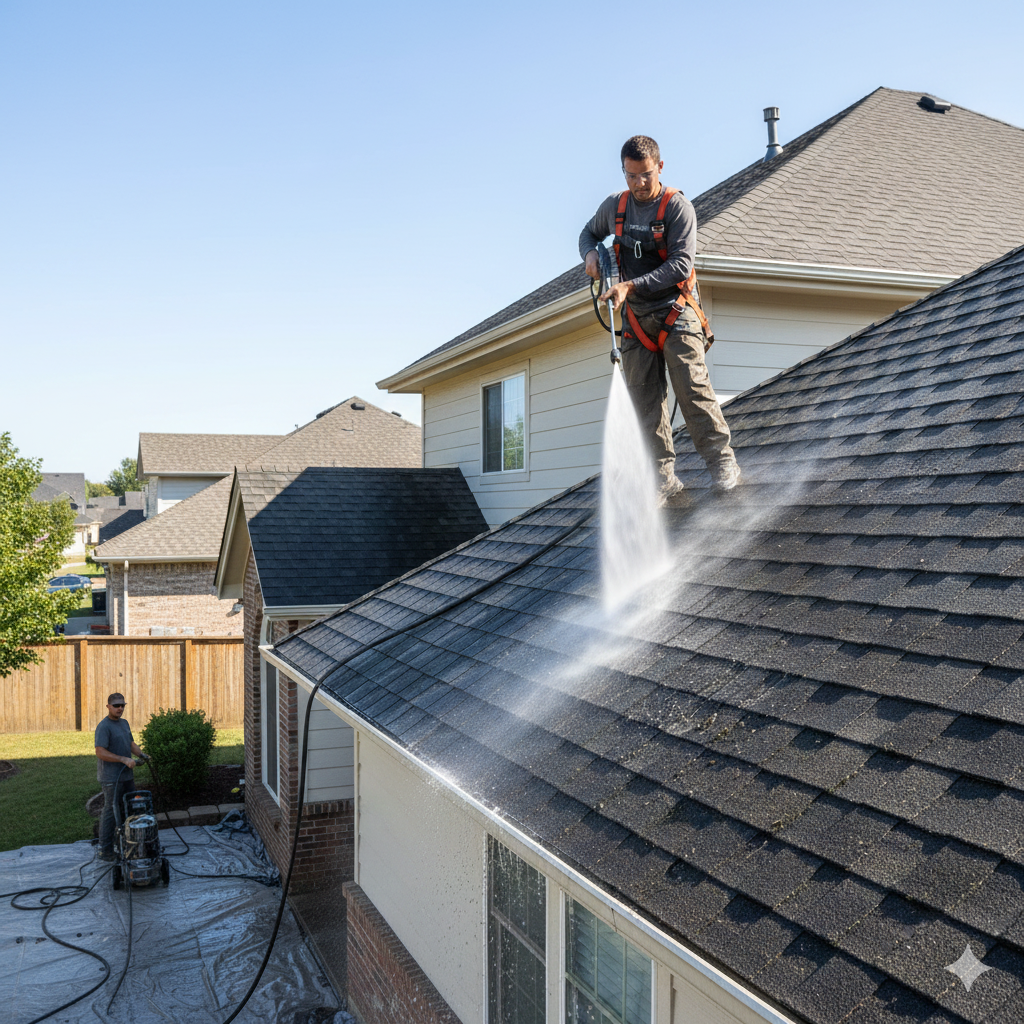
How to Do Roof Pressure Washing (Step-by-Step)
1. Inspect the Roof
Check for broken shingles, loose tiles, cracks, or leaks. Roof Pressure Washing should never be done on damaged surfaces.
2. Choose the Right Method
- Soft wash for asphalt shingles, tiles, and wood shakes
- Pressure wash for metal roofs or concrete tiles
3. Prepare Cleaning Solution
Most professionals use a biodegradable solution containing:
- Sodium hypochlorite (kills algae)
- Surfactants (increase effectiveness)
- Water
4. Apply Solution
Spread the cleaning agent with low-pressure spray nozzles. Let it sit for 10–20 minutes to dissolve contaminants.
5. Rinse the Roof
Use soft-pressure rinsing for shingles and medium pressure for metal roofs.
6. Final Inspection
Remove debris from gutters, check flashing areas, and ensure that water flow is clear.
How Much Does Roof Pressure Washing Cost?
Roof Pressure Washing costs depend on roof size, height, pitch, and contamination level.
Average Roof Pressure Washing Prices (US)
- Small roof (1,000 sq ft): $150 – $300
- Medium roof (1,500–2,000 sq ft): $250 – $500
- Large roof (+2,500 sq ft): $450 – $900
Factors that increase cost:
- Steep roof pitch
- Heavy moss growth
- Multi-story house
- Special cleaning chemicals
Professionals generally charge $0.20 – $0.60 per square foot.
How Long Does Roof Pressure Washing Take?
The duration depends largely on roof size and buildup.
- Small roof: 1–2 hours
- Average roof: 2–4 hours
- Large roof: Up to 6 hours
Soft washing techniques may require additional drying time, but the cleaning itself is usually quick.
Installation? Roof Pressure Washing vs. Roof Maintenance
Roof Pressure Washing is not a roof installation technique, but it is an essential part of roof maintenance.
However, proper cleaning supports:
- Longer roof lifespan
- Better adhesion of sealants or protective coatings
- Safer installation conditions for future repairs
If planning a new roof installation, washing old materials beforehand ensures cleaner surfaces and better bonding.
Advantages of Roof Pressure Washing
1. Increases Roof Lifespan
Removes damaging moss, lichen, and mold that weaken roofing materials.
2. Improves Energy Efficiency
A clean roof reflects sunlight more effectively, reducing attic heat.
3. Enhances Home Value
Curb appeal improves significantly once stains and dirt are removed.
4. Prevents Water Damage
Eliminates moss that traps moisture and causes leaks.
5. Saves Money on Repairs
Routine cleaning is far cheaper than roof replacement.
Challenges Associated with Roof Pressure Washing
1. Risk of Damage if Done Incorrectly
High pressure can loosen shingles or remove protective granules.
2. Safety Concerns
Walking on wet roofs is dangerous for untrained individuals.
3. Chemical Misuse
Improper chemical mixtures may bleach surfaces or harm landscaping.
4. Short-Term Mess
Runoff water can discolor walls or enter gutters if not controlled.
FAQs About Roof Pressure Washing
1. How often should I schedule Roof Pressure Washing?
Every 2–3 years, or sooner if you notice black streaks or moss.
2. Is Roof Pressure Washing safe for shingles?
Yes—only when soft wash techniques are used. High pressure can cause damage.
3. Will Roof Pressure Washing remove mold and algae completely?
Yes. Soft wash chemicals kill algae spores, preventing fast regrowth.
4. Can I pressure wash my roof myself?
It’s possible but not recommended. Roof Pressure Washing requires safety training and correct pressure settings.
5. Does Roof Pressure Washing increase home value?
Absolutely. A clean roof increases curb appeal and buyer confidence.
Conclusion
Roof Pressure Washing is one of the most powerful ways to preserve your roof, enhance curb appeal, and prevent structural damage. Whether you are a homeowner, contractor, or property manager, understanding how Roof Pressure Washing works—its cost, benefits, and process—can help you protect your property and save money in the long run.
Routine cleaning not only maintains beauty but also ensures your roof performs efficiently for many years.
