
How Long Do Roofs Last? 1 Powerful Signs & Smart Costs
How Long Do Roofs Last? : Guide, Costs, Installation & Expert Tips
For homeowners and building professionals, one of the most important questions is how long do roofs last. Your roof is the first line of defense against rain, wind, sun, hail, and temperature variations. Understanding the lifespan of different roofing materials helps you plan maintenance, avoid expensive damage, and predict replacement costs. Whether you’re buying a home, renovating, or managing a property, knowing how long roofs last allows you to make informed decisions and protect your investment.
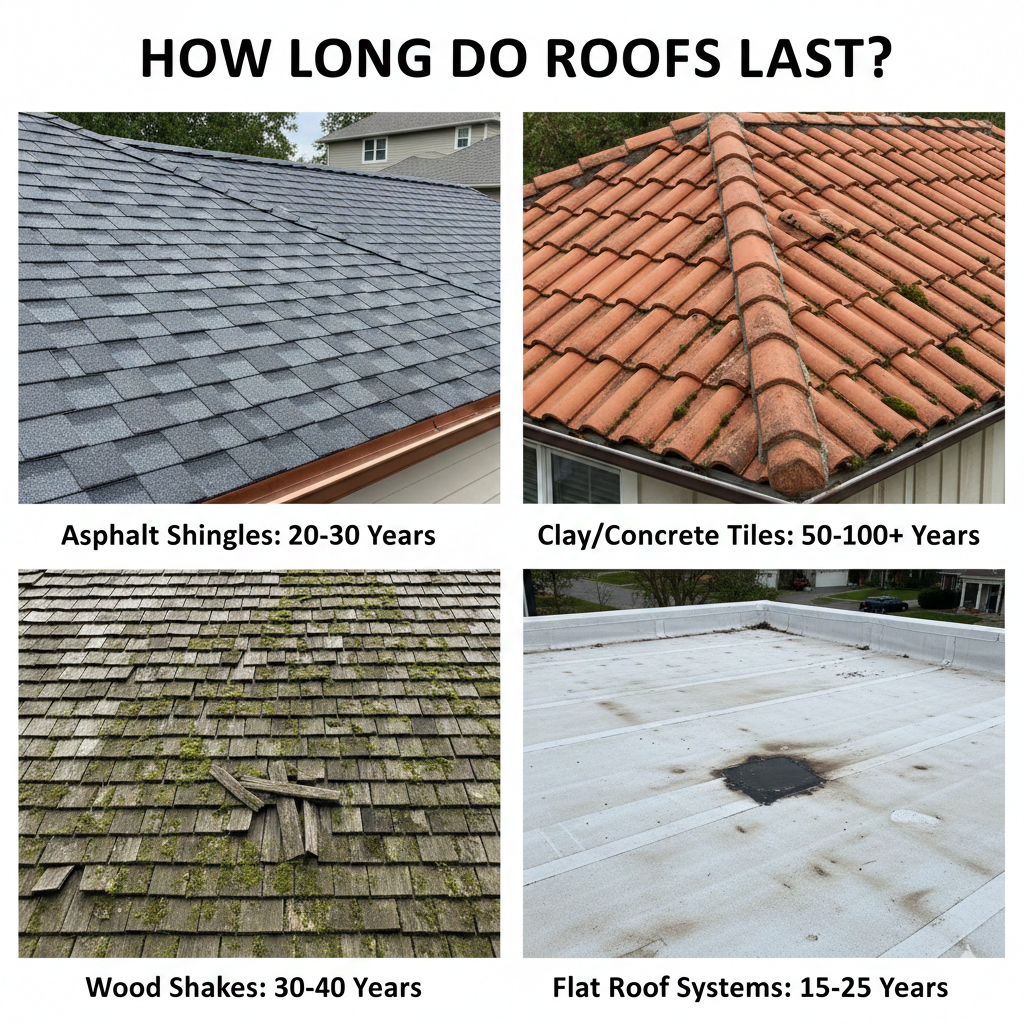
How Long Do Roofs Last? (Average Lifespan by Material)
The lifespan of a roof depends mainly on the material, installation quality, climate, and maintenance. Here’s a clear breakdown:
- Asphalt Shingle Roofs
- Lifespan: 15–30 years
- Cost: $4,000–$12,000 for most homes
- Why: Affordable, easy to install, widely used
- Challenge: Shortest lifespan among modern roofing
2. Architectural Asphalt Shingles (Premium)
- Lifespan: 25–35 years
- Cost: 20–40% higher than standard shingles
- Advantage: Thicker, better wind resistance
3. Metal Roofs
- Lifespan: 40–70 years
- Cost: $10,000–$40,000+
- Pros: Fire-resistant, durable, energy-efficient
- Cons: Higher upfront cost
4. Clay or Concrete Tiles
- Lifespan: 50–100 years
- Cost: $20,000–$50,000+
- Pros: Incredible durability
- Cons: Heavy structure required
5. Slate Roofs
- Lifespan: 75–150 years
- Cost: $30,000–$100,000+
- Pros: Longest-lasting roofing material
- Cons: Expensive and heavy
6. Wood Shake Roofs
- Lifespan: 20–40 years
- Cost: $12,000–$30,000
- Pros: Natural and aesthetic
- Cons: Requires more maintenance, not fire-resistant
What Determines How Long Roofs Last?
Even the best roof won’t reach its maximum lifespan if certain conditions are ignored.
1. Climate
- Hot sun accelerates shingle aging
- Heavy wind can lift shingles
- Snow and ice cause leaks
- Humidity fosters mold
2. Installation Quality
Incorrect flashing, poorly aligned shingles, or unsealed edges can reduce the roof’s life by up to 40%.
3. Maintenance
A roof that is inspected annually lasts much longer. Early detection prevents expensive repairs.
4. Ventilation
Proper ventilation reduces heat buildup and moisture, extending shingle life.
How to Make Your Roof Last Longer
Here are practical and actionable steps to extend your roof’s lifespan:
✔ Annual Roof Inspections
Hire a roofer or visually inspect your roof for:
- Cracked shingles
- Missing tiles
- Rusted flashing
- Algae or moss growth
✔ Clean Gutters Every Season
Clogged gutters cause water pooling and premature shingle rot.
✔ Trim Overhanging Trees
Branches damage shingles and drop moisture-holding debris.
✔ Remove Moss & Algae
Moss lifts shingles and causes water infiltration. Use gentle roof cleaning products.
✔ Fix Small Leaks Early
A $100 repair today can prevent a $10,000 repair later.
How to Install a Roof (Summarized Process)
While professional installation is recommended, understanding the steps helps you know what to expect:
- Remove the old roofing materials
- Inspect and repair the decking
- Install underlayment or waterproof membrane
- Place the starter shingles
- Install field shingles or metal panels
- Add flashing around valleys, chimneys, vents
- Install ridge caps and ventilation systems
- Final inspection
Good installation = longer roof life.

How Much Does a New Roof Cost?
Costs vary depending on materials and home size.
| Roof Type | Average Cost |
|---|---|
| Asphalt shingles | $4,000–$12,000 |
| Architectural shingles | $8,000–$18,000 |
| Metal roofing | $10,000–$40,000 |
| Tile roofing | $20,000–$50,000+ |
| Slate roofing | $30,000–$100,000+ |
Remember: The cheapest roof installs cost more in the long run because they don’t last as long.
Advantages of Understanding How Long Roofs Last
Understanding how long roofs last gives homeowners several benefits:
👍 Better financial planning
- You know when to expect major expenses.
👍 Reduced maintenance costs
- Proper care prevents huge repairs.
👍 Higher home resale value
- Buyers prefer homes with newer roofs.
👍 Better energy efficiency
- A healthy roof keeps heating and cooling costs low.
Challenges Related to Roof Lifespans
Not everything is easy—there are challenges:
⚠ Weather unpredictability
- Storms can cut a roof’s lifespan drastically.
⚠ Improper installation
- Many roofs fail early due to poor workmanship.
⚠ Rising roofing costs
- Materials and labor prices continue to increase yearly.
⚠ Insurance limitations
- Some insurers do not cover roofs older than 15–20 years.
FAQ: How Long Do Roofs Last?
1. What is the average lifespan of a roof?
Most roofs last 15 to 30 years, depending on material and maintenance.
2. How long does a metal roof last?
Typically 40–70 years, sometimes more.
3. How long do asphalt shingles last?
Standard shingles: 15–25 years
Architectural shingles: 25–35 years
4. Does climate affect roof lifespan?
Yes. Heat, storms, snow, and humidity shorten the lifespan significantly.
5. How do I know ?
Look for: missing shingles, leaks, sagging, mold, granule loss.
Conclusion
Understanding how long do roofs last is essential for protecting your home, planning your budget, and avoiding costly surprises. Material choice, installation quality, and regular maintenance are the biggest factors that determine your roof’s lifespan. By following the advice in this guide, homeowners can extend the life of their roof and maximize their investment.
Other Resources
Wikipedia – Domestic Roof Construction Comprehensive overview of residential roof structures, materials, and construction methods.