
leaky roof repair: 10 Powerful Ways To Save
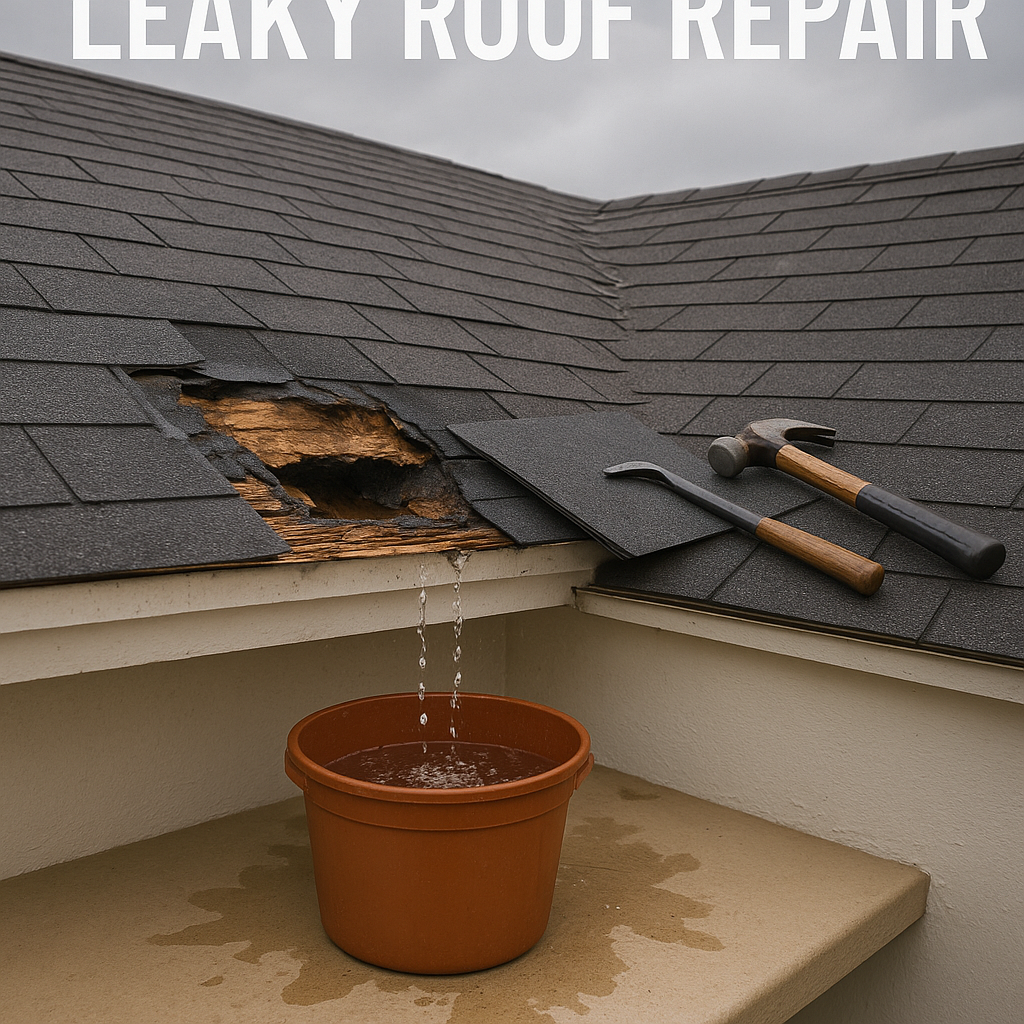
leaky roof repair: 11 Smart Steps To Success
A small stain on the ceiling can signal big trouble, and leaky roof repair often becomes urgent at the worst time. Water sneaks through tiny gaps, saturates insulation, and silently weakens timber. Acting quickly limits structural damage, mold growth, and expensive interior restoration. This guide explains essentials in clear steps, so homeowners feel informed, confident, and ready to choose the best solution for their situation.
Understanding leaky roof repair begins with identifying where and why water gets in. Shingles curl, flashing cracks, sealant dries, and gutters clog, each opening a path for moisture. Different materials, from asphalt shingles to metal or tile, fail in different ways. Learning to read early warning signs, from musty smells to blistered paint, lets you catch problems before they escalate into structural hazards and insurance disputes.
Many people only think about leaky roof repair after a major storm, but weather is just one factor. Sun exposure, age, poor installation, and neglected maintenance all accelerate deterioration. Even a newer roof can leak if ventilation is wrong or flashing was installed badly. Taking a structured approach to inspection, planning, and repair helps avoid guesswork, repeat problems, and wasted money on the wrong materials or quick fixes that soon fail.
Another key part of leaky roof repair is understanding safety and realistic limits. Working on a roof involves heights, slippery surfaces, sharp tools, and unpredictable weather. Some tasks fit cautious homeowners; others demand licensed professionals with proper equipment and insurance. Throughout this article, notes will highlight when to consider expert help, especially near steep pitches, power lines, or complex details like chimneys and skylights.
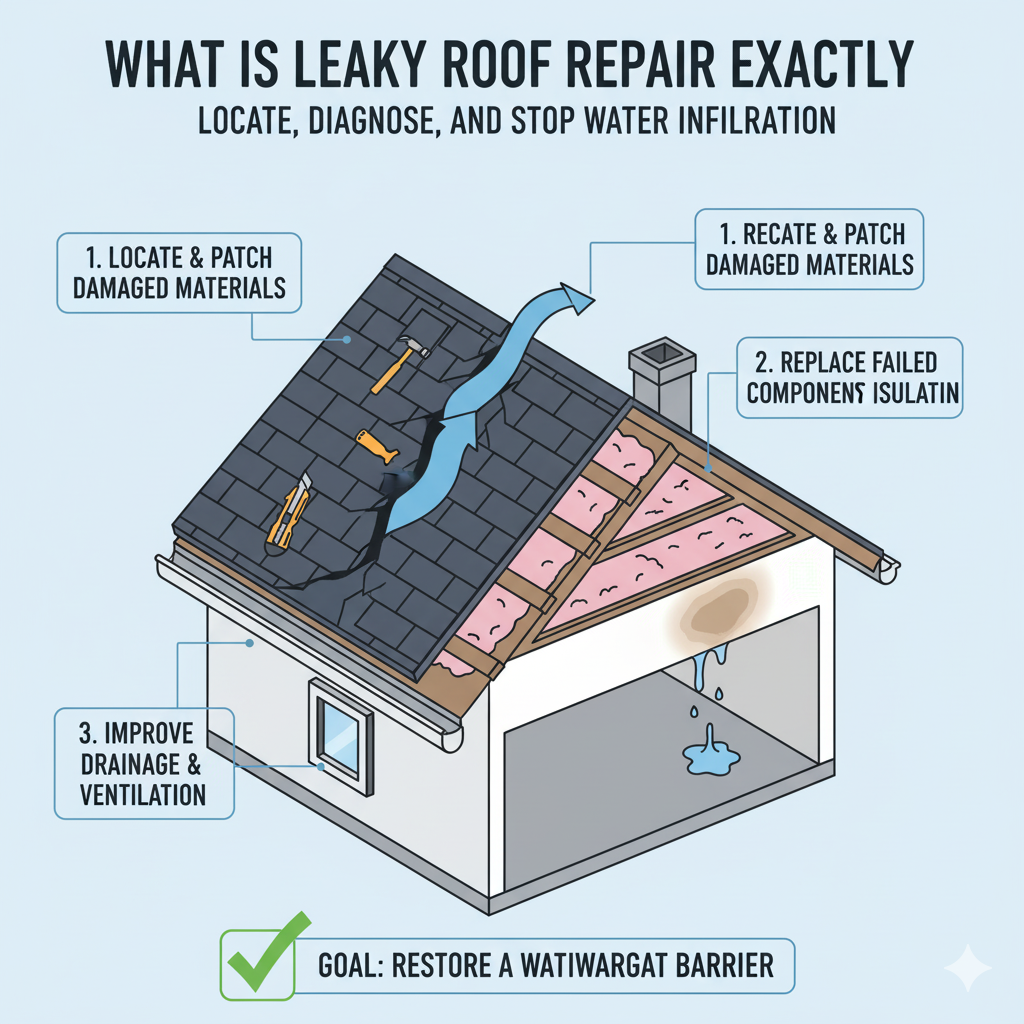
What Is Leaky Roof Repair Exactly
Leaky roof repair refers to all the steps taken to locate, diagnose, and stop water infiltration through the roof system. It includes patching damaged materials, replacing failed components, and improving drainage or ventilation. Sometimes it is a simple sealant touch up; other times it becomes a partial or full replacement. The goal is always the same: restore a continuous, watertight barrier that protects structure, insulation, and interior finishes from ongoing damage.
How To Do A Basic Leak Inspection
Effective leaky roof repair starts with a careful inspection rather than guesswork. Begin indoors, looking for ceiling stains, bubbling paint, peeling wallpaper, and damp spots along exterior walls. In the attic, check for wet insulation, darkened wood, or visible drips during rain. Outside, examine shingles, flashing, and roof penetrations in good daylight. Binoculars help on steep roofs, reducing the need to climb while still revealing obvious surface problems and missing pieces.
How To Find The Exact Leak Source
Pinpointing the source is the hardest part of leaky roof repair because water often travels. A stain on the ceiling may sit several feet away from the roof entry point. In the attic, follow wet trails uphill to the highest damp area, then match that spot to the roof surface. Outside, inspect around that zone for cracked shingles, raised nails, loose flashing, or deteriorated sealant. If needed, a controlled hose test can confirm the leak path in sections.
How To Buy The Right Materials
- Good leaky roof repair depends on using compatible, durable materials rather than whatever is cheapest. For asphalt roofs, that usually means matching shingle type, weight, and color as closely as possible. Also budget for underlayment, roofing nails, roofing cement, flashing tape, and metal flashing where needed. Metal, tile, and flat roofs each have specific products and sealants; ask suppliers for items rated for your climate and roof slope. Quality now helps avoid repeat leaks later.
- When shopping, compare manufacturer warranties, UV resistance, and temperature ranges. Ask whether products are approved for contact with existing materials, especially on metal roofs where dissimilar metals can corrode. For flat systems, confirm whether surfaces need primer before applying liquid membranes. Always purchase a little extra for future spot repairs. Bringing photos of your current roof to the store helps staff recommend matching products and avoid incompatible combinations that could void warranties.
How Much Does Leaky Roof Repair Cost
- Cost is often the first concern, and it varies widely based on damage, height, and materials. Small shingle patches cost far less than broad structural work. Labor rates also change by region and season. Many homeowners balance short term affordability with long term durability, choosing between stopgap patches and more extensive solutions. Understanding typical price ranges and cost drivers helps in budgeting and deciding whether to file an insurance claim for storm related issues.
- Here is a focused breakdown on leaky roof repair cost, keeping numbers general because markets differ. Minor DIY patching with sealant, a few shingles, and basic tools might stay under a couple hundred dollars, especially on easy access slopes. Professional small repairs usually climb higher, reflecting travel, safety, and expertise. Extensive water damage, sagging sections, or rot around structural members push costs into the thousands, especially when interior restoration and mold remediation join the scope.
How Long Does A Typical Repair Last
Longevity is a crucial factor when planning leaky roof repair because a quick fix that fails fast can end up more expensive. A well executed localized repair using quality, compatible materials can last many years, especially on a relatively young roof. However, patching very old shingles or fatigued metal may only buy time. The remaining overall roof life, climate stress, and maintenance habits all influence how long the repair remains watertight and reliable.
How To Install Common Leak Fixes
Many homeowners handle simple leaky roof repair tasks themselves, but must prioritize safety and manufacturer guidelines. Before climbing, use a sturdy ladder on firm ground, wear non slip footwear, and avoid wet or icy conditions. For basic shingle replacement, carefully lift surrounding tabs, remove damaged pieces, slide new shingles into place, and nail according to pattern. Seal exposed nail heads and edges with roofing cement, pressing firmly to ensure adhesion and smooth, watertight coverage.
For metal roofs, leaky roof repair often involves tightening loose fasteners, replacing failed screws with larger gasketed ones, and sealing seams with compatible sealant or butyl tape. Tile repairs might require gently lifting neighboring pieces, replacing broken tiles, and reinstating underlayment patches. Flat roofs commonly use patch kits or liquid membranes, applied to clean, dry, primed surfaces. In each case, follow product instructions closely, because mixing methods can cause premature failure or incompatibility problems.
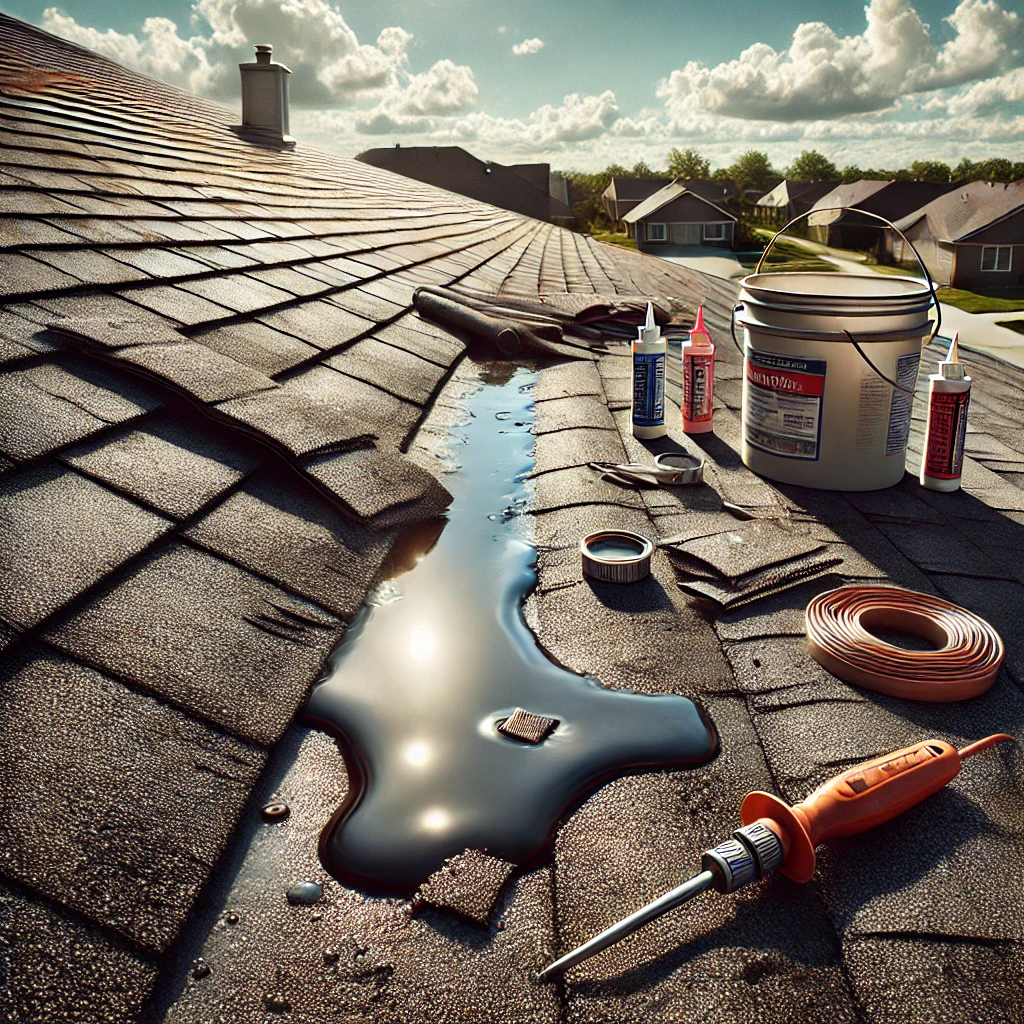
How To Clean Roofs To Prevent Leaks
Preventative maintenance complements every leaky roof repair by addressing causes, not just symptoms. Debris buildup in valleys and gutters traps moisture, accelerates shingle decay, and backs water under flashing. Regularly cleaning leaves, branches, and moss helps keep drainage pathways open. Gentle methods are best; aggressive pressure washing can strip protective granules from asphalt shingles or lift edges. Using a soft brush, mild cleaner, and careful technique protects both roofing material and surrounding landscaping.
Gutter cleaning plays a major role in avoiding future leaky roof repair. Overflowing gutters send water against fascia boards and under lower edge shingles, causing rot and interior leaks. Inspect and clean gutters at least twice a year, more often under heavy tree cover. Check that downspouts discharge away from the foundation. While cleaning, look for rust, loose brackets, or separated joints that could affect water control. Good drainage supports roof performance and reduces leak risk.
What Is The Cost Of Ignoring A Leak
The hidden cost of postponing leaky roof repair almost always exceeds the price of prompt action. Water that sneaks in today quietly saturates insulation, rusts fasteners, and feeds mold colonies inside cavities. Over time, ceiling plaster sags, framing decays, and electrical systems may corrode. Insurance companies sometimes deny claims when owners ignored earlier warning signs. Addressing leaks early protects both property value and health, avoiding long term structural issues and contaminated indoor air.
Energy loss is another often overlooked consequence of delayed leaky roof repair. Wet insulation loses much of its thermal resistance, meaning heating and cooling systems work harder. Utility bills creep upward while comfort drops. In colder climates, chronic moisture also encourages ice dams at roof edges, amplifying shingle damage. Fixing leaks and replacing saturated insulation restores energy efficiency. Thinking in terms of lifecycle costs, early repair becomes a smart financial and environmental decision.
Advantages And Challenges Of Leaky Roof Repair
Well executed leaky roof repair offers several meaningful advantages. It extends roof life, protects interior finishes, stabilizes property value, and improves energy efficiency. Timely fixes prevent structural rot and mold, which can be difficult and expensive to remediate. Strategic repairs can also reveal installation flaws, letting owners correct underlying design issues. For many homes, targeted repairs delay the need for full replacement, freeing budget for other priorities and keeping sound materials in service longer.
However, leaky roof repair also comes with challenges that homeowners should acknowledge. Locating the exact water entry point can be frustrating, especially around complex junctions. Weather windows for exterior work may be short in some climates, delaying solutions. Matching older roofing materials for color and style is not always possible. Safety risks add complexity; steep slopes, high elevations, and fragile surfaces require proper fall protection. For some projects, professional help becomes the most responsible option.
To weigh these advantages and challenges, consider these points:
Quick action reduces long term structural damage and mold risk.
Skilled diagnosis prevents repeated, ineffective patching attempts.
Investing in quality materials increases repair longevity.
Safety equipment and training are essential on steep or high roofs.
This perspective helps homeowners set realistic expectations, budget wisely, and decide when to shift from patching to full replacement.
Focused Topics On Key Repair Questions
Because certain questions arise repeatedly, it helps to look at specific leaky roof repair topics in more detail, using concise explanations. Each subsection below addresses a common concern. Together, they form a practical toolkit for planning, budgeting, and understanding options. Whether handling small DIY patches or evaluating contractor bids, clear information reduces stress and improves decisions. These focused sections also highlight where professional assessment is particularly valuable for safety and long term durability.
First, consider a practical overview of leaky roof repair cost in everyday terms. Prices depend on roof type, access difficulty, and damage extent, but patterns appear. Simple shingle fixes cost less than structural rebuilds or full replacements. Flat roofs and specialty materials often sit at the higher end. Permits and disposal add to totals. Homeowners who budget for routine inspections and minor preventive work usually face smaller repair invoices over time, compared with those who wait for emergencies.
Next, a concise guide on leaky roof repair cost in more structured language. Think of costs in tiers: minimal, moderate, and major. Minimal covers small shingle patches or flashing reseals, often hundreds. Moderate includes replacing larger sections, repairing decking, or dealing with multiple leak points, frequently climbing higher. Major costs appear when structural elements, insulation, and interior finishes all need restoration. Understanding these levels prepares owners for realistic quotes and smarter conversations with contractors.
Now, turn to the practical question of how to repair a leaky roof in simple, actionable steps. Begin with safety by securing ladders, checking weather, and using appropriate footwear and fall protection. Then locate the leak source using attic inspection and surface examination. Remove damaged materials carefully, keeping surrounding pieces intact. Install new components according to manufacturer guidelines. Seal exposed fasteners and joints with approved products. Finally, test the repair during rain or controlled water application.
Clarifying how to repair a leaky roof benefits from a short method summary. Start by documenting damage with photos for reference or insurance. Protect interior spaces with plastic sheeting and buckets during storms. On the roof, prioritize temporary emergency measures, such as tarps or peel and stick patches, if permanent materials are unavailable. Once weather clears, complete more durable repairs. Regularly inspect the area afterward to catch any early signs of recurring moisture or weakness.
Many owners of mobile or recreational units ask how to repair leaky trailer roof surfaces. These roofs often use different materials than typical houses, such as rubber membranes, aluminum panels, or fiberglass. Cleaning becomes the first essential step, removing dirt, oxidation, and old sealant. Suitable tapes and liquid coatings designed for flexible surfaces then provide long lasting, elastic seals around seams and edges. Choosing products specifically labeled for trailers helps avoid cracking and premature failure.
Detailing how to repair leaky trailer roof assemblies further, pay attention to seams, vents, and edges, because most leaks start there. Inspect factory joints, skylight frames, and antenna bases. Replace brittle or separated sealant, and tighten loose fasteners. On older units, a full roof coating system sometimes offers better value than repeated spot patches. Carefully follow drying times and temperature recommendations during application. Proper preparation and patience often make the difference between short lived and durable results.
Another recurring concern is how to repair a leaky roof vent pipe flashing. These flashings sit where plumbing stacks penetrate the roof surface and often degrade faster than shingles. Rubber boots crack, metal corrodes, and sealant shrinks, opening clear paths for water. Effective repair generally involves removing surrounding shingles, replacing the flashing with a new unit that slides over the pipe, and weaving shingles back around it. Seal edges as directed, avoiding excess that can trap water.
To refine how to repair a leaky roof vent pipe flashing, watch for subtle signs. Dark rings, soft decking, or slight sagging around the pipe indicate moisture has persisted. In those cases, leaky roof repair should include checking and replacing any decayed wood beneath. Use nails placed under shingle overlaps where possible to limit exposed fasteners. Finally, ensure vent pipes rise to proper heights above the roof plane, improving draft and reducing risk of backflow or condensation issues.
Practical Lists For Planning And Action
Organizing tasks and decisions in leaky roof repair becomes easier with simple lists. These outlines help homeowners move from problem discovery to durable solution without skipping vital steps. They also offer a quick reference during stressful weather events. While every roof differs, the following examples provide a framework adaptable to most homes. Adjust them according to roof type, local climate, and comfort level with tools and heights.
Here is a basic numbered checklist for emergency response when a leak first appears:
Protect belongings by moving furniture and covering areas with plastic.
Place containers to catch drips and relieve ceiling water pressure.
Safely locate the damp area in the attic, avoiding weak spots.
Mark the suspected entry point to reference later.
Contact a professional if conditions are unsafe or damage looks extensive.
And here is an indented bulleted list of long term prevention actions related to leaky roof repair:
Schedule professional roof inspections every one to three years.
Trim overhanging branches that drop debris and rub shingles.
Clean gutters and downspouts regularly to maintain drainage.
Check and refresh sealant around vents, chimneys, and skylights.
Monitor attic ventilation and insulation to reduce moisture buildup.
These simple lists support consistent maintenance, helping limit future leaks.
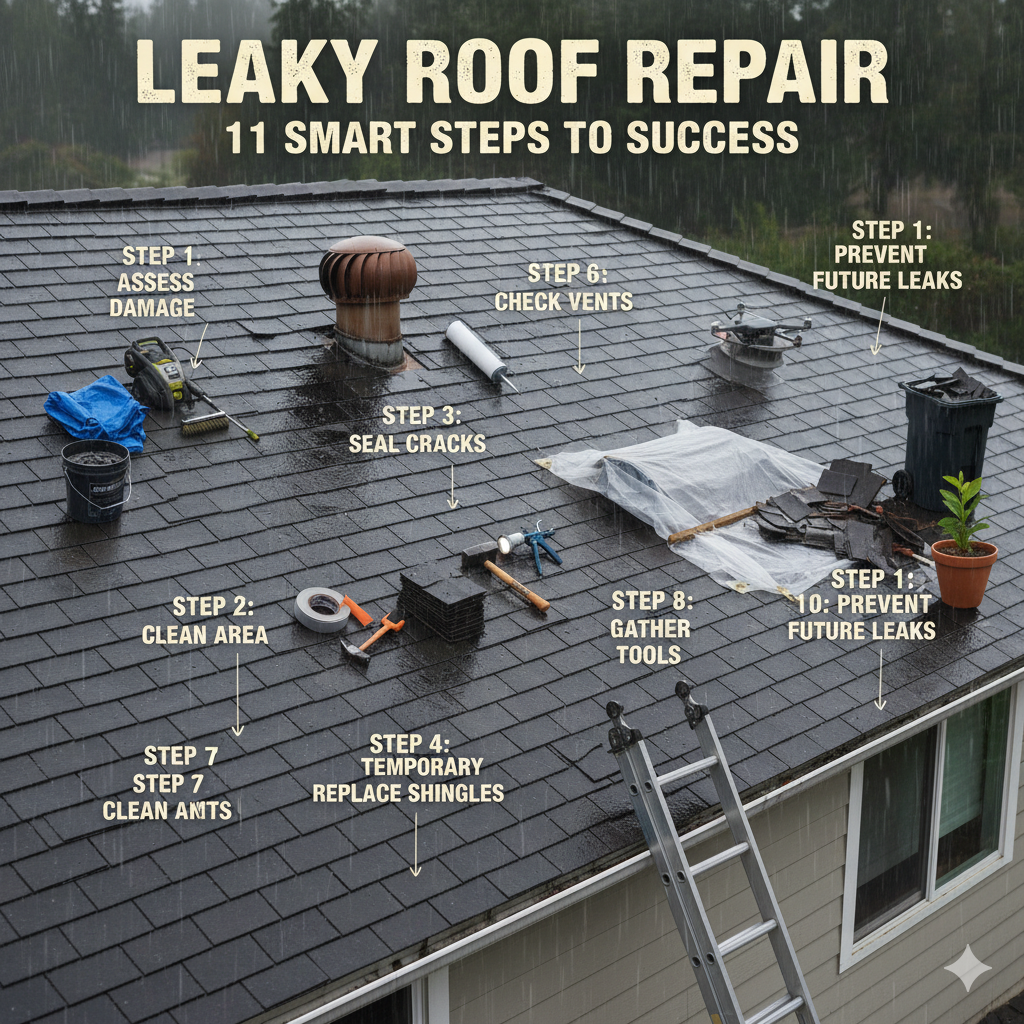
FAQ About Leaky Roof Repair
What are the first signs that leaky roof repair is needed?
Early indicators include small ceiling stains, musty attic smells, damp insulation, or discolored drywall near exterior walls. Outside, look for missing, curling, or cracked shingles, rusted flashing, or moss in roof valleys. Catching these signs early allows timely leaky roof repair before significant structural damage, mold growth, or interior finishes are affected. A quick inspection after major storms often reveals issues while they are still minor.
Can leaky roof repair be a DIY project, or should a professional always handle it?
The answer depends on roof height, pitch, complexity, and personal comfort with tools and ladders. Small, accessible shingle patches or simple sealant touch ups sometimes suit careful homeowners. However, steep slopes, fragile materials, electrical hazards, or widespread damage call for professionals. Experienced roofers bring safety equipment, diagnostic skills, and warranties. When in doubt, at least obtain an expert assessment before attempting significant work alone.
How long should leaky roof repair take from inspection to completion?
Timeframes vary with weather, material availability, and repair scope. Minor patches may finish in a single visit, while larger projects span several days. Scheduling can stretch longer during busy seasons after storms. Good contractors explain timelines clearly and secure temporary protection, such as tarps, if work must be delayed. Homeowners can speed the process by documenting damage early and responding quickly to proposals and questions.
Will insurance typically cover leaky roof repair costs?
Coverage usually depends on the cause and policy language. Sudden damage from wind, hail, or falling branches might qualify, while long term neglect or wear often does not. Insurers expect owners to perform basic maintenance and address small issues promptly. Documenting storm events, taking clear photos, and keeping maintenance records support any claim. Speaking with both a roofing professional and the insurer provides clarity before committing to major work.
How can homeowners reduce the likelihood of needing frequent leaky roof repair?
Consistent maintenance remains the strongest defense. That includes keeping gutters clean, trimming trees, scheduling inspections, and addressing minor defects quickly. Ensuring proper attic ventilation and insulation also helps by reducing moisture and temperature extremes that age roofing faster. Choosing quality materials and reputable installers at replacement time lays a strong foundation. Combined, these actions greatly cut the chances of recurring leaks and emergency calls.
Conclusion
Effective planning and timely action transform leaky roof repair from a stressful emergency into a manageable project. By understanding what leaks are, how to inspect and find sources, and how to choose materials and methods, homeowners make stronger decisions. Recognizing cost drivers, lifespan expectations, and safety limits guides when to use professionals. With regular cleaning, careful monitoring, and strategic upgrades, a repaired roof can remain reliable for years, protecting both home and peace of mind.
💧 Other Resources
Explore these expert guides and tutorials to learn how to find and fix roof leaks quickly and safely:
YouTube – How to Fix a Roof Leak – Step-by-step video showing quick leak repair methods.
Family Handyman – Find & Fix Roof Leaks – Comprehensive guide to detecting leaks and performing repairs.
Reddit – Temporary Leak Fix Advice – Real homeowner discussions and troubleshooting tips.
Home Depot – How to Fix a Leaky Roof – DIY instructions and recommended products for leak repair.
🔎 Other Helpful Articles
Plastic Roofing Installation – Guide to installing plastic and polycarbonate panels.
Roofing Leads – How to generate more roofing customers.
Tile Roof Repair – How to repair broken or cracked roofing tiles.

I have read so many articles regarding the blogger lovers however this post is genuinely a
nice article, keep it up.
Take a look at my blog; roof repair