
Metal Roof Parts: Names, Functions and Buying Checklist
Metal Roof Parts: Names and Functions
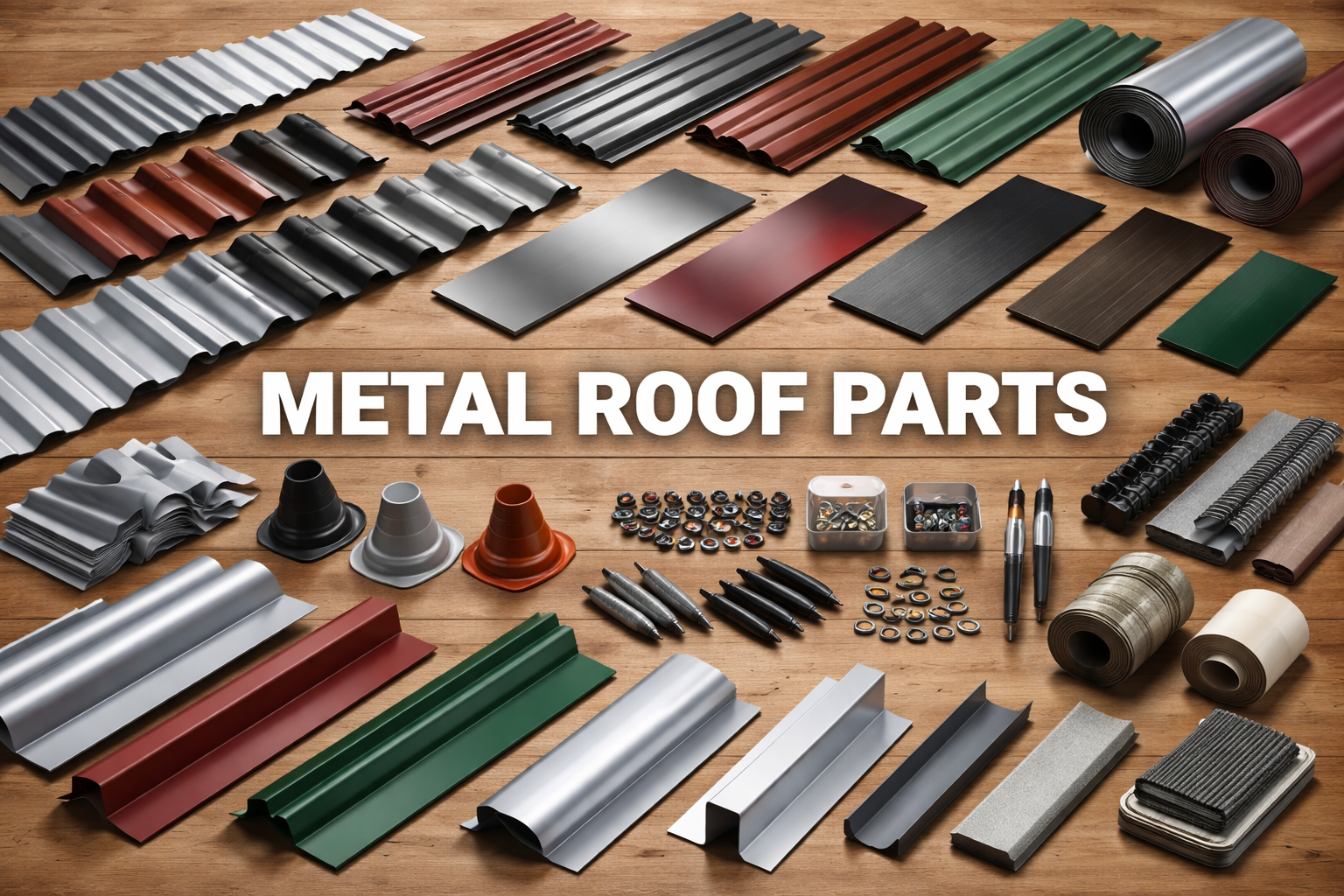
A metal roof includes more than panels. Ridge caps, eave and rake trim, flashing, fasteners and underlayment work together to manage water at the roof edges, joints and openings. This guide explains the names of common metal roof parts and what to check before ordering replacements.
What Is a Metal Roofing System?
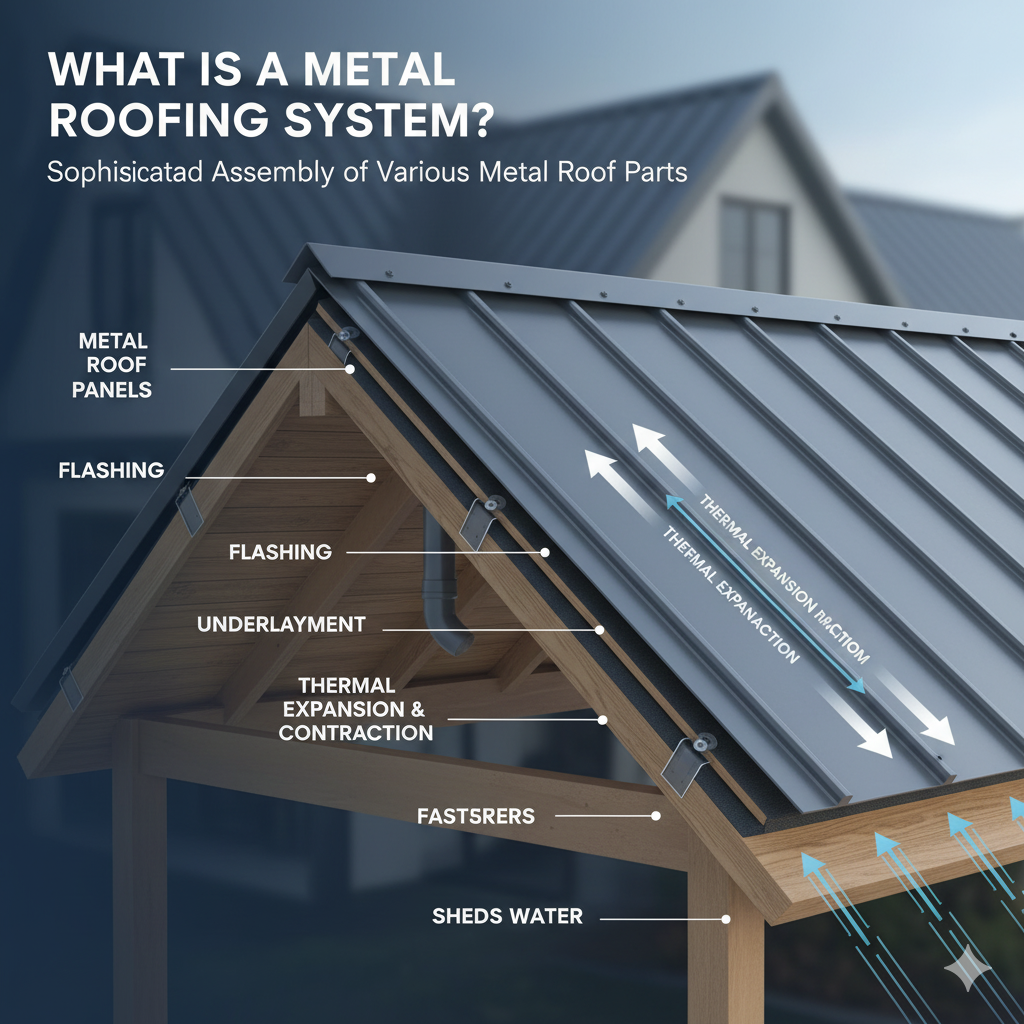
A metal roofing system is not just a collection of sheets nailed to a deck; it is a sophisticated assembly of various metal roof parts working in unison to shed water and protect the structure. At its core, this system involves panels, flashing, fasteners, and underlayment. The primary function is to create a watertight seal that resists wind, rain, and snow.
Unlike asphalt shingles, which rely on gravity and overlapping layers, metal systems often use interlocking mechanisms or specific fasteners to secure the material. The metal roof parts involved in this process are engineered to handle thermal expansion and contraction, which is a common occurrence with metal materials.
Furthermore, the materials used for these metal roof parts can vary significantly. You might find components made from:
Galvanized steel
Aluminum
Copper
Zinc
Each material offers different benefits regarding corrosion resistance and aesthetic appeal, but they all serve the same fundamental purpose within the assembly.
What Are the Parts of a Metal Roof Called?
Use this quick reference to identify the component you need. Names and shapes vary by panel system; confirm the part number with the supplier.
| Part | Location and purpose |
|---|---|
| Roof panel | Covers the main roof surface. |
| Ridge cap | Covers the meeting point of two slopes at the peak. |
| Eave trim | Finishes the lower roof edge. |
| Rake or gable trim | Finishes the sloping side edge. |
| Valley flashing | Channels water where two slopes meet in an internal angle. |
| Sidewall and endwall flashing | Details the junction between a roof and a wall. |
| Pipe flashing | Seals the transition around a pipe penetration. |
| Clips and fasteners | Secure the panel system using its specified attachment method. |
For dimensions and drawings, use the manufacturer trim and flashing library for your exact panel profile.
1: What Are the Parts of a Metal Roof Called
The terminology can be confusing, but the main metal roof parts have specific names. The Ridge Cap sits at the very peak of the roof where two slopes meet. Eave Trim is located at the bottom edge of the roof, directing water away from the fascia. Rake Trim covers the sloped edges of the roof. Valleys are the internal angles where two roof planes intersect, requiring specific flashing. Finally, Fasteners are the screws or clips that hold everything together.
2: All Parts Needed for a Metal Roof
A complete list of metal roof parts needed for installation includes the primary panels, drip edge, gable trim, sidewall flashing, end wall flashing, ridge caps, transition flashing, pipe boots, butyl tape, and sealant. You also need underlayment, which acts as a secondary barrier.
3: Metal Roof Parts Diagram
If you look at a diagram of metal roof parts, you will see the underlayment goes down first. The drip edge is installed at the eaves. Panels are laid out over the field of the roof. The rake trim creates a finished look on the sides, while the ridge cap seals the top.
4: Can You Replace Part of a Metal Roof
A localized repair may be possible, but it depends on how the panels and seams connect. Ask a roofer to identify the system, inspect adjacent components and confirm that a compatible replacement is available before removing a panel.
How to Find Quality Components
Finding high-quality metal roof parts requires a bit of research. You cannot simply walk into a general store and expect to find professional-grade materials. The best place to start is with specialized roofing supply distributors. These vendors cater specifically to contractors and knowledgeable homeowners, ensuring that the metal roof parts they stock meet industry standards.
When searching, look for manufacturers that offer warranties. A warranty is a strong indicator that the company stands behind its metal roof parts. If a manufacturer is willing to guarantee their flashing or panels for 20 or 30 years, it suggests the material is durable.
Record the panel profile, metal type, thickness, finish and manufacturer before ordering. Thickness alone does not establish suitability: the selected assembly must meet the project requirements, including its support and attachment details.
How to Buy the Right Materials
Buying metal roof parts involves more than just swiping a credit card. You need a detailed materials list based on your roof’s measurements. Before you buy, ensure you have calculated the square footage of the roof, the linear footage of the ridges, eaves, and valleys, and the number of penetrations (like vent pipes).
Once you have your measurements, approach a supplier to get a quote. Ask specifically if the quote includes all necessary metal roof parts, including clips, screws, and sealants. Some suppliers might quote only the panels to make the price look lower, leaving you to buy expensive accessories later.
Request Samples: Ask to see samples of the metal roof parts to verify the color and finish.
Verify Coatings: Ensure the paint system is Kynar 500 or Hylar 5000, which resists fading.
Check Delivery: Metal panels are long and heavy; ensure the supplier can deliver to your site.
When you buy metal roof parts, also consider purchasing a little extra. Having spare screws or an extra piece of flashing can save you from halting the project if a mistake is made during cutting or installation.
What Is the Cost of Components?
Compare supplier quotes using the same panel profile, metal thickness, finish and quantities. Panel prices may be quoted per square foot, linear foot or sheet; these units are not interchangeable.
Example of unit conversion: a panel 12 feet long with 3 feet of effective coverage represents 36 square feet of coverage. This arithmetic example is not a product specification or a price quote. Confirm the actual coverage width and required laps with the supplier.
Request separate lines for panels, trim lengths, clips or screws, closures, pipe flashings, underlayment, sealants, tax and delivery. Use effective coverage rather than overall panel width when comparing material costs.
How Much Does Installation Cost?
An installed quote should identify the measured roof area, panel system, tear-off, disposal, deck repairs, flashing work and access requirements. Ask whether labor is fixed-price and how additional work will be approved.
Do not compare a materials-only price with a complete installation price. Roof pitch, penetrations and the number of valleys can change the work substantially; a generic total without those details is not a dependable estimate.
How Long Do These Components Last?
Service life depends on the specific product, exposure, installation and maintenance. Panels, coatings, sealants and fastener washers do not necessarily age at the same rate.
Keep the manufacturer’s maintenance instructions and warranty documents. Have leaks, loose components and corrosion assessed rather than replacing parts solely because they have reached a generic age. A coating warranty is not a promise that every roof component will last for that period.
How to Install the System
Installing metal roof parts is a systematic process that must be followed strictly to prevent leaks. It starts with a solid deck.
Step 1: Preparation
Remove old roofing if necessary and repair any damaged decking. Install a high-quality underlayment over the entire deck. This is a critical layer that sits beneath the metal roof parts.
Step 2: Eave Trim
Install the drip edge along the eaves. This is the first of the metal components to go down.
Step 3: Panel Layout
Begin installing panels. For vertical panels, start at one end and work your way across. Ensure the panels are square to the eave.
Step 4: Fastening
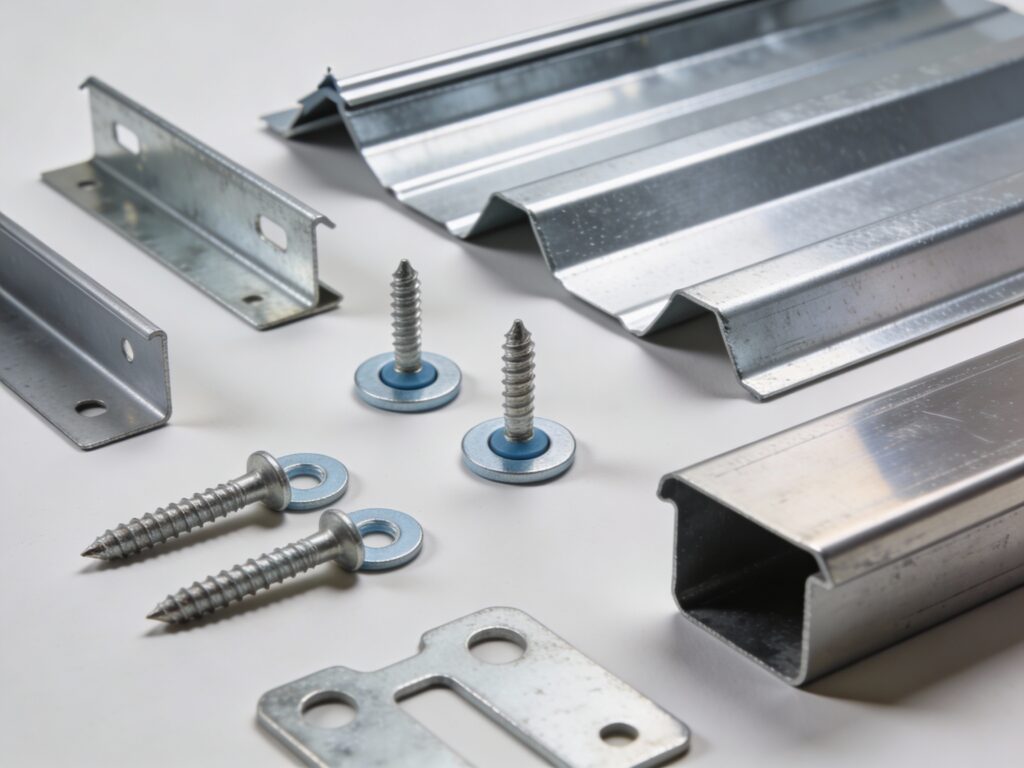
Secure the panels using the appropriate fasteners. If using an exposed fastener system, screw through the flat part of the panel (or rib, depending on manufacturer instructions) into the wood deck. Be careful not to overtighten, as this damages the washers on these metal roof parts.
Step 5: Flashing and Trim
Install gable trim along the rake edges. Install the ridge cap last to seal the peak. Use butyl tape between overlapping metal roof parts to ensure a water-tight seal.
How to Clean and Maintain
Cleaning metal roof parts is relatively simple but requires caution. Over time, dirt, algae, or leaves can accumulate, trapping moisture against the metal.
To clean, use a solution of mild laundry detergent and water. Apply it with a soft-bristle brush or a low-pressure sprayer. Never use a high-pressure washer on metal roof parts, as the force can drive water under the panels or strip the paint coating.
Cleaning out gutters is also part of maintaining metal roof parts. Clogged gutters can cause water to back up under the eave trim, leading to rot. By keeping the drainage system clear, you protect the integrity of the lower roof components.
Advantages of Metal Components
The advantages of choosing high-quality metal roof parts are numerous.
Durability: They withstand high winds, heavy snow, and hail better than most other materials.
Fire Resistance: Metal is non-combustible, providing a high fire rating.
Energy Efficiency: Many metal roof parts are coated with reflective paint that reduces cooling costs in the summer.
Aesthetics: They come in various styles and colors, mimicking slate, tile, or shakes.
Furthermore, metal roof parts are environmentally friendly. They are often made from recycled materials and are 100% recyclable at the end of their life, unlike asphalt shingles which end up in landfills.
Challenges Connected to Metal Roofing
Despite the benefits, there are challenges associated with metal roof parts.
Cost: The initial investment is high.
Noise: Rain or hail can be noisy on a metal roof, although proper insulation mitigates this.
Expansion/Contraction: Metal expands with heat. If metal roof parts are not installed with room to move, they can buckle or loosen fasteners.
Color Matching: If you need to replace a panel years later, matching the color of faded metal roof parts can be difficult.
Navigating these challenges requires careful planning and hiring experienced installers who understand how to handle these specific materials.
FAQ
What is the most important part of a metal roof?
While the panels are the most visible, the flashing is arguably the most critical among metal roof parts. Flashing seals the joints and transitions where leaks are most likely to occur. Without proper flashing, the best panels in the world cannot keep a building dry.
Can I install metal roof parts over shingles?
Do not assume a roof-over installation is suitable. Have the existing roof and supporting structure assessed, then confirm the local requirements and the panel manufacturer’s approved assembly. Damaged decking or trapped moisture must be addressed before covering the roof.
Do metal roof parts attract lightning?
No, metal roof parts do not increase the likelihood of a lightning strike. In fact, if lightning does strike, a metal roof is safer because it is non-combustible and can disperse the electrical charge safely into the ground if properly grounded.
How do I stop screws from backing out?
Screws backing out is caused by thermal expansion and contraction. To prevent this, ensure the metal roof parts are installed into solid wood decking and that the correct type of wood-grip screws are used. Checking fasteners every few years is good maintenance practice.
Is underlayment necessary for metal roofs?
Absolutely. Underlayment provides a secondary barrier against moisture and prevents chemical reactions between the metal roof parts and the roof deck or old shingles. It is a vital component of the total system.
Conclusion
Investing in a roofing system is a significant decision that impacts the safety, value, and appearance of your home. By understanding the various metal roof parts, from the ridge cap down to the eave trim, you empower yourself to make better choices regarding materials, installation, and maintenance. Whether you are concerned about the cost, the longevity, or the aesthetic appeal, knowing how these components work together is the key to a successful project.
A roof is more than just a cover; it is a complex system of metal roof parts engineered to protect everything you value. With proper selection and care, these components will serve you reliably for decades, offering peace of mind through every storm and season. Remember to source your materials from reputable suppliers and prioritize quality over the lowest price to ensure your home remains secure and beautiful.
🧩 Other Resources
Explore these trusted guides to better understand metal roofing components, trim pieces, and accessory systems:
Gulf Coast Supply – Metal Roofing Components & Trim – Educational overview of metal roof trim, panels, and finishing components.
Western States Metal Roofing – Accessories – Full range of metal roofing accessories including flashing, closures, and fasteners.
Clear Cut Exteriors – Metal Roof Anatomy – Visual breakdown explaining each part of a metal roofing system.
YouTube – Metal Roof Components Explained – Video guide showing how metal roof components work together.
🔎 Other Helpful Articles
Metal Roof Drip Edge – Why drip edge flashing is essential for metal roofs.
Metal Roof Underlayment – Choosing the right underlayment for performance and durability.
New Metal Roof Cost in Fort Walton Beach, Florida – Local pricing guide for metal roof installation.

Whoa! This blog looks just like my old one!
It’s on a entirely different subject but it has pretty much the same page layout and design. Excellent choice
of colors!
Feel free to surf to my blog; roofing tubular (https://Www.Globaleconnections.com)