
Emergency Roof Repair: What to Do After a Leak or Storm
What to Do During a Roof Emergency
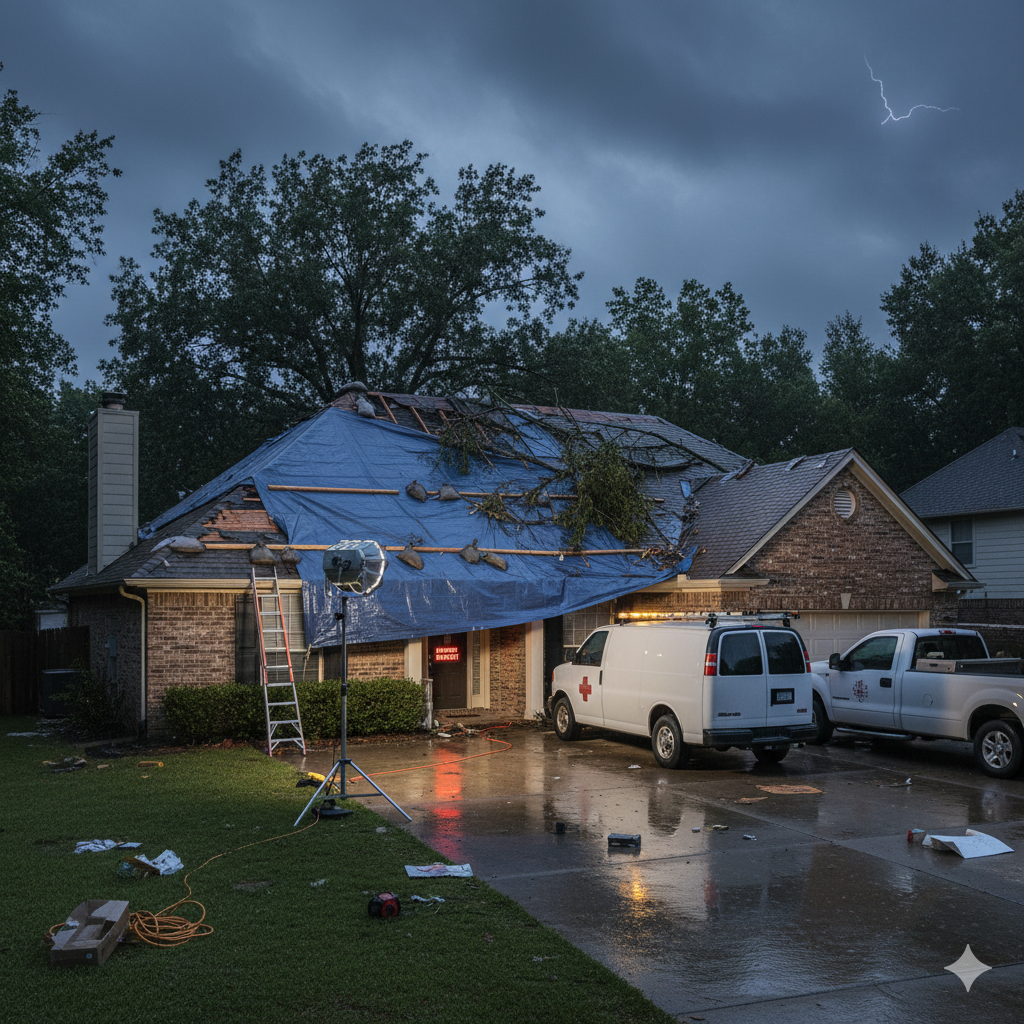
Protect people first. An active leak, fallen tree, exposed opening or visibly damaged structure may require urgent professional help. Do not climb onto a roof during a storm or onto a wet, steep or damaged surface to make a temporary repair.
Move away from sagging ceilings, wet electrical equipment and areas affected by structural movement. If there is immediate danger, leave the affected area and contact local emergency services or the appropriate utility. Follow instructions from local officials after severe weather.
Immediate Steps From a Safe Location
- Keep people and pets away from the affected area.
- Move movable valuables only if access is safe.
- Use containers to collect drips only where there is no electrical or collapse hazard.
- Take photographs from safe locations and note the time.
- Contact a qualified roofer and describe the damage and any access hazards.
Do not touch wet switches, wiring or fixtures, and do not stand beneath a bulging ceiling. The CDC’s post-storm safety guidance highlights electrical and damaged-building hazards.
What Counts as Urgent?
| Situation | Appropriate priority |
|---|---|
| Signs of collapse or electrical danger | Keep clear and obtain emergency or utility assistance. |
| Active water entry or exposed roof area | Arrange prompt professional assessment and safe interior protection. |
| Visible damage without an active leak | Document it and arrange inspection; appearance alone cannot establish the full condition. |
This checklist helps explain the situation when calling for help. It is not a remote diagnosis of structural safety.
Temporary Protection Is Professional Work
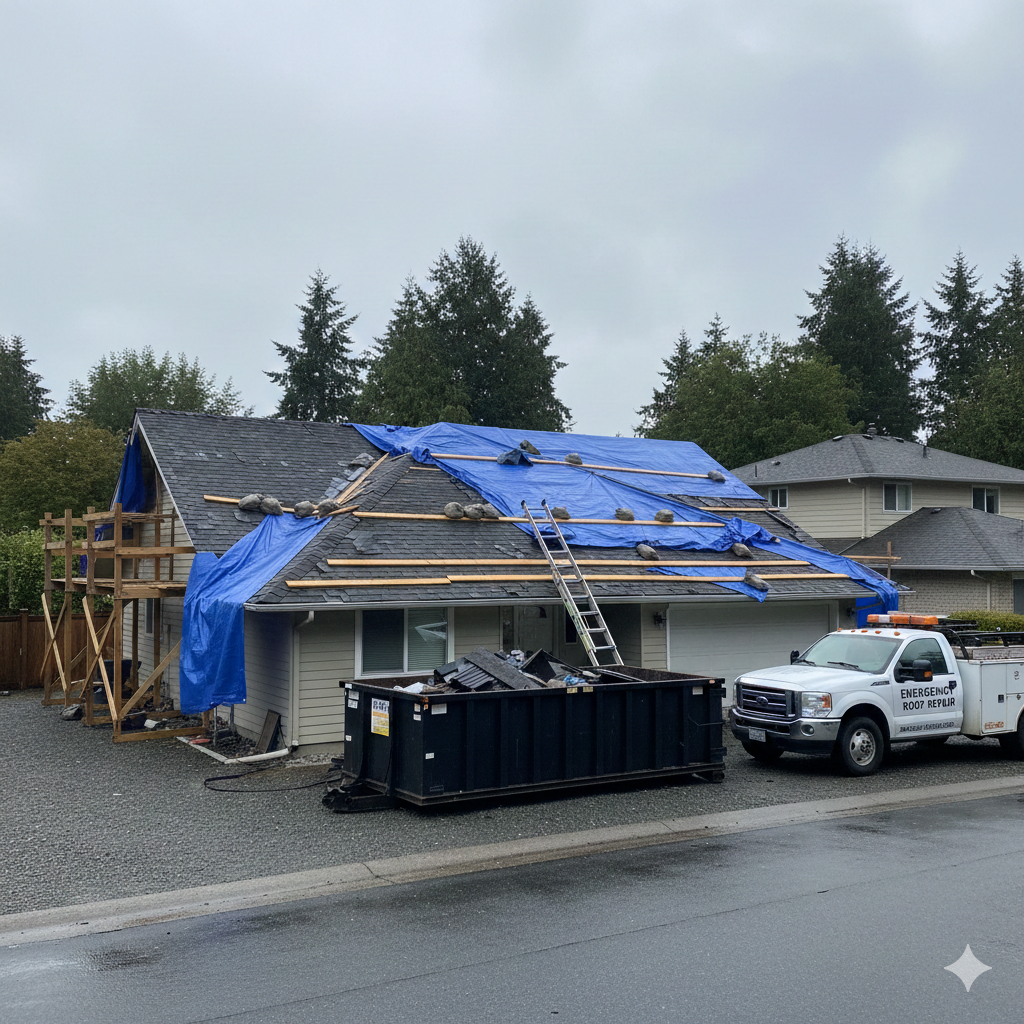
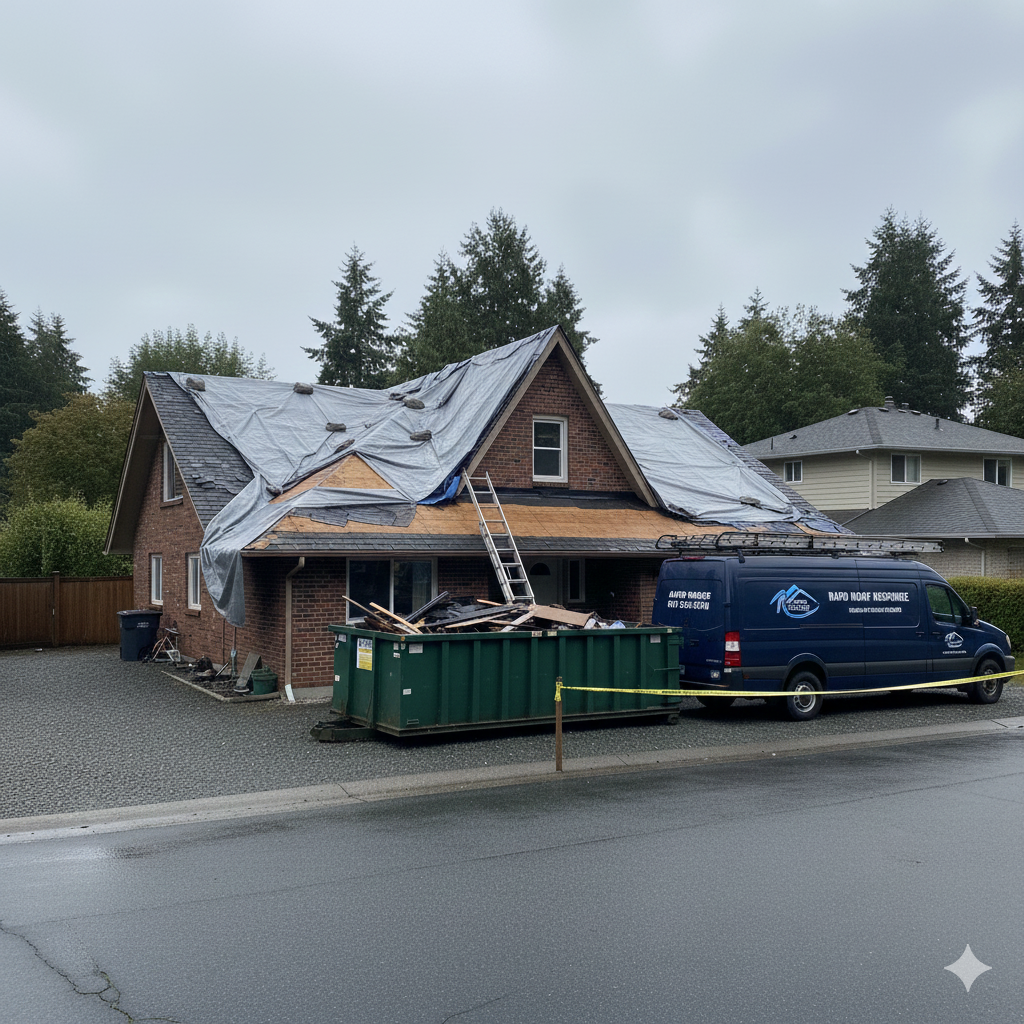
A roofer may use a temporary covering or a system-compatible repair once access and conditions permit. Securing a tarp or patch incorrectly can create new damage and expose the installer to falls. IKO’s homeowner emergency repair guidance advises homeowners against attempting to tarp or fix a leaking roof themselves.
Ask what the temporary measure covers, its limitations, how it will be monitored and when a permanent repair will be evaluated. Temporary work should not be described as a completed long-term repair unless that is genuinely the agreed scope.
Choosing Emergency Roofing Help
Confirm the business identity, relevant licensing where required, insurance and experience with the roof system. Ask who will attend, what the call-out includes and whether the initial visit is for inspection, temporary protection or permanent repair.
After widespread storms, availability may change quickly. Get the expected response window in writing where possible. A promise of immediate attendance or a fixed completion time does not override unsafe weather or access conditions.
Document Damage and Keep Records
Keep dated photographs, the contractor’s findings, invoices, communications and receipts for temporary work. Ask for photographs before damaged components are concealed or removed when this can be done safely.
If making an insurance claim, contact your insurer for the process that applies to your policy. Coverage, deductibles and requirements vary. No contractor’s general promise establishes what your insurer will pay, and this guide does not assume that a roof emergency is automatically covered.
Understanding the Charges
Ask for an itemized scope showing call-out charges, inspection, temporary protection, materials, labor, access equipment and any follow-up visit. Clarify which charges are estimates and which are fixed.
Emergency attendance and permanent restoration may be separate services. Compare the permanent proposal with the inspection findings once immediate hazards are controlled. Use our roofing quotation guide to organize the scope, exclusions and payment terms. Avoid relying on a universal emergency surcharge or repair price.
Plan the Permanent Repair
The roofer should identify the water entry point, evaluate affected layers and select compatible materials. An indoor stain may not be directly below the defect. Wet insulation, deck damage or drainage problems can require work beyond a surface patch.
Read our guides to flat roof repair and wind damage inspection for the questions relevant to those situations. If replacement is proposed, request an explanation of why a localized repair is inadequate.
Frequently Asked Questions
Should I puncture a bulging ceiling?
Do not stand beneath or disturb a potentially unstable ceiling. Keep the area clear and obtain appropriate professional help.
Can I seal a leak from inside?
Containing drips is not the same as repairing the exterior water path. Ask the roofer to diagnose and repair the assembly once conditions allow.
How long can a temporary covering remain?
Ask the installer for the limitations of the specific measure and a follow-up plan. Weather and installation conditions matter; no universal duration is assumed here.
What should I tell the roofer on the phone?
Give the address, roof type if known, when the leak began, the affected rooms and any visible tree, electrical or structural hazards. Send safely obtained photographs if requested.
What comes after the roof repair?
Confirm that the water source has been addressed, document completed work and arrange evaluation of affected interior materials as appropriate. Keep temporary and permanent repair records together.

🔧 Other Resources
• IKO – Educational blog guide explaining steps to take when dealing with emergency roof repair situations.
• Angi – Consumer-focused article outlining how homeowners should handle emergency roof repairs.
• AmeriPro Roofing – Service information page describing emergency roof repair scenarios and response practices.
• PJ Fitzpatrick – Informational service page explaining emergency roofing repair options and processes.
🔎 Other Helpful Articles
• CNC Machine to Cut Roofing – Technical article explaining CNC machines used for cutting roofing materials.
• Wind Damage Roof – Informational article describing how wind damage affects roofing systems.
• Elastomeric Roof Coating – Educational overview explaining elastomeric roof coatings and their applications.
