Flat Roof Repair: Easy Ways to Avoid Disasters
Flat Roof Repair: Top Tips for Critical Fixes
Flat roofs look good and work well for modern buildings, but they also have their own set of problems. Water pooling, tears in the membrane, and thermal expansion can all weaken the structure. When problems come up, quick flat roof repair is important to keep the inside of the property from getting a lot of water damage. It’s important to know the details of repair work, whether you’re a homeowner doing a DIY project or a property manager looking for professional help.
This complete guide covers everything you need to know about fixing and keeping flat systems in good shape. We’ll talk about the costs, methods, and important steps you need to take to make sure your roof stays watertight for many years to come. You protect your investment and make the whole roofing system last longer by putting maintenance first.
What Is Flat Roof Repair?
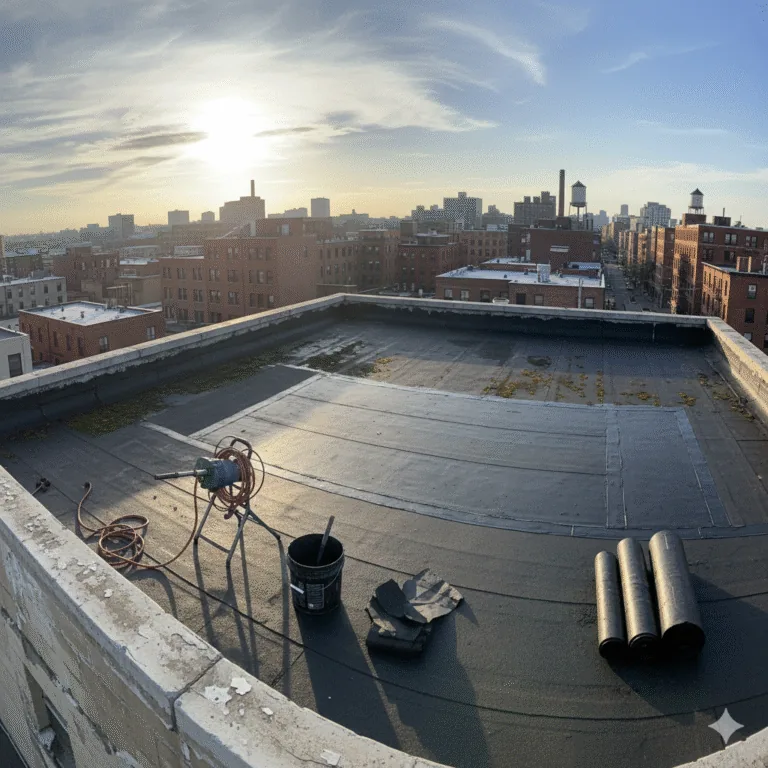
Flat roof repair is the process of finding and fixing problems on a low-slope roof. Flat roofs don’t shed water naturally like pitched roofs do because they rely on a slight slope and waterproof membranes to do the job. Repair work usually means fixing leaks, resealing seams, or replacing damaged parts of materials like EPDM (Ethylene Propylene Diene Monomer), TPO (Thermoplastic Polyolefin), or modified bitumen.
The scope of a repair project depends heavily on the severity of the damage. Minor issues might only require a tube of sealant and a patch kit. However, extensive blistering or widespread moisture saturation beneath the membrane often necessitates more invasive flat roof repair techniques. Ignoring these problems can lead to structural rot, mold growth, and significantly higher restoration costs down the line.

How to Do Flat Roof Repair Yourself
If you have the right tools and safety gear, you can fix small problems on your own with a DIY flat roof repair. Safety comes first. Always make sure you have a strong ladder and never work on a surface that is wet or icy. Once you’re safely on the roof, the hardest part is usually finding the leak’s source.
For a common EPDM rubber roof, follow these steps:
-
Clean the Area: Remove all debris, dirt, and gravel from the damaged section. Use a specialized cleaner to ensure the patch will adhere correctly.
-
Prime the Surface: Apply a roofing primer to the cleaned area. This chemical agent helps the patch bond to the existing membrane.
-
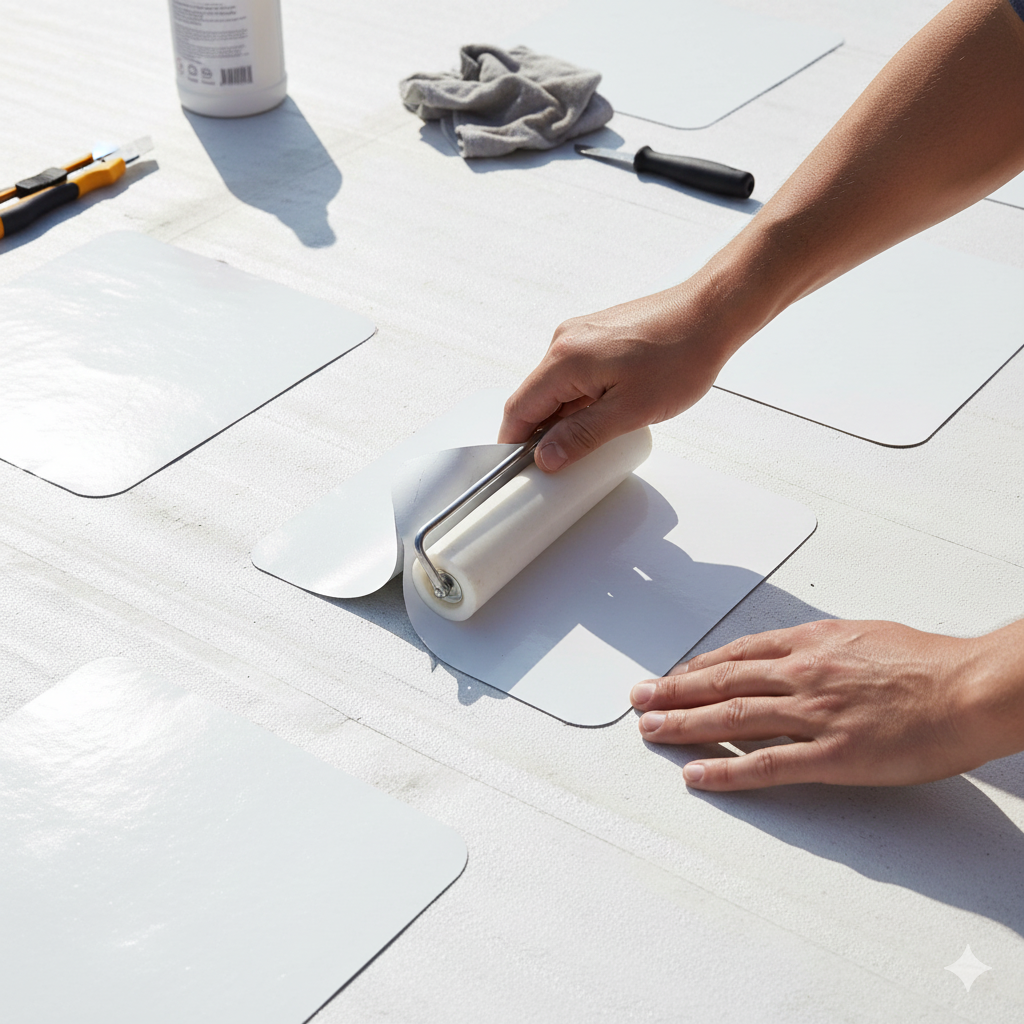
Apply the Patch: Cut a piece of repair membrane that extends at least three inches beyond the damage in all directions. Peel off the backing and press it firmly onto the primed area.
-
Seal the Edges: Use a lap sealant around the edges of the patch to ensure a watertight barrier.
If you have a built-up roof (tar and gravel), the flat roof repair process includes taking off the gravel, putting roofing cement in the crack, embedding a mesh fabric, and then putting more cement on top. Always follow the directions from the manufacturer for the material you are fixing.
How to Find Reliable Repair Services
Finding a trustworthy contractor for flat roof repair requires diligence. Start by asking for recommendations from friends, family, or local building supply stores. Word-of-mouth referrals are often the most reliable way to find quality workmanship.
Online directories and review platforms can also provide a list of local roofers. Look for companies with high ratings and specific reviews mentioning flat roof repair. Pay attention to how the company responds to negative feedback, as this can indicate their commitment to customer satisfaction.
Verify their credentials before hiring. A legitimate contractor should be licensed, insured, and bonded. Ask for proof of insurance to protect yourself from liability in case of accidents during the project. Additionally, request references from past clients who had similar flat roof repair work done. Contact these references to ask about the contractor’s punctuality, communication, and the quality of the final result.
How to Buy Repair Materials
Purchasing the correct materials is a critical component of successful flat roof repair. You can find basic supplies at big-box home improvement stores, but for specialized products, you may need to visit a roofing supply distributor.
When buying materials, consider the following:
-
Compatibility: Ensure the repair products are compatible with your existing roof. Using asphalt-based products on an EPDM roof, for example, can damage the membrane.
-
Quality: Invest in high-quality sealants and patches. Cheaper alternatives often fail quickly under UV exposure and thermal fluctuation.
-
Quantity: Buy slightly more material than you think you need. It is better to have extra supplies on hand than to run out in the middle of a flat roof repair.
Many manufacturers sell repair kits specifically designed for homeowners. These kits usually contain patches, primer, and sealant, simplifying the buying process. If you are unsure what to buy, take photos of your roof damage and show them to a knowledgeable associate at the supply store.
How Much Does Flat Roof Repair Cost?
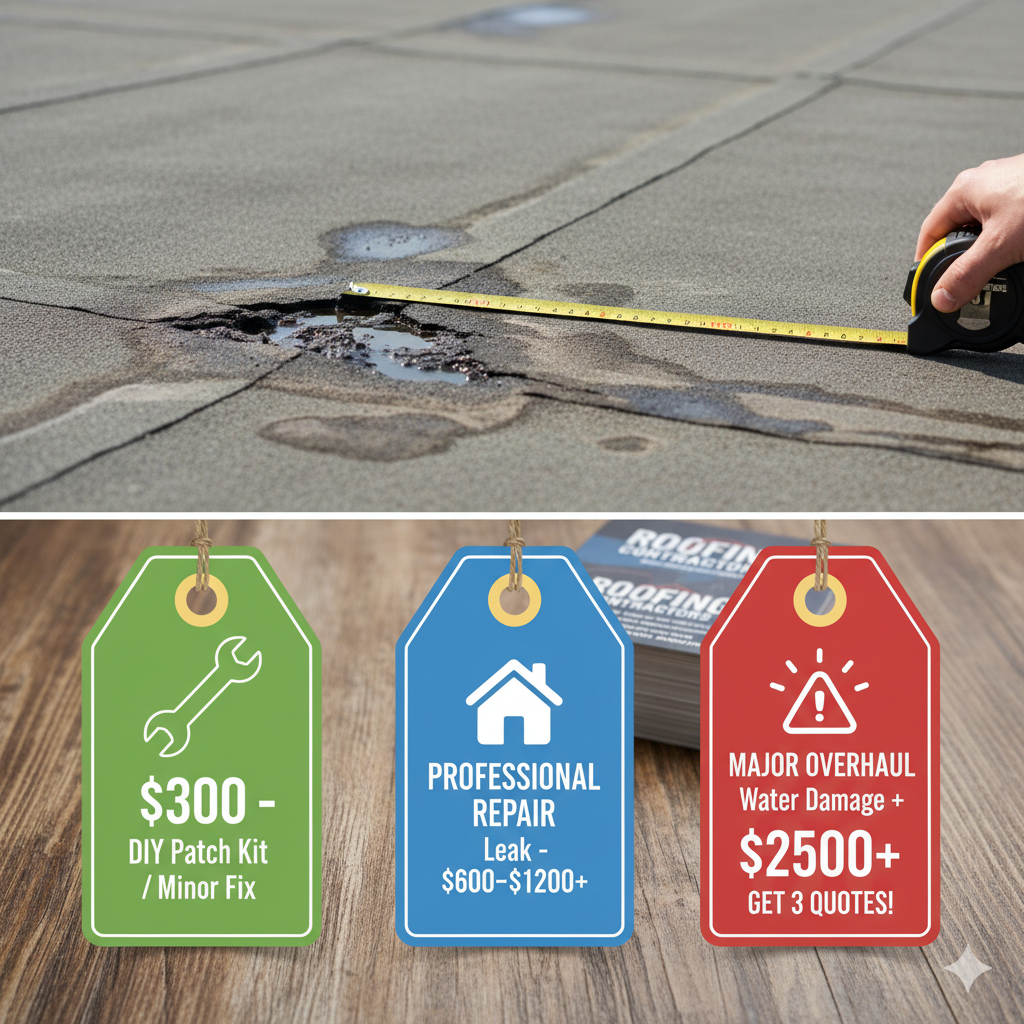
The cost of flat roof repair varies widely based on the extent of the damage, the materials needed, and labor rates in your area. Minor repairs, such as patching a small puncture, can be relatively inexpensive, especially if you do the work yourself. However, hiring a professional for more significant issues will increase the price.
Homeowners might have to pay between $300 and $1,200 for professional leak repairs on average. Costs are usually figured out by the hour or by the square foot. The cost will go up a lot for complicated jobs that involve water damage to the insulation or decking underneath.
It is wise to obtain quotes from at least three different contractors to ensure you are getting a fair price for your flat roof repair. Be wary of quotes that are significantly lower than the average, as they may indicate subpar materials or inexperienced labor.

How Long Does Repair Take?
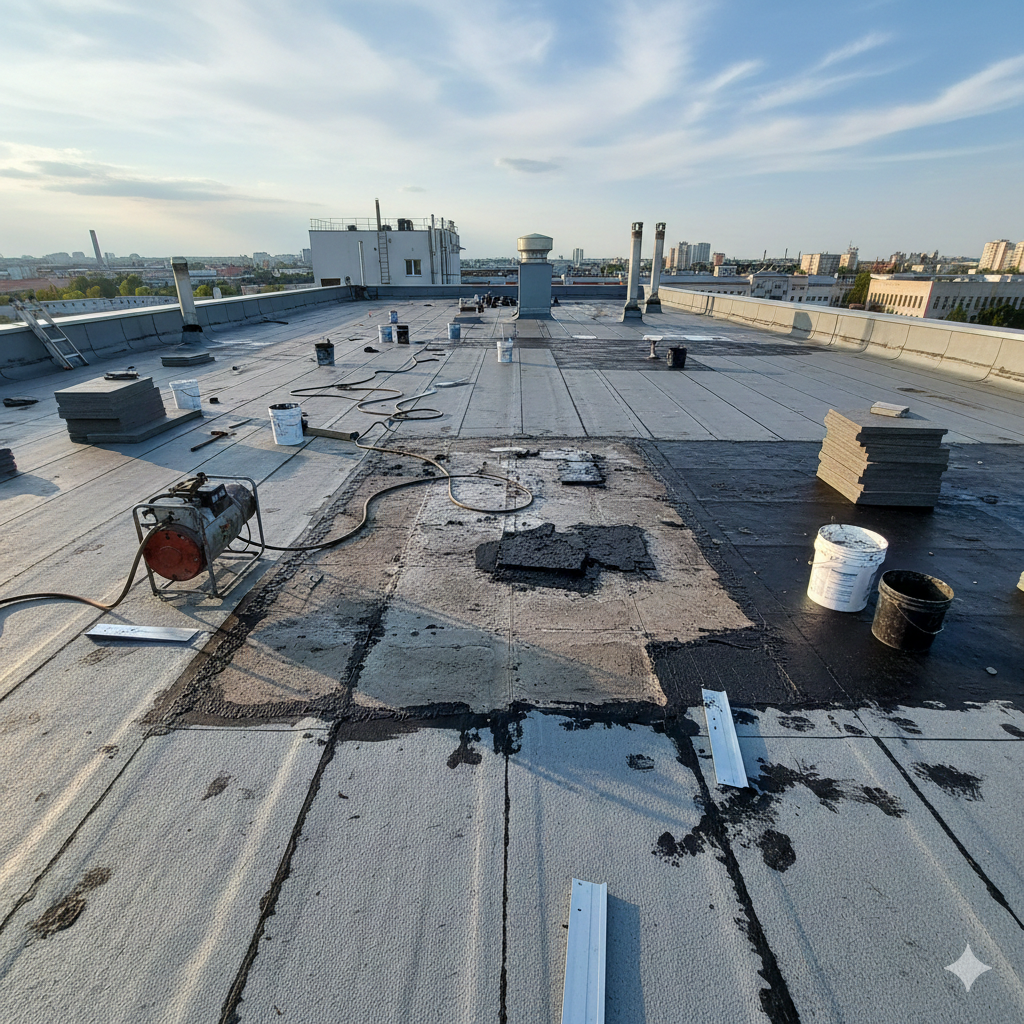
The duration of a flat roof repair project depends on the complexity of the issue and weather conditions. A simple patch job can often be completed in a few hours. However, locating a difficult leak might take several visits or extensive testing.
For larger projects, such as resealing an entire roof section or replacing saturated insulation, the work could span several days. Contractors must also account for drying times for primers and sealants. Adverse weather, such as rain or extreme heat, can cause delays.
When hiring a professional, ask for an estimated timeline. A reliable contractor should provide a schedule outlining when the work will begin and end. Keep in mind that unforeseen issues discovered during the flat roof repair process can extend the timeline.
How to Install Repair Patches Correctly
- Proper installation is the key to a long-lasting flat roof repair. Even the best materials will fail if applied incorrectly. The most common mistake is failing to prepare the surface adequately. Dust, oxidation, and moisture prevent adhesives from bonding.
- For modified bitumen roofs, the “torch-down” method is common but dangerous for amateurs. It involves heating the patch with a torch until the bitumen melts and adheres to the roof. A safer alternative for DIYers is using cold-applied adhesives.
- When installing patches on TPO or PVC roofs, professionals often use a hot-air gun to weld the new material to the old. This creates a monolithic bond that is stronger than adhesives. If you are attempting a DIY flat roof repair on these materials, specific peel-and-stick patches designed for thermoplastics are available and easier to use.
- Ensure that all patches have rounded corners. Sharp corners are more likely to peel up over time. applying pressure with a roller ensures the patch makes full contact with the surface, eliminating air bubbles that could compromise the seal.

How to Clean After Repairs
Post-repair maintenance is often overlooked but essential. Once the flat roof repair is complete, the area should be cleaned to remove any leftover materials, tools, or debris. Sharp objects left on the roof can puncture the membrane, undoing your hard work.
Regular cleaning is also a preventative measure. Leaves, branches, and dirt can clog drains and scuppers, leading to ponding water. Standing water is the enemy of flat roofs and the primary cause of premature failure.
Establish a routine cleaning schedule, ideally twice a year in the spring and fall. during these cleanings, inspect the repair sites to ensure they are holding up. If you notice any peeling or cracking, address it immediately. Consistent cleaning and inspection reduce the frequency of needing major flat roof repair services.
Core Repair Methods and Considerations
When addressing specific issues, different approaches are required. This section breaks down four critical topics regarding the execution and financial aspects of fixing your roof.
1: how do i repair a leaking flat roof
To repair a leaking flat roof, you must first trace the leak to its source. This is rarely directly above the water stain on your ceiling. Water travels along trusses and beams. Look for penetrations like vents, skylights, or chimneys, as these are common failure points. Once located, clear the gravel or debris. If the membrane is blistered, slice it open to release trapped air or water, apply adhesive, and press it back down. Cover the slice and the surrounding area with a high-quality patch and sealant. Proper flat roof repair requires that the area be perfectly dry before applying any new materials.
2: how do you repair a flat roof
How you repair a flat roof depends on the material. For asphalt based roofs, use roofing cement and reinforcement mesh. For EPDM, use rubber patches and specialized primer. The general process involves cleaning the substrate, priming the area to ensure adhesion, applying the repair material, and sealing the edges. It is vital to use materials compatible with your existing roof. Using incompatible chemicals can dissolve the membrane, turning a small fix into a massive flat roof repair job. Always read the technical data sheets for your roofing products.
3: fix flat roof
To fix a flat roof permanently, you cannot rely on temporary solutions like tarps or caulk. You must restore the waterproof integrity of the system. This might involve “coating” the roof. Elastomeric coatings can be rolled over the entire surface to seal micro-cracks and extend the roof’s life. This is a cost-effective form of flat roof repair that also improves energy efficiency by reflecting UV rays. However, coatings should only be applied to structurally sound roofs. If the insulation is wet, the roof must be opened up and dried out before any coating is applied.
4: flat roof repair cost
The cost factor is inevitable. Minor DIY repairs generally cost under $100 for materials. Professional patch work averages $300 to $600. However, if the deck is rotting, flat roof repair costs can skyrocket to $8 to $12 per square foot for partial replacement. Emergency repairs during a storm will also carry a premium. To manage costs, catch problems early. A $200 maintenance repair today prevents a $10,000 replacement next year. Always budget for annual inspections to minimize unexpected expenses.
Advantages and Challenges of Repairs
Opting for flat roof repair rather than replacement has distinct advantages. The most obvious is cost savings. Repairs are significantly cheaper and less disruptive to the building’s occupants. They generate less waste, making them an environmentally friendly option.
However, there are challenges. flat roof repair can sometimes be a band-aid solution if the underlying issues are not addressed. It can be difficult to match the new materials with the aged roof aesthetically. Furthermore, if a roof has multiple layers of old repairs, adding another patch might violate building codes or add too much weight.
FAQ : Flat roof repair
How often should I inspect my roof to avoid flat roof repair?
You should inspect your roof at least twice a year and after every major storm. Regular inspections help catch small issues before they require major flat roof repair. Pay close attention to seams and flashings, as these are the most common points of failure. Detecting a separated seam early allows for a simple patch, whereas waiting until water penetrates the insulation often necessitates a much more expensive restoration project.
Can I use any sealant for flat roof repair?
No, you must use a sealant compatible with your specific roofing material. Using the wrong sealant can cause chemical reactions that damage the membrane. For instance, asphalt-based mastics can eat through PVC or TPO membranes, turning a small leak into a large hole. Always check the manufacturer’s technical data sheets or consult with a roofing supply expert to ensure the chemical composition of your repair product matches your existing roof system.
Is ponding water a sign I need flat roof repair?
Yes, if water stands on your roof for more than 48 hours, it is a structural concern. You may need to repair the drainage system or build up low spots. Chronic ponding acts as a magnifying glass for UV rays, accelerating membrane degradation, and the added weight can stress the building’s structure. If you see algae growth or distinct concentric dirt rings, your roof drainage is insufficient and requires immediate professional attention to prevent premature failure.
Does insurance cover flat roof repair?
Insurance typically covers repairs if the damage is caused by a sudden event like a storm or fallen tree. It usually does not cover damage resulting from wear and tear or lack of maintenance. Documenting your bi-annual inspections with photos can be incredibly helpful if you ever need to file a claim; it proves that the damage was sudden and not due to long-term negligence. Always review your specific policy exclusions regarding roofing age and materials.
Can I walk on my roof to perform flat roof repair?
Yes, but exercise caution. Flat roofs can be slippery, and excessive foot traffic can damage the membrane. Walk only where necessary and avoid stepping on blisters or soft spots. If you must be on the roof frequently for maintenance, consider installing walk pads. These sacrificial layers protect the main membrane from abrasion and puncture caused by boots and tools, significantly extending the life of the roof in high-traffic zones.
Conclusion
maintaining the integrity of a commercial or residential building heavily relies on the quality of the roofing system. flat roof repair is not merely a reactive measure but a proactive strategy to preserve the value and safety of a property. By understanding the types of damage that occur, the materials involved, and the correct application methods, property owners can make informed decisions that save thousands of dollars in the long run.
Whether you choose to tackle the project yourself or hire a seasoned professional, the key is timeliness. Ignoring a small drip today can lead to a compromised structure tomorrow. We have explored how to find leaks, the costs associated with fixing them, and the specific techniques for different materials. Remember that safety should always be the priority during any repair work.
Ultimately, a well-maintained roof offers peace of mind. By performing regular inspections and addressing issues immediately with proper flat roof repair, you ensure that your building remains dry, energy-efficient, and secure against the elements. Don’t wait for the ceiling to stain; take control of your roofing maintenance today.
🔧 Other Resources
• YouTube Video – Video demonstrating basic methods used to repair leaks on flat roofing systems.
• Reddit DIY UK Community – Community discussion sharing practical advice on fixing a leaking flat roof.
• PJ Fitzpatrick – DIY guide explaining step-by-step methods for repairing a flat roof.
🔎 Other Helpful Articles
• Emergency Roof Repair – Informational article outlining situations that require immediate roof repair.
• Roofing Quotation – Educational article explaining how roofing quotations are structured and evaluated.
• Roof Replacement Cost – Informational guide detailing factors that affect roof replacement costs.