
Metal roof snow guards vs snow rails: Key Steps
Metal roof snow guards vs snow rails: Best Wins
Winter brings serene landscapes and cozy nights, but for homeowners, it also brings the heavy burden of snow accumulation. The sudden release of snow and ice from a slick metal surface can damage gutters, landscaping, and vehicles, or even injure pedestrians. This is why understanding metal roof snow guards vs snow rails is critical for property safety.
Choosing the right retention system prevents dangerous roof avalanches. While both options aim to hold snow in place until it melts safely, they function differently and suit different budgets. Your choice between metal roof snow guards vs snow rails will depend on your roof’s pitch, local snowfall amounts, and aesthetic preferences. This comprehensive guide explores every aspect of these essential safety devices to help you make an informed decision.
What is metal roof snow guards vs snow rails
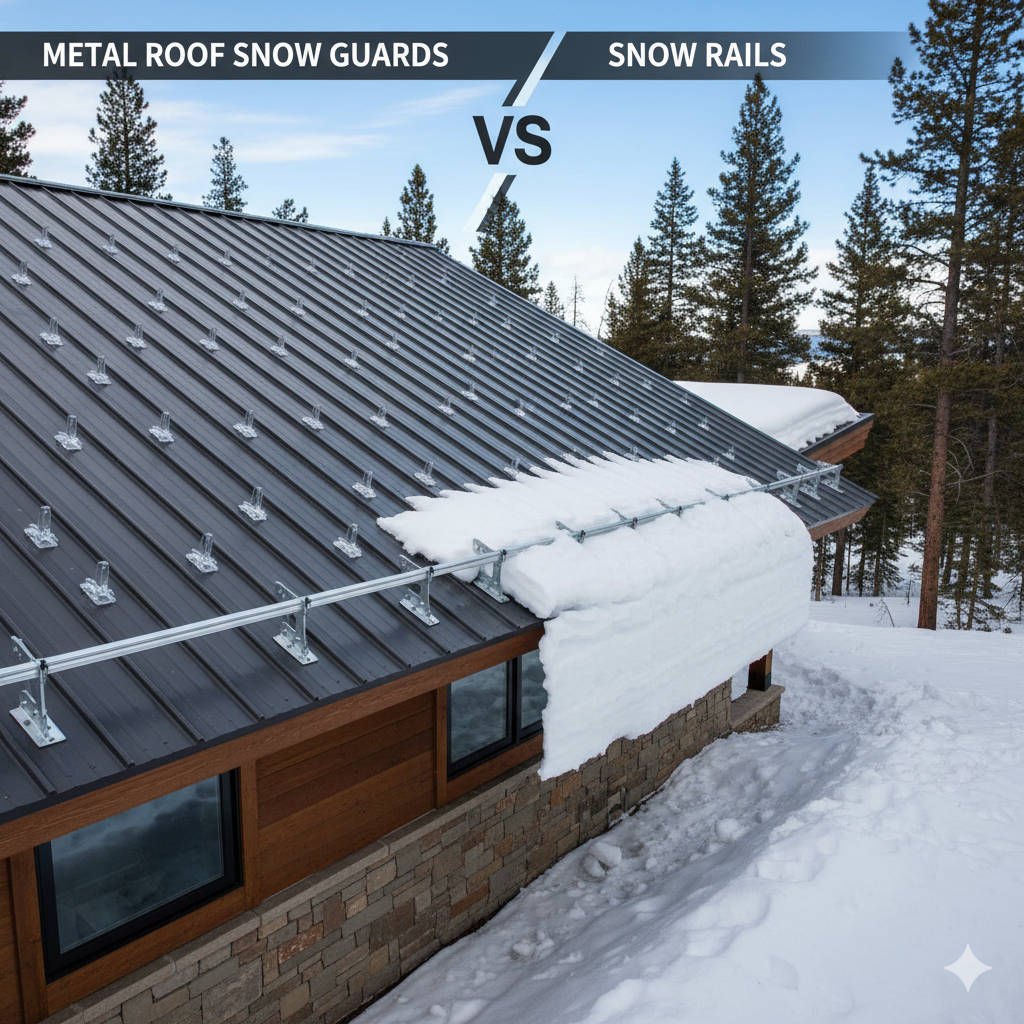
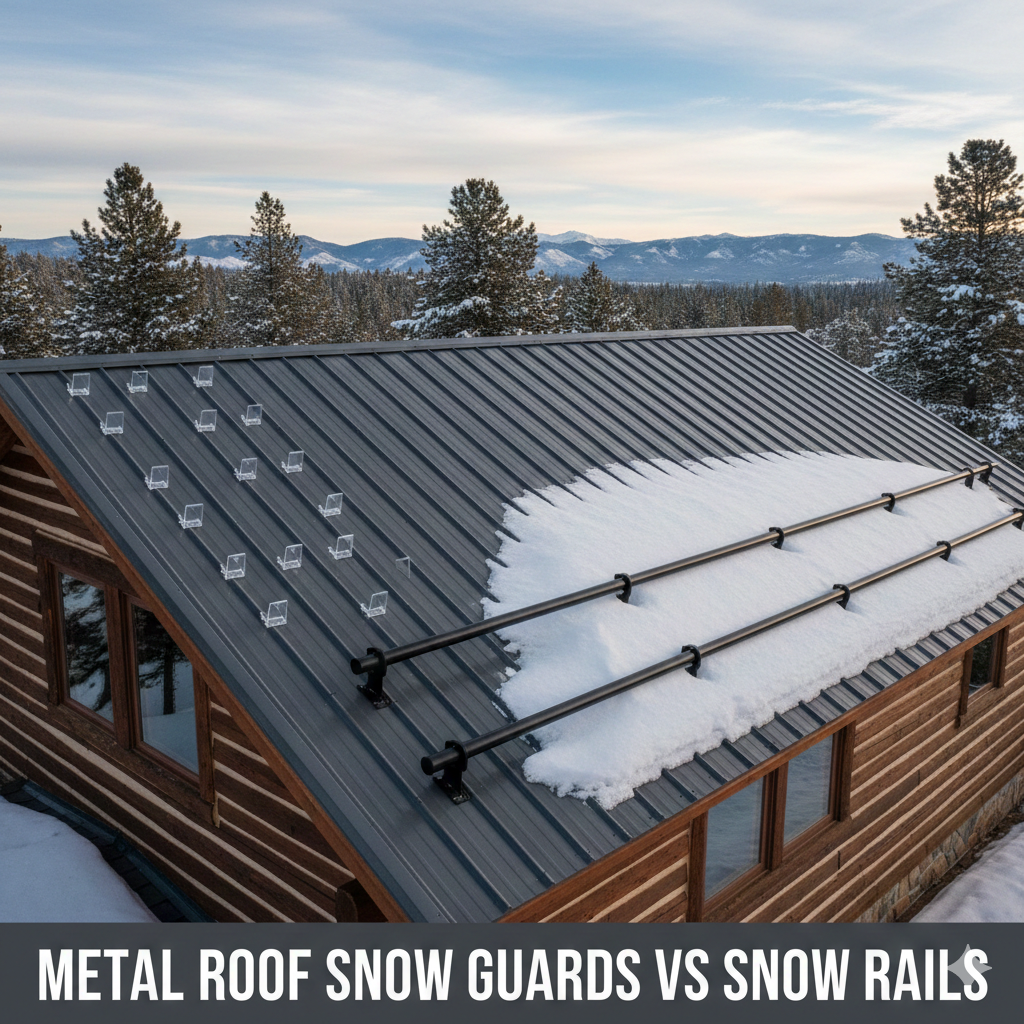
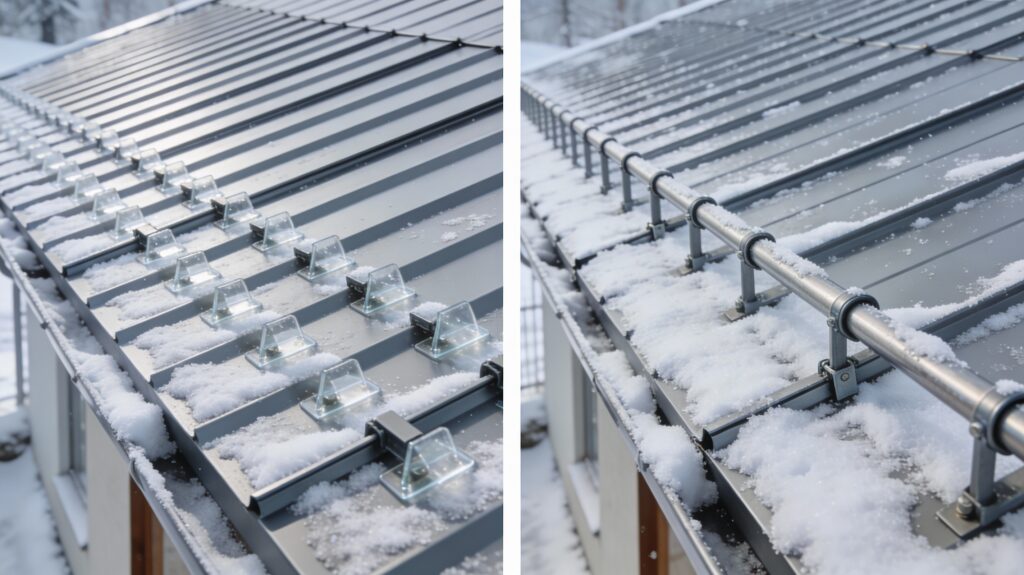
To effectively compare metal roof snow guards vs snow rails, we must first define what each system entails. Snow guards, often called snow pads or cleats, are individual units placed in a staggered pattern across the roof surface. They act as friction points that prevent a solid sheet of snow from sliding off all at once. They are typically made from polycarbonate plastic, aluminum, or stainless steel and are designed to blend in with the roof color.
In contrast, when analyzing metal roof snow guards vs snow rails, the rail system (often called a snow fence) consists of continuous tubes or bars running parallel to the eaves. These rails are held in place by brackets clamped to the standing seams of the metal roof. Snow rails create a solid barrier that is generally considered stronger and more effective for areas with heavy snow loads or steep roof pitches.
The primary difference when looking at metal roof snow guards vs snow rails lies in their coverage. Guards provide localized friction, while rails provide a continuous barricade. Architects often specify rails for commercial buildings and high-end residential projects because of their durability and sleek, linear appearance.
However, the discussion of metal roof snow guards vs snow rails is not just about aesthetics; it is about physics. Guards rely on the shear strength of the adhesive or screw and the snow’s ability to break apart around the guard. Rails transfer the massive weight of the snow pack to the roof’s structural seams or deck, distributing the load more evenly. This structural distinction is the most important factor when choosing between the two.
How to find metal roof snow guards vs snow rails
Finding the right equipment starts with identifying reputable suppliers who specialize in metal roof snow guards vs snow rails. You should not simply walk into a generic hardware store and expect to find high-grade roofing safety equipment. Most professional-grade systems are sold through specialized roofing distributors or direct-to-consumer manufacturers online.
When searching for metal roof snow guards vs snow rails, start by looking for manufacturers that offer engineered layouts. A quality supplier will ask for your roof pitch, panel type (corrugated, standing seam, etc.), and local snow load requirements before selling you a product. This engineering service is crucial because installing the wrong number of guards or rails can lead to system failure.
You can also find metal roof snow guards vs snow rails by consulting with local metal roofing contractors. These professionals often have preferred brands they trust and can explain why they favor one over the other for your specific climate. Reading online forums and reviews from homeowners in similar climates can also provide unbiased insights into how different brands perform over time.
Don’t forget to look for certifications when researching metal roof snow guards vs snow rails. Products should be tensile-strength tested to ensure they can withstand the forces exerted by sliding snow. If a website or supplier cannot provide technical data sheets regarding the holding strength of their system, keep looking for a vendor who can transparency.
How to buy metal roof snow guards vs snow rails
Once you have identified a supplier, the process to buy metal roof snow guards vs snow rails involves precise calculation. You cannot guess the quantity needed. For snow guards, you will need to calculate the number of units per square foot based on the roof slope. Steeper roofs require more guards spaced closer together. Buying too few is the most common mistake homeowners make.
When you buy metal roof snow guards vs snow rails, consider the attachment method. For exposed fastener roofs (corrugated), you will need guards with rubber gaskets and long screws. For standing seam roofs, you must buy clamps that do not penetrate the metal. Ensure you are buying the correct clamp size for your seam profile; a mismatch here will make installation impossible.
The purchase of metal roof snow guards vs snow rails should also include necessary accessories. For rails, this means end caps, couplers to join rail sections, and ice flags (optional clips that hang from the rail to stop snow from sliding under the bar). For glue-on guards, you must buy the specific architectural adhesive recommended by the manufacturer, as standard construction glue often fails in freezing temperatures.
Finally, compare warranties before you finalize your purchase of metal roof snow guards vs snow rails. Some polycarbonate guards come with limited lifetime warranties against yellowing or breakage, while metal systems might have finish warranties matching the paint on your roof. Investing in a system with a strong warranty ensures you won’t be buying replacements after the first heavy winter storm.
How much does metal roof snow guards vs snow rails cost
Cost is often the deciding factor in the metal roof snow guards vs snow rails debate. Generally, individual snow guards are more affordable upfront. Plastic polycarbonate guards can cost between $3 and $8 per piece. Since you might need hundreds for a large roof, the material cost adds up, but it usually remains lower than a full rail system.
In the comparison of metal roof snow guards vs snow rails, rail systems are the premium option. A dual-pipe snow rail system can cost between $20 and $30 per linear foot. If your roof line is 100 feet long, that is an immediate material cost of $2,000 to $3,000, not including installation labor or additional rows if the roof is steep.
Labor costs also vary when assessing metal roof snow guards vs snow rails. Installing individual guards is time-consuming because each one must be measured, marked, and fastened or glued individually. However, a rail system, while heavier, requires fewer attachment points (clamps) per linear foot, which can sometimes balance out the labor time for experienced crews.
When calculating the total investment of metal roof snow guards vs snow rails, consider the potential cost of not having them. A destroyed gutter system can cost $1,000 to replace. A damaged car or HVAC unit crushed by ice can cost thousands more. Therefore, even the more expensive rail system offers a high return on investment by preventing costly property damage.
How to install metal roof snow guards vs snow rails
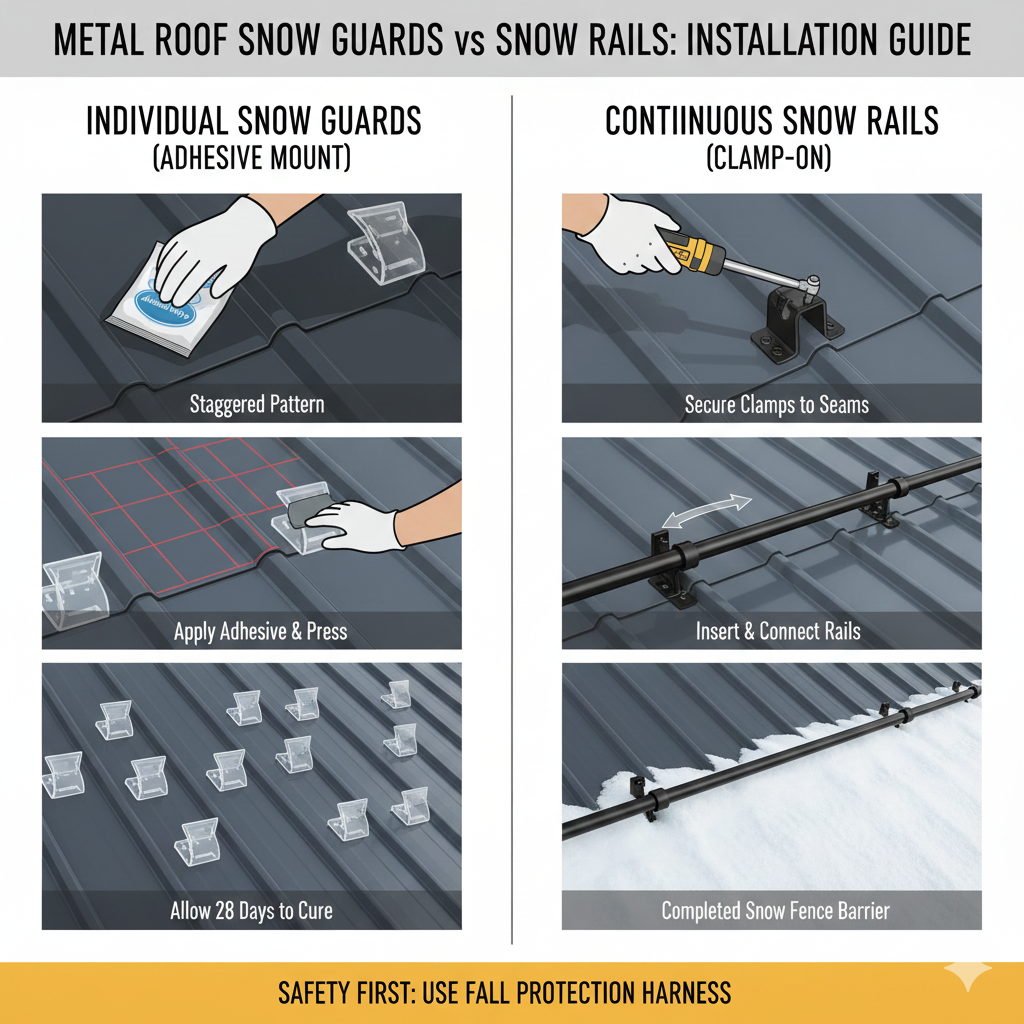
Installing metal roof snow guards vs snow rails requires safety gear, proper tools, and patience. Safety is paramount; never work on a snowy or wet metal roof. You will need a fall protection harness, a cordless drill, a torque wrench (essential for clamps), and measuring tape.
For individual guards in the metal roof snow guards vs snow rails comparison:
Clean the roof surface thoroughly with alcohol if using adhesive.
Mark the layout pattern (usually staggered rows).
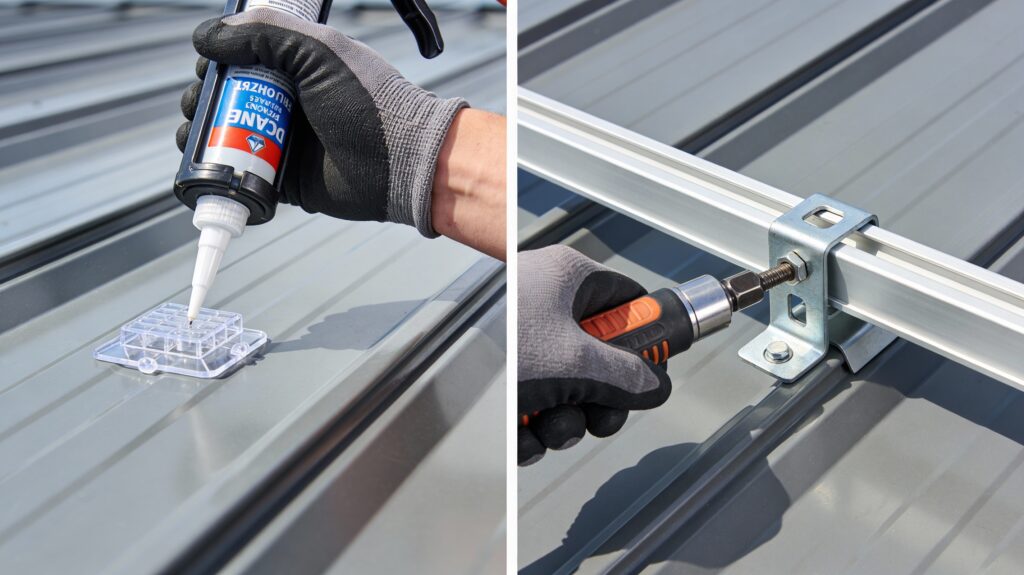
Apply the adhesive or position the guard with the gasket.
Screw the guard into the purlin (for screw-down roofs) or let the glue cure for 28 days (for adhesive mounts) before snow falls.
For rail systems in the metal roof snow guards vs snow rails workflow:
Install the clamps on the standing seams at the measured height above the eave (usually over the load-bearing wall).
Tighten the set screws to the specific torque specified by the manufacturer.
Slide the tubes or bars through the holes in the clamps.
Join sections with couplers and install end caps.
The alignment is critical for both metal roof snow guards vs snow rails. If a rail is crooked, it will look unprofessional. If guards are not in a straight line, they may distribute weight unevenly. Always follow the manufacturer’s spacing guide, as placing guards too high up the roof allows snow to build too much momentum before hitting the system.
How long does metal roof snow guards vs snow rails last
Durability is a major point of divergence for metal roof snow guards vs snow rails. High-quality metal snow rails made of aluminum or stainless steel are designed to last the lifetime of the roof itself—often 50 years or more. They are impervious to UV rays and, if powder-coated, resistant to corrosion and fading.
In the context of metal roof snow guards vs snow rails, polycarbonate guards have a shorter lifespan. While modern plastics are UV stabilized, they can eventually become brittle after years of exposure to harsh sun and freezing cycles. It is not uncommon for plastic guards to require replacement after 15 to 20 years, whereas metal guards or rails will persist much longer.
The attachment method also dictates how long metal roof snow guards vs snow rails stay secure. Adhesive bonds can fail over time due to thermal expansion and contraction of the metal roof panels. Mechanically fastened systems (clamps or screws) are generally more permanent. If you use a glue-down system, expect to re-glue a few guards every couple of years.
Ultimately, the longevity of metal roof snow guards vs snow rails depends on the installation quality. A rail system that is not torqued correctly can come loose in a single season. Similarly, a screw-down guard installed without hitting the purlin underneath will rip out under the first heavy snow load, damaging the metal panel in the process.
How to clean metal roof snow guards vs snow rails
Maintenance is often overlooked when discussing metal roof snow guards vs snow rails. Both systems can trap debris like leaves, pine needles, and twigs behind them. This debris creates a dam that holds moisture against the roof, potentially leading to corrosion or finish failure over time.
To clean metal roof snow guards vs snow rails:
Wait for a dry day in spring or late autumn.
Use a soft-bristle brush or a leaf blower to dislodge debris accumulated behind the rails or guards.
Avoid using high-pressure power washers, which can drive water under metal seams or flashings.
Inspect the fasteners for tightness while you are cleaning.
Checking the system is a vital part of the metal roof snow guards vs snow rails maintenance routine. For rail systems, ensure the set screws on the clamps haven’t backed out due to vibration. For glued guards, give each one a firm tug to ensure the bond is still solid. If a guard comes loose, clean the area and re-adhere it immediately.
Cleaning is also an aesthetic concern. Metal roof snow guards vs snow rails can accumulate grime or algae. A mild solution of water and simple dish soap, applied with a soft cloth or sponge, is usually sufficient to clean the faces of the guards or rails. Never use abrasive scrubbers that could scratch the paint on your snow retention system or the roof panels.
Special Analysis: Pros, Cons, and Details
This section provides a focused breakdown of the essential aspects regarding the selection of metal roof snow guards vs snow rails.
1: Metal roof snow guards vs snow rails pros and cons
When weighing metal roof snow guards vs snow rails, guards are generally less visible and lower in cost, making them a “pro” for budget projects. However, a major “con” is that plastic guards can turn yellow or brittle. Rails offer the “pro” of superior strength and continuous protection, ideal for entryways. The “con” is the higher material cost and the industrial look, which some homeowners dislike.
2: Metal roof snow guards vs snow rails cost
The financial difference is stark. Snow guards average $5-$10 per unit installed, while rails can reach $30 per linear foot. For a typical home, a full rail system might cost $2,000 more than a pad system. However, the metal roof snow guards vs snow rails cost analysis must include longevity; rails rarely need replacement, offering better long-term value.
3: What are snow guards
Snow guards are devices that protrude from the roof surface to increase friction. In the metal roof snow guards vs snow rails debate, guards are the “friction” option. They don’t stop snow like a wall; they hold it so it melts in place or sheds in small, manageable amounts rather than a large sheet.
4: Snow guards for roofing
Snow guards for roofing are essential for any metal roof in a snowy climate. Without them, the smooth surface accelerates snow slides. Whether you choose metal roof snow guards vs snow rails, the goal is the same: protecting people, pets, and property from the kinetic energy of falling ice.
Advantages and challenges of metal roof snow guards vs snow rails
The main advantage in the metal roof snow guards vs snow rails discussion is safety. Both systems effectively prevent the “roof avalanche” phenomenon. This protects your gutters from being ripped off, your landscaping from being crushed, and your family from injury. Rails have the specific advantage of acting as a stiffener for the standing seams, adding a degree of structural rigidity to the roof edge.
However, challenges exist for both metal roof snow guards vs snow rails. The primary challenge for adhesive guards is weather dependence during installation; you cannot install them when it is too cold, limiting the installation window. The challenge for rails is shipping; 8 or 10-foot metal bars are difficult and expensive to transport compared to a box of small plastic guards.
Another challenge with metal roof snow guards vs snow rails is the aesthetic integration. Some homeowners feel that rows of guards look like “acne” on a pristine metal roof. Rails provide a cleaner line but are more visually dominant. Manufacturers have addressed this by offering color-matched powder coating for both systems, allowing them to blend almost seamlessly with the roof panels.
Finally, a technical challenge in metal roof snow guards vs snow rails is the load calculation. If you install rails on a roof with a weak deck attachment, the snow load held by the rail could theoretically damage the panels themselves. This highlights the importance of professional engineering calculations over guesswork when selecting your system.
How to do selection for metal roof snow guards vs snow rails
Making the final selection between metal roof snow guards vs snow rails requires a checklist approach. First, assess your budget. If funds are tight, polycarbonate guards are a viable safety solution. If budget permits, the rail system is a premium upgrade that adds value to the home.
Second, look at the roof type to decide on metal roof snow guards vs snow rails. If you have a corrugated or exposed fastener roof, screw-down guards are the standard solution. If you have a standing seam roof, clamping rails are the preferred method to avoid penetrating the metal and voiding the roof warranty.
Third, consider the snow load when comparing metal roof snow guards vs snow rails. In areas with massive snowfall (like the Rockies or Buffalo, NY), a double-rail system is often mandatory to handle the weight. Small pads may simply shear off under such extreme pressure.
Lastly, think about the future maintenance of metal roof snow guards vs snow rails. If you want a “set it and forget it” system, the metal rail is the clear winner. If you are comfortable with occasional inspections and re-gluing, the pad system serves its purpose well. By methodically going through these steps, you ensure the safety of your home is never compromised.
FAQ : metal roof snow guards vs snow rails
Do I really need snow guards on a metal roof?
Yes, metal roofs have very low friction coefficients, meaning snow sheds easily and rapidly. Without protection, this can cause significant property damage or injury.Can I install snow guards in the winter?
Installing metal roof snow guards vs snow rails is best done in warm weather. Adhesives will not cure in freezing temperatures, and working on icy roofs is dangerous. Clamp-on rails can technically be installed in winter, but it is not recommended.Will snow guards cause roof leaks?
Properly installed systems will not cause leaks. Clamp-on rails for standing seam roofs do not penetrate the metal. Screw-down guards use neoprene washers to seal the holes, similar to the screws used to hold the roof panels themselves.How many snow guards do I need?
The number depends on the roof pitch and local snow load. You cannot guess; you must use a manufacturer’s calculator or consult a professional to determine the density needed for metal roof snow guards vs snow rails.Do snow guards damage the metal roof?
If installed correctly, no. However, adhesive guards can sometimes mar the paint finish if removed, and clamps tightened incorrectly can crimp the seams.
Conclusion
Navigating the choice between metal roof snow guards vs snow rails is a vital step in home maintenance for anyone living in a snow-prone region. Both systems offer the critical function of retaining snow to prevent dangerous avalanches, yet they do so with different mechanisms, costs, and aesthetics. Snow guards offer a cost-effective, low-profile solution suitable for many residential applications, while snow rails provide robust, continuous protection ideal for heavy snow loads and standing seam roofs.
Ultimately, the decision of metal roof snow guards vs snow rails comes down to balancing your budget, your roof’s structural design, and your tolerance for maintenance. By understanding the installation requirements, costs, and performance differences outlined in this article, you can confidently select the system that best protects your property. Investing in the right snow retention system today ensures a safer, worry-free winter for years to come.
❄️ Other Resources
Explore these expert guides to understand the difference between snow guards and snow rails, and how to choose the right snow retention system for metal roofs:
Levi’s Building Components – Snow Guards vs Snow Rails – Clear comparison of performance, placement, and use cases.
Angi – Snow Guards vs Snow Rails – Homeowner-focused explanation with safety considerations.
Pally Roofing – Metal Roof Snow Retention – Contractor insights on choosing the right system.
Supply Maverick – Which Snow System to Choose – Practical breakdown with pros and cons.
🔎 Other Helpful Articles
How to Install Metal Roofing – Step-by-step installation guide.
Minimum Slope for Metal Roof – Pitch requirements for metal roofs.
Metal Roofing Screws – Choosing the right fasteners for metal roofing systems.
