Aluminum roof sealant: Best Choices
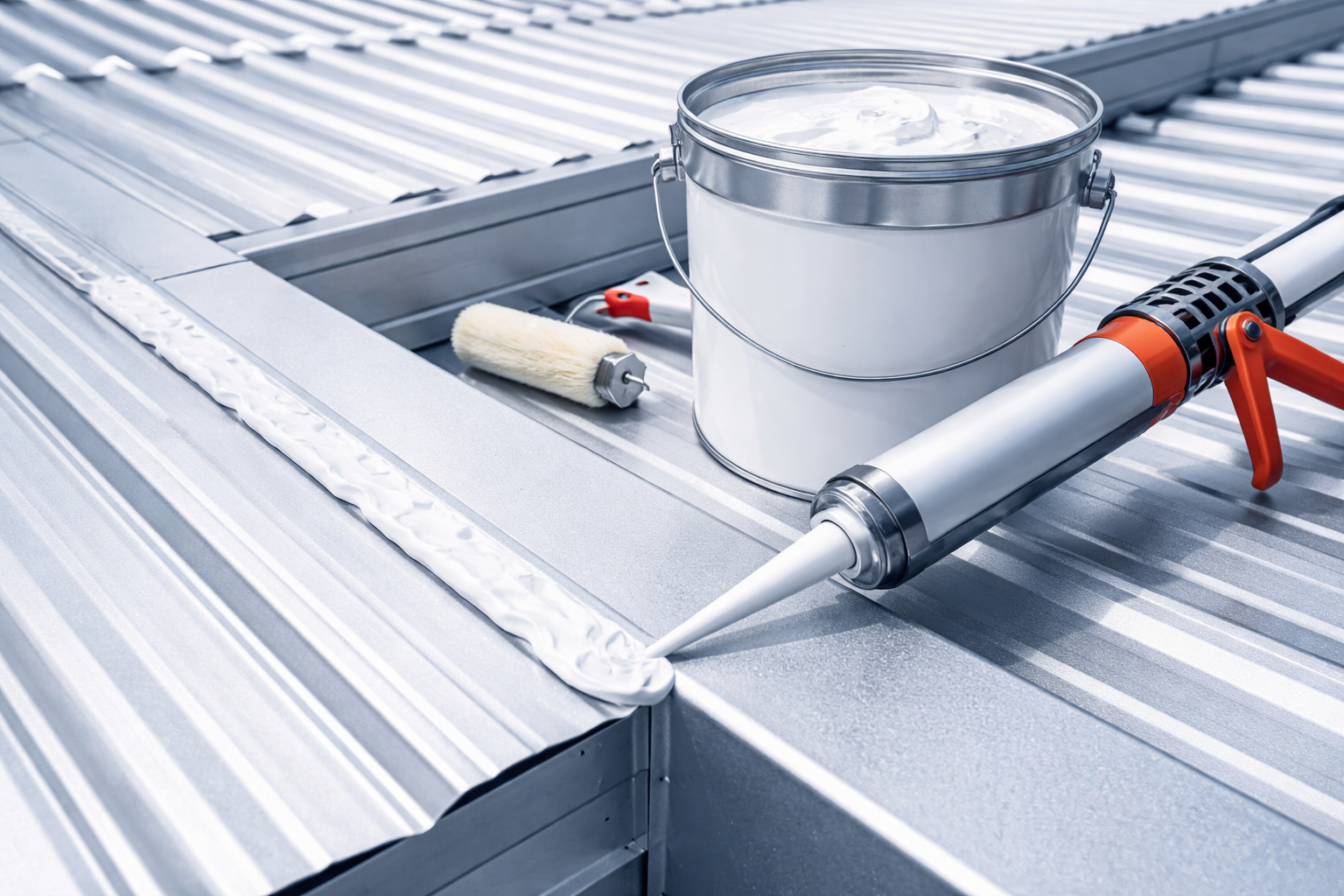
Aluminum roof sealant: Easy Steps to a Perfect Finish
Protecting your building from the elements is a priority, and maintaining a watertight barrier is essential. Whether you manage a large commercial building, own a home with metal components, or travel in a recreational vehicle, understanding the materials available to protect these investments is vital. One highly effective solution for maintaining structural integrity and preventing leaks is aluminum roof sealant. This comprehensive guide will explore every facet of this protective material, ensuring you have the knowledge needed to make informed decisions about your property.
What Is Aluminum Roof Sealant?
An aluminum roof sealant is a specialized coating designed to protect and extend the lifespan of various roofing materials, primarily those made of metal or modified bitumen. It is essentially a liquid compound formulated with asphalt or a synthetic rubber base, heavily impregnated with aluminum flakes or pigments. When this mixture is applied to a surface, the aluminum particles “leaf” or rise to the top as the compound dries and cures. This unique characteristic creates a highly reflective, metallic barrier.
The primary function of aluminum roof sealant is to provide a durable, waterproof layer that guards against moisture intrusion. The reflective nature of the aluminum flakes also serves a secondary, equally important purpose: deflecting ultraviolet (UV) rays from the sun. By reflecting these harmful rays, the sealant significantly reduces the surface temperature of the roof. This cooling effect not only minimizes the thermal expansion and contraction that can cause wear and tear over time but also helps lower indoor cooling costs during hot months.
Furthermore, aluminum roof sealant acts as a rust inhibitor. The asphaltic or synthetic base seals out oxygen and water, which are the primary catalysts for corrosion on metal surfaces. This makes it an ideal choice for restoring older metal roofs that may have started to show signs of age or minor deterioration. It is a versatile product, commonly used on flat or low-sloped commercial roofs, agricultural buildings, mobile homes, and even specific types of residential roofing systems. The formulation ensures flexibility, allowing the coating to move with the building structure without cracking or peeling under normal conditions.
How to Find Aluminum Roof Sealant
Locating the right aluminum roof sealant for your specific needs is a straightforward process if you know where to look. This product is widely available across various retail and wholesale channels, catering to both do-it-yourself enthusiasts and professional contractors.
-
Hardware Stores and Home Improvement Centers: The most accessible places to find aluminum roof sealant are large home improvement retailers and local hardware stores. These establishments typically carry a selection of consumer-grade sealants in various container sizes, usually ranging from one-gallon cans to five-gallon pails. The staff in the roofing or paint departments can often provide basic guidance on product selection based on the square footage of your project and the type of roof you are treating.
-
Roofing Supply Distributors: For larger projects or if you require professional-grade materials, specialized roofing supply distributors are the best option. These suppliers cater primarily to contractors but are usually open to the public. They carry a much broader range of products, including high-solids formulations and specialized primers that might be necessary for specific applications. The counter staff at these distributors are highly knowledgeable and can offer expert advice on compatibility and application techniques.
-
Online Retailers: E-commerce platforms offer the convenience of browsing a vast array of aluminum roof sealant options from the comfort of your home or office. Major online retailers and specialized construction supply websites allow you to compare prices, read detailed product specifications, and review customer feedback. Purchasing online is particularly useful if you are looking for a specific brand or formulation that might not be available locally. However, remember to factor in shipping costs, especially for heavy items like five-gallon pails.
-
Manufacturer Websites: Many manufacturers of roofing materials sell their products directly to consumers or provide a “where to buy” feature on their websites. This is an excellent way to locate authorized dealers in your area and ensure you are purchasing authentic products. Manufacturer websites also provide access to technical data sheets (TDS) and safety data sheets (SDS), which are crucial for understanding the product’s properties and safe handling procedures.
How to Buy Aluminum Roof Sealant
Purchasing the correct aluminum roof sealant involves more than just picking up the first can you see. To ensure you get the best product for your specific application, you need to consider several factors and evaluate the available options carefully.
-
Assess Your Roof’s Condition: Before making a purchase, thoroughly inspect the area you intend to coat. Is the surface heavily rusted? Are there existing leaks that need patching? The condition of your roof will dictate whether you need a specialized primer or a particular formulation of aluminum roof sealant.
-
Determine the Square Footage: Calculate the total area of the roof that requires sealing. Most product labels indicate the coverage rate, typically expressed in square feet per gallon. Knowing your total square footage will allow you to buy the right amount of material, preventing you from running out mid-project or overspending on excess sealant.
-
Choose the Right Formulation: Aluminum roof sealant is available in different formulations, primarily varying in the percentage of solids and the type of base material. High-solids formulations generally provide a thicker, more durable coating and a longer lifespan but are usually more expensive. The base material can be fibered or non-fibered. Fibered sealants contain reinforcing fibers, making them thicker and better suited for bridging small gaps or filling minor imperfections. Non-fibered sealants are thinner and offer a smoother finish, ideal for relatively flat, well-maintained surfaces.
-
Read the Labels Carefully: Take the time to read the product labels and technical data sheets. Pay attention to the recommended application temperature, drying time, and compatibility with your existing roof material. Ensure the product you select is intended for the type of surface you are treating.
-
Compare Brands and Prices: While cost is always a consideration, do not compromise quality for a lower price. Compare reputable brands and read customer reviews to gauge the performance and longevity of different products. Investing in a high-quality aluminum roof sealant will save you money in the long run by reducing the frequency of reapplication and preventing costly water damage.
What Is the Cost of Aluminum Roof Sealant?
The cost of an aluminum roof sealant project can vary significantly based on several factors, including the size of the roof, the quality of the product chosen, the geographic location, and whether you decide to tackle the project yourself or hire a professional.
When purchasing the material itself, the price is generally calculated per gallon. Consumer-grade, non-fibered sealants tend to be the most affordable option, typically ranging from $15 to $30 per gallon. These are suitable for smaller projects or roofs in relatively good condition. High-quality, professional-grade fibered sealants or those with a high-solids formulation will cost more, usually between $30 and $60 per gallon. These premium products offer superior durability, better reflectivity, and a longer lifespan, making them a worthwhile investment for larger or more demanding applications. Keep in mind that a single gallon typically covers between 50 and 100 square feet, depending on the porosity of the surface and the thickness of the application.
If you choose to hire a professional contractor to apply the aluminum roof sealant, the labor costs will significantly impact the overall project budget. Professional application typically ranges from $1.50 to $3.50 per square foot, including materials and labor. This cost can increase if the roof requires extensive preparation, such as pressure washing, rust removal, or patching existing leaks.
-
Small Projects (e.g., shed or small patio cover): $100 – $300 (DIY materials only)
-
Medium Projects (e.g., standard residential garage or mobile home): $300 – $800 (DIY materials only)
-
Large Projects (e.g., commercial building or large barn): $1,000+ (DIY materials only), or several thousand dollars for professional application.
In addition to the sealant itself, you must also factor in the cost of preparation materials and application tools. You may need a specialized roof primer, which can cost $20 to $40 per gallon. Application tools such as heavy-duty brooms, rollers, brushes, and protective gear will add another $50 to $100 to the total cost. While the initial investment might seem substantial, applying aluminum roof sealant is generally much more cost-effective than replacing an entire roofing system.
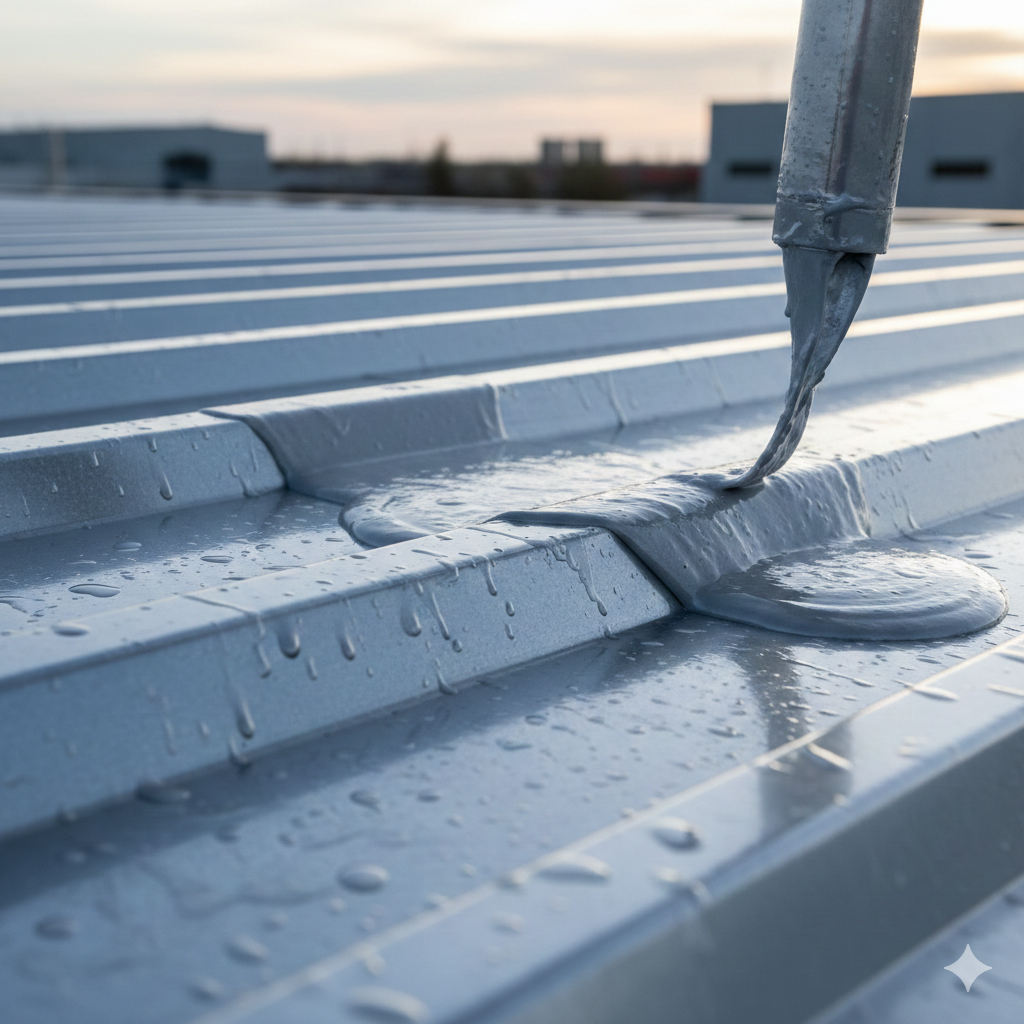
How to Install Aluminum Roof Sealant
Proper installation is critical to ensuring the longevity and effectiveness of your aluminum roof sealant. Skipping steps or rushing the process can lead to poor adhesion, premature failure, and continued leaks.
-
Preparation is Key: The surface must be absolutely clean, dry, and free of any debris, dirt, oil, or loose rust. Begin by sweeping the entire roof to remove leaves, branches, and loose dirt. Next, use a pressure washer or a stiff-bristled brush with a suitable cleaning solution to remove stubborn grime and chalking. If there are areas of significant rust, use a wire brush or mechanical grinder to remove the loose scale. It is crucial to allow the roof to dry completely after cleaning; applying sealant over a damp surface will trap moisture and cause the coating to blister and fail.
-
Repair Existing Damage: Before applying the coating, you must address any existing leaks or structural issues. Inspect all seams, fasteners, and flashing. Tighten or replace any loose or missing screws. Apply a compatible patching compound or roofing cement to any holes, cracks, or gaps, especially around penetrations like vents, skylights, and chimneys. Allow all patches to cure fully according to the manufacturer’s instructions before proceeding.
-
Prime the Surface (If Necessary): Depending on the condition of your roof and the specific aluminum roof sealant you are using, a primer may be required. Primer improves adhesion, particularly on heavily rusted surfaces, previously unpainted metal, or porous materials like modified bitumen. Apply the primer evenly and allow it to dry completely before applying the topcoat.
-
Mix Thoroughly: This is a critical step that is often overlooked. The aluminum flakes in the sealant settle heavily at the bottom of the container during storage. You must mix the product vigorously and continuously until the aluminum is evenly distributed throughout the compound, creating a uniform, metallic appearance. A mechanical drill mixer is highly recommended for five-gallon pails. You should also continue to stir the product periodically during application to ensure the aluminum remains suspended.
-
Application: Apply the aluminum roof sealant evenly over the prepared surface. For large, flat areas, pouring the sealant directly onto the roof and spreading it with a heavy-duty roofing brush or a squeegee is usually the most efficient method. For smaller areas or pitched roofs, a thick-nap roller can be used. Work in manageable sections, starting from the highest point or the edge furthest from your exit point, and work your way backward. Ensure you achieve the recommended coverage rate and avoid leaving puddles or excessively thick areas, which can lead to cracking.
-
Curing Time: Allow the coating to cure completely before walking on it or exposing it to heavy rain. The curing time will vary depending on the temperature, humidity, and the specific product used, but it generally takes 24 to 48 hours.
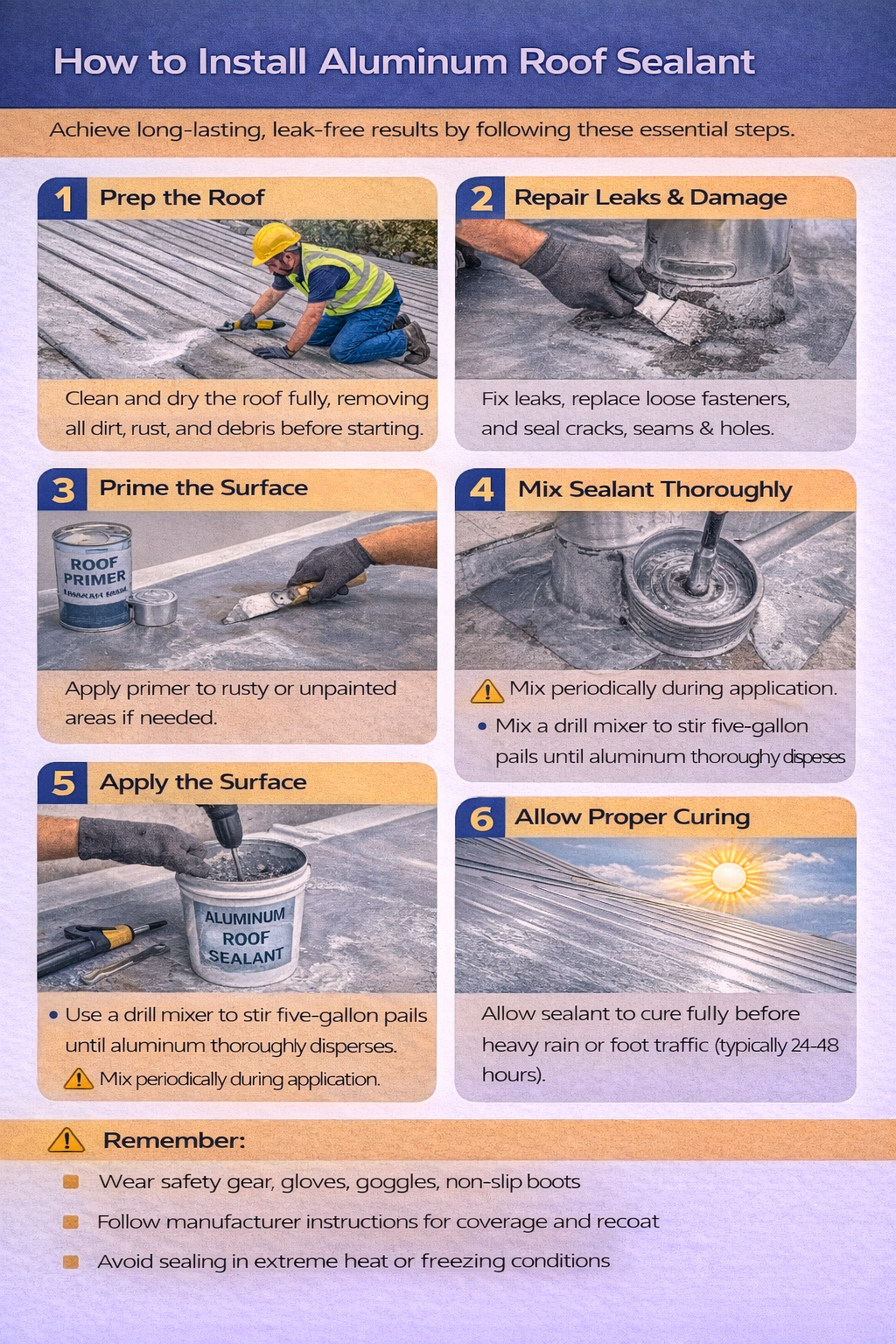
How to Clean Aluminum Roof Sealant Tools
Cleaning up after applying aluminum roof sealant can be challenging due to the sticky, asphaltic nature of the product. Proper cleaning is essential if you intend to reuse your tools or if you accidentally spill the sealant on unintended surfaces.
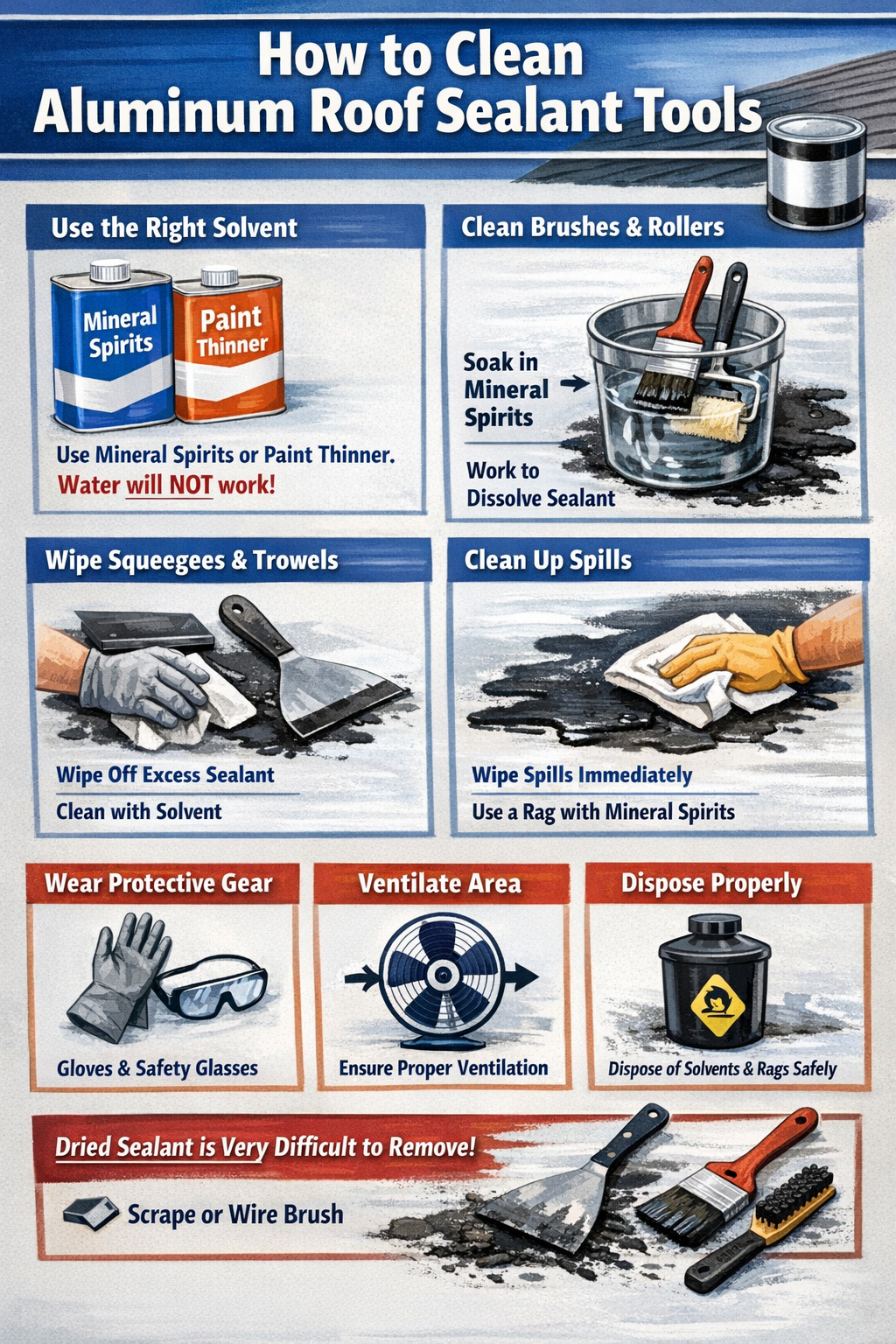
Because most standard aluminum roof coatings are solvent-based (typically mineral spirits or asphaltcutback), water will not be effective for cleaning. You must use a suitable solvent. Mineral spirits or paint thinner are generally the most effective and accessible options for cleaning brushes, rollers, squeegees, and any spills.
Immediately after use, submerge your brushes or rollers in a container of mineral spirits. Work the solvent into the bristles or nap to dissolve the sealant. You may need to change the solvent a few times until the tools are reasonably clean. For squeegees or trowels, wipe off as much excess material as possible with a rag or paper towel before cleaning them with the solvent.
If you accidentally spill the sealant on a surface where it is not wanted, wipe it up immediately with a rag soaked in mineral spirits. Once the sealant has dried and cured, it becomes extremely difficult to remove. Dried sealant usually requires mechanical removal, such as scraping or wire brushing, which can damage the underlying surface. Always wear appropriate personal protective equipment, including gloves and safety glasses, when working with chemical solvents, and ensure adequate ventilation. Dispose of used solvents and contaminated rags responsibly, according to local environmental regulations.
Can You Mix Paint Thinner With Aluminum Roof Sealant?
When working with viscous materials, it’s common to wonder if you can thin them out for easier application. However, when it comes to aluminum roof sealant, mixing it with paint thinner or any other solvent is generally not recommended and can be detrimental to the product’s performance.
Manufacturers formulate these sealants with a specific ratio of solids, base material, and solvents to ensure proper curing, adhesion, and reflectivity. Adding extra paint thinner alters this delicate chemical balance.
-
Thinner Consistency: While thinning the sealant might make it easier to brush or roll, it will reduce the thickness of the final cured film. A thinner film provides less protection against water intrusion and UV degradation, significantly reducing the lifespan of the coating.
-
Reduced Reflectivity: The aluminum flakes need a specific viscosity to “leaf” or float to the surface properly as the coating cures. If the mixture is too thin, the flakes may not orient themselves correctly, resulting in a dull finish and diminished reflective properties.
-
Application Issues: Thinning the product can cause it to run or sag, especially on pitched roofs or vertical surfaces like parapet walls, making it difficult to achieve an even coat.
-
Manufacturer Warranty: Altering the product by adding unauthorized solvents will almost certainly void any warranty provided by the manufacturer.
If you find that your aluminum roof sealant is too thick to apply, it may be due to cold temperatures. The best solution is to store the product in a warm area for 24 hours prior to application, rather than attempting to thin it chemically.
What Sealant for Aluminum Railer Roof?
When considering what sealant to use on an aluminum trailer roof, the requirements are slightly different from those of a standard commercial or residential building. Trailers, particularly cargo trailers or horse trailers, are subject to significant movement, vibration, and varying environmental conditions as they travel down the highway. Therefore, the sealant chosen must be exceptionally flexible and durable.
A high-quality, fibered aluminum roof sealant is often an excellent choice for this application. The reinforcing fibers in these formulations provide added strength and tear resistance, helping the coating withstand the stresses of transportation. Furthermore, the high reflectivity of the aluminum is beneficial for keeping the interior of the trailer cooler, which is crucial if you are transporting livestock or temperature-sensitive goods.
Before applying the sealant, thorough preparation is essential. The aluminum roof of the trailer must be scrubbed clean of all dirt, road grime, and any previous coatings that are flaking or peeling. Pay special attention to the seams where the aluminum panels meet, as these are the most common areas for leaks. It is highly recommended to use a specialized seam tape or a high-quality polyurethane caulk to seal these joints before applying the overall coating of aluminum roof sealant. This two-step process ensures maximum protection against water intrusion while allowing the trailer to flex during travel without compromising the seal.
RV Aluminum Roof Sealant
Recreational vehicles present unique challenges when it comes to roof maintenance. Many older RVs, and some newer models, feature roofs made of sheet aluminum. While durable, these roofs are prone to leaks around vents, air conditioning units, skylights, and seams over time due to the constant vibration of travel and exposure to harsh weather conditions.
For these applications, an RV-specific aluminum roof sealant is often the preferred solution. These products are formulated to provide a tough, flexible barrier that can handle the dynamic movement of an RV. The reflective properties are also highly valued by RV owners, as they help deflect the sun’s heat, reducing the strain on the vehicle’s air conditioning system and keeping the interior more comfortable during summer camping trips.
When maintaining an RV roof, it’s crucial to differentiate between sealing penetrations and coating the entire roof. For sealing around vents and seams, a thick, elastomeric patching compound or a specialized self-leveling lap sealant is usually required. Once the penetrations and seams are properly sealed and cured, a high-quality aluminum roof sealant can be applied over the entire surface to provide a continuous, reflective protective layer. Regular inspection and prompt maintenance using the correct products are vital for preventing costly water damage to the interior of the RV.
Roof Aluminum Coating
The terms “sealant” and “coating” are often used interchangeably in the roofing industry, but they can sometimes refer to slightly different applications or product consistencies. A roof aluminum coating generally implies a product intended to cover the entire surface area of the roof, providing a broad, protective, and reflective layer.
An effective roof aluminum coating serves as the primary defense against the sun’s damaging UV rays, which can cause underlying roofing materials like asphalt or modified bitumen to degrade, become brittle, and eventually crack. By reflecting a significant portion of the solar energy, the coating significantly lowers the temperature of the roof surface. This reduction in thermal shock—the rapid expansion and contraction caused by heating and cooling cycles—extends the life of the underlying roofing system.
When applying a roof aluminum coating, the goal is to achieve a uniform, opaque, silver finish. This requires careful attention to the application rate and thorough mixing of the product. The aluminum particles must be evenly distributed to ensure consistent reflectivity across the entire roof. A properly applied roof aluminum coating will not only protect the building from moisture and UV damage but can also enhance the overall aesthetic appearance of an older, weathered metal roof, giving it a refreshed, bright silver look.
Advantages and Challenges Connected to Aluminum Roof Sealant
Like any building material, utilizing aluminum roof sealant presents a distinct set of advantages and potential challenges. Understanding these pros and cons is essential for determining if this is the right solution for your specific roofing needs.
Advantages
-
Excellent Reflectivity: The most significant advantage is its ability to reflect UV rays. This drastically reduces roof surface temperatures, leading to lower cooling costs and improved energy efficiency for the building.
-
Cost-Effective Protection: Compared to a full roof replacement, applying a coating of aluminum roof sealant is a highly economical way to extend the life of an existing roof by several years.
-
Rust and Corrosion Resistance: The barrier created by the sealant effectively prevents moisture and oxygen from reaching metal surfaces, inhibiting the formation and spread of rust.
-
Versatility: It can be applied to a variety of surfaces, including metal, modified bitumen, and built-up roofing systems, making it a versatile solution for many different property types.
-
Relatively Easy Application: While proper preparation is crucial, the actual application of the sealant can often be accomplished by competent DIYers using standard tools like brushes, rollers, or squeegees.
Challenges
-
Rigorous Preparation Required: The product will only adhere properly to a meticulously clean and dry surface. Inadequate preparation is the leading cause of coating failure.
-
Mixing Difficulties: The heavy aluminum flakes settle rapidly. Achieving and maintaining proper suspension during application requires vigorous and frequent mixing, which can be physically demanding.
-
Weather Dependent: Application requires specific weather conditions—typically warm, dry days with no rain forecast for at least 24 to 48 hours to allow for proper curing.
-
Not a Cure-All for Severe Damage: Aluminum roof sealant is a preventative maintenance product, not a structural repair material. It will not fix large holes, severe structural rust, or underlying insulation problems.
-
Aesthetics: The bright silver finish may not be aesthetically pleasing for all building types or neighborhoods, and it will eventually dull over time as it weathers and accumulates dirt.
Frequently Asked Questions : Aluminum roof sealant
How long does this type of coating typically last?
The lifespan varies depending on the quality of the product, the condition of the underlying roof, and the climate. Generally, a high-quality application can last anywhere from 3 to 7 years before requiring a recoat.
Can I apply this product over existing paint or older coatings?
Yes, but the existing coating must be fully adhered and thoroughly cleaned. Any loose, flaking, or peeling paint must be removed prior to application. If the old coating is not compatible, a specialized primer may be necessary.
Is it safe to collect rainwater from a roof coated with this material?
Generally, it is not recommended to use water collected from a roof treated with solvent-based aluminum roof sealant for drinking or watering edible plants, as trace amounts of solvents or asphaltic compounds could leach into the water.
What temperature is best for applying the coating?
Most manufacturers recommend application when the ambient temperature is between 50°F (10°C) and 90°F (32°C). Applying in extreme heat can cause the solvent to flash off too quickly, while cold temperatures will thicken the product and hinder adhesion.
Will this sealant stop an active leak?
No, a liquid coating is designed to protect the surface and provide broad waterproofing. Active leaks must be identified and patched with an appropriate roofing cement or patching compound before the overall coating is applied.
Conclusion
Maintaining the integrity of a building’s envelope is an ongoing responsibility, and the roof is the first line of defense against the elements. Utilizing an aluminum roof sealant is a proven, cost-effective strategy for extending the lifespan of metal and modified bitumen roofs. By providing a durable, waterproof barrier and reflecting harmful UV rays, these coatings offer significant protection against moisture intrusion, rust, and thermal degradation. While the application requires careful preparation and adherence to specific weather conditions, the benefits of reduced cooling costs and delayed roof replacement make it a worthwhile endeavor.
Whether you are protecting a commercial warehouse, an agricultural barn, or maintaining the roof of your recreational vehicle, understanding the properties, application methods, and limitations of these products is crucial. By selecting the appropriate formulation, thoroughly preparing the surface, and applying the coating correctly, you can ensure that your property remains protected and secure for years to come. Investing the time and resources into proper maintenance with high-quality aluminum roof sealant is an investment in the long-term health and value of your building.