TPO Roof Drains: Types, Inspection and Leak Prevention
What Are TPO Roof Drains?
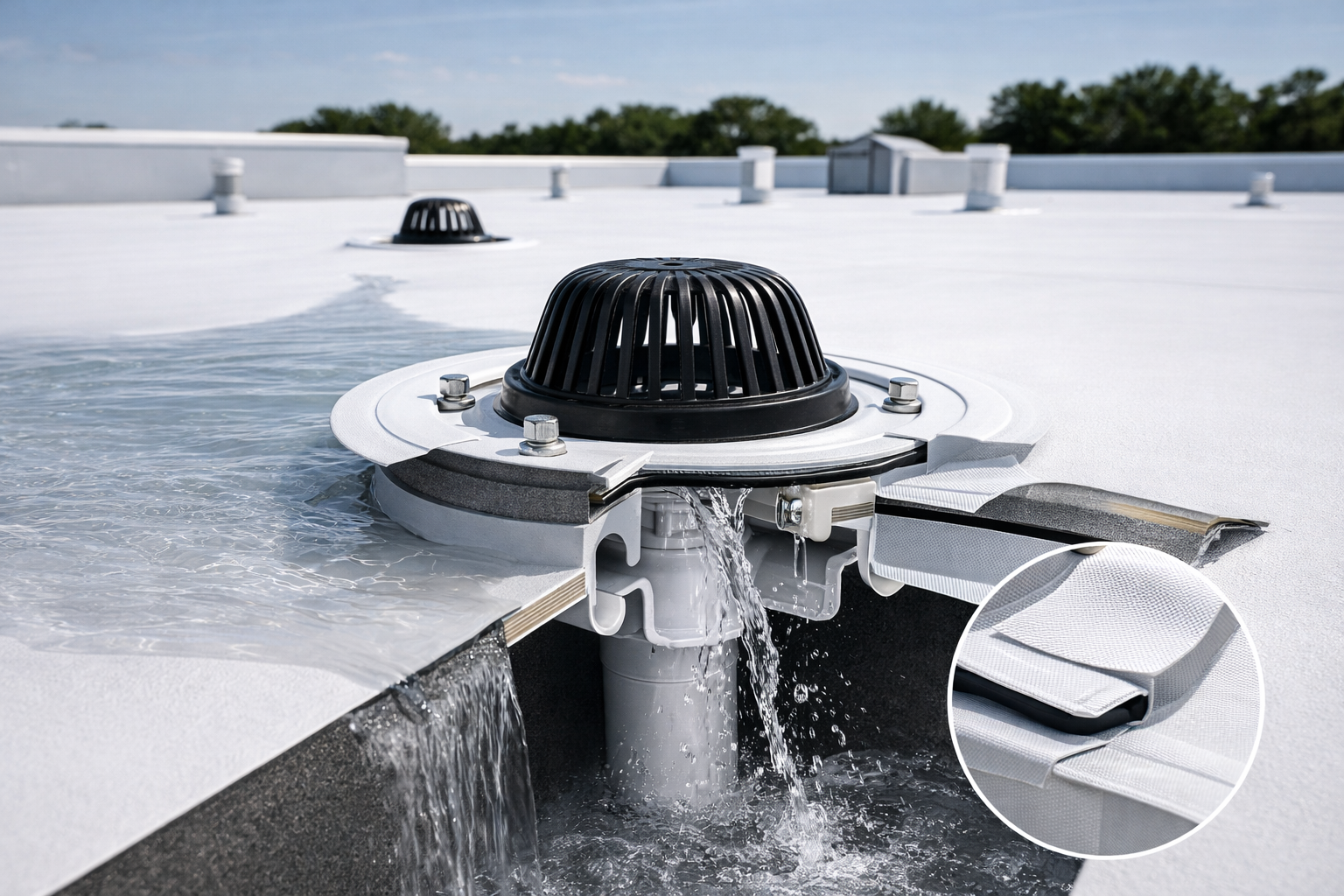
TPO (thermoplastic polyolefin) is a single-ply roof membrane often used on low-slope commercial buildings. A roof drain is the outlet that collects runoff at a designed low point and carries it away through a piping system. The drain, its connection to the membrane, the roof slope and the downstream piping all need to work together.
The phrase “TPO roof drain” usually refers to a drain assembly detailed for use with a TPO membrane. Some assemblies have a TPO-coated flange or compatible membrane flashing that can be heat-welded; others use a clamping ring or a retrofit connection. The correct detail depends on the specific product and roof assembly. Follow the membrane and drain manufacturers’ current instructions.
Drain Types and Related Outlets
| Drainage component | Where it sends water | What to confirm |
|---|---|---|
| Interior roof drain | Into a roof drain bowl and internal piping. | Drain location, bowl condition, strainer and membrane connection. |
| Scupper | Through a parapet wall to an exterior leader or discharge point. | Wall flashing, opening condition and safe discharge away from the building. |
| Gutter and downspout | Along the roof edge and down the building exterior. | Support, joints, clear flow and where water is released. |
| Overflow outlet | Provides a secondary drainage path where the design requires one. | Separate location, visible discharge and applicable code/design criteria. |
A retrofit drain is a way to connect a new drain assembly to an existing outlet during renovation; it is not a substitute for checking the capacity and condition of the full drainage system. Ask the designer or roofing contractor which components are primary and which provide secondary drainage.
How to Inspect a TPO Roof Drain
Inspect from a safe, authorized access route and follow the building’s roof-access procedures. A visual inspection can identify debris, damage or water that is draining slowly; it cannot certify hidden piping or structural capacity.
- Check whether the strainer is present, secure and clear of leaves, packaging or other debris.
- Look for visible cracks, displaced flashing, open seams, loose or damaged rings, and deterioration around the drain bowl.
- Record where water remains after rain and whether the condition is localized or widespread.
- Look inside the building for new leaks or water staining near the drain route.
- Photograph the location and date, and compare with prior inspection records.
Carlisle’s TPO drain inspection resource and roof inspection tips provide manufacturer guidance. Inspection frequency should follow the roof warranty, maintenance plan, building conditions and local requirements; arrange an additional review after severe weather or reported drainage problems.
Choosing or Replacing a Drain
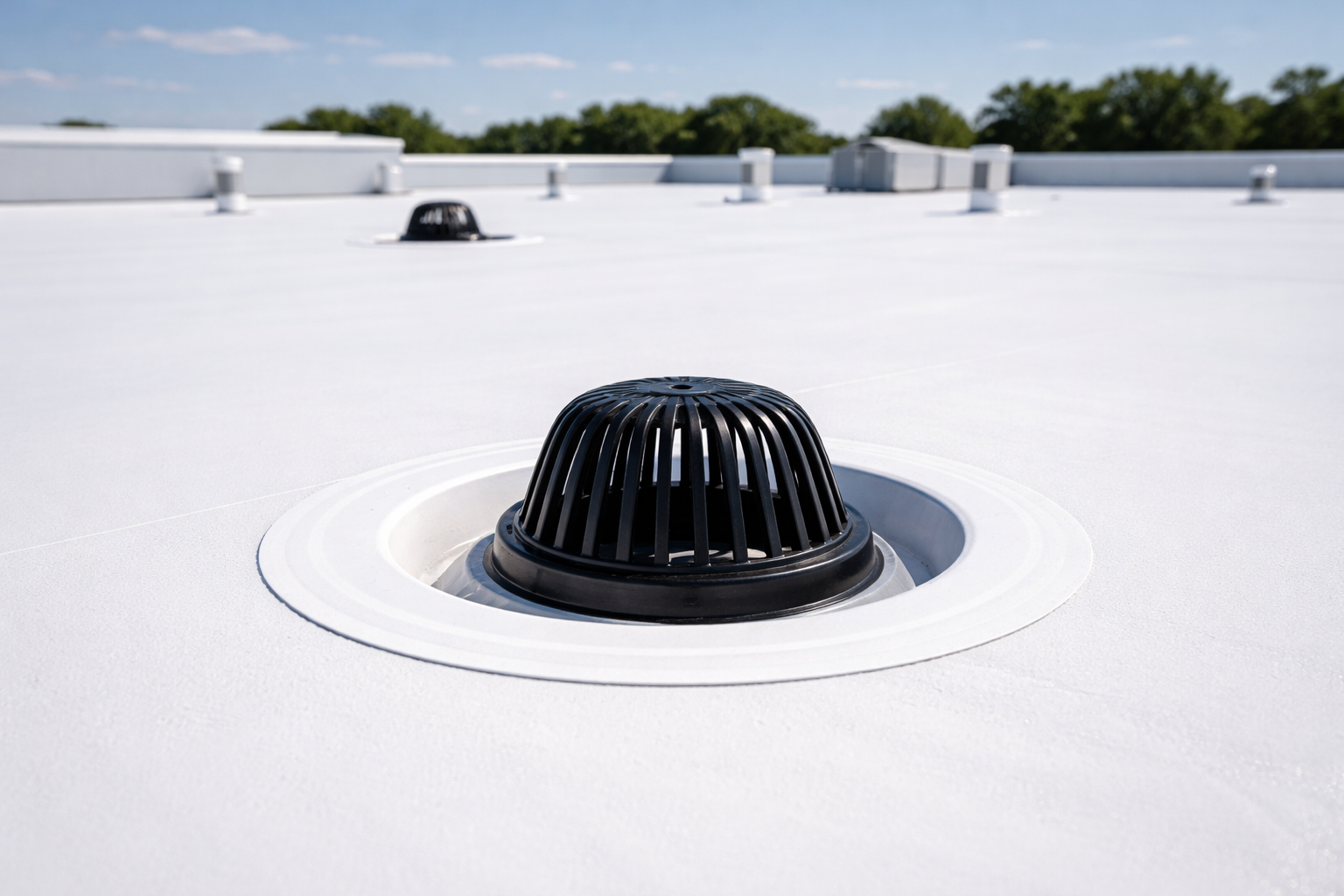
Do not choose a drain by pipe diameter or price alone. The design professional needs to consider the drainage area, roof slope and low points, rainfall criteria, piping and the building’s existing conditions. Confirm that the proposed drain assembly is compatible with the TPO membrane and accepted under the roof system’s warranty.
Before approving a retrofit, ask whether the existing drain bowl and piping are sound, whether the new connection suits their dimensions, and how the transition will be inspected. Where hidden plumbing or structural work is involved, the roofing scope may need coordination with a qualified plumbing or design professional.
What Affects Drain Replacement Cost?
There is no reliable universal price for a TPO roof drain replacement. A quote may include some or all of these items:
- Drain type, material, size and compatible membrane flashing.
- Access equipment, roof protection and safe work setup.
- Removal of existing components and disposal.
- Membrane preparation, drain-sump work and tie-in.
- Repairs to insulation, deck, bowl or downstream piping.
- Interior protection, testing, permits and warranty inspection.
Request an itemized scope that identifies what is included and how concealed damage will be approved and priced. A material-only drain price does not represent the installed repair. Compare proposals for the same product, assembly and supporting work.
Ponding Water and Leak Diagnosis
Water remaining near a drain can have several causes, including debris, an obstructed pipe, an uneven or deflected surface, or a drainage design issue. A roof’s condition cannot be diagnosed from one photograph or a single observation. Record when the water was seen after rainfall and have persistent or unusual ponding assessed by a qualified professional.
Do not assume that ponding automatically means the drain is the only problem, or that adding another drain is the correct fix. Drainage capacity, overflow provisions, roof slope and structural loading may require a coordinated review. Follow local code and the project’s approved design.
Installation Requires a System-Specific Detail
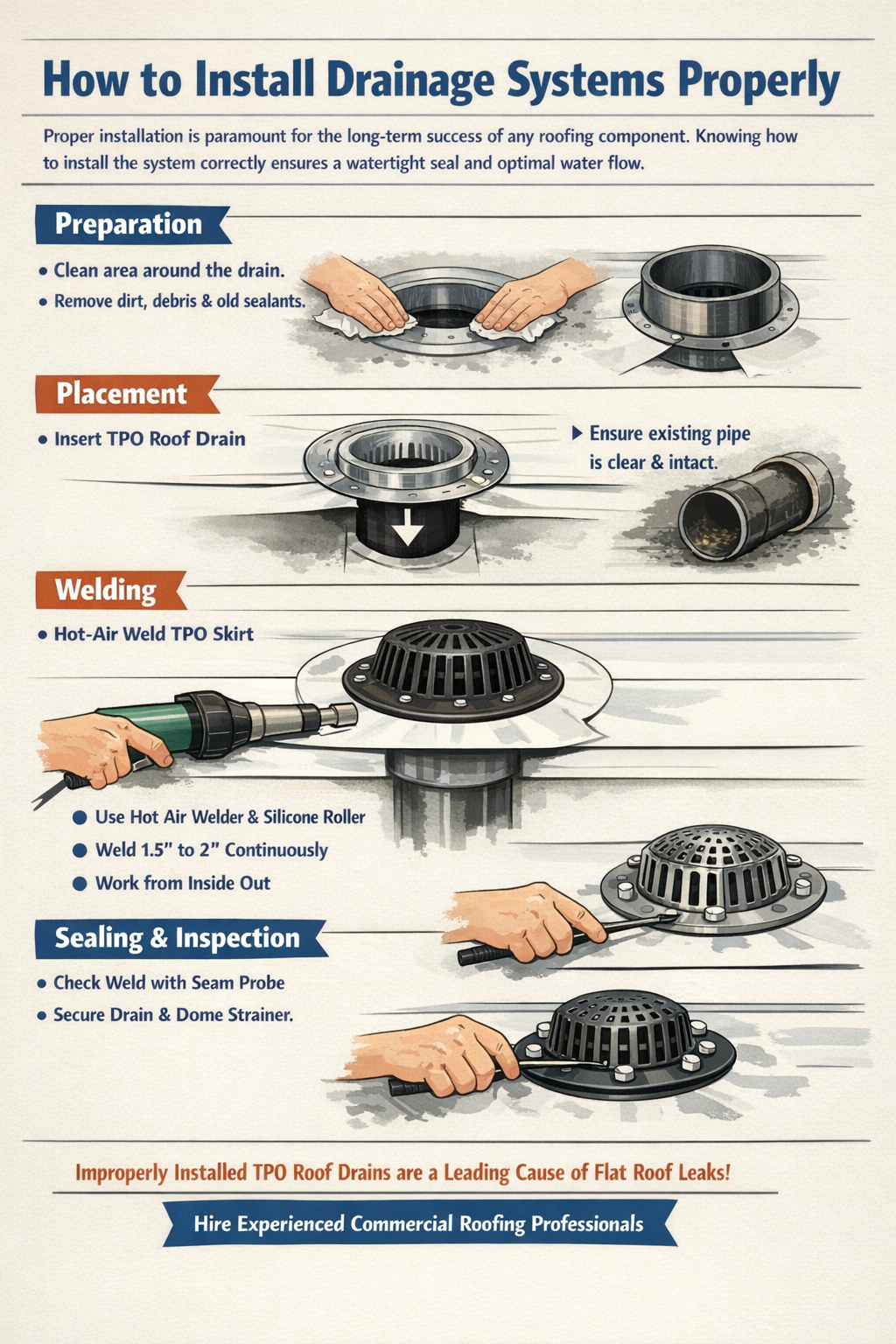
Drain replacement affects the roof membrane and may affect the building’s waterproofing warranty. The work should be performed by a qualified commercial roofing professional familiar with the installed system. A general online sequence cannot specify a safe or compliant installation for every roof.
Before work begins, confirm the drain model, membrane product, approved detail, substrate condition and connection method. The manufacturer’s current instructions determine preparation, cleaning, clamping components, welding or sealing, fasteners and any required inspection. Do not apply a generic sealant or use a guessed weld width as a substitute for the specified assembly.
Ask the contractor to document the exposed condition before covering it and the completed connection afterward. Carlisle provides a TPO drain inspection reference; product-specific application documents should govern the actual installation.
Routine Drain Maintenance
Keep the drain area and strainer free of debris using the building’s approved maintenance process. Establish an inspection schedule based on the manufacturer’s instructions, roof warranty, nearby trees or equipment, local weather and the building’s maintenance plan. After major storms or a reported leak, document and arrange an appropriate inspection.
Use authorized roof access and fall protection. Do not remove drain rings, cut the membrane, probe the pipe with sharp tools or flush an unknown blockage with a hose. Those actions can damage the roof assembly or move water into the building. If the drain remains slow after visible debris is cleared safely, contact the roofing or plumbing professional responsible for the system.
Frequently Asked Questions
Are all TPO roof drains heat-welded?
No. Drain assemblies and connection details vary. Check the exact drain and membrane instructions to learn whether the assembly uses a welded flashing, a clamping component or another approved detail.
How many roof drains does a building need?
There is no single number that applies to every roof. The design depends on roof area, slope, rainfall criteria, outlet capacity, building layout, applicable code and required secondary drainage. Have the project reviewed by a qualified design or roofing professional.
Does standing water prove the drain is clogged?
No. Debris is one possibility, but roof geometry, surface deflection, piping and design may also be involved. Record the condition and request an inspection if it persists or is unusual.
Can I repair a leaking drain with roof sealant?
A generic sealant may be incompatible with the membrane or fail to address the cause. Have the connection inspected and repaired using the method approved for the specific roof system.
What should a drain inspection report include?
Useful records identify the drain location, visible condition, photographs, water-flow observations, work performed and any items needing professional follow-up. Keep the report with the roof plan and warranty documents.
Other Resources
Thunderbird Products – Product collection featuring TPO and PVC clad roof drains for commercial roofing systems.
CopperLab – Product listing showcasing TPO and PVC roof drain solutions for flat roofs.
GAF – EverGuard TPO Coated Hercules Drains – Product page detailing TPO-coated roof drains designed for commercial roofing applications.
Centimark Video – Video resource demonstrating TPO or PVC roof drain installation and system integration.
Other Helpful Articles
Roof to Wall Vent Guide – Informational article describing roof-to-wall vent systems and installation basics.
Aluminum Roof Sealant – Guide explaining aluminum roof sealants and their typical uses.
Roofing Trailer – Article outlining roofing trailer types and their jobsite applications.
