
Gable Roof vs Hip Roof: Smart Design Choices
Gable Roof vs Hip Roof: Best Tips for Safety
Choosing the right structure for your home is one of the most critical decisions in residential construction. The debate of gable roof vs hip roof is timeless, as both styles offer distinct advantages regarding aesthetics, durability, and cost. Understanding the nuances of these architectural designs helps homeowners make informed decisions that impact their property value for decades.
What Is the Difference Between These Styles?
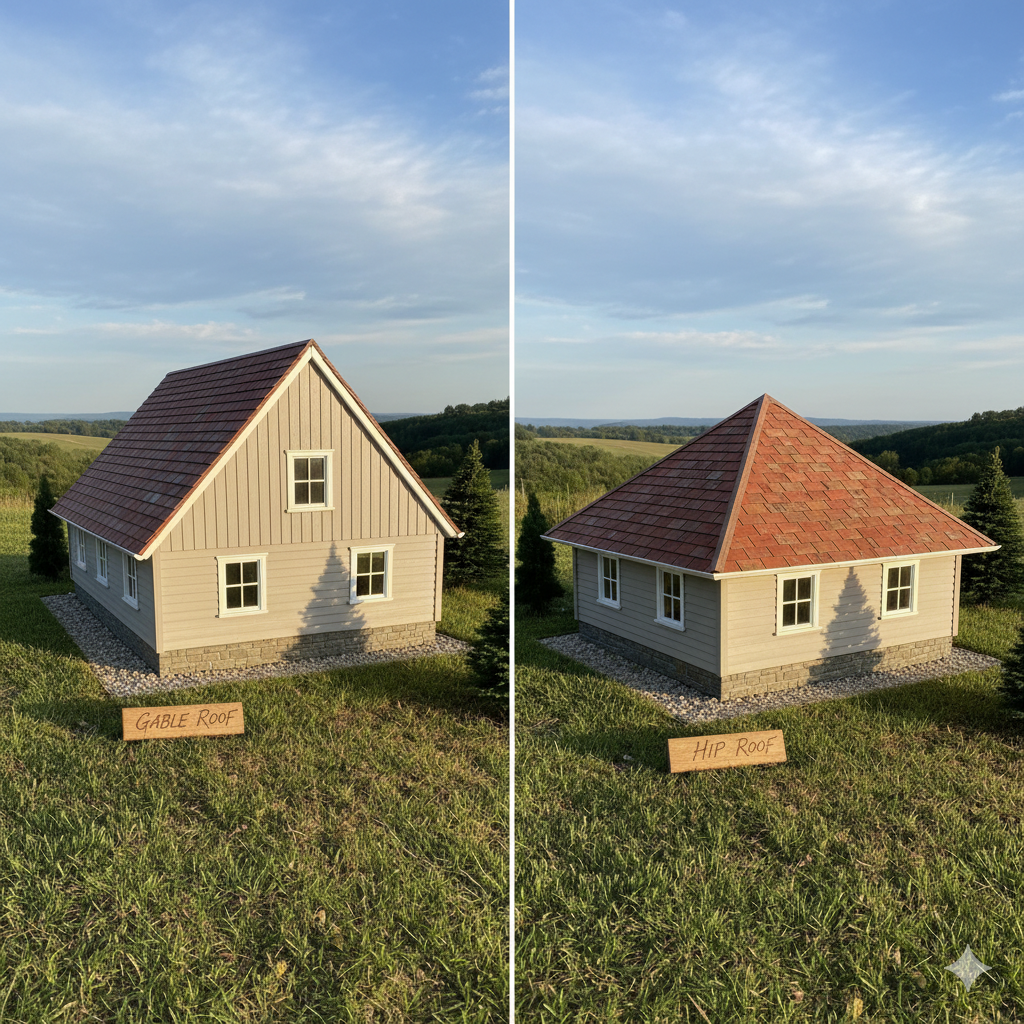
When comparing a gable roof vs hip roof, the primary difference lies in the slopes. A gable roof is easily identified by its triangular shape, formed by two distinct slopes that meet at a central ridge. This “A-frame” look is classic, simple, and very common in modern American architecture. It creates a spacious attic and allows for excellent ventilation.
In contrast, the hip roof has slopes on all four sides. There are no vertical ends or “gables.” The sides come together at the top to form a ridge, or in some square structures, a single peak. The hip design is generally more aerodynamic. The complexity of framing a gable roof vs hip roof is significant; the hip roof requires more materials and intricate truss systems.
Architecturally, the gable roof vs hip roof comparison often comes down to style preference. Gable roofs look more traditional and prominent, often featuring decorative elements. Hip roofs appear more grounded, stable, and subtle, blending into the horizon line more effectively than their triangular counterparts.

How to Do a Proper Structural Comparison
Analyzing a gable roof vs hip roof requires looking at how they handle weather. Gable roofs are excellent at shedding water and snow due to their steep pitch. However, because they have large flat ends, they are more susceptible to wind damage. In hurricane-prone areas, high winds can catch the overhang of a gable and lift the structure or peel off materials.
The structural integrity in a gable roof vs hip roof scenario usually favors the hip roof during storms. Because a hip roof slopes on all four sides, it is self-bracing. It offers less surface area for the wind to hit flat-on. This aerodynamic quality makes the hip roof a superior choice for coastal regions or high-wind zones.
When evaluating a gable roof vs hip roof, you must also consider the living space. The gable design naturally provides vaulted ceilings or a large attic. The hip roof, with its inward slopes on all sides, significantly reduces the usable height and volume of the attic space, which may limit storage or conversion options.
How to Find the Right Contractor for the Job
Finding a roofer who understands the complexity of gable roof vs hip roof construction is vital. Not every framer is equally skilled at cutting the complex rafters required for a hip roof. You should search for local contractors with portfolios showcasing both styles. Ask specifically about their experience with truss packages versus stick framing for these specific designs.
When discussing the project, ask the contractor about their preference for gable roof vs hip roof in your specific climate. A local expert will know if wind shear or snow load is the bigger threat. If you live in a snowy region, they might suggest a gable for better shedding. If you are in a tornado alley, they will likely steer the gable roof vs hip roof conversation toward the stability of a hip design.
Requesting quotes is the next step. Ensure the quote separates labor and materials so you can see the cost difference inherent in the gable roof vs hip roof choice. Usually, the labor for a hip roof will be higher due to the complex cuts required for hip rafters and jack rafters.
How to Buy the Best Materials for Each Design
The material selection in a gable roof vs hip roof decision is mostly universal, but quantity varies. Both can use asphalt shingles, metal, tile, or slate. However, because a hip roof covers more surface area than a gable roof of the same footprint (due to the extra slopes), you will need to buy more shingles and underlayment.
When calculating for a gable roof vs hip roof, don’t forget the accessories. Gable roofs require siding materials for the triangle ends, known as the gable ends. This might be brick, vinyl, or wood shake. Hip roofs do not need this; instead, they require more ridge cap shingles because the ridge lines are longer and more numerous.
Ventilation materials also differ. In a gable roof vs hip roof comparison, gables are easier to vent using simple gable vents on the exterior walls. Hip roofs require ridge vents or soffit vents because there is no vertical wall to install a standard louvered vent. buying the right ventilation system is crucial for roof longevity.
How Much Do These Roofing Styles Cost?
The financial aspect of the gable roof vs hip roof debate is often the deciding factor. Generally, a gable roof is cheaper to build. The design is simple, requiring fewer cuts and less lumber. The labor hours are significantly reduced, and the truss systems are straightforward triangles that are easy to manufacture and install.
Conversely, the gable roof vs hip roof price comparison shows hip roofs are more expensive. A hip roof requires more complex truss systems or hand-framed rafters. The surface area of the roof is larger, meaning you pay for more square footage of shingles and underlayment. Additionally, the gutter system on a hip roof must wrap around the entire house, whereas a gable roof only needs gutters on two sides.
However, insurance costs might flip the script on the gable roof vs hip roof expense. In high-wind areas, insurance companies often offer premiums discounts for hip roofs because they are less likely to fail during a hurricane. Over twenty years, these insurance savings can offset the initial higher construction cost of the hip roof.
Specialized Comparison: Hip vs Gable Variations
When diving deeper into the gable roof vs hip roof discussion, we must address the specific variations and cost nuances that confuse many homeowners. This section clarifies the terminology often used interchangeably in the industry.
Hip Roof vs Gable Roof
The distinction here is purely structural. A hip roof vs gable roof comparison highlights that the hip variation eliminates the large flat face of the gable. This is crucial for aerodynamics. While the gable has a “face” that catches the wind, the hip deflects it.
Hip Roof vs Gable
Sometimes referred to simply as “hip roof vs gable,” this comparison focuses on the aesthetic “cap” of the house. The gable offers a high peak that looks imposing and grand. The hip creates a horizontal line that hugs the earth. Architects often mix these styles, adding a small gable dormer onto a hip roof to break up the monotony.
Hip Roof vs Gable Roof Cost
If we analyze the hip roof vs gable roof cost strictly by numbers, the gable wins on upfront savings. You save on labor, lumber, and roofing coverage. However, the hip roof vs gable roof cost analysis changes if you factor in maintenance. Gables take more wind damage, potentially leading to higher repair bills over time.
Gable vs Hip Roof
Finally, looking at gable vs hip roof from an interior perspective, the gable is the clear winner for space. If you plan to finish your attic or need HVAC ductwork storage, the gable vs hip roof choice should lean toward gable. The hip roof’s sloping sides drastically cut into the headroom, making the attic mostly useless for living space.
How Long Does Installation Take?
Time is money, and the timeline for a gable roof vs hip roof project differs. A simple gable roof can often be framed and sheathed in a few days for an average-sized home. The trusses are uniform, and the sheathing requires very few diagonal cuts. It is a production-friendly design that contractors love for its speed.
The gable roof vs hip roof timeline extends significantly with a hip design. The framers must measure and cut every jack rafter individually if they are stick-framing. Even with prefabricated trusses, the installation is slower because of the complex geometry at the corners. Sheathing a hip roof requires cutting plywood at angles for every valley and hip ridge, which is time-consuming and generates more waste.
Weather delays can also impact the gable roof vs hip roof schedule. Because the hip roof takes longer to close in, the structure is exposed to the elements for a longer period during construction. Contractors must be more vigilant about tarping and weatherproofing a hip roof project in progress compared to the faster-to-seal gable roof.

How to Install: A Step-by-Step Overview
The installation process highlights the engineering gap in the gable roof vs hip roof debate. For a gable roof, the process starts by setting the ridge board and installing common rafters from the ridge to the exterior walls. It is a repetitive process of installing identical pieces of lumber. The gable ends are then framed to close the triangle.
In a gable roof vs hip roof scenario, installing a hip roof is far more intricate.
-
First, the ridge board is set.
-
Then, the four hip rafters are installed, running from the ridge corners to the building corners at a 45-degree angle.
-
Finally, jack rafters are filled in. These get progressively shorter as they get closer to the corners.
The roofing material installation also differs. Shingling a gable roof is a straight run from eave to ridge. In the gable roof vs hip roof comparison, shingling a hip roof requires cutting shingles at an angle along every hip ridge. This requires a skilled hand to ensure the lines remain straight and the cuts are clean.
How to Clean and Maintain Your Roof
Maintenance is an ongoing reality, and the gable roof vs hip roof choice dictates how you clean it. Gable roofs are generally easier to clean because the slopes are straightforward. However, the steep pitch of some gable designs can make walking on them dangerous. You must use safety harnesses regardless of the style.
When cleaning a gable roof vs hip roof, the hip roof offers better accessibility around the perimeter. Because the eaves are consistent on all sides, you can set a ladder anywhere. With a gable roof, setting a ladder on the gable end can be tricky if the ground is uneven or if the peak is extremely high.
Debris accumulation varies in the gable roof vs hip roof battle. Valleys—where two roof sections meet—are debris magnets. Hip roofs often have more complex valleys if the house isn’t a perfect square. Leaves and pine needles get stuck here, retaining moisture.
-
Cleaning Gables: Check the gable vents for bird nests.
-
Cleaning Hips: Clear the valleys and check the extensive gutter system.
Cleaning gutters is a bigger job on a hip roof. Since the gable roof vs hip roof design difference means hip roofs have gutters on all four sides, you have twice the linear footage of gutters to clean compared to a gable roof.
Advantages and Challenges of Each Style
To summarize the gable roof vs hip roof decision, we must look at the pros and cons in a direct comparison. The advantages of a gable roof are clear: lower cost, more attic space, and easier ventilation. They are perfect for budget-conscious builders and those who want a classic aesthetic.
The challenges in the gable roof vs hip roof dynamic for gables are wind resistance and maintenance of the siding on the gable ends. The paint or siding on the triangle face of the house takes a beating from the sun and rain, requiring more maintenance than the roof itself.
The advantages of the hip roof in the gable roof vs hip roof debate are structural superiority and protection. The continuous eaves protect the walls of the house from sun and rain on all sides. The challenges are the cost, the potential for leaks at the complex seams, and the lack of attic space.
What Is the Cost of Repairs?
Long-term ownership means facing repairs, and the gable roof vs hip roof question affects your wallet here too. Repairing a leak on a gable roof is usually straightforward. The geometry is simple, and locating the source of a leak is easier. If a tree falls on a gable roof, framing repairs are standard carpentry.
In a gable roof vs hip roof repair scenario, hip roofs can be a nightmare. If a hip rafter is damaged, it compromises the structural integrity of the adjacent slopes. Replacing a main hip rafter is a major surgical operation for a house. Furthermore, finding a leak in the complex flashing of a hip roof can be difficult, leading to higher diagnostic costs.
Re-roofing costs also favor the gable. When it is time to replace the shingles in 20 years, the labor to tear off and replace shingles on a gable roof vs hip roof is lower for the gable. The waste factor is lower, and the crews can work faster on the long, straight runs of a gable roof.
FAQ
Which is better for snow, a gable roof or a hip roof?
In the gable roof vs hip roof debate regarding snow, the gable roof is generally better. Its steeper slopes allow snow to slide off easily, and the simple design prevents the formation of ice dams in complex valleys.
Can I convert a hip roof to a gable roof?
Yes, but it is expensive. Changing a gable roof vs hip roof profile requires removing the entire roof structure, reframing the attic floor, and building new walls. It is a major renovation project.
Does a hip roof add more value to a home?
Functionally, yes. In the gable roof vs hip roof market analysis, homes in hurricane zones with hip roofs often command a higher price due to their safety features and lower insurance premiums.
Why are gable roofs more popular?
The gable roof vs hip roof popularity contest is won by gables because they are cheaper and easier to build. Most developers prefer them to keep construction costs down and maximize profit margins.
Do hip roofs need gutters all around?
Yes. A key difference in gable roof vs hip roof design is that hip roofs slope in all directions, so water runs off every side. You need a full perimeter gutter system to manage the water.
Conclusion
The choice between a gable roof vs hip roof is not just about lines on a blueprint; it is about safety, budget, and lifestyle. If you prioritize maximizing space, reducing upfront costs, and achieving a traditional look, the gable roof is your answer. It has stood the test of time for a reason.
However, if your priority in the gable roof vs hip roof decision is durability, wind resistance, and architectural sleekness, the hip roof is the superior contender. While it costs more initially, the peace of mind during a storm and the potential insurance savings make it a worthy investment. Ultimately, understanding the gable roof vs hip roof dynamics ensures you build a home that protects you and your family for generations.
🏠 Other Resources
Explore these expert comparisons to understand the differences between hip roofs and gable roofs, including strength, cost, and design:
-
Tulsa ProTech – Hip vs Gable Roof – Clear comparison of structure, durability, and weather performance.
-
IKO – Hip Roof vs Gable Roof – Manufacturer-backed overview of pros, cons, and use cases.
-
Colony Roofers – Gable vs Hip Roof Differences – Practical insights from professional roofers.
-
Larson & Keeney – Which Roof Is Better? – Side-by-side comparison to help homeowners choose.
🔎 Other Helpful Articles
-
What Is a Square in Roofing? – Roofing measurements explained simply.
-
Copper Roof Panels – Benefits, costs, and installation options.
-
Roof Curbs – What roof curbs are and when they’re required.