
Rolled Roofing vs Shingles: Smart Ways to Save Money

Rolled Roofing vs Shingles: Smart Buyer Guide
The debate between rolled roofing vs shingles is one that many homeowners and property managers face when deciding on a new roof installation or replacement. Understanding the fundamental differences, cost implications, and installation requirements of rolled roofing vs shingles is essential for making an informed decision that balances budget with longevity. This comprehensive guide will explore every aspect of rolled roofing vs shingles to ensure you choose the best material for your specific needs in 2026.
What Is Rolled Roofing vs Shingles?
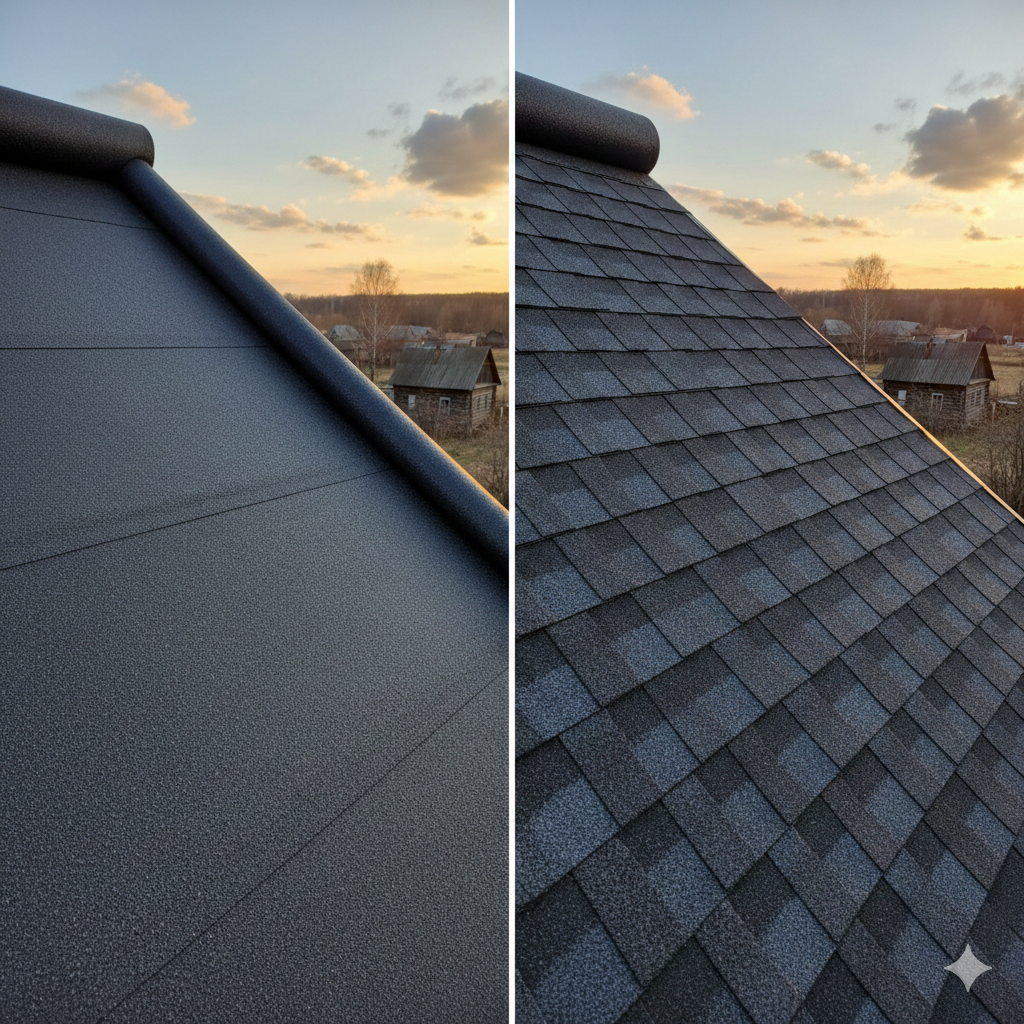
To truly understand the comparison of rolled roof vs shingles, one must first define what each material actually represents in the construction industry. Rolled roof vs shingles is not just a choice between two products but a choice between two distinct roofing philosophies tailored for different structural needs. Rolled roofing, often referred to as mineral-surfaced roofing (MSR), is a mineral-surfaced oil-based asphalt product that comes in large rolls, typically covering about 100 square feet per roll. It is designed primarily for utility and efficiency.
In contrast, when analyzing rolled roof vs shingles, asphalt shingles are individual rectangular tiles made from a similar asphalt base but reinforced with fiberglass or organic mats and coated with ceramic granules. Shingles are designed to overlap significantly, creating a multi-layered barrier against the elements. The structural difference in rolled roof vs shingles dictates their application; rolled roofing is a single-layer system, whereas shingles form a multi-layer system. This fundamental difference in rolled roof vs shingles impacts everything from durability to water resistance.
When discussing rolled roofing vs shingles with a contractor, you will find that rolled roofing is thinner and less durable than its shingle counterpart. However, the rolled roofing vs shingles discussion often leans toward rolled roofing when the roof pitch is shallow. Shingles require gravity to shed water effectively, meaning they are generally unsuitable for low-slope roofs where water might pool. Therefore, the definition of rolled roof vs shingles is intrinsically tied to the slope and purpose of your building structure.
How to Buy rolled roofing vs shingles
Knowing how to buy the right materials is a critical step in the rolled roofing vs shingles decision-making process. When you head to a supplier to compare rolled roofing vs shingles, you need to look for specific quality indicators for each material. For rolled roofing, ensure you are purchasing “mineral-surfaced” rolls if the roof will be exposed to direct sunlight, as the minerals protect the asphalt from UV degradation. In the rolled roof vs shingles market, you will find rolled roofing is often sold in roughly 75-pound rolls.
When buying shingles in the rolled roofing vs shingles comparison, you have far more aesthetic options. You must decide between 3-tab shingles, which are flatter and cheaper, or architectural shingles, which offer a dimensional look and longer warranties. Buying for a rolled roof vs shingles project also involves calculating waste; shingles typically require a 10-15% overage purchase to account for cutting and fitting, whereas rolled roofing might require less overage due to its linear application.
Major brands dominate the rolled roof vs shingles market in 2026. For shingles, look for reputable names like GAF, Owens Corning, and CertainTeed. These manufacturers offer extensive warranties that are rarely matched by rolled roofing products. When you buy for a rolled roofing vs shingles project, always check the manufacturing date on the packages; asphalt products can degrade if stored improperly for years. Your choice in rolled roof vs shingles should also be influenced by the specific warranty terms, which are vastly superior for shingles.
How to Find Best Suppliers for rolled roofing vs shingles
Finding the right supplier is as important as the material choice in the rolled roofing vs shingles equation. While big-box home improvement stores carry both, they may not offer the professional-grade variety you need for a high-quality rolled roofing vs shingles job. For the best rolled roofing vs shingles materials, visit specialized roofing supply houses. These distributors often sell to the public and stock fresher inventory than general hardware stores.
When searching for suppliers of rolled roofing vs shingles, ask about delivery options. Shingles are incredibly heavy; a bundle weighs roughly 70-80 pounds, and you need three for a “square” (100 sq ft). Rolled roofing is also heavy. A supplier that offers rooftop delivery—placing the materials directly on the roof—can save you immense labor in a rolled roof vs shingle project. This service is often a deciding factor for DIYers comparing rolled roofing vs shingle logistics.
Online marketplaces have also become a viable source for rolled roofing vs shingle research and purchasing, but shipping costs can be prohibitive due to weight. Therefore, local sourcing is usually key in rolled roofing vs shingle procurement. Look for suppliers who can provide technical data sheets comparing rolled roof vs shingles specifications side-by-side, ensuring you get materials that meet local building codes. Building codes in 2026 are strict, and the rolled roof vs shingle suitability often depends on adhering to specific wind and fire ratings available from professional suppliers.
Rolled Roofing vs Shingles Cost Comparison
The most significant driver for many homeowners in the rolled roofing vs shingles debate is cost. In 2026, the price gap in rolled roofing vs shingles remains distinct. Generally, rolled roofing vs shingles pricing favors rolled roofing for the initial material purchase. You can expect to pay approximately $1.50 to $4.00 per square foot for rolled roofing materials. This makes it an attractive option for budget-conscious projects like sheds or garages.
On the other hand, the rolled roofing vs shingles cost analysis for shingles shows a higher bracket. Asphalt shingles typically cost between $3.50 and $5.50 per square foot for standard 3-tab options, with architectural styles ranging from $4.00 to $8.50 per square foot installed. When you look at the total installed cost in the rolled roofing vs shingles comparison, a shingle roof for a 2,000 square foot home can range from $8,000 to over $17,000 depending on complexity.
However, the rolled roofing vs shingle cost perspective must be long-term. While rolled roofing is cheaper upfront, its lifespan is significantly shorter—often 5 to 10 years compared to 20 to 30 years for shingles. Therefore, the “cost per year of service” in a rolled roofing vs shingle calculation often proves that shingles are the better financial investment for permanent structures. If you strictly compare the initial receipt, rolled roofing vs shingle points to rolled roofing as the winner, but value-wise, shingles often take the lead.
How to Install rolled roofing vs shingles
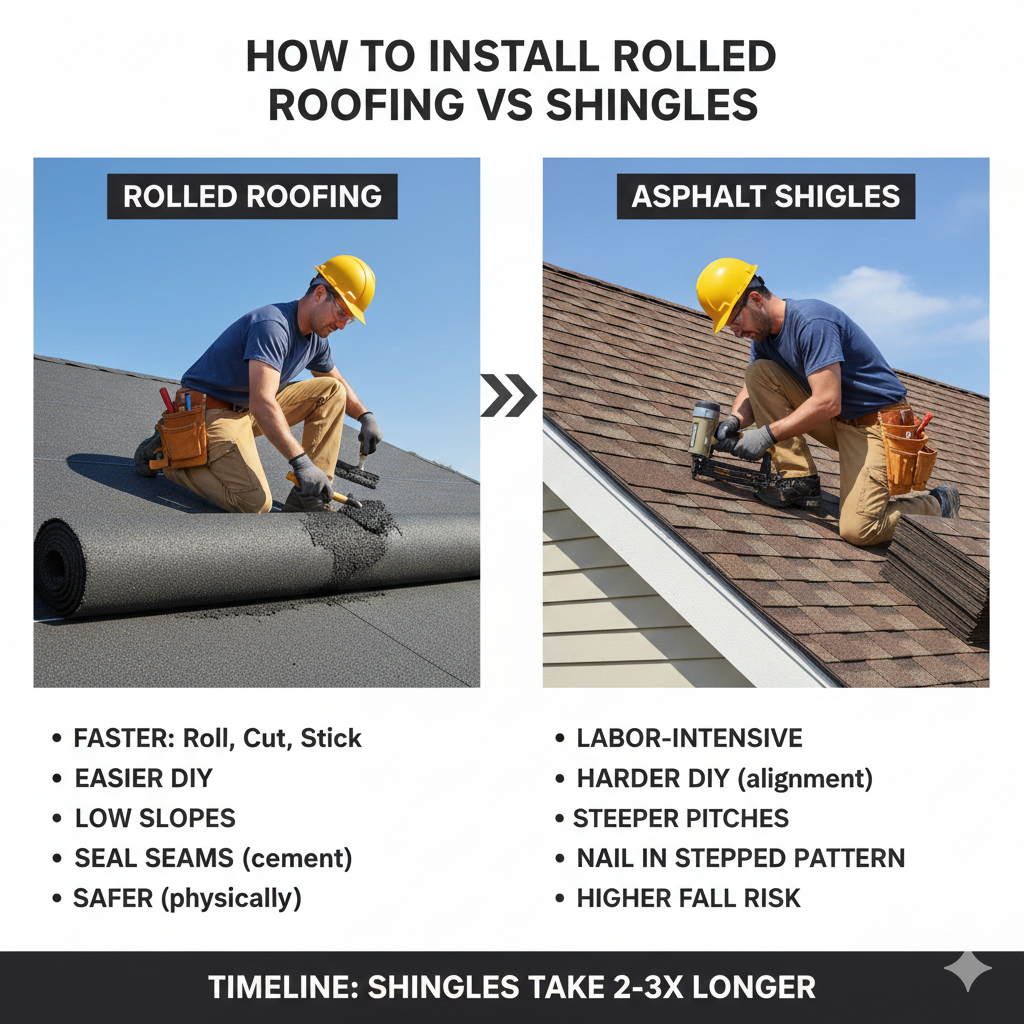
The installation process is a major differentiator in the rolled roofing vs shingles discussion. Installing rolled roofing vs shingles requires different skill sets and tools. For rolled roofing, the process is generally faster. You start by cleaning the deck and applying a primer if necessary. The material is rolled out, cut to length, and adhered using roofing cement or nails. The critical part of rolled roofing vs shingles installation for rolled material is sealing the seams; a 1/8 to 1/4 inch layer of cement is applied to overlaps to ensure water tightness.
Conversely, the rolled roof vs shingles installation for shingles is more labor-intensive. It begins with a starter strip at the eaves. Shingles are then nailed in a stepped pattern, usually requiring four to six nails per shingle. The “overlap” is built into the product design, unlike the manual overlap required in rolled roofing. In a rolled roofing vs shingle timeline, shingling a roof takes 2-3 times longer than rolling out material.
Safety is paramount in rolled roofing vs shingles installation. Because rolled roofing is often used on low slopes, it is physically safer to walk on during installation. Shingles are typically on steeper pitches, increasing fall risk. However, the rolled roofing vs shingles difficulty level for DIYers generally favors rolled roofing due to the simplicity of “roll, cut, and stick,” whereas shingles require precise alignment to look good and function correctly.
How to Clean rolled roofing vs shingles
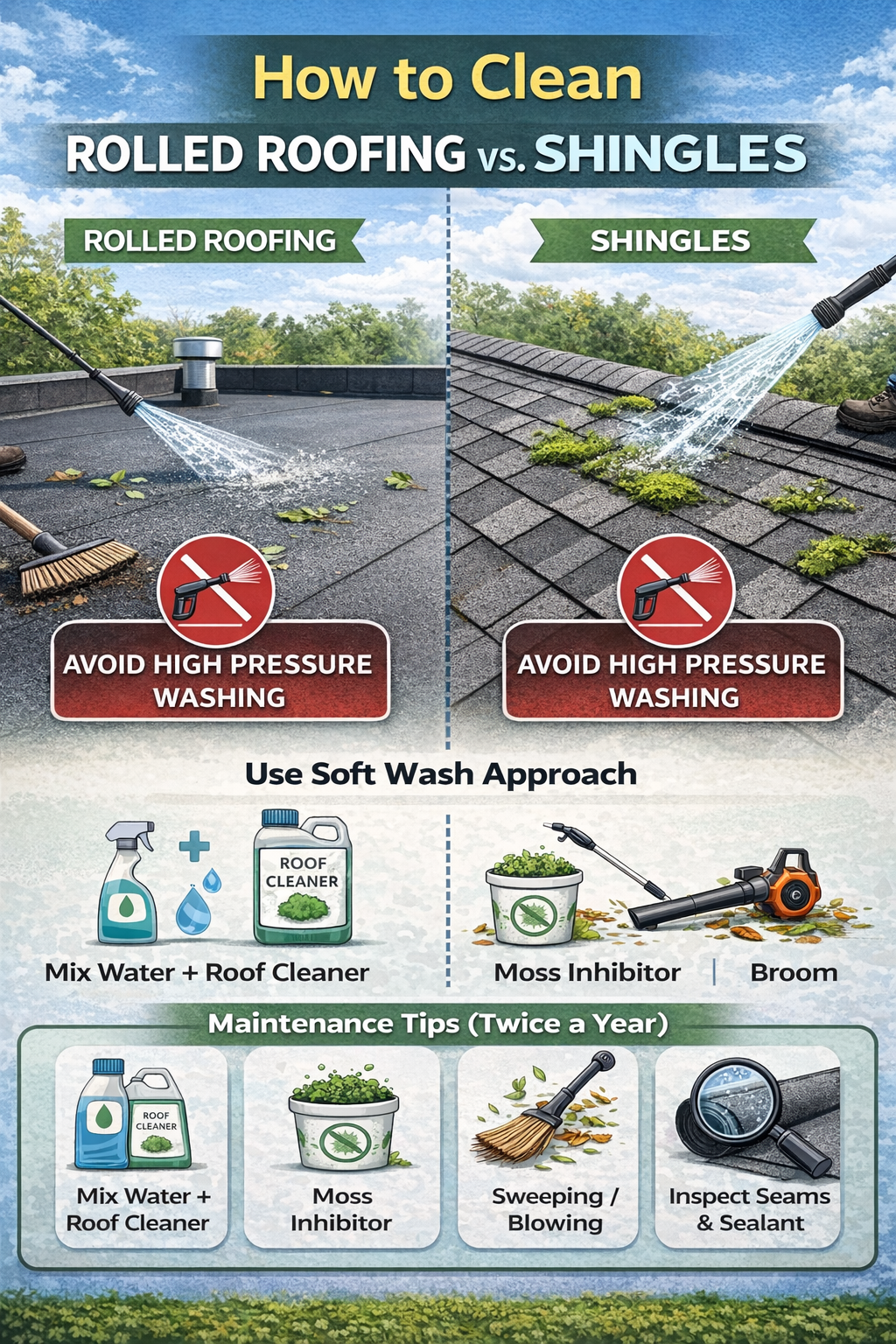
Maintenance is key to longevity, and cleaning methods for rolled roof vs shingles vary. When you look at how to clean rolled roof vs shingles, you must avoid high-pressure washing for both. High pressure can strip the protective mineral granules from both rolled roofing and shingles, destroying their UV protection. The best method for cleaning rolled roof vs shingles is a “soft wash” approach.
For both materials in the rolled roofing vs shingles cleaning category, use a mixture of water and a specialized roof cleaner or a mild bleach solution to kill algae and moss. Apply the solution gently and let it sit. In the rolled roofing vs shingles comparison, rolled roofing is often easier to walk on to apply these cleaners due to the lower slope. However, because rolled roofing is on low slopes, it accumulates debris like leaves and branches faster than shingles, requiring more frequent sweeping or blowing.
Moss removal is critical in rolled roofing vs shingles care. Moss lifts shingles, breaking the seal, and eats into rolled roofing seams. Regular application of moss inhibitor is recommended for both. The rolled roofing vs shingles maintenance schedule suggests a check-up twice a year. When cleaning, always inspect the sealant on rolled roofing seams, as this is the weak point in the rolled roofing vs shingles durability comparison.
When to Use rolled roofing vs shingles
Deciding when to use rolled roofing vs shingles is usually dictated by the roof’s pitch. The industry standard rule for rolled roofing vs shingles is that shingles should generally not be used on slopes less than 2:12 (2 inches of vertical rise for every 12 inches of horizontal run). On slopes between 2:12 and 4:12, shingles require special underlayment. Below 2:12, rolled roofing vs shingles dictates that rolled roofing (or other membrane systems) is the mandatory choice.
Therefore, use rolled roofing when the structure is flat or nearly flat, such as on patios, sheds, workshops, or lean-tos. In the rolled roofing vs shingles context, rolled roofing is the “utility” player. It is perfect for structures where aesthetics are secondary to function and cost. Conversely, choose shingles for residential homes, steep garage roofs, and any building where curb appeal matters. The rolled roof vs shingles decision for a main residence almost always favors shingles due to resale value.
Also consider the climate when choosing rolled roof vs shingles. In areas with high wind, shingles (especially architectural ones) often have higher wind ratings (up to 130 mph) compared to rolled roofing, which can lift at the seams. Thus, the “when to use” factor in rolled roofing vs shingle is a combination of slope geometry and local weather patterns.
Advantages and Challenges of rolled roofing vs shingles
Analyzing the pros and cons of rolled roofing vs shingles helps clarify the trade-offs. The primary advantage of rolled roofing in the rolled roofing vs shingles matchup is cost and speed. It is the cheapest way to cover a roof and the fastest to install. However, the challenges of rolled roofing vs shingles for rolled material include a very short lifespan (5-8 years typical) and low aesthetic appeal. It adds zero resale value to a home.
For shingles, the advantages in the rolled roofing vs shingles comparison are durability, aesthetics, and value. Shingles can last 25+ years and come in designer styles. The challenge in rolled roofing vs shingles for shingles is the higher upfront cost and the labor intensity. Additionally, shingles are heavier, adding more dead load to the structure than a single layer of rolled roofing.
Another challenge in rolled roof vs shingles is waste. Shingles create significant landfill waste if not recycled, whereas rolled roofing creates less cutting waste. However, because rolled roofing is replaced 3-4 times as often as shingles, the long-term environmental footprint in the rolled roofing vs shingle lifecycle might be higher for rolled roofing due to frequent disposal cycles.
Vital Rolled Roofing vs Shingles Comparison Topics
1: When to use rolled roofing vs shingles
The decision of when to use rolled roofing vs shingles is primarily strictly governed by the pitch of your roof. Builders and architects agree that for any roof slope below a 2:12 pitch, shingles are ineffective because water travels sideways and under them before it can drain off. In these low-slope scenarios, the rolled roof vs shingles choice must default to rolled roofing or similar membranes which provide a seamless barrier. Conversely, for any roof visible from the street or with a pitch steeper than 2:12, rolled roof vs shingles guidelines strongly recommend shingles for their superior water-shedding ability and aesthetic contribution to the home’s exterior design.
2: Rolled roofing vs shingles cost
Analyzing the rolled roof vs shingles cost differential reveals a massive gap in initial investment versus long-term value. While you might pay $150 to material a shed with rolled roofing, the same shed might cost $400 to shingle. However, the rolled roofing vs shingles cost dynamic shifts over time. Since you will likely replace that rolled roof three times in the span of one shingle roof’s life, the long-term labor and material inflation make shingles a cheaper “lifetime” solution.
3: Rolled roofing vs shingles cost
Revisiting the rolled roofing vs shingles cost perspective, one must include the cost of accessories. Shingle roofs require starter strips, ridge caps, and often drip edges that are more complex than those used for rolled roofing. The rolled roofing vs shingles labor cost is also distinct; professional roofers charge significantly more per square for shingles due to the time involved. If you are hiring out the work, the labor premium on shingles widens the rolled roofing vs shingles price gap further than just material costs alone.
4: Shingles vs rolled roofing
Finally, looking at shingles vs rolled roofing from a resale perspective is crucial. Real estate appraisers value a new shingle roof significantly higher than a new rolled roof. In the rolled roofing vs shingles valuation, a shingle roof is considered a standard residential asset, while a rolled roof is often flagged as a “temporary” or “utility” covering. Therefore, for a main house, the rolled roofing vs shingles debate is nonexistent; shingles are the only investment-grade option.
Environmental Impact of rolled roofing vs shingles
In 2026, the environmental footprint is a major factor in the rolled roof vs shingles debate. Both materials are petroleum-based, meaning they are not inherently eco-friendly. However, the rolled roof vs shingles comparison shows that shingles contribute massively to landfill waste. It is estimated that millions of tons of shingle waste are generated annually, taking roughly 300 years to decompose.
Rolled roofing, while chemically similar in the rolled roofing vs shingles analysis, often uses less material per square foot. However, because you replace it more frequently, the cumulative waste volume over 30 years might be comparable. Recycling is a challenge for both in the rolled roofing vs shingles sector. While some facilities recycle shingles into road asphalt, the rates are low (around 10%).
Homeowners concerned with the rolled roof vs shingles environmental impact might look for “cool roof” rated granules available on some rolled roofing and white shingles, which reduce energy consumption. Ultimately, in the rolled roofing vs shingles green debate, the most eco-friendly option is the one that lasts the longest, which typically gives the edge to high-quality shingles if they don’t need premature replacement.
Repair and Maintenance of rolled roofing vs shingles
Repairability is a distinct feature in the rolled roofing vs shingles comparison. When a shingle is damaged, the rolled roofing vs shingles advantage lies with shingles; you can easily lift the tab, remove the nails, and slide a new shingle in. It is a seamless repair that blends in perfectly.
In contrast, repairing rolled roofing vs shingles damage on a rolled roof is less elegant. A tear or blister in rolled roofing usually requires a patch. You must cut a piece of new material, apply cement, and stick it over the damage. In the rolled roofing vs shingle aesthetic, this patch is always visible and looks like a bandage. This makes shingles superior for long-term maintenance aesthetics.
However, finding leaks can be easier with rolled roofing in the rolled roof vs shingles diagnostic process because there are fewer seams. If a rolled roof leaks, it is usually at a seam or a penetration. With shingles, water can travel sideways under several layers, making the leak source hard to pinpoint. Despite this, the consensus in rolled roof vs shingles maintenance is that shingles offer a more serviceable system for the average homeowner.

FAQ : Rolled roofing vs shingle
Is rolled roofing cheaper than shingles for a shed?
Yes, in the rolled roofing vs shingle cost breakdown, rolled roofing is significantly cheaper for sheds and requires fewer accessories.
Can I put shingles on a low slope roof?
Generally no. In the rolled roofing vs shingle rules, putting shingles on a slope lower than 2:12 will lead to leaks; you must use rolled roofing.
How long does rolled roofing last compared to shingles?
In the rolled roofing vs shingles longevity contest, rolled roofing lasts 5-10 years, while shingles last 15-30 years.
Can I install rolled roofing over old shingles?
Technically yes, but in the rolled roof vs shingles best practices, it is not recommended as the rough texture of shingles will puncture the rolled roofing over time.
Which is easier for a DIY beginner, rolled roofing or shingles?
Rolled roofing is easier. The rolled roofing vs shingles difficulty curve is much steeper for shingles due to the precise alignment required.
Conclusion
The choice between rolled roofing vs shingles ultimately comes down to the specific needs of your project, your budget, and the geometry of your roof. As detailed in this 2026 guide, rolled roofing vs shingles is not a matter of one being universally “better,” but rather one being the correct tool for the job. If you have a flat patio or a budget shed, the rolled roofing vs shingles winner is clearly rolled roofing for its cost-effectiveness and ease of install.
However, for a primary residence or any steep-sloped structure, the rolled roofing vs shingles verdict decisively favors shingles for their superior durability, aesthetic variety, and long-term value. By weighing the costs, installation requirements, and maintenance needs discussed in this rolled roofing vs shingles article, you can confidently proceed with the roofing material that ensures your property remains safe and secure for years to come. Remember that regardless of the rolled roofing vs shingles choice you make, proper installation is the key to performance.
Other Resources
Alpha Roofing Texas – FAQ page explaining differences between rolled roofing and asphalt shingles.
Reddit – Roll Roofing Cost Discussion – Community discussion examining why roll roofing can be more expensive than shingles.
A House on a Rock – Informational article comparing rolled roofing and asphalt shingles for residential use.
Brava Roof Tile – Educational post outlining key differences between rolled roofing and shingle systems.
Other Helpful Articles
Roofing Shingles Benefits Costs – Guide explaining the benefits and cost factors of roofing shingles.
Roof Shingle Calculator – Calculator guide for estimating shingle quantities.
ELK Shingles Guide – Guide providing information on ELK asphalt shingles and product options.