
Roof Curbs: 10 Expert Steps For Success
Roof Curbs: 10 Smart Tactics For Buyers
When managing a commercial building or planning a new construction project, the details often determine the longevity of the structure. Among these critical details are roof curbs. While they might seem like simple metal boxes to the untrained eye, they are essential components that bridge the gap between your roof deck and the equipment mounted on top of it. Without proper knowledge of how they function, you risk severe water damage and equipment failure.
Understanding roof curbs is the first step toward a watertight and efficient building envelope. They act as the mounting platform for HVAC units, exhaust fans, skylights, and other heavy rooftop accessories. This article will guide you through every aspect of these vital structures, from selection to installation, ensuring you have the expert knowledge needed to make informed decisions.
What Is A Roof Curb?
At its core, a roof curb is a raised frame used to mount accessories onto a roof surface. Imagine a box-like structure, usually made of galvanized steel or aluminum, that is securely attached to the roof deck. The primary purpose of roof curbs is to provide a level platform for equipment while allowing for proper flashing to prevent water intrusion.
The design of roof curbs typically involves vertical sides and a flange that sits flush against the roof deck. This design lifts the mechanical unit or skylight above the roofline. By elevating the connection point, the curb ensures that water, snow, and debris can flow freely around the equipment without seeping into the joint where the unit meets the roof. This elevation is critical for maintaining the watertight integrity of the roofing membrane.
Furthermore, roof curbs often contain insulation to prevent thermal transfer. This insulation helps maintain the building’s internal temperature and prevents condensation from forming on the inside of the curb, which could lead to mold or rust issues. Whether you are dealing with a flat commercial roof or a pitched metal roof, these structures are the unsung heroes keeping the interior dry.

How To Do A Proper Assessment
Before purchasing or installing roof curbs, you must perform a thorough assessment of your existing roof structure. This involves checking the load-bearing capacity of the roof deck. HVAC units and the curbs themselves add significant weight. If the roof deck is structurally compromised or not designed for heavy loads, you may need structural reinforcements before proceeding.
You should also evaluate the roof slope. Roof curbs must be fabricated to match the pitch of the roof exactly. If a curb is installed on a sloped roof without a pitched bottom, the equipment mounted on top will sit at an angle. This can cause mechanical failure in HVAC units, as compressors and fans often require a level surface to operate correctly. Therefore, accurate measurements of the roof pitch are non-negotiable.
Finally, consider the compatibility of materials. The material of the roof curbs should be compatible with the roofing membrane to ensure a strong bond during flashing. For example, if you have a metal roof, you might need a curb designed with a specific rib profile to nest perfectly into the roof panels.
How To Find The Right Manufacturer
Finding reliable manufacturers for roof curbs requires a bit of research. Start by looking for companies that specialize in commercial roofing accessories. General metal fabricators might be able to make a box, but specialized manufacturers understand the specific requirements for water diversion, insulation, and load distribution.
Look for certifications and standards compliance. High-quality roof curbs should meet specific industry standards, such as those set by the Sheet Metal and Air Conditioning Contractors’ National Association (SMACNA). Compliance guarantees that the curb is built to withstand wind loads and environmental stressors common in your region.
Review customer testimonials and case studies. If a manufacturer has a history of supplying curbs for large-scale commercial projects similar to yours, they are likely a safe bet. Ask specifically if they offer custom fabrication, as many roofing situations require bespoke dimensions rather than stock sizes.
How To Buy The Correct Model
When you are ready to buy roof curbs, specification is key. You cannot simply order a “standard” size because equipment footprints vary wildly between brands and models. You will need the exact model number of the rooftop unit (RTU) you intend to install. The curb manufacturer will use this to match the supply and return air duct openings perfectly.
Pay attention to the height requirements. Most building codes require roof curbs to be a minimum of 8 inches high, but 12 or 14 inches is often better, especially in areas with heavy snowfall. A higher curb ensures that the top of the flashing remains above the snow line, preventing meltwater from entering the system.
Do not forget to order necessary accessories like cant strips or wood nailers if they are not included. These components are essential for attaching the roofing membrane to the curb.
How Much Do They Cost?
The price of roof curbs varies significantly based on size, material, and customization. For a standard, small exhaust fan curb, you might pay between $150 and $300. However, for large commercial HVAC units, the cost can easily range from $500 to over $1,500 per unit.
Custom features increase the price. If you need roof curbs with vibration isolation rails to reduce noise transfer into the building, expect to pay a premium. Similarly, pitched curbs for steep metal roofs require more complex fabrication, which drives up the manufacturing cost.
Shipping is another factor to consider. Because roof curbs are bulky and occupy a lot of space, freight charges can be high. It is often cost-effective to order all your curbs at once to consolidate shipping. When budgeting for your project, always add a 15-20% buffer for shipping and potential rush fees if the project timeline accelerates.
How Long Does Production Take?
Lead times for roof curbs can fluctuate based on the season and the manufacturer’s workload. Standard, fixed-size curbs might be in stock and ready to ship within 24 to 48 hours. However, most commercial projects require custom-fabricated curbs to match specific roof pitches and equipment footprints.
For custom orders, the typical production time is between 5 and 10 business days. During peak construction season (spring and summer), lead times can extend to two or three weeks. It is crucial to order your roof curbs well in advance of the scheduled crane lift for the HVAC units.
If you are on a tight schedule, some manufacturers offer “quick ship” programs where they can fabricate custom roof curbs in 1 to 3 days for an expedited fee. While expensive, this service can save a project from costly delays if the curbs were forgotten in the initial ordering phase.
How To Install For Maximum Lifespan
Installing roof curbs correctly is vital for the long-term health of the roof. The process begins by cutting the opening in the roof deck. This opening must be precise; a hole that is too large can compromise structural integrity and make fastening difficult. Once the hole is cut, the curb is placed over it and secured to the deck using lag bolts or welding, depending on the deck type.
The most critical step is the flashing. The roofing membrane must be brought up the sides of the roof curbs and terminated properly.
-
Clean the Area: Ensure the roof deck around the curb is free of debris.
-
Secure the Curb: Fasten the curb flange to the roof deck every 12 inches.
-
Install Cant Strips: Place cant strips against the curb to smooth the angle for the membrane.
-
Apply Flashing: Adhere the roofing membrane up the vertical wall of the curb.
-
Counter-Flash: Install metal counter-flashing to protect the top edge of the membrane.
If the flashing is done poorly, the roof curbs will become the primary source of leaks in the building. It is highly recommended that a professional roofer handle this part of the installation, even if the mechanical contractor sets the curb itself.

Special Considerations For Curbs
When dealing with complex roofing systems, you need to understand specific terminology and details. Here are four crucial topics regarding roof curbs that professionals must know.
1: HVAC Roof Curb
An HVAC roof curb is specifically designed to handle the airflow requirements of heating and cooling units. Unlike a simple box for a skylight, these roof curbs often have internal dividers. These dividers separate the supply air (going into the building) from the return air (coming out). If these are not sealed correctly within the curb, you will get “short-cycling,” where the conditioned air is immediately sucked back into the unit, destroying energy efficiency.
2: Roofing Curbs
The term “roofing curbs” is often used interchangeably, but it can also refer to the continuous wood blocking used at roof perimeters or expansion joints. However, in the context of equipment, roofing curbs must accommodate the thermal expansion and contraction of the roof. On large warehouses, the roof expands in the heat. If the roof curbs are too rigid or attached incorrectly to a floating roof system, the movement can tear the membrane.
3: Roof Curbs Icon
In architectural drawings and blueprints, the roof curbs icon is a standard symbol used to denote placement. It usually looks like a square or rectangle with an “X” or a specific hatch pattern. Recognizing this icon is essential for contractors to know exactly where to cut deck penetrations. Misinterpreting the location by even a few feet can result in conflicts with internal steel beams or sprinkler lines.
4: Roof Curb Detail
The “roof curb detail” refers to the specific engineering drawing showing how the curb interacts with the roof layers. This detail specifies the insulation thickness, the type of fasteners, and the layers of flashing. Architects provide a specific roof curb detail to ensure the contractor maintains the warranty of the roofing system. Ignoring this detail is a common cause for voided roof warranties.
How To Clean And Maintain
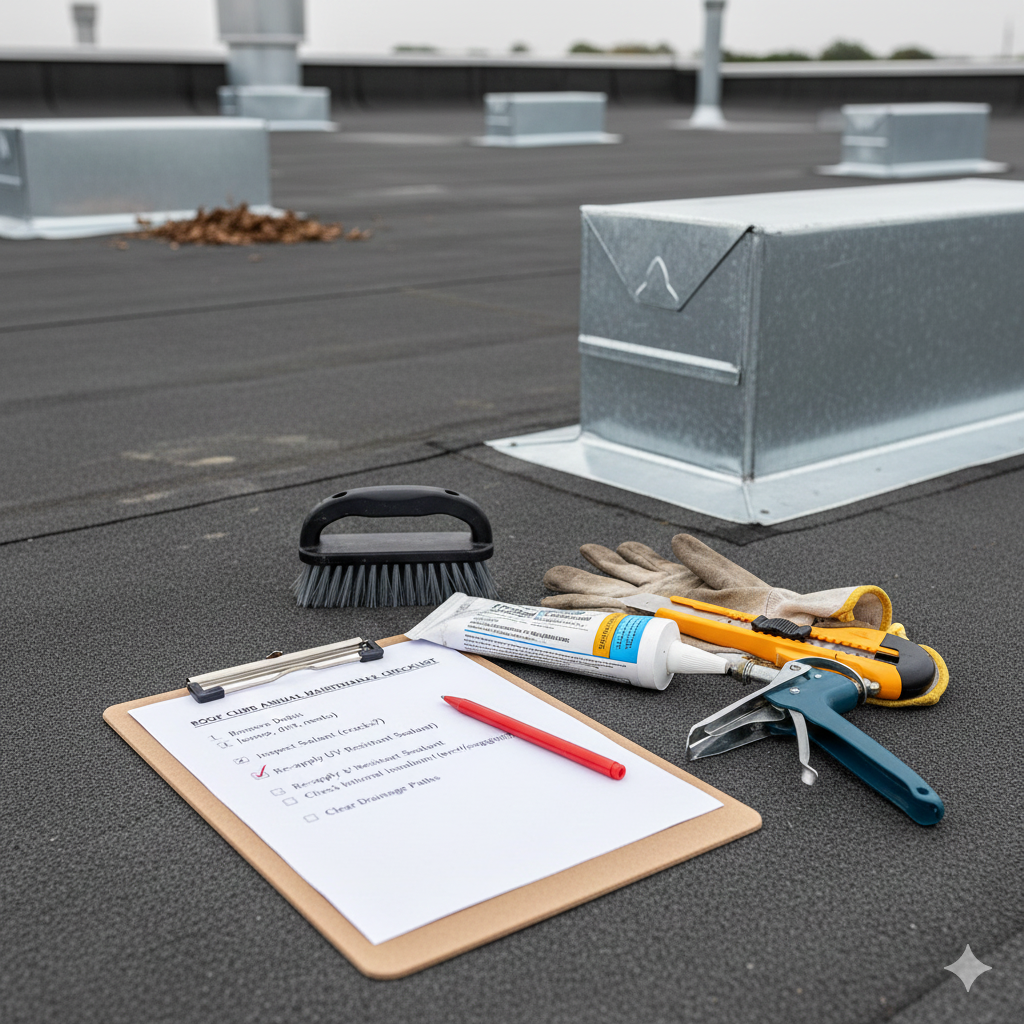
Maintenance of roof curbs is often overlooked until a leak occurs. Regular cleaning involves removing debris such as leaves, dirt, and bird nests that accumulate around the base of the curb. This debris can trap moisture against the metal and the flashing, leading to premature corrosion or rotting of the wood nailers.
Inspect the sealant and caulking around the top of the curb where the unit sits. Over time, UV exposure causes sealants to crack. Re-applying a high-quality, UV-resistant sealant to the top perimeter of the roof curbs ensures that wind-driven rain cannot penetrate the joint between the curb and the equipment.
Check the internal insulation. If you ever remove an HVAC unit for service, look inside the curb. If the insulation is wet or sagging, it needs to be replaced. Wet insulation within roof curbs reduces thermal efficiency and can harbor mold that gets blown into the building’s air supply.
What Is The Total Cost of Ownership?
The initial purchase price of roof curbs is only a fraction of the total cost. You must consider installation labor, the cost of the roofing contractor to flash it in, and long-term maintenance. Cheap, poorly made curbs might save $50 upfront but can cost thousands in water damage repairs later.
High-quality roof curbs made of heavy-gauge steel or aluminum will last the life of the roof (20-30 years). Cheaper, light-gauge curbs may rust out in 10 years, requiring a complex and expensive replacement that involves lifting the HVAC unit again. Therefore, investing in quality curbs reduces the total cost of ownership significantly.
Energy costs also play a role. Well-insulated roof curbs prevent heat loss in winter and heat gain in summer. Over the lifespan of a building, a properly insulated curb can save hundreds of dollars in energy bills compared to an uninsulated one.
Advantages and Challenges
Utilizing roof curbs presents a mix of significant benefits and potential hurdles that facility managers must navigate.
Advantages:
The primary advantage is water protection. By raising equipment, roof curbs drastically reduce the risk of leaks. They also provide a standardized way to mount equipment, making future replacements easier. If you swap out an AC unit, you often can use an adapter curb on top of the existing one rather than ripping up the roof. Additionally, they reduce noise vibration when equipped with isolation rails.
Challenges:
The main challenge is the installation precision required. If roof curbs are not level or if the measurements are off by half an inch, the equipment won’t fit. Another challenge is weight distribution. Adding multiple curbs increases the dead load on the roof, which might require structural engineering approval. Finally, improper flashing around roof curbs is the number one cause of commercial roof leaks, making skilled labor essential.

FAQ
Why are roof curbs necessary for HVAC units?
They provide a secure, level mounting platform and prevent water from entering the building through the duct openings.
Can I install roof curbs on an existing roof?
Yes, this is called a retrofit installation. It requires cutting the existing membrane and deck, installing the curb, and then re-flashing the area.
What is the standard height for roof curbs?
The most common standard height is 12 inches, though 8 inches is the minimum code in many areas, and 18 inches is used in heavy snow regions.
Do roof curbs come with insulation?
Yes, most high-quality curbs come with rigid insulation lining the interior walls to prevent condensation and thermal loss.
How do I measure for adapter roof curbs?
You must measure the outside dimensions of the existing curb and the supply/return duct openings, then provide the model number of the new unit.
Are aluminum roof curbs better than steel?
Aluminum is lighter and does not rust, making it better for coastal environments, but galvanized steel is stronger and more common for general use.
Conclusion
In the world of commercial construction, roof curbs are indispensable components that ensure the functionality and integrity of a building. They are more than just metal boxes; they are engineered solutions that protect your property from water damage while supporting vital mechanical systems. From understanding the initial specifications to mastering the installation nuances, expertise in this area is valuable.
Selecting the right roof curbs involves careful consideration of materials, load capacities, and environmental factors. Whether you are an architect designing a new warehouse or a facility manager replacing an old AC unit, paying attention to the details of these structures will save time and money.
By following the guidelines for assessment, purchasing, and maintenance outlined in this article, you can ensure that your roof curbs perform flawlessly for decades. Remember that the roof is your building’s first line of defense against the elements, and a well-installed curb is a critical link in that defensive chain. Prioritize quality and professional installation to enjoy a safe, dry, and efficient building environment.
🏗️ Other Resources
Explore these trusted resources to understand what a roof curb is, how it’s used, and where to find roof curb products:
-
RoofCurb.com – Specialized manufacturer of custom roof curbs for HVAC and rooftop equipment.
-
Design Components – What Is a Roof Curb? – Clear explanation of roof curb purpose, types, and installation.
-
Greenheck – Roof Curbs & Mounting Accessories – Roof curbs designed for ventilation and air movement systems.
-
Thybar – Roof Curb Products – Pre-engineered and custom roof curb solutions.
🔎 Other Helpful Articles
-
New Metal Roof Cost in Fort Walton Beach, Florida – Local metal roofing cost guide.
-
What Is a Square in Roofing? – Roofing measurements explained.
-
Copper Roof Panels – Guide to copper roofing materials and costs.