
Roof Jacks : Installation Steps, Prices, and Lifespan for 2025
Roof Jacks Safety Guide: Installation Steps, Prices, and Lifespan
Roof jacks play a crucial role in roofing safety, especially when working on steep slopes where balance and stability are limited. Whether you’re planning to repair shingles, install new roofing materials, or complete routine maintenance, roof jacks provide the secure platform needed to move confidently and reduce accident risks. This guide explains what roof jacks are, how much they cost, how to install them, and why they remain one of the most reliable tools on a roof.
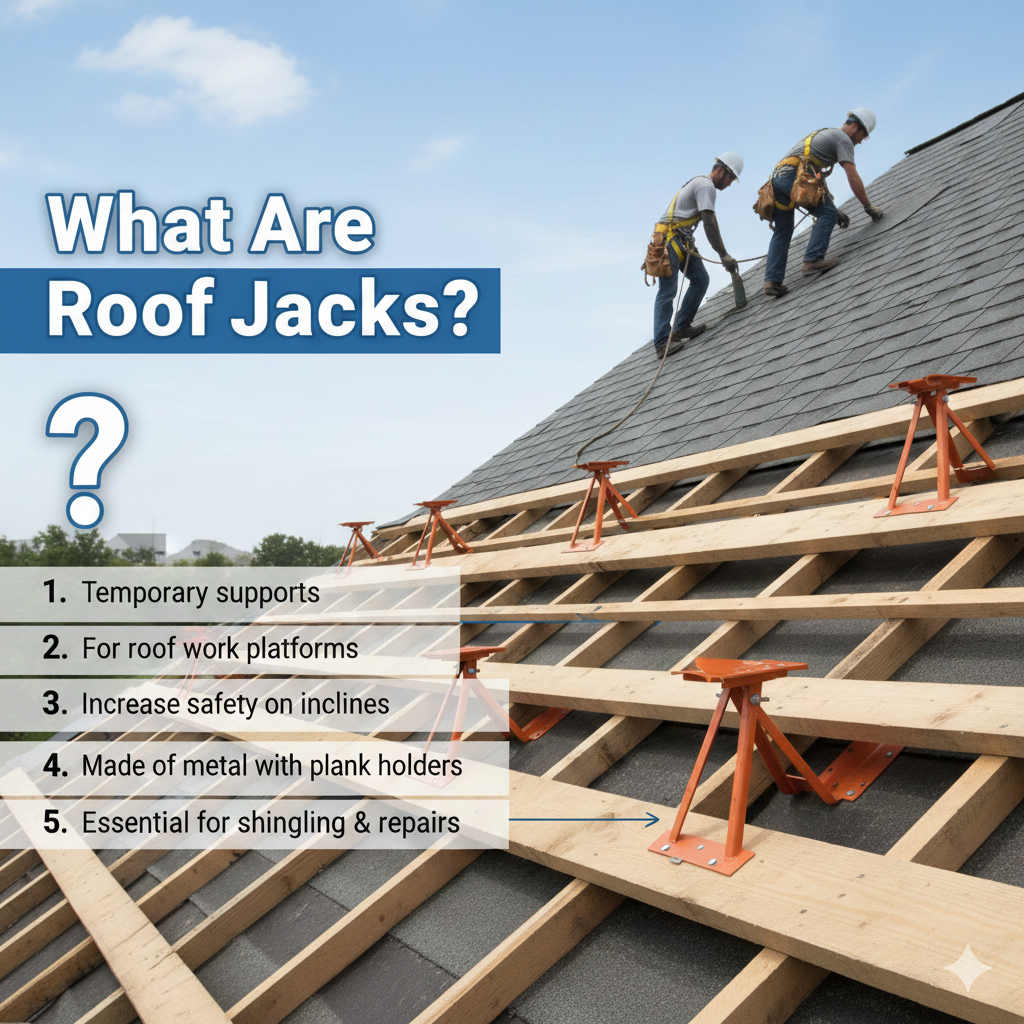
What Are Roof Jacks?
Roof jacks are heavy-duty metal brackets fastened directly into the roof structure. Once installed, they support wooden planks—usually 2×10 or 2×12 boards—creating a temporary walkway or working platform. This setup gives roofers stable footing on pitches that would otherwise be unsafe or impossible to navigate.
Roof jacks are commonly used for:
- Shingle installation and removal
- Chimney and flashing repairs
- Cleaning or maintaining steep roof sections
- homes
- Ice-dam or snow removal tasks
- Preparation for mounting rooftop equipment
They are especially useful on roofs with a pitch of 6/12 or greater, where traction becomes a serious challenge.
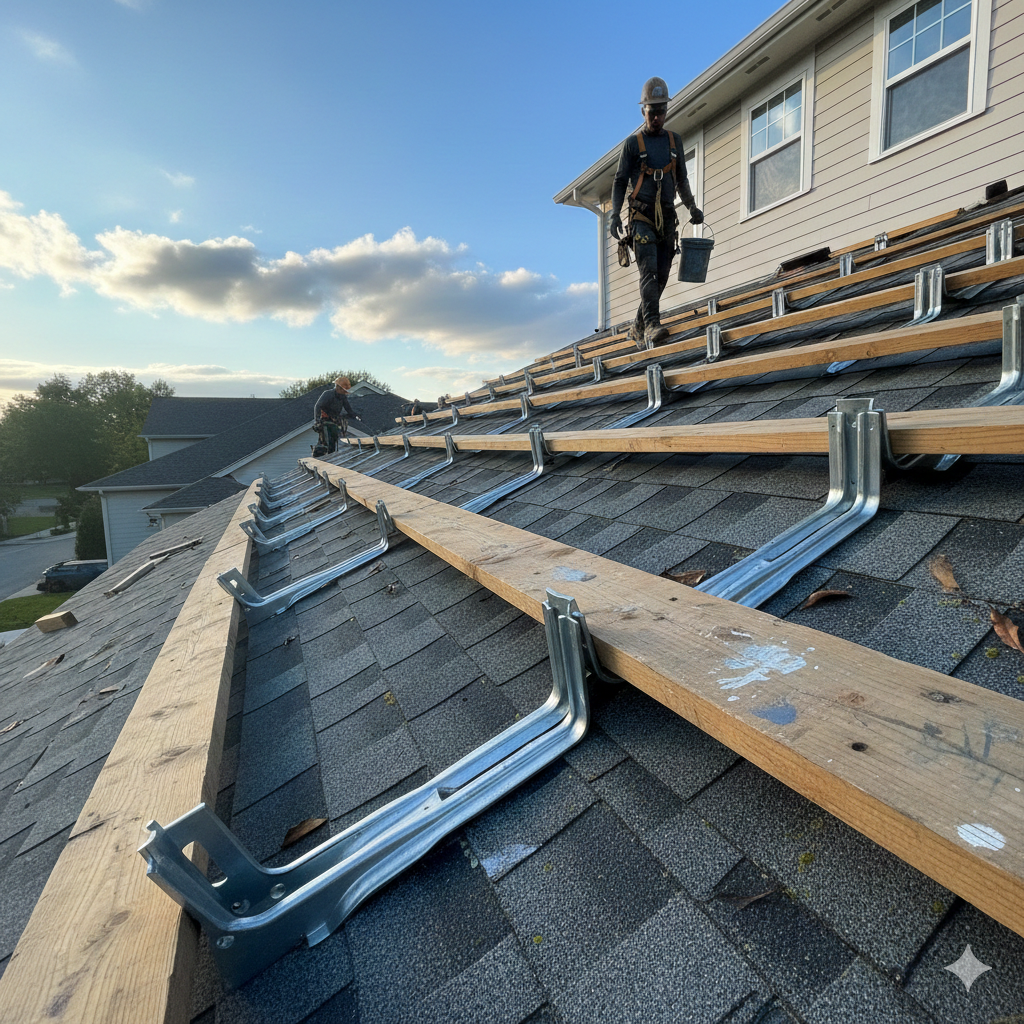
Key Benefits
1. Strong Safety Support
- The main purpose of roof jacks is to reduce slipping hazards and provide a solid platform. This significantly lowers fall risks during roofing projects.
2. Faster and Easier Work
- A steady surface allows roofers to move more efficiently, carry tools, and complete tasks faster.
3. Adaptable for Many Roof Types
- Roof jacks come in various designs to match different pitches, making them versatile for most residential roofing systems.
4. Affordable and Reusable
- Compared to scaffolding systems, roof jacks cost much less and can be reused for several years if properly stored.
5. Simple to Install and Remove
- Installation requires basic tools, and removal leaves only small nail holes that can be sealed easily.
How to Install
Follow these steps for safe and efficient installation:
- Prepare Your Tools
Roof jacks, roofing nails, a hammer or nail gun, lumber planks, and a safety harness are essential. - Locate Rafters
Roof jacks must be nailed into rafters—not shingles—to ensure weight support. - Position the Brackets
Space them evenly, usually every 4–6 feet, depending on the length of your planks. - Secure the Roof Jacks
Use strong nails (such as 16d) and drive at least four into each bracket. - Set the Planks
Slide your boards into place to create a level working area. - Remove and Seal
After the job is complete, remove the jacks and seal the nail holes with roofing cement to prevent leaks.
How Much Do Roof Jacks Cost?
Prices depend on the quality, material, and design:
- Standard steel roof jacks: $10–$20 each
- Adjustable or heavy-duty models: $25–$45
- Premium or professional-grade jacks: $50+
For a typical roofing project, expect to use between 6 and 12 jacks, bringing the overall cost to $100–$350.
How Long Do Roof Jacks Last?
Most roof jacks last 10–20 years, especially when cleaned and stored after use. Harsh weather, corrosion, and improper storage can shorten their lifespan.
Tips for Using Roof Jacks Safely
- Always wear a safety harness roof jacks alone are not enough.
- Choose jacks designed for your roof’s pitch.
- Use strong, straight planks only.
- Inspect jacks for rust or bending before reusing them.
- Avoid using roof jacks on flat or low-slope roofs.
Roof jacks are simple yet powerful tools that dramatically improve safety and efficiency on steep roofs. When installed correctly, they create a secure platform that helps both homeowners and professionals complete roofing work with confidence. Their affordability, reusability, and reliability make them a must-have for anyone working on challenging roof surfaces.
Other Resources
- Home Depot – Roof Brackets Wide selection of roof brackets for safe roof work and stability.
- Big Rock Supply – Roof Brackets Professional-grade roof brackets designed for shingle roofing projects.
- MBCI – Roof Jacks Durable roof jacks for concealed fastener metal roofing systems.
- YouTube – How to Use Roof Jacks Quick visual tutorial on using roof jacks safely and effectively.
- Roof Pressure Washing : Roof Pressure Washing: Guide, Cost, Process & Expert Tips