
Roof Pipe Supports: Essential Tips
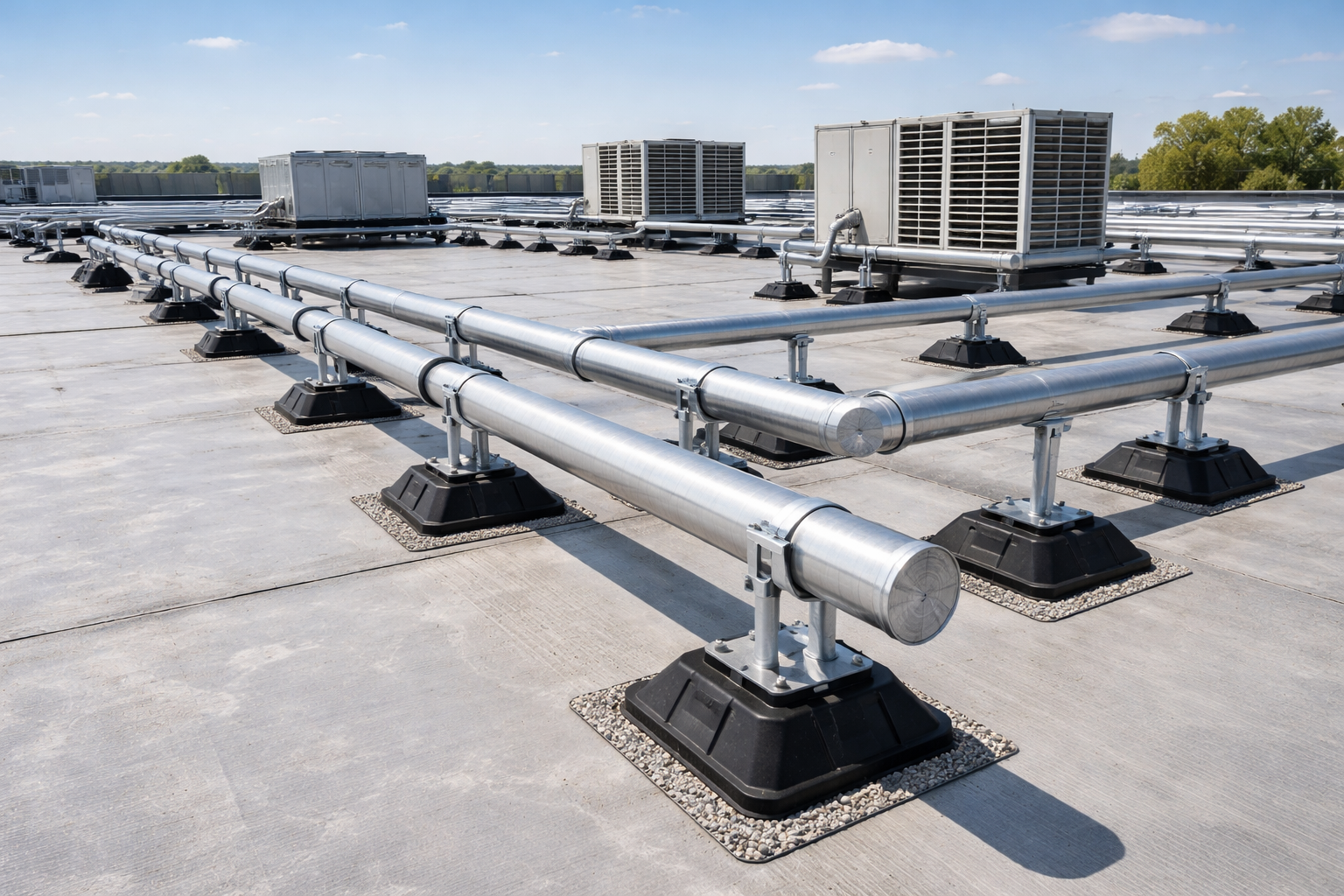
Roof Pipe Supports: The Complete Professional Installation Guide
When it comes to roofing systems that incorporate plumbing, HVAC, or gas lines, roof pipe supports play an absolutely critical role in maintaining structural integrity and safety. These essential components ensure that pipes passing through or mounted on your roof remain stable, properly positioned, and compliant with building codes. Whether you’re a homeowner planning a renovation, a contractor managing a commercial project, or a DIY enthusiast tackling a home improvement task, understanding roof pipe supports is fundamental to achieving a safe and long-lasting installation.
The importance of proper pipe support cannot be overstated. Inadequate support can lead to pipe movement, stress on connections, water infiltration, and even structural damage to your roofing system. From simple residential vent pipes to complex commercial HVAC installations, every pipe penetration requires carefully selected and correctly installed roof pipe supports. This comprehensive guide covers everything you need to know about these crucial components, from basic definitions to advanced installation techniques.
Throughout this article, we’ll explore the various types of roof pipe supports, their applications, installation methods, costs, and maintenance requirements. You’ll learn how to select the right supports for your specific project, avoid common installation mistakes, and ensure your system meets all relevant building codes and safety standards.
What Are Roof Pipe Supports
Roof pipe supports are specialized structural components designed to secure pipes that penetrate through or run across roofing surfaces. These supports serve multiple critical functions: they bear the weight of the pipes, prevent lateral movement caused by wind or thermal expansion, maintain proper pitch for drainage, and protect the roof membrane from damage. The supports act as an intermediary between the pipe and the roof structure, distributing loads evenly and preventing concentrated stress points that could compromise either the piping system or the roof itself.
Modern roof pipe supports come in various configurations to accommodate different pipe materials, sizes, and installation scenarios. Common types include roof-mounted pipe stands, which elevate pipes above the roof surface; roof curbs with integrated pipe sleeves for penetrations; adjustable roller supports that allow for thermal expansion; and framing supports that attach directly to structural members beneath the roof deck. Each type is engineered for specific applications and load requirements.
The materials used in manufacturing roof pipe supports vary based on environmental conditions and compatibility requirements. Steel supports offer exceptional strength and are often galvanized or powder-coated for corrosion resistance. Aluminum supports provide a lightweight alternative with natural corrosion resistance, making them ideal for coastal environments. Composite materials and specialized plastics are increasingly used for their chemical resistance and insulating properties, particularly in situations where thermal transfer must be minimized.
How to Choose the Right Roof Pipe Supports
Selecting appropriate roof pipe supports begins with a thorough assessment of your specific requirements. First, determine the pipe size, material, and weight, including any insulation or contents. Calculate the span between supports, considering that longer unsupported lengths require stronger supports or more frequent placement. Evaluate environmental factors such as wind loads, snow accumulation, seismic activity, and temperature extremes that will affect the support system. Additionally, consider the roof type, slope, and deck material, as these factors influence attachment methods and load distribution.
Building codes and industry standards provide essential guidance for support selection. The International Plumbing Code (IPC) and International Mechanical Code (IMC) specify minimum support requirements for various pipe types and sizes. Local amendments may impose stricter requirements based on regional conditions. Roof pipe supports must comply with these codes while also meeting manufacturer specifications for load capacity and installation methods. Consulting with a structural engineer or experienced contractor ensures your selection meets all regulatory requirements.
Material compatibility represents another crucial consideration when choosing roof pipe supports. The support material must be compatible with both the pipe material and the roofing membrane to prevent galvanic corrosion, chemical reactions, or thermal damage. For example, copper pipes require supports that won’t cause electrolytic corrosion, while PVC pipes need supports that can accommodate thermal expansion. The roof membrane—whether TPO, EPDM, PVC, or modified bitumen—must be protected from abrasion and chemical degradation caused by support components.
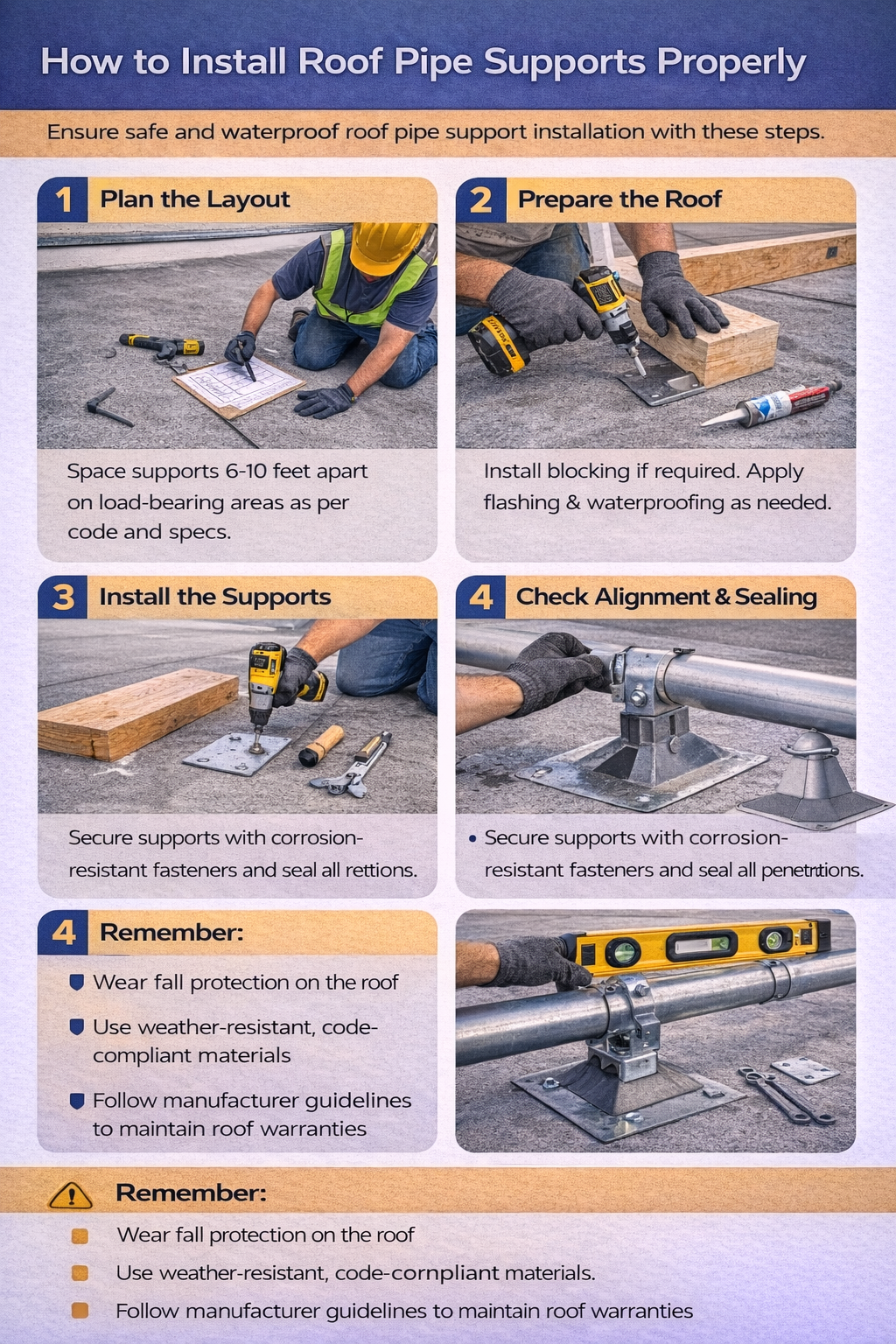
How to Install Roof Pipe Supports Properly
Installing roof pipe supports demands careful planning and precise execution to ensure system safety and longevity. Begin by marking support locations according to code requirements and manufacturer specifications, typically spacing supports at intervals of 6 to 10 feet depending on pipe size and material. Verify that attachment points align with structural members or adequately reinforced roof deck areas. Create detailed layout drawings showing all support locations, pipe routing, and connection points before beginning physical installation.
The installation process varies depending on support type and roof construction. For roof-mounted pipe stands, start by preparing the roof surface, ensuring it’s clean, dry, and structurally sound. Install a properly sized roof curb or blocking if required to provide adequate attachment strength. Apply appropriate flashing and waterproofing measures around all penetrations, following roofing manufacturer guidelines to maintain warranty compliance. Secure the pipe stand using corrosion-resistant fasteners rated for the expected loads, and seal all fastener penetrations with compatible sealants.
When installing supports that penetrate the roof deck, coordination with roofing professionals becomes essential. The penetration must be properly flashed with a combination of base flashing, counter flashing, and storm collars to prevent water infiltration. For gas pipes on residential roofs, special attention must be paid to proper support spacing and secure attachment methods that prevent movement during thermal expansion. Each support point should be inspected to ensure proper alignment, adequate load transfer, and complete waterproofing before proceeding to the next location.
Understanding Frame Pipe Supports for Roofs
Frame pipe supports for roofs represent a specific category of support systems designed to distribute pipe loads across multiple structural members. These supports typically consist of fabricated steel or aluminum frames that span between roof joists, rafters, or purlins, creating a stable platform for pipe attachment. The frame design allows for greater flexibility in pipe routing while maintaining proper support spacing and load distribution. Frame supports prove particularly valuable in situations where the roof deck cannot bear concentrated loads or where multiple pipes require support in close proximity.
The construction of frame pipe supports involves careful engineering to ensure adequate strength and stability. Engineers calculate the required frame member sizes based on expected loads, span lengths, and connection details. The frame typically includes horizontal beams that support the pipes directly and vertical posts or diagonal bracing that transfer loads to structural members. All connections use bolts, welds, or specialized connectors rated for the calculated forces. Proper frame design accounts for both dead loads (pipe weight and contents) and live loads (maintenance access, snow, wind).
Installation of frame pipe supports requires close coordination with structural elements. The support frame must attach securely to building structural members using appropriate fasteners and connection methods. In some cases, supplemental reinforcement of the roof structure may be necessary to accommodate the concentrated loads at frame attachment points. Frame supports offer significant advantages for complex piping arrangements, allowing for organized routing of multiple pipes while minimizing roof penetrations and simplifying maintenance access.
Can You Support Gas Pipe with Wood on Roof
The question of whether wood can serve as a material for supporting gas pipes on roofs requires careful consideration of building codes, safety requirements, and practical limitations. While wood has historically been used for various construction applications, its use for gas pipe supports faces significant restrictions in most jurisdictions. Building codes typically require non-combustible materials for gas pipe supports, particularly in areas where the gas pipe could become hot or where fire risk exists. However, specific circumstances and local code interpretations may permit wood supports under certain conditions.
When wood supports are permitted, they must meet stringent requirements for treatment, sizing, and installation. The wood must be pressure-treated or naturally rot-resistant species rated for exterior exposure. Support members must be adequately sized to carry all anticipated loads with appropriate safety factors. The wood must be protected from direct contact with metal pipes through appropriate insulation or isolation methods to prevent moisture accumulation and corrosion. Additionally, wood supports must be securely attached to structural members and properly flashed to prevent water infiltration.
In most professional installations, non-combustible materials such as steel or aluminum are strongly preferred over wood for gas pipe supports. These materials offer superior fire resistance, longer service life, and more predictable performance under varying environmental conditions. Metal supports also provide better resistance to settlement, warping, and degradation from UV exposure. If you’re considering wood supports for gas pipes on your roof, consult with local building officials and gas utility representatives to determine whether such installations meet current codes and safety standards in your jurisdiction.
Determining How Many Roof Pipe Supports You Need
Calculating the correct number of roof pipe supports for your installation requires understanding support spacing requirements specified in building codes and engineering standards. The International Plumbing Code provides minimum support spacing requirements based on pipe material and size. For example, copper pipes typically require support every 6 feet for horizontal runs, while steel pipes may extend to 12 feet between supports. PVC and other plastic pipes generally need more frequent support, often at 4-foot intervals. These spacing requirements ensure pipes remain properly aligned and don’t sag between support points.
Beyond minimum code requirements, several factors may necessitate additional roof pipe supports. Pipes carrying heavy contents, such as water-filled fire suppression systems, require more frequent support than empty vent pipes. Changes in pipe direction, including elbows, tees, and offsets, typically require dedicated supports to handle the directional forces. Pipes installed on roofs with significant slope may need closer support spacing to prevent movement down the slope. Environmental conditions such as high wind zones or heavy snow load areas often mandate additional supports to maintain system stability.
The proper calculation method involves creating a detailed pipe layout showing all horizontal and vertical runs, direction changes, and connection points. Measure the total length of each pipe segment and divide by the maximum allowable spacing for that pipe type and size. Round up to the nearest whole number to determine the minimum number of supports required. Add supports at all direction changes and equipment connections. Include additional supports at access points for maintenance and at locations where concentrated loads occur. This systematic approach ensures adequate support throughout the entire piping system.
How to Support a Gas Pipe on a Residential Roof
Supporting gas pipes on residential roofs demands strict adherence to safety codes and proper installation techniques. Gas pipe installations must comply with the International Fuel Gas Code (IFGC) and local amendments, which specify requirements for materials, support methods, and clearances. The support system must securely hold the gas line while allowing for thermal expansion and preventing strain on connections. All components must use non-combustible materials, and the installation must be accessible for inspection and maintenance.
Begin residential gas pipe support installation by determining the optimal pipe route across the roof that minimizes exposure to traffic areas while maintaining proper clearances from other building elements. Install supports at intervals not exceeding code-specified maximums, typically 6 feet for steel pipe and closer for aluminum. Each support must attach to structural framing members or adequately reinforced roof deck sections capable of bearing the imposed loads. Use approved pipe hangers, straps, or stands specifically rated for gas piping applications.
Proper installation requires attention to several critical details. Support components must incorporate provisions for thermal expansion, typically through sliding supports or expansion loops in the piping system. All roof penetrations for support attachments must be properly flashed and sealed to prevent water infiltration. The gas pipe itself requires protection from physical damage, using guards or barriers where necessary. Bonding and grounding requirements must be satisfied according to electrical codes. Finally, pressure testing and inspection by qualified authorities ensure the installation meets all safety standards before placing the system in service.
How to Find Quality Roof Pipe Supports
Locating high-quality roof pipe supports requires research across multiple channels and careful evaluation of supplier credentials. Start by consulting with professional roofing supply distributors who specialize in commercial and industrial applications. These suppliers typically carry a comprehensive range of roof pipe supports from reputable manufacturers and can provide technical assistance in product selection. Many maintain relationships with engineers and contractors, offering insights into products that perform well in real-world applications.
Online resources provide extensive options for sourcing roof pipe supports. Manufacturer websites offer detailed product specifications, installation guides, and compatibility charts. Industry-specific online retailers specialize in piping and roofing components, often providing comparison tools and customer reviews. Professional trade associations, such as the Plumbing-Heating-Cooling Contractors Association (PHCC) or the National Roofing Contractors Association (NRCA), maintain directories of approved suppliers and manufacturers. These associations also publish technical bulletins and standards documents that reference quality products.
When evaluating potential suppliers, consider several key factors beyond price. Verify that products carry appropriate certifications from recognized testing laboratories such as Underwriters Laboratories (UL) or the International Code Council Evaluation Service (ICC-ES). Review manufacturer warranties and technical support availability. Assess the supplier’s inventory depth and delivery capabilities, particularly for large or time-sensitive projects. Request product samples when possible to evaluate build quality and material specifications firsthand. Establish relationships with multiple suppliers to ensure reliable access to roof pipe supports for both routine and emergency needs.
How to Buy Roof Pipe Supports Cost-Effectively
Purchasing roof pipe supports cost-effectively requires balancing initial investment against long-term performance and reliability. While budget constraints often influence purchasing decisions, selecting low-quality supports can result in premature failures, increased maintenance costs, and potential safety hazards that far exceed any initial savings. Develop a comprehensive procurement strategy that considers total cost of ownership rather than simply the lowest purchase price.
Begin by accurately specifying your requirements, including exact quantities, sizes, materials, and load ratings. Detailed specifications enable accurate price comparisons and prevent cost overruns from incorrect orders. Request quotes from multiple suppliers, but ensure all quotes reflect identical specifications to make meaningful comparisons. Consider purchasing supports in bulk for large projects, as many suppliers offer volume discounts. However, avoid over-purchasing, as excess inventory ties up capital and may result in storage deterioration or obsolescence.
Timing your purchases strategically can yield significant savings. Some suppliers offer seasonal promotions or end-of-year clearances on roofing components. Building relationships with preferred suppliers may provide access to contractor pricing, early notification of sales, or preferred payment terms. Consider purchasing through professional buying groups or cooperatives that leverage collective purchasing power for better pricing. For large or complex projects, engage suppliers early in the planning process to secure accurate pricing and ensure product availability before construction deadlines.
Understanding Roof Pipe Support Costs
The cost of roof pipe supports varies significantly based on type, size, materials, and application requirements. Basic roof-mounted pipe stands for residential applications typically range from $15 to $50 per unit for standard sizes supporting common pipe diameters. Mid-range commercial supports with adjustable heights and larger load capacities cost between $50 and $150 per support. Heavy-duty industrial supports engineered for large-diameter pipes or extreme load conditions can exceed $200 to $500 per unit. Custom-fabricated supports designed for specific applications may cost considerably more depending on engineering requirements and fabrication complexity.
Material selection substantially impacts cost. Steel supports, while strong and durable, typically cost 20-30% less than equivalent aluminum supports. However, aluminum offers corrosion resistance advantages that may justify the higher initial cost in coastal or chemical environments. Stainless steel supports command premium pricing, often 50-100% more than standard steel, but provide superior corrosion resistance for critical or high-maintenance applications. Composite and specialized polymer supports fall into mid-to-high price ranges depending on their specific properties and certifications.
Beyond the support components themselves, total project costs include associated materials and labor. Flashing kits, sealants, and fasteners add $10 to $30 per support location. Roof curbs or supplemental blocking required for proper installation can cost $50 to $200 per location depending on size and complexity. Professional installation labor typically ranges from $75 to $150 per support, varying by location, accessibility, and contractor rates. Engineering fees for complex installations requiring structural calculations may add $500 to $2,000 or more to total project costs. When budgeting for roof pipe support installations, account for all these components to develop realistic cost projections.
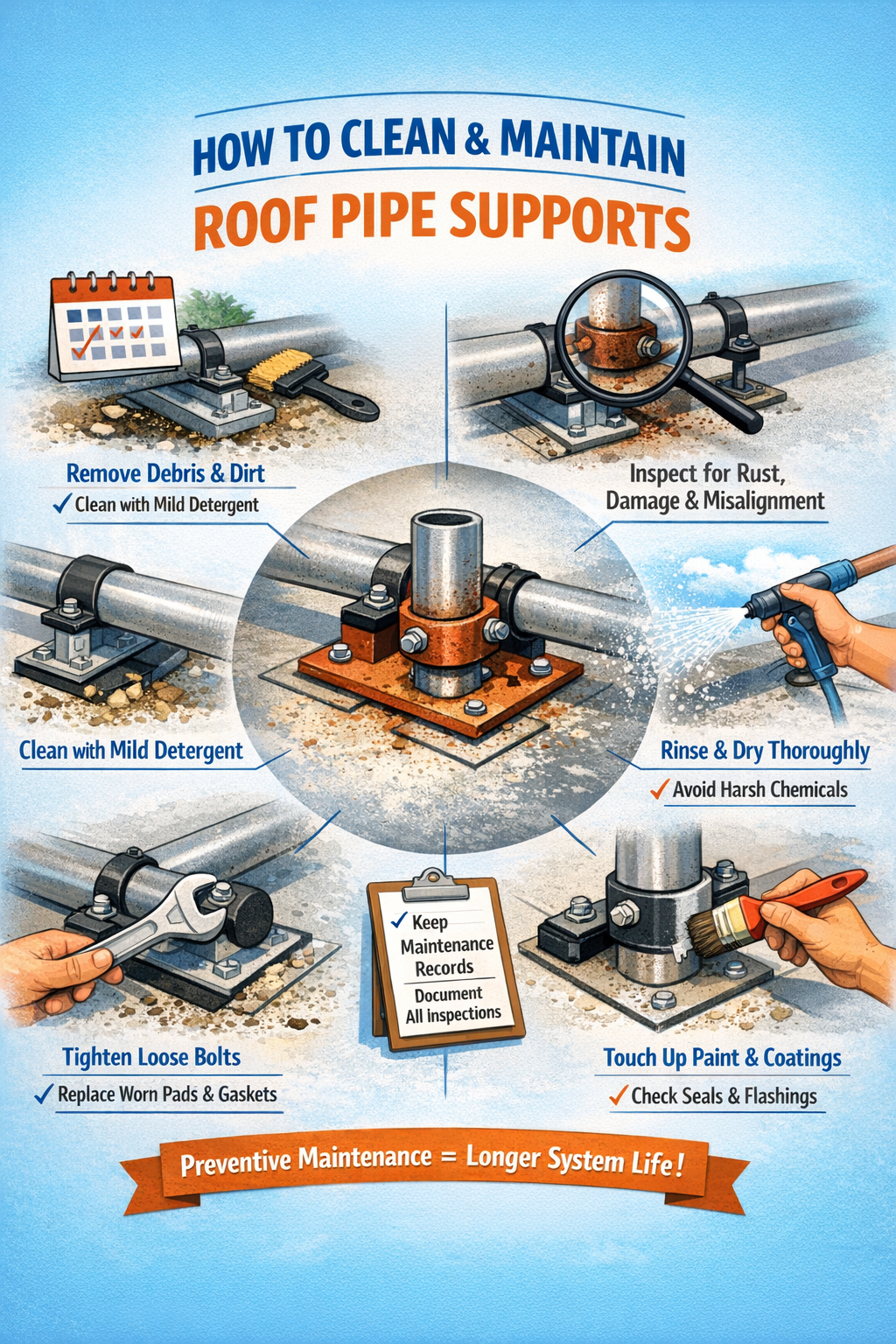
How to Clean and Maintain Roof Pipe Supports
Regular maintenance of roof pipe supports ensures optimal performance and extends system lifespan. Establish a maintenance schedule based on environmental conditions and manufacturer recommendations, typically conducting inspections semi-annually and after major weather events. Visual inspections should examine supports for signs of corrosion, loose fasteners, damaged coatings, or structural deformation. Check pipe alignment to detect any settlement or movement that might indicate support failure or inadequate initial installation.
Cleaning roof pipe supports involves removing accumulated debris, dirt, and biological growth that can trap moisture and accelerate corrosion. Use appropriate cleaning methods based on support material—mild detergent solutions work well for most applications, while specialized cleaners may be necessary for stubborn deposits or specific materials. Avoid harsh chemicals or abrasive tools that might damage protective coatings. After cleaning, rinse thoroughly with water and allow complete drying before applying any protective treatments or coatings.
Preventive maintenance tasks extend beyond basic cleaning. Tighten any loose bolts or fasteners to manufacturer-specified torque values. Inspect and replace worn gaskets, isolation pads, or vibration dampeners. Touch up damaged paint or protective coatings to prevent corrosion initiation. Verify that all flashing and sealants around support attachments remain intact and watertight, repairing or replacing as necessary. Lubricate moving components on adjustable or sliding supports according to manufacturer specifications. Document all maintenance activities, creating a historical record that helps identify patterns or recurring issues requiring corrective action.
Advantages of Proper Roof Pipe Support Systems
Correctly installed roof pipe supports deliver numerous benefits that justify their cost and importance in building systems. Structural protection ranks foremost among these advantages—proper supports prevent excessive stress on pipes and roof structures, eliminating sagging, misalignment, and premature failures. By distributing loads appropriately across structural members, support systems protect the roof deck from concentrated forces that could cause damage or compromise the building envelope. This protection extends building lifespan and reduces the likelihood of costly repairs.
Safety improvements represent another critical advantage of quality roof pipe support systems. Secure supports prevent pipe movement during wind events, seismic activity, or thermal cycling, reducing the risk of connection failures that could release hazardous materials. For gas piping systems, proper support prevents stress on connections that might cause leaks. In fire suppression systems, adequate support ensures pipes remain properly positioned to deliver water effectively during emergencies. The safety benefits extend to maintenance personnel, who can access properly supported systems with reduced risk of pipe displacement or collapse.
Operational efficiency gains result from well-supported piping systems. Properly pitched and supported drain lines flow more effectively, reducing clog risks and improving system performance. HVAC piping maintains optimal alignment for efficient fluid flow and heat transfer. Vibration damping in supported systems reduces noise transmission and mechanical stress on equipment. Long-term cost benefits include reduced maintenance requirements, fewer emergency repairs, extended system lifespan, and maintained building insurance coverage. These advantages compound over time, making investment in quality roof pipe supports economically prudent for any building owner or manager.
Challenges and Considerations for Roof Pipe Supports
Despite their benefits, roof pipe support systems present several challenges requiring careful attention during design and installation. Thermal movement poses a significant concern, as temperature variations cause metal pipes to expand and contract considerably. Roof pipe supports must accommodate this movement without allowing excessive stress on pipes or connections. Fixed supports provide stability at key points, while sliding or roller supports permit movement along the pipe length. Failure to account for thermal expansion can result in buckled pipes, failed connections, or damaged supports.
Roofing membrane compatibility presents another common challenge. Some support materials or protective coatings react adversely with specific membrane types, causing degradation or warranty violations. TPO and PVC membranes are particularly sensitive to incompatible materials. Support installations that penetrate the membrane require precise flashing details to maintain waterproofing integrity. Even non-penetrating supports can cause membrane damage through abrasion or concentrated pressure points. Addressing these concerns requires careful material selection and close coordination with roofing manufacturers and contractors.
Access limitations and existing structure conditions complicate many support installations. Retrofit projects may encounter inadequate structural capacity at desired support locations, requiring costly reinforcement. Congested roof areas with multiple utility systems demand creative routing and support solutions. Historic buildings or structures with architectural constraints may limit support options. Weather-related installation challenges affect schedules and material performance. Successfully navigating these obstacles requires experienced contractors, thorough planning, and sometimes acceptance of higher costs to achieve proper installations that meet code requirements and performance expectations.
Frequently Asked Questions : Roof pipe supports
What is the maximum spacing between roof pipe supports for copper pipes?
Copper pipe support spacing depends on pipe diameter and orientation. Horizontal copper pipes typically require support every 6 feet for sizes up to 1.5 inches and every 10 feet for larger diameters. Vertical runs may extend support spacing slightly, but following manufacturer recommendations ensures optimal performance and code compliance.
Do all roof pipe penetrations require dedicated supports?
Not necessarily—short vertical penetrations through the roof deck may be adequately supported from below the roof. However, any horizontal piping on the roof surface or piping extending significant distances above the roof requires proper support systems to prevent stress on connections and maintain alignment.
Can I use the same supports for different pipe materials?
While some support systems accommodate multiple pipe types, material compatibility must be verified. Different pipe materials have varying expansion rates, weight characteristics, and corrosion concerns. Supports should be selected specifically for the pipe material being installed, with appropriate isolation where necessary to prevent galvanic corrosion.
How often should roof pipe supports be inspected?
Semi-annual inspections are generally recommended for most installations, with additional checks after severe weather events. Critical systems such as gas lines or fire suppression may require more frequent inspection. Harsh environments or aged systems benefit from quarterly inspections to detect issues early.
What certifications should quality roof pipe supports carry?
Look for products tested and certified by recognized laboratories such as UL (Underwriters Laboratories), FM Global, or ICC-ES (International Code Council Evaluation Service). These certifications verify that supports meet applicable standards for load capacity, corrosion resistance, and fire safety.
Can I install roof pipe supports myself, or do I need a professional?
While DIY installation is possible for simple residential applications, professional installation is strongly recommended to ensure code compliance, proper load distribution, and adequate waterproofing. Gas pipe installations always require licensed professionals in most jurisdictions.
What happens if roof pipe supports are spaced too far apart?
Insufficient support causes pipe sagging, misalignment, and excessive stress on connections. Over time, this leads to leaks, premature wear, and potential system failure. Proper spacing prevents these issues and ensures reliable long-term performance.
Are adjustable roof pipe supports better than fixed supports?
Each type serves specific purposes. Adjustable supports offer installation flexibility and accommodate varying pipe heights, while fixed supports provide maximum stability at critical points. Most installations benefit from a combination of both types strategically positioned throughout the system.
Conclusion
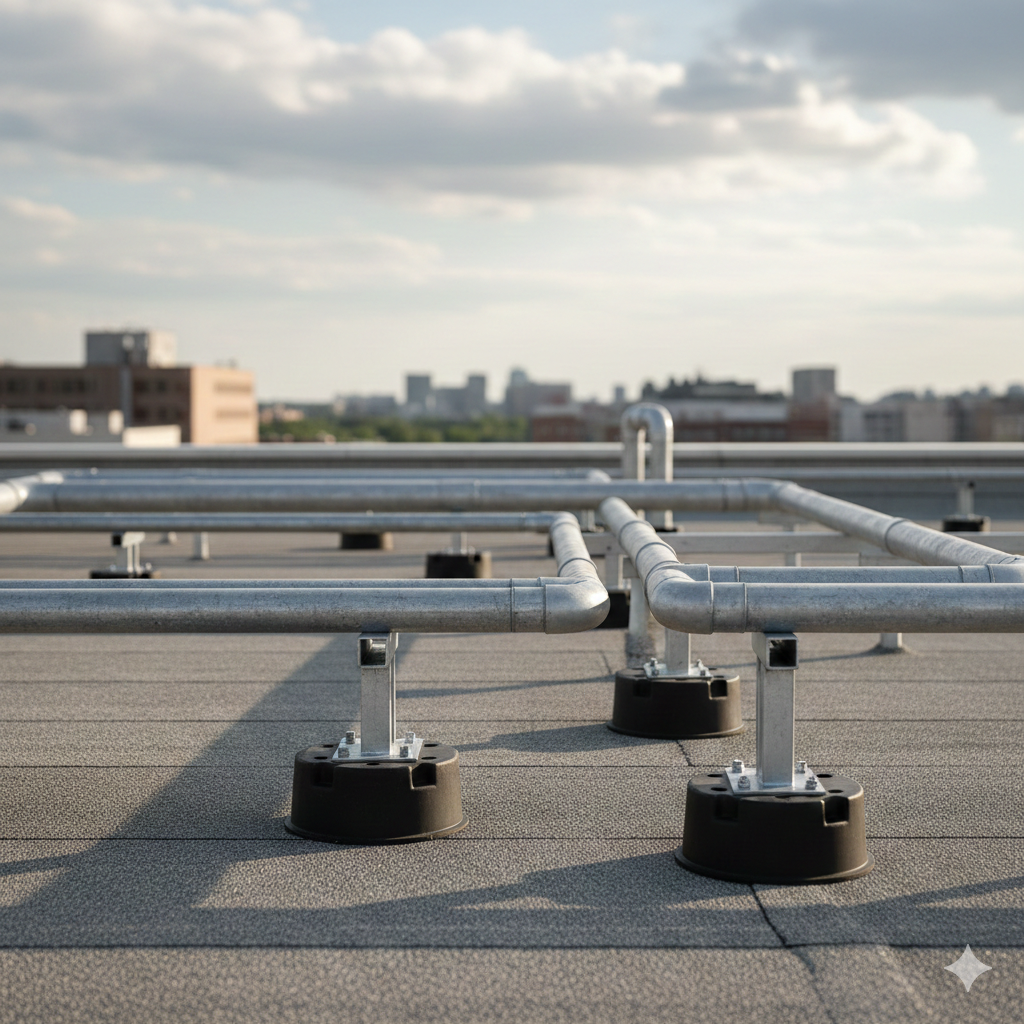
Roof pipe supports represent essential components in any building system involving pipes that penetrate or traverse roofing surfaces. From basic residential vent pipes to complex commercial mechanical systems, proper support ensures structural integrity, safety, and long-term performance. This comprehensive guide has covered the fundamental aspects of roof pipe supports, including their types, selection criteria, installation methods, costs, and maintenance requirements.
Success with roof pipe supports requires careful attention to building codes, material compatibility, structural considerations, and environmental factors. Whether you’re planning a new installation or maintaining an existing system, investing in quality supports and proper installation techniques pays dividends through enhanced safety, reduced maintenance costs, and extended system lifespan. The challenges associated with roof pipe support installations can be overcome through thorough planning, experienced contractors, and commitment to meeting established standards.
As building systems become increasingly complex and performance expectations rise, the importance of properly engineered and installed roof pipe supports continues to grow. By understanding the principles outlined in this guide and working with qualified professionals, building owners and managers can ensure their piping systems remain secure, functional, and code-compliant for years to come. Remember that roof pipe supports are not merely accessories but critical structural components deserving careful specification, installation, and ongoing maintenance attention.
Other Resources
Miro Industries – Manufacturer website providing rooftop pipe supports and related roof accessory systems.
CRS Supply – Product category featuring pipe supports designed for rooftop installations.
PHP Systems/Design – Informational page outlining rooftop pipe support systems for commercial roofing applications.
Other Helpful Articles
Stainless Steel Roofing Screws – Article explaining the uses and advantages of stainless steel screws in roofing projects.
UPVC Roof Sheet Install Fast – Guide outlining efficient installation methods for UPVC roof sheets.
Amish Metal Roofing – Article providing information about Amish metal roofing services and materials.