
Roofing COP : Code of Practice – 1 Expert Roof Safety

Roofing COP : Code of Practice Guide
The roofing cop : code of practice is one of the most important references for anyone working on roof construction, maintenance, or safety management. Homeowners, roofing contractors, inspectors, and even DIY roofers depend on structured guidelines to ensure safe, durable, and compliant roofing work. Understanding these rules not only helps achieve higher quality installations but also prevents structural problems, unnecessary repairs, and safety violations. This guide explores what it is, how it works, how much projects cost, how long each step takes, and how to apply it correctly.
What Is the Roofing COP : Code of Practice?
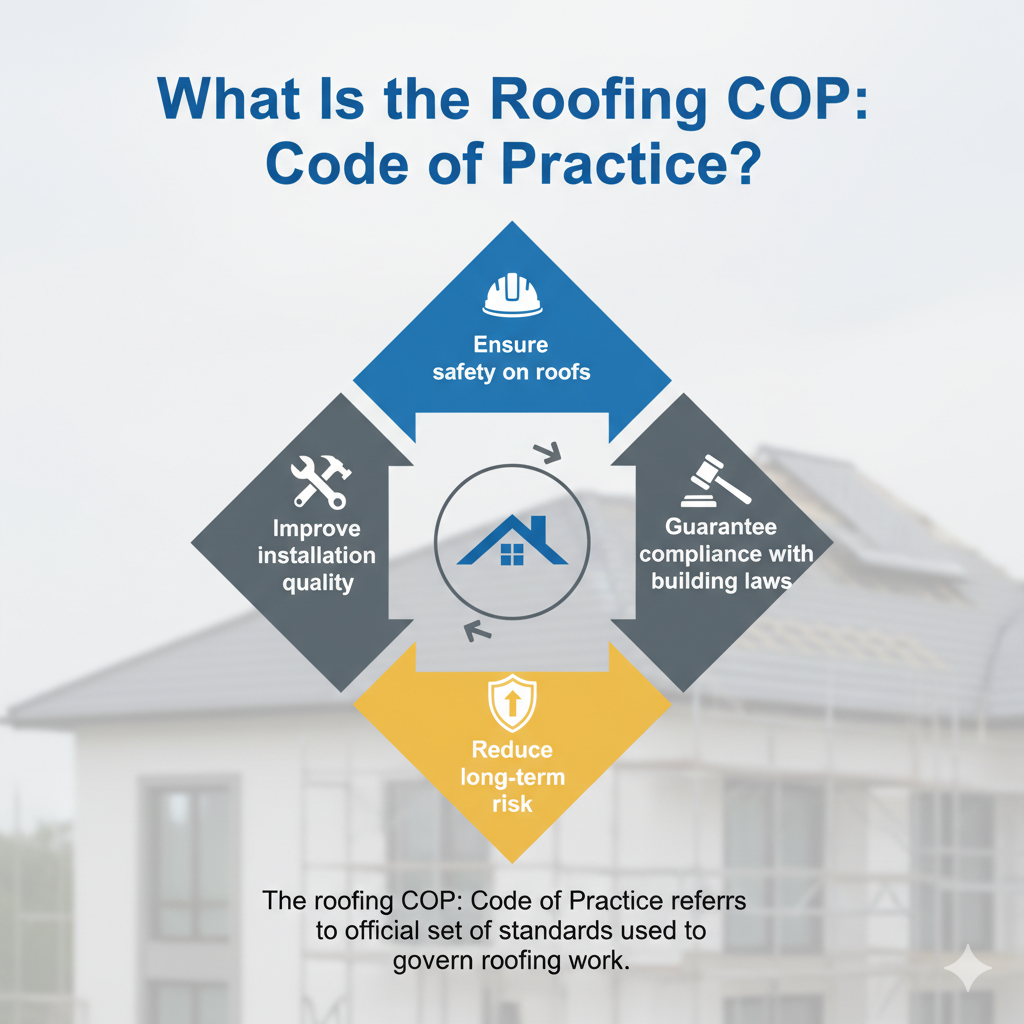
The roofing cop : code of practice refers to an official set of standards used to govern roofing work. These standards are created to:
- Ensure safety on roofs
- Improve installation quality
- Reduce long-term risk
- Guarantee compliance with building laws
It includes structural details, fastening methods, slope requirements, ventilation rules, approved materials, and professional safety procedures.
Why the Roofing COP : Code of Practice Matters
Contractors following the roofing cop : code of practice deliver stronger, longer-lasting installations. It reduces roof failure, prevents leaks, and limits liability. For homeowners, it offers peace of mind knowing the project respects recommended industry standards.
Key Principles of Roofing COP : Code of Practice
Below are the most essential principles found inside reputable roofing codes of practice worldwide:
1. Structural Requirements
- Every roof structure must withstand wind, moisture, loads, and weather conditions.
2. Safe Working Practices
- This involves ladder positioning, fall-prevention equipment, protective gear, and load-handling rules.
3. Material Specifications
- Guidelines define acceptable roofing membranes, shingles, metal panels, fasteners, and waterproof layers.
4. Ventilation and Insulation
- Proper ventilation prevents moisture buildup, mold, and heat accumulation.
5. Drainage Design
- Roofs must guide water away efficiently using slopes, gutters, and flashing.
Applying the Roofing COP : Code of Practice in Real Projects
Using the roofing cop : code of practice correctly requires following a sequence of verified steps, which vary depending on roof type and material.
How to Use Roofing COP : Code of Practice – Step-by-Step
Step 1: Pre-Inspection
Evaluate existing damage, roof pitch, weight limits, ventilation needs, and weather conditions.
Step 2: Material Selection
Choose approved materials described in the roofing cop : code of practice.
Step 3: Surface Preparation
Remove debris, rotten decking, or old roofing. Adjust slope if needed.
Step 4: Underlayment Installation
Use moisture-resistant barriers, fasteners, and alignment spacing recommended by the code.
Step 5: Roof Covering Installation
Shingles, metal panels, tiles, or membranes must follow fastening, overlap, and layout requirements.
Step 6: Flashing and Penetrations
All chimneys, vents, and edges must be sealed according to the guidelines.
Step 7: Final Inspection
A full review ensures that everything is secure, aligned, ventilated, and watertight.
How Much Does It Cost to Follow the Roofing COP : Code of Practice?
Costs vary depending on materials and region. Here is a general range:
| Project Type | Average Cost |
|---|---|
| Standard shingle roof | $4,000 – $10,000 |
| Metal roof installation | $8,000 – $18,000 |
| Tile roofing | $12,000 – $25,000 |
| Full roof replacement | $6,000 – $15,000 |
Following the roofing cop : code of practice may add a small cost for extra materials or safety tools, but it significantly increases durability and reduces long-term repair expenses.
How Long Does a Roof Installation Take?
Most roofing projects following strict code standards require:
- 1 day for small roofs
- 2 to 4 days for standard homes
- 1 week or more for large or complex structures
Timeframes depend on roof type, weather, crew size, and safety requirements listed in the roofing cop : code of practice.
Advantages of Roofing COP : Code of Practice
- ✔ Increased Safety
- Workers stay protected from falls and accidents.
- ✔ Better Roof Lifespan
- Compliance ensures perfect alignment, fastening, and waterproofing.
- ✔ Reduced Repairs
- Fewer leaks, fewer cracks, fewer structural failures.
- ✔ Certified Professional Work
- Homeowners gain confidence in the roofing process.
- ✔ Higher Property Value
- A roof installed under strict standards is more marketable.
Challenges Connected to Roofing COP : Code of Practice
- ❗ Additional Time Required
- Following each rule properly takes more time.
- ❗ Higher Upfront Costs
- Better materials and safety tools increase the initial budget.
- ❗ Requires Knowledge and Training
- DIY homeowners may struggle without professional guidance.
How to Install a Roof with the Roofing COP : Code of Practice
To ensure the process is smooth, follow these tips:
- Hire licensed contractors familiar with code requirements.
- Obtain building permits early.
- Choose only approved materials.
- Maintain proper slope and drainage.
- Inspect each layer before installing the next one.
NZ Metal Roof And Wall Cladding PDF
The Roofing Code of Practice PDF provides essential guidelines for the design, installation, and performance of metal roof and wall cladding in New Zealand. While based on proven industry experience and testing, the New Zealand Metal Roofing Manufacturers Inc. does not guarantee the accuracy or completeness of the information, and responsibility remains with designers and contractors. The Code explains that compliance does not ensure full adherence to the NZ Building Code, as environmental conditions may affect performance. It outlines acceptable and recommended trade practices, helping meet NZBC requirements (B1, B2, E1, E2, E3) and standards such as AS/NZS 1170 and NZS 3604.
FAQ – Roofing COP : Code of Practice
1. What is the code of practice?
It is a formal guide providing safety, material, structural, and installation rules for roofing projects.
2. Does following the code increase the price?
Yes, slightly but it reduces long-term repair costs.
3. Is the roofing cop : code of practice mandatory?
In most regions, building codes are mandatory for safety and compliance.
4. Can homeowners apply the code themselves?
Yes, but professional help is recommended for accuracy and safety.
5. How long does a compliant roof last?
A properly installed roof can last 20–50 years, depending on material and climate.
Conclusion
The roofing cop : code of practice is essential for safe, durable, and compliant roofing installations. By following its guidelines closely, homeowners and contractors achieve higher quality roof performance, reduced maintenance, and long-term peace of mind. Whether you are installing a new roof, repairing an old one, or improving safety standards, the code of practice remains the best reference for achieving professional results.
Other Resources
Explore these trusted sources for Roofing COP guidelines, compliance documents, and related industry information:
Metal Roofing NZ – Roofing COP.
Metal Roofing NZ – Roofing COP PDF.
Coohom – Essential Guide to Roofing COP.
COP Proofing – Waterproofing & Roofing Systems.
Idaho Roofing Contractors – Shop With a Cop.
Roofing-COP – Metal Roof Cost Guide Detailed cost guide for metal roofing materials and installation pricing.
One Comment