
upvc roof sheet: Safe Steps to Install Fast
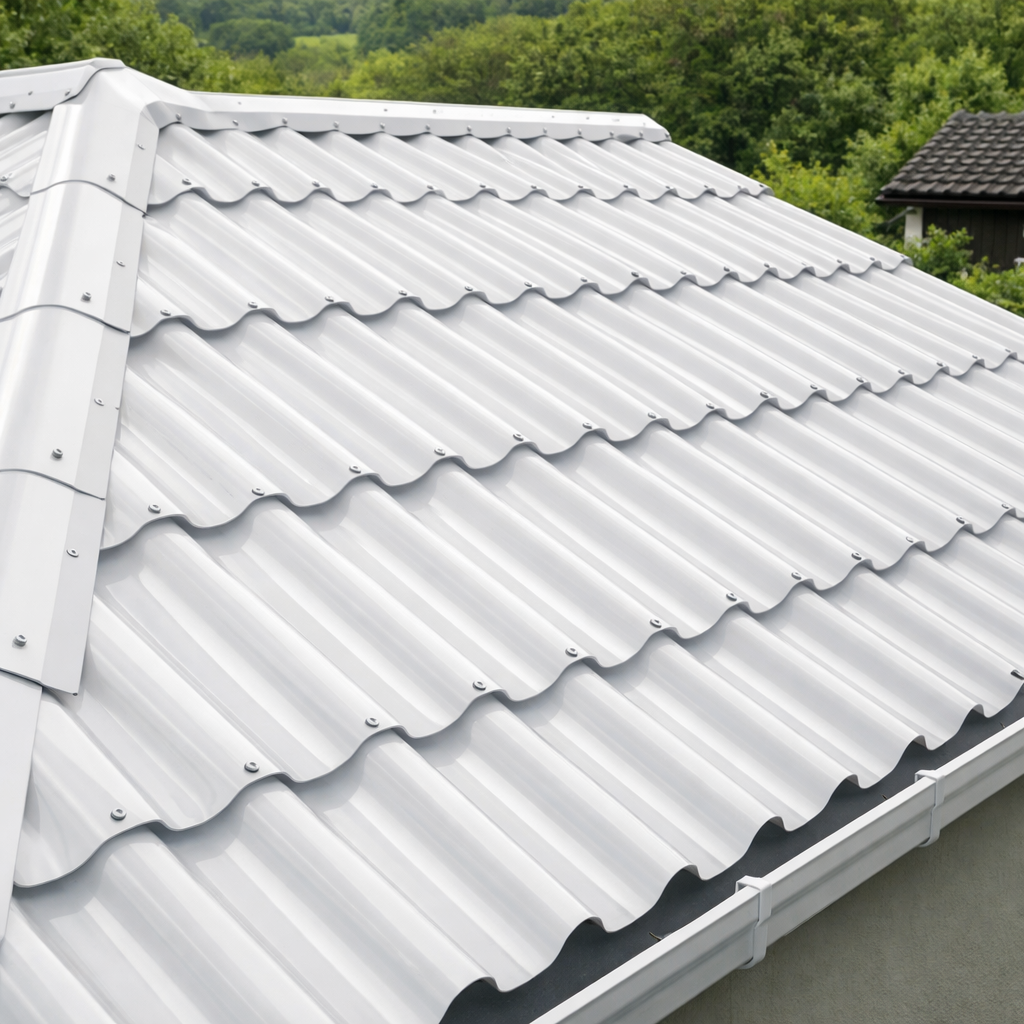
UPVC roof sheet: Easy Tips for Cheap Roofs
When considering modern roofing solutions, homeowners and contractors alike are increasingly turning their attention to synthetic materials that offer durability without breaking the bank. The construction industry has evolved significantly, moving away from traditional clay and heavy metals toward more versatile options. Among these, the upvc roof sheet stands out as a premier choice for residential and light commercial projects. Whether you are building a new carport, renovating a conservatory, or covering a garden shed, understanding the mechanics and benefits of this material is essential for a successful project.
A upvc roof sheet offers a unique combination of lightweight handling and robust weather resistance. Unlike metal, which can corrode, or wood, which can rot, unplasticized polyvinyl chloride (UPVC) is engineered to withstand harsh environmental conditions while maintaining its structural integrity. This guide will walk you through everything you need to know, from purchasing and pricing to installation and maintenance, ensuring that your next roofing project is built to last.
Understanding the Basics of UPVC Roofing
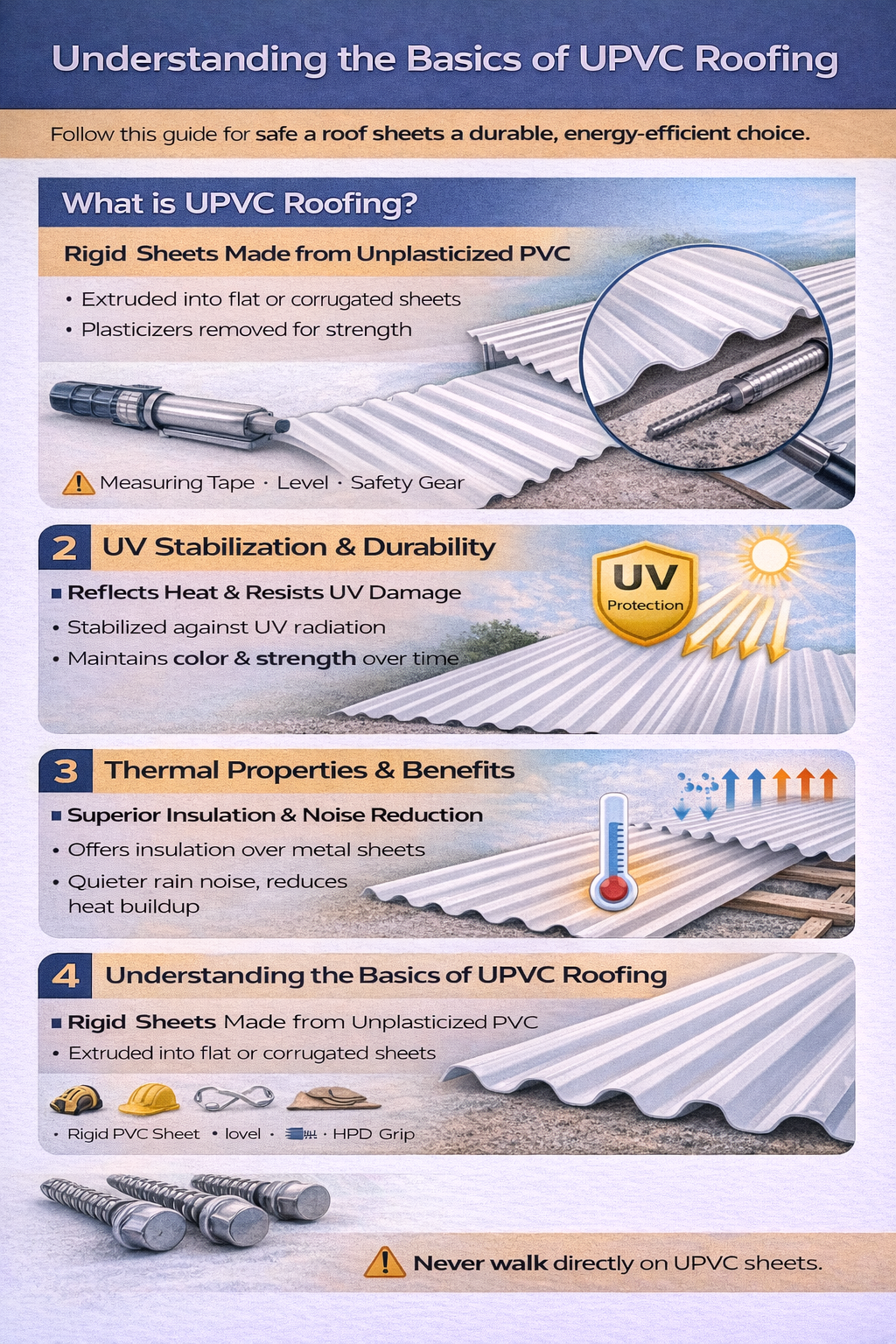
To truly appreciate the value of this material, one must first understand what it actually is. A upvc roof sheet is manufactured from a rigid form of PVC that has not been plasticized, meaning it retains a hardness and stiffness that makes it suitable for structural applications. This material is extruded into sheets that can be either flat or corrugated, depending on the specific drainage and aesthetic requirements of the building.
The manufacturing process involves stabilizing the plastic against UV radiation, which is a critical factor for any roofing material. Without this stabilization, standard plastic would become brittle and crack under the sun. However, a high-quality upvc roof sheet is designed to reflect heat and resist UV damage, ensuring that the color and strength remain consistent over many years. This makes it an ideal candidate for outdoor structures that face direct exposure to the elements.
Furthermore, the thermal properties of a upvc roof sheet are superior to single-layer metal sheets. They provide a degree of insulation, reducing the noise of rain—a common complaint with metal roofing—and preventing extreme heat buildup in the space below.
How to Find the Best Supplies
Finding a high-quality upvc roof sheet requires a bit of research, as not all suppliers offer the same grade of material. You should look for suppliers who specialize in roofing plastics rather than general hardware stores, as specialist suppliers often have better stock variety and technical knowledge.
-
Search Online Marketplaces: Many specialized roofing distributors have extensive online catalogs where you can filter by thickness, color, and profile.
-
Visit Local Builders Merchants: Seeing the product in person allows you to gauge the rigidity and finish of the sheet.
-
Check Manufacturer Warranties: A reputable upvc roof sheet should come with a warranty ranging from 10 to 20 years.
When searching, pay attention to the thickness specifications. A thinner sheet might be cheaper, but a thicker upvc roof sheet will provide better span capabilities and impact resistance. You should also look for reviews regarding delivery, as these sheets can be large and cumbersome; ensuring they arrive undamaged is part of finding a good supplier.
Determining the Cost of Your Project
One of the most attractive features of this material is its cost-effectiveness. When asking “how much,” the answer varies based on the profile (corrugated vs. flat) and the specific brand, but generally, a upvc roof sheet is significantly cheaper than glass or slate.
-
Standard Corrugated Sheets: These are usually the most affordable option, often priced per linear meter or per sheet.
-
Multi-wall Sheets: If you are looking for insulation, multi-wall versions cost more but offer better thermal performance.
-
Profiled Sheets: Specialized profiles that mimic tiles or slate will command a higher price point.
To get an accurate estimate, you must calculate the total area of your roof and add roughly 10% for overlaps and waste. Don’t forget to factor in the cost of fixings, flashings, and support structures, as the upvc roof sheet itself is only part of the total expenditure. However, even with these additions, the total project cost usually remains lower than traditional alternatives.
Purchasing Guide: How to Buy
Buying a upvc roof sheet involves more than just clicking “add to cart.” You need to ensure the specifications match your structural requirements. Start by measuring the pitch of your roof; this will determine if you need a specific profile to ensure adequate water runoff.
When you are ready to buy, ensure you are purchasing compatible accessories. A upvc roof sheet requires specific fixings that include washers and caps to prevent leaks at the screw points. Using standard wood screws without sealing washers is a common mistake that leads to water ingress.
Pro Tip: Always buy from the same batch number if possible. Slight color variations can occur between manufacturing runs, and you want your upvc roof sheet installation to look uniform.
Check the return policy before finalizing the purchase. Because these sheets are often large items, return shipping can be expensive if you accidentally order the wrong size or color.
Key Advantages of Synthetic Roofing
The popularity of the upvc roof sheet is driven by its impressive list of advantages. First and foremost is durability. These sheets are chemically resistant, meaning they won’t rust near saltwater and are unaffected by acid rain or bird droppings.
Another major advantage is the weight. A upvc roof sheet is incredibly lightweight compared to concrete tiles. This means the underlying structure of your shed, carport, or conservatory does not need to be as heavy-duty, saving you money on timber and structural steel.
-
Light Transmission: Translucent options allow natural light to enter, perfect for greenhouses.
-
Fire Resistance: High-quality UPVC is often self-extinguishing and meets strict fire safety codes.
-
Low Maintenance: Unlike wood, it doesn’t need painting or sealing.
However, there are challenges. A upvc roof sheet can expand and contract significantly with temperature changes. This thermal movement must be accounted for during installation by drilling slightly larger holes for fixings. If installed too tightly, the sheets can warp or crack.
Step-by-Step Installation Guide
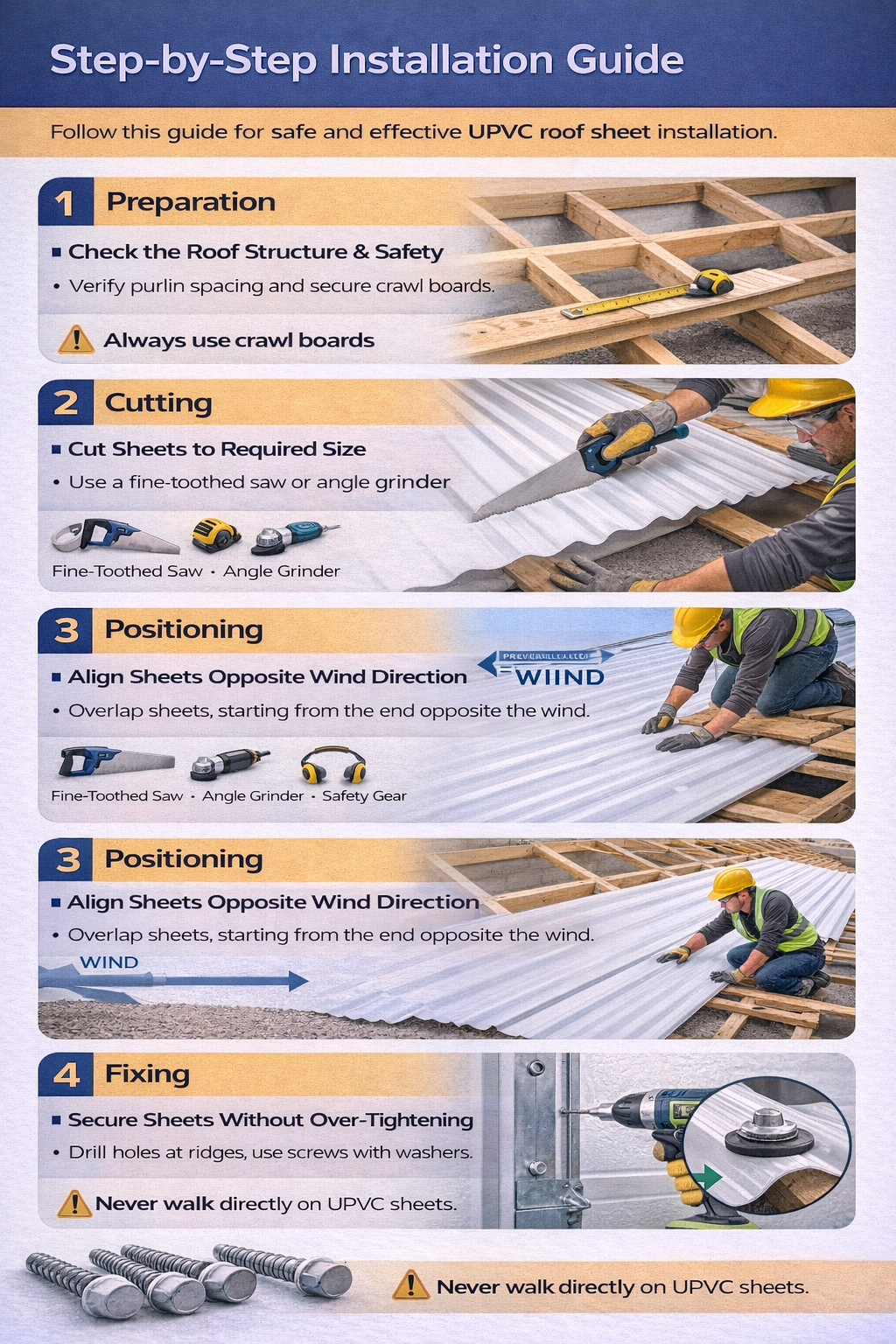
Installing a upvc roof sheet is a feasible DIY task if you follow the correct procedures. Safety is paramount; never walk directly on the sheets. Always use crawl boards to distribute your weight across the purlins.
Preparation:
Ensure your roof structure is sound and the purlins are spaced correctly according to the manufacturer’s guidelines for the thickness of the upvc roof sheet you have chosen.
Cutting:
If you need to cut the sheets, use a fine-toothed saw or an angle grinder with a masonry disc. Support the sheet fully to prevent vibration, which can cause cracking.
Positioning:
Start laying the sheets from the end of the roof opposite the prevailing wind. This ensures that the side overlaps face away from the wind, preventing rain from being driven under the upvc roof sheet.
Fixing:
Drill holes for your fixings at the top of the corrugation (the crest), not the valley. This is crucial for waterproofing. The hole should be 2mm to 4mm larger than the shank of the screw to allow for thermal expansion. Do not overtighten the fixings; the washer should be just tight enough to seal without deforming the upvc roof sheet.
Specialized Applications and Longevity
In this section, we will delve into four specific topics regarding the material’s application and durability.
What is upvc roofing sheet
At its core, a upvc roofing sheet is a rigid, thermoplastic sheet designed for covering structures. It differs from standard PVC by excluding plasticizers, which results in a hard, durable finish that is resistant to weathering. This chemical composition makes the upvc roof sheet ideal for construction because it does not degrade quickly when exposed to the elements.
Conservatory application upvc roof sheet
Conservatories often suffer from being too hot in summer and too cold in winter. Replacing old glass or polycarbonate with a solid or multi-wall upvc roof sheet can transform the space. The material offers better thermal efficiency, reducing glare and heat transfer. This application makes the conservatory usable year-round, turning it into a genuine extension of the living space rather than just a seasonal room.
upvc roofing sheet
When discussing the general category of upvc roofing sheet, it encompasses various profiles including trapezoidal, sinusoidal, and flat sheets. Each profile serves a different aesthetic and structural purpose. The versatility of the upvc roof sheet allows it to be used in industrial warehouses, agricultural barns, and residential carports with equal effectiveness.
Long lifespan upvc roof sheet
A key selling point is the longevity. A high-quality upvc roof sheet can last anywhere from 20 to 30 years with minimal maintenance. The material’s resistance to rot, rust, and UV degradation ensures that it performs consistently over decades. Investing in a long lifespan upvc roof sheet reduces the need for frequent replacements, making it an environmentally and economically sound choice.
Cleaning and Maintenance Best Practices
One of the great benefits of this material is how easy it is to clean. Over time, algae, moss, or general grime might accumulate, but restoring a upvc roof sheet to its original condition is straightforward.
You generally do not need harsh chemicals. Warm water mixed with a mild household detergent is usually sufficient. Use a soft-bristle brush or a sponge to wipe down the surface. Avoid using abrasive scrubbers that could scratch the surface of the upvc roof sheet, as scratches can trap dirt and encourage algae growth.
If you are using a pressure washer, keep the pressure setting low and stand at a distance. blasting high-pressure water directly at the overlaps can force water underneath the sheets or damage the surface coating of the upvc roof sheet.
Regular cleaning, perhaps once or twice a year, will keep the roof looking new and ensure that maximum light transmission is maintained for translucent sheets.
Cost Analysis: What is the Cost?
Determining “what is the cost” involves looking at the full lifecycle of the roof. While the initial purchase price of a upvc roof sheet is low, the lack of maintenance costs adds to the savings.
When comparing quotes, consider the thickness. A 1.1mm thick sheet will cost more than a 0.8mm sheet, but the thicker upvc roof sheet requires fewer supports (purlins), which might save money on timber.
-
Budget Options: Thin, clear corrugated sheets for temporary structures.
-
Mid-Range: Colored, standard thickness sheets for sheds and carports.
-
Premium: Heavy-duty, UV-protected, multi-wall sheets for conservatories.
Always factor in delivery charges, which can be significant for large roofing materials. Buying in bulk or collecting from a local depot can reduce the overall price of your upvc roof sheet order.
Overcoming Installation Challenges
Every construction project has hurdles, and installing a upvc roof sheet is no exception. The most common challenge is handling the material in windy conditions. Because the sheets are light and have a large surface area, they can act like sails. Never attempt installation on a windy day.
Another challenge is condensation. In single-skin applications, moisture can form on the underside of the upvc roof sheet if there is inadequate ventilation. To combat this, ensure there is good airflow through the structure, or consider using an anti-condensation lining or a twin-wall sheet.
Cutting complicated shapes around chimneys or vents can also be tricky. Take your time measuring and use a cardboard template before cutting the actual upvc roof sheet to avoid expensive mistakes.
Environmental Impact and Sustainability
In today’s construction landscape, sustainability is key. A upvc roof sheet is often recyclable at the end of its life, which reduces the burden on landfills. Unlike some composite materials that are difficult to separate, UPVC can be ground down and repurposed into new products.
Furthermore, the longevity of a upvc roof sheet means fewer resources are consumed over time compared to materials that need replacing every few years. The lightweight nature also reduces the carbon footprint associated with transportation, as more sheets can be transported in a single load compared to heavy tiles.
Choosing a upvc roof sheet is a step toward a more sustainable building practice, provided the material is disposed of correctly at the end of its lifecycle.
FAQ : upvc roof sheet
How do I stop my upvc roof sheet from yellowing?
High-quality sheets come with UV protection co-extruded into the surface. Ensure you buy UV-stabilized sheets to prevent yellowing.
Can I walk on a upvc roof sheet?
No, you should never walk directly on the sheets. Always use crawl boards spanning the purlins to support your weight safely.
Does a upvc roof sheet provide insulation?
Single-skin sheets offer minimal insulation, but multi-wall (polycarbonate style) or foam-backed UPVC sheets offer significantly better thermal properties.
How much overlap do I need for a upvc roof sheet?
Generally, you need at least one corrugation overlap at the sides and 150mm overlap at the ends, though this depends on the roof pitch.
Is a upvc roof sheet noisy in the rain?
It is generally quieter than metal roofing but can be noisier than felt or tile. Multi-wall sheets are quieter than single-skin options.
Can I paint a upvc roof sheet?
It is difficult to paint because the surface is designed to repel adhesion. It is better to buy the correct color initially.
Advanced Installation Techniques
For those looking to achieve a professional finish, understanding advanced installation techniques is beneficial. When joining a upvc roof sheet to a wall, using purely silicone sealant is rarely enough. You should use a dedicated flashing strip, often made of lead or a synthetic alternative, chased into the brickwork and overlapping the upvc roof sheet. This allows for movement between the wall and the roof without breaking the waterproof seal.
Another advanced tip concerns the eaves. To prevent wind uplift, which can tear a upvc roof sheet off the structure, ensure that the overhang at the eaves is not excessive. Usually, an overhang of 50mm to 70mm is sufficient to direct water into the gutter without exposing too much underside to the wind. Secure the sheets securely at the eaves and ridge, as these are the areas subject to the highest wind pressures.
If you are installing a upvc roof sheet on a very low pitch roof, you may need to increase the end laps or use mastic tape between the sheets at the overlaps. This creates a secondary seal that prevents water from being blown back up the slope by strong winds, a phenomenon known as capillary action.
Comparing UPVC to Other Materials
To fully understand the value proposition, one must compare the upvc roof sheet against its competitors. Compared to metal roofing, UPVC is quieter and does not suffer from rust. While metal might be stronger against extreme impact, a high-quality upvc roof sheet is surprisingly resilient and will not dent as easily as thin aluminum.
Compared to bitumen sheets, a upvc roof sheet is much more rigid. Bitumen can sag over time if not supported frequently, whereas UPVC holds its shape better across wider spans. Additionally, bitumen can become soft in extreme heat, whereas UPVC maintains its structural stability.
Against polycarbonate, the upvc roof sheet is often more opaque, which can be a benefit if you want to block out unsightly overhead views or reduce intense sunlight. However, for maximum light transmission, clear polycarbonate might edge out UPVC. Yet, for general durability and ease of handling, the upvc roof sheet remains a top-tier contender.
Troubleshooting Common Issues
Even with the best installation, issues can arise. If you notice a leak, the first place to check on a upvc roof sheet roof is the fixings. Over time, washers can degrade. Replacing old screws with new, larger washers often solves simple leaks.
If a upvc roof sheet cracks, it is usually due to impact or restricted thermal movement. Small cracks can sometimes be repaired with a specialist PVC solvent cement or a repair tape designed for roofing plastics. However, if the crack is extensive, replacing the single sheet is usually the best option. The modular nature of a upvc roof sheet system makes replacing a single damaged section relatively easy without disturbing the whole roof.
Noise can be another issue. If the sheets rattle in the wind, it usually means the fixings are loose or there are not enough of them. Checking and tightening (but not overtightening) the screws on your upvc roof sheet can significantly reduce wind noise.
The Future of Roofing
As technology advances, the upvc roof sheet continues to improve. Manufacturers are developing coatings that are even more resistant to dirt accumulation and UV damage. We are also seeing the introduction of recycled content into the manufacturing process, making the upvc roof sheet an even greener choice for the eco-conscious builder.
The trend towards modular, easy-to-install building materials fits perfectly with the attributes of the upvc roof sheet. As labor costs rise, materials that are quick to install and require less specialist labor become more valuable. The upvc roof sheet allows a general handyman or a skilled DIYer to achieve results that previously required a specialist roofer.
Ultimately, the decision to use a upvc roof sheet is a decision for practicality and efficiency. It is a material that understands the needs of modern construction: speed, durability, and cost-effectiveness. Whether for a small garden project or a large commercial covering, the upvc roof sheet delivers reliable performance.
In summary, the upvc roof sheet represents a smart investment for property owners. It bridges the gap between expensive, heavy traditional materials and cheap, short-lived alternatives. By offering a middle ground of high performance at a reasonable price, the upvc roof sheet has secured its place as a staple in the roofing industry.
When you are ready to start your project, remember the key points: measure accurately, buy quality materials, and install with care. Your upvc roof sheet roof will serve you well, protecting your property and adding value for years to come.
Final thought: The best roof is one you don’t have to worry about. With a upvc roof sheet, peace of mind comes standard.
Detailed Maintenance Schedule
To get the absolute maximum life out of your upvc roof sheet, establishing a maintenance schedule is a proactive step. It doesn’t need to be complex.
Spring:
Check the roof after winter storms. Look for any debris, branches, or leaves that have accumulated in the valleys of the upvc roof sheet. Clear these to ensure water can drain freely. Check that snow load hasn’t caused any sagging.
Summer:
Inspect for UV damage or discoloration, although a good upvc roof sheet should resist this. mainly, look for thermal movement issues. Ensure that the sheets haven’t expanded to the point of hitting a wall or another obstruction.
Autumn:
This is the most critical time. Clear gutters and downpipes. If the water cannot escape, it will back up onto the upvc roof sheet. Wet leaves left on the roof can stain the plastic and encourage moss growth.
Winter:
Generally, leave the roof alone. The upvc roof sheet can be more brittle in freezing temperatures, so avoid any impact or attempting repairs unless absolutely necessary.
Cost vs. Value: A Deeper Dive
We discussed “how much” earlier, but let’s look at value. A cheap felt roof might cost half as much as a upvc roof sheet project, but if it needs replacing every 5 years, the upvc roof sheet pays for itself within a decade.
Furthermore, the aesthetic value adds to the property appeal. A rotting wooden roof or a torn felt roof looks neglected. A pristine upvc roof sheet looks maintained and professional. This curb appeal is vital if you plan to sell your home. Potential buyers view a durable upvc roof sheet on outbuildings as a “finished” job they won’t have to worry about.
There is also the value of protection. If you are storing expensive tools, a classic car, or garden equipment under the roof, the reliability of a upvc roof sheet in keeping them dry is worth the investment. The cost of water damage to stored items often exceeds the cost difference between cheap roofing and a quality upvc roof sheet.
Final Installation Tips for DIYers
If you are tackling this yourself, here are a few final “how to do” tips. Use a string line to keep your fixings straight. A crooked line of screws on a upvc roof sheet looks unprofessional and can miss the purlins underneath.
When cutting, if you don’t have power tools, a fine-toothed handsaw works, but it takes patience. Keep the angle of the saw low to the upvc roof sheet to reduce vibration.
Finally, always have a helper. Maneuvering a long upvc roof sheet up a ladder is dangerous and difficult alone. A second pair of hands makes the job safer and ensures the sheets are positioned accurately before fixing.
By adhering to these guidelines, your experience with upvc roof sheet products will be successful, resulting in a structure that is both functional and durable.
Conclusion
Choosing the right roofing material is a critical decision for any homeowner or builder. The upvc roof sheet offers a compelling blend of durability, affordability, and ease of installation that is hard to match with traditional materials. From the lightweight nature that simplifies construction to the robust weather resistance that ensures a dry interior, this material has proven its worth in the market.
Whether you are looking to build a new carport, refurbish a conservatory, or simply replace a shed roof, the upvc roof sheet provides a versatile solution. By following the installation tips, understanding the costs, and committing to simple maintenance, you can ensure that your roof remains functional and attractive for decades. Remember to source your materials carefully, prioritize safety during installation, and you will reap the benefits of this modern roofing technology.
The versatility of the upvc roof sheet extends beyond simple waterproofing; it offers an aesthetic upgrade to older structures. Many homeowners find that replacing tired, moss-covered felt with a crisp, clean upvc roof sheet instantly modernizes the look of their garden buildings. The variety of profiles available means you can mimic the look of traditional clay tiles or opt for a sleek, industrial corrugated look, depending on your style preference.
When calculating “how to buy,” do not underestimate the importance of accessories. The longevity of your upvc roof sheet installation is often dictated by the quality of the fixings and flashings. Using cheap screws that rust will lead to leaks long before the sheet itself fails. Investing in high-quality, plastic-headed screws or specialist storm washers ensures that the integrity of the upvc roof sheet is maintained even during severe weather events.
Furthermore, the thermal dynamics of a upvc roof sheet are worth revisiting. In agricultural or equestrian settings, keeping animals cool is a priority. A white or light-colored upvc roof sheet reflects a significant amount of solar radiation, keeping the interior temperature manageable without the need for electric ventilation. This passive cooling effect is a major advantage of the material in hotter climates or during summer months.
Other Resources
Viraat Industries – Product page outlining UPVC roofing sheets and their applications in industrial and residential buildings.
Kavya Roofing – Informational article discussing the benefits and limitations of UPVC roofing sheets.
JL Roof Tile – Comparative article explaining differences between UPVC and PVC sheets for roofing use.
Other Helpful Articles
Drone Roof Inspection – Guide describing how drones are used for roof inspection and reporting.
Scaffolding on a Roof Installation – Step-by-step overview of installing scaffolding safely on a roof.
Stainless Steel Roofing Screws – Article explaining the uses and advantages of stainless steel screws in roofing projects.