
Wind Damage Roof: Essential Repair Steps Revealed

Wind Damage Roof: Warning Signs Homeowners Miss
Wind damage roof issues affect millions of homeowners annually, causing billions of dollars in property damage across the United States. When powerful winds strike your home, your roof bears the brunt of nature’s force, often sustaining damage that isn’t immediately visible from ground level. Understanding wind damage roof signs, repair processes, and prevention strategies can save you thousands of dollars and protect your family’s safety.
High winds can lift shingles, crack tiles, tear off flashing, and compromise your roof’s structural integrity in minutes. Whether you’ve recently experienced a storm or want to prepare for future weather events, this comprehensive guide covers everything you need to know about wind damage roof assessment, repair, and protection. From identifying subtle damage indicators to navigating insurance claims and selecting wind-resistant materials, you’ll gain the knowledge needed to make informed decisions about your roof’s condition and necessary repairs.
What Is Wind Damage Roof and How Does It Occur
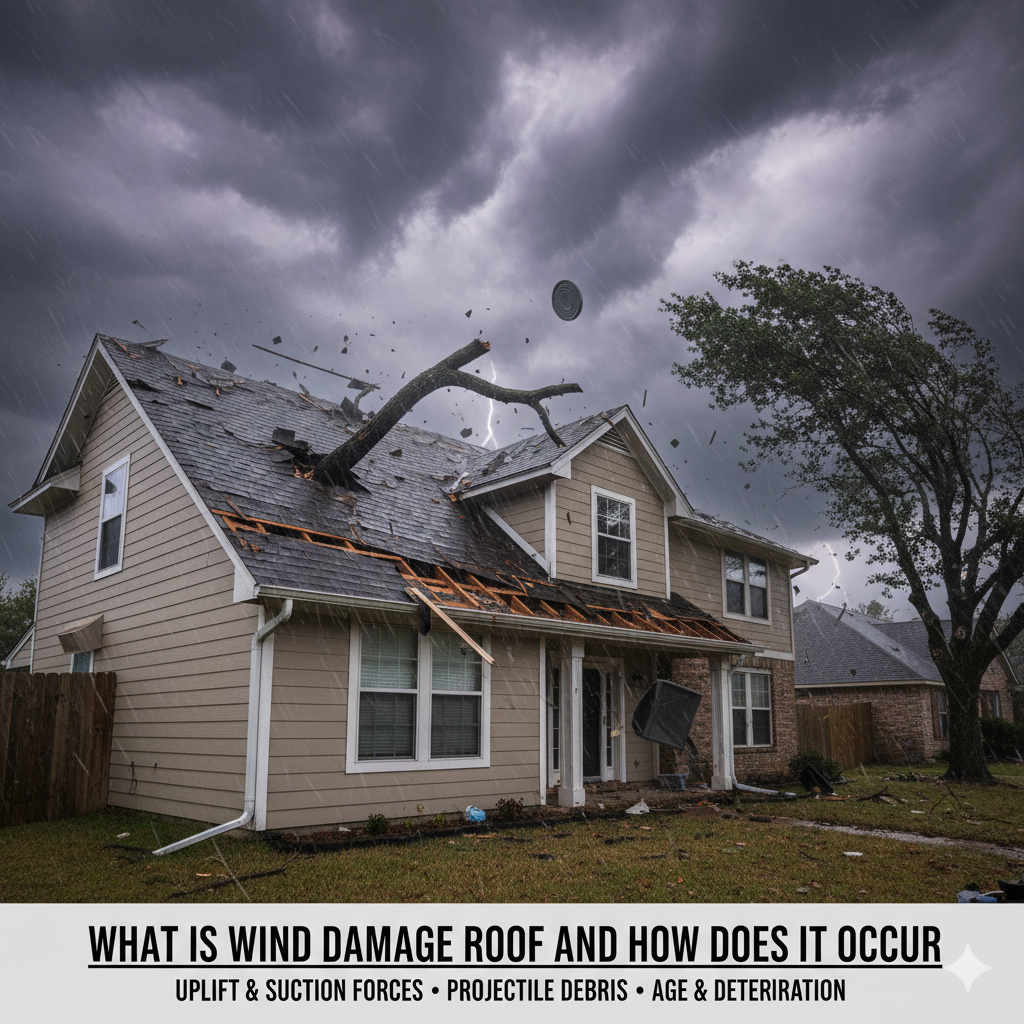
Wind damage roof refers to any harm caused to roofing materials, structures, or components resulting from high-velocity wind events. This damage occurs when wind forces exceed the design limits of roofing materials or when age and deterioration have weakened the roof’s resistance capabilities. Wind damage roof scenarios range from minor cosmetic issues to severe structural failures requiring complete roof replacement.
The physics behind wind damage roof incidents involves several forces working simultaneously. Wind creates uplift pressure on the underside of roofing materials while generating suction on the top surface. This dual-force action can peel back shingles, lift tiles, or tear entire sections of roofing away from the structure. Additionally, wind-driven debris becomes projectile weapons that puncture, crack, or dislodge roofing components.
Wind damage roof severity depends on multiple factors including wind speed, duration of exposure, roof age, installation quality, and material type. Sustained winds above 50 mph can damage older or poorly maintained roofs, while winds exceeding 70 mph threaten even well-maintained roofing systems. Understanding these dynamics helps homeowners assess their wind damage roof vulnerability and take appropriate protective measures.
How to Identify Wind Damage Roof Signs From Ground Level
Detecting wind damage roof problems early prevents minor issues from escalating into major structural concerns. Start your inspection from ground level using binoculars to examine your roof safely without climbing. Look for these critical wind damage roof indicators that signal professional inspection needs.
Key visual signs include:
-
Missing or displaced shingles creating bare spots
-
Curled, cracked, or torn shingle edges
-
Granule loss leaving dark patches on asphalt shingles
-
Lifted or bent metal flashing around chimneys and vents
-
Damaged or missing ridge caps along roof peaks
-
Debris accumulation in valleys or gutters
-
Visible daylight through roof boards from attic
-
Water stains on interior ceilings or walls
Your gutters and downspouts provide additional wind damage roof clues. Check for excessive granule accumulation, which indicates shingle deterioration accelerated by wind exposure. Inspect your property perimeter for fallen shingle pieces, torn flashing, or other roofing materials displaced by wind forces.
Document all observed wind damage roof signs with photographs and detailed notes. This documentation proves invaluable when filing insurance claims or consulting with roofing contractors. Time-stamped photos establish when damage occurred, supporting your claim that specific weather events caused the destruction.
How to Conduct a Detailed Wind Damage Roof Assessment
Professional wind damage roof inspection requires systematic examination of all roofing components and related systems. While homeowners can identify obvious damage, hiring certified roofing inspectors ensures comprehensive assessment of hidden wind damage roof issues that untrained eyes might miss.
A thorough wind damage roof inspection process includes:
-
Exterior examination – Inspectors check every roof section for missing, damaged, or displaced materials
-
Flashing assessment – Critical evaluation of all metal flashing around penetrations and transitions
-
Structural evaluation – Checking for sagging, bowing, or other signs of compromised roof decking
-
Attic inspection – Looking for water intrusion evidence, damaged insulation, or visible daylight
-
Gutter and drainage review – Ensuring water management systems remain intact and functional
-
Ventilation check – Verifying wind hasn’t damaged soffit vents, ridge vents, or other ventilation components
-
Documentation preparation – Creating detailed reports with photographs for insurance and repair purposes
Professional inspectors use moisture meters, infrared cameras, and other specialized tools to detect wind damage roof problems invisible to visual inspection alone. These technologies identify water intrusion, insulation damage, and structural issues requiring immediate attention.
Schedule wind damage roof inspections after any significant storm event, even if you don’t observe obvious damage. Many wind damage roof scenarios involve subtle deterioration that worsens over time, leading to expensive repairs when left unaddressed.
How to Find Qualified Wind Damage Roof Repair Contractors
Selecting reputable contractors for wind damage roof repairs protects you from substandard workmanship and potential scams that proliferate after major storms. Storm chasers and unqualified operators often target disaster-affected areas, making contractor verification essential for quality repairs.
Follow these steps to find trustworthy wind damage roof professionals:
-
Verify active state licensing and proper insurance coverage
-
Check Better Business Bureau ratings and complaint histories
-
Request multiple references from recent wind damage roof projects
-
Review online ratings on platforms like Google, Yelp, and Angie’s List
-
Confirm manufacturer certifications for specific roofing products
-
Ask for detailed written estimates breaking down materials and labor
-
Verify warranty coverage for both materials and workmanship
Local contractors often provide better long-term value than out-of-state storm chasers who disappear after collecting payment. Established local companies maintain reputations within their communities and remain available for warranty service or future concerns.
Interview at least three contractors before making your wind damage roof repair decision. Compare their assessment findings, proposed solutions, material recommendations, and pricing structures. Be wary of contractors who pressure immediate decisions or request full payment upfront before starting work.
How to Buy Wind-Resistant Roofing Materials
Preventing future wind damage roof scenarios requires investing in materials engineered to withstand high wind forces. Modern roofing products feature advanced designs and installation methods that significantly improve wind resistance compared to traditional options.
When purchasing wind-resistant roofing materials, consider these critical factors:
Impact-rated shingles – Look for products rated Class 3 or Class 4 for impact resistance, indicating superior durability against wind-driven debris. These shingles feature reinforced construction that resists tearing and lifting during high-wind events.
Wind rating classifications – Choose materials with wind ratings matching or exceeding your area’s typical storm intensity. Products rated for 110 mph or higher wind speeds provide enhanced protection in hurricane-prone or severe weather regions.
Proper fastening systems – Select materials designed for six-nail installation patterns rather than standard four-nail methods. Additional fasteners dramatically increase wind damage roof resistance by securing shingles more firmly to roof decking.
Sealed shingle designs – Modern architectural shingles feature adhesive strips that bond layers together, creating unified wind-resistant surfaces. This sealing action prevents individual shingle lifting during wind events.
Purchase wind-resistant materials from reputable suppliers who provide manufacturer certifications and warranty documentation. Many insurance companies offer premium discounts for homes with certified wind-resistant roofing, offsetting higher initial material costs through long-term savings.
How Much Does Wind Damage Roof Repair Cost
Wind damage roof repair expenses vary dramatically based on damage extent, roofing materials, home location, and contractor rates. Understanding typical cost ranges helps homeowners budget appropriately and evaluate contractor estimates for reasonableness.
Average wind damage roof repair costs include:
-
Minor repairs – $200 to $800 for replacing several shingles or reattaching loose materials
-
Moderate damage – $800 to $3,500 for repairing sections, replacing flashing, and addressing multiple problem areas
-
Extensive damage – $3,500 to $10,000 for large-scale repairs affecting significant roof portions
-
Complete replacement – $8,000 to $25,000+ depending on roof size, material selection, and home complexity
Emergency wind damage roof repairs commanding premium pricing often become necessary when damage compromises home weatherproofing. Temporary repairs like tarping cost $300 to $1,500 but prevent additional water damage while you arrange permanent solutions.
Insurance coverage significantly impacts out-of-pocket wind damage roof costs. Most homeowner policies cover wind damage after deductible payment, though specific coverage terms vary. Review your policy carefully and document all damage thoroughly to maximize insurance reimbursement.
Geographic location influences wind damage roof repair pricing substantially. Coastal areas prone to hurricanes typically feature higher labor and material costs due to increased demand and stricter building code requirements. Obtain multiple detailed estimates comparing similar repair scopes to ensure fair pricing.
How Long Does Wind Damage Roof Repair Take
Wind damage roof repair timelines depend on damage severity, weather conditions, contractor availability, and material procurement requirements. Understanding typical timeframes helps homeowners plan appropriately and set realistic expectations for repair completion.
Standard repair duration estimates:
-
Minor repairs – 1 to 2 days for replacing limited shingles or fixing small damaged sections
-
Moderate repairs – 3 to 5 days for addressing multiple damage areas and replacing extensive materials
-
Major repairs – 1 to 2 weeks for substantial reconstruction requiring structural repairs
-
Full replacement – 2 to 4 weeks from project start to completion for complete roof replacement
Weather significantly impacts wind damage roof repair schedules. Rain delays prevent proper material installation and adhesive bonding. Extreme temperatures affect shingle sealing and material handling. Contractors schedule weather-dependent work carefully to ensure quality results.
Material availability extends repair timelines when damage affects numerous homes simultaneously. After major storms, popular roofing products may face backorders lasting weeks or months. Discuss material availability during initial consultations and consider alternative products if preferred materials face extended delays.
Insurance claim processing adds time to wind damage roof repair projects. Adjuster scheduling, damage assessment, approval processes, and payment distribution can extend timelines by several weeks. Begin claim filing immediately after damage discovery to minimize these delays.
How to Install Wind-Resistant Roofing Systems
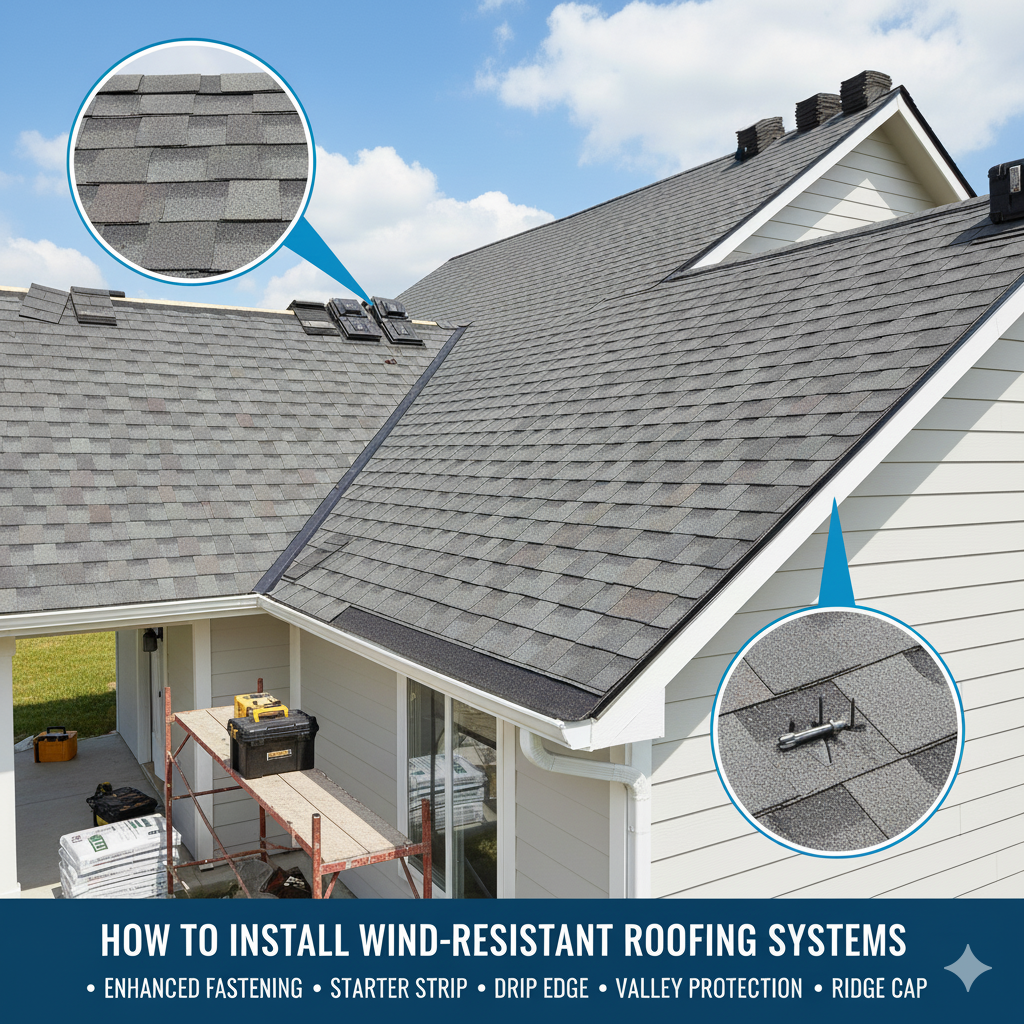
Proper installation techniques determine whether wind-resistant materials provide advertised protection levels. Even premium wind damage roof resistant products fail when installed incorrectly, making qualified contractor selection and installation oversight critical for achieving desired wind resistance.
Essential wind-resistant installation practices include:
Enhanced fastening patterns – Install shingles using six nails instead of standard four-nail patterns. Place fasteners according to manufacturer specifications, typically one inch from shingle edges and properly spaced across each shingle’s nailing strip.
Starter strip application – Apply starter strips along all roof edges to provide secure attachment points for first-course shingles. This prevents edge lifting, a common wind damage roof failure point during high-wind events.
Proper adhesive activation – Ensure hand-sealing or mechanical sealing of shingles in areas requiring enhanced wind resistance. Adhesive strips require proper temperature and pressure for effective bonding.
Drip edge installation – Install metal drip edges along all eaves and rakes before shingle application. Proper drip edge installation prevents water infiltration and provides additional wind uplift resistance.
Valley protection – Reinforce valley areas with additional underlayment layers and proper shingle installation techniques. Valleys experience concentrated water flow and increased wind vulnerability requiring enhanced protection.
Ridge cap securement – Install ridge cap shingles with longer fasteners and closer spacing than standard roof field shingles. Ridge areas face maximum wind exposure requiring superior attachment methods.
Manufacturers void warranties when installation deviates from specifications, emphasizing the importance of following documented procedures. Request that contractors document installation compliance with photographs showing proper techniques throughout the project.
How to Clean and Maintain Roofs for Wind Damage Prevention
Regular maintenance reduces wind damage roof vulnerability by addressing minor issues before they escalate during storms. Clean, well-maintained roofs withstand wind forces better than neglected systems where deterioration weakens material integrity and attachment strength.
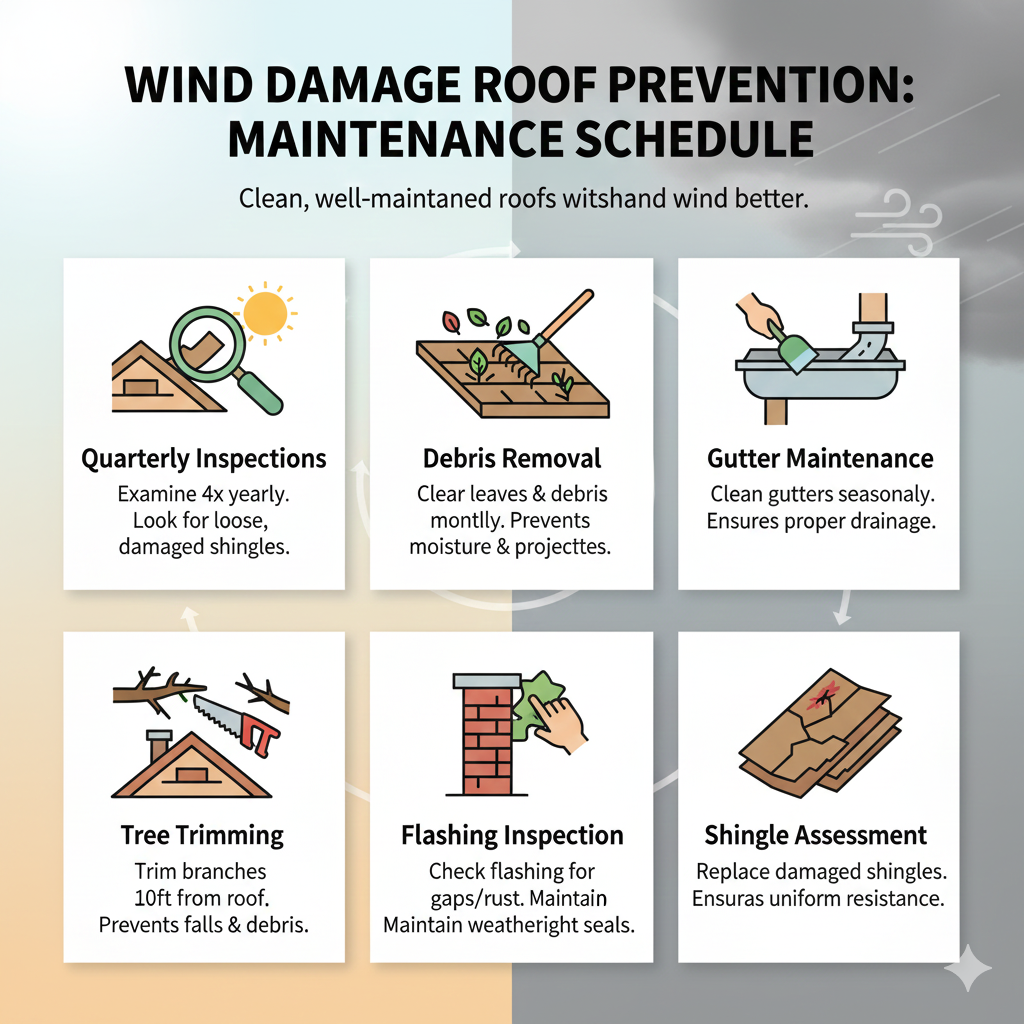
Implement this comprehensive wind damage roof prevention maintenance schedule:
Quarterly inspections – Examine your roof four times yearly, preferably before and after storm seasons. Look for loose, damaged, or missing shingles requiring repair or replacement.
Debris removal – Clear leaves, branches, and other debris from roof surfaces and gutters monthly. Accumulated debris traps moisture, accelerates material deterioration, and creates wind-driven projectiles during storms.
Gutter maintenance – Clean gutters and downspouts seasonally to ensure proper drainage. Clogged gutters overflow during storms, causing water damage that compromises roof structure and increases wind damage roof susceptibility.
Tree trimming – Remove overhanging branches within ten feet of your roof. Trim trees regularly to prevent branch falls during wind events and minimize leaf debris accumulation on roof surfaces.
Flashing inspection – Check all flashing around chimneys, vents, and roof penetrations for rust, gaps, or loose sections. Repair or replace damaged flashing immediately to maintain weathertight seals.
Shingle assessment – Look for curling, cracking, or granule loss indicating shingle age and deterioration. Replace damaged shingles promptly to maintain uniform wind resistance across your entire roof surface.
Professional roof cleaning services remove algae, moss, and debris safely without damaging roofing materials. Schedule professional cleaning every two to three years to maintain optimal roof condition and extend service life.
What Is the Cost Comparison of Wind Damage Roof Materials
Understanding material costs helps homeowners make informed decisions balancing upfront investment against long-term wind damage roof protection and maintenance savings. Different roofing materials offer varying wind resistance levels at substantially different price points.
Asphalt shingles – $100 to $150 per square (100 sq ft) for standard three-tab shingles, $150 to $400 per square for architectural or impact-resistant versions. Most affordable option providing decent wind resistance when properly installed with enhanced fastening patterns.
Metal roofing – $300 to $800 per square for standing seam or metal shingle systems. Superior wind resistance rated up to 140 mph with proper installation. Higher initial costs offset by 50+ year lifespan and minimal maintenance requirements.
Clay or concrete tiles – $400 to $1,000+ per square depending on style and quality. Excellent wind resistance when properly attached with hurricane clips or foam adhesive. Heavy weight requires structural assessment before installation.
Slate roofing – $800 to $1,500+ per square for natural slate materials. Exceptional wind resistance and 100+ year lifespan. Premium pricing limits widespread adoption despite superior performance characteristics.
Synthetic alternatives – $200 to $600 per square for rubber, plastic, or composite materials mimicking traditional roofing. Modern synthetics offer excellent wind resistance with lighter weight and easier installation than natural materials.
Factor in long-term costs when comparing wind damage roof material options. Metal and tile roofs requiring minimal maintenance and lasting 50+ years often prove more economical than cheaper asphalt shingles needing replacement every 20-25 years despite lower initial costs.
Advantages and Challenges Connected to Wind Damage Roof
Understanding both benefits and difficulties associated with wind damage roof scenarios helps homeowners prepare effectively and make informed decisions about protection, repair, and prevention strategies.
Advantages of addressing wind damage roof issues:
-
Insurance coverage – Most policies cover wind damage, providing financial assistance for repairs
-
Improvement opportunity – Damage creates chances to upgrade to superior wind-resistant materials
-
Property value protection – Prompt repairs maintain home value and prevent additional damage
-
Enhanced safety – Addressing damage protects occupants from structural failures and water intrusion
-
Energy efficiency – Repairs and upgrades often improve insulation and reduce energy costs
-
Peace of mind – Proper protection reduces anxiety during future storm events
Challenges of wind damage roof management:
-
Hidden damage detection – Many wind damage roof issues remain invisible without professional inspection
-
Insurance complications – Claim denials, coverage disputes, and inadequate settlements frustrate homeowners
-
Contractor selection difficulties – Finding qualified, honest contractors proves challenging after major storms
-
Cost uncertainty – Repair expenses vary widely making budgeting difficult without professional assessment
-
Time constraints – Emergency repairs needed quickly but contractor availability limited during peak demand
-
Temporary inconvenience – Living with repairs, noise, and disruption challenges families
-
Prevention costs – Wind-resistant materials and installation techniques increase upfront expenses
Balance these considerations when developing your wind damage roof protection strategy. Proactive maintenance and quality materials reduce future challenges while maximizing long-term advantages of wind-resistant roofing systems.
Essential Information About Wind Damage Roof and Insurance
Does Home Insurance Cover Roof Damage From Wind
Home insurance typically covers wind damage roof repairs under standard policies’ dwelling coverage provisions. Most carriers consider wind a covered peril, meaning damage from windstorms, hurricanes, and tornadoes qualifies for insurance reimbursement after deductible payment. However, coverage specifics vary significantly between policies and insurance companies.
Standard homeowner policies distinguish between wind damage and other perils like flood or earthquake requiring separate coverage. Review your policy declarations page to verify wind damage roof protection inclusion and understand your deductible amount. Some coastal areas require separate windstorm or hurricane deductibles, often calculated as percentages of home value rather than fixed dollar amounts.
Insurance companies may deny wind damage roof claims when they determine damage resulted from poor maintenance, pre-existing conditions, or normal wear and tear rather than recent storm events. Maintaining documentation of regular roof maintenance and prompt damage reporting strengthens claim approval likelihood. Professional inspections establish damage timelines and causation, supporting your claim against potential insurance disputes.
What Does Wind Damage Look Like on a Roof
Wind damage roof appearances vary depending on roofing material types, wind speeds, and damage severity. Recognizing these visual indicators helps homeowners identify problems requiring professional assessment even when damage seems minor or cosmetic.
Common wind damage roof visual signs include missing shingles creating bare deck exposure, lifted or curled shingle edges no longer sealed flat against the roof surface, torn or ripped shingles showing underlayment beneath, and granule loss creating smooth, dark patches on asphalt shingles. Metal roofing shows wind damage through bent or creased panels, loosened fasteners, and separated seams along panel edges.
Indirect wind damage roof evidence appears through displaced flashing around chimneys and vents, damaged soffit or fascia boards, torn or missing gutters, and debris accumulation in unexpected roof areas. Interior signs include water stains on ceilings or walls, increased attic ventilation noise during windy conditions, and visible daylight through roof boards when viewed from attic spaces.
Wind Damage Roof Shingles
Wind damage roof shingles exhibit specific failure patterns helping identify storm damage versus normal aging. Understanding these patterns assists with damage documentation for insurance claims and repair planning.
Shingle wind damage typically begins at roof edges, corners, and ridge areas where wind forces concentrate most intensely. Individual shingles lift when wind gets beneath unsealed edges, breaking adhesive bonds and fastener connections. Once initial shingles lift, wind forces peel back additional shingles in progressively larger sections.
Impact damage occurs when wind-driven debris strikes shingles, creating cracks, punctures, or complete penetrations through shingle and underlayment layers. Hail combined with wind produces distinctive circular impact patterns different from wind-only damage. Professional inspectors differentiate between damage types when assessing wind damage roof shingle conditions.
Does Insurance Cover Roof Damage From Wind
Insurance coverage for wind damage roof scenarios depends on policy specifics, damage circumstances, and carrier practices. While most standard homeowner policies include wind coverage, certain situations and locations involve coverage limitations or exclusions requiring careful policy review.
Policies covering wind damage roof repairs typically pay for necessary repairs or replacement based on depreciated or replacement cost provisions. Replacement cost coverage pays full repair costs without depreciation deductions, while actual cash value coverage subtracts depreciation from settlement amounts based on roof age and condition.
Some coastal regions or hurricane-prone areas require separate windstorm insurance policies or higher deductibles for wind-related claims. These special provisions protect insurance companies from catastrophic losses during major storm events but increase homeowner costs. Verify your specific coverage details annually and consider supplemental policies when standard coverage proves inadequate for your location’s wind risks.
Frequently Asked Questions About Wind Damage Roof
How quickly should I address wind damage roof issues after a storm?
Contact contractors and file insurance claims within days of storm events when possible. Prompt action prevents minor wind damage roof problems from escalating into major structural issues. Most insurance policies require timely damage reporting, and delays may complicate claim approval processes.
Can I temporarily repair wind damage roof problems myself?
Homeowners can apply emergency tarps or sealants for temporary wind damage roof protection, but professional repairs ensure proper long-term solutions. Improper temporary repairs sometimes void warranties or complicate insurance claims. Document all damage before attempting repairs and consult with insurance adjusters about approved temporary measures.
Will wind damage roof repairs increase my insurance premiums?
Filing wind damage roof claims may affect future premium rates, though impacts vary between carriers and claim frequencies. Single claims typically cause minimal increases, while multiple claims within short periods trigger larger rate adjustments or coverage cancellations. Discuss claim filing decisions with your insurance agent considering repair costs versus potential premium changes.
How can I prove wind damage roof problems occurred during specific storms?
Weather service records documenting wind speeds, professional inspection reports establishing damage timelines, and dated photographs showing roof conditions before and after storms provide evidence connecting damage to specific weather events. Maintain regular roof condition documentation to support future wind damage roof insurance claims.
What wind speeds typically cause roof damage?
Wind damage roof scenarios begin at sustained speeds around 50 mph for older or poorly maintained roofs. Newer, properly installed roofing systems typically withstand winds up to 70-90 mph before sustaining damage. Gusts exceeding 100 mph threaten even well-maintained roofs, particularly at vulnerable edge and ridge areas.
Should I replace my entire roof after wind damage or just repair damaged sections?
Repair versus replacement decisions depend on damage extent, roof age, insurance coverage, and long-term cost considerations. Extensive wind damage roof scenarios affecting more than 30% of total roof area often warrant complete replacement. Insurance adjusters and roofing contractors provide recommendations based on specific damage assessments.
How do I prevent wind damage roof problems in the future?
Install wind-resistant materials rated for your area’s typical storm intensity, maintain regular inspection and maintenance schedules, trim nearby trees to prevent branch falls, and ensure proper installation with enhanced fastening patterns. These preventive measures significantly reduce future wind damage roof vulnerability and associated repair costs.
Conclusion
Wind damage roof protection requires proactive maintenance, quality materials, proper installation, and prompt damage response. Understanding how wind affects roofing systems, recognizing damage signs, and knowing repair processes empowers homeowners to protect their properties effectively. Whether addressing existing wind damage roof issues or implementing preventive measures, the information provided here guides informed decision-making throughout assessment, repair, and protection phases.
Regular inspections catch wind damage roof problems early when repairs remain simple and affordable. Investing in wind-resistant materials and proper installation techniques provides long-term protection exceeding costs of repeated repairs to inadequate roofing systems. Insurance coverage assistance makes wind damage roof repairs financially manageable, though policy understanding and proper claim documentation ensure maximum reimbursement.
Your roof represents a critical home component protecting family safety, personal possessions, and property value. Take wind damage roof concerns seriously by scheduling professional inspections after storms, maintaining comprehensive documentation, and addressing problems promptly. These actions minimize repair costs, prevent secondary damage, and ensure your roof provides reliable protection through future weather challenges.
🔧 Other Resources
• Owens Corning – Educational checklist outlining key steps to assess roof damage after a storm event.
• Reddit Roofing Community – Community discussion sharing practical insights about identifying and handling minor wind-related roof damage.
• Cenvar Roofing – Informational blog article explaining common types of wind damage affecting residential roofing systems.
🔎 Other Helpful Articles
• Signs of Roof Condensation – Informational guide describing common indicators and causes of roof condensation issues.
• Synthetic Umbrella Thatch Roofing – Educational article explaining synthetic thatch roofing materials and typical use cases.
• CNC Machine to Cut Roofing – Technical article describing CNC machines used for cutting roofing and insulation materials.