
Roof Underlayment: Types, Costs and Installation Basics
What Is Roof Underlayment?
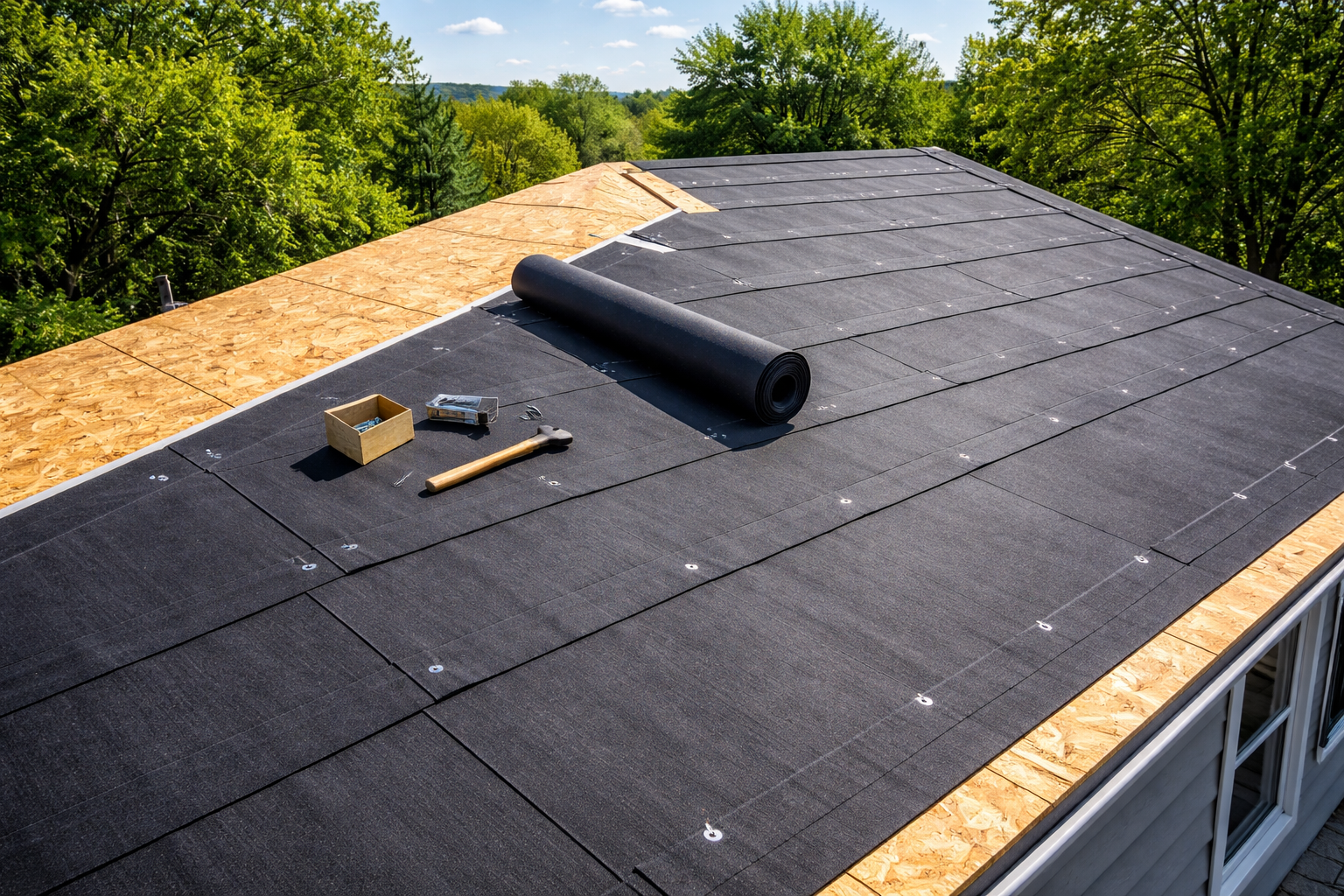
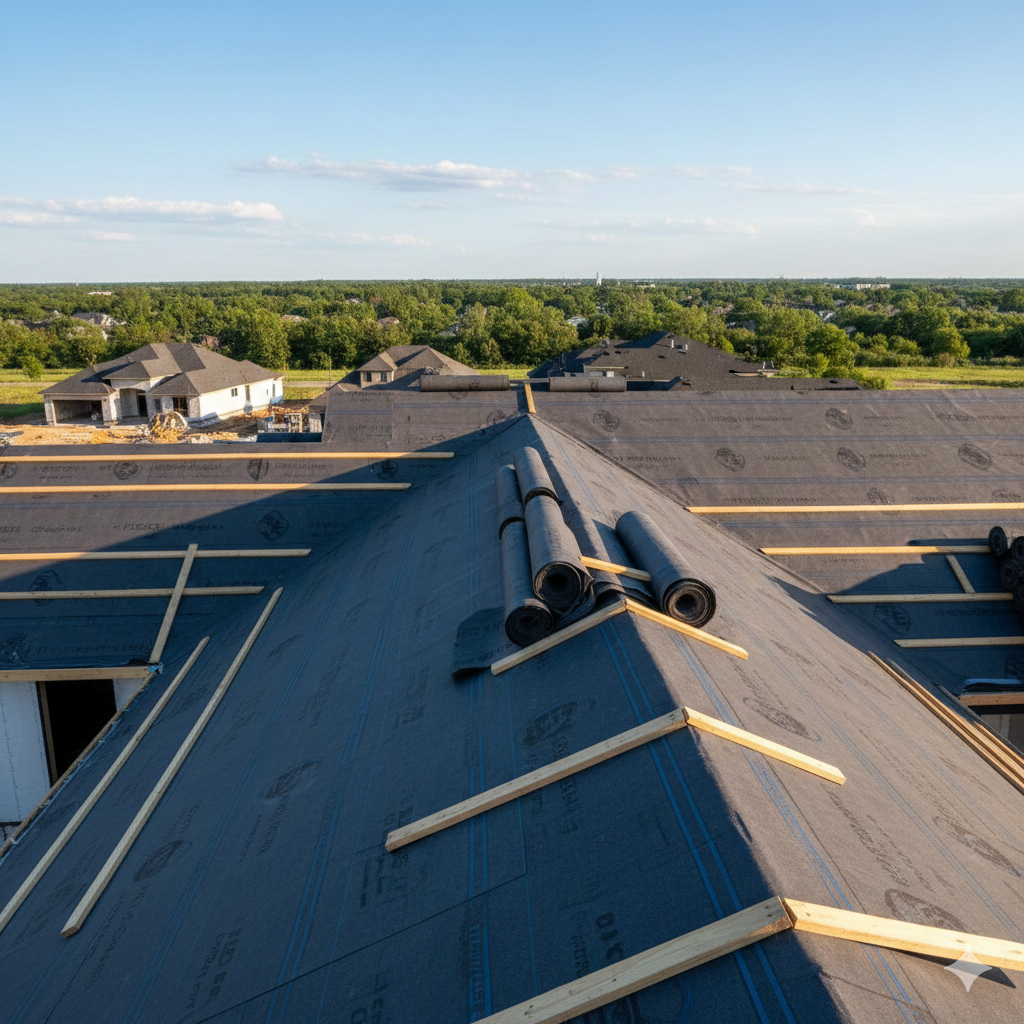
Roof underlayment is a protective layer between the roof deck and the main roof covering. It provides secondary moisture protection as part of the complete assembly. It is not a substitute for sound flashing, correct installation or a roof covering in good condition.
The right product depends on the roof covering, slope, climate and manufacturer’s requirements. Start with the roofing system specification, then compare suitable products. GAF’s underlayment overview explains where this layer fits in the assembly.
Felt, Synthetic and Self-Adhered Products
| Category | What to compare |
|---|---|
| Asphalt-saturated felt | Product grade, permitted use, handling and exposure limits. |
| Mechanically attached synthetic | Compatibility, fastener requirements, vapor properties and installation instructions. |
| Self-adhered membrane | Approved substrate, application temperature, adhesion and intended location. |
Category names do not establish that a product is waterproof, breathable, suitable for every temperature or free of petroleum-derived ingredients. Use the actual technical data sheet. Products within a category can differ substantially.
Choose for the Roof Covering and Climate
Ask which underlayment is approved beneath the specified shingles, metal panels, tile or other covering. Some assemblies require particular temperature resistance, fire classifications or moisture-control details. A product that performs well in one roof is not automatically interchangeable with another.
For metal roofs, confirm the assembly’s temperature and compatibility requirements. For areas vulnerable to ice or wind-driven water, ask which membrane details the applicable code and roofing manufacturer require. Do not assume that covering the entire deck with a low-permeance product is appropriate for every assembly.
Check the Deck Before Installation
The substrate must meet the product’s requirements for soundness, preparation and moisture condition. Underlayment cannot repair rot or restore structural capacity. Damaged panels and unsupported edges should be evaluated before they are concealed.
Read the roof sheathing guide for the questions to ask about panel repairs. If old material is being left in place, ask the contractor to identify the instructions permitting that arrangement.
Installation Details Must Be Product-Specific
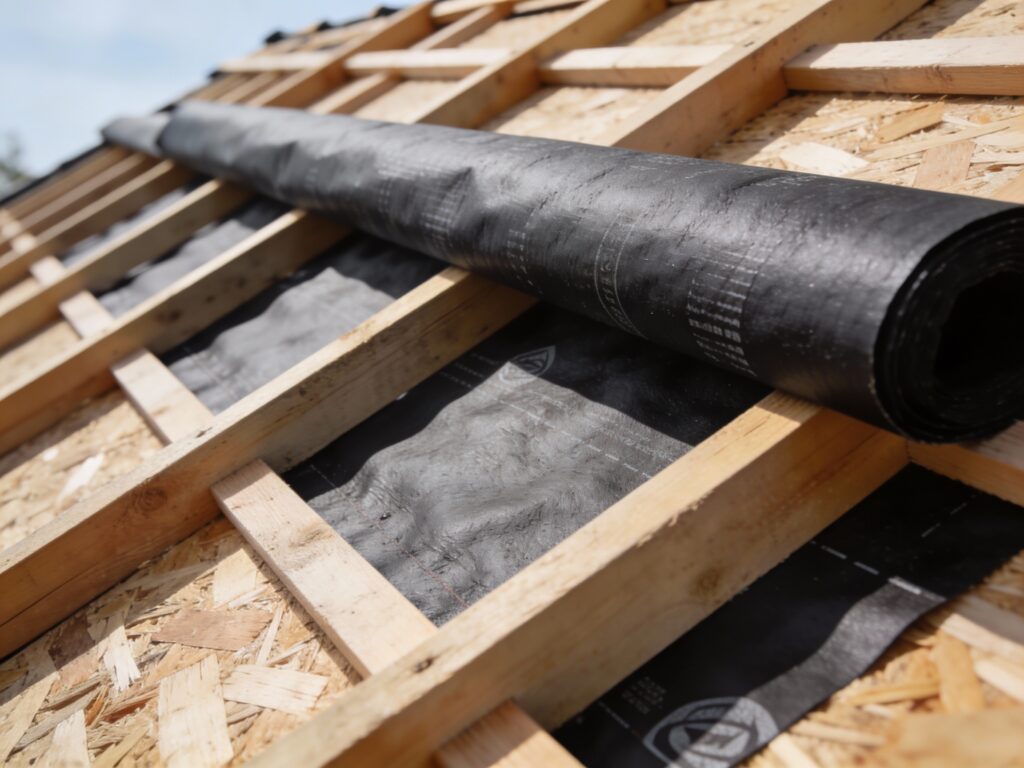
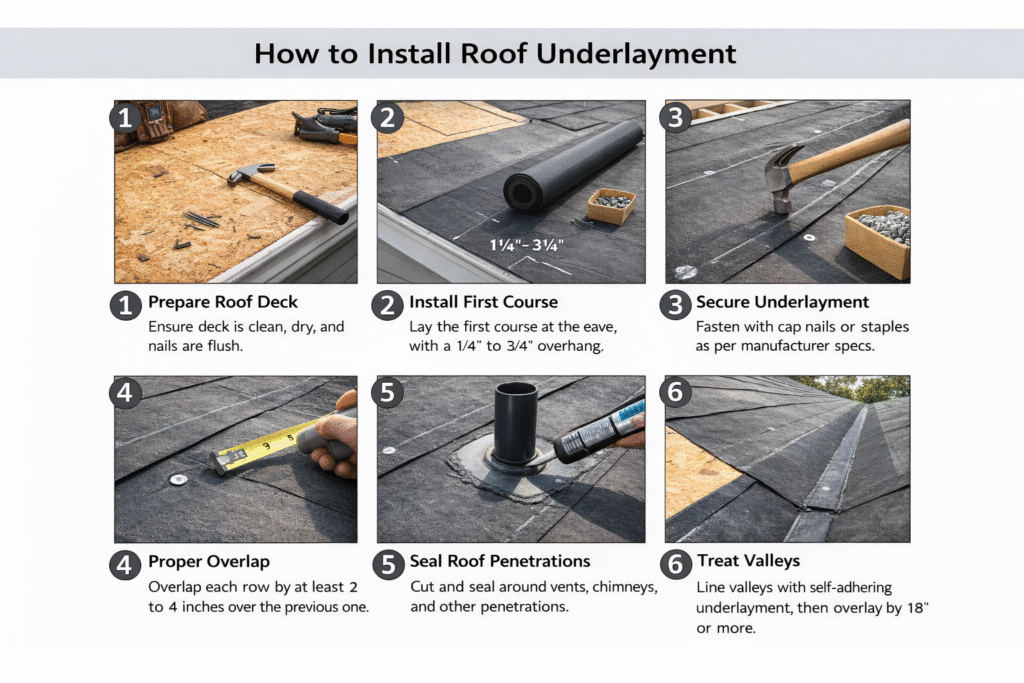
There is no single overlap, nail spacing, exposure duration or installation temperature that applies to every underlayment. The current instructions for the exact product should govern those details together with applicable building requirements. A generic online sequence cannot replace them.
- Confirm permitted roof slope and approved roof covering.
- Check lap directions and dimensions, including end laps.
- Identify the required fasteners, caps or substrate preparation.
- Review transitions at eaves, valleys, walls and penetrations.
- Confirm maximum exposure and what to do after storm damage.
- Record the product and retain the installation documents.
The Owens Corning document library is one example of a manufacturer source for product-specific instructions and warranties. Use documentation matching the product actually purchased.
Cost: Compare Installed Scope
Compare usable coverage per roll after required laps, material quantity, accessories, labor, delivery and preparation. A larger nominal roll is not necessarily cheaper per covered square foot. Self-adhered work may involve preparation that a roll-only comparison misses.
Request current local proposals identifying the product and scope. An underlayment allowance within a roof replacement estimate should not be counted again if it is already included in the contractor’s system price. No universal price or fixed installation time is assumed in this guide.
Exposure, Service Life and Replacement
A permitted construction exposure period is not the same as service life underneath a completed roof. Similarly, a warranty term does not predict how long the installed assembly will remain leak-free.
Underlayment is largely hidden after installation. If leakage occurs, the roofer should investigate the entire water path rather than diagnose this layer from an interior stain alone. During reroofing, ask how existing material will be removed, inspected or treated under the selected system’s requirements.
Common Selection and Installation Problems
Issues to investigate include an incompatible product, damaged sheets, missed transitions, inadequate fastening or exposure beyond the allowed conditions. For a narrower discussion, see problems with synthetic underlayment. That page addresses defects and compatibility; this guide covers overall selection.
Frequently Asked Questions
Can underlayment permanently replace the roof covering?
No. Use it only within the exposure limits and assembly specified by its manufacturer.
Is synthetic always better than felt?
No category is the automatic answer to every project. Compare approved use, handling, installed cost and the complete roofing specification.
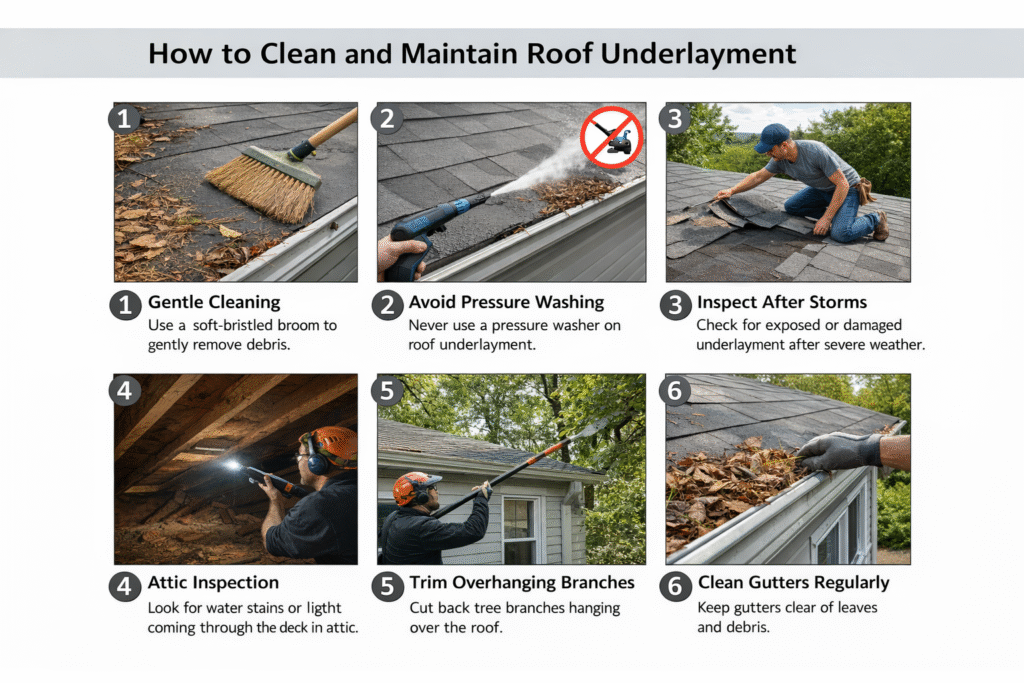
Should hidden underlayment be washed or routinely cleaned?
No routine cleaning procedure applies to a layer concealed under finished roofing. Investigate leaks and maintain accessible roof components according to the roofing manufacturer’s guidance.
What documents should I keep?
Keep product names, purchase records, photographs taken before covering, installation instructions and warranty documents. They provide useful evidence if a future repair needs to identify the existing assembly.
🔧 Other Resources
• Home Depot – Retail category page listing roofing underlayment products and material options.
• Owens Corning – Educational article explaining how roofing underlayment protects homes from moisture and weather.
• Lowe’s – Retail page presenting roofing underlayment products for residential applications.
• NACHI – Technical resource describing different types of roofing underlayment and their functions.
🔎 Other Helpful Articles
• How Long Does a Roof Last – Informational guide explaining roof lifespan based on materials and environmental factors.
• Roof Decking Build – Technical article outlining how roof decking is constructed and installed.
• Roof Sheathing – Educational article explaining roof sheathing materials and their role in roofing systems.
