
Metal Roof Ridge Vents: Compatibility and Airflow Guide
Metal Roof Ridge Vents: Planning the Ventilation System
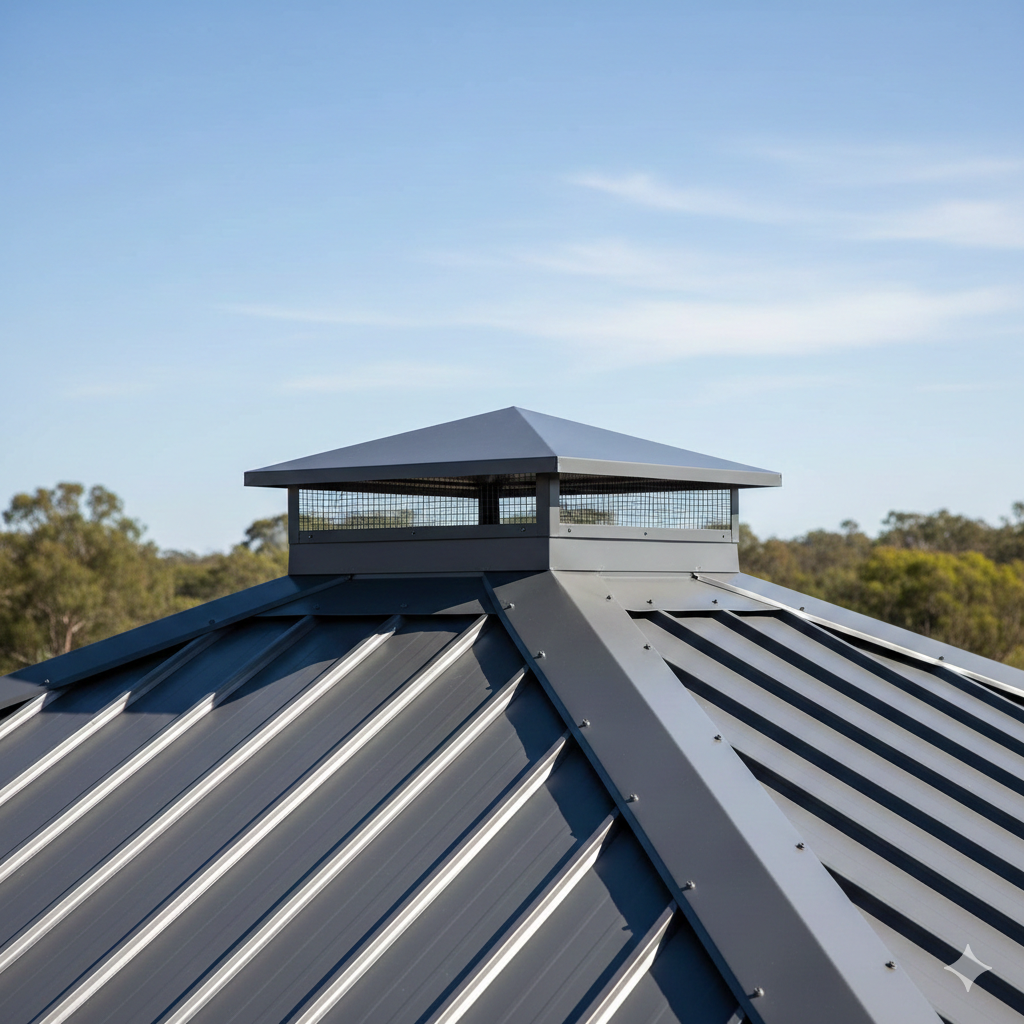
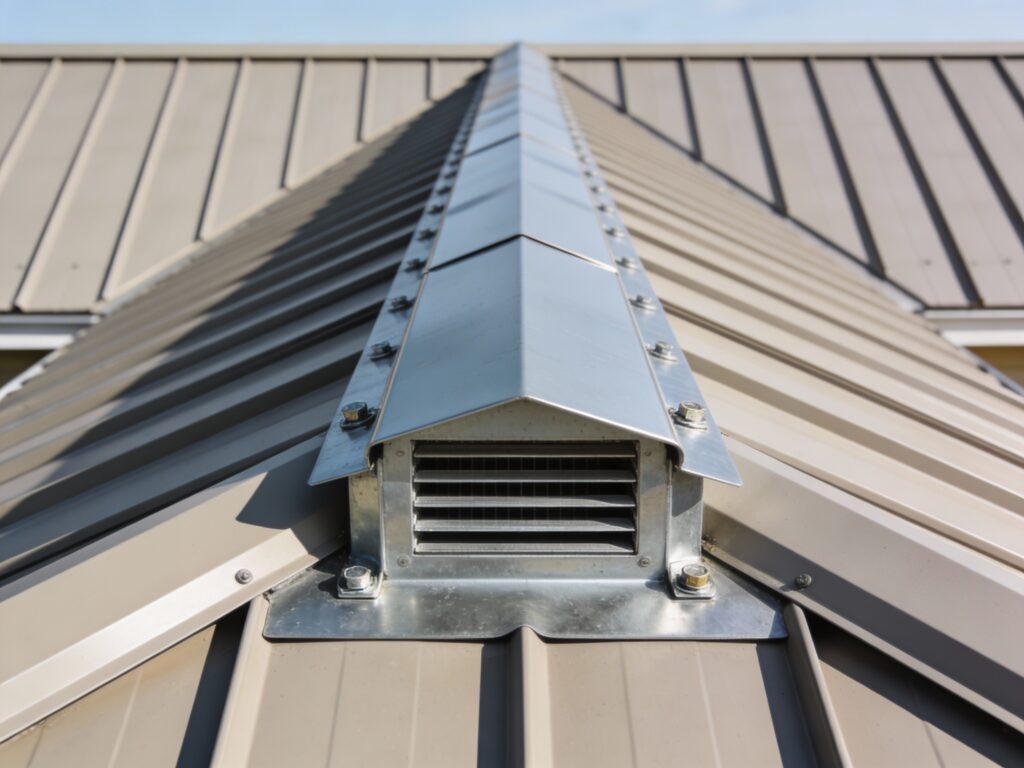
A metal roof ridge vent provides an exhaust path near the roof peak in a ventilated roof assembly. Before choosing one, identify the metal panel profile, ridge cap detail, required vent area and available intake. The vent and its closures must suit that assembly. Use the manufacturer’s drawings to confirm the complete detail, rather than selecting a product by appearance alone.
Many homeowners overlook the importance of a metal roof ridge vent until they notice problems like ice dams in the winter or superheated living spaces in the summer. By installing a high-quality metal roof ridge vent, you are essentially allowing your house to breathe. This article will guide you through every aspect of these systems, from choosing the right model to the nuances of installation and maintenance.
Whether you are a DIY enthusiast looking to tackle a retrofit or a homeowner planning a new construction project, understanding the mechanics and benefits of a metal roof ridge vent is the first step toward a more durable and energy-efficient home. We will explore the costs, the types available, and the specific installation methods that ensure your warranty remains valid and your home remains dry.
What Is a Metal Roof Ridge Vent?
A metal roof ridge vent is a specialized ventilation strip installed along the ridgeline of a sloped roof. Unlike box vents or turbine vents which are installed sporadically across the roof surface, a metal roof ridge vent runs the entire horizontal length of the roof peak. This design provides the most efficient exhaust method because it utilizes the natural principle of thermal buoyancy—hot air rises. As the air in your attic heats up, it naturally moves to the highest point. The metal roof ridge vent provides a clear exit path for this air, preventing it from getting trapped and causing moisture issues.
These vents are typically designed to be low-profile and aesthetically pleasing. In many metal roofing systems, the metal roof ridge vent is covered by a matching metal ridge cap, making the vent itself virtually invisible from the ground. This “shingle-over” or “cap-over” style is preferred by architects and homeowners who want to maintain the sleek lines of a metal roof without protruding vent pipes.
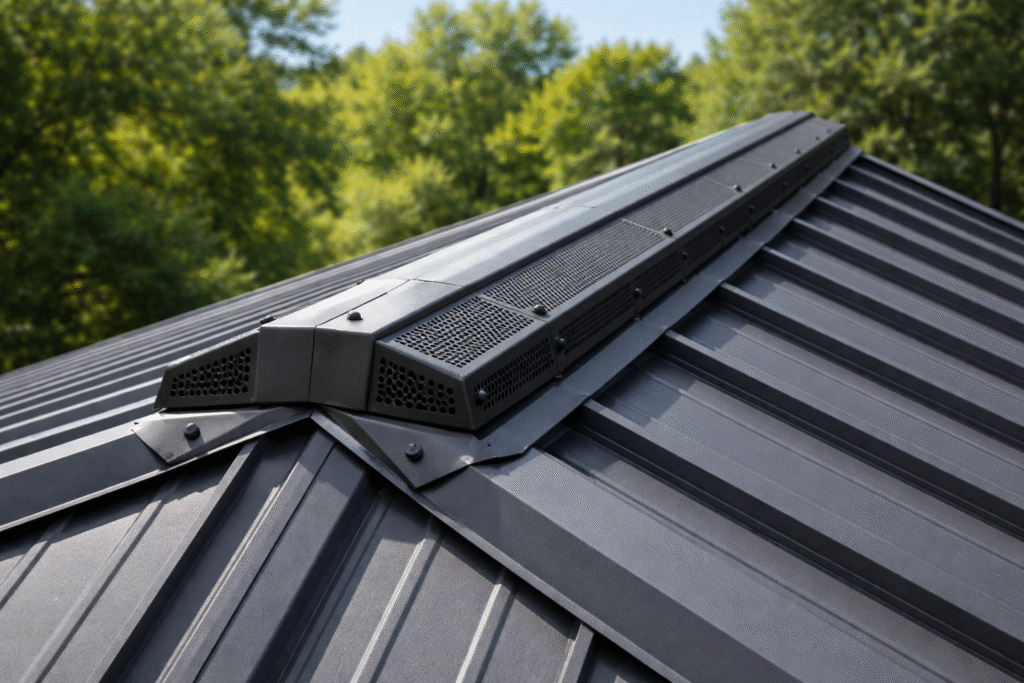
The core of a metal roof ridge vent system usually consists of a permeable material—often a durable mesh or a baffled plastic structure that allows air to pass through while blocking rain, snow, and insects.
There are different profiles of metal roof ridge vent products available to match the specific corrugation or seam style of your metal roof. For example, a standing seam roof requires a different type of metal roof ridge vent than a corrugated R-panel roof. Choosing the correct profile is essential to ensure a weather-tight seal. If you install a flat vent on a ribbed roof without the proper foam closures, you leave gaps that can invite wind-driven rain and pests into your attic. Therefore, understanding exactly what a metal roof ridge vent is and how it interfaces with your specific roof profile is the foundation of a successful roofing system.
How to Find the Right Metal Roof Ridge Vent
Finding the correct metal roof ridge vent involves more than just picking a product off the shelf; it requires understanding your roof’s specifications. The first step is to identify the manufacturer and profile of your metal roofing panels. Most major metal roofing manufacturers produce a specific metal roof ridge vent compatible with their panels.
If you cannot find the original manufacturer, you will need to measure the rib height and spacing of your metal panels. This information is crucial because the metal roof ridge vent must sit flush against the panels or be used with closure strips that match the rib pattern perfectly.
You can find high-quality metal roof ridge vent options at specialized roofing supply stores rather than general big-box hardware stores. While stores like Lowe’s or Home Depot may carry generic universal vents, a specialized roofing supplier will have the specific profiled vents required for metal roofs. Online marketplaces and direct-to-consumer metal roofing websites are also excellent resources. When searching online, use specific terms like “profiled metal roof ridge vent” or “universal ridge vent for metal roof” to narrow down the results.
Another effective way to find the right metal roof ridge vent is to consult with local roofing contractors who specialize in metal installations. They often have access to wholesale distributors and can recommend products that have performed well in your local climate. For instance, if you live in an area with heavy snowfall, you might need a metal roof ridge vent with an internal baffle system designed to stop snow ingestion. Reading reviews and checking technical data sheets for “net free area” (NFA) ratings will also help you find a metal roof ridge vent that provides adequate airflow for your specific attic size.
How to Buy a Metal Roof Ridge Vent
Once you have identified the type of vent you need, the buying process for a metal roof ridge vent is straightforward but requires attention to detail. When you are ready to buy, ensure you calculate the total linear footage of your roof’s ridge. A metal roof ridge vent is typically sold in rolls (often 20 to 50 feet long) or in rigid 4-foot sections. It is always wise to buy 10-15% more material than you measured to account for cutting, waste, and overlaps.
When you buy a metal roof ridge vent, you should also purchase the necessary accessories. This often includes foam closure strips (if not included with the vent), sealant, and specific screws or roofing nails. Do not assume that the fasteners you have on hand will work; the metal roof ridge vent usually requires longer fasteners to penetrate through the ridge cap, the vent itself, and into the roof deck. Check the manufacturer’s installation guide before you check out to ensure you have every component listed.
Comparing prices is also part of the “how to buy” process. While a generic “universal” metal roof ridge vent might be cheaper, it may require more labor to waterproof effectively. A profiled metal roof ridge vent might cost more upfront but will save you time and money on sealants and potential leak repairs later.
Many suppliers offer bulk discounts, so if you are re-roofing a large structure or a commercial building, ask for a volume quote on your metal roof ridge vent order. Always check the return policy as well; metal roofing components can be specialized, and restocking fees are common if you order the wrong size.
How Much Does a Metal Roof Ridge Vent Cost?
The cost of a metal roof ridge vent can vary significantly based on the material quality, the design complexity, and whether you are hiring a professional or doing it yourself. For materials alone, a standard universal roll of metal roof ridge vent can cost between $2.25 and $4.75 per linear foot. However, high-end rigid metal vents or specialized profiled vents can cost upwards of $6.00 to $10.00 per linear foot. If you are covering a 40-foot ridge, the material cost for the vent itself could range from $90 to $400.
Labor costs are a major factor if you are not installing the metal roof ridge vent yourself. Professional installation typically ranges from $7 to $15 per linear foot, which includes labor and minor materials like fasteners and sealants. For a complete installation on a standard-sized home, you might expect to pay between $350 and $750. This price can increase if the roof is steep, difficult to access, or if the old ridge cap needs to be carefully removed and salvaged.
It is important to remember that the “cost” of a metal roof ridge vent is an investment in your home’s longevity. A cheap, poorly installed vent can lead to thousands of dollars in water damage or mold remediation. Conversely, a high-quality metal roof ridge vent pays for itself over time by reducing cooling costs in the summer and preventing ice dam damage in the winter. When budgeting, always include a contingency fund for unexpected issues, such as discovering rotted decking when you remove the old ridge cap to install the new metal roof ridge vent.
How Long Does a Metal Roof Ridge Vent Last?
One of the primary advantages of metal roofing is its longevity, and a metal roof ridge vent is designed to match that lifespan. A high-quality metal roof ridge vent can last anywhere from 30 to 50 years, often outlasting the asphalt shingles on neighboring houses. The durability depends largely on the material. Vents made from UV-resistant polymers or aluminum are built to withstand decades of sun exposure, rain, and thermal cycling without becoming brittle or cracking.
However, the lifespan of a metal roof ridge vent can be compromised by poor installation or lack of maintenance. If the fasteners are over-tightened, they can crack the vent casing. If the sealant used degrades after 10 years, the metal roof ridge vent might physically remain intact but fail functionally by allowing leaks. Regular inspections are necessary to ensure that the metal roof ridge vent continues to perform as intended for its full potential lifespan.
Many manufacturers offer warranties on their metal roof ridge vent products, ranging from 20 years to limited lifetime warranties. These warranties often cover defects in the material but not issues arising from improper installation. To ensure your metal roof ridge vent lasts as long as possible, it is crucial to keep it free of debris and moss, which can trap moisture against the vent and accelerate degradation. With proper care, your metal roof ridge vent will likely be a one-time investment for the duration of your ownership of the home.
How to Install a Metal Roof Ridge Vent Properly
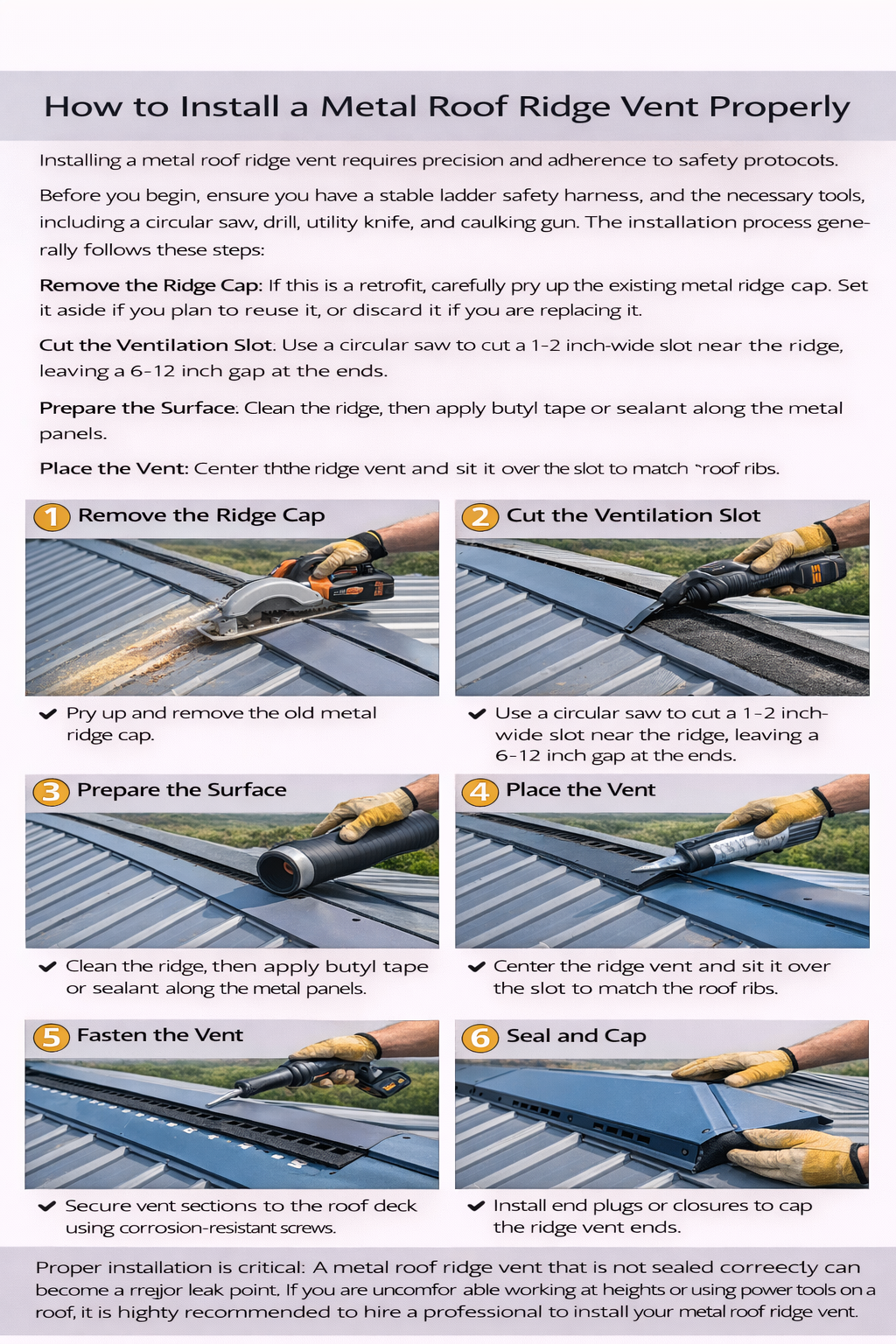
Installing a metal roof ridge vent requires precision and adherence to safety protocols. Before you begin, ensure you have a stable ladder, safety harness, and the necessary tools, including a circular saw, drill, utility knife, and caulking gun. The installation process generally follows these steps:
Remove the Ridge Cap: If this is a retrofit, carefully pry up the existing metal ridge cap. Set it aside if you plan to reuse it, or discard it if you are replacing it.
Cut the Ventilation Slot: You need an opening for air to escape. Mark a line roughly 1 to 2 inches down from the peak on both sides of the ridge. Use a circular saw to cut the decking, ensuring you do not cut through the structural ridge beam (truss). Stop the cut about 6 to 12 inches from the gable ends to maintain structural integrity.
Prepare the Surface: Clean the area thoroughly. Apply a line of butyl tape or high-quality sealant along the metal panels where the metal roof ridge vent will sit.
Place the Vent: Roll out or place the metal roof ridge vent sections over the ridge. Ensure the vent is centered over the opening. If you are using a profiled vent, make sure the contours match the roof ribs perfectly.
Fasten the Vent: Use the recommended screws to secure the metal roof ridge vent to the roof deck. Fasten through the pre-drilled holes or as directed by the manufacturer. Do not overdrive the screws.
Seal and Cap: Apply another bead of sealant on top of the vent if required. Then, install the metal ridge cap over the metal roof ridge vent. Fasten the cap through the vent and into the deck using long stitch screws or roofing nails.
End Caps: Install end plugs or foam closures at the very ends of the ridge to prevent wind-driven rain from entering the ends of the metal roof ridge vent.
Proper installation is critical. A metal roof ridge vent that is not sealed correctly can become a major leak point. If you are uncomfortable working at heights or using power tools on a roof, it is highly recommended to hire a professional to install your metal roof ridge vent.
Key Facts About Metal Roof Ridge Vents
There are several nuances to understanding how a Ridge vent system functions within a roofing system. This section addresses four specific topics that often confuse homeowners and contractors alike.
1: Do metal roofs have ridge vents?
Yes, most modern metal roofs have ridge vents. While older agricultural metal roofs might have relied solely on leaky gaps or gable vents, contemporary residential metal roofs almost always incorporate a metal roof ridge vent. It is the standard for code-compliant ventilation in energy-efficient homes. Without a metal roof ridge vent, a metal roof can trap incredible amounts of heat, potentially degrading the underlayment and causing condensation issues inside the structure.
2: Can you put a ridge vent on a metal roof?
Absolutely. You can put a ridge vent on a metal roof, provided you choose a product compatible with the roof’s profile. You cannot simply use a standard shingle-over vent designed for asphalt roofs without modification, as it won’t seal against the ribs of the metal panels. You must use a metal roof ridge vent specifically engineered for the high-profile nature of metal roofing to ensure a watertight fit.
3: How to install a ridge vent on a metal roof?
The installation process is distinct from asphalt roofing. As detailed in the previous section, installing a metal roof ridge vent involves dealing with closure strips and profile matching. The critical difference is the “sandwich” method: the metal roof ridge vent is sandwiched between the metal roof deck/panels and the metal ridge cap. Sealant placement is far more critical here than with asphalt shingles because metal expands and contracts significantly with temperature changes.
4: Ridge vent for metal roofing?
When asking for a “ridge vent for metal roofing,” you are looking for a product that handles high expansion and contraction rates. A proper metal roof ridge vent often includes a foam closure system that breathes. This foam fills the gaps under the metal ribs while allowing air to pass. The best ridge vent for metal roofing is one that offers a high Net Free Area (NFA) while providing a barrier against wind-driven rain, which can easily be blown up under the ridge cap of a metal roof if not properly baffled.
How to Clean a Metal Roof Ridge Vent
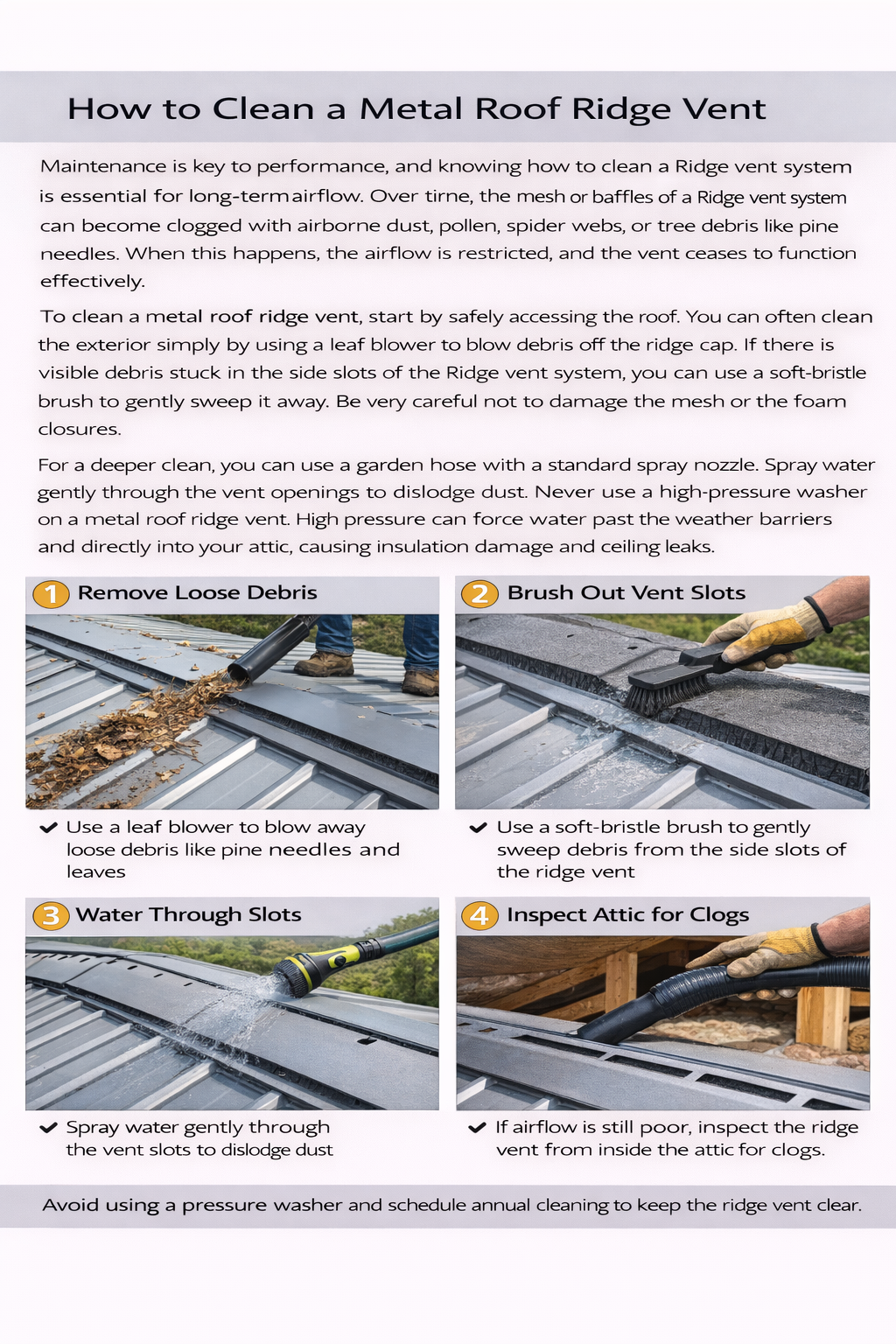
Maintenance is key to performance, and knowing how to clean a Ridge vent system is essential for long-term airflow. Over time, the mesh or baffles of a Ridge vent system can become clogged with airborne dust, pollen, spider webs, or tree debris like pine needles. When this happens, the airflow is restricted, and the vent ceases to function effectively.
To clean a metal roof ridge vent, start by safely accessing the roof. You can often clean the exterior simply by using a leaf blower to blow debris off the ridge cap. If there is visible debris stuck in the side slots of the Ridge vent system, you can use a soft-bristle brush to gently sweep it away. Be very careful not to damage the mesh or the foam closures.
For a deeper clean, you can use a garden hose with a standard spray nozzle. Spray water gently through the vent openings to dislodge dust. Never use a high-pressure washer on a metal roof ridge vent. High pressure can force water past the weather barriers and directly into your attic, causing insulation damage and ceiling leaks.
If you suspect the Ridge vent system is clogged from the inside (which is rare but possible), you may need to inspect it from inside the attic and use a shop vacuum to remove dust bunnies or insulation that may be blocking the airflow path. Regular cleaning, ideally once a year, ensures your metal roof ridge vent remains efficient.
Advantages of Metal Roof Ridge Vent Systems
Investing in a metal roof ridge vent brings a multitude of benefits that go beyond simple airflow. The primary advantage is the creation of a consistent, passive air current. Because the Ridge vent system is located at the highest point, it utilizes the “stack effect” efficiently—hot air rises and exits, pulling cool air in from the soffits. This passive cooling can significantly lower your air conditioning costs during the summer months.
Another significant advantage is moisture control. In the winter, warm, moist air from your living space leaks into the attic. If trapped, this moisture condenses on the cold underside of the metal roof, leading to “attic rain” or mold growth. A metal roofing ridge vent allows this moisture to escape before it can condense. This is particularly vital for metal roofs, which can sweat more than other materials if not properly ventilated.
Aesthetically, a metal roof ridge vent is superior to other options. Wind turbines and box vents break up the clean lines of a metal roof and can be noisy or prone to mechanical failure. A metal roofing ridge vent, covered by a ridge cap, is sleek, silent, and has no moving parts to break. Furthermore, because it runs the entire length of the roof, it provides uniform ventilation to every rafter bay, eliminating hot spots that can occur with spot vents. The Ridge vent system is simply the most comprehensive and reliable ventilation solution for metal roofing systems.
Challenges with Metal Roof Ridge Vent Installation
Despite the benefits, there are challenges associated with a metal roofing ridge vent. The most common issue is improper installation leading to leaks. Because metal roofs have ribs and valleys, sealing the metal roofing ridge vent against these uneven surfaces can be difficult. If the closure strips are not installed perfectly, wind-driven rain can be forced under the vent and into the attic. This is why using a profiled metal roofing ridge vent that matches your specific panel type is so important.
Another challenge is “capping over” too tightly. Some installers might fasten the ridge cap down so tightly over the metal roofing ridge vent that they crush the vent material, restricting airflow. The Ridge vent system needs to maintain its structural height to allow air to pass through. Conversely, if left too loose, the ridge cap can blow off in high winds. Finding the “Goldilocks” zone of fastener tightness is a skill that requires experience.
Finally, in areas with extreme snowfall, a metal roofing ridge vent can become buried. While some airflow can still occur through the snow, a thick layer of ice and heavy snow can temporarily block the vent. While this is usually a temporary problem, it highlights the need for a balanced system that might include gable vents as a backup in very snowy climates. Additionally, retrofitting a metal roof ridge vent on an existing roof is labor-intensive and risky, as cutting the metal deck produces hot sparks that can damage the finish of the panels if not managed carefully. Being aware of these challenges allows you to plan and supervise the installation of your metal roof ridge vent more effectively.
Summary of Metal Roof Ridge Vent Types
To wrap up, let’s summarize the main types of metal roof ridge vent options you will encounter.
Universal Universal Foam/Mesh Rolls: These are flexible rolls that can adhere to various metal profiles. They are versatile and cost-effective but rely heavily on adhesive and proper placement.
Profiled Closures: These are rigid foam or plastic strips cut to match the exact shape of your metal panel (e.g., R-Panel, U-Panel). A metal roof ridge vent made this way offers the best seal against weather but must be ordered specifically for your roof type.
Rigid Plastic/Aluminum Vents: These look like traditional shingle-over vents but are adapted for metal. They are sturdy and crush-resistant but can be harder to seal against high-ribbed panels.
Mechanical/Active Ridge Vents: Rare for residential but used in commercial, these include small fans within the ridge. They are overkill for most homes.
Choosing the right metal roof ridge vent depends on your specific roof profile, budget, and climate. By understanding the options, you can ensure that your metal roof ridge vent serves your home efficiently for decades.
FAQ : Metal roof ridge vent
What happens if I don’t use a metal roof ridge vent?
Without a Ridge vent system, heat and moisture get trapped in your attic. This can lead to mold growth, rotted decking, higher energy bills, and ice dams in winter.
Can I install a metal roof ridge vent myself?
Yes, but it requires comfort with heights and power tools. You must be precise with cutting the metal deck and applying sealant. If you are unsure, hiring a pro to install your Ridge vent system is safer.
Does a metal roof ridge vent leak?
A properly installed Ridge vent system should not leak. Leaks usually occur due to improper sealing, missing foam closures, or using the wrong type of vent for the roof profile.
Is a metal roof ridge vent better than a turbine vent?
Generally, yes. A metal roof ridge vent provides continuous airflow along the entire roof peak, has no moving parts, and is more aesthetically pleasing than turbine vents.
How often should I check my metal roof ridge vent?
You should inspect your metal roofing ridge vent at least once a year, preferably in the spring or fall, to ensure it is free of debris and that the fasteners are secure.
Conclusion
A metal roof ridge vent is not just an accessory; it is a fundamental component of a high-performing metal roofing system. By ensuring continuous airflow, a metal roof ridge vent protects the structural integrity of your home and enhances your living comfort. From understanding the costs and “how to buy” logistics to mastering the “how to install” techniques, we hope this guide has empowered you to make informed decisions.
Remember that the key to a successful metal roof ridge vent installation lies in choosing the right profile for your roof and adhering to strict waterproofing practices. Whether you are building a new dream home or upgrading an existing one, prioritizing a quality metal roof ridge vent is a decision that will pay dividends in energy savings and peace of mind for years to come. Do not underestimate the power of letting your roof breathe; install a metal roof ridge vent and safeguard your investment today.
🔧 Other Resources
• EZ Ventnclosure – Product website presenting vent enclosure solutions designed to protect roof ventilation openings.
• Best Buy Metals – Product page detailing a metal ridge vent used for roof ventilation systems.
• Hog Slat – Supplier page listing ridge vent roof ventilation products for building applications.
• YouTube Video – Video demonstrating ridge vent installation or roof ventilation concepts.
🔎 Other Helpful Articles
• Roof Vent Cost – Informational article explaining typical roof vent installation costs and pricing factors.
• Roof Vent Cap Installation – Technical guide outlining steps and considerations for installing a roof vent cap.
