
Roof Scaffolding: Access Planning and Safety Requirements
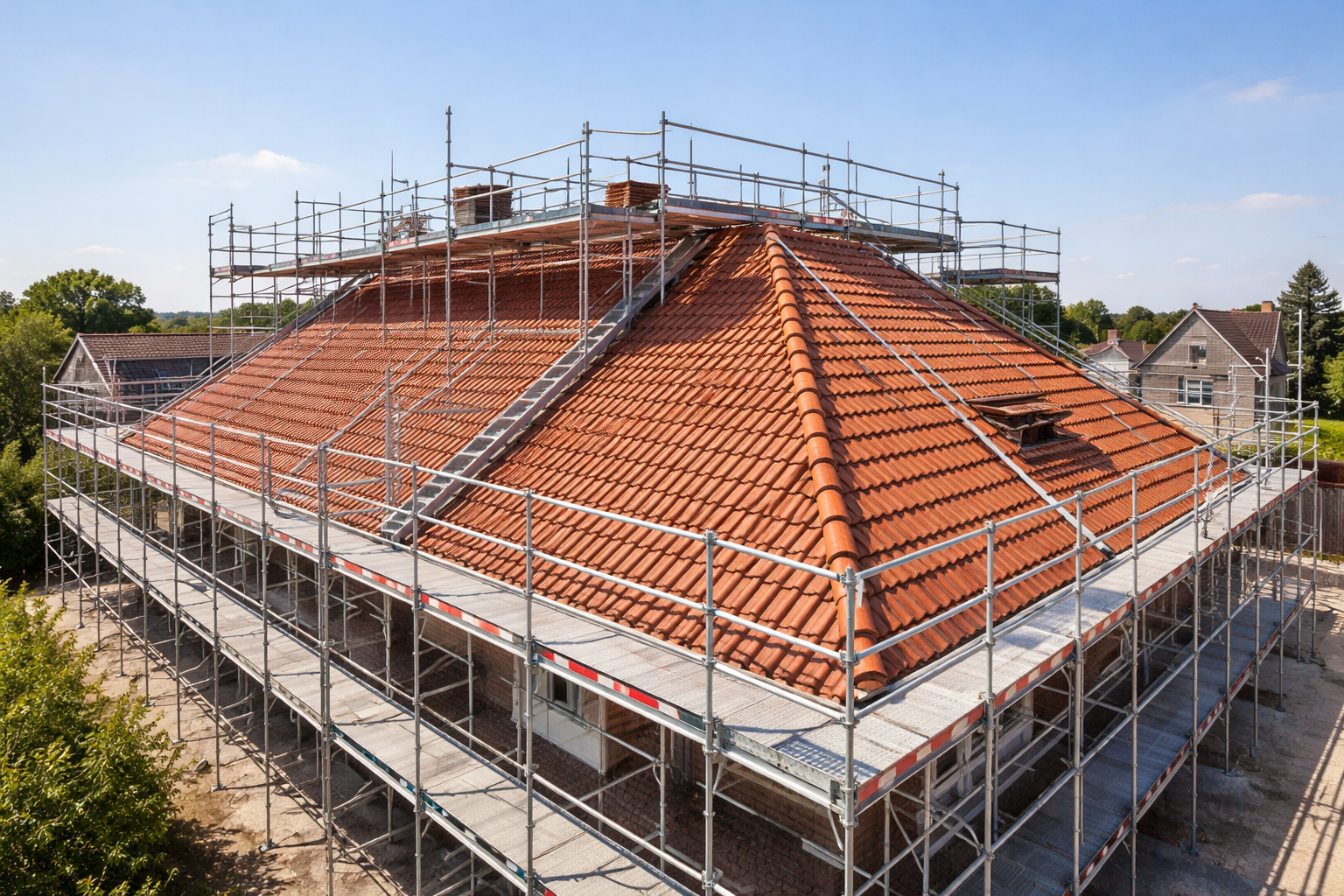
Roof Scaffolding: Plan the Access System Before Work
Roof work requires an access system suited to the building, task and expected loads. Ground-supported scaffolding, roof brackets and suspended platforms are different systems; they are not interchangeable. For U.S. construction work, OSHA requires scaffolds to be designed by a qualified person. Discuss support, access, fall protection and inspection with the contractor before work starts.
The implementation of scaffolding on a roof involves careful planning, adherence to safety regulations, and proper installation techniques that ensure both worker protection and structural integrity. From selecting the appropriate scaffolding type to understanding rental costs and legal requirements, every aspect of using scaffolding on a roof demands attention to detail and professional expertise.
What is Scaffolding on a Roof
Scaffolding on a roof is a temporary support structure specifically designed to provide safe access and a stable working platform for construction workers, roofers, and maintenance personnel performing tasks at elevated heights. Unlike traditional ground-based scaffolding that relies on vertical support from the ground up, scaffolding on a roof can be mounted directly onto the roof structure itself or built as a traditional system that extends above the roofline.
This specialized equipment consists of several key components that work together to create a secure environment:
Ridge mounting brackets that attach to the peak of the roof without causing extensive damage to shingles
Horizontal rails and beams made from galvanized steel or aluminum for durability and weather resistance
Platform boards (typically 2×10 lumber) that create the walking and working surface
Adjustable feet and base plates that ensure level positioning on sloped surfaces
Guardrails and safety barriers to prevent falls from elevated platforms
Diagonal bracing that maintains structural stability under load
Scaffolding on a roof serves multiple purposes beyond simply providing a place to stand. It distributes worker weight across a broader area, protecting fragile roofing materials from damage or collapse. The structure also creates designated zones for storing tools and materials, reducing the risk of falling objects that could injure people below or damage property.
Modern scaffolding on a roof systems utilize advanced engineering principles to accommodate various roof pitches, from gentle slopes to steep inclines exceeding 14/12 pitch. These systems can support not only workers but also heavy equipment, building materials, and environmental loads such as wind and precipitation.
Types of Scaffolding for Roof Work
Understanding the different types of scaffolding on a roof available helps contractors and property owners select the most appropriate system for their specific project requirements. Each type offers distinct advantages depending on the roof configuration, project duration, and work complexity.
Frame scaffolding represents the most common and economical option for basic roof work, featuring pre-fabricated frames that connect with cross braces and platforms
System scaffolding utilizes modular components with advanced connection systems, ideal for complex structures and industrial projects requiring customization
Rolling or mobile scaffolding incorporates locking casters that allow repositioning, perfect for tasks requiring access to multiple roof areas
Suspended scaffolding hangs from roof structures using cables or chains, primarily used for high-rise building facade work and window maintenance
Tube and clamp scaffolding offers maximum flexibility with individual components that can be configured to any shape or angle
SteepSlope roof scaffold systems specifically designed for pitched roofs between 8/12 and 14/12, featuring free-floating platforms that eliminate extensive nailing into shingles
The selection of scaffolding on a roof type depends on several factors including roof pitch, building height, project scope, weight requirements, and accessibility constraints. Frame scaffolding works well for straightforward residential re-roofing projects, while system scaffolding better serves commercial buildings with complex architectural features.
Scaffolding on a roof for steep slopes requires specialized equipment with adjustable mounting brackets that accommodate varying pitch angles. These systems typically feature ridge-mounted brackets that secure to the roof peak with minimal penetration, reducing potential leak points. The brackets incorporate multiple mounting tube positions, allowing workers to adjust the platform angle to match roof pitch exactly.
Temporary roof scaffolding combines traditional scaffolding frameworks with weatherproof covering materials, protecting both the building interior and work area from adverse climatic conditions. This type proves particularly valuable for extended projects where work must continue despite rain, snow, or extreme temperatures.
How to Find Quality Scaffolding on a Roof Services
Locating reputable providers for scaffolding on a roof rental and installation requires thorough research and careful evaluation of potential contractors. The quality of both equipment and installation directly impacts worker safety and project success, making this selection process critically important.
1️⃣ Request Professional Recommendations
Start by requesting recommendations from local construction professionals, general contractors, and building inspectors who regularly work with scaffolding on a roof suppliers. Industry professionals often maintain trusted relationships with reliable providers and can offer valuable insights regarding service quality, equipment condition, reliability, and pricing structures.
2️⃣ Verify Licensing and Insurance
Verify that any scaffolding on a roof provider maintains proper licensing, insurance coverage, and required safety certifications within your jurisdiction. Reputable companies should readily provide proof of general liability insurance, workers’ compensation coverage, and compliance with OSHA standards or equivalent local regulations. Proper documentation protects you from liability and ensures legal compliance.
3️⃣ Evaluate Equipment Quality and Maintenance
Examine the provider’s equipment inventory to confirm they supply appropriate scaffolding on a roof systems for your specific project requirements. Quality suppliers maintain equipment in excellent condition, conduct regular inspections, and comply with current safety standards. Look for providers who follow structured maintenance programs, including cleaning procedures, corrosion prevention, and scheduled component replacements.
4️⃣ Request Detailed Written Quotes
Request detailed written quotations from multiple scaffolding on a roof providers. The quote should clearly itemize all costs, including rental rates, delivery and pickup fees, installation labor, and any additional equipment such as safety netting or weather protection. Transparent pricing reflects professional practices and helps avoid unexpected charges during the project.
5️⃣ Assess Technical Expertise
Evaluate the provider’s technical knowledge by asking specific questions about installation methods suited to your roof type, pitch adjustment capabilities, and load capacity calculations. Competent providers should confidently explain how they will adapt scaffolding on a roof systems to your building’s unique characteristics, including fragile roofing materials, existing structural damage, or architectural elements like skylights and chimneys.
6️⃣ Review References and Testimonials
Review customer testimonials and request references from recent projects similar in size and complexity to yours. Speaking directly with previous clients can provide insight into installation quality, safety standards, equipment reliability, and overall satisfaction with the provider’s service.
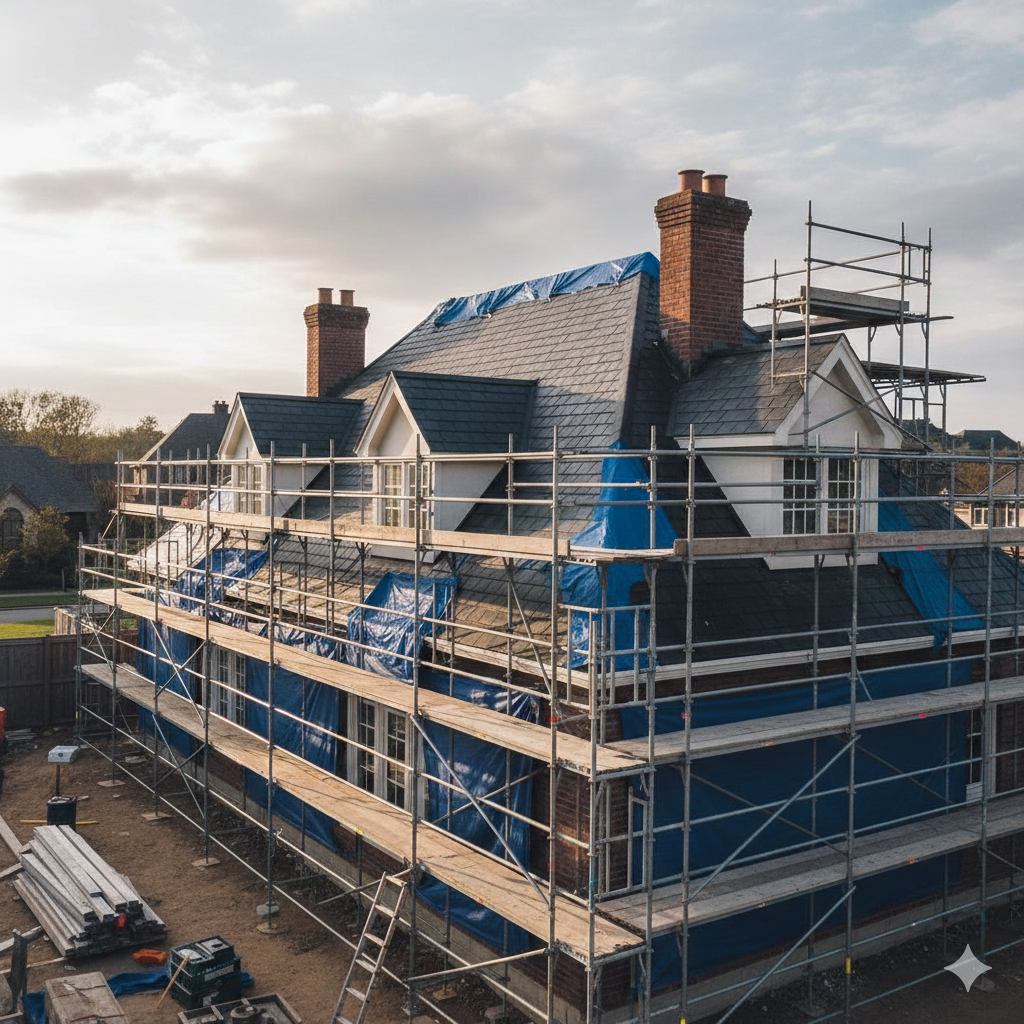
How to Buy Scaffolding on a Roof Equipment
Purchasing scaffolding on a roof equipment rather than renting makes financial sense for contractors and property owners who regularly perform elevated work or manage multiple ongoing projects. The decision to buy requires understanding equipment specifications, quality standards, and long-term maintenance responsibilities.
New scaffolding on a roof systems purchased from manufacturers or authorized distributors ensure compliance with current safety standards and come with warranties covering defects and premature failures. When buying new equipment, prioritize suppliers who provide detailed documentation including load capacity ratings, assembly instructions, inspection protocols, and replacement part availability.
Consider these essential factors when purchasing scaffolding on a roof equipment:
Material composition – galvanized steel offers superior durability and weather resistance compared to painted steel or aluminum alternatives
Load classification – ensure the system meets or exceeds anticipated weight requirements including workers, tools, and materials
Component compatibility – verify that all pieces work together and that replacement parts remain readily available
Certification documentation – confirm the equipment meets OSHA 29 CFR 1926 Subpart L standards or equivalent regulations
Manufacturer reputation – research company history, customer reviews, and industry standing before committing to a purchase
Used scaffolding on a roof equipment provides cost savings but requires careful inspection to identify wear, damage, or safety deficiencies that could compromise performance. Examine metal components for rust, corrosion, cracks, or bends that indicate structural weakness. Check wooden planks for splits, rot, warping, or previous repairs that might affect load-bearing capacity.
Quality scaffolding on a roof investment includes proper storage facilities that protect equipment from weather exposure when not in use. Dry, well-ventilated storage areas prevent moisture damage that leads to rust on metal components and mold on wooden elements.
Bulk purchases of scaffolding on a roof systems often qualify for volume discounts from suppliers, particularly when buying complete sets rather than individual components. Contractors outfitting multiple crews or property managers maintaining large facility portfolios should negotiate pricing based on total order value.
How Much Does Scaffolding on a Roof Cost
The cost of scaffolding on a roof varies significantly based on rental versus purchase decisions, project duration, system type, building size, and geographic location. Understanding these cost factors helps with accurate budget planning and prevents financial surprises during project execution.
Rental pricing for scaffolding on a roof operates on daily, weekly, and monthly rate structures, with longer rental periods offering better per-day value:
| Scaffold Type | Daily Rate | Weekly Rate | Monthly Rate |
|---|---|---|---|
| Frame Scaffolding | $15-$30 | $50-$150 | $200-$500 |
| System Scaffolding | $35-$60 | $175-$350 | $600-$1,200 |
| Rolling/Mobile | $20-$40 | $70-$200 | $300-$700 |
| Suspended | $50-$100 | $200-$500 | $800-$2,000 |
| Tube & Clamp | $100-$300+ | Custom | Custom |
Beyond base rental rates, scaffolding on a roof projects incur additional expenses that can represent 30-50% of total costs:
Delivery and pickup fees typically range from $75 to $300 depending on distance and equipment volume
Installation and dismantling labor costs $500 to $2,500 based on system complexity and building height
Safety equipment additions like side protection netting ($4-$8 per linear meter) and dust protection ($2-$5 per square meter)
Weather protection elements including PE tarpaulins ($0.90-$11 per square meter) and protective roofs ($19-$33 per linear meter)
Permit fees required by many municipalities for temporary structures, ranging from $50 to $500
Project-specific scaffolding on a roof costs reflect building characteristics and work scope:
Roof repair scaffolding: $350 for basic tower systems to $2,800 for complete re-roofing setups
Chimney repair scaffolding: $1,200 to $1,700 for standard residential chimneys
Solar panel installation scaffolding: $1,200 to $2,500 depending on array size and roof complexity
Temporary roof scaffolding: Starting at $90 per square meter for comprehensive weather-protected systems
The square footage pricing model for scaffolding on a roof ranges from $15 to $50 per square foot for rental installations. For a standard 1,500 square foot residential roof, total project costs might span $22,500 to $75,000 when including all equipment, labor, and additional safety features.
Professional installation of scaffolding on a roof by qualified technicians ensures proper setup and regulatory compliance, typically adding 20-40% to equipment rental costs. While this represents significant expense, professional installation dramatically reduces accident risk and liability exposure compared to self-installation attempts.
How to Set Up Scaffolding on a Sloped Roof
Installing scaffolding on a roof with significant pitch requires specialized techniques that differ substantially from level-surface scaffolding applications. Sloped roof installations demand careful attention to leveling, securing, and load distribution to prevent dangerous shifting or collapse.
The fundamental process for setting up scaffolding on a roof on slopes involves these critical steps:
1️⃣ Site Preparation and Safety Assessment
Site preparation and safety assessment begin by clearing all debris, tools, and obstructions from the roof surface that could interfere with scaffold placement or create trip hazards. Potential complications such as electrical wires, tree branches, gutters, skylights, and ventilation systems must be identified and accounted for during installation. All necessary equipment and materials should be gathered on the roof before assembly begins to reduce hazardous trips up and down ladders while carrying heavy components.
2️⃣ First Level Frame Assembly
First level frame assembly involves constructing the base scaffold section either on the ground or directly on the roof surface before positioning it over the roof peak. Adjustable feet must be attached to each vertical leg, ensuring the mechanisms move freely and lock securely. These adjustable feet are critical for leveling, as they compensate for roof pitch and create a horizontal working platform despite the sloped surface underneath.
3️⃣ Peak Positioning and Leveling
Peak positioning and leveling require carefully moving the assembled base frame into place so that it straddles the roof ridge, ideally with assistance from at least one additional person. The scaffold must sit perpendicular to the ridge with equal overhang on both sides. A quality level should be used to confirm that the top platform is perfectly horizontal, adjusting the feet on the lower slope side to extend further than those on the upper side.
4️⃣ Securing the Base Level
Securing the base level prevents unwanted movement during use. Wooden blocks, specialized bracing materials, or sandbags can be placed against the feet on the lower slope side to prevent sliding. Some installers use custom-cut wooden wedges that match the roof pitch to provide stable bearing surfaces. These stabilizing elements must be secured using screws or mechanical fasteners rather than relying solely on gravity.
5️⃣ Additional Level Construction
Additional level construction begins only after the base level is stable and properly aligned. The scaffold structure should then be built upward according to manufacturer specifications, ensuring all connections are fully locked and cross-bracing maintains rigidity throughout. Guardrails, toe boards, and safety netting must be installed in compliance with OSHA regulations for fall protection when working at heights exceeding 10 feet.
For scaffolding on a roof with steep pitches between 8/12 and 14/12, specialized SteepSlope scaffold systems offer superior safety and easier installation. These systems utilize ridge-mounted brackets that secure to the roof peak with minimal penetration, typically requiring only one nail per rail rather than 30-60 fasteners penetrating shingles. The mounting brackets feature multiple tube positions that accommodate different pitch angles by simply selecting the appropriate mounting hole.
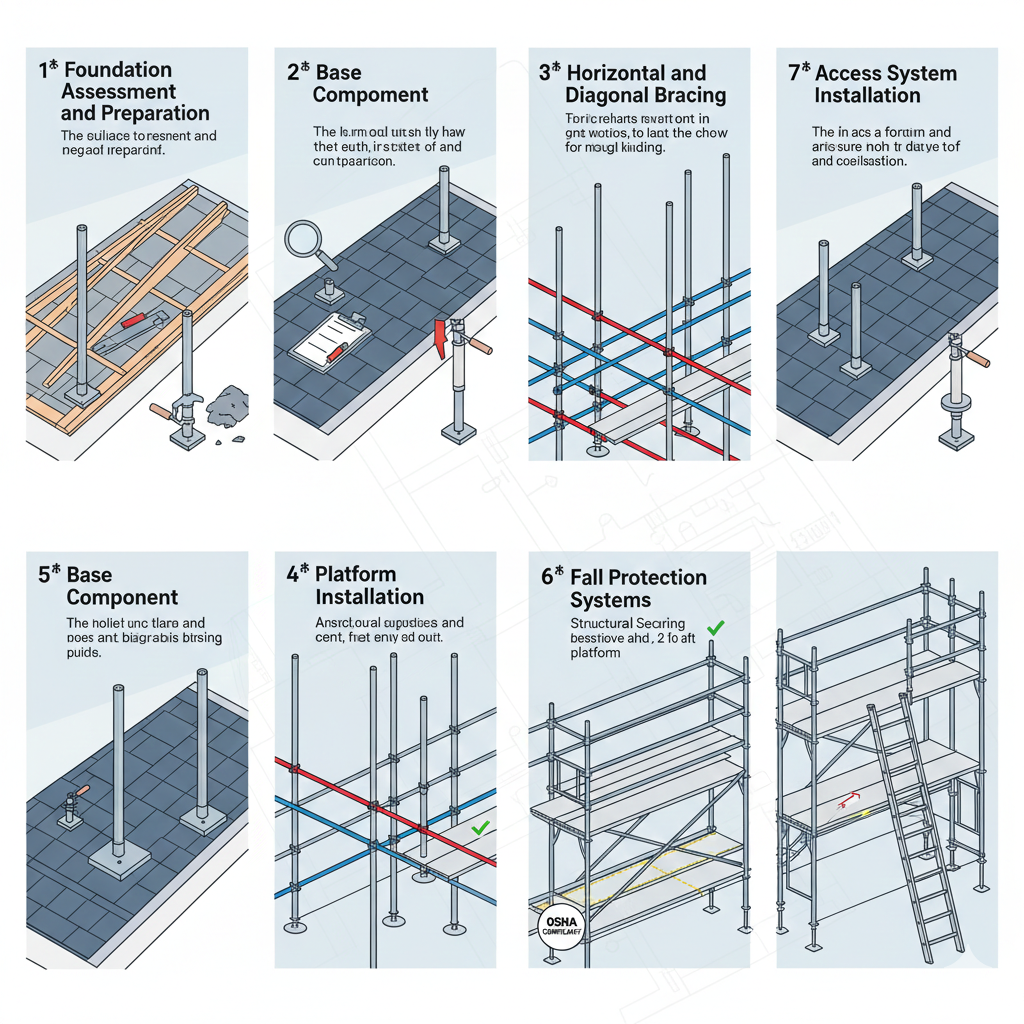
How to Build Scaffolding on a Roof
Constructing scaffolding on a roof from individual components requires technical knowledge, physical capability, and strict adherence to safety protocols throughout the assembly process. Proper construction techniques ensure the resulting structure safely supports anticipated loads under all working conditions.
1️⃣ Foundation Assessment and Preparation
Foundation assessment and preparation form the critical first step in building scaffolding on a roof. The roof’s structural integrity must be evaluated to confirm it can safely support the combined weight of scaffolding, workers, tools, and materials without risk of collapse. Older buildings or roofs with visible damage may require structural reinforcement before installation begins. The installation area must be cleared of debris, and a level working surface should be established by correcting significant irregularities.
2️⃣ Base Component Installation
Base component installation begins by positioning base plates or mudsills to distribute scaffold weight evenly across a wider roof area. On sloped roofs, leveling is achieved through adjustable feet or custom-cut blocking materials. The first set of vertical standards (uprights) is then installed at the designated spacing, typically between 4 and 8 feet apart depending on load requirements and scaffold type.
3️⃣ Horizontal and Diagonal Bracing
Horizontal and diagonal bracing connect the vertical standards and provide structural rigidity to prevent lateral movement. Horizontal ledgers must be installed at specified height intervals, ensuring locking mechanisms are fully engaged. Diagonal braces should be added in both directions to create a stable framework capable of resisting multi-directional forces. Proper bracing integrates individual components into a unified structural system.
4️⃣ Platform Installation
Platform installation creates the working surface for scaffolding on a roof. Scaffold planks or decking are placed across horizontal supports with proper overlap—generally at least 12 inches where planks meet and no more than 18 inches extending beyond end supports. The platform must provide complete coverage without gaps that create fall hazards or allow tools to drop through. Planking must be secured to prevent sliding or lifting during use.
5️⃣ Fall Protection Systems
Fall protection system installation must comply with OSHA requirements for elevated platforms. Guardrails are required on all open sides, typically for heights of 10 feet or more (7.5 feet in California). Guardrail systems must include top rails at 42 inches, mid-rails at 21 inches, and toe boards at least 3.5 inches high to prevent materials from falling off the edge.
6️⃣ Structural Securing and Anchoring
Structural securing and anchoring tie the scaffolding on a roof to the building at regular intervals. Industry standards generally require tie-ins every 26 feet horizontally and 20 feet vertically for freestanding scaffolding. Ridge-mounted systems attach directly to the roof peak, while traditional scaffolding extending from ground level must be anchored to wall structures or roof framing for stability.
7️⃣ Access System Installation
Access system installation provides safe entry to the scaffolding on a roof platform. Approved access methods include integrated scaffold stair systems, frame ladders built into the structure, or properly secured extension ladders that meet OSHA specifications. Ladders must extend at least 3 feet above the platform landing and be secured to prevent displacement during use.
Quality construction of scaffolding on a roof requires competent person oversight – an individual with specific training in scaffolding safety, capable of identifying existing and predictable hazards. This competent person must inspect the scaffolding before each work shift and after any occurrence that could affect structural integrity.
Is It Illegal to Work on a Roof Without Scaffolding
The legality of working on roofs without scaffolding on a roof depends on multiple factors including project scope, risk assessment, building height, and specific regulatory requirements in your jurisdiction. While not universally illegal, working without scaffolding in many situations violates occupational safety regulations and creates substantial liability exposure.
OSHA regulations under 29 CFR 1926 Subpart L do not explicitly mandate scaffolding on a roof for all elevated work, but they do require employers to provide fall protection systems for workers at heights of 10 feet or more. This fall protection can take several forms including scaffolding, guardrail systems, safety nets, or personal fall arrest systems (harnesses). The key legal requirement focuses on adequate fall protection rather than specifically requiring scaffolding.
Scaffolding on a roof becomes effectively mandatory for certain high-risk situations:
Sloped roof work where pitch creates significant fall hazards and unstable footing
Projects involving heavy equipment or materials that workers must maneuver at heights
Multi-worker operations requiring several people simultaneously working on the roof
Extended duration projects where workers spend substantial time at elevated positions
Commercial construction subject to stricter oversight and safety requirements
Risk assessment procedures determine whether alternatives to scaffolding on a roof provide adequate protection for specific tasks. Small, low-risk jobs like gutter cleaning, minor damage inspection, or emergency repairs might qualify for alternative fall protection methods including ladder use with proper positioning or personal harness systems anchored to structural elements.
However, even when not strictly illegal, working without scaffolding on a roof in situations where it represents the most effective safety measure exposes contractors to serious legal consequences. If a worker falls and suffers injury or death, investigators examine whether appropriate safety measures were implemented. Failure to provide scaffolding on a roof when reasonable and necessary can result in:
OSHA citations and fines potentially reaching tens of thousands of dollars for serious violations
Workers compensation claim complications and premium increases
Civil liability lawsuits from injured workers or their families
Criminal negligence charges in cases of willful safety violations resulting in fatalities
Business license suspension or contractor certification revocation
California maintains even stricter requirements under Cal/OSHA regulations, mandating fall protection at 7.5 feet rather than the federal 10-foot standard. California also imposes additional bracing requirements and wind load considerations for scaffolding on a roof installations.
Professional contractors generally consider scaffolding on a roof the industry standard for any substantial roofing project, regardless of minimum legal requirements. This approach protects workers, reduces liability exposure, and demonstrates commitment to safety that clients and insurance companies value.
Is It Legal to Work on a Roof Without Scaffolding
While closely related to the previous question, the legality of roof work without scaffolding on a roof requires examining specific circumstances, alternative safety measures, and regulatory compliance in detail. Legal roof work without scaffolding demands documented risk assessments and implementation of equivalent protective systems.
Working legally on roofs without scaffolding on a roof requires demonstrating that alternative fall protection methods provide equal or superior safety for the specific task. OSHA’s hierarchy of controls prioritizes elimination of hazards first, followed by engineering controls, administrative controls, and finally personal protective equipment. Scaffolding on a roof represents an engineering control that physically prevents falls, placing it high in the safety hierarchy.
Acceptable alternatives to scaffolding on a roof that maintain legal compliance include:
Guardrail systems installed along roof edges and openings, providing passive fall protection without requiring worker action
Safety net systems positioned below work areas to catch falling workers before they strike lower levels or ground
Personal fall arrest systems consisting of full-body harnesses, lanyards, and secure anchor points capable of supporting fall forces
Warning line systems combined with safety monitors for designated low-slope roofing work zones
Slide guards or roof brackets providing footholds and tool storage on sloped surfaces
However, simply having alternative equipment doesn’t ensure legal compliance when working without scaffolding on a roof. Workers must receive comprehensive training on proper equipment use, understand fall hazards specific to the project, and demonstrate competency in safety procedures. A designated competent person must oversee the work, conduct daily inspections of safety systems, and maintain authority to halt operations if hazards develop.
Documentation proves crucial for legal roof work without scaffolding on a roof. Employers should maintain written records including:
Site-specific risk assessments identifying fall hazards and justifying safety measure selection
Worker training certificates demonstrating fall protection education and competency verification
Equipment inspection logs confirming safety systems meet specifications and remain in good condition
Daily safety briefings documenting hazard communication and work plan review
Incident reports detailing any safety concerns, near-misses, or actual accidents
Small residential projects conducted by property owners working on their own homes face less stringent legal requirements regarding scaffolding on a roof use. However, homeowners should recognize that regulations exist to prevent injuries, and choosing to work without scaffolding increases personal risk regardless of legal obligations.
Insurance considerations affect the practical legality of working without scaffolding on a roof even when technically permitted. Many liability insurance policies include specific coverage requirements or exclusions related to fall protection equipment. Contractors working without scaffolding may violate policy terms, voiding coverage for fall-related claims.
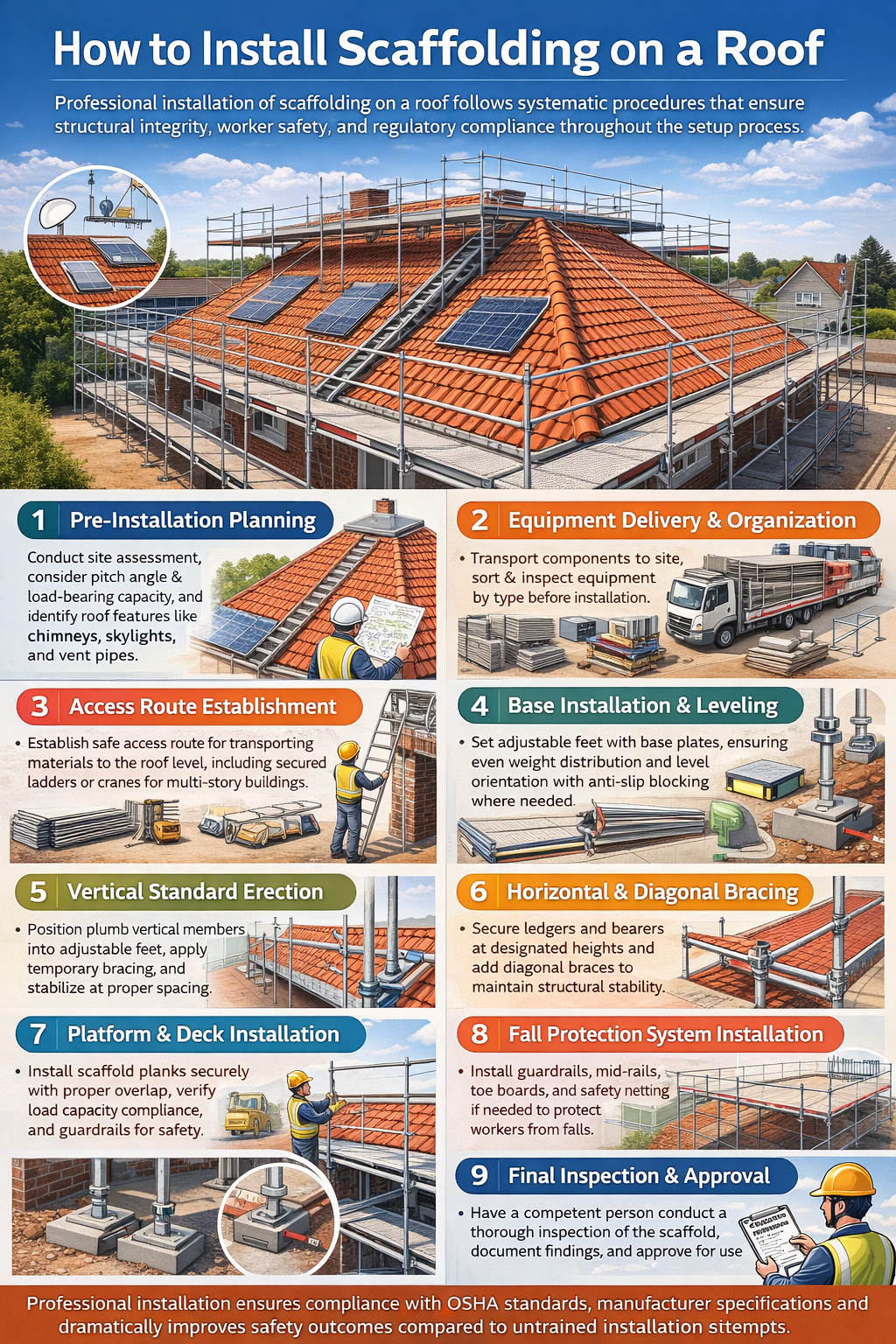
How to Install Scaffolding on a Roof
Professional installation of scaffolding on a roof follows systematic procedures that ensure structural integrity, worker safety, and regulatory compliance throughout the setup process. Proper installation requires understanding both general scaffolding principles and roof-specific considerations that affect stability and performance.
1️⃣ Pre-Installation Planning
Pre-installation planning for scaffolding on a roof begins with a comprehensive site assessment and design specification, including evaluation of the roof structure type, pitch angle, material condition, and load-bearing capacity to determine the correct configuration. All obstacles such as chimneys, skylights, vent pipes, satellite dishes, and solar panels must be identified and integrated into the scaffold plan, while platform dimensions are calculated according to the number of workers, tools, and materials expected on the structure at the same time.
2️⃣ Equipment Delivery and Organization
Equipment delivery and organization require transporting all scaffold components to the site, sorting them by type—vertical standards, horizontal beams, diagonal braces, platform boards, guardrails, and connection hardware—and conducting a full inspection before installation to remove any damaged or defective elements that could compromise structural integrity.
3️⃣ Access Route Establishment
Access route establishment ensures safe transport of materials to roof level. For single-story buildings, properly secured extension ladders positioned at a 4:1 angle ratio are used. For multi-story buildings, cranes, material hoists, or temporary stair systems may be required to move heavy components safely and efficiently.
4️⃣ Base Installation and Leveling
Base installation and leveling create a stable foundation by positioning base plates or adjustable feet according to the installation plan, ensuring proper weight distribution across the roof surface. On sloped roofs, feet must be adjusted to achieve level orientation, and anti-slip blocking or bracing materials should be installed to prevent movement.
5️⃣ Vertical Standard Erection
Vertical standard erection establishes the primary structural framework by setting plumb vertical members into base plates, applying temporary bracing to stabilize them, and maintaining manufacturer-recommended spacing to meet load requirements.
6️⃣ Horizontal and Diagonal Bracing Installation
Horizontal and diagonal bracing installation transforms separate components into a unified structural system by securely connecting ledgers and bearers at designated heights and installing diagonal braces to resist lateral forces such as wind loads and worker movement.
7️⃣ Platform and Deck Installation
Platform and deck installation provide the working surface by placing scaffold planks or prefabricated decks with proper overlap and securing them against displacement. All gaps must be eliminated to prevent fall hazards, and load capacity compliance must be verified before use.
8️⃣ Fall Protection System Installation
Fall protection system installation completes the safety structure by adding guardrails on all open sides, including top rails at 42 inches, mid-rails at 21 inches, and toe boards at least 3.5 inches high. Guardrails must withstand 200 pounds of force in any direction, and additional safety netting or tarpaulins may be installed when required.
9️⃣ Final Inspection and Approval
Final inspection and approval must be conducted by a designated competent person who verifies structural connections, platform integrity, fall protection systems, and access provisions. The inspection must be documented in writing, noting any deficiencies and confirming corrective actions before authorizing scaffold use.
Professional installation of scaffolding on a roof by experienced technicians ensures compliance with OSHA standards and manufacturer specifications while reducing setup time and liability exposure. Though adding to project costs, professional installation dramatically improves safety outcomes compared to untrained installation attempts.
How to Clean Scaffolding on a Roof
Proper maintenance and cleaning of scaffolding on a roof extends equipment lifespan, ensures safe working conditions, and facilitates thorough safety inspections. Regular cleaning prevents accumulation of debris, corrosion-causing contaminants, and hazardous slippery substances that compromise worker safety.
Scaffolding on a roof cleaning should occur after each use, particularly following work in muddy, dusty, or chemically contaminated environments. Different scaffold components require specific cleaning approaches based on material composition and contamination type.
Metal components of scaffolding on a roof demand particular attention to prevent rust and corrosion:
Remove loose dirt and debris by brushing or washing with water immediately after dismantling the scaffold
Address surface rust using wire brushes to remove oxidation before it penetrates deeper into metal
Apply rust-inhibiting treatments including protective primers or specialized anti-corrosion coatings to exposed metal
Clean connection points thoroughly to ensure proper engagement during subsequent assembly
Remove oily or greasy residues that create slippery surfaces using appropriate degreasers
Wooden planks used in scaffolding on a roof platforms require different cleaning protocols:
Scrape off hardened materials like concrete, mortar, or dried paint that accumulate on walking surfaces
Wash away mud and general dirt using water and stiff brushes to restore clean surfaces
Dry thoroughly before storage to prevent mold growth and wood rot in humid conditions
Inspect for embedded debris like nails, screws, or metal fragments that could cause injuries
Sand rough areas where splinters have developed to maintain smooth, safe surfaces
Cleaning scaffolding on a roof after exposure to specific construction materials requires targeted approaches:
Concrete splatter – remove while still wet when possible, use chisels or scrapers for hardened deposits
Paint contamination – clean immediately with appropriate solvents before drying occurs
Chemical exposure – identify the substance and use compatible cleaning agents that won’t damage scaffold materials
Biological growth – treat mold or mildew with appropriate fungicides, especially on wooden components stored in damp conditions
Safety considerations during scaffolding on a roof cleaning include:
Personal protective equipment – wear gloves when handling cleaning chemicals and eye protection when using wire brushes or pressure washers
Slip hazard management – ensure scaffold components are completely dry before stacking or storage
Chemical compatibility – verify that cleaning products won’t damage galvanized coatings, painted surfaces, or wood treatments
Proper ventilation – clean scaffolding in well-ventilated areas when using solvents or chemical cleaners
Storage of cleaned scaffolding on a roof equipment significantly impacts long-term condition. Store components in dry, well-ventilated facilities that protect against weather exposure and ground moisture. Organize similar components together for efficient retrieval and inventory management. Elevate wooden planks off the ground using racks or pallets to promote air circulation and prevent moisture absorption.
Regular cleaning of scaffolding on a roof facilitates more effective safety inspections by ensuring visibility of potential defects. Clean surfaces reveal cracks, bends, corrosion, and other damage that might remain hidden beneath dirt and debris. This inspection advantage justifies cleaning efforts even for contractors with large equipment inventories.
What is the Cost of Scaffolding on a Roof Projects
Comprehensive cost analysis for scaffolding on a roof projects encompasses far more than simple equipment rental rates, including installation labor, safety additions, permits, and project-specific variables that significantly impact total investment. Understanding these cost components enables accurate budgeting and informed decision-making about scaffold specifications.
Base rental costs for scaffolding on a roof represent only 50-70% of total project expenses. The remaining costs arise from essential services and additions:
Professional installation labor adds $500 to $2,500 depending on system complexity, building height, and roof accessibility
Transportation expenses include delivery and pickup fees ranging from $75 to $300 based on distance and load size
Safety equipment additions like fall protection netting, debris screens, and personal protective gear add $200 to $1,000
Weather protection systems including tarps, protective roofs, and wind barriers cost $500 to $2,000 for comprehensive coverage
Municipal permits required for temporary structures on properties typically range from $50 to $500 depending on jurisdiction
Project duration dramatically affects scaffolding on a roof economics. Weekly rental rates offer significant per-day savings compared to daily rates, while monthly rates provide the best value for extended projects:
Daily rental suits emergency repairs or very short projects but costs 3-5 times more per day than weekly rates
Weekly rental works well for most residential roofing projects completed within 5-10 working days
Monthly rental provides optimal value for major renovations, commercial projects, or work with weather-related delays
Building characteristics influence scaffolding on a roof costs substantially:
| Project Type | Typical Scaffold Cost |
|---|---|
| Single-story roof repairs | $350-$800 |
| Two-story house re-roofing | $1,500-$2,800 |
| Chimney repairs | $1,200-$1,700 |
| Solar panel installation | $1,200-$2,500 |
| House rendering with roof access | $2,000-$3,500 |
| Commercial building roof work | $5,000-$15,000+ |
Geographic location affects scaffolding on a roof pricing due to varying labor costs, equipment availability, and regulatory requirements. Urban areas with higher living costs typically charge 20-40% more than rural regions for identical scaffold configurations. Regions with strict building codes may require additional engineering certifications that increase costs.
Hidden costs in scaffolding on a roof projects often surprise unprepared property owners:
Extension fees when projects run longer than initially rented period, often charged at higher daily rates
Damage charges for lost, damaged, or excessively dirty equipment upon return
Modification costs if scaffold configuration requires adjustment after initial installation
Early termination penalties some rental agreements impose for scaffolds returned significantly before contracted period
Weekend or holiday delivery surcharges for urgent scaffold needs outside standard business hours
Cost reduction strategies for scaffolding on a roof include:
Accurate duration estimation prevents overpaying for unused rental time or expensive last-minute extensions
Combined projects utilizing scaffolding for multiple building improvements simultaneously maximizes rental value
Off-season scheduling may qualify for discounted rates during slower periods for scaffold companies
Equipment return condition cleaning scaffolds before return often avoids cleaning surcharges
Multiple quotes comparing at least three providers ensures competitive pricing
Self-installation of scaffolding on a roof reduces labor costs by $500-$2,500 but requires technical knowledge, appropriate tools, and acceptance of liability for improper setup. Inexperienced installers risk safety violations, structural inadequacy, and injury exposure that far exceed potential savings.
Advantages of Using Scaffolding on a Roof
Implementing scaffolding on a roof provides numerous benefits that extend beyond basic safety compliance, improving work quality, project efficiency, and overall construction outcomes. These advantages justify the investment costs and logistical considerations involved in scaffold deployment.
Enhanced worker safety represents the primary advantage of scaffolding on a roof. Falls from heights account for a significant percentage of construction fatalities and serious injuries, with unstable work platforms contributing to many incidents. Properly installed scaffolding on a roof provides stable, level platforms with guardrails and fall protection systems that dramatically reduce fall risk compared to working directly on sloped roof surfaces or from ladders.
The stable platform created by scaffolding on a roof prevents the fatigue and physical strain associated with maintaining balance on pitched surfaces. Workers can focus attention on actual construction tasks rather than constantly managing footing and body position. This reduced physical stress improves work quality and allows sustained productivity over longer periods.
Scaffolding on a roof enables multiple workers to operate simultaneously in the same area, accelerating project completion. The spacious platforms accommodate several personnel along with necessary tools and materials, facilitating coordinated work that would be impossible with individual ladder access. Team-based approaches improve efficiency for tasks like roof replacement, where material handling and installation occur simultaneously.
Tool and material organization improves significantly with scaffolding on a roof platforms. Rather than climbing up and down repeatedly to retrieve items, workers can store everything needed within arm’s reach on the scaffold deck. This convenience saves substantial time over a multi-day project while reducing the physical demands on workers.
Protection for roof structures occurs when using scaffolding on a roof properly designed to distribute weight. Older roofs or those with fragile materials may not safely support workers standing directly on surfaces. Scaffold systems transfer loads to structural elements capable of handling the weight, preventing roof damage, material crushing, or catastrophic collapse.
Weather protection capabilities of temporary scaffolding on a roof systems with overhead coverings allow work to continue during adverse conditions. Rain, snow, and extreme temperatures that would normally halt roofing projects become manageable when workers operate under weatherproof scaffold structures. This capability maintains project schedules and prevents weather-related delays.
Challenges of Implementing Scaffolding on a Roof
Despite significant advantages, scaffolding on a roof presents various challenges that contractors and property owners must address for successful project execution. Understanding these obstacles allows proper planning and mitigation strategies.
Financial investment required for scaffolding on a roof represents the most immediate challenge, particularly for small contractors or property owners with limited budgets. Equipment rental, delivery, installation labor, and additional safety features can add $1,000 to $5,000 or more to project costs. This expense becomes difficult to justify for very small repair jobs or quick inspections that might be completed safely with simpler access methods.
Time requirements for installing and dismantling scaffolding on a roof extend overall project duration. Professional installation typically requires 4-8 hours for residential projects and full days for complex commercial installations. Similarly, dismantling and equipment removal consume billable time. Projects with extremely tight deadlines may struggle to accommodate scaffold setup and removal.
Space limitations on some properties prevent effective deployment of scaffolding on a roof. Dense urban locations with minimal yard space, adjacent buildings, or landscape features may lack adequate area for scaffold footings and structural elements. Properties with extensive landscaping, pools, or hardscaping may require creative scaffold configurations or alternative access methods to avoid property damage.
Structural concerns arise when considering scaffolding on a roof for older or damaged buildings. Roofs lacking adequate load-bearing capacity cannot safely support scaffold weight plus workers and materials. Structural engineering assessments may become necessary before scaffold installation, adding professional fees and project delays. Some buildings require reinforcement before scaffolding can be safely deployed.
Weather sensitivity affects scaffolding on a roof installation and use. High winds, lightning, heavy precipitation, and ice accumulation create unsafe conditions that halt scaffold work. Exposed scaffold platforms catch wind like sails, increasing structural loads and instability. Extended projects face inevitable weather delays that impact schedules and rental costs.
Regulatory complexity surrounding scaffolding on a roof installation requires navigation of OSHA standards, local building codes, and permit requirements. Contractors must maintain current knowledge of regulations or risk citations and fines. Some jurisdictions impose restrictions on scaffold placement, duration, or specifications that complicate deployment.
Frequently Asked Questions About Scaffolding on a Roof
How long can scaffolding on a roof safely remain installed?
Scaffolding on a roof can remain in place for weeks or months provided it receives regular inspections and maintenance. OSHA requires competent person inspections before each work shift and after any event that might affect structural integrity, such as severe weather. Extended installations need periodic adjustments to maintain proper tightness of connections and replacement of any components showing wear or weather damage.
What weight capacity does scaffolding on a roof need to support?
Typical scaffolding on a roof must support at least four times the maximum intended load according to OSHA requirements. For standard roofing work, this translates to scaffolds rated for 75 pounds per square foot of platform area, accommodating workers, tools, and reasonable material quantities. Heavy materials like roofing tiles or equipment may require higher load classifications.
Can scaffolding on a roof be used during winter months?
Scaffolding on a roof can be deployed during winter with appropriate precautions for cold weather conditions. Platforms require regular clearing of snow and ice accumulation that adds weight and creates slip hazards. Modern scaffold designs utilize pitched roof configurations of 15-20 degrees to encourage snow shedding rather than accumulation. Workers need additional fall protection since cold weather increases slip risk.
Does scaffolding on a roof require building permits?
Most jurisdictions require permits for scaffolding on a roof installations, particularly for scaffolds exceeding certain heights or remaining in place beyond specified durations. Permit requirements vary by municipality, with fees typically ranging from $50 to $500. Contractors should verify local requirements before beginning scaffold installation to avoid code violations and potential fines.
How much does it cost to rent scaffolding on a roof for one week?
Rental costs for scaffolding on a roof for one week typically range from $50 to $350 depending on scaffold type and project requirements. Basic frame scaffolding averages $50-$150 weekly, while more complex system scaffolding costs $175-$350 per week. These base rates exclude delivery, installation labor, and additional safety equipment that can add 30-50% to total costs.
What training do workers need to use scaffolding on a roof?
Workers using scaffolding on a roof must receive training covering fall hazards, proper use procedures, load capacity limits, and prohibited practices. OSHA mandates that employers provide scaffold safety training to all employees who work on or around scaffolding. Training must be provided by a qualified person and documented with written records. Additional training is required when scaffold types change or workers demonstrate unsafe practices.
Conclusion
Scaffolding on a roof represents an essential safety investment and practical necessity for contractors and property owners undertaking elevated construction, maintenance, or repair projects. From understanding the various scaffold types available to navigating rental costs, installation procedures, and regulatory requirements, successful scaffold deployment demands comprehensive planning and professional execution.
The benefits of enhanced worker safety, improved work quality, and efficient project completion justify the financial and logistical commitments required for proper scaffolding on a roof implementation. Whether building custom scaffold configurations, renting professional equipment, or hiring specialized installation services, prioritizing safety through appropriate scaffolding on a roof protects workers, property, and project outcomes while demonstrating the professional standards that define quality construction practices.
Other Resources
ScaffoldMart – Product page featuring chimney scaffolding systems used for roof and masonry access.
Safety Hoist Company – Informational page describing steep slope roof scaffold systems for roofing projects.
Badger Ladder – Product category listing roof brackets designed to support scaffolding on pitched roofs.
Other Helpful Articles
Top Roof Louver Installation – Guide explaining best practices for installing roof louvers.
Types of Roofs in Florida – Article outlining common roof types used in Florida and their characteristics.
Ventilation Systems for Flat Roofs – Overview of ventilation options designed specifically for flat roofing systems.
