Ultimate Arched Metal Roof Guide 2026
The Ultimate Arched Metal Roof Guide
An arched metal roof is more than just a protective covering for a building; it is a sophisticated architectural statement that combines modern engineering with timeless aesthetic appeal. Homeowners and commercial builders alike are increasingly turning to this unique roofing style to solve complex structural challenges while enhancing the visual impact of their properties. Unlike standard flat or pitched roofs, an arched metal roof offers superior aerodynamics, water shedding capabilities, and an undeniable “wow” factor that sets a structure apart from the mundane landscape of traditional construction.
Whether you are looking to build a massive agricultural barn, a sleek modern home, or a commercial warehouse, understanding the intricacies of an arched metal roof is essential. This comprehensive guide will walk you through every aspect of the process, from the initial design phase to the final cleaning and maintenance. We will explore the financial implications, the technical installation requirements, and the long-term benefits of investing in an arched metal roof system. By the end of this article, you will have the knowledge required to make an informed decision about whether an arched metal roof is the right choice for your next project.
What Is an Arched Metal Roof System?
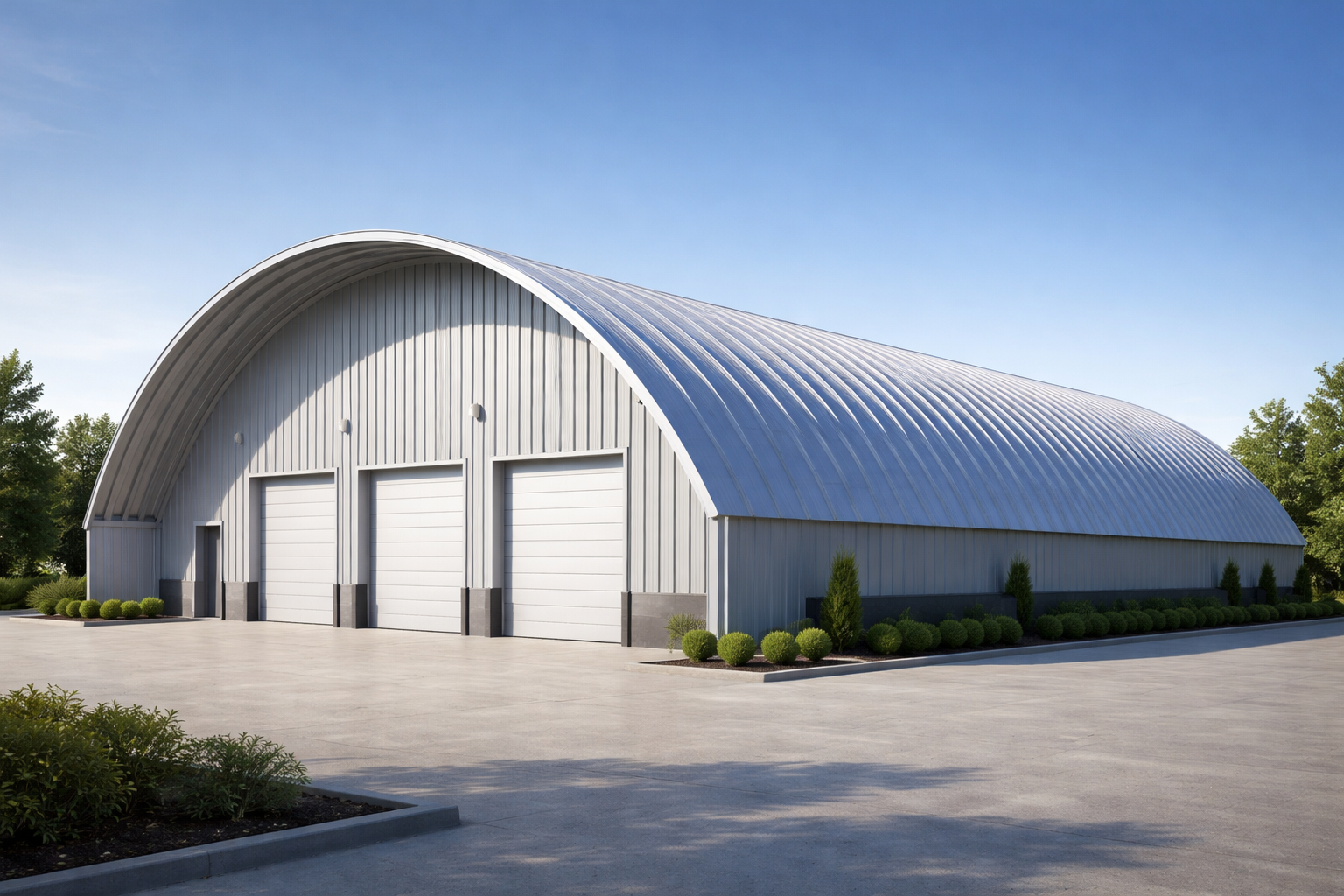
An arched metal roof is a roofing system defined by its curved design, which is typically self-supporting and eliminates the need for internal columns, beams, or trusses. This design feature allows for a completely clear span interior, maximizing the usable square footage within the building. The curvature of an arched metal roof provides incredible strength, as the arch shape naturally distributes weight and stress evenly across the structure, making it highly resistant to heavy snow loads and high wind speeds.
The distinct geometry of an arched metal roof allows it to deflect wind more effectively than flat walls or angular roofs, reducing the risk of wind uplift during severe storms.
Most arched metal roof systems are constructed from high-grade steel or aluminum panels that are mechanically seamed or overlapped to create a watertight barrier. The panels are often roll-formed into specific radii to match the architectural requirements of the building. Because the arched metal roof acts as both the roof and the walls in many Quonset-style structures, it reduces the amount of material waste and simplifies the overall construction process.
-
Self-Supporting Arches: These rely on the structural integrity of the curved panels themselves to hold up the roof without internal supports.
-
Structural Supported Arches: These involve installing curved metal panels over a pre-existing framework of structural steel, wood, or glulam beams.
-
Barrel Vaults: A specific type of arched metal roof that resembles a barrel cut in half lengthwise, often used for aesthetic entrances or corridors.
The versatility of an arched metal roof means it can be adapted for residential carports, aircraft hangars, grain storage, and even contemporary luxury homes. The material used is typically galvanized steel or Galvalume, which is coated with a zinc-aluminum alloy to prevent rust and corrosion, ensuring that your arched metal roof lasts for decades with minimal degradation.
Advantages and Challenges of This Design
Choosing an arched metal roof comes with a specific set of pros and cons that every buyer must weigh carefully. The primary advantage is durability. An arched metal roof is virtually indestructible when installed correctly, capable of withstanding fire, hail, and extreme temperature fluctuations without cracking or warping.
Another significant benefit is energy efficiency. The curved surface of an arched metal roof has a smaller surface area relative to the interior volume compared to a rectangular building, which can reduce heating and cooling needs. Furthermore, many arched metal roof coatings are designed to reflect solar radiant heat, keeping the interior cooler in the summer.
However, there are challenges. The unique shape of an arched metal roof can make it difficult to install standard windows, skylights, or ventilation systems without specialized flashing kits. Additionally, finding contractors experienced in arched metal roof installation can be harder than finding standard roofers.
Advantages:
-
Superior Durability: Resistant to rot, insects, and fire.
-
Clear Span Interior: No poles or beams obstructing the floor plan.
-
Low Maintenance: Requires less frequent repair than asphalt shingles.
-
Aesthetic Appeal: Provides a modern, industrial, or futuristic look.
Challenges:
-
Acoustics: Rain and hail can be loud on an arched metal roof if not properly insulated.
-
Complexity: Modifications and extensions can be technically difficult.
-
Cost: Custom curved panels can be more expensive than flat sheets.
Despite the challenges, the consensus among architects is that the structural benefits of an arched metal roof often outweigh the downsides, especially for industrial and agricultural applications where maximizing interior space is critical.
How to Find Reliable Roofing Suppliers
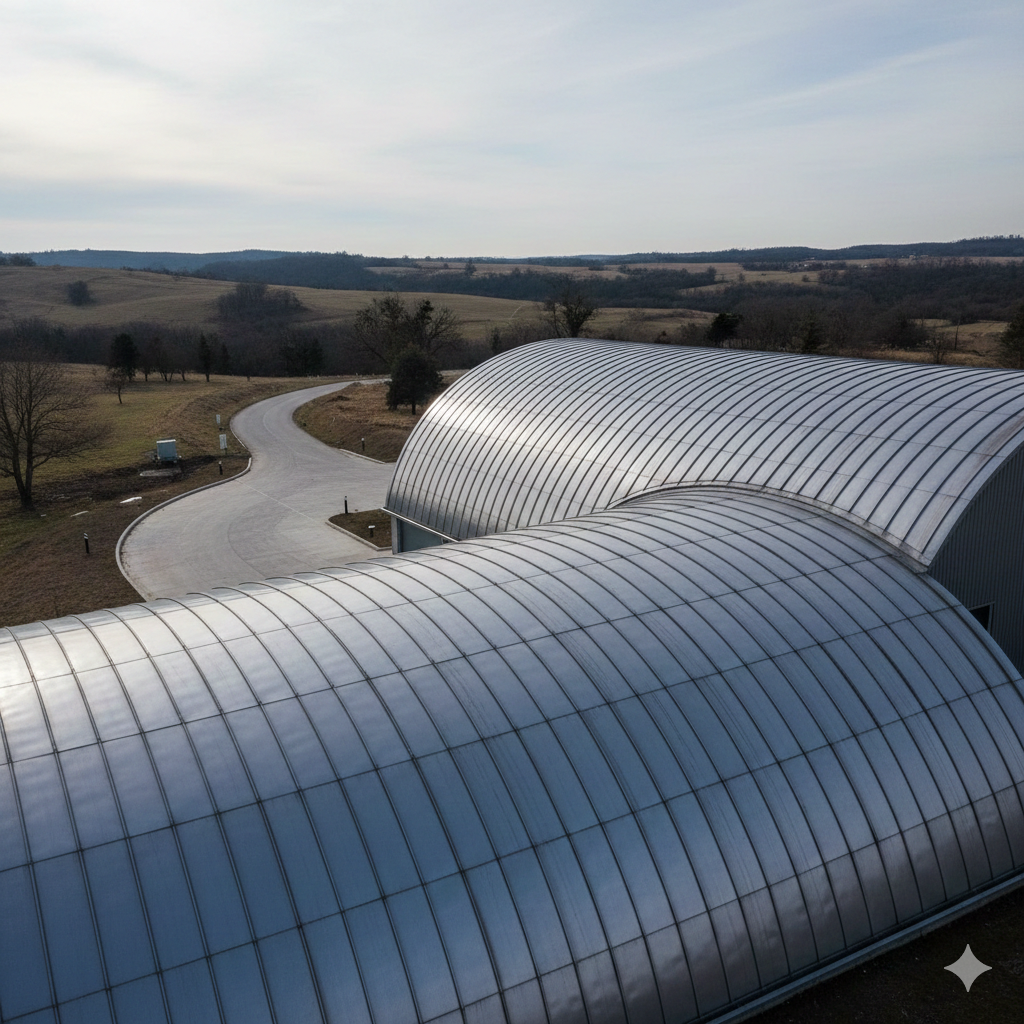
Finding a supplier for your arched metal roof requires more diligence than driving to a local hardware store. Because these systems are specialized, you often need to deal directly with manufacturers or specialized distributors who can fabricate panels to your specific radius requirements. Start by searching for companies that specialize in “radius metal roofing” or “curved standing seam panels.”
Pro Tip: Always ask for a portfolio of completed arched metal roof projects. A reputable supplier should be able to show you photos of their materials in use on buildings similar to yours.
When vetting suppliers, inquire about the gauge of the steel they use. A high-quality arched metal roof should typically use 22-gauge or 24-gauge steel. Thinner materials may buckle under the stress of the curve or fail to provide adequate structural support. Additionally, verify that the supplier offers a warranty on the paint finish and the substrate material.
-
Check Manufacturer Certifications: Ensure the factory is ISO certified.
-
Read Customer Reviews: Look for feedback specifically about delivery condition and panel accuracy.
-
Request Samples: Ask for a small sample of the curved panel to inspect the finish quality.
-
Ask About Shipping: Shipping curved panels for an arched metal roof requires specialized crating to prevent deformation during transit.
Local metal fabrication shops may also be able to produce panels for an arched metal roof if they have mechanical curving equipment. This can save on shipping costs, but you must ensure they have experience with the specific tolerances required for your project.
How to Buy the Right Materials
Once you have identified a supplier, the next step is to buy the correct materials for your arched metal roof. You cannot simply order “standard” panels; you must provide exact specifications regarding the radius of the arch, the length of the arc, and the width of the panels. If these measurements are off by even a fraction of an inch, the panels will not seam together correctly, compromising the integrity of the entire arched metal roof.
You also need to decide on the profile of the panel. A standing seam profile is popular for an arched metal roof because the fasteners are concealed, reducing the risk of leaks. Corrugated profiles are also common, especially for agricultural buildings, as they are often cheaper and easier to handle, though they typically use exposed fasteners.
When purchasing, always order 10% more material than you think you need. Mistakes happen during the cutting and curving process, and having extra panels for your arched metal roof ensures the project won’t stall while waiting for a re-order.
Don’t forget the accessories. A complete arched metal roof system requires specialized closure strips, curved trim pieces, and high-quality sealants that can withstand the expansion and contraction of the metal. Ensure that the screws or clips you buy are compatible with the specific metal alloy of your roof to prevent galvanic corrosion.
How Much Does an Arched Metal Roof Cost?
The cost of an arched metal roof varies significantly based on the material, the complexity of the curve, and the geographic location of the project. As of 2025, you can expect the material costs for a standard steel arched metal roof to range between $5.00 and $12.00 per square foot. This price includes the panels but may not include the trim, fasteners, and underlayment.
Premium metals like aluminum or zinc will drive the price higher. An aluminum arched metal roof is an excellent choice for coastal areas due to its resistance to salt corrosion, but it can cost between $9.00 and $16.00 per square foot for materials alone. Copper, the most luxurious option for an arched metal roof, can exceed $25.00 per square foot, though it offers a lifespan that can exceed a century.
-
Steel Panels: $5.00 – $12.00 per sq. ft.
-
Aluminum Panels: $9.00 – $16.00 per sq. ft.
-
Zinc Panels: $10.00 – $18.00 per sq. ft.
-
Copper Panels: $20.00 – $30.00+ per sq. ft.
It is important to note that an arched metal roof is generally more expensive than a flat metal roof because of the manufacturing process required to curve the panels. The “curving fee” is an additional cost that manufacturers charge for running the panels through a radius machine.
What Is the Cost of Labor and Extras?
Material is only half the equation; labor for installing an arched metal roof is a major expense. Because the installation requires specialized knowledge of geometry and metal behavior, contractors charge a premium. You should budget between $6.00 and $15.00 per square foot for labor, depending on the height and pitch of the roof.
This brings the total installed cost of a steel arched metal roof to roughly $11.00 to $27.00 per square foot. Complex designs with multiple intersecting arches or dormers will be at the higher end of this spectrum.
Warning: Do not choose the cheapest bidder for an arched metal roof installation. Improper installation can lead to leaks that are incredibly difficult to trace and repair on a curved surface.
You must also budget for “extras” such as:
-
Old Roof Removal: $1.00 – $2.00 per sq. ft.
-
Insulation: Spray foam or fiberglass batting suitable for an arched metal roof can add $2.00 – $4.00 per sq. ft.
-
Permits and Engineering: Structural drawings for an arched metal roof may cost $500 – $2,000 depending on local codes.
How to Do the Preliminary Planning
Before a single panel is ordered, you must meticulously plan the geometry of your arched metal roof. This starts with determining the exact radius required. If you are building a Quonset hut, the radius is determined by the width of the building. If you are applying an arched metal roof to a custom home, an architect must calculate the load-bearing requirements of the curved trusses.
You must also consider water runoff. An arched metal roof sheds water very quickly. You need to plan for a gutter system that can handle high-velocity water flow at the eaves. Standard residential gutters may be overwhelmed by the runoff from a steep arched metal roof during a heavy downpour.
-
Measure the Span: Accurate width measurements are critical.
-
Calculate the Rise: Determine how high the center of the arch will be.
-
Check Local Codes: Ensure your zoning allows for the height of an arched metal roof.
-
Plan for Penetrations: Minimize the number of vents or chimneys that must poke through the arched metal roof.
Planning also involves site access. The panels for an arched metal roof can be very long. You need to ensure that a delivery truck can access your site and that there is enough flat ground to store the panels without bending them before installation.
How to Install Curved Panels Correctly
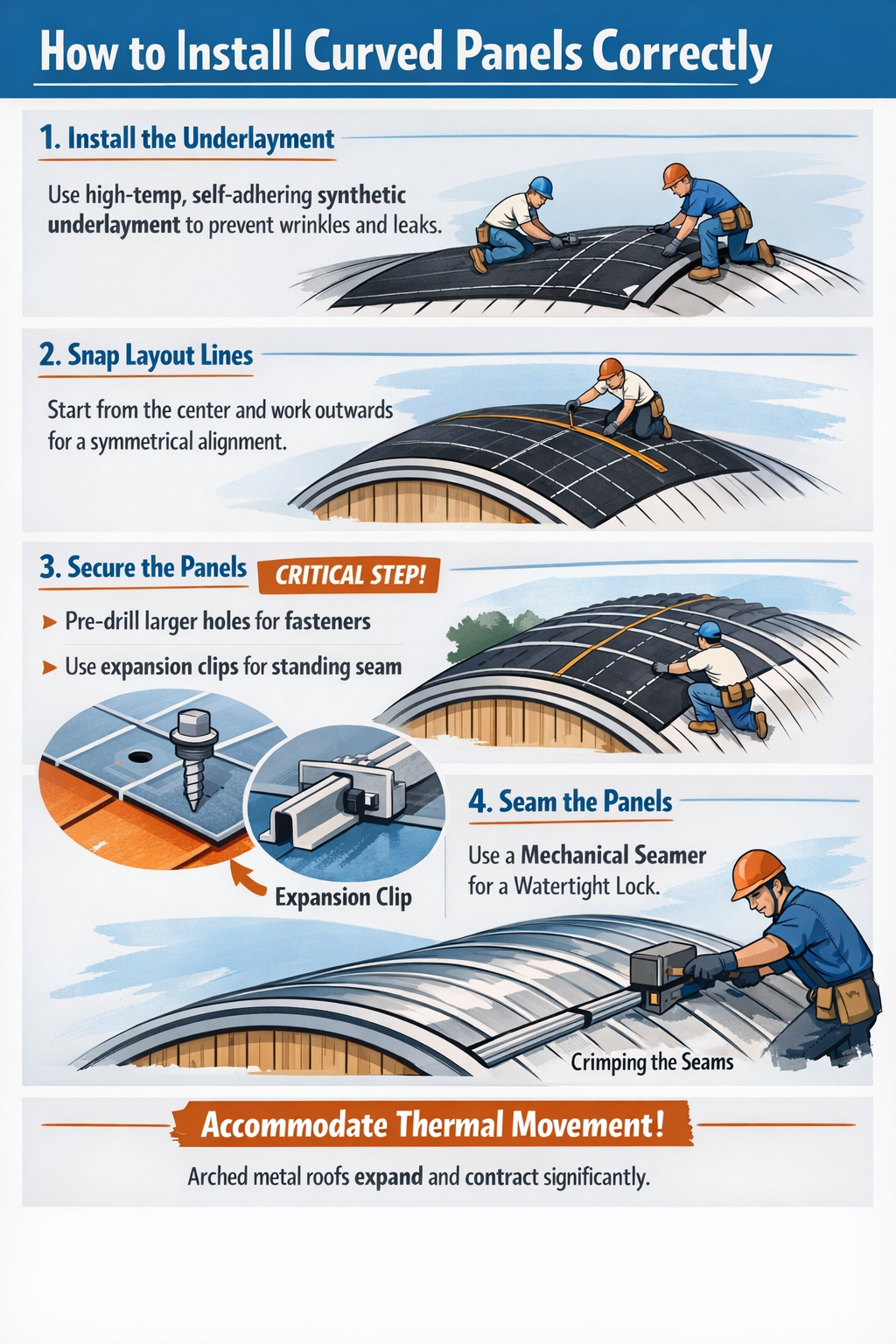
Installing an arched metal roof is a precise operation that usually requires a team of professionals. The process begins with installing the underlayment. On a curved surface, standard felt paper may wrinkle, so a high-temperature, self-adhering synthetic underlayment is recommended for an arched metal roof. This provides a second line of defense against leaks.
Next, the layout lines are snapped. Because an arched metal roofing has no ridge cap in the traditional sense (for barrel vaults), the panels must be perfectly centered. Installers typically start from the center of the roof and work their way outwards to the edges to ensure symmetry, or start from one gable end if using a standing seam system that requires a specific direction.
Critical Step: When securing the panels, thermal movement must be accommodated. An arched metal roofing will expand and contract significantly. If using exposed fasteners, the holes must be pre-drilled slightly larger than the screw shank, or specialized clips must be used for standing seam systems.
As the panels are laid, the seams are crimped or snapped together. For a mechanical lock arched metal roofing, a mechanical seaming tool is run along the seam to fold the metal over, creating a watertight joint. This is the most secure method for any arched metal roofing installation.
Curved Systems and Metal Building Types
When discussing this architectural feature, four specific categories often arise: arched roof metal buildings, curved metal roof panels, metal roofing for curved roof applications, and curved sheet metal roofing.
Arched roofing metal buildings are entire structures where the roof and walls are often a single continuous unit. These are commonly known as Quonset huts. They are incredibly cost-effective and are frequently used for military barracks, equipment storage, and agricultural workshops. The structural integrity of arched roofing metal buildings is derived entirely from the corrugation and curve of the steel.
Curved metal roof panels refer specifically to the individual components used to create the arch. These can be mechanically curved in a factory or, in some cases, “sprung” curved on-site if the radius is large enough. High-quality curved metal roofing panels are essential for preventing oil canning (visible waviness) in the finished roof.
Metal roofing for curved roof projects requires a different mindset than flat roofing. You cannot simply force a flat panel to bend; it will kink and fail. Metal roofing for curved roofing designs must be specifically engineered with the correct tensile strength to hold the curve without fatiguing the metal over time.
Finally, curved sheet metal roofing is often used in smaller architectural details, such as covering a dormer window or a porch awning. Curved sheet metal roofing adds a touch of elegance and can be fabricated from copper or zinc for a premium finish that patinas beautifully over time.
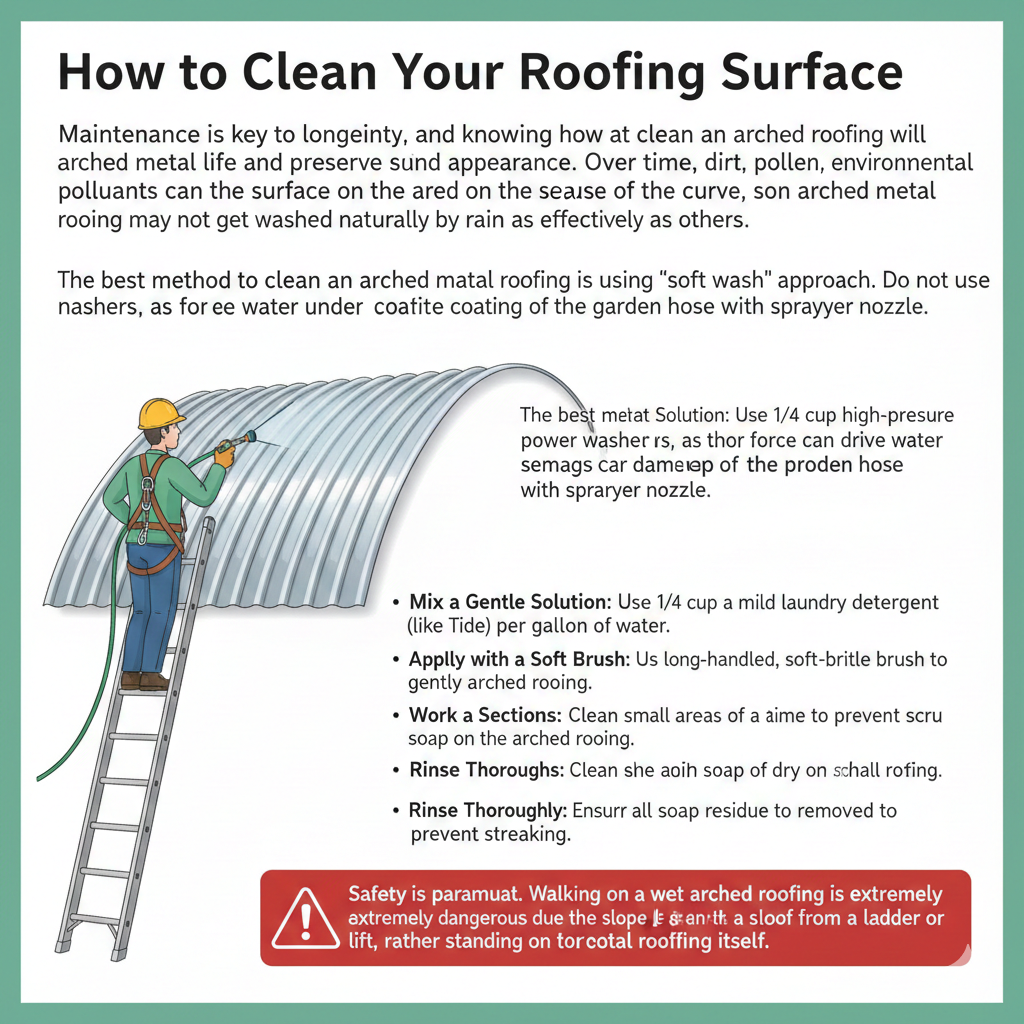
How to Clean Your Roofing Surface
Maintenance is key to longevity, and knowing how to clean an arched metal roofing will extend its life and preserve its appearance. Over time, dirt, pollen, and environmental pollutants can build up on the surface. Because of the curve, some areas of an arched metal roofing may not get washed naturally by rain as effectively as others.
The best method to clean an arched metal roofing is using a “soft wash” approach. Do not use high-pressure power washers, as the force can drive water under the seams or damage the protective coating of the arched metal roofing. Instead, use a garden hose with a sprayer nozzle.
-
Mix a Gentle Solution: Use 1/4 cup of mild laundry detergent (like Tide) per gallon of water.
-
Apply with a Soft Brush: Use a long-handled, soft-bristle brush to gently scrub the arched metal roofing.
-
Work in Sections: Clean small areas at a time to prevent the soap from drying on the arched metal roofing.
-
Rinse Thoroughly: Ensure all soap residue is removed to prevent streaking.
Safety is paramount. Walking on a wet arched metal roofing is extremely dangerous due to the slope and slippery surface. It is always recommended to clean the roof from a ladder or a lift, rather than standing on the arched metal roofing itself.
Maintenance Tips for Long-Lasting Results
Beyond cleaning, regular inspections are vital for an arched metal roofing. You should inspect the roof at least twice a year, ideally in the spring and fall. Look specifically for any loose fasteners. The expansion and contraction of an arched metal roofing can sometimes back screws out slightly over time. These should be retightened but not overturned, as that can strip the washer.
Check the sealant at all termination points. The areas where the arched metal roofing meets the walls or chimneys are the most prone to leaks. If the sealant looks cracked or dried out, it should be removed and replaced with a high-grade polyurethane sealant compatible with your arched metal roofing material.
Keep trees trimmed back. heavy branches rubbing against an arched metal roofing can scratch the paint, leading to rust. Furthermore, falling leaves can accumulate in the valleys of an arched metal roofing, trapping moisture and accelerating corrosion.
Finally, keep an eye on the “drip edge.” This is the edge of the arched metal roofing where water exits. Ensure that water is flowing freely and not wicking back up under the panels. A well-maintained arched metal roofing can easily last 50 years or more, making it a generational investment for your property.
FAQ : Arched metal roof
How long does an arched metal roof last?
With proper maintenance, a steel or aluminum arched metal roof can last between 40 and 70 years. Copper and zinc systems can last over 100 years.
Is an arched metal roof louder than a standard roof?
Yes, rain can be louder on an arched metal roof if it is installed directly over open framing. However, if installed over a solid deck with proper insulation, the noise is comparable to a standard asphalt roof.
Can I install solar panels on an arched metal roof?
Yes, flexible solar panels are available that can adhere directly to the curve of an arched metal roof. Alternatively, specialized clamps can be used to mount rigid panels without penetrating the roof surface.
Does an arched metal roof cost more to insure?
Often, it costs less. Many insurance companies offer discounts for an arched metal roof because metal is fire-resistant and holds up better to hail and wind than shingles.
Can I walk on an arched metal roof?
It is difficult and dangerous due to the curve. If you must walk on it, wear soft-soled shoes and use safety harnesses. It is best to hire professionals for any work requiring access to an arched metal roof.
Conclusion
Investing in an arched metal roof is a decision that pays dividends in durability, energy efficiency, and architectural beauty. While the initial cost and installation complexity are higher than traditional roofing methods, the long-term benefits of a virtually maintenance-free, weather-resistant system are undeniable. By understanding how to buy, install, and maintain your arched metal roof, you ensure that your building will stand strong and look spectacular for decades to come. Whether for a commercial warehouse or a custom residential project, an arched metal roofing remains one of the most robust and stylish roofing solutions available on the market today.
Other Resources
MBCI – Product page detailing curved metal roof systems for commercial and industrial buildings.
SteelMaster USA – Overview of metal roof systems designed for Quonset huts and arched structures.
McElroy Metal – Informational page explaining curved standing seam metal roofing systems.
Other Helpful Articles
ELK Shingles Guide – Guide providing information on ELK asphalt shingles and their characteristics.
Roof Repair East Tamaki Services – Local service article outlining roof repair options in East Tamaki.
Modified Bitumen Roof Repair – Article discussing repair methods for modified bitumen roofing systems.