
Modified Bitumen Roof Repair: Methods, Materials and Quotes
Modified Bitumen Roof Repair: Methods, Materials and Quotes
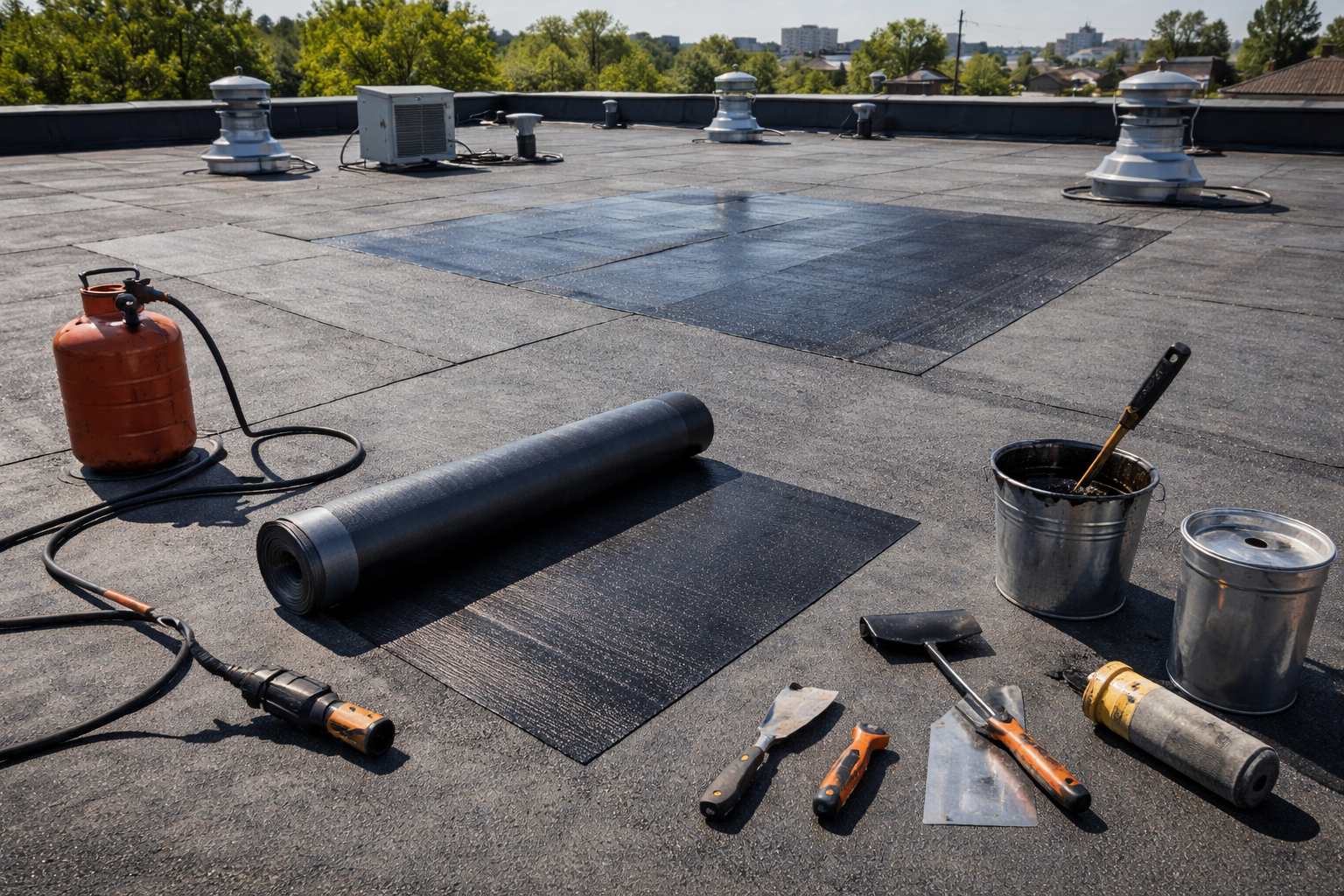
A modified bitumen roof repair needs a compatible product system and a diagnosis of the damage beneath the visible surface. The right approach depends on the existing membrane, previous coatings, moisture and the extent of the defect.
This guide explains how to compare a contractor’s proposed repair and quote. If the source or extent of a leak is still uncertain, begin with our modified bitumen roof inspection checklist.
Match the Repair to the Existing Assembly
Ask for the manufacturer and product name of the existing roof, where these can be established. The roof may include a base sheet, cap sheet, insulation and other layers that affect the repair.
Do not select an adhesive or patch solely from the label APP or SBS. Consult the manufacturer’s material and application guidance and the instructions for the actual products proposed.
When a Repair May Be Worth Considering
A contractor may propose a localized repair when the defect is limited and the surrounding roof can support a compatible repair. The proposal should explain why this is appropriate for the observed condition.
Compare a patch with broader options when there are recurring leaks, widespread damage or problems beneath the membrane. Repairing one opening does not restore an entire aged roof to new condition.
Compatibility and Concealed Damage
Ask how the repair product will bond to the existing surface and whether earlier coatings need to be addressed. Request the relevant product instructions rather than a generic promise that one mastic works everywhere.
The scope should explain how wet insulation, damaged decking or loose material will be handled if discovered. Covering the visible defect alone may leave the underlying problem unresolved.
Define the Repair Area Before Work Starts
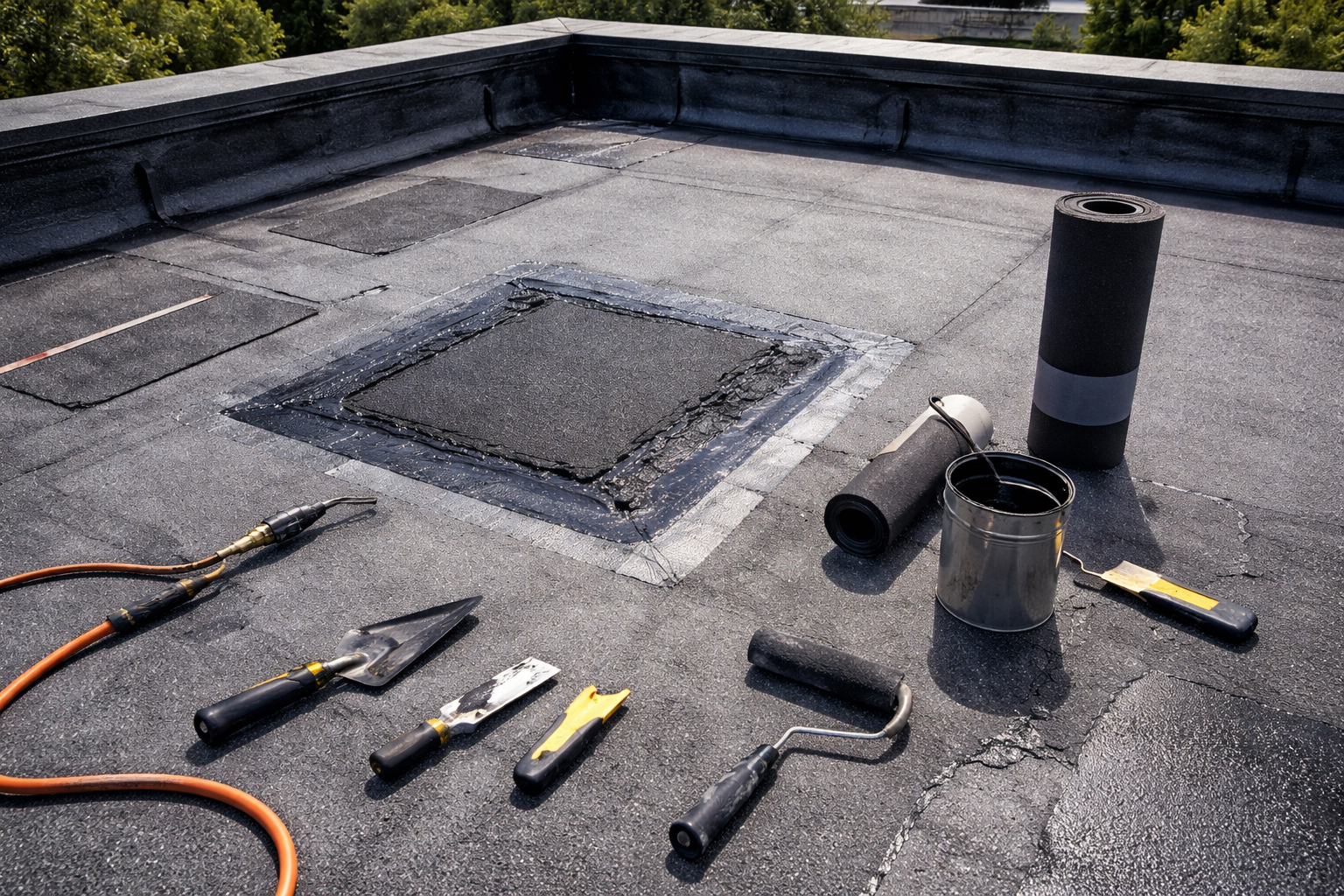
The contractor should mark the proposed repair area and document adjacent seams, flashing, drains and penetrations. Ask for photographs before removal and after the work is completed.
If the leak source is uncertain, investigate first. Water visible inside the building may have entered elsewhere. Avoid treating a screw-driver probe, a cut blister or a surface stain as a complete diagnosis.
Specify the Products in the Quote
| Item | Information to request |
|---|---|
| Repair membrane | Manufacturer, product name and compatibility with the existing assembly. |
| Primer or adhesive | Exact product, permitted substrate and preparation requirements. |
| Mastic and reinforcement | Specified products and the detail in which they are used. |
| Underlying layers | Insulation or deck replacement included or allowed for. |
| Surfacing | Required protection or finish for the selected repair system. |
For an example of product-specific options, consult CertainTeed’s repair portfolio. Availability of a product does not establish its suitability for your roof.
Compare Repair Methods by Specification
A membrane patch, a reinforced mastic detail and replacement of damaged roof layers are different operations. Ask which one is proposed and why. There is no universal three-course method for every defect.
Cold-applied, self-adhered and heat-applied products have their own preparation and installation requirements. Have the contractor identify the approved method, required overlap dimensions and weather limits. Do not substitute a generic six-inch rule for the specified detail.
What a Professional Repair Scope Should Cover
- Confirm the defect and establish a safe work area.
- Identify layers that require removal or replacement.
- Prepare the remaining substrate to the product requirements.
- Install the specified repair and complete its flashing or edge details.
- Document the finished work and explain follow-up care.
This is a scope checklist, not an installation procedure. Cutting membranes, drying concealed areas and using open flames require product-specific methods and appropriate professional controls. A heat gun or a surface that looks dry does not prove that the underlying assembly is ready.

Cleaning, Drying and Primer Requirements
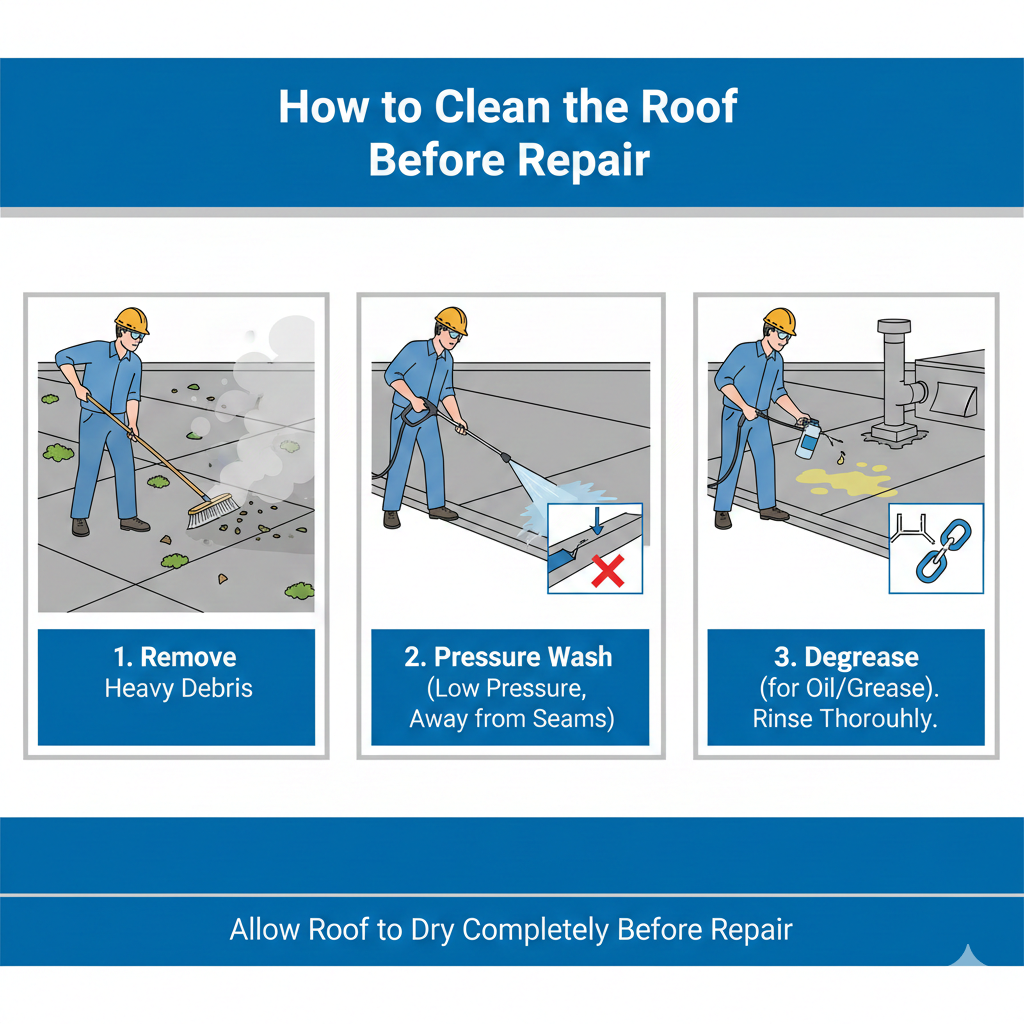
Ask the installer to state the permitted cleaning method and how the substrate condition will be checked. Dirt, oil, moisture and existing coatings can affect the work.
Use only preparation products accepted for the repair system. A strong bleach solution, pressure washing or an unspecified degreaser should not be presented as a standard treatment for every roof. Primer requirements also depend on the product; confirm them in its instructions.
How to Compare Repair Costs
Request an itemized local quote. It should separate access and setup, investigation, removal, replacement layers, repair materials, labor, disposal and any tax. Ask what is excluded and how unexpected damage is priced.
For a small job, minimum service and access charges may matter more than the area of the patch. For larger work, confirm exactly what the quoted area includes. A materials-only price is not comparable with an installed repair.
Keep the specification identical when comparing bids. Do not rely on a universal cost per square foot without knowing the roof condition and scope.
Maintenance After the Repair
Obtain completion photographs, product names and maintenance instructions. Record where the repair was made so future inspections can check it alongside the surrounding roof.
Ask about drainage, rooftop equipment access and any limitations during curing. A coating is not automatically a substitute for repairing damaged or wet layers, and a fixed recoating interval does not suit every system.
Weather, Curing and Scheduling
The contractor should plan preparation, application and protection around the selected products’ temperature and weather requirements. Ask when the repair can be exposed to rain or foot traffic; these may be different milestones.
A generic claim that every repair cures in 24 to 48 hours is unreliable. The schedule must allow for actual substrate condition, product instructions and any concealed damage found during removal.
Repair FAQ
How long will the repair last?
Ask about the specific workmanship and product terms. Longevity depends on the repair, surrounding roof and whether the cause was resolved; no fixed lifespan applies to every patch.
Can a new roof layer cover the existing roof?
That requires an assessment of the assembly, moisture, structure and applicable requirements. It is a separate reroofing decision, not an automatic repair option.
Is torch application always better?
No. Select the method required for the product and assembly. Torch work requires trained professionals and fire controls; it is not a homeowner shortcut.
What should I keep after the repair?
Save the quote, change orders, product details, photographs and warranty documents. Record any later leaks so the contractor can investigate them.
Related guide: inspection, damage records and repair decisions.
Conclusion
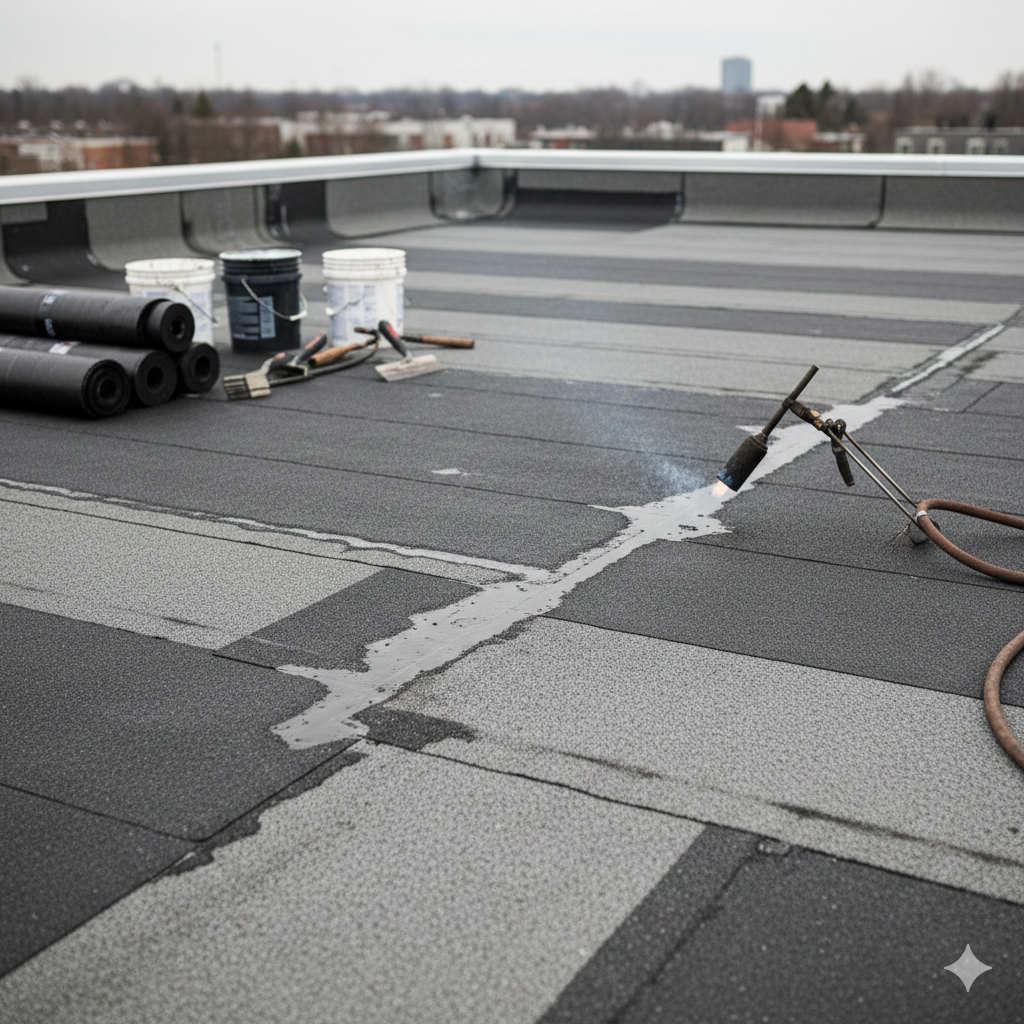
Use the inspection findings, product instructions and a written scope to decide on the next step. Ask the contractor to explain what is confirmed, what remains uncertain and how unexpected damage will be handled.
Keep the repair records and follow the maintenance instructions for the actual roof system. If a leak returns, have its cause investigated rather than repeatedly covering the same visible spot.
Other Resources
American WeatherStar – Comprehensive guide explaining modified bitumen roofing systems, materials, and installation methods.
Reddit – Modified Bitumen Roof Repair Discussion – Community discussion sharing approaches to patching and repairing modified bitumen roofs.
Restore Masters – Service page describing commercial modified bitumen roofing solutions and applications.
Other Helpful Articles
Temporary Roof Scaffolding in London – Article describing temporary roof scaffolding systems used on construction sites in London.
Roof Jacks for Metal Roofs – Article explaining roof jacks designed specifically for metal roofing systems.
ELK Shingles Guide – Guide providing information on ELK asphalt shingles and their characteristics.
