
Modified Bitumen Roof Inspection: Damage and Repair Decisions
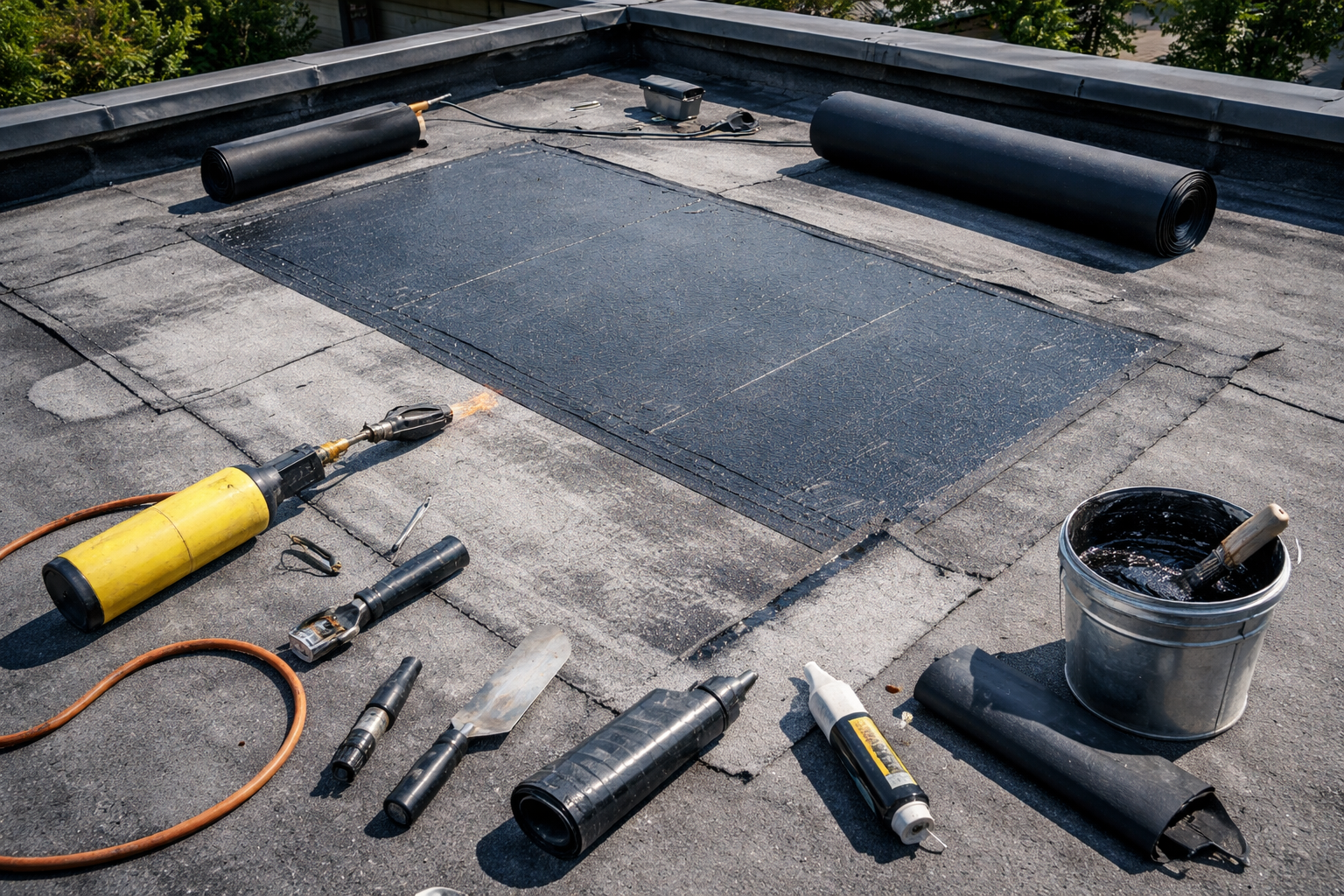
Modified Bitumen Roof Inspection: What to Check Before Repair
A modified bitumen roof inspection should establish where water is entering, how far damage extends and whether the existing assembly can be repaired. A stain indoors or a raised area on the roof is a starting point for investigation, not a diagnosis by itself.
This guide helps property owners document symptoms and compare inspection findings. For material selection and repair specifications, use our modified bitumen repair methods and quote guide.
Identify the Existing Roof System
Collect the original installation records, product names, warranty and details of previous repairs or coatings. Ask the contractor to identify the membrane and the layers beneath it before recommending products.
APP and SBS describe different asphalt modifiers, but the abbreviation alone does not specify a repair method. CertainTeed’s material and application guide shows that SBS products can have several application methods. Confirm the exact product instructions.
Record Damage Without Disturbing the Membrane
Start with observations from indoors and safely accessible areas. Record when the leak appears, whether it follows wind-driven rain and whether nearby equipment has recently been serviced. Water can travel before becoming visible indoors.
| Observation | What to ask the inspector |
|---|---|
| Open lap or damaged flashing | Where does separation begin and how far does it extend? |
| Blister or raised area | Is it intact, damaged or associated with trapped moisture? |
| Recurring puddles | Are drains obstructed or does the roof have a drainage problem? |
| Interior staining | What evidence connects it to the proposed leak source? |
Do not puncture blisters or probe seams to test them yourself. Such work can turn an intact surface into a leak path.
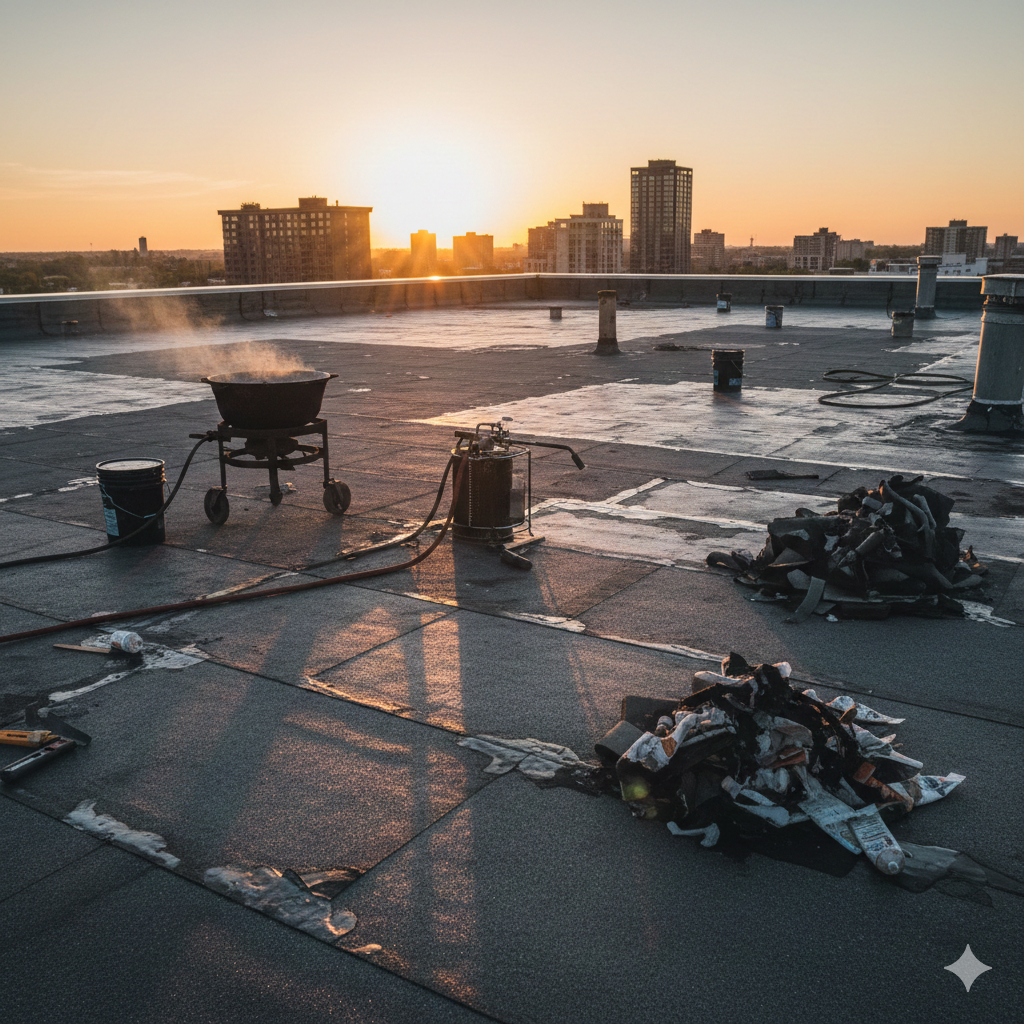
Choose an Inspector with Low-Slope Roof Experience
Ask whether the contractor regularly works on the identified membrane system. Request an inspection scope, photographs and a written explanation of the findings. Manufacturer credentials should be checked with the issuing manufacturer.
Ask what the inspection can establish visually and whether moisture testing or exploratory work is needed. Any opening of the roof should have an agreed scope and a plan to close it before weather changes.
Ask for a Repair Specification Before Buying Materials
Do not purchase a generic patch kit before the cause and extent of damage are understood. Ask the contractor to identify the proposed membrane, primer, adhesive or mastic and any required reinforcement.
The specification should explain compatibility with the existing roof and previous coatings. A product being described as “roof cement” does not establish that it is suitable for every modified bitumen assembly.
Compare Inspection and Repair Quotes
Separate the inspection fee from the repair price. A quote should state access arrangements, investigation work, the measured repair area and the proposed assembly. Ask whether removal and disposal are included.
For concealed wet insulation or deck damage, request unit prices or an approval procedure for extra work. A low patch price and a quote that includes replacing damaged underlying materials are different scopes and should not be compared as equivalent.
Surface Condition: Questions for the Contractor
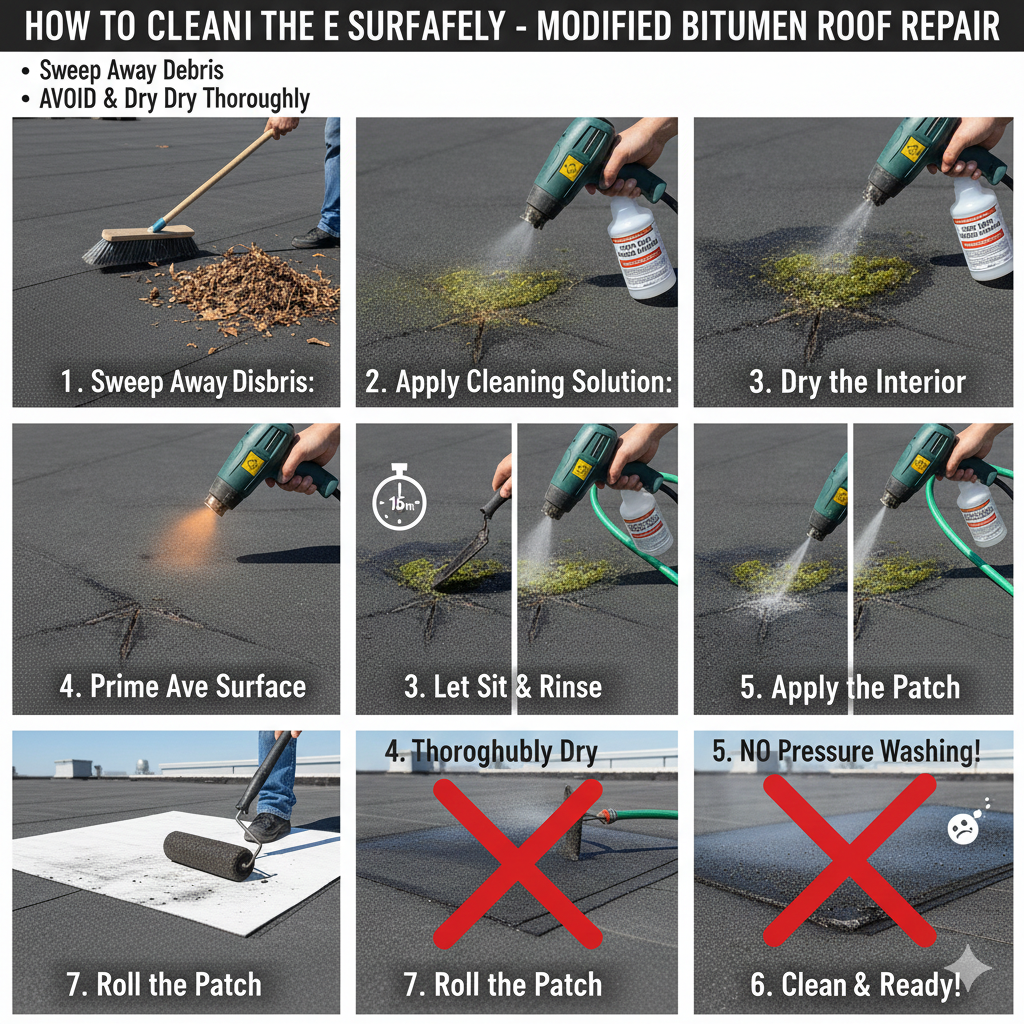
Note loose debris, vegetation, grease near exhausts and existing coatings. These can affect how an area is assessed and prepared, but the cleaning method must suit the product.
Do not apply a universal bleach mixture or pressure-wash the roof to prepare for an inspection. Ask the contractor to follow the membrane and repair-product instructions for cleaning, drying and any primer. Cleaning does not establish that insulation below the membrane is dry.
Decide Whether a Localized Repair Is Appropriate
Ask the inspector to distinguish damage limited to the surface from damage involving insulation, attachment or the deck. A localized defect may have a repair option; repeated leaks or widespread deterioration require a broader assessment.
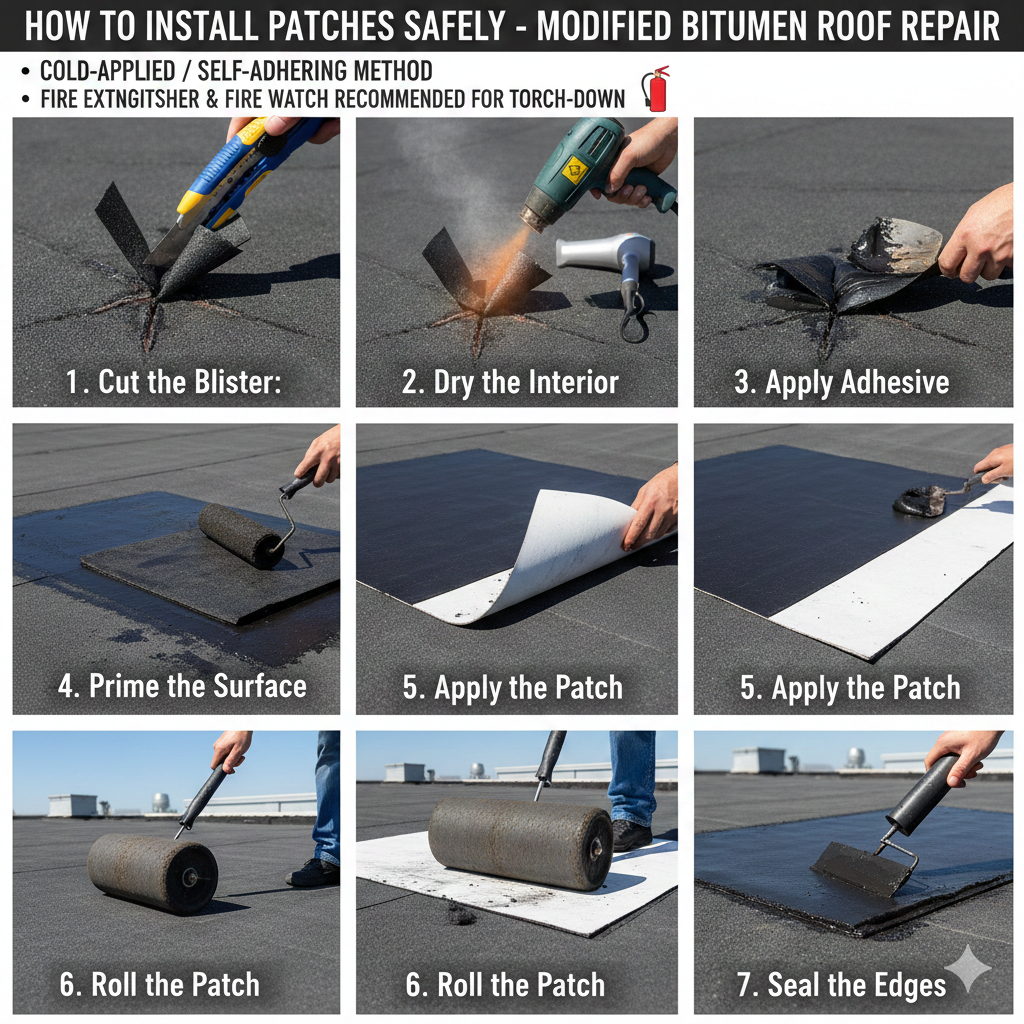
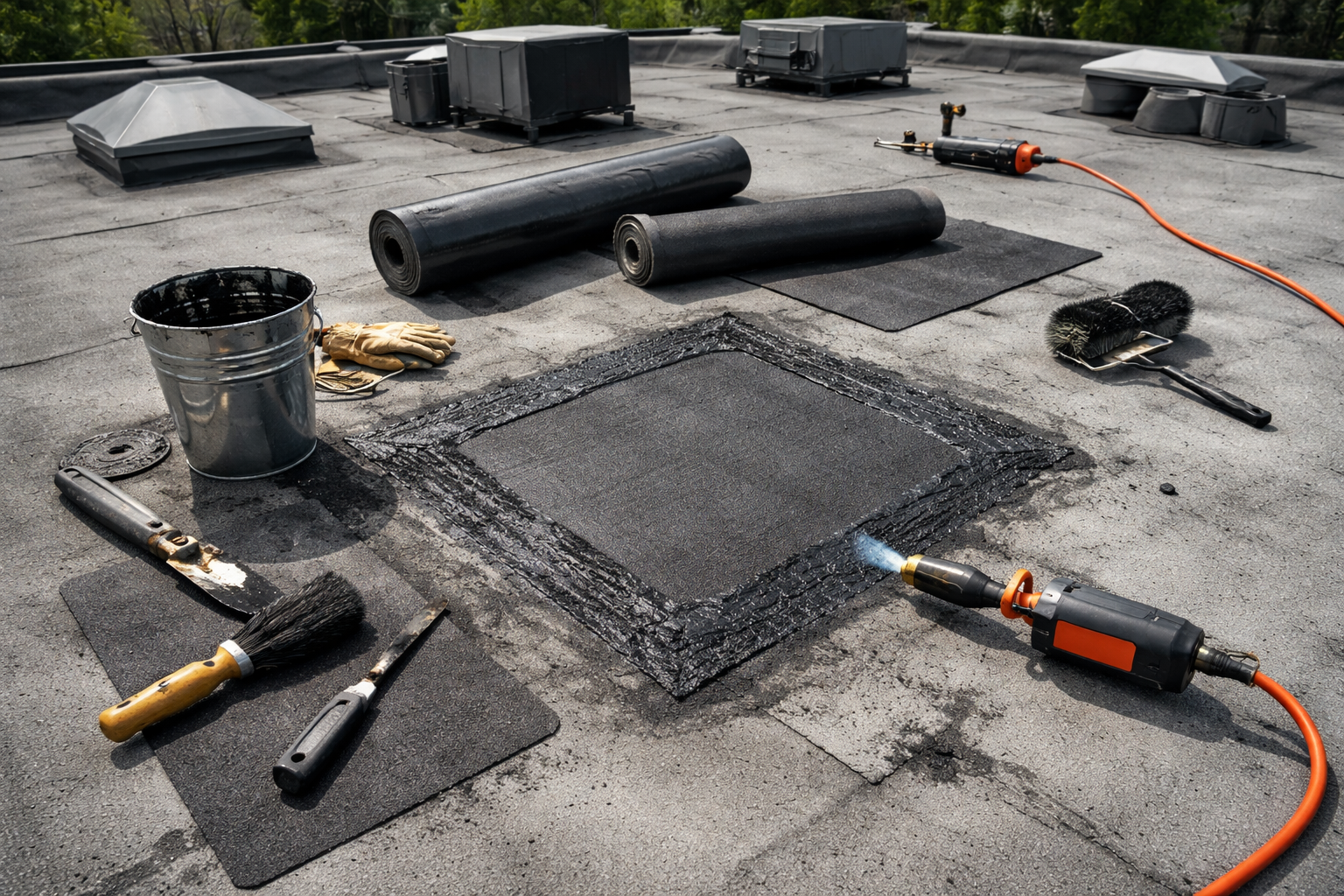
Request the reason for the recommendation and its limits. A patch should address the identified defect rather than simply cover the location where water appeared indoors. Any torch work belongs with appropriately trained and equipped roofing professionals.
What to Do During an Active Leak
Keep people away from sagging ceilings and water near electrical equipment. Protect contents from a safe position and contact an emergency roofing service. Do not access a roof during a storm.
Record the time, weather and visible entry points. Ask the contractor to document temporary work separately from the permanent repair, including products used, areas treated and the follow-up inspection needed. A temporary leak stop is not evidence that all wet layers have been addressed.
Keep a Maintenance and Inspection Record
Retain dated inspection reports, photographs, repair invoices and product documentation. Record drainage issues and any work by other trades near rooftop equipment.
Follow the roof manufacturer’s inspection schedule and arrange additional checks after damaging weather or relevant building work. Good records help the next inspector distinguish a new defect from an unresolved earlier problem.
Understand the Limits of a Visual Inspection
A surface inspection may not reveal concealed moisture or deck deterioration. Ask which conclusions are confirmed and which remain assumptions. Where further testing is proposed, request its purpose and how the results will change the repair plan.
Different contractors may recommend different scopes. Compare the evidence and proposed system details before choosing, rather than relying on the most confident description or a promised lifespan.
Questions to Ask Before Approving the Work
- What product and roof assembly have you identified?
- What evidence supports the proposed leak source?
- Which layers need repair or replacement?
- How will drainage and surrounding flashing be addressed?
- What conditions would require a change order?
- Which product instructions and warranty conditions apply?
Keep the answers with the signed scope. For the next stage, compare the repair materials and quote checklist.
Inspection FAQ
Does every blister need to be cut open?
No universal rule applies. Have its condition and the surrounding assembly assessed; do not cut an intact blister just to inspect it.
Can a photograph identify the repair product?
A photograph helps document the problem, but it does not confirm every membrane, coating or hidden layer. Provide records and allow the contractor to verify the assembly.
Does an inspection guarantee a warranty claim?
No. Ask the manufacturer about the applicable terms and required documentation. An inspection report records findings; it does not establish coverage by itself.
Further reading: modified bitumen roofing overview and CertainTeed repair-product information.
Conclusion
Use the inspection findings, product instructions and a written scope to decide on the next step. Ask the contractor to explain what is confirmed, what remains uncertain and how unexpected damage will be handled.
Keep the repair records and follow the maintenance instructions for the actual roof system. If a leak returns, have its cause investigated rather than repeatedly covering the same visible spot.
Other Resources
American WeatherStar – Comprehensive guide explaining modified bitumen roofing systems, materials, and installation methods.
Reddit – Modified Bitumen Roof Discussion – Community discussion sharing approaches to patching and repairing modified bitumen roofs.
Restore Masters – Service page describing commercial modified bitumen roofing solutions and applications.
West Roofing Systems – Informational article focused on cost-effective repair options for modified bitumen roofs.
Other Helpful Articles
Roof Jacks for Metal Roofs – Article explaining roof jacks designed specifically for metal roofing systems.
ELK Shingles Guide – Guide providing information on ELK asphalt shingles and their characteristics.
Roof Repair East Tamaki Services – Local service article outlining roof repair options in East Tamaki.
