
Fortified Roof: 10 Critical Facts Homeowners Need
Fortified Roof: 10 Critical Benefits That Save Money
Homeowners across the United States face increasing threats from severe weather events, including hurricanes, tornadoes, and devastating windstorms. A fortified roof represents one of the most effective defensive strategies against these natural disasters, offering protection that extends far beyond traditional roofing systems. The concept of a fortified roof has gained tremendous momentum as property owners seek reliable solutions to minimize damage and reduce insurance premiums.
Understanding what makes a fortified roof different from conventional roofing requires examining the specific construction standards and certification processes involved. The Insurance Institute for Business & Home Safety developed the FORTIFIED Home program to establish rigorous guidelines for building resilient structures. This designation ensures that every fortified roof meets stringent requirements designed to withstand extreme weather conditions that would compromise standard roofing installations.
Investing in a fortified roof delivers measurable benefits that impact both immediate safety and long-term financial outcomes. Property owners who choose this enhanced protection often discover substantial insurance savings, improved home values, and peace of mind during storm seasons. The growing popularity of fortified roof systems reflects a broader shift toward proactive disaster mitigation rather than reactive repairs after catastrophic events occur.
What Is a Fortified Roof and How Does It Differ
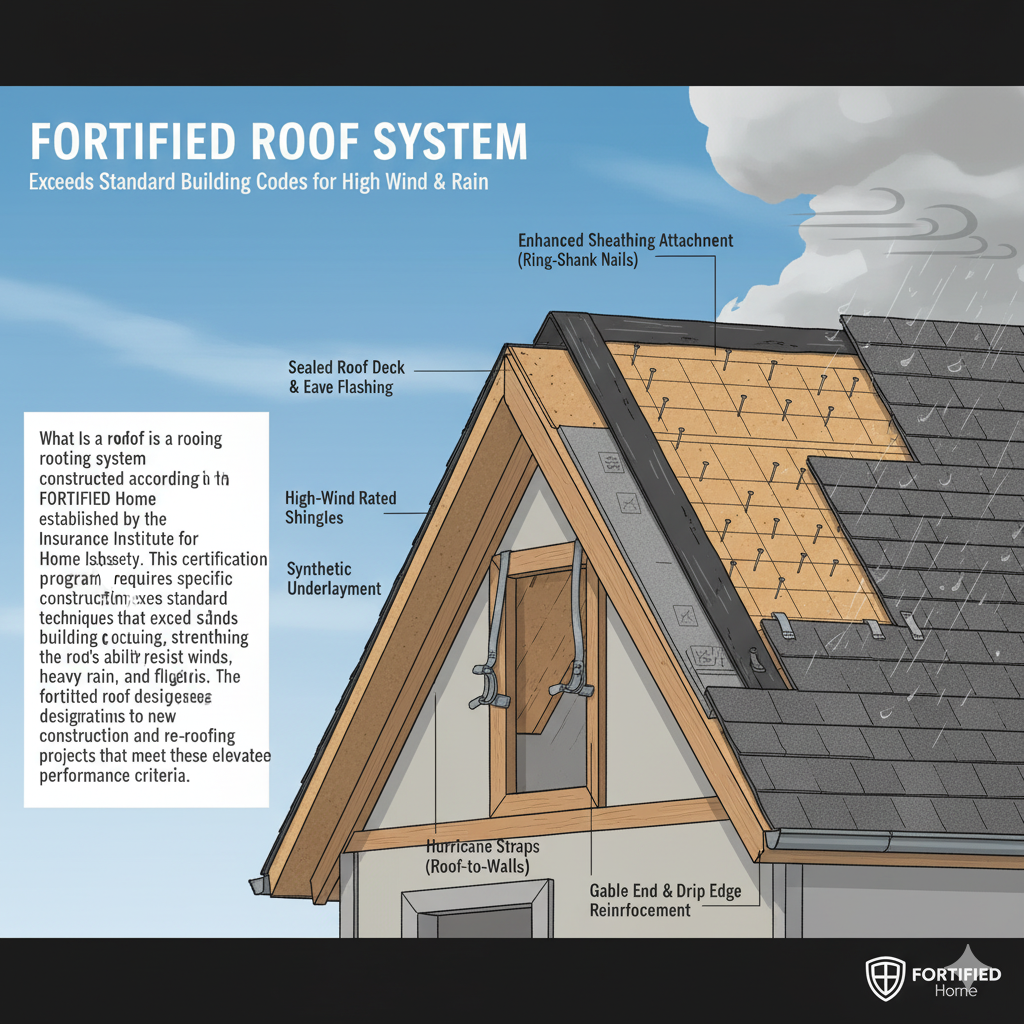
A fortified roof is a roofing system constructed according to FORTIFIED Home standards established by the Insurance Institute for Business & Home Safety. This certification program requires specific construction techniques that exceed standard building codes, focusing on strengthening the roof’s ability to resist high winds, heavy rain, and flying debris. The fortified roof designation applies to new construction and re-roofing projects that meet these elevated performance criteria.
The fundamental difference between a fortified roof and traditional roofing lies in the enhanced attachment methods and sealed deck construction. Standard roofs may use minimal fasteners and lack proper sealing, creating vulnerabilities during severe weather. A fortified roof incorporates ring-shank nails spaced closer together, sealed roof deck systems, and reinforced connections between the roof covering and the structural components below.

Louisiana Fortified Roof Program
The Louisiana fortified roof program has become a model for disaster-resistant construction throughout the Gulf Coast region. Louisiana offers significant incentives for homeowners who invest in fortified roof systems, including generous grants that can cover up to $10,000 of construction costs. This state-sponsored initiative recognizes that strengthening individual homes creates more resilient communities capable of withstanding hurricane-force winds.
Participating in the Louisiana fortified roof program requires working with certified contractors and independent evaluators who verify compliance with FORTIFIED standards. The program has successfully encouraged thousands of property owners to upgrade their roofing systems, resulting in dramatically reduced damage during recent hurricane seasons. Insurance companies have responded by offering premium discounts ranging from 15% to 45% for homes with certified fortified roof installations.
What Is a Fortified Roof
A fortified roof is specifically engineered to prevent the three primary failure modes that compromise standard roofing during storms: roof deck detachment, roof covering loss, and water intrusion through vulnerable penetrations. The system requires a sealed roof deck using adhesive or taped seams between panels, creating a continuous barrier against wind-driven rain. Every component from underlayment to shingles must meet higher performance standards than conventional materials.
The fortified roof certification process involves multiple inspections conducted by independent third-party evaluators who document compliance at critical construction stages. These inspections verify proper installation of the sealed deck, correct fastener placement, and appropriate flashing details around chimneys, skylights, and roof penetrations. Only after passing all inspections does a roof receive official fortified roof designation, providing homeowners with documented proof of superior construction quality.
Fortified Roof Program
The fortified roof program operates on three progressive designation levels: FORTIFIED Roof, FORTIFIED Silver, and FORTIFIED Gold. Each level builds upon the previous one, with the basic fortified roof designation focusing specifically on the roof system itself. Higher levels incorporate additional home hardening measures including strengthened wall-to-foundation connections and impact-resistant opening protections that create comprehensive structural resilience.
Achieving fortified roof program certification requires detailed documentation including engineering plans, material specifications, and photographic evidence of construction progress. Contractors must demonstrate expertise in FORTIFIED construction methods, while evaluators maintain independence to ensure unbiased verification. The program’s success stems from its practical approach to disaster mitigation, translating complex engineering principles into actionable construction guidelines that measurably improve building performance during extreme weather events.
How Much Does a Fortified Roof Cost
A fortified roof cost typically ranges from $12,000 to $28,000 for an average-sized home, representing an investment approximately 10% to 25% higher than standard roofing installations. The specific cost depends on roof size, complexity, material choices, and regional labor rates. Premium materials like impact-resistant shingles and enhanced underlayment contribute to higher upfront expenses, though these components deliver superior longevity and performance that offset initial costs through reduced maintenance and repair needs.
Homeowners should consider the fortified roof cost within the context of long-term financial benefits including insurance discounts, increased property values, and avoided damage expenses. Many jurisdictions offer grants, rebates, or tax incentives that substantially reduce out-of-pocket costs for fortified roof installations. Some property owners recover their additional investment within five to seven years through insurance savings alone, making the fortified roof a financially prudent choice beyond its obvious protective advantages.
How to Determine If Your Home Needs a Fortified Roof
Evaluating whether your property requires a fortified roof begins with assessing your geographic location and exposure to severe weather risks. Homes in coastal areas, tornado-prone regions, or locations with frequent severe storms benefit most from fortified roof protection. Insurance claims history for your neighborhood provides valuable data about typical storm damage patterns that indicate whether enhanced roofing would deliver meaningful risk reduction.
Your existing roof’s age and condition factor significantly into the decision-making process. Roofs approaching the end of their serviceable life present ideal opportunities to upgrade to a fortified roof during replacement rather than installing another standard system. Properties with documented wind damage, recurring leaks, or missing shingles after moderate storms demonstrate vulnerabilities that fortified roof construction specifically addresses through superior materials and installation techniques.
How to Find Qualified Fortified Roof Contractors
Locating contractors experienced in fortified roof installation requires researching professionals who have completed FORTIFIED training and demonstrated successful project completion. The Insurance Institute for Business & Home Safety maintains a database of trained contractors searchable by location, providing homeowners with verified professionals familiar with program requirements. These contractors understand the specific construction techniques and material specifications necessary for achieving certification.
Interviewing multiple contractors allows comparison of experience levels, pricing structures, and project timelines for your fortified roof installation. Request references from previous fortified roof projects and contact those homeowners about their experiences with the contractor’s workmanship, communication, and problem-solving abilities. Verify that contractors maintain proper licensing, insurance coverage, and bonding appropriate for the project scope and your state’s requirements.
Examining a contractor’s portfolio of completed fortified roof projects reveals their expertise with various roof configurations, material types, and architectural styles. Ask about their relationship with third-party evaluators who will inspect the work, as experienced contractors maintain positive working relationships that facilitate smooth certification processes. The best contractors provide detailed written proposals outlining all aspects of the fortified roof installation including materials, labor, timeline, and warranty coverage.
How to Buy Materials for a Fortified Roof Installation
Purchasing materials for a fortified roof requires selecting products that meet or exceed FORTIFIED Home program specifications for each component. Roof decking must be properly rated structural panels, typically 7/16-inch or thicker oriented strand board or plywood. Underlayment should be self-adhering modified bitumen or equivalent products that create watertight seals, while roof coverings need impact resistance ratings appropriate for your region’s wind and hail exposure.
Working with suppliers who understand fortified roofing requirements ensures proper material selection and adequate quantities for complete coverage without shortcuts. Many building supply companies now stock FORTIFIED-compliant materials and can provide technical specifications confirming products meet program standards. Request documentation for all materials including impact ratings, wind resistance certifications, and manufacturer installation guidelines that support the fortified roofing certification process.
Timing material purchases to align with contractor schedules prevents weather exposure and storage issues that could compromise product performance. Order specialized components like ridge venting, drip edge, and flashing materials specifically designed for fortified roofing applications rather than substituting standard alternatives. Quality materials represent the foundation of every successful fortified roofing installation, making careful selection and verification essential steps in the construction process.
How Much Does a Complete Fortified Roof System Cost
The total cost of a fortified roof system encompasses materials, labor, inspection fees, and certification expenses that together create the final investment requirement. Material costs typically represent 35% to 45% of the total project budget, with premium components like impact-resistant shingles, sealed deck panels, and high-performance underlayment commanding higher prices than standard alternatives. Labor costs vary by region but generally constitute 45% to 55% of the overall fortified roof expense.
Inspection and certification fees add $700 to $1,500 to the fortified roof project cost, covering multiple site visits by independent evaluators who verify compliance at critical construction stages. These fees purchase objective verification that your fortified roof meets all program requirements, providing documentation necessary for insurance discounts and resale value enhancement. Some contractors include inspection coordination in their services, while others require homeowners to arrange evaluator engagement separately.
Additional costs may include permit fees, debris removal, and repairs to underlying structural components discovered during decking installation. Budget contingencies of 10% to 15% accommodate unexpected conditions like rotted framing or inadequate ventilation requiring correction. The comprehensive fortified roofing investment protects your property for decades, delivering returns through insurance savings, increased home values, and superior performance during severe weather events.
How Long Does Fortified Roof Installation Take
A typical fortified roof installation requires seven to fourteen days from project commencement to final inspection, depending on roof size, complexity, and weather conditions. The sealed deck installation phase demands particular attention to detail, as evaluators must inspect this critical component before contractors can proceed to subsequent layers. Scheduling inspections around evaluator availability sometimes extends project timelines, though experienced contractors minimize delays through proactive communication and preparation.
Weather significantly impacts reinforced roofing installation duration, as certain steps require dry conditions for proper material adhesion and curing. Contractors may pause work during rain or extreme temperatures that compromise installation quality or worker safety. The reinforced roof certification process requires documentation at specific stages, creating natural breakpoints that prevent rushed work and ensure thorough compliance verification.
Complex roof geometries with multiple valleys, dormers, or penetrations extend installation timeframes compared to simple gable configurations. The reinforced roof system demands precision in flashing details and deck sealing around these features, requiring additional labor hours to achieve proper execution. Homeowners should discuss realistic timelines with contractors based on their specific roof characteristics, understanding that quality installation sometimes requires patience but delivers decades of superior performance.
How to Install Critical Fortified Roof Components
Installing a reinforced roof begins with proper roof deck preparation including removal of existing materials down to structural decking. Contractors inspect framing for damage, adequate sizing, and appropriate spacing before installing new deck panels. The sealed roof deck requires panels installed with edges aligned over rafters, secured with ring-shank nails spaced 6 inches apart along perimeter edges and 12 inches in field areas.
Deck sealing represents the most critical reinforced roof installation step, requiring self-adhering membrane or taped seams that create continuous water barriers. Contractors must achieve complete adhesion without wrinkles or gaps that would compromise the sealed deck’s integrity. Evaluators inspect this phase before allowing installation to proceed, verifying that every seam, penetration, and edge receives proper sealing according to FORTIFIED standards.
Underlayment installation over the sealed deck follows manufacturer specifications with appropriate overlaps and proper fastening patterns. Drip edge installation at eaves and rakes precedes final roof covering, protecting edges from water intrusion. The fortified roof covering requires enhanced attachment with more fasteners than standard installations, specific placement patterns, and proper alignment to resist high winds. Starter strips, hip and ridge treatments, and flashing details all follow elevated performance standards that distinguish reinforced roof construction from conventional methods.
How to Clean and Maintain a Fortified Roof
Maintaining a fortified roofing requires regular inspections to identify and address minor issues before they compromise the system’s protective capabilities. Schedule professional inspections annually and after significant weather events to assess shingle condition, flashing integrity, and sealed penetrations. Remove debris accumulation from valleys and behind chimneys that traps moisture and accelerates material deterioration, using soft brushes or low-pressure water rather than harsh cleaning methods that damage protective granules.
Cleaning a reinforced roof involves gentle techniques that preserve the impact-resistant properties and surface coatings of premium roofing materials. Avoid pressure washing which can dislodge granules and compromise shingle integrity, instead using approved cleaning solutions applied with soft brushes for moss or algae removal. Trim overhanging branches that drop leaves and retain moisture on the reinforced roof surface, creating conditions conducive to organic growth and premature aging.
Gutter maintenance directly impacts reinforced roof longevity by ensuring proper water drainage away from roof edges and sealed deck components. Clean gutters quarterly to prevent overflow that saturates fascia boards and compromises drip edge performance. The fortified roof system’s enhanced construction warrants proactive maintenance that protects your investment and sustains the superior performance characteristics that reduce insurance costs and prevent storm damage.
What Are the Primary Advantages of Fortified Roof Systems
The most significant advantage of a reinforced roof is dramatically reduced vulnerability to wind damage during hurricanes, tornadoes, and severe thunderstorms. Enhanced attachment methods and sealed deck construction prevent the roof covering blow-off that typically initiates catastrophic structural failure during high-wind events. Properties with reinforced roof installations demonstrate 60% to 80% less damage during major storms compared to homes with standard roofing, translating to thousands of dollars in avoided repair costs.
Insurance premium reductions represent substantial ongoing financial benefits from reinforced roof investments. Many insurers offer discounts ranging from 15% to 45% for certified fortified roof installations, with exact savings varying by location, carrier, and overall home characteristics. These annual savings compound over the reinforced roof’s lifespan, often recovering the initial premium investment within a decade while continuing to deliver savings for years beyond the payback period.
Property value enhancement from reinforced roof certification appeals to buyers seeking disaster-resilient homes with lower operating costs. Real estate markets in storm-prone regions increasingly recognize the value proposition of reinforced roof systems, with certified homes commanding price premiums and selling faster than comparable properties with standard construction. The fortified roof designation provides third-party verification of superior construction quality that differentiates properties in competitive markets.
Additional advantages include:
-
Extended roof lifespan due to superior materials and installation quality
-
Reduced maintenance requirements from fewer weather-related repairs
-
Enhanced energy efficiency through improved attic sealing and ventilation
-
Peace of mind knowing your home has maximum storm protection
-
Eligibility for grants and incentive programs that offset installation costs
-
Lower risk of displacement from severe damage requiring extended repairs
What Challenges Exist with Fortified Roof Implementation
The primary challenge facing reinforced roofing adoption is higher upfront costs compared to standard roofing installations. This price differential discourages some homeowners despite long-term savings potential, particularly when immediate budget constraints limit available capital. Financing reinforced roofing projects through home equity loans, special financing programs, or grant funding helps overcome this barrier, though not all property owners qualify for or pursue these options.
Contractor availability represents another implementation challenge, as fortified installation requires specialized training and certification that many roofing professionals lack. Some markets have limited numbers of qualified contractors, creating scheduling delays or reduced competitive pricing. The growing demand for reinforced roofing systems is gradually expanding the contractor pool, though capacity constraints persist in certain regions where program adoption has surged.
Documentation and inspection requirements add complexity to reinforced roof projects compared to standard installations. Homeowners must coordinate evaluator schedules, maintain photographic records, and ensure contractors complete required forms throughout the construction process. While these steps verify proper installation and enable certification, they demand time and attention beyond typical roofing projects.
Other challenges include:
-
Limited awareness of reinforced roof benefits among homeowners and real estate professionals
-
Varying state and local building codes that may conflict with FORTIFIED standards
-
Insurance discount inconsistencies across carriers and jurisdictions
-
Potential delays from weather interruptions during critical installation phases
-
Need for ongoing maintenance to preserve certification validity and performance
-
Initial learning curves for contractors new to FORTIFIED construction methods
Frequently Asked Questions About Fortified Roof Systems
How long does fortified roof certification remain valid?
reinforced roof certification remains valid for the life of the roof system provided it receives proper maintenance and no major modifications occur. Homeowners must notify their evaluator if significant repairs or alterations affect certified components. Insurance companies may require periodic verification that the reinforced roof maintains its original certified condition, typically through documentation rather than new inspections.
Can existing roofs be retrofitted to achieve fortified roof certification?
Existing roofs can sometimes achieve fortified roof certification through strategic retrofitting, though this proves more challenging and potentially costly than new construction. The sealed roof deck requirement presents the primary obstacle, as achieving continuous sealing over existing decking may require complete tear-off. Some jurisdictions offer partial certifications for specific upgrades that improve performance even when full reinforced roof standards cannot be met.
Do all insurance companies offer discounts for fortified roof installations?
Most major insurance carriers provide discounts for fortified certification, though discount percentages and eligibility requirements vary significantly. Contact your insurance agent to verify specific discount availability and required documentation before beginning your fortified roof project. Some states mandate minimum discount levels for certified installations, while others leave pricing to individual carrier discretion.
Are there different fortified roof requirements for various climate zones?
FORTIFIED Home standards establish baseline requirements applicable nationwide, with additional specifications for high-wind regions exceeding 130 mph design wind speeds. Coastal areas subject to hurricane exposure require enhanced wind resistance ratings and impact protection compared to inland locations. Your reinforced roof design must address specific climate risks including wind speed, hail exposure, and seismic activity relevant to your geographic location.
How does a fortified roof affect home appraisals and resale value?
A reinforced roof typically enhances home appraisals by 2% to 5% compared to similar properties with standard roofing, reflecting reduced risk, lower insurance costs, and superior construction quality. Appraisers increasingly recognize FORTIFIED certification as a value-adding feature, particularly in markets where storm resilience influences buyer decisions. Documentation of your reinforced roof certification should be provided to appraisers and prospective buyers to ensure proper valuation consideration.
Conclusion
A fortified roof represents a strategic investment in property protection, financial stability, and long-term value preservation. The enhanced construction standards, rigorous certification process, and proven performance during severe weather distinguish fortified roof systems from conventional alternatives. Homeowners who choose this superior protection benefit from reduced insurance premiums, minimized storm damage, and peace of mind knowing their property can withstand extreme conditions that devastate standard construction.
🛡️ Other Resources
-
FORTIFIED Home – Roof Program – Official guide to FORTIFIED Roofing standards, requirements, and certification.
-
FORTIFIED Home – Main Website – Resources for strengthening homes against hurricanes, hail, and high winds.
-
GAF – FORTIFIED Roof System – Overview of GAF roofing materials designed to meet FORTIFIED standards.
-
Louisiana Department of Insurance – Fortify Homes Program – Grants and incentives for homeowners upgrading.
🔎 Other Helpful Articles
-
Hail Damage Roof Guide – How to identify and repair hail-damaged roofing.
-
Metal Roofing Screws – Choosing the right fasteners for metal roof installations.
-
Step Flashing Roof – Proper installation of step flashing to prevent leaks.