
Gambrel Roof: 8 Expert Tips to Build the Perfect Design
What is a Gambrel Roof?
A gambrel roof represents one of the most distinctive and practical roofing styles in architectural history, characterized by its unique double-sloped design on each side. This iconic roof style features two separate slopes on each side, with the lower slope being significantly steeper than the upper one, creating a profile that immediately reminds observers of classic Dutch colonial houses and traditional American barns. The gambrel roof design maximizes interior space while maintaining efficient water drainage, making it an increasingly popular choice for both residential homes and agricultural buildings.
Unlike traditional gable roofs that feature a single slope on each side, the gambrel roof breaks the pitch into two distinct angles, resolving headroom limitations and providing substantially more usable attic space. The steeper lower slope extends outward, creating nearly vertical walls that maximize headroom, while the gentler upper slope reduces the overall height while maintaining efficient drainage capabilities. This ingenious design has made the gambrel roof a timeless architectural solution that continues to evolve in modern construction.
Understanding Gambrel Roof Design and Architecture
The hallmark of gambrel roof design lies in its two-slope construction that creates both aesthetic appeal and functional advantages. The most recognizable characteristic involves dual slopes on each side, where the steep lower slope extends outward to maximize space, while the gentler upper slope provides a balanced appearance that has captivated architects for centuries. This configuration typically features generous eaves and overhangs, enhancing visual appeal while providing crucial protection from weather elements.
Several distinct gambrel roof variations exist to suit different architectural needs and preferences. The classic gambrel maintains a symmetrical double-slope design with no hips, typically incorporating two gable windows on the front and featuring a slight overhang on all sides. Asymmetrical gambrel designs allow architects to stretch one side of the roof to create additional interior or exterior space, offering flexibility in customization. Wall-supported gambrel roofs eliminate overhangs entirely, joining each wall at an angle to reduce material costs, while mansard gambrel roofs feature four-sided construction with hipped design and dormers on the lower slope.

Key Architectural Features
The double-sloped design serves as the defining characteristic of any gambrel roof structure. The steeper lower slope facilitates efficient water runoff and snow shedding, significantly reducing the risk of water damage and ice accumulation during winter months. The upper slope adds aesthetic interest while contributing essential interior space that distinguishes gambrel roofs from simpler alternatives.
The break point between the two slopes represents a critical structural element that experiences concentrated stress requiring proper reinforcement beams and adequate framing. Professional contractors ensure these connection points meet rigorous engineering specifications to handle the unique load distribution created by the dual-slope design. The roof’s geometry directly affects wind resistance, demanding careful attention to fastening patterns, structural connections, proper rafter spacing, appropriate sheathing materials, and secure attachment methods that comply with local wind load requirements.
Gambrel Roof Trusses and Structural Components
Gambrel roof trusses form the backbone of this distinctive roofing system, requiring precise engineering to support the dual-angle configuration. These specialized trusses must accommodate the transition between the steep lower slope and the gentler upper slope while distributing structural loads evenly across the building frame. The construction demands expertise in calculating proper angles, dimensions, and material specifications to ensure long-term stability and performance.
The truss system connects at critical junction points where the two slopes meet, creating areas of concentrated stress that require reinforced connections and properly sized lumber. Engineers design these trusses to handle not only the roof’s dead load but also dynamic loads from snow accumulation, wind pressure, and occasional maintenance activities. Professional installation ensures proper spacing between trusses, typically ranging from 16 to 24 inches on center, depending on local building codes and expected load conditions.
How to Calculate Gambrel Roof Dimensions
A gambrel roof calculator simplifies the complex mathematics involved in determining constructional dimensions for this unique roof style. These specialized tools require inputs including building width and length, lower and upper roof pitches, and break position, which is typically expressed as a percentage of half the building span. Users may also enter total height or specific section measurements if already known, allowing flexibility in the planning process.
The calculator generates comprehensive outputs that streamline construction planning and material estimation. Results include total roof height, lengths of each rafter section, rise and run measurements for both slopes, and slope angles expressed in degrees. Additionally, the calculator determines total roof surface area, which proves invaluable for estimating materials like shingles, underlayment, and panels.

Two Calculation Methods Available
The two-pitch method provides full control over design specifications, allowing users to set both pitches and the break point independently. This approach works best for custom designs where specific angles and proportions are required to match existing structures or achieve particular aesthetic goals. Users enter building dimensions, overhang measurements, and both roof pitches, then provide at least one additional detail such as upper or lower run length, rise height, or rafter length.
The half-circle method automatically maintains balanced proportions characteristic of classic barn-style gambrel roofs. This calculation approach simplifies the design process by using predetermined relationships between roof segments, ensuring harmonious proportions without requiring extensive manual calculations. The method proves particularly useful for traditional agricultural buildings and homes seeking authentic historical appearance.
How to Find Quality Gambrel Roof Contractors
Finding qualified professionals for gambrel roof installation requires thorough research and careful vetting of potential contractors. Start by requesting referrals from neighbors, friends, or family members who have recently completed similar roofing projects, as personal recommendations often lead to reliable contractors with proven track records. Online review platforms and local business directories provide additional resources for identifying contractors specializing in complex roof designs like gambrel construction.
Verify that potential contractors hold appropriate licensing and insurance coverage before proceeding with any agreements. Licensed contractors demonstrate commitment to professional standards and ongoing education about building codes and best practices, while comprehensive insurance protects homeowners from liability for workplace accidents or property damage during construction. Request proof of both general liability insurance and workers’ compensation coverage, and verify the information directly with insurance providers when possible.
How to Buy Materials for Gambrel Roof Installation
Purchasing materials for a gambrel roof project requires careful planning and accurate quantity calculations to avoid costly delays or excess waste. Begin by using a gambrel roof calculator to determine precise measurements for all structural components, including rafter lengths, sheathing area, and total roof surface area. These calculations form the foundation for creating a comprehensive materials list that accounts for both structural framing and finishing materials.
Roofing materials vary significantly in cost and performance characteristics, requiring careful consideration of budget constraints and long-term durability needs. Asphalt shingles represent the most economical option, costing approximately $4 to $8 per square foot installed, while offering adequate protection for most residential applications. Metal roofing systems range from $8 to $20 per square foot but provide superior longevity, often lasting 50 years or more with minimal maintenance requirements.
How Much Does a Gambrel Roof Cost?
The cost to install a gambrel roof on a 2,000-square-foot home typically ranges from $16,000 to $30,000, averaging $8 to $15 per square foot for framing alone. This baseline estimate covers the structural framework but excludes roofing materials and finishing labor, which add $4 to $20 per square foot depending on material selection such as asphalt shingles or metal panels. Total project costs fluctuate based on numerous factors including material choices, labor rates, design complexity, and regional variations in construction expenses.
Labor and installation costs depend heavily on local wage rates, installation complexity, and the roofing crew’s expertise level. Geographic location significantly impacts overall expenses, as regional differences in labor availability, material costs, and local building code requirements create substantial price variations across different markets. Complex design features such as multiple dormers, intricate trim work, or unique architectural details increase both labor hours and material requirements, potentially raising total costs considerably above baseline estimates.
Cost Breakdown by Material Type
Asphalt shingle installations represent the most budget-friendly roofing option for gambrel roofs, with material costs ranging from $90 to $150 per square (100 square feet). Standard three-tab shingles occupy the lower end of this range, while architectural or dimensional shingles command premium prices due to enhanced durability and aesthetic appeal. Installation labor for asphalt shingles typically costs $40 to $80 per hour, with most projects requiring two to five days of work depending on roof size and complexity.
Metal roofing materials offer superior longevity and weather resistance at higher initial costs, ranging from $300 to $1,200 per square for materials alone. Standing seam metal roofing occupies the premium price range but provides exceptional durability, energy efficiency, and low maintenance requirements throughout its 50-plus-year lifespan. Metal installation requires specialized skills and equipment, potentially increasing labor costs by 20 to 40 percent compared to asphalt shingle installation.
How Long Does Gambrel Roof Installation Take?
Gambrel roof installation timelines vary considerably based on project scope, weather conditions, crew size, and construction complexity. A typical residential gambrel roof replacement on a 2,000-square-foot home requires approximately one to two weeks from demolition through final installation, assuming favorable weather and no unexpected structural issues. New construction gambrel roofs may proceed more quickly when weather cooperates, as crews can work continuously without navigating existing structure removal or repairs.
The installation process begins with framing the gambrel trusses or building the roof frame stick-by-stick, depending on the construction method selected. Pre-manufactured trusses significantly reduce installation time, often allowing the structural framework to be erected in one to three days for standard residential projects. Stick-built gambrel roofs require more time as carpenters must cut, fit, and secure each rafter individually, but this method provides greater flexibility for custom designs or renovations involving existing structures.

How to Install a Gambrel Roof: Step-by-Step Process
- Installing a gambrel roof begins with establishing a solid foundation through proper measurements and planning. Contractors start by confirming building dimensions, calculating precise rafter lengths for both upper and lower roof sections, and determining the optimal break point between the two slopes. These preliminary calculations ensure accurate material ordering and prevent costly errors during construction phases.
- The structural framework installation proceeds systematically from bottom to top. Crews erect support walls or install a ridge beam to support the upper rafters, then begin installing lower rafters at the specified angle and spacing, typically 16 to 24 inches on center depending on load requirements and local codes. After securing all lower rafters, installers attach the break point reinforcement beams that connect lower and upper roof sections, then complete the framework by installing upper rafters from break points to the ridge line.
- Sheathing application follows once the rafter framework stands complete and inspected. Workers install oriented strand board (OSB) or plywood sheathing panels perpendicular to rafters, securing them with appropriate fasteners at recommended intervals to create a solid substrate for roofing materials. The sheathing process requires attention to proper spacing between panels to allow for thermal expansion and contraction that occurs with temperature fluctuations.
- Underlayment installation provides critical moisture protection beneath the final roofing material. Contractors typically install synthetic underlayment or traditional felt paper, beginning at the eaves and working toward the ridge with proper overlaps between courses. Special attention goes to valley areas, break points, and penetrations where water accumulation risk runs highest, often incorporating additional waterproofing measures such as ice and water shield in vulnerable locations.
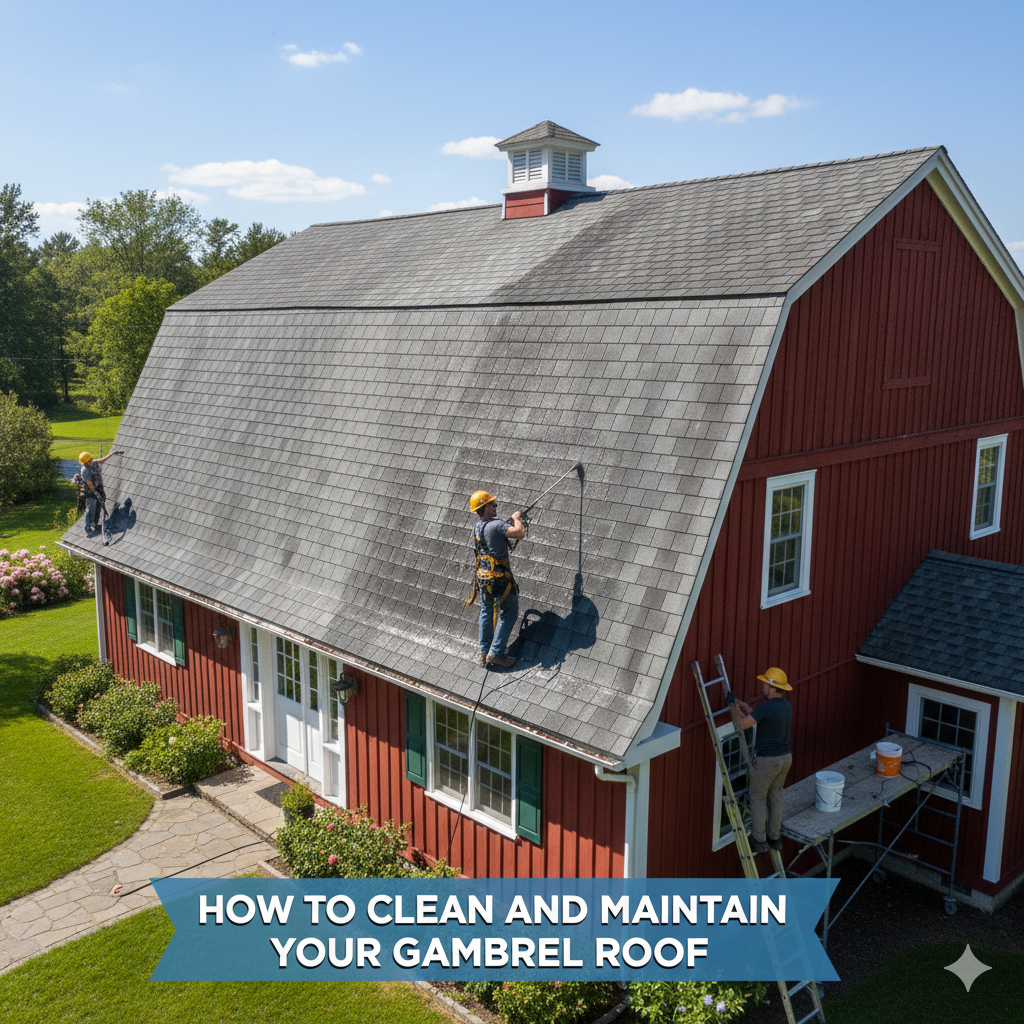
How to Clean and Maintain Your Gambrel Roof
Regular maintenance ensures your gambrel roof delivers maximum lifespan and optimal performance throughout its service life. Homeowners or professionals should inspect the roof at least twice annually—once in spring and once in fall—plus after any major storm events. Inspections should focus particular attention on ridges where roof pitches change, checking for cracked sealant, loose flashing, or damaged shingles, as these areas commonly develop leaks.
Debris removal represents one of the most important maintenance tasks for preserving gambrel roof integrity. Regularly clean leaves, twigs, and other debris from the roof surface to prevent water pooling that can lead to rot, mold growth, and premature deterioration. Use a leaf blower or soft brush with low-pressure hose setup to remove accumulated debris, working from the ridge downward to prevent spreading dirt across cleaned sections.
Professional Cleaning Techniques
Moss and algae growth frequently develops on the lower slopes of gambrel roofs, particularly in shaded or damp areas that remain moist for extended periods. Address biological growth using a solution of water and bleach or commercial roof cleaner, applying the mixture gently with a soft brush or low-pressure sprayer. Avoid using pressure washers, as high-pressure water streams can damage shingle granules, break sealant bonds, and force water beneath roofing materials where it causes hidden damage.
Installing zinc or copper strips along the roof ridge provides effective long-term prevention against future moss and algae growth. These metal strips release ions when rain water flows over them, creating an environment inhospitable to biological growth without requiring ongoing chemical treatments. The strips typically last decades and require no maintenance once properly installed.
Gutter and Drainage System Maintenance
Maintaining clean, functional gutters ensures proper water drainage away from your home’s foundation and prevents moisture-related damage to roof structures. Remove leaves, twigs, and other buildup from gutters and downspouts regularly, especially during fall when deciduous trees shed leaves prolifically. Clogged gutters cause water to back up beneath roofing materials, potentially causing rot in fascia boards, soffit damage, and water infiltration into interior spaces.
Inspect gutters for sagging sections, leaks at seams, and physical damage that compromises their drainage function. Make repairs promptly to maintain efficient water flow and prevent minor issues from escalating into major problems requiring extensive remediation. Consider installing gutter guards or screens to reduce debris accumulation and minimize cleaning frequency, though periodic inspection remains necessary even with protective systems installed.
Advantages of Gambrel Roof Design
- The gambrel roof delivers exceptional space efficiency compared to traditional gable or hip roof designs, providing significantly more headroom and usable attic area. The steep lower slope creates nearly vertical walls in the upper floor, maximizing living space that homeowners can convert into bedrooms, offices, storage areas, or other functional spaces. This space advantage proves particularly valuable in areas where building footprint restrictions limit horizontal expansion, allowing vertical space utilization that other roof styles cannot match.
- Cost effectiveness represents another significant advantage driving gambrel roof popularity among budget-conscious builders and homeowners. The relatively simple design reduces construction complexity compared to more elaborate roof styles, lowering labor costs and construction time while still delivering distinctive architectural character. Although gambrel roofs cost slightly more than basic gable roofs due to additional framing requirements, they provide substantially more usable space per dollar invested, making them economically attractive for many applications.
- The gambrel roof’s double-sloped design facilitates superior water drainage and snow management compared to flatter roof profiles. The steep lower pitch prevents water accumulation and ice dam formation, directing precipitation quickly off the roof surface before it can penetrate roofing materials or create structural loading concerns. This drainage advantage extends roof lifespan by minimizing moisture exposure and reduces maintenance requirements related to water damage.
- Aesthetic appeal makes gambrel roofs instantly recognizable and architecturally significant. Their distinctive silhouette adds charm and character to both traditional and contemporary designs, enhancing curb appeal and property values. The versatile design adapts successfully to various architectural styles, from rustic barn conversions to elegant Dutch colonial residences to sleek modern interpretations featuring clean lines and contemporary materials.
Challenges and Disadvantages of Gambrel Roofs
- Construction complexity poses the primary challenge associated with gambrel roof installation, requiring precise techniques and experienced contractors to execute properly. The dual-slope design demands accurate calculations for rafter lengths, angles, and reinforcement requirements at break points where concentrated stresses develop. This complexity may increase labor intensity and installation time compared to simpler roof styles, potentially raising overall project costs despite the design’s inherent material efficiency.
- Maintenance challenges arise from the intricate design features that make gambrel roofs architecturally distinctive. The multiple slopes, break points, and transition areas create locations where debris accumulates and water may pool if drainage systems become compromised. Hard-to-reach areas complicate routine inspections and repairs, sometimes requiring specialized equipment or professional services that increase ongoing maintenance expenses compared to simpler roof configurations.
- Wind resistance limitations represent a significant concern for gambrel roofs, particularly in regions prone to hurricanes or severe windstorms. The roof’s geometry creates multiple slopes that can generate uplift forces during high-wind events, potentially reducing wind resistance compared to simpler gable designs. The transition points between slopes create turbulence that may stress fasteners and connections, requiring careful attention to installation details and possible reinforcement beyond standard practices to meet wind load requirements in vulnerable locations.
- Insulation constraints sometimes develop due to the steep lower slope that characterizes gambrel roof design. The limited depth available in some areas of the roof structure may restrict insulation options, potentially compromising energy efficiency unless designers carefully plan insulation strategies during initial design phases. This limitation may increase heating and cooling costs compared to roof styles offering greater depth for insulation installation throughout the entire roof assembly.
Gambrel Roof Design Variations and Applications
Gambrel roof designs adapt successfully to diverse building types ranging from residential homes to agricultural structures to commercial buildings. Traditional barn applications showcase the style’s practical advantages for maximizing interior volume while maintaining relatively low wall heights that simplify construction and reduce material costs. The extra headroom and floor space created by the gambrel profile prove particularly valuable for hay storage, equipment housing, and livestock sheltering in agricultural contexts.
Residential gambrel roof houses blend historical charm with contemporary functionality, offering homeowners distinctive architectural character combined with practical space advantages. Dutch colonial homes represent the classic residential application, featuring the characteristic gambrel profile on the front and rear elevations while incorporating dormers, overhangs, and traditional trim details. Modern interpretations maintain the functional benefits while updating materials, finishes, and design details to suit contemporary aesthetic preferences and performance expectations.
Shed and garage structures frequently employ gambrel roof designs to maximize storage capacity within compact footprints. The steep lower slopes allow full-height access to areas that would feature unusable space under conventional gable roofs, effectively increasing functional square footage without expanding the building’s ground-level dimensions. This efficiency makes gambrel roofs particularly popular for backyard storage sheds, workshop buildings, and detached garages where vertical space utilization directly enhances utility.
Comparing Gambrel Roofs to Alternative Roof Styles
Gambrel roofs differ substantially from gable roofs in both design and functionality, offering distinct advantages and trade-offs. While gable roofs feature a single slope on each side creating a symmetrical triangle profile, gambrel roofs incorporate two slopes per side with steep and shallow sections. This fundamental design difference gives gambrel roofs significantly larger attic space and more storage capacity compared to gable alternatives of similar footprint. However, gambrel construction typically costs slightly more due to custom framing requirements, whereas gable roofs benefit from standardized framing components and simpler installation processes.
Mansard roofs share similarities with gambrel designs but feature important structural distinctions. A gambrel roof has two slopes on two sides only, while a mansard roof extends the double-slope design to all four sides of the building. Gambrel roofs evoke barn-like aesthetics rooted in American and Dutch architectural traditions, whereas mansard roofs convey French architectural influences and formal elegance. Both styles maximize upper-floor living space, but mansard roofs provide even greater interior volume at the cost of substantially increased construction complexity and expense.
Hip roofs present another alternative offering different performance characteristics and aesthetic qualities. Hip roofs slope downward on all four sides, meeting at a central ridge or forming a pyramid shape on square buildings, creating excellent wind resistance and structural stability. Gambrel roofs provide superior interior space efficiency but sacrifice some wind resistance due to their complex geometry featuring multiple slope transitions that create turbulence during high-wind events.
Conclusion
The gambrel roof stands as a testament to architectural ingenuity, combining distinctive visual appeal with exceptional space efficiency and practical functionality. This iconic roof style’s double-sloped design maximizes usable interior volume while maintaining efficient water drainage and snow shedding capabilities that protect structures throughout diverse weather conditions. Whether gracing a traditional barn, a Dutch colonial home, or a modern custom residence, the gambrel roof delivers both character and performance that continue attracting homeowners, builders, and architects seeking to balance aesthetics with utility.
Understanding gambrel roof construction costs, installation requirements, and maintenance needs empowers property owners to make informed decisions about this distinctive roofing style. While gambrel roofs present certain challenges including complex construction techniques and maintenance considerations, their advantages in space creation, cost effectiveness, and architectural beauty make them compelling choices for appropriate applications. With proper planning, professional installation, and regular maintenance, a gambrel roof provides decades of reliable service while enhancing property value and curb appeal.
Frequently Asked Questions About Gambrel Roofs
Q: What is the main difference between a gambrel roof and a gable roof?
A: A gambrel roof features two distinct slopes on each side—a steep lower slope and a gentler upper slope—while a gable roof has only a single slope on each side. This design difference gives gambrel roofs significantly more interior space and headroom in the attic area compared to traditional gable roofs.
Q: How much does it cost to install a gambrel roof?
A: Installing a gambrel roof on a 2,000-square-foot home typically costs between $16,000 and $30,000, or approximately $8 to $15 per square foot for framing alone. Adding roofing materials like asphalt shingles or metal panels increases total costs by $4 to $20 per square foot, depending on material selection.
Q: Are gambrel roofs good in high-wind areas?
A: Gambrel roofs can have reduced wind resistance compared to simpler roof designs due to their multiple slopes that create uplift forces during high-wind events. However, proper installation with reinforced connections, appropriate fastening patterns, and compliance with local wind load requirements can make gambrel roofs suitable for most locations.
Q: How often should I inspect my gambrel roof?
A: You should inspect your gambrel roof at least twice per year—once in spring and once in fall—and after any major storm events. Pay particular attention to the ridges where the two roof pitches meet, as these areas are common locations for leaks and require careful monitoring.
Q: Can I convert my attic space with a gambrel roof?
A: Yes, the gambrel roof’s steep lower slope creates nearly vertical walls in the upper floor, providing excellent headroom and usable space ideal for conversion into bedrooms, offices, or living areas. The increased interior volume represents one of the primary advantages of gambrel roof design compared to other roof styles.
Q: What maintenance does a gambrel roof require?
A: Regular maintenance includes removing debris like leaves and twigs to prevent water pooling, inspecting for damaged shingles or flashing, cleaning gutters, and addressing moss or algae growth with appropriate cleaning solutions. Professional roof inspections at least once annually help identify potential issues before they become major problems.
Q: How long does a gambrel roof last?
A: A properly installed and maintained gambrel roof can last 20 to 50+ years depending on the roofing material used. Asphalt shingles typically last 20 to 30 years, while metal roofing systems can exceed 50 years with minimal maintenance requirements throughout their lifespan.
Q: Is a gambrel roof more expensive than other roof types?
A: Gambrel roofs cost slightly more than basic gable roofs due to additional framing requirements and construction complexity. However, they provide substantially more usable space per dollar invested, making them cost-effective when interior space maximization is a priority.
Q: Can I install solar panels on a gambrel roof?
A: Yes, solar panels can be installed on gambrel roofs, with the lower steep slope often providing optimal angles for solar energy collection. The dual-slope design may even offer advantages by providing multiple installation options to capture sunlight at different times of day.
Q: What building styles work best with gambrel roofs?
A: Gambrel roofs complement Dutch colonial homes, traditional barns, Cape Cod-style residences, and many contemporary designs seeking distinctive architectural character. The versatile design adapts to both rustic and modern aesthetics depending on material selection and trim details.
🏠 Other Resources
Explore these trusted sources to learn more about gambrel roofs, their structure, benefits, and design variations:
-
Wikipedia – Gambrel Roof – Overview of the gambrel roof shape, history, and architectural uses.
-
GAF – What Is a Gambrel Roof? – Easy explanation of how gambrel roofs work and where they are used.
-
Fixr – Gambrel Roof Guide – Cost, materials, pros and cons of gambrel roofing.
-
Brava Roof Tile – Gambrel Roof Designs – Inspiration and design variations for modern gambrel roofs.
🔎 Other Helpful Articles
-
Roof Inspection Guide – Step-by-step inspection guide for homeowners.
-
TPO Roofing – Complete overview of TPO roofing systems.
-
Roof Air Vents – Learn about roof ventilation types and benefits.