
Snow Guards for Corrugated Metal Roofs: Smart Ways
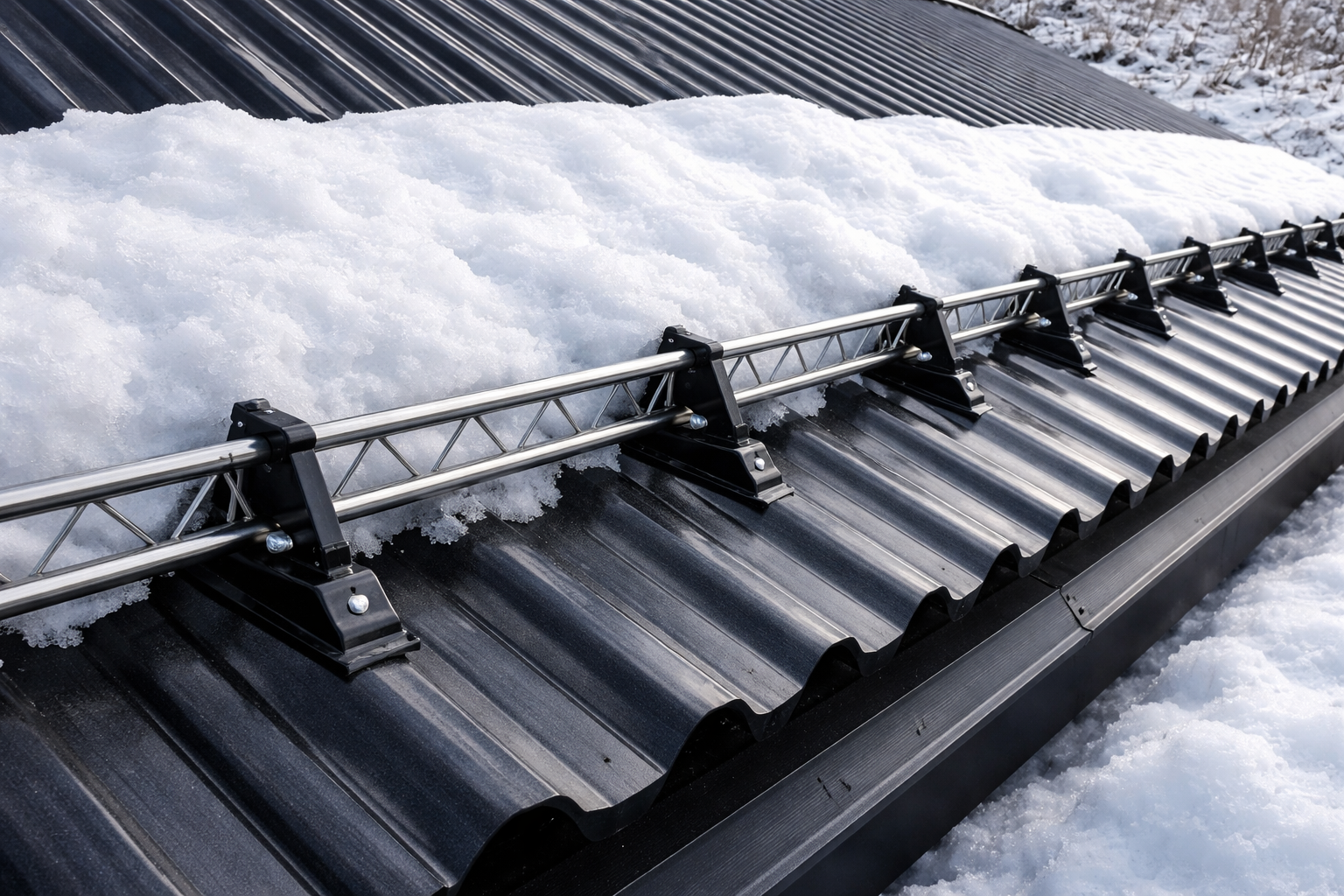
Snow Guards for Corrugated Metal Roofs: Safe Tips
Understanding the Basics of Roof Protection
Winter brings a specific set of challenges for homeowners, particularly those who have invested in metal architecture. One of the most critical components for winter safety is the installation of snow guards for corrugated metal roofs. These devices are not merely accessories; they are essential safety features designed to hold precipitation in place. When snow accumulates on a slick metal surface, it forms a heavy blanket that can slide off all at once. This sudden release, often called a roof avalanche, poses a significant threat to landscaping, vehicles, gutters, and pedestrians below.
By utilizing snow guards for corrugated metal roofs, you effectively break the friction bond between the ice and the metal panels. The guards hold the snow pack in position, allowing it to melt gradually and drain off as water rather than crashing down as a solid block of ice. This controlled melting process is crucial for preserving the structural integrity of your gutters. Without these guards, the sheer weight of a sliding snow load can tear gutters right off the fascia board.
The design of corrugated metal is unique because of its wavy pattern. This profile requires specific mounting hardware compared to standing seam roofs. Therefore, selecting the correct snow guards for corrugated metal roofs is vital. If you choose a generic guard that does not match the corrugation profile, the installation will fail, leading to leaks and potential panel damage.
Homeowners often underestimate the weight of snow. A single cubic foot of heavy, wet snow can weigh over 20 pounds. When you multiply that across the surface area of a roof, you are dealing with tons of potential energy. Installing snow guards for corrugated metal roofs distributes this load evenly, preventing localized stress points that could warp the metal sheets.
How to Identify the Right System
Finding the correct system requires a keen eye for detail and an understanding of your specific roof profile. To successfully find the best snow guards for corrugated metal roofs, you must first measure the pitch of your roof and the depth of the corrugation. High-pitch roofs require more robust systems or a higher density of guards to hold back the snow effectively.
You should look for manufacturers that specialize in metal roofing accessories. A high-quality set of snow guards for corrugated metal roofs will often be made from non-corrosive materials like polycarbonate, aluminum, or stainless steel. These materials ensure that the guards do not rust and stain your roof over time.
Identify the Wave Pattern: Measure the distance between the peaks of your corrugation.
Determine Roof Pitch: Steeper roofs generate more sliding force, requiring stronger guards.
Calculate Snow Load: Check your local building codes for ground snow load requirements.
Choose Material: Select a guard material that is compatible with your metal panels to avoid galvanic corrosion.
When searching online or in stores, read the specifications carefully. Many products are labeled generally for metal roofs, but you specifically need snow guards for corrugated metal roofs that can contour to the round peaks or fit securely in the valleys of the panel. The wrong fit is the leading cause of system failure.
Consulting with a roofing professional can also streamline the process. They can recommend specific brands of snow guards for corrugated metal roofs that have performed well in your local climate. Local experience is invaluable because the snow characteristics in heavy alpine regions differ vastly from the freeze-thaw cycles found in milder climates.
How to Purchase the Best Equipment
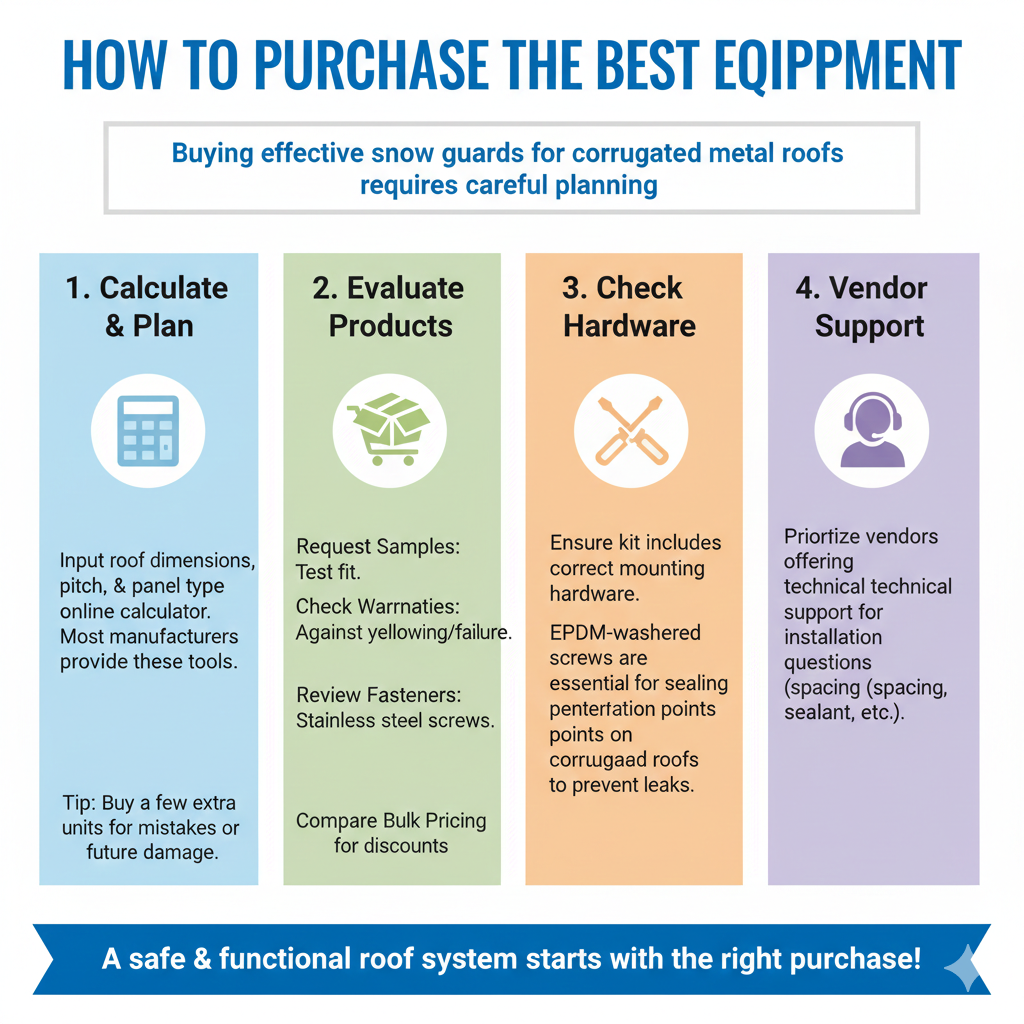
Buying the right equipment involves more than just clicking the cheapest option on a website. To buy effective snow guards for corrugated metal roofs, you need to calculate the exact number of units required for your roof’s surface area. Most manufacturers provide online calculators where you input your roof’s dimensions, pitch, and panel type to get a layout recommendation.
It is generally advisable to purchase a few extra units. Having spare snow guards for corrugated metal roofs on hand is helpful if you make a mistake during installation or if a unit gets damaged in the future. Additionally, ensure you are buying the correct mounting hardware. For corrugated roofs, this usually involves EPDM-washered screws that seal the penetration point to prevent leaks.
- Request Samples: If possible, order a single unit to test the fit against your roof’s corrugation.
- Check Warranties: Look for products that guarantee against yellowing (for clear guards) or structural failure.
- Review Fasteners: Ensure the kit includes long-lasting screws, preferably stainless steel.
- Compare Bulk Pricing: Many suppliers offer discounts when you buy **snow guards for corrugated metal roofs** in bulk.
When evaluating vendors, prioritize those who offer technical support. You might have questions about spacing or sealant during the installation process. A vendor knowledgeable about snow guards for corrugated metal roofs will be able to guide you, ensuring your purchase results in a safe and functional roof system.
Analyzing Costs and Budgeting
The financial aspect is always a major consideration for any home improvement project. Determining the cost of snow guards for corrugated metal roofs involves looking at both the material price and the potential labor costs if you hire a professional. Individual polycarbonate guards can range from a few dollars to over ten dollars per unit, depending on the size and strength.
Rail systems, which are often used as heavy-duty snow guards for corrugated metal roofs, are significantly more expensive. They are sold by the linear foot and require more complex bracket assemblies. However, for roofs with long runs and heavy snow loads, the investment in a rail system is often justified by its superior performance.
Economy Options: Plastic or polycarbonate individual guards are the most budget-friendly.
Mid-Range Options: Powder-coated steel guards offer better durability and aesthetics.
Premium Options: Bar or rail systems provide the highest level of protection but come at a premium price.
You must also factor in the cost of sealants and fasteners. Cheap silicone will degrade under UV exposure, leading to leaks. Investing in high-quality, neutral-cure silicone is essential for installing snow guards for corrugated metal roofs effectively. If you choose to hire a contractor, expect labor costs to match or exceed the material costs, as working on a metal roof is hazardous and skilled labor is at a premium.
While the upfront cost might seem high, compare it to the potential damage. Replacing a gutter system, repairing a crushed car, or dealing with a liability lawsuit from a sliding snow injury is far more expensive than installing snow guards for corrugated metal roofs. Viewed in this light, these guards are a cost-effective insurance policy for your property.
Installation and Cleaning Procedures
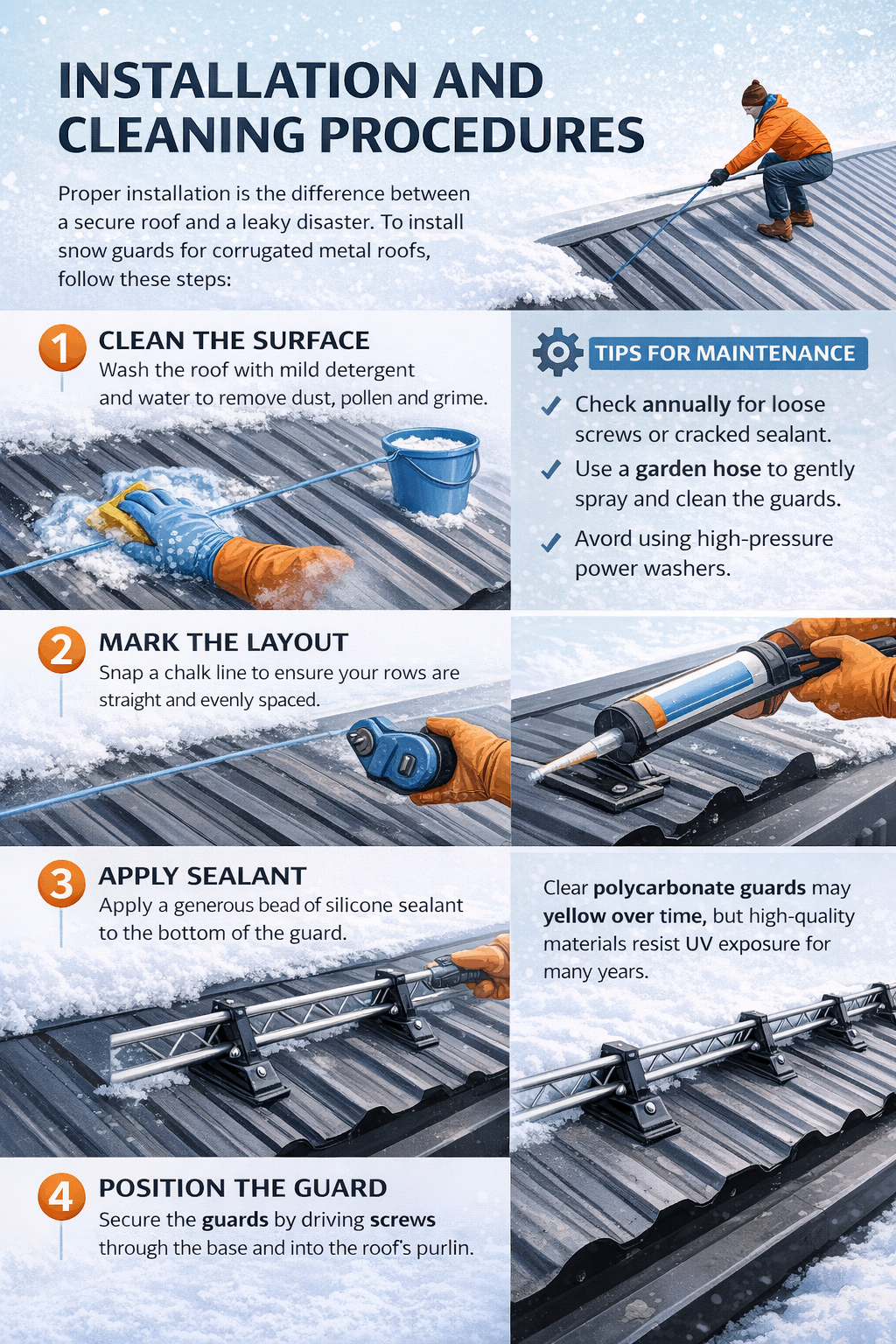
Proper installation is the difference between a secure roof and a leaky disaster. To install snow guards for corrugated metal roofs, you must work on a clean, dry surface. Ideally, installation happens in late summer or early autumn, well before the first snowflake falls. This allows the sealants to cure fully and bond with the metal panel.
Cleaning your roof prior to installation is mandatory. Use a mild detergent and water to remove dust, pollen, and grime. If the surface is dirty, the sealant or adhesive used for the snow guards for corrugated metal roofs will adhere to the dirt rather than the metal, leading to immediate failure.
- Mark the Layout: Use a chalk line to ensure your rows are straight and evenly spaced.
- Apply Sealant: Apply a generous bead of silicone to the bottom of the guard.
- Position the Guard: Place the guard on the pre-marked spot.
- Secure Fasteners: Drive the screws through the guard and into the structural purlin or decking below.
Maintaining these systems is relatively simple. To clean snow guards for corrugated metal roofs, you can usually rely on rain to do most of the work. However, checking them annually is smart. Look for cracked sealant or loose screws. If you notice a guard has shifted, it means the snow load was too heavy for the layout, and you may need to add more rows.
Never use high-pressure power washers directly on the guards, as this can force water under the seals. A gentle spray with a garden hose is sufficient to clean snow guards for corrugated metal roofs and keep them looking good. Clear guards may eventually yellow due to UV exposure, but high-quality polycarbonate is designed to resist this for many years.
Specialized Systems and Components
When discussing the broad category of protection, we must look at specific variations. The market for snow guards for corrugated metal roofs includes several distinct styles, each with its own installation nuances and benefits. Understanding these subsections helps in customizing the solution to your specific building requirements.
Installing Snow Guards for Corrugated Metal Roofs
The actual process of installing snow guards for corrugated metal roofs requires precision. Unlike flat roofs, the corrugation means you have peaks and valleys. Most experts recommend mounting the guards in the low flat area (the valley) of the panel. This is because the valley is structurally closer to the decking, allowing for a firmer attachment.
However, you must be incredibly careful about waterproofing. Every hole you drill is a potential leak. Therefore, when installing snow guards for corrugated metal roofs, using a high-grade sealant is non-negotiable. You must ensure the screw penetrates the wood purlin or solid decking beneath the metal; fastening only to the thin sheet metal will result in the screws ripping out under load.
Metal Roof Snow Clips
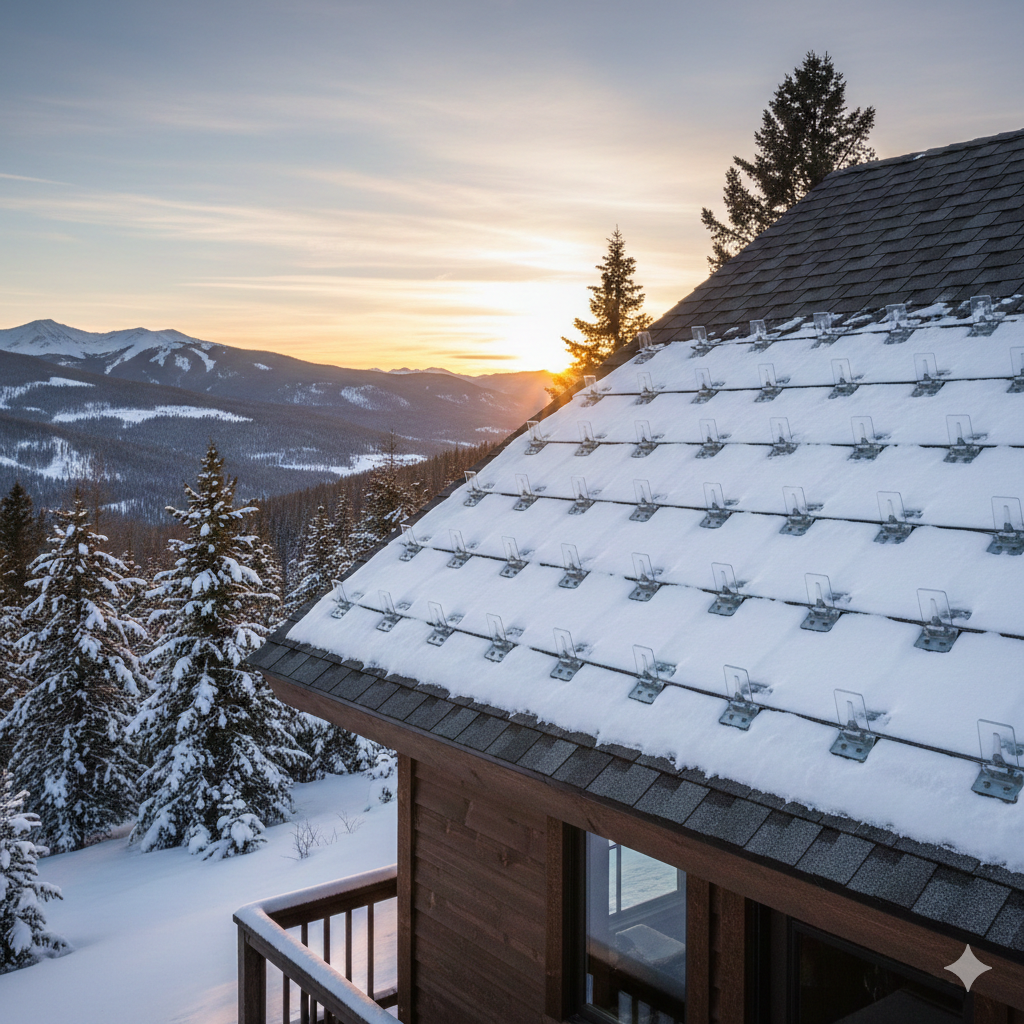
Sometimes referred to as clips or cleats, these are smaller individual units. Metal roof snow clips are a subset of snow guards for corrugated metal roofs often used on lighter duty projects or in areas with moderate snowfall. They are less obtrusive visually than large rails. While effective, they rely heavily on the staggered layout pattern. If you align them in a single straight row, the snow acts as a sheet and can topple them. A staggered pattern breaks the snow field into smaller sections. When choosing clips as your primary snow guards for corrugated metal roofs, ensure they are tall enough to engage the snow layer effectively.
Metal Roof Snow Fence
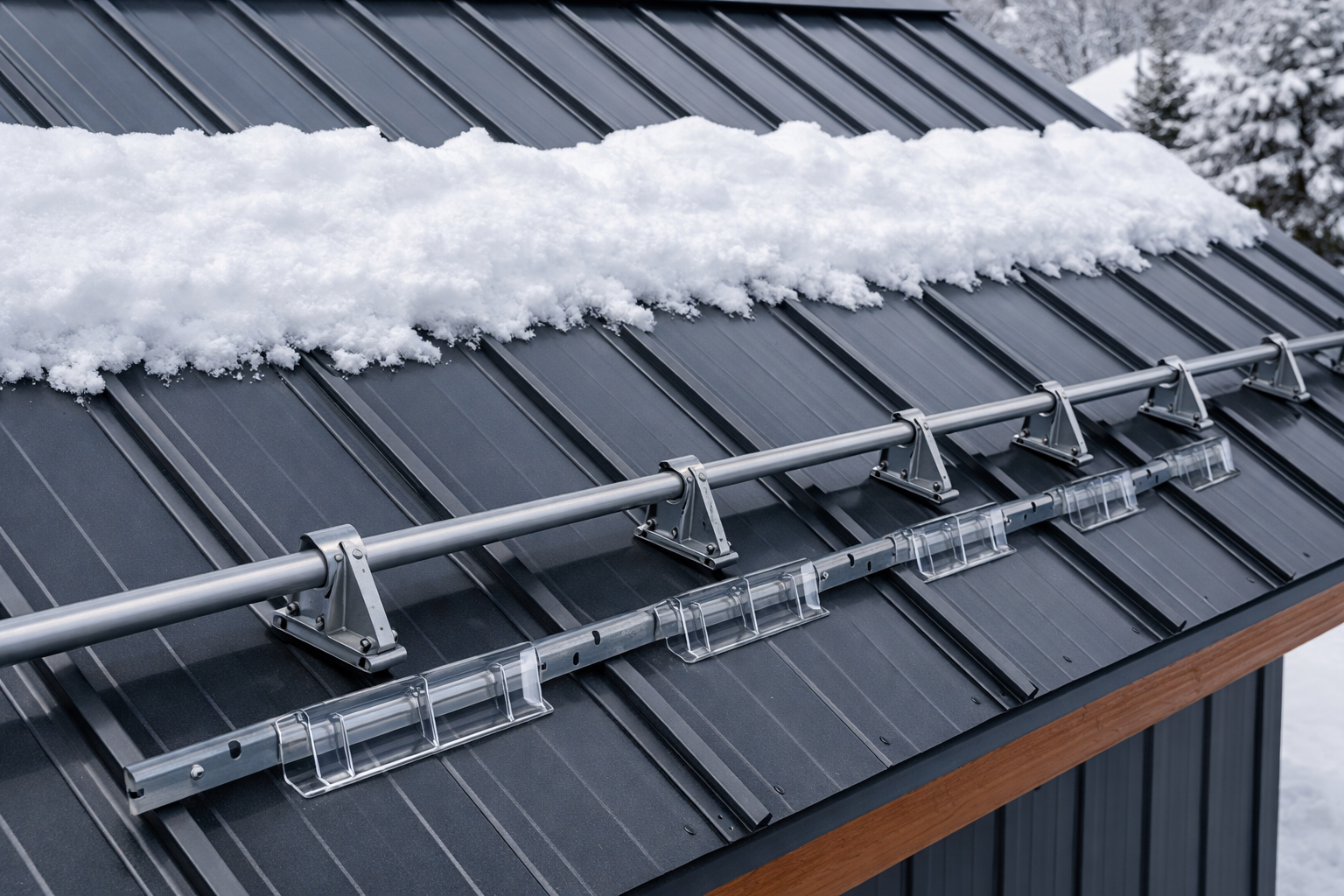
For heavy snow zones, a simple clip isn’t enough. A metal roof snow fence is a continuous barrier system. These are the heavyweights of snow guards for corrugated metal roofs. They consist of brackets mounted to the roof that support horizontal tubes or bars. This creates a literal fence that holds back massive banks of snow. They are ideal for protecting entryways or expensive landscaping. The installation of a fence system is more complex, often requiring clamping to the seams or bolting through the high ribs of the corrugation. While more visible, a fence provides the ultimate peace of mind among all options for snow guards for corrugated metal roofs.
Roof Snow Rails
Similar to fences, roof snow rails offer a sleek, continuous line of protection. Rails are often preferred for their aesthetic appeal on modern architecture. As a variation of snow guards for corrugated metal roofs, rails are incredibly effective at preventing the “curling” of snow that often happens at the eaves. They distribute the load across the entire length of the roof section rather than concentrating it on individual points. When specifying rails, you must calculate the shear strength of the mounting brackets to ensure they can withstand the thrust of the snow pack.
Advantages of Installation
The primary advantage of installing snow guards for corrugated metal roofs is safety. The prevention of “roof avalanches” cannot be overstated. These sudden slides can bury a person, crush a pet, or damage a parked vehicle in seconds. By retaining the snow on the roof, you eliminate this sudden dynamic hazard.
Another significant benefit is the protection of roof penetrations. Plumbing vents, chimneys, and skylights are vulnerable to being sheared off by sliding snow. Snow guards for corrugated metal roofs placed above these penetrations act as a shield, diverting the moving snow around the delicate pipes and flashing. This saves homeowners thousands of dollars in repairs and water damage restoration.
Gutter Preservation: Prevents gutters from being ripped off by sliding ice.
Foundation Protection: stops large piles of snow from accumulating against the foundation, which can cause basement leaks.
Landscape Safety: Protects shrubs and bushes planted near the drip line from being crushed.
Furthermore, retaining snow on the roof can actually add a layer of insulation. While not their primary purpose, the snow held by snow guards for corrugated metal roofs acts as a thermal blanket, potentially reducing heat loss through the roof structure during the coldest days of winter. This can lead to minor energy savings.
Challenges and Considerations
Despite their benefits, there are challenges associated with snow guards for corrugated metal roofs. The most prominent is the risk of improper installation. If the guards are not sealed correctly, they become the source of leaks. Water intrusion in a metal roof system can go undetected for a long time, rotting the substrate before a drip is ever seen inside the house.
Another challenge is aesthetics. Some homeowners feel that rows of guards detract from the clean lines of a metal roof. While manufacturers offer clear or color-matched snow guards for corrugated metal roofs, they are still visible additions. This is a trade-off between visual preference and functional safety that every owner must weigh.
- Cost: High-quality systems can be expensive to purchase and install.
- Maintenance: They require annual inspection to ensure they haven’t loosened.
- Snow Load Calculation: Incorrect calculations can lead to structural damage if the roof trusses cannot support the retained snow weight.
It is crucial to verify that your roof structure was designed to hold the full weight of the snow. In some older buildings, the roof was designed with the assumption that snow would slide off. If you install snow guards for corrugated metal roofs on a structure not built for that static load, you risk a roof collapse. Always consult a structural engineer if you are unsure about your building’s capacity.
Maintenance and Long-Term Care
Once you have installed your snow guards for corrugated metal roofs, the work isn’t entirely done. Winter weather is harsh, and the freeze-thaw cycle exerts tremendous force on all roof components. An annual inspection, preferably in the fall, is necessary to ensure the system remains secure.
Check the torque on the screws. The expansion and contraction of the metal panels can cause fasteners to back out slightly over time. Tightening these ensures that your snow guards for corrugated metal roofs remain firmly attached. If you find a loose guard, remove it, apply fresh sealant, and re-fasten it, possibly using a slightly larger screw if the hole has stripped.
Inspect Sealants: Look for cracking or peeling silicone around the base.
Check for Damage: Ensure no guards have been cracked by impact from ice.
Clear Debris: Remove leaves and pine needles that may get stuck behind the guards.
If you live in an area with extreme snowfall, you might need to rake the roof occasionally, even with guards. Snow guards for corrugated metal roofs are designed to hold snow, but if the accumulation exceeds the design load of the roof, removing the top layers of snow is a safety precaution for the building itself.
Layout Strategies for Maximum Efficiency
The layout of your guards is just as important as the product itself. A common mistake is installing just one row of snow guards for corrugated metal roofs near the eaves. On a long rafter run, this creates a massive amount of pressure on that single row, often leading to failure.
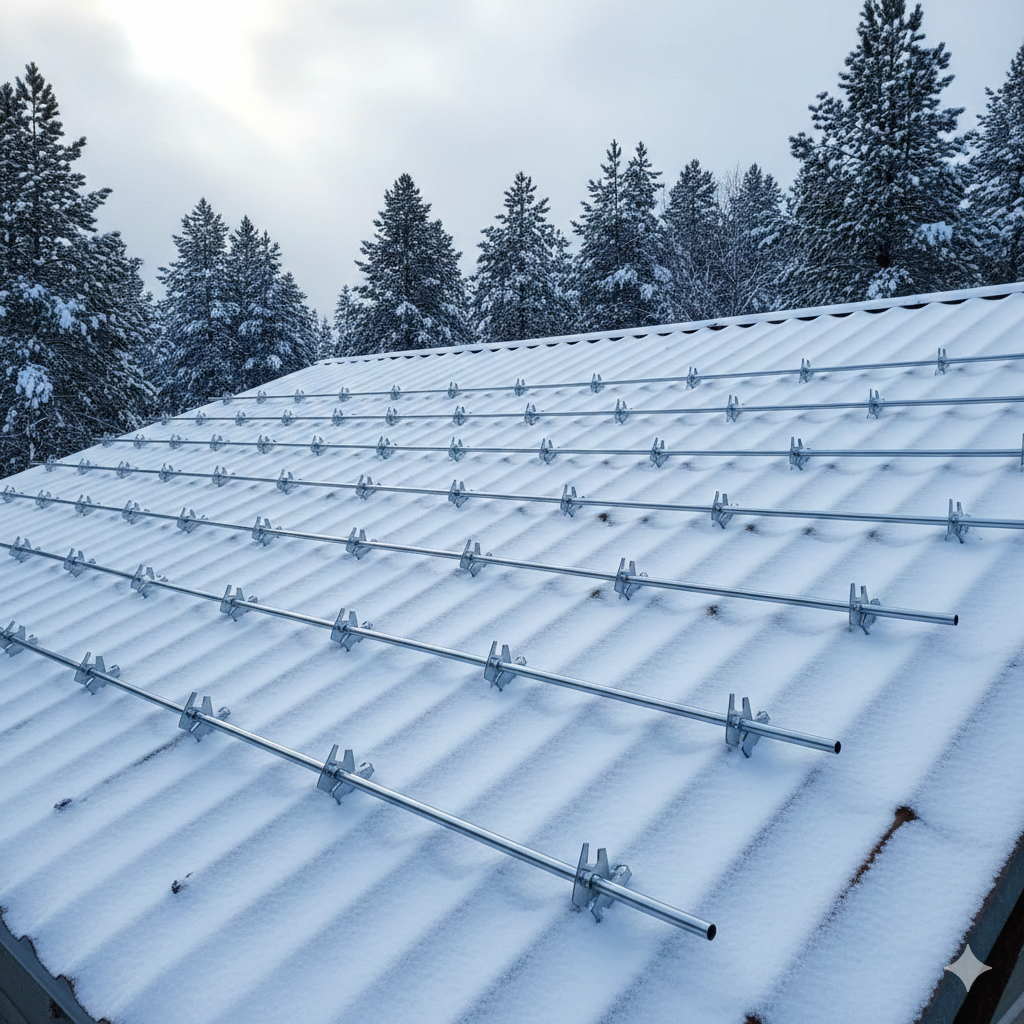
The most effective strategy involves multiple rows spaced evenly up the slope of the roof. This distribution holds the snow slab in several places, reducing the compressive force on any single row of guards. For steep roofs, you may need rows of snow guards for corrugated metal roofs every four to six feet vertically.
1. Eave Row: Place the first row about 12 inches up from the gutter line.
2. Second Row: Place the next row halfway up the roof slope.
3. Staggering: Offset the second row so the guards are not directly above the ones below.
This staggered approach ensures that if a small amount of snow slips past the top row of snow guards for corrugated metal roofs, it will be caught by the row below. It effectively breaks up the snow field into manageable sections that can melt safely.
Why Professional Advice Matters
While DIY installation is possible, the complexity of calculating loads and layouts often warrants professional advice. Roofing contractors who specialize in metal work deal with snow guards for corrugated metal roofs daily. They understand the nuances of different metal gauges and how they interact with various guard materials.
A professional can also help you navigate warranties. Many roofing material warranties are voided if improper accessories are installed. By using a certified installer for your snow guards for corrugated metal roofs, you protect the warranty of your expensive metal roof. They will know which fasteners are approved and which sealants are compatible with the paint finish on your panels.
Furthermore, professionals have the safety equipment required to work on icy, steep metal roofs. Walking on corrugated metal is difficult; walking on it when it is wet or icy is treacherous. Hiring a pro to install your snow guards for corrugated metal roofs keeps you safe on the ground while ensuring the job is done to code.
FAQ : Snow guards for corrugated metal roofs
Do snow guards for corrugated metal roofs cause leaks?
No, not if they are installed correctly. Using high-quality fasteners with EPDM washers and proper sealant prevents leaks. However, poor installation is a common cause of water intrusion.
Can I glue snow guards for corrugated metal roofs instead of screwing them?
Adhesive-mounted guards exist, but they are generally less reliable on corrugated surfaces due to the limited contact area. Mechanically attached guards are preferred for corrugation.
How many snow guards for corrugated metal roofs do I need?
The number depends on your roof’s pitch, the length of the run, and your local snow load. A single row is rarely enough; most roofs require a distributed pattern.
Are plastic or metal snow guards for corrugated metal roofs better?
Both have pros and cons. Polycarbonate (plastic) is less visible and non-corrosive. Metal is stronger and can be color-matched, but you must ensure compatibility to avoid galvanic corrosion.
Can I install snow guards for corrugated metal roofs in the winter?
It is not recommended. Sealants do not cure properly in freezing temperatures, and working on an icy roof is dangerous. Late summer or fall is the ideal time.
Conclusion
Investing in snow guards for corrugated metal roofs is a decision that prioritizes safety and property preservation. These devices are essential for anyone living in a climate where snow accumulation is a reality. They prevent the dangerous, uncontrolled slide of heavy ice sheets, protecting everything from your gutters to your loved ones. By understanding the different types of systems, from simple clips to robust rail fences, you can choose the solution that best fits your budget and aesthetic needs.
Whether you choose to tackle the project yourself or hire a professional, the key lies in proper planning and correct installation. Ensuring that you have the right density of guards and that they are securely fastened will provide peace of mind throughout the winter. Do not wait for an accident to happen. Evaluate your home’s needs and install snow guards for corrugated metal roofs to ensure a safe, damage-free winter season for your home and family. The protection they offer far outweighs the initial cost, making them a smart addition to any metal roofing system.
Other Resources
Metal Roof Snow Guards – Manufacturer website providing snow guard systems designed for metal roofing applications.
SnoBlox-SnoJax – Product collection featuring snow guards specifically engineered for metal roofs.
Snow Guard Depot – CorGard – Product page detailing CorGard snow retention systems for metal roofing.
Other Helpful Articles
Snow Guards for Shingle Roofs – Article explaining snow guard options suitable for asphalt shingle roofing systems.
Snow Guards for Standing Seam Steel Roof – Guide outlining snow guard systems designed for standing seam steel roofs.
How to Install Snow Guards on Metal Roof – Step-by-step overview of installing snow guards on metal roofing.