
Snow Guards for Shingle Roofs: Smart Solutions
Snow Guards for Shingle Roofs: Critical Tips
Winter brings picturesque snowfall, but it also creates serious hazards for homeowners with sloped roofs. Heavy snow accumulation on your roof can suddenly slide off in dangerous sheets, damaging property, injuring people, and destroying landscaping below. This is where snow guards for shingle roofs become essential protective devices. These simple yet effective roof accessories prevent catastrophic snow avalanches while allowing controlled melting and drainage. Understanding snow guards for shingle roofs helps you protect your investment, ensure safety, and maintain your home’s structural integrity throughout harsh winter months.
Whether you’re dealing with occasional snowfall or living in regions with heavy winter precipitation, snow guards for shingle roofs offer peace of mind and practical protection. This comprehensive guide explores everything you need to know about selecting, installing, and maintaining these critical roofing components. From understanding different types to calculating costs and mastering installation techniques, you’ll gain expert knowledge to make informed decisions about protecting your shingle roof from winter’s challenges.
What Are Snow Guards for Shingle Roofs
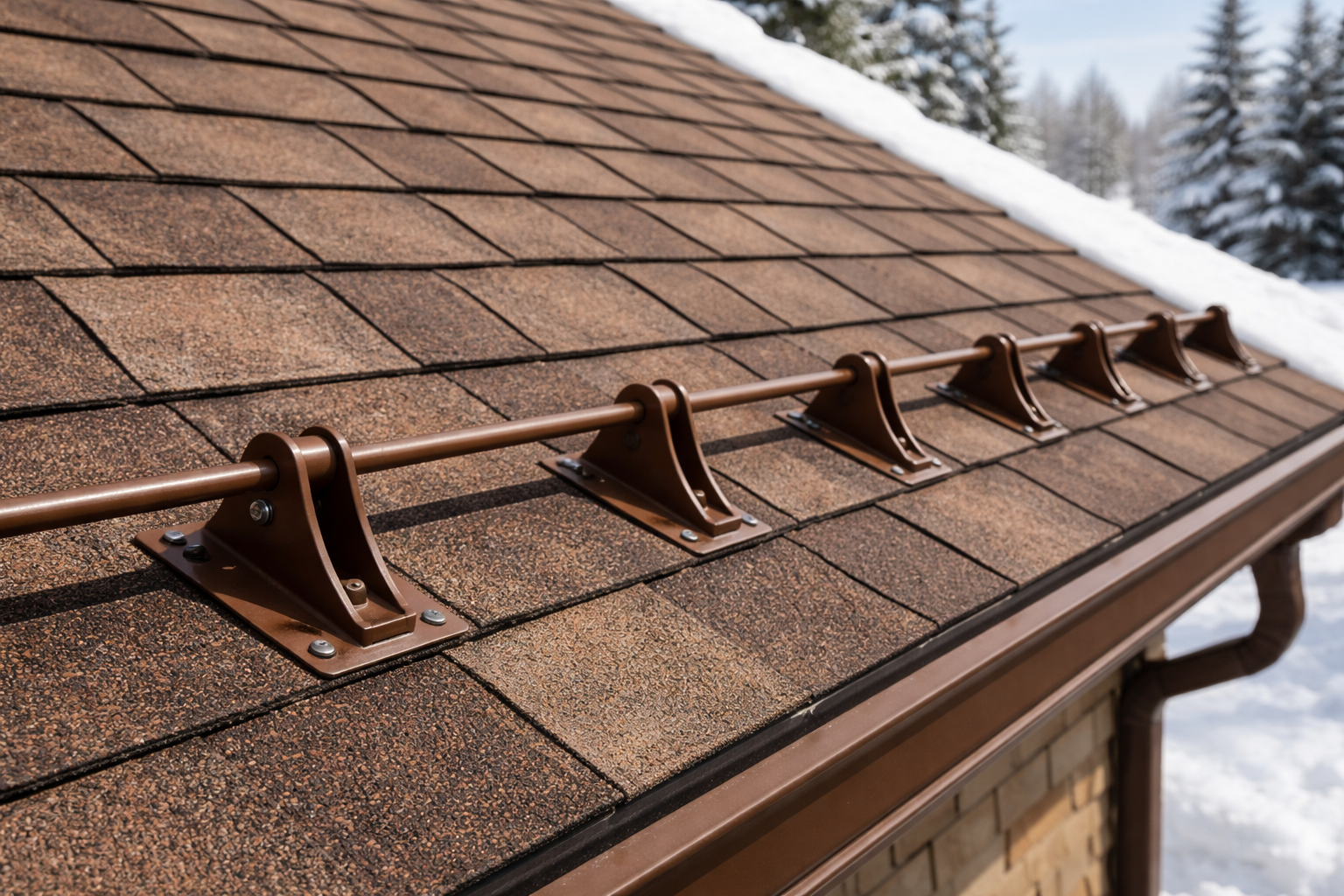
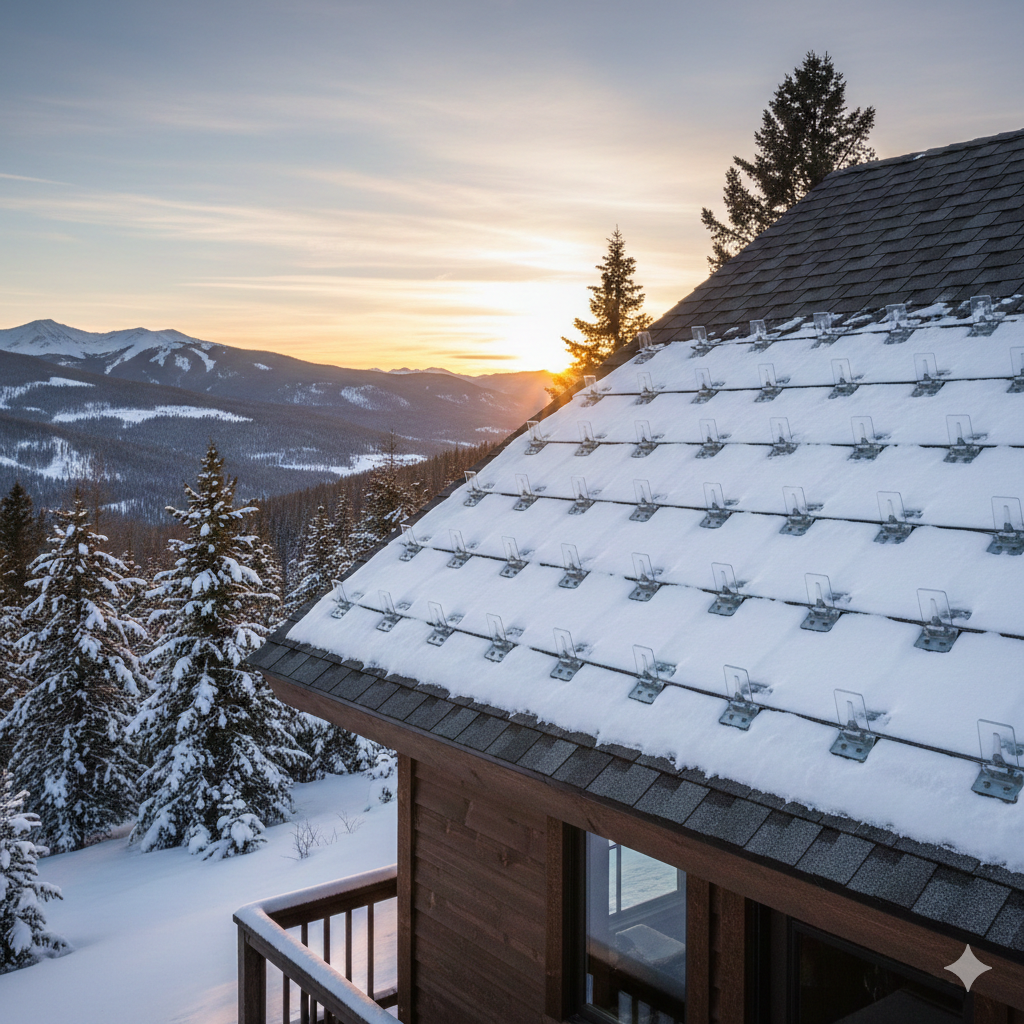
Snow guards for shingle roofs are specialized devices installed on sloped roofing systems to prevent snow and ice from sliding off in dangerous sheets. These protective barriers work by creating friction points that hold snow in place, allowing it to melt gradually rather than avalanching suddenly. The devices come in various styles including pad-style guards, rail systems, and individual brackets designed specifically for asphalt shingle applications.
The primary function of snow guards for shingle roofs involves breaking up snow loads into smaller sections that can safely release or melt without causing damage. Most snow guards attach directly to the shingle surface using adhesive, mechanical fasteners, or a combination of both methods. They’re strategically positioned across the roof in patterns that distribute snow retention forces evenly.
Understanding the Four Main Types
1. What Snow Guards for Shingle Roof Systems Accomplish
Traditional snow guards for shingle roofs create individual stopping points that interrupt sliding snow. These compact devices typically measure between two to six inches in height and install in staggered rows across vulnerable roof sections. They excel at handling moderate snow loads while maintaining your roof’s aesthetic appearance. The individual guard approach allows customization based on your specific roof pitch, climate conditions, and architectural style.
2. Roof Snow and Ice Guard Systems for Shingle Roofs
Comprehensive roof snow and ice guard systems for shingle roofs combine multiple protection elements including gutter guards, heating cables, and retention devices. These integrated solutions address both snow accumulation and ice dam formation simultaneously. They’re particularly effective in regions experiencing freeze-thaw cycles that create dangerous ice buildup along roof edges and in valleys.
3. Snow Guards for Asphalt Shingles
Snow guards for asphalt shingles feature specialized attachment methods designed to bond effectively with composite roofing materials without causing damage. These guards often use high-strength adhesive pads rated for extreme temperature variations. Since asphalt shingles represent the most common residential roofing material, manufacturers have developed extensive product lines specifically engineered for optimal compatibility and longevity.
4. Roof Snow Guard Systems for Shingle Roofs
Complete roof snow guard systems for shingle roofs incorporate continuous rail designs that span entire roof sections. These systems use vertical brackets attached to the roof surface with horizontal rails connecting them. Rail systems provide maximum snow retention capacity and work exceptionally well on roofs with steep pitches or in areas receiving heavy snowfall. They create a fence-like barrier that prevents any snow from sliding past the protected zone.
How Snow Guards for Shingle Roofs Work
The engineering behind snow guards for shingle roofs relies on creating sufficient friction to counteract gravitational pull on snow masses. When snow accumulates on a sloped roof, gravity naturally pulls it downward. Snow guards interrupt this movement by providing obstacles that increase resistance. The guards essentially “catch” the snow, preventing it from gaining momentum and sliding off in one dangerous mass.
Snow guards for shingle roofs distribute the weight of retained snow across multiple attachment points rather than concentrating stress in single locations. This distributed load approach prevents roof damage while maintaining structural integrity. As temperatures rise, trapped snow melts gradually, with water draining through normal channels rather than falling as heavy chunks or ice sheets.
The effectiveness of snow guards for shingle roofs depends heavily on proper spacing and placement. Engineers calculate guard positions based on roof pitch, local snow loads, and material coefficients of friction. Steeper roofs require more guards positioned closer together, while gentler slopes need fewer devices with wider spacing.
How to Find Quality Snow Guards for Shingle Roofs
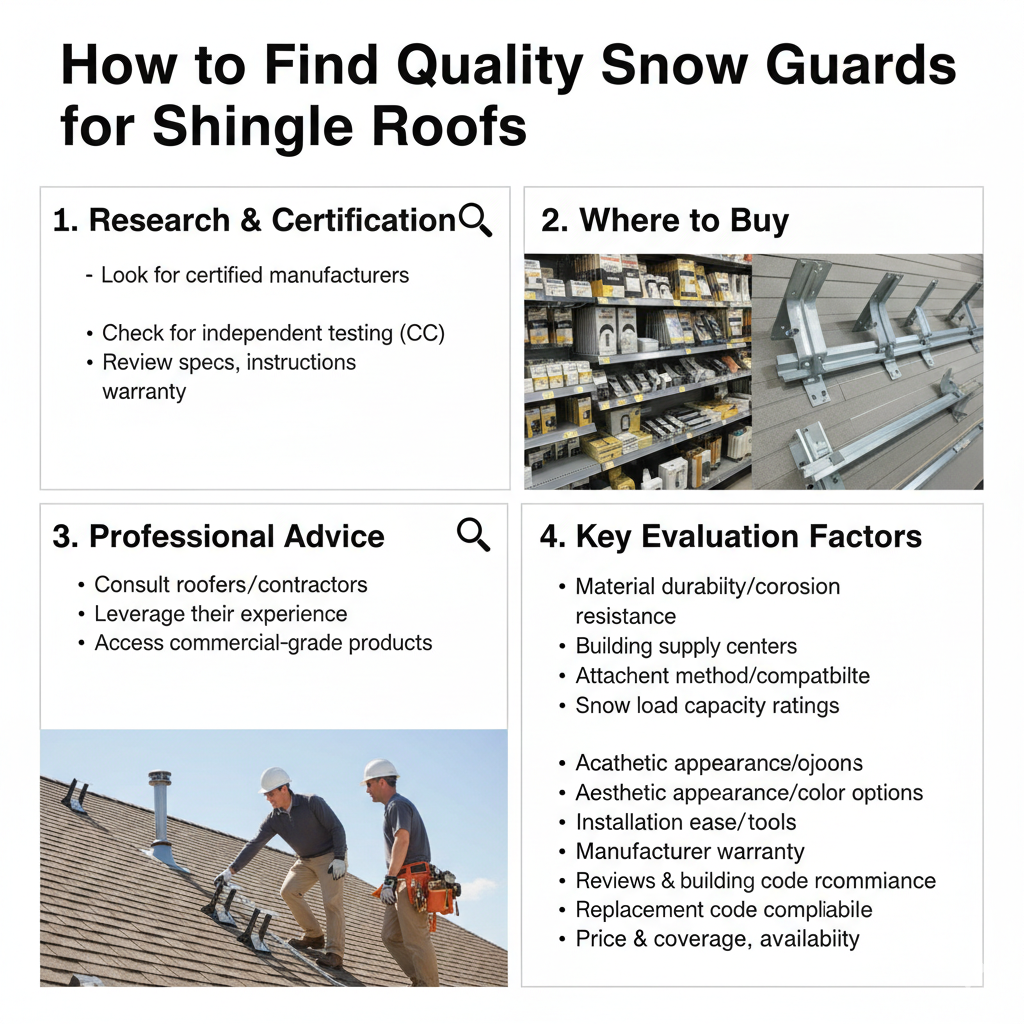
Finding reliable snow guards for shingle roofs starts with researching manufacturers who specialize in roofing safety products. Look for companies offering products tested and certified by independent organizations like the International Code Council or equivalent standards bodies. Quality manufacturers provide detailed engineering specifications, installation instructions, and warranty coverage for their products.
Local roofing supply stores typically stock several brands of snow guards for shingle roofs suitable for your regional climate. Building supply centers often display sample guards and can provide expert advice about which products work best for specific roof configurations. Online retailers offer broader selection but require careful attention to product specifications and compatibility with asphalt shingles.
Professional roofers and contractors represent excellent resources for identifying superior snow guards for shingle roofs. These experts have hands-on experience with various products and can recommend options based on real-world performance. Many contractors maintain relationships with distributors and can source commercial-grade products not available through retail channels.
Consider these key factors when evaluating snow guards for shingle roofs:
-
Material durability and corrosion resistance
-
Attachment method compatibility with asphalt shingles
-
Snow load capacity ratings
-
Aesthetic appearance and color matching options
-
Installation difficulty and required tools
-
Manufacturer warranty terms and duration
-
Customer reviews and professional recommendations
-
Local building code compliance
-
Price per unit versus coverage area
-
Availability of replacement parts
How to Buy Snow Guards for Shingle Roofs
Purchasing snow guards for shingle roofs requires accurate measurements and calculations to determine the quantity needed. Start by measuring your roof’s dimensions including total square footage, pitch angle, and length of eaves requiring protection. Most manufacturers provide online calculators that estimate the number of guards needed based on these measurements and your geographic location’s typical snow loads.
When buying snow guards for shingle roofs, always purchase 10-15% more units than calculated requirements. This buffer accounts for installation errors, damaged units, and future repairs or additions. Buying in bulk often reduces per-unit costs significantly compared to purchasing individual guards.
Verify that chosen snow guards for shingle roofs meet local building codes before purchasing. Some jurisdictions require specific snow retention capacities or installation patterns. Your local building department can provide code requirements and may need to approve your product selection before installation.
Compare pricing across multiple suppliers for identical snow guards for shingle roofs. Prices vary considerably between big-box stores, specialty roofing suppliers, and online retailers. Factor in shipping costs for online orders, as snow guards are relatively heavy and may incur substantial freight charges.
Consider purchasing complete installation kits that include:
-
Appropriate number of snow guards
-
Adhesive or sealant rated for roofing applications
-
Mechanical fasteners if required
-
Installation template or spacing guide
-
Detailed instruction manual
-
Touch-up paint for fastener heads
-
Manufacturer warranty registration card
How Much Do Snow Guards for Shingle Roofs Cost
The cost of snow guards for shingle roofs varies widely based on style, material, brand, and quantity purchased. Individual pad-style guards typically range from $3 to $15 per unit for basic models, while premium designs with enhanced aesthetics cost $15 to $40 each. Rail system components generally price higher, with brackets costing $8 to $25 each and rails running $20 to $60 per linear foot.
Material composition significantly affects pricing for snow guards for shingle roofs. Polycarbonate plastic guards represent the most economical option at the lower end of the price spectrum. Aluminum guards occupy the mid-range price category, offering good durability at moderate cost. Stainless steel and copper guards command premium prices but provide exceptional longevity and corrosion resistance.
A typical residential roof installation of snow guards for shingle roofs covering 1,500 to 2,000 square feet requires 40 to 80 individual guards or 20 to 40 linear feet of rail system. Material costs for this project range from approximately $300 to $2,400 depending on product selection. Add installation supplies including adhesive, sealant, and fasteners for an additional $50 to $150.
Professional installation of snow guards for shingle roofs adds substantial labor costs. Roofing contractors typically charge $200 to $500 for basic installations on easily accessible single-story homes. Complex installations on steep roofs or multi-story buildings can cost $800 to $2,500 or more. Many homeowners choose DIY installation to save these labor expenses.
Budget considerations for snow guards for shingle roofs should include:
-
Initial product purchase costs
-
Installation supplies and tools
-
Professional labor if not DIY
-
Potential roof preparation or repairs
-
Building permit fees where required
-
Long-term maintenance expenses
-
Energy savings from reduced ice dam damage
-
Insurance premium reductions in some cases
How to Install Snow Guards for Shingle Roofs
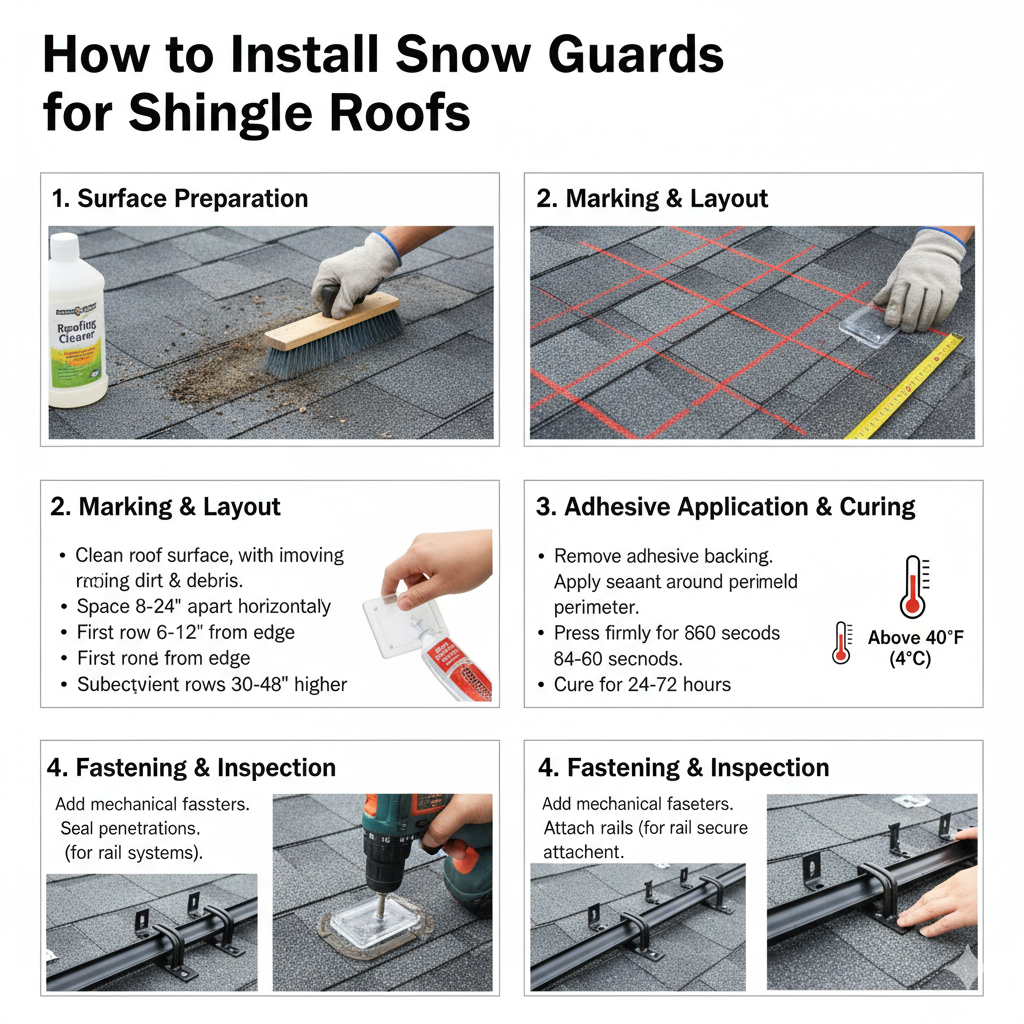
Installing snow guards for shingle roofs requires careful planning, proper preparation, and attention to detail. Begin by cleaning the roof surface thoroughly, removing all dirt, debris, moss, and loose granules from installation areas. The shingle surface must be completely dry and free from oils or contaminants that could interfere with adhesive bonding.
Mark installation locations for snow guards for shingle roofs using a chalk line and measuring tape. Most manufacturers recommend spacing guards 8 to 24 inches apart horizontally and installing multiple rows up the roof slope. The first row should be positioned 6 to 12 inches above the roof edge, with subsequent rows spaced 30 to 48 inches higher depending on roof pitch.
Temperature conditions critically affect adhesive performance when installing snow guards for shingle roofs. Most products require ambient temperatures above 40°F (4°C) for proper bonding. Schedule installation during mild weather and allow adhesive to cure for 24 to 72 hours before exposing guards to stress from snow loads.
Follow this step-by-step process for installing pad-style snow guards for shingle roofs:
-
Clean and dry the shingle surface at each marked location
-
Remove protective backing from adhesive pad
-
Apply additional roofing sealant around adhesive perimeter if recommended
-
Firmly press guard onto shingle surface for 30-60 seconds
-
Apply even pressure across entire base to ensure complete contact
-
Add mechanical fasteners through pre-drilled holes if required
-
Seal fastener penetrations with roofing cement
-
Allow adhesive to cure according to manufacturer specifications
-
Inspect all guards for secure attachment before winter season
-
Test guards by applying gentle upward pressure
Rail system installation for snow guards for shingle roofs involves additional steps including bracket attachment and rail mounting. Brackets must be attached with both adhesive and mechanical fasteners to handle the higher loads imposed on rail systems. Rails then snap or bolt into bracket tops, creating continuous snow retention barriers.
How to Clean and Maintain Snow Guards for Shingle Roofs
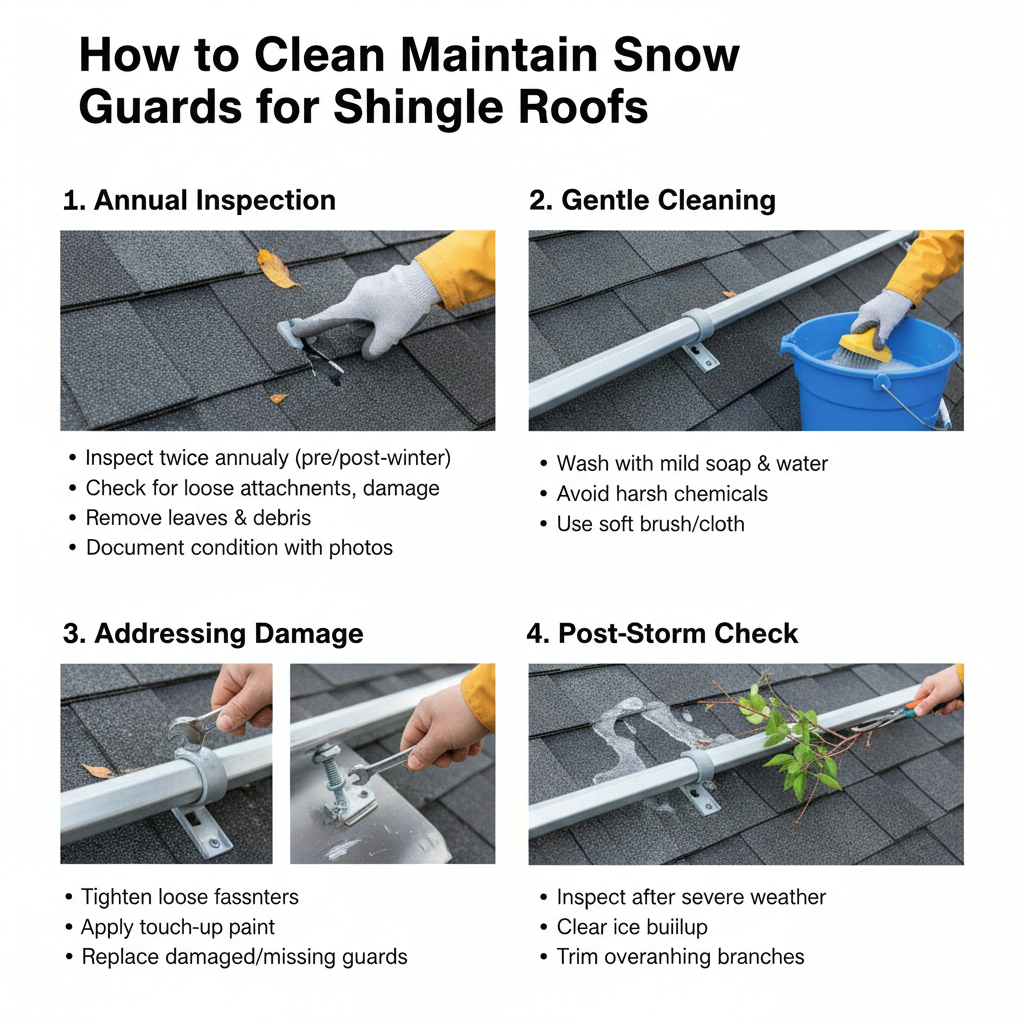
Regular maintenance extends the lifespan and effectiveness of snow guards for shingle roofs significantly. Inspect guards twice annually—once before winter and again after spring snowmelt. Check for loose attachments, damaged components, corrosion, and debris accumulation. Early detection of problems prevents guard failure during critical winter months.
Cleaning snow guards for shingle roofs involves gentle washing with mild soap and water to remove dirt, algae, and environmental contaminants. Avoid harsh chemicals or abrasive cleaners that might damage guard surfaces or degrade adhesive bonds. Use a soft brush or cloth to prevent scratching plastic or painted metal finishes.
After severe winter weather, inspect snow guards for shingle roofs for any damage caused by ice accumulation or extreme wind. Look for bent brackets, cracked pads, or separating adhesive. Address any issues immediately to ensure guards remain functional for the remainder of winter and future seasons.
Maintenance tasks for snow guards for shingle roofs include:
-
Removing accumulated leaves and debris between guards
-
Checking adhesive bond integrity around guard bases
-
Tightening any loose mechanical fasteners
-
Applying touch-up paint to prevent corrosion on metal guards
-
Replacing damaged or missing guards promptly
-
Clearing ice buildup that could stress guard attachments
-
Trimming overhanging tree branches that drop debris
-
Documenting guard condition with photos for future reference
Advantages of Installing Snow Guards for Shingle Roofs
The primary advantage of snow guards for shingle roofs centers on safety protection. These devices prevent dangerous snow avalanches that can injure people, damage vehicles, destroy landscaping, and break gutters. A single snow slide from a two-story roof can weigh several thousand pounds, creating serious liability concerns without proper retention systems.
Property protection represents another crucial benefit of snow guards for shingle roofs. Sliding snow frequently tears off gutters, downspouts, and roof edge trim. It damages siding, breaks windows, crushes shrubs, and cracks walkways. The cost of repairing this damage typically exceeds snow guard installation expenses many times over.
Insurance benefits sometimes accompany snow guards for shingle roofs installations. Some insurance companies offer premium reductions for homes equipped with approved snow retention systems. Even without direct premium savings, guards reduce claim frequency and may prevent policy cancellations in areas with significant snow liability risks.
Energy efficiency improvements occur with properly installed snow guards for shingle roofs. By preventing snow from sliding off and exposing bare roof sections, guards maintain insulating snow coverage that reduces heat loss. This effect particularly benefits homes in extremely cold climates where heavy snow loads persist throughout winter.
Additional advantages include:
-
Extended roof lifespan by reducing mechanical stress
-
Preserved roof warranties that may require snow retention
-
Protected investment in solar panels or other roof-mounted equipment
-
Enhanced property aesthetics with color-matched guard options
-
Increased home resale value in snow-prone regions
-
Reduced ice dam formation in many configurations
-
Protection for outdoor furniture and equipment near eaves
-
Peace of mind during heavy snowfall events
-
Compliance with building codes in some jurisdictions
-
Minimal ongoing maintenance requirements
Challenges and Considerations for Snow Guards for Shingle Roofs
Despite their benefits, snow guards for shingle roofs present several challenges requiring consideration. Installation difficulty varies considerably based on roof pitch, height, and accessibility. Steep roofs above second stories require professional installation with proper safety equipment, increasing total project costs substantially. DIY installation on such roofs risks serious injury and should be avoided.
Aesthetic concerns affect some homeowners’ decisions about snow guards for shingle roofs. While many products offer color-matching and low-profile designs, guards remain visible from ground level. Homes with architectural styles emphasizing clean rooflines may find guards visually disruptive. However, manufacturers increasingly offer attractive designs that blend well with various shingle colors and styles.
Potential roof damage during installation represents a significant risk with snow guards for shingle roofs. Improperly installed guards requiring mechanical fasteners create penetrations that can leak if not sealed correctly. Over-tightened fasteners may crack shingles, while inadequate adhesive preparation leads to premature guard failure and possible shingle damage during detachment.
Climate limitations affect snow guards for shingle roofs effectiveness. Regions with minimal snowfall may not justify installation costs, while areas with extreme snow loads might require expensive rail systems beyond many budgets. Guards designed for moderate climates fail when subjected to unusually heavy snow, potentially causing more damage than prevented.
Other challenges include:
-
Warranty concerns with some shingle manufacturers
-
Difficulty matching guard colors to aged or faded shingles
-
Potential for ice buildup behind improperly spaced guards
-
Maintenance requirements on tall or complex roof designs
-
Product availability variations by region
-
Code compliance complexity in some jurisdictions
-
Initial cost barriers for comprehensive coverage
-
Performance degradation over time with some materials
-
Difficulty removing guards if desired later
-
Varying effectiveness based on roof pitch and orientation
Selecting the Right Snow Guards for Shingle Roofs
Choosing appropriate snow guards for shingle roofs depends on evaluating multiple factors specific to your home and climate. Roof pitch represents the most critical consideration—steeper roofs require guards with higher retention capacity positioned closer together. Measure your roof pitch using a level and measuring tape, or reference your home’s construction documents for accurate specifications.
Local snow loads determine the strength and quantity of snow guards for shingle roofs needed. Building departments provide design snow load data based on historical weather patterns. Areas receiving occasional light snow require minimal guard installations, while regions with heavy, persistent snowfall demand comprehensive coverage with commercial-grade products.
Shingle type and condition affect compatibility with snow guards for shingle roofs. New architectural shingles with thick profiles and strong adhesive strips provide better bases for guard attachment than old, brittle three-tab shingles. Heavily weathered roofs may need replacement or repairs before guards can be safely installed.
Budget constraints influence product selection for snow guards for shingle roofs significantly. While premium stainless steel or copper guards offer superior longevity, quality aluminum or polycarbonate alternatives provide excellent performance at fraction of the cost. Prioritize coverage area over luxury materials to maximize protection within budget limits.
Selection criteria should include:
-
Roof pitch and slope configuration
-
Expected snow load based on local climate
-
Shingle type, age, and overall condition
-
Available budget for materials and installation
-
Aesthetic preferences and color matching
-
DIY installation capability versus professional needs
-
Local building code requirements
-
Manufacturer warranty terms
-
Long-term maintenance commitment
-
Compatibility with existing roof features
Frequently Asked Questions About Snow Guards for Shingle Roofs
Do snow guards for shingle roofs work on all roof pitches?
Snow guards for shingle roofs work on most residential roof pitches ranging from 4:12 to 12:12 slopes. Very low-pitch roofs below 3:12 typically don’t generate sufficient sliding force to require guards, while extremely steep roofs above 12:12 may need specialized systems. Effectiveness depends on proper guard selection and spacing for your specific pitch.
Can I install snow guards for shingle roofs myself?
Homeowners with basic DIY skills can install snow guards for shingle roofs on accessible single-story roofs with moderate pitches. However, steep roofs, multi-story homes, or situations requiring complex spacing calculations should involve professional roofers. Safety equipment including harnesses and proper ladder setup are essential for any roof work.
How long do snow guards for shingle roofs last?
Quality snow guards for shingle roofs typically last 15 to 25 years when properly installed and maintained. Plastic guards may degrade faster in intense UV exposure, while metal guards can last 30+ years. Lifespan depends on material quality, climate conditions, and installation method. Adhesive bonds may fail before the guards themselves deteriorate.
Will snow guards for shingle roofs damage my roof?
Properly installed snow guards for shingle roofs should not damage roofing when using appropriate products and following manufacturer instructions. Damage risks include improper fastener installation creating leaks, excessive adhesive degrading shingle surfaces, or guard removal tearing shingles. Using recommended products and techniques prevents these issues.
How many snow guards for shingle roofs do I need?
The quantity of snow guards for shingle roofs required depends on roof size, pitch, and local snow loads. A typical 2,000-square-foot roof might need 60 to 100 individual guards or 30 to 50 linear feet of rail system. Manufacturers provide calculation tools, but consulting a roofing professional ensures accurate coverage for your specific situation.
Do snow guards for shingle roofs prevent ice dams?
Snow guards for shingle roofs primarily prevent snow avalanches rather than ice dams, though they may reduce ice dam formation indirectly by maintaining snow coverage that insulates roofs. Dedicated ice dam prevention requires adequate attic insulation, ventilation, and possibly heating cables. Snow guards complement but don’t replace comprehensive ice dam strategies.
Can snow guards for shingle roofs be installed on existing roofs?
Yes, snow guards for shingle roofs can be retrofitted to existing roofs in good condition. The shingles must be structurally sound with intact surfaces for adhesive bonding. Aged roofs approaching replacement may not provide adequate attachment surfaces, and installing guards could accelerate deterioration. Assess roof condition before proceeding with guard installation.
What colors are available for snow guards for shingle roofs?
Most manufacturers offer snow guards for shingle roofs in standard colors including black, brown, gray, white, and bronze to match common shingle colors. Premium products provide extended color selections or custom matching services. Metal guards can be painted to match specific shingle tones, though paint maintenance becomes an additional consideration.
Are snow guards for shingle roofs required by building codes?
Building code requirements for snow guards for shingle roofs vary by jurisdiction. Some areas mandate snow retention systems on roofs above entryways, walkways, or neighboring properties. Other regions have no specific requirements. Check with your local building department to determine if guards are mandatory for your location and situation.
Can snow guards for shingle roofs be removed later?
Snow guards for shingle roofs can be removed, though the process may damage shingles depending on attachment method. Adhesive-mounted guards often leave residue or tear shingle surfaces when removed. Mechanically fastened guards leave holes requiring sealing. If removal is anticipated, choose products specifically designed for temporary or seasonal installation.
Conclusion
Snow guards for shingle roofs provide essential protection against winter hazards while preserving your home’s value and structural integrity. These relatively simple devices prevent dangerous snow avalanches, reduce property damage, and offer peace of mind throughout harsh winter months. Understanding the various types of snow guards for shingle roofs, their installation requirements, costs, and maintenance needs empowers you to make informed decisions about protecting your investment.
Whether selecting individual pad-style guards for moderate climates or comprehensive rail systems for heavy snow regions, proper product choice and installation ensure optimal performance. While challenges exist including installation difficulty and initial costs, the safety benefits and property protection typically justify the investment many times over. Snow guards for shingle roofs represent a proactive approach to winter roof management that pays dividends in reduced damage, lower maintenance costs, and enhanced safety for everyone around your home.
Other Resources
Rocky Mountain Snow Guards – Product page detailing the ST9 snow guard designed for asphalt shingle roofs.
Snow Guard Depot – Product collection showcasing various snow guard types for different roofing systems.
Gutter Supply – Category page listing snow guards specifically for asphalt shingle roofs.
Other Helpful Articles
Hawaiian Blue Metal Roof – Article explaining features and applications of Hawaiian Blue metal roofing.
Rolled Roofing vs Shingles Critical Cost – Cost-focused comparison of rolled roofing and asphalt shingles.
Roof Snow Melt Systems – Guide describing roof snow melt systems and how they help prevent ice buildup.