Stainless Steel Roofing Screws: Ultimate Guide
Stainless Steel Roofing Screws: Ultimate Guide
Choosing the right fasteners for your roofing project can make the difference between a roof that lasts decades and one that requires constant maintenance. Stainless steel roofing screws have become the gold standard in the roofing industry due to their exceptional durability and corrosion resistance. Whether you’re a professional contractor or a DIY enthusiast, understanding these specialized fasteners is essential for any metal roofing installation.
Stainless steel roofing screws offer superior performance compared to traditional carbon steel alternatives. They withstand harsh weather conditions, resist rust formation, and maintain structural integrity for years. This comprehensive guide explores everything you need to know about stainless steel roofing screws, from basic definitions to advanced installation techniques.
The roofing industry has evolved significantly, and fastener technology has kept pace with these changes. Modern stainless steel roofing screws feature advanced designs that ensure watertight seals and reliable connections. Understanding their properties, applications, and proper usage will help you make informed decisions for your roofing projects.
What Are Stainless Steel Roofing Screws
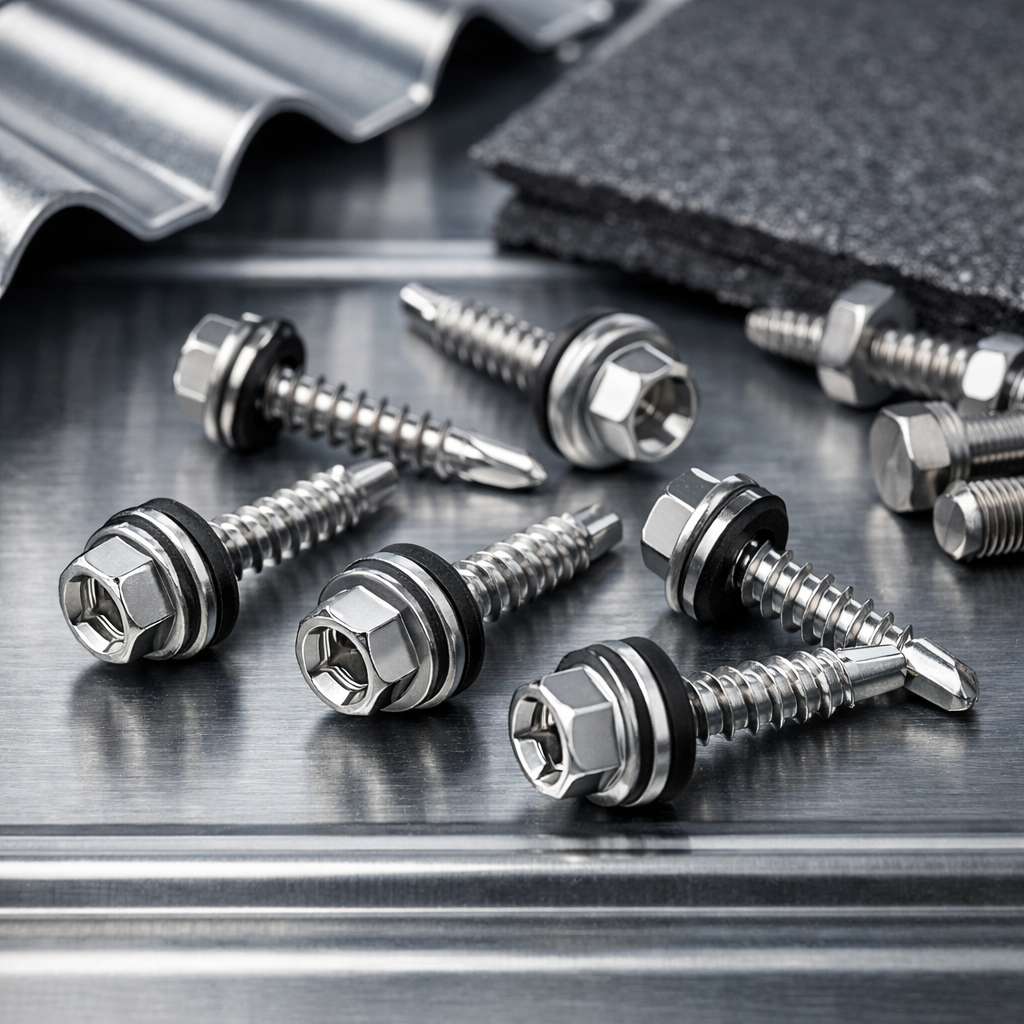
Stainless steel roofing screws are specialized fasteners designed specifically for securing metal roofing panels to structural supports. These screws are manufactured from high-grade stainless steel alloys that contain chromium, which forms a protective oxide layer on the surface. This layer prevents corrosion and rust, making them ideal for exterior applications.
The composition of stainless steel roofing screws typically includes:
-
Chromium content ranging from 10% to 30%
-
Nickel for enhanced corrosion resistance
-
Molybdenum in marine-grade varieties
-
Carbon for structural strength
These fasteners feature a self-drilling point that penetrates metal panels and wood substrates without pre-drilling. The sharp cutting threads create their own path, reducing installation time significantly. Most stainless steel roofing screws come with a built-in EPDM or neoprene washer that creates a weatherproof seal upon compression.
The head design varies depending on the application, with hex washer heads being the most common for roofing work. The washer distributes load evenly across the panel surface, preventing dimpling or damage. Thread patterns are optimized for maximum pull-out resistance in various substrate materials.
Types of Stainless Steel Roofing Screws Available
The market offers several types of stainless steel roofing screws, each designed for specific applications and environmental conditions. Understanding these variations helps you select the appropriate fastener for your project requirements.
Grade 304 stainless steel roofing screws represent the most common choice for general roofing applications. They provide excellent corrosion resistance in most environments and offer a cost-effective solution. These screws work well in urban and suburban settings where exposure to salt air is minimal.
Grade 316 stainless steel roofing screws deliver superior corrosion resistance due to added molybdenum. They’re essential for coastal installations where salt spray accelerates corrosion. Marine-grade applications always require 316 stainless steel roofing screws for long-term durability.
Common type variations include:
-
Self-drilling screws with drill points for metal-to-metal applications
-
Self-tapping screws for wood substrates
-
Pancake head screws for low-profile installations
-
Modified truss head designs for increased load distribution
-
Color-matched screws with painted heads for aesthetic purposes
Size options range from #9 to #14 gauge, with lengths varying from 3/4 inch to 6 inches. Thread patterns include fine, coarse, and self-tapping designs. Each configuration serves specific substrate and panel thickness requirements.
How to Choose the Right Stainless Steel Roofing Screws
Selecting appropriate stainless steel roofing screws requires careful consideration of multiple factors. Your choice directly impacts installation success and long-term roof performance.
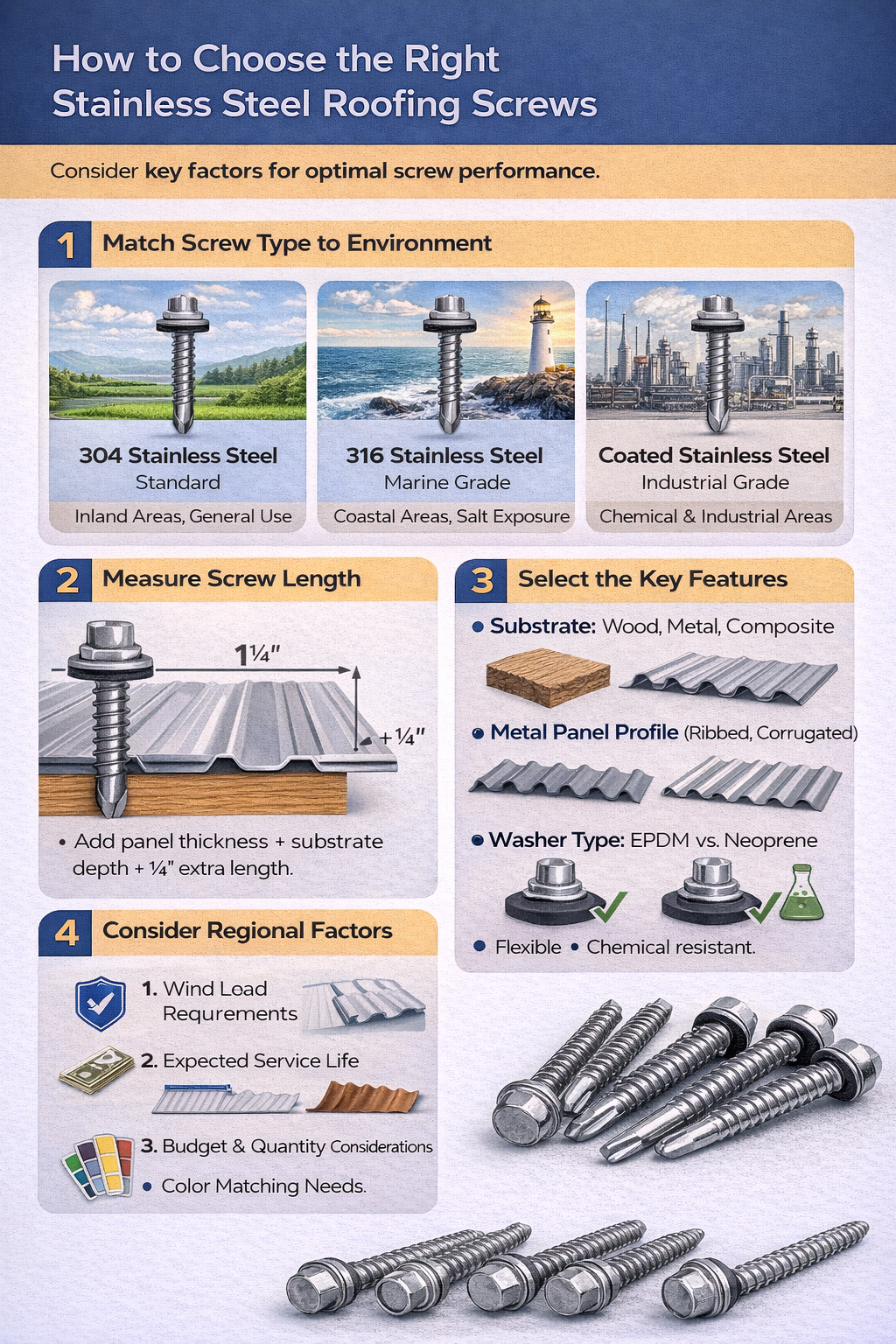
Start by evaluating your environmental conditions. Coastal areas demand 316-grade stainless steel roofing screws due to salt exposure. Inland locations typically perform well with 304-grade options. Industrial environments with chemical exposure may require specialized coatings or higher-grade materials.
Panel thickness determines required screw length. Add the panel thickness to the substrate penetration depth, then add 1/4 inch for proper engagement. Metal panels typically need 1 to 1-1/4 inch penetration into wood purlins. Thicker structural substrates may require longer stainless steel roofing screws for adequate holding power.
Consider these selection criteria:
-
Substrate material type (wood, metal, or composite)
-
Panel profile and thickness
-
Wind load requirements for your region
-
Expected service life of the roofing system
-
Budget constraints and quantity needed
-
Color matching for visible applications
Thread design matters significantly for performance. Fine threads work best for metal substrates, while coarse threads excel in wood applications. Self-drilling points save time on metal-to-metal installations but aren’t necessary for wood substrates.
Washer selection affects seal quality. EPDM washers offer excellent weather resistance and maintain flexibility in temperature extremes. Neoprene washers provide chemical resistance but may harden over time in UV exposure.
Where to Find Quality Stainless Steel Roofing Screws
Locating reliable suppliers of stainless steel roofing screws ensures you receive genuine products that meet industry standards. Multiple purchasing channels exist, each with distinct advantages.
Local roofing supply stores stock common sizes and grades of stainless steel roofing screws. They provide immediate availability and technical support from knowledgeable staff. Building relationships with local suppliers often results in better pricing for bulk orders.
Online retailers offer extensive selections with competitive pricing:
-
Amazon and major e-commerce platforms for small quantities
-
Specialized fastener websites for professional-grade products
-
Manufacturer direct websites for bulk purchases
-
Industrial supply companies for contractor accounts
Professional roofing distributors maintain large inventories specifically for contractors. They understand project requirements and can recommend appropriate stainless steel roofing screws based on your specifications. Many offer delivery services and extended payment terms for established customers.
Big-box home improvement stores carry basic stainless steel roofing screws suitable for residential projects. Their selection typically focuses on popular sizes in 304-grade materials. Prices may be higher than specialty suppliers, but convenience and return policies offer value for smaller projects.
Manufacturer representatives provide technical expertise and can source specialized stainless steel roofing screws not commonly stocked. They assist with product selection, quantity calculations, and installation recommendations. Direct manufacturer relationships often yield cost savings on large-scale projects.
How to Buy Stainless Steel Roofing Screws Wisely
Purchasing stainless steel roofing screws requires strategic planning to balance quality, cost, and project requirements. Smart buying practices prevent delays and ensure proper materials arrive on site.
Calculate exact quantities before ordering. Count panels, determine screw spacing requirements per manufacturer specifications, and add 10% for waste and errors. Typical spacing ranges from 12 to 24 inches on center along panel ribs. Perimeter fastening requires closer spacing for wind uplift resistance.
Request certifications and documentation:
-
Material grade certifications (304 or 316)
-
Load testing results for pull-out strength
-
Corrosion resistance test data
-
Compliance with building code requirements
-
Manufacturer warranties and guarantees
Compare pricing from multiple suppliers for stainless steel roofing screws. Bulk discounts significantly reduce per-unit costs on large projects. Some suppliers offer contractor pricing programs with additional savings. Don’t sacrifice quality for marginal cost reductions, as inferior fasteners lead to callbacks and reputation damage.
Check product reviews and supplier ratings before committing to large orders. Professional contractors often share experiences with specific brands and suppliers. Industry forums and trade associations provide valuable insights into product performance.
Order early to avoid project delays. Standard stainless steel roofing screws typically ship within days, but specialized grades or large quantities may require longer lead times. Confirm delivery schedules and arrange for adequate storage on site.
Understanding Stainless Steel Roofing Screw Costs
Pricing for stainless steel roofing screws varies based on multiple factors that affect both material costs and overall project budgets. Understanding these variables helps with accurate estimating and cost control.
Grade 304 stainless steel roofing screws typically cost between $0.15 and $0.35 per screw in standard sizes. Grade 316 options range from $0.25 to $0.50 per screw due to enhanced corrosion resistance. Specialty coatings or colors add $0.05 to $0.15 per screw.
Quantity significantly impacts pricing:
-
Small packages (100 screws): $25 to $45
-
Medium boxes (1,000 screws): $180 to $350
-
Bulk cartons (5,000 screws): $750 to $1,500
-
Contractor pallets (25,000 screws): $3,000 to $6,000
Size affects pricing proportionally. Longer stainless steel roofing screws and larger gauges cost more due to increased material usage. A #12 x 1-1/4 inch screw costs approximately 30% more than a #10 x 1 inch equivalent in the same grade.
Brand reputation influences pricing structures. Premium manufacturers charge more for consistent quality and technical support. Generic options save 20% to 30% but may lack quality control. Mid-tier brands balance cost and performance for most applications.
Hidden costs include:
-
Shipping charges for online orders
-
Minimum order requirements
-
Expedited delivery fees
-
Return restocking charges
-
Tool compatibility requirements
Compare total project costs including labor efficiency. Higher-quality stainless steel roofing screws may cost more initially but reduce installation time and callback risks. Self-drilling points eliminate pre-drilling, saving significant labor hours on metal roofing projects.
Special Considerations for Different Stainless Steel Roofing Screw Types
Understanding specific variations of stainless steel roofing screws helps optimize material selection for particular applications. Each type offers unique advantages for different roofing scenarios.
Stainless steel metal roofing screws feature aggressive thread patterns designed specifically for metal-to-metal connections. The self-drilling point penetrates metal panels and metal purlins without pre-drilling, significantly reducing installation time. These screws typically have finer threads that grip metal substrates more effectively than wood-thread designs.
The drill point length varies based on substrate thickness. Shorter points work for thin-gauge metal, while longer points handle heavier structural steel. Thread engagement begins immediately behind the point for maximum holding power. The shank diameter remains consistent to prevent panel distortion during installation.
Stainless steel roof screws represent a broader category encompassing all roofing fastener applications. They work effectively on wood substrates, metal panels, and composite materials. Thread designs vary to match substrate requirements, with coarse threads for wood and fine threads for metal.
These versatile fasteners handle residential, commercial, and industrial roofing projects. Head styles include hex washer, pancake, and modified truss designs. Washer materials range from EPDM for standard applications to metal-backed washers for high-wind zones.
316 stainless steel roofing screws provide maximum corrosion resistance for harsh environments. The added molybdenum creates superior protection against chloride attack in coastal regions. Salt air, which rapidly corrodes lesser materials, has minimal impact on 316-grade stainless steel roofing screws.
Marine applications, waterfront properties, and industrial facilities with chemical exposure require this premium grade. The price premium of 40% to 60% over 304-grade proves worthwhile for extended service life. Coastal building codes often mandate 316-grade materials within specific distances from shorelines.
Stainless steel roofing screws with washers integrate sealing components directly into the fastener assembly. The bonded washer creates a weatherproof seal when compressed during installation. EPDM washers remain flexible across temperature ranges from -40°F to 300°F.
Washer diameter affects load distribution and sealing effectiveness. Larger washers spread clamping force over greater areas, reducing panel stress. The washer thickness and durometer rating determine compression characteristics. Properly compressed washers create visible deformation indicating adequate torque application.
How to Install Stainless Steel Roofing Screws Properly
Correct installation techniques ensure stainless steel roofing screws perform as designed throughout the roof’s service life. Proper procedures prevent leaks, structural failures, and premature fastener degradation.
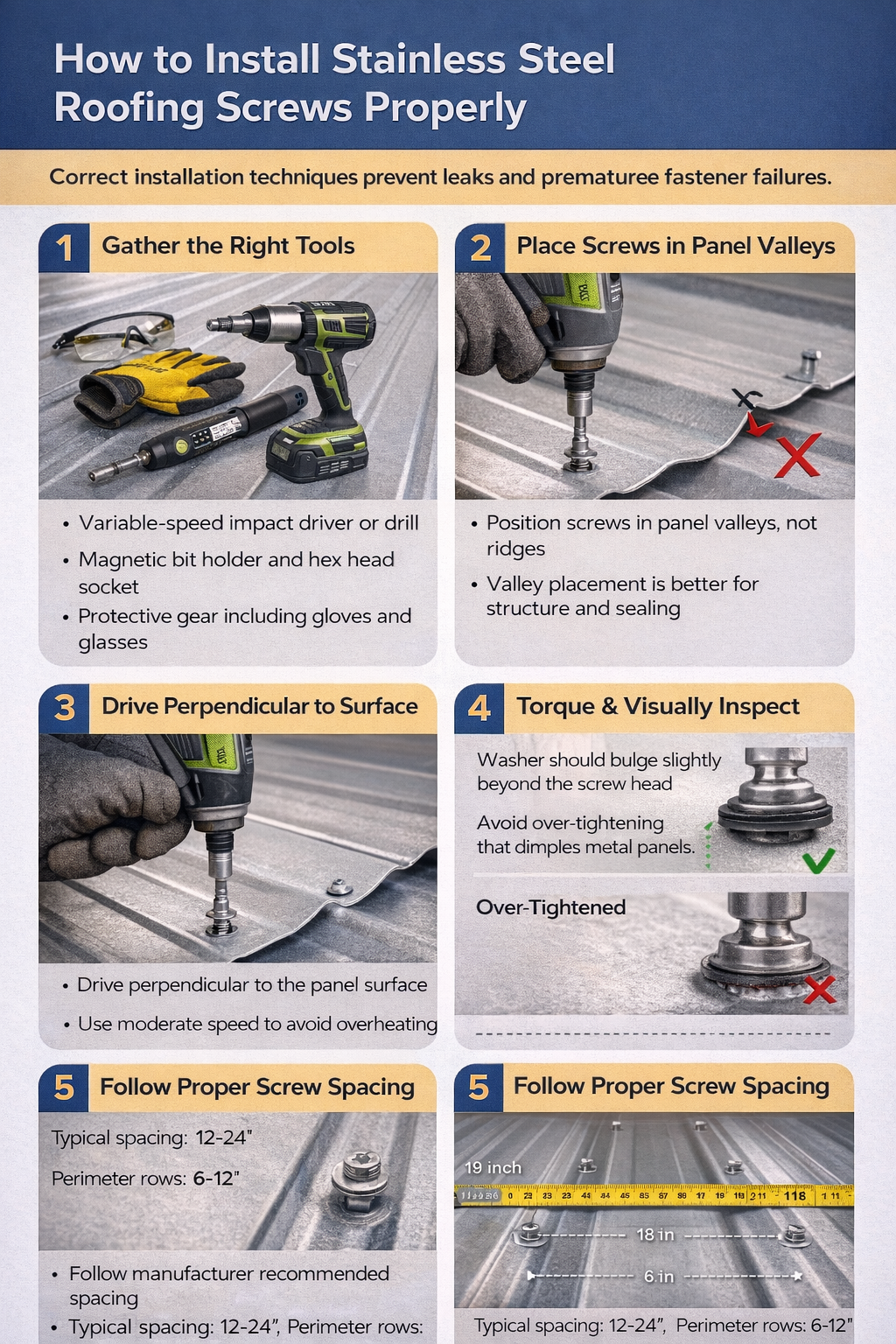
Prepare your installation tools before starting:
-
Variable-speed impact driver or drill
-
Magnetic bit holders for screw retention
-
Appropriate hex head socket bits
-
Torque-limiting clutch or digital torque wrench
-
Safety equipment including glasses and gloves
Position stainless steel roofing screws in panel valleys, not on ridges. Valley placement ensures screws penetrate structural supports and compress washers against flat surfaces. Ridge placement creates stress concentrations and poor sealing.
Drive screws perpendicular to the panel surface. Angled installation reduces holding power and creates uneven washer compression. Use moderate speed to prevent overheating that can damage washers. The self-drilling point should penetrate smoothly without excessive force.
Proper torque prevents two common problems:
-
Under-tightening leaves gaps allowing water infiltration
-
Over-tightening crushes washers and dimples panels
Visual inspection confirms correct torque. The washer should bulge slightly beyond the screw head without metal-to-metal contact. Panel dimpling indicates over-tightening requiring screw replacement.
Space stainless steel roofing screws according to panel manufacturer specifications. Typical spacing ranges from 12 to 24 inches along purlins. Perimeter rows require closer spacing, often 6 to 12 inches, for wind uplift resistance. End laps need fasteners every 12 inches minimum.
Follow proper sequencing during installation. Start at one end and work systematically across the roof. This prevents panel shifting and maintains alignment. Secure each panel before moving to the next.
Maintenance and Care for Stainless Steel Roofing Screws
Although stainless steel roofing screws require minimal maintenance, periodic inspections and cleaning extend their service life and maintain roof integrity. Proactive care prevents small issues from becoming major problems.
Schedule visual inspections annually and after severe weather events. Examine screw heads for corrosion, loose fasteners, or damaged washers. Binoculars allow safe ground-level inspections of higher roofs. Document findings with photos for tracking changes over time.
Check for these common issues:
-
Loose screws requiring re-tightening
-
Cracked or deteriorated washers needing replacement
-
Corrosion spots indicating grade mismatches
-
Panel movement around fastener locations
-
Water staining suggesting seal failures
Clean stainless steel roofing screws during regular roof maintenance. Use mild detergent and water with a soft brush to remove dirt and debris. Avoid abrasive cleaners that scratch protective oxide layers. Rinse thoroughly and allow complete drying.
Coastal installations require more frequent cleaning. Salt deposits accelerate corrosion even on stainless steel. Quarterly washing with fresh water removes salt accumulation. Some contractors use specialized cleaners that enhance corrosion resistance.
Replace damaged stainless steel roofing screws promptly to prevent leaks. Remove failed screws carefully to avoid enlarging holes. Install replacement screws slightly offset from original positions when possible. Match grade and size specifications exactly.
Apply sealant around screws showing minor leaks as a temporary measure. Permanent repairs require screw replacement. Never rely on sealant alone for long-term waterproofing.
Monitor fastener performance in high-stress areas. Ridge caps, valleys, and eaves experience greater loads requiring closer attention. Wind-driven rain tests these locations most severely. Early detection prevents interior damage and costly repairs.
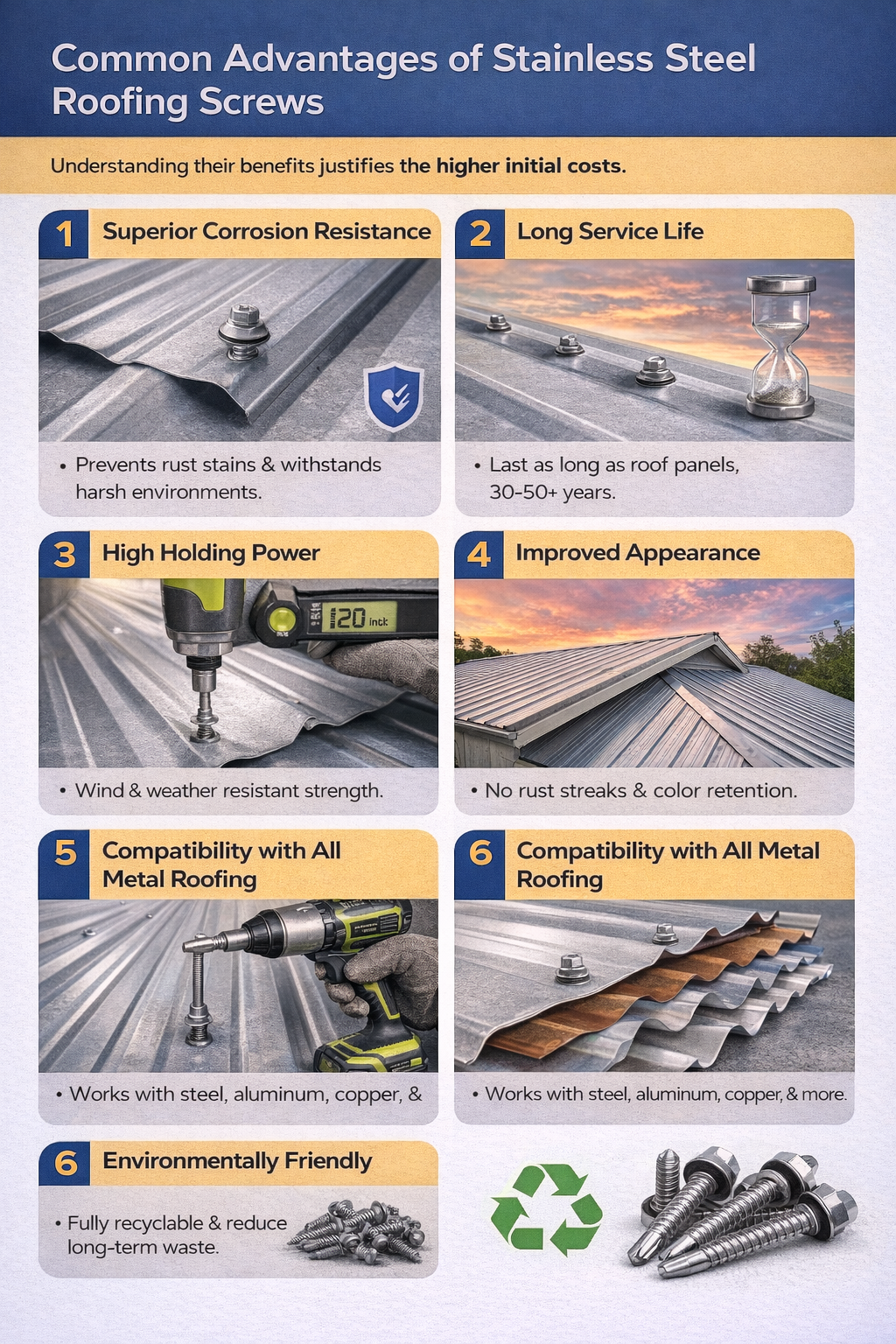
Common Advantages of Stainless Steel Roofing Screws
The benefits of using stainless steel roofing screws extend beyond basic corrosion resistance. Understanding these advantages helps justify their higher initial costs compared to alternative fasteners.
Superior corrosion resistance tops the advantage list. The chromium content in stainless steel roofing screws creates a passive oxide layer that self-heals when scratched. This protection remains effective for decades in most environments. Coastal and industrial applications particularly benefit from this durability.
Longevity matches or exceeds roof panel life expectancy. Quality stainless steel roofing screws last 30 to 50 years without replacement. This eliminates re-fastening costs and associated labor. Total lifecycle costs often prove lower than carbon steel alternatives despite higher initial investment.
Key performance advantages include:
-
No rust staining on roof surfaces
-
Maintained holding power throughout service life
-
Reduced maintenance requirements
-
Better appearance retention over decades
-
Compatibility with all metal roofing materials
Strength characteristics rival or exceed carbon steel fasteners. Stainless steel roofing screws withstand high wind loads without structural degradation. Thread engagement remains secure even in challenging substrates. Pull-out resistance meets or exceeds building code requirements.
Installation efficiency improves with self-drilling designs. Pre-drilling becomes unnecessary, saving significant labor time. The sharp points penetrate cleanly without walking or slipping. Consistent quality reduces installation errors and callbacks.
Environmental benefits matter increasingly in construction. Stainless steel roofing screws are fully recyclable at end of life. They contain no harmful coatings that deteriorate into the environment. Reduced replacement frequency minimizes waste generation.
Property value enhancement results from quality fastener selection. Properly installed stainless steel roofing screws contribute to documented roof longevity. This documentation supports higher resale values and easier property transfers.
Challenges and Limitations of Stainless Steel Roofing Screws
Despite numerous advantages, stainless steel roofing screws present certain challenges that require consideration during project planning. Understanding these limitations enables better decision-making and risk mitigation.
Higher initial costs create budget pressure on price-sensitive projects. Stainless steel roofing screws cost 200% to 400% more than zinc-plated alternatives. Large commercial projects involving thousands of fasteners see significant cost differences. Value justification requires lifecycle analysis rather than simple initial cost comparison.
Installation challenges include:
-
Greater driving torque requirements
-
Potential for galling during installation
-
Tool wear from harder materials
-
Temperature sensitivity during installation
-
Specialized bit requirements for some designs
Galling occurs when stainless steel threads bind during installation. This adhesive wear can seize threads, making removal difficult. Proper installation speed and occasional lubrication minimize galling risks. Some manufacturers add special coatings to reduce this problem.
Availability varies by region and supplier. Specialty grades like 316 stainless steel roofing screws may require special ordering. Lead times can delay projects waiting for specific sizes or configurations. Maintaining adequate inventory becomes critical for contractors using these fasteners regularly.
Material compatibility requires attention. Stainless steel roofing screws shouldn’t contact dissimilar metals without proper isolation. Galvanic corrosion occurs when stainless steel touches aluminum or carbon steel in wet conditions. Plastic washers or separation techniques prevent this issue.
Thermal expansion differs from roof panel materials. Stainless steel expands and contracts at rates different from aluminum or steel panels. Proper slot sizing in panels accommodates this movement. Fixed connections should occur only at designated locations per engineering specifications.
Quality variations exist between manufacturers. Not all stainless steel roofing screws meet stated specifications. Some overseas suppliers provide substandard materials labeled as higher grades. Third-party testing and certification verification protect against inferior products.
Frequently Asked Questions About Stainless Steel Roofing Screws
What is the difference between 304 and 316 stainless steel roofing screws?
Grade 304 contains 18% chromium and 8% nickel, providing good corrosion resistance for most environments. Grade 316 adds 2-3% molybdenum, offering superior protection against chloride corrosion in coastal areas. The 316 grade costs more but proves essential within 10 miles of saltwater.
How many stainless steel roofing screws do I need per square?
Typical requirements range from 80 to 120 screws per square (100 square feet) depending on panel profile and wind load requirements. Corrugated panels need more fasteners than standing seam systems. High-wind zones require additional fasteners, particularly at roof perimeters.
Can I use regular drill bits with stainless steel roofing screws?
Self-drilling stainless steel roofing screws don’t require separate drill bits. The integrated drill point penetrates metal and wood substrates. For extremely thick materials, pre-drilling with carbide-tipped bits may help. Use proper hex socket bits matched to screw head size.
Do stainless steel roofing screws work with aluminum panels?
Yes, but use plastic or coated washers to prevent galvanic corrosion between stainless steel and aluminum. The washer electrically isolates dissimilar metals. Some manufacturers offer aluminum-compatible coatings on stainless steel roofing screws specifically for this application.
How tight should I drive stainless steel roofing screws?
Drive until the washer slightly bulges beyond the screw head without dimpling the panel. The washer should compress approximately 30% of its original thickness. Over-tightening damages washers and panels while under-tightening allows water infiltration.
What causes stainless steel roofing screws to corrode?
True stainless steel shouldn’t corrode in normal conditions. Corrosion indicates either incorrect grade selection, counterfeit materials, or contamination from carbon steel tools. Coastal environments require 316 grade. Regular steel particles from cutting tools can rust on stainless surfaces.
Can I reuse stainless steel roofing screws if I remove panels?
Reuse isn’t recommended because threads may be damaged and washers lose sealing capability after compression. The small cost of new fasteners provides better leak protection than marginal savings from reuse. Always install fresh stainless steel roofing screws during panel reinstallation.
How long do stainless steel roofing screws last?
Quality stainless steel roofing screws typically last 30 to 50 years in appropriate applications. Grade 316 in coastal areas may exceed 50 years. Service life often matches or exceeds the roof panels themselves. Regular maintenance and proper installation maximize longevity.
What’s the best grade for industrial environments?
Grade 316 stainless steel roofing screws handle most industrial chemical exposures. Facilities with severe acidic conditions may require specialty alloys. Consult with corrosion engineers for extreme environments. Document the specific chemicals present for proper material selection.
Should I use sealant with stainless steel roofing screws?
Properly installed screws with good washers don’t require additional sealant. The compressed washer creates an adequate weather seal. Sealant adds minimal benefit and may hide installation problems. Use sealant only for repairs or specialized applications per manufacturer recommendations.
Conclusion
Stainless steel roofing screws represent a premium fastening solution that delivers exceptional performance across diverse roofing applications. Their superior corrosion resistance, longevity, and reliability justify the higher initial investment through reduced maintenance costs and extended service life. Whether you’re working on a coastal residence requiring 316-grade materials or an inland commercial project using 304-grade fasteners, proper selection and installation ensure decades of trouble-free performance.
Understanding the technical specifications, installation procedures, and maintenance requirements empowers you to make informed decisions about these critical roofing components. The self-drilling design, integrated washers, and various size options accommodate virtually any metal roofing configuration. By following manufacturer guidelines, maintaining proper torque settings, and conducting regular inspections, you maximize the value of stainless steel roofing screws in your roofing system.
Success with stainless steel roofing screws begins with thorough planning and quality material sourcing. Calculate quantities accurately, verify grade certifications, and choose reputable suppliers who stand behind their products. The small additional effort invested in proper fastener selection pays significant dividends through improved roof performance and reduced lifecycle costs.
Other Resources
Fasteners Plus – Product collection featuring stainless steel metal roofing screws for various applications.
Metal Roofing Screws – Online store listing roofing screws designed for metal panel installations.
Roof Things – Product page offering size 9 stainless steel roofing screws for metal roofing systems.
Jake Sales – Collection page showcasing #9 stainless steel roofing screws for construction use.
Other Helpful Articles
Cost to Replace RV Roof – Article explaining factors that influence RV roof replacement pricing.
Drone Roof Inspection – Guide describing how drones are used for roof inspection and assessment.
Scaffolding on a Roof Installation – Step-by-step overview of installing scaffolding safely on a roof.