
The Ultimate List of Types of Roofs in Florida for Homeowners
Types of Roofs in Florida: Best Choices
Florida homeowners face a unique challenge: balancing aesthetic appeal with the brutal reality of tropical weather. When selecting from the various types of roofs in florida, you are not just choosing a color or style; you are selecting a shield against 150 mph winds, blistering UV radiation, and torrential downpours. This comprehensive guide will walk you through every aspect of the decision-making process, from material science to installation intricacies.
When you begin researching the types of roofs in florida, you quickly realize that the Sunshine State requires specific engineering that differs significantly from the rest of the country. A roof that lasts 30 years in Ohio might fail in ten years in Miami if not properly chosen. Understanding the nuances of these systems is critical for protecting your investment and ensuring your family’s safety during hurricane season.
Whether you are building a new custom home in Naples or replacing an aging shingle system in Jacksonville, knowing the specific characteristics of different types of roofs in florida is the first step toward a successful project. This article will break down costs, benefits, and technical specifications to empower you with professional-level knowledge.
What Is the Best Roofing for Climate?
To understand what constitutes the best roofing for this climate, one must first analyze the environmental stressors. The types of roofs in florida that succeed are those that can handle high thermal expansion and contraction cycles. The Florida sun can heat a roof surface to over 160°F, while sudden summer thunderstorms can rapidly cool it, causing thermal shock. Materials that are too rigid may crack under this stress.
The best systems among the types of roofs in florida also possess high reflectivity. Energy efficiency is a massive priority here. Cool roofs—those that reflect more sunlight and absorb less heat—can lower roof surface temperatures by up to 50°F and reduce peak cooling demand by 10-15%. Metal roofs with Kynar 500 coatings and light-colored concrete tiles are exceptional in this regard.
Furthermore, the best types of roofs in florida must be impermeable to salt spray. For homes within five miles of the coast, galvanic corrosion is a silent killer. Aluminum and copper standing seam roofs are superior in these zones compared to steel, which may rust even with protective coatings. Identifying the types of roofs in florida that match your specific micro-climate—whether coastal or inland—is the key to longevity.
Different Types of Roofs in Florida
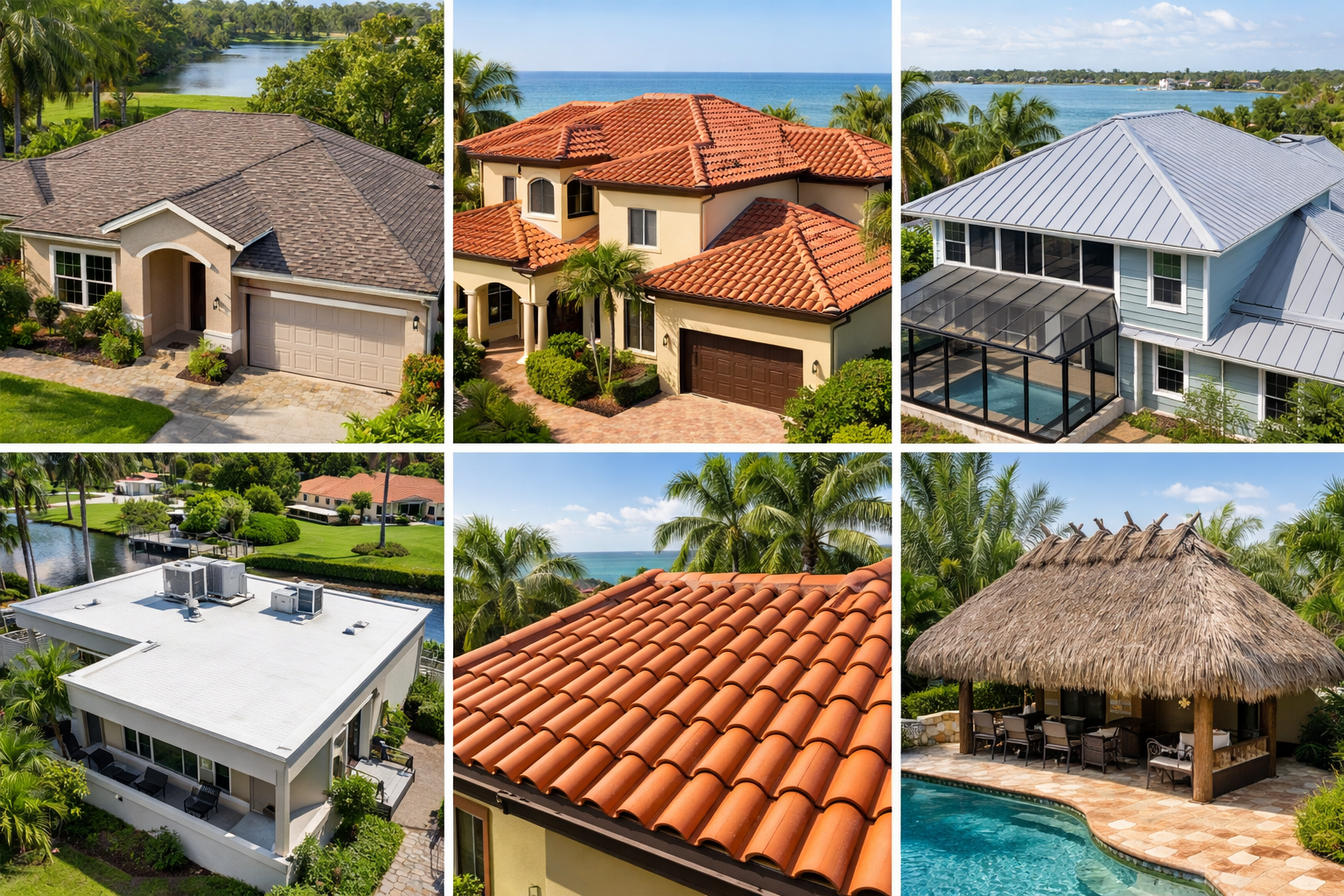
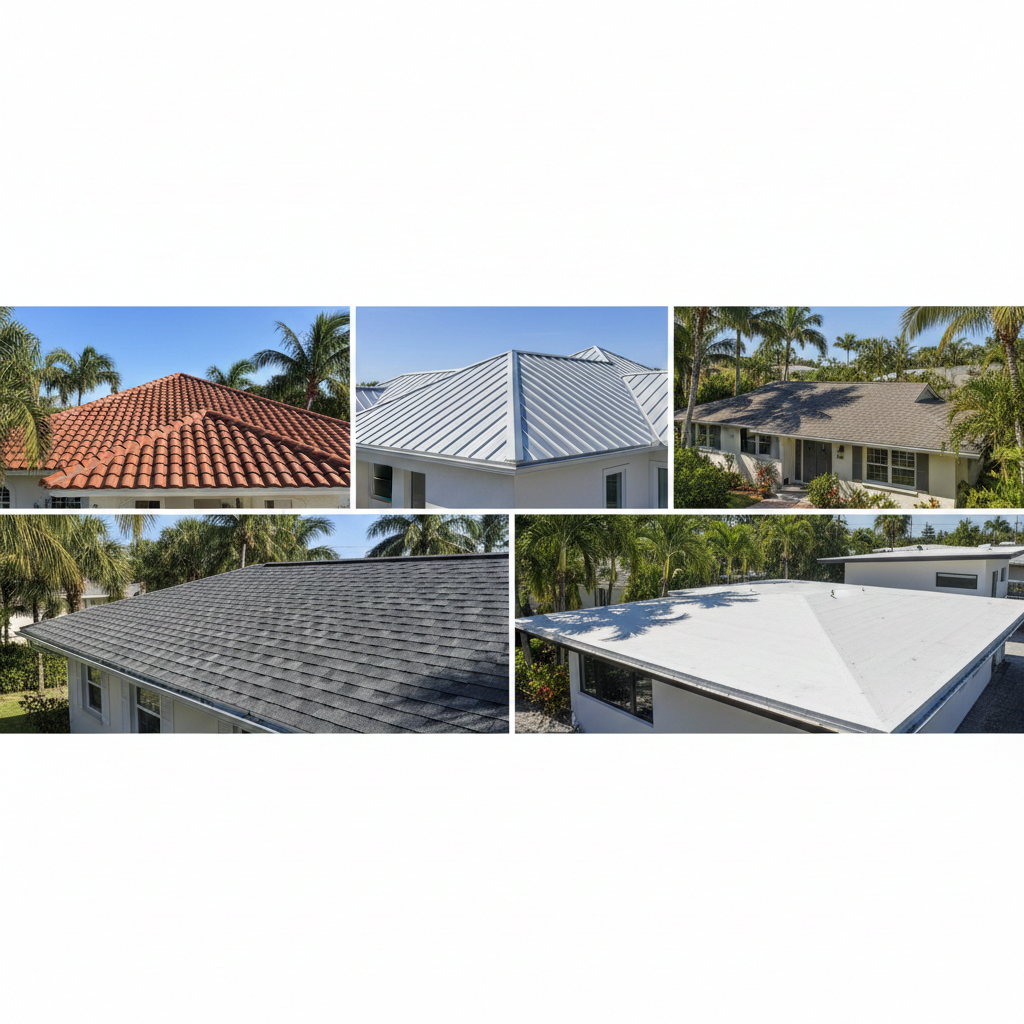
There is a wide array of options available, but five categories dominate the market. Understanding the distinctions between these types of roofs in florida will clarify which is right for your budget and architecture.
-
Asphalt Shingles: This is the most common and affordable option among the types of roofs in florida. Architectural shingles offer decent wind resistance (up to 130 mph) and aesthetic versatility. However, they have a shorter lifespan in the Florida heat compared to other materials.
-
Metal Roofing: Rapidly gaining popularity, metal systems are among the most durable types of roofs in florida. Available in aluminum, steel, and copper, they can withstand winds exceeding 160 mph and last 40 to 70 years.
-
Clay and Concrete Tiles: Synonymous with Florida architecture, these heavy, barrel-shaped tiles offer excellent thermal mass and airflow. They are one of the most prestigious types of roofs in florida, often seen in Mediterranean-style homes.
-
Flat/Low-Slope Roofs: Common in modern architecture and commercial buildings, these include TPO, PVC, and Modified Bitumen. Among the types of roofs in florida, these require the most specialized waterproofing due to the lack of gravity-assisted drainage.
-
Composite/Synthetic: A newer entrant, these materials mimic slate or shake but are engineered polymers. They are becoming one of the favored types of roofs in florida for their resistance to impact and rot.
Special Insight Section:
You might wonder about specific preferences across the state.
-
What type of roof is most beneficial in florida? Metal roofing is widely considered the most beneficial due to its balance of energy efficiency, extreme durability, and insurance premium discounts.
-
Best type of roof in florida: For pure longevity and value retention, Standing Seam Metal (specifically Aluminum for coastal areas) is the best technical choice.
-
Different types of roofs in florida: As listed above, the market is segmented into shingle (economy), metal (performance), and tile (aesthetic/longevity).
-
What type of roofing materials are available in southwest florida? Southwest Florida (Naples, Fort Myers) sees a high volume of Concrete Tile and Clay Tile due to HOA requirements, alongside a growing market for 5V-Crimp and Standing Seam Metal for storm hardening.
How to Find Reliable Contractors
Finding a contractor capable of installing specific types of roofs in florida requires diligence. Florida has strict licensing requirements; you must hire a Certified Roofing Contractor (CCC) or a Certified General Contractor (CGC) with roofing capability. Never hire an unlicensed handyman for roof work, as this can void your insurance claim.
When researching companies, ask specifically about their experience with the types of roofs in florida you are interested in. A company that excels at shingle installation may not have the specialized tools or crews for a standing seam metal roof. Request a portfolio of completed local projects that use the exact material you are considering.
Review the contract for specific mention of “wind mitigation” techniques. The best installers of all types of roofs in florida will use enhanced nailing patterns (such as 6 inches on center) and secondary water barriers (peel-and-stick underlayment) to ensure your home qualifies for insurance discounts.
How to Buy the Right Materials
Learning how to buy materials for the various types of roofs in florida often involves navigating warranties and wind ratings. Do not just look at the brand name; look at the NOA (Notice of Acceptance) or Florida Product Approval number. This code verifies that the specific system has been tested to meet the state’s rigorous building codes.
When purchasing, consider the “system” approach. The best types of roofs in florida are not just the top layer; they are a combination of deck protection, underlayment, ventilation, and flashing. Ensure your quote includes high-quality synthetic underlayment rather than old-fashioned felt paper, as this provides a critical secondary moisture barrier.
Bulk buying is rarely an option for homeowners, as distributors sell to licensed contractors. However, you can influence the buying process by specifying the grade of material. For example, if choosing metal types of roofs in florida, insist on a Kynar 500 or Hylar 5000 paint finish warranty to prevent fading in the harsh UV light.
How Much Do New Roofs Cost?
The cost of types of roofs in florida varies wildly based on geometry, height, and location. As of 2026, labor and insurance rates for roofers have driven prices up. Understanding the “per square” (100 sq. ft.) pricing model is essential for comparing quotes.
-
Asphalt Shingles: typically range from $500 to $800 per square. For a 2,000 sq. ft. roof, this equates to $10,000–$16,000. These are the most budget-friendly types of roofs in florida.
-
Metal Roofing: Costs range from $900 (exposed fastener) to $1,600+ (standing seam) per square. A typical installation might run $18,000 to $35,000+.
-
Tile Roofing: One of the most expensive types of roofs in florida, costing between $1,100 and $2,000 per square. Total projects often exceed $30,000.
Be aware that complex roof lines with many valleys and dormers increase the waste factor, raising the cost of all types of roofs in florida. Additionally, if wood rot is discovered during the tear-off phase, decking replacement costs (often $80-$100 per sheet) will be added to the final bill.
What Is the Cost of Replacement?
Replacement costs for types of roofs in florida are generally higher than new construction due to the “tear-off” and disposal fees. Florida regulations require the removal of old roofing down to the deck; you cannot layer new shingles over old ones. This labor-intensive process adds $100-$200 per square to the project.
Dumpster fees and permit fees also contribute to the cost of replacing different types of roofs in florida. In high-density areas like Miami or Tampa, permit fees can be substantial. Furthermore, if your existing roof does not meet current hurricane codes (e.g., re-nailing the deck), you will be required to pay for these upgrades during replacement.
The “25% Rule” in the Florida Building Code is a critical cost factor. It states that if you repair more than 25% of your roof’s area in a 12-month period, you must bring the entire roof up to current code. This often forces a full replacement even when the homeowner hoped for a repair, making it vital to choose durable types of roofs in florida initially.
How to Install Roofs Correctly
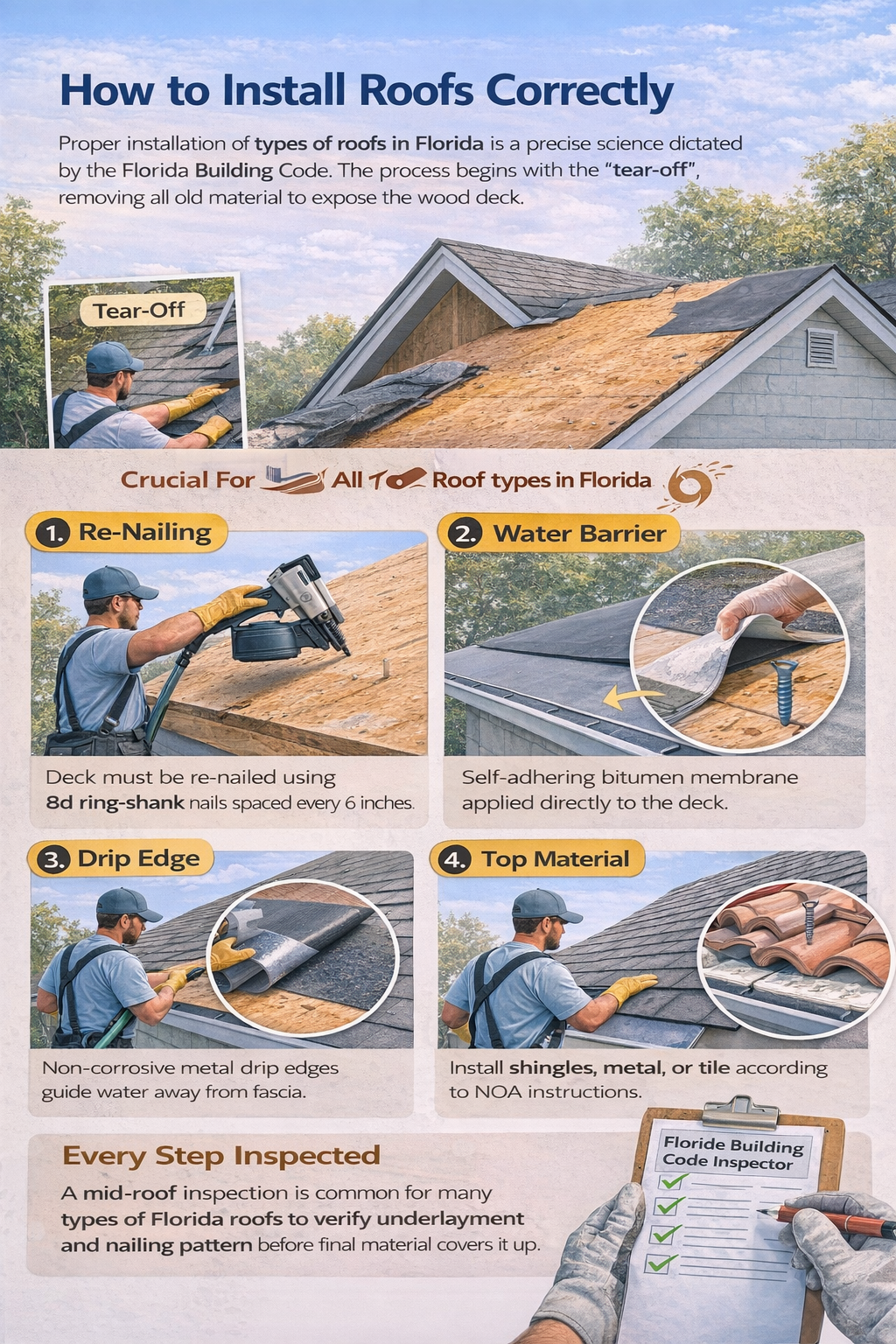
Proper installation of types of roofs in florida is a precise science dictated by the Florida Building Code. The process begins with the “tear-off,” removing all old material to expose the wood deck.
-
Re-nailing: The deck must be re-nailed using 8d ring-shank nails spaced every 6 inches. This is crucial for all types of roofs in florida to prevent the plywood from lifting during a hurricane.
-
Water Barrier: A self-adhering polymer modified bitumen membrane (peel-and-stick) is applied directly to the deck. This provides a waterproof seal that seals around nails.
-
Drip Edge: Non-corrosive metal drip edges are installed at the eaves and rakes to guide water away from the fascia.
-
Top Material: The visible layer (shingles, metal, tile) is installed according to the specific NOA instructions. For tile types of roofs in florida, this may involve foam adhesion or mechanical screws.
Every step must be inspected. A mid-roof inspection is common for many types of roofs in florida to verify the underlayment and nailing pattern before the final material covers it up.
How to Clean and Maintain Roofs
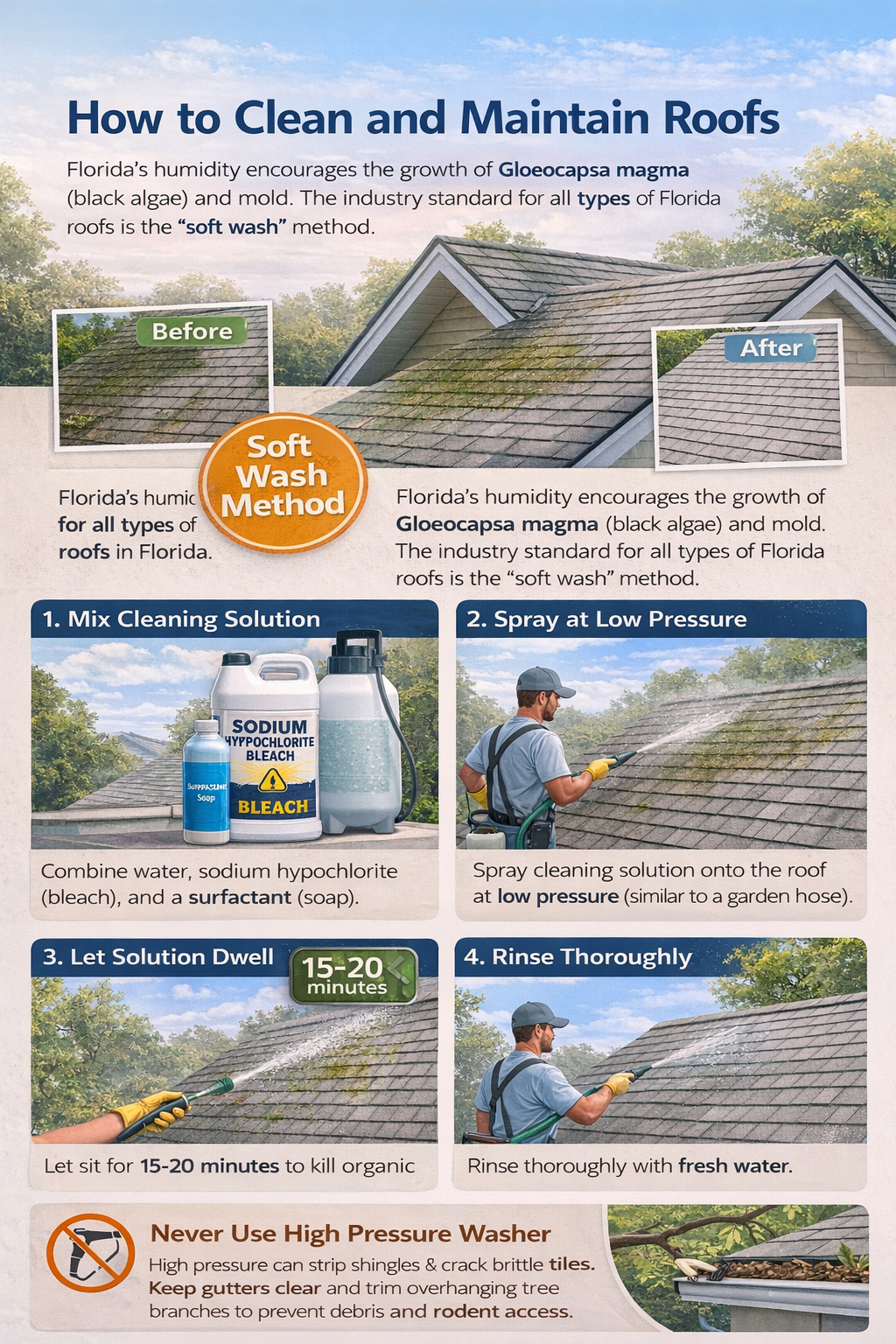
The humidity in Florida encourages the growth of Gloeocapsa magma (black algae) and mold. Cleaning the various types of roofs in florida is necessary not just for aesthetics but for longevity. Algae can eat away at the limestone filler in shingles.
How to clean: The industry standard for all types of roofs in florida is the “soft wash” method.
-
Mix a solution of water, sodium hypochlorite (bleach), and a surfactant (soap).
-
Spray this solution onto the roof at low pressure (similar to a garden hose).
-
Let it dwell for 15-20 minutes to kill the organic growth.
-
Rinse thoroughly with fresh water.
Never use a high-pressure washer on asphalt or tile types of roofs in florida. High pressure can strip the granules off shingles and crack brittle tiles. Maintenance also involves keeping gutters clear and trimming overhanging tree branches to prevent abrasion and rodent access.
Advantages and Challenges of Systems
Each of the types of roofs in florida comes with a distinct trade-off between performance and price.
Advantages:
-
Metal: Reflects heat, lowers cooling bills, lasts 50 years, often receives Class A fire ratings. It is one of the most resilient types of roofs in florida.
-
Tile: Unmatched curb appeal and resistance to salt air. Concrete tiles are incredibly tough against impact.
-
Shingles: Affordable and easy to repair. If a branch damages a few shingles, they are easily swapped, unlike metal panels.
Challenges:
-
Metal: Can be noisy during rain (though insulation mitigates this) and dented by large hail.
-
Tile: extremely heavy. Not all structures can support the weight of these types of roofs in florida without truss reinforcement. They are also brittle to walk on.
-
Shingles: Susceptible to wind uplift and algae staining. They have the shortest lifespan of all types of roofs in florida, often needing replacement every 15-20 years.
How to Do a Roof Inspection
Regular inspections are vital for all types of roofs in florida. You should perform a visual inspection from the ground or a ladder twice a year, and especially after any named storm.
Look for:
-
Loose or missing tabs: On shingle roofs, this indicates wind damage.
-
Cracked tiles: A common issue with clay types of roofs in florida.
-
Rust or loose screws: On metal roofs, check that fasteners are tight and washers haven’t degraded.
-
Granule loss: Accumulation of granules in gutters suggests the shingles are nearing the end of their life.
For a professional inspection, hire a licensed inspector who can provide a “Wind Mitigation Report.” This document certifies the features of your roof (shape, deck attachment, water barrier) and can save you thousands on homeowners insurance—a unique financial benefit of modern types of roofs in florida.
Understanding Florida Building Codes
The regulatory environment dictates much of your choice regarding types of roofs in florida. Since Hurricane Andrew in 1992, Florida has developed the toughest building codes in the nation. The High-Velocity Hurricane Zone (HVHZ), covering Miami-Dade and Broward counties, has even stricter standards.
When selecting types of roofs in florida, you must ensure the product is “Florida Product Approved.” This means it has passed impact and wind uplift testing. For example, in an HVHZ, tiles must be foam-adhered or double-screwed to resist uplift forces.
Additionally, energy codes may require specific insulation values or reflective properties for certain types of roofs in florida. A knowledgeable roofer will handle the permitting and ensure that your new roof isn’t just beautiful, but legally compliant and insurable. Ignoring these codes can lead to a “red tag” from the city, halting your project and demanding costly revisions.
FAQ : Types of roofs in florida
What is the cheapest option among types of roofs in florida?
Asphalt shingles, specifically 3-tab or architectural shingles, are the most affordable option upfront, though they may cost more over time due to more frequent replacements.
How long do different types of roofs in florida last?
Asphalt shingles typically last 15-20 years; metal roofs can last 40-70 years; and clay or concrete tile roofs can last 50+ years if the underlayment is maintained.
Do metal types of roofs in florida interfere with cell reception?
No, in a typical residential setting, a metal roof will not noticeably disrupt cell phone signals or Wi-Fi connectivity.
Can I install solar panels on all types of roofs in florida?
Yes, solar panels can be installed on shingles, tile, and metal. Standing seam metal roofs are particularly good for solar because panels can be clamped to the seams without penetrating the roof deck.
Are there insurance discounts for specific types of roofs in florida?
Yes, hip-shaped roofs and materials with high impact ratings (Class 4) often qualify for significant wind mitigation discounts on homeowner insurance premiums.
Conclusion
Selecting the right solution from the many types of roofs in florida is a decision that impacts your home’s safety, energy efficiency, and value for decades. From the affordability of asphalt to the permanence of standing seam metal and the elegance of clay tile, each material offers unique benefits tailored to the Sunshine State’s demanding environment.
By understanding the costs, installation requirements, and maintenance needs of these types of roofs in florida, you can navigate your roofing project with confidence. Remember to prioritize wind resistance and energy efficiency, hire licensed professionals, and maintain your roof faithfully. In doing so, you ensure that your home remains a safe haven, no matter what the Florida weather brings.
Other Resources
RoofClaim – Informational article outlining the most common roof types used in Florida.
AC Roof – Educational blog post explaining different roof types and their general characteristics.
Brava Roof Tile – Article discussing roofing materials best suited for Florida’s climate conditions.
Other Helpful Articles
Snow Guards for Slate Roofs – Guide explaining snow guard options designed for slate roofing systems.
Roof Slope Snow Safe Steps – Article outlining safe roof slope considerations related to snow load and protection.
Top Roof Louver Installation – Guide describing roof louver installation methods and best practices.