|

Roof Replacement Cost: Smart Saving Tips

roof replacement cost

Roof Replacement Cost: Critical Facts

Understanding the full scope of a home renovation project is crucial for any homeowner, but few projects are as significant or as intimidating as changing your roof. When you begin to notice missing shingles, water stains on your ceiling, or sagging structural elements, the first thought that likely crosses your mind is the potential roof replacement cost. It is a substantial investment, but one that is necessary for the protection and longevity of your property. This guide is designed to walk you through every aspect of the process, ensuring you are not blindsided by the financial requirements.

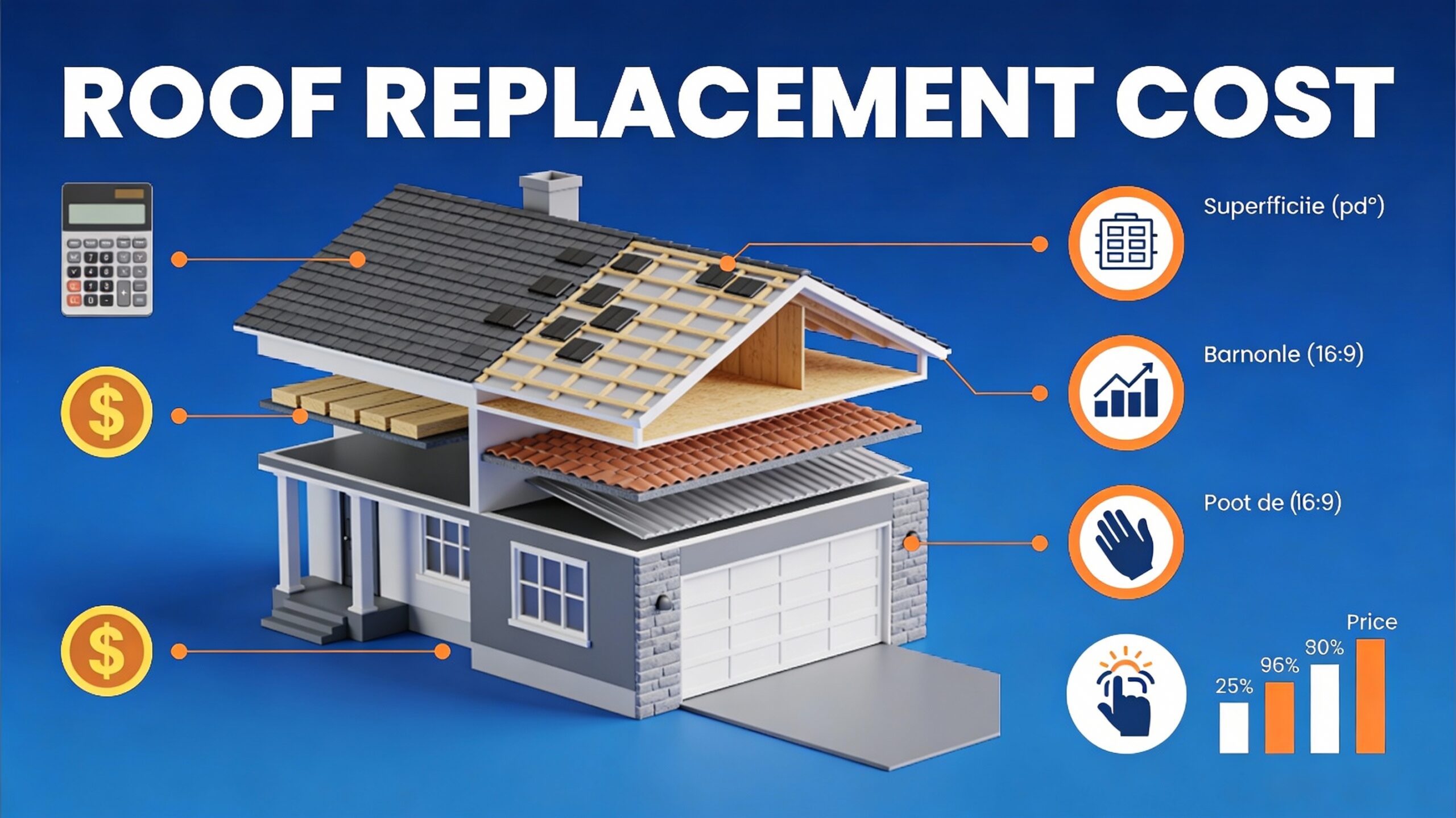
The total roof replacement cost is rarely a single, static figure. It is a dynamic number influenced by geography, material scarcity, labor markets, and the specific architectural quirks of your home. By breaking down the components of what makes up the final bill, you can approach the project with confidence rather than anxiety. Whether you are dealing with a simple asphalt shingle swap or a complex slate installation, knowing the financial landscape is your best defense against overspending.

What is Roof Replacement Cost Analysis?

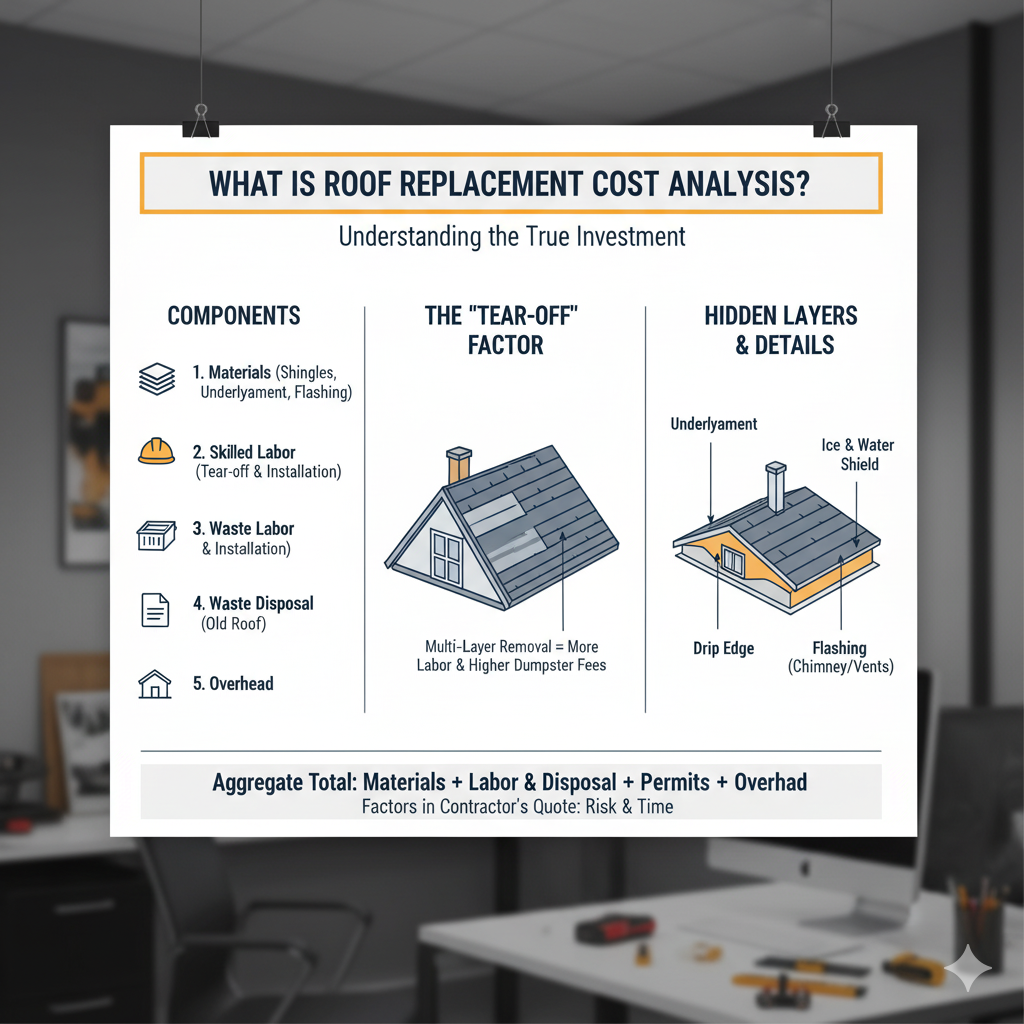
To truly understand the budget required, one must first define what the roof replacement cost actually encompasses. It is not merely the price of the shingles or the metal panels. The term refers to the aggregate total of materials, skilled labor, waste disposal, permits, and overhead. When a contractor provides a quote, they are calculating the risk and time associated with your specific property.

A significant portion of the roof replacement cost is attributed to the “tear-off” phase. This is the removal of the existing material. If you have multiple layers of old shingles, the labor required to strip the deck increases, as does the weight of the debris, which impacts dumpster fees. Furthermore, the analysis must include the “hidden” layers. Underlayment, ice and water shields, drip edges, and flashing around chimneys all contribute to the final roof replacement cost.

Therefore, when analyzing the financial requirements, you must look at the project holistically. You are paying for a construction system, not just a surface layer. The quality of the nails, the type of ventilation installed, and the warranty coverage all play a role in determining the ultimate roof replacement cost you will pay.

What is Roof Replacement Cost Analysis?

How to Find the Right Contractor to Manage Costs

Finding a contractor who is transparent about the roof replacement cost is perhaps the most critical step in the entire process. A low bid often indicates cut corners, while an astronomically high bid does not always guarantee superior quality. To manage your budget effectively, you need a partner who provides a detailed breakdown of expenses.

Start by soliciting at least three different quotes. This allows you to see the market range for the roof replacement cost in your specific area. When reviewing these estimates, look for line-item details. A trustworthy contractor will specify the cost of materials versus the cost of labor. If a bid comes in significantly lower than the others, ask why. It is possible they are excluding the cost of waste removal or permits, which will be added to your roof replacement cost later as a “surprise.”

  • Check Digital Footprints: Look for reviews that specifically mention adherence to the quoted budget.

  • Verify Insurance: Uninsured contractors are cheaper, but if an accident occurs, your personal liability could dwarf the savings on the roof replacement cost.

  • Ask About Subcontractors: Does the company use their own crew? Subcontracting can sometimes inflate the roof replacement cost due to the layers of markup involved.

By rigorously vetting the professionals, you ensure that the roof replacement cost you agree to is the price you actually pay.

How to Buy Materials That Fit Your Budget

The materials you select are the single biggest variable in the roof replacement cost equation. Homeowners have a vast array of options, and each comes with a different price point and lifespan. Learning how to buy materials strategically can save you thousands of dollars.

Asphalt shingles are the most common choice in North America primarily because they keep the roof replacement cost low. They are relatively easy to manufacture and install. However, within the asphalt category, there are 3-tab shingles (cheaper) and architectural shingles (more expensive but durable). Upgrading to architectural shingles raises the initial roof replacement cost, but often lowers the cost per year of the roof’s life due to longevity.

If you are looking at metal, the roof replacement cost jumps significantly. Standing seam metal roofs require specialized manufacturing and skilled labor. However, buying these materials is an investment in permanence. When purchasing, consider:

  1. Bulk Availability: Is the material in stock locally? Shipping heavy slate or tile from a distance adds freight charges to the roof replacement cost.

  2. Warranty Value: Higher-end materials often come with extended warranties. While this increases the upfront roof replacement cost, it provides value over time.

  3. Energy Efficiency: Some materials reflect heat, lowering your cooling bills. This doesn’t lower the installation price, but it offsets the roof replacement cost through operational savings.

How Much Should You Expect to Pay?

Determining exactly how much you will pay is difficult without a site visit, but understanding the averages helps frame the roof replacement cost. In the current market, prices have fluctuated due to inflation and supply chain issues. Generally, the roof replacement cost is calculated per “square,” which is a roofing term for a 100-square-foot area.

For a standard 2,000-square-foot home using asphalt shingles, the roof replacement cost can range widely depending on the pitch of the roof. A steep roof requires more safety equipment and slower labor, driving the price up. Conversely, a flat, walkable roof might have a lower labor component, though the materials for flat roofing systems can be pricey.

It is vital to have a contingency fund. Experts recommend setting aside 10% to 15% above the quoted roof replacement cost for unforeseen issues. This buffer ensures that if the contractor finds structural damage, the project doesn’t stall. When asking “how much,” remember that the cheapest option often has the highest long-term maintenance costs. The goal is to find a balance where the roof replacement cost aligns with the value added to the home.

How Long Does the Project Take?

Time is money in construction. The duration of the project has a direct correlation to the labor portion of the roof replacement cost. A project that drags on for weeks requires reliable crew scheduling, equipment rental extensions, and prolonged dumpster rentals.

  • One to Three Days: This is typical for asphalt shingles on a standard home. The efficiency keeps the labor portion of the roof replacement cost manageable.

  • Five to Seven Days: Larger homes or complex rooflines with multiple valleys and dormers will take longer, increasing the roof replacement cost.

  • Two Weeks or More: High-end materials like slate, tile, or custom copper work require slow, meticulous craftsmanship. Consequently, the roof replacement cost for these projects is significantly higher due to the sheer man-hours involved.

Weather also impacts the timeline. If a crew has to stop frequently for rain, the project drags out, potentially affecting the efficiency and arguably the final roof replacement cost if contracts are time-and-materials based. Knowing the timeline helps you understand the labor quote.

How to Install: The Process Behind the Price

Understanding the installation steps clarifies why the roof replacement cost is what it is. It is a major construction project involving dangerous heights and heavy materials.

  1. Preparation: The site must be protected. Tarps are laid over landscaping. The setup time is part of the labor hours in your roof replacement cost.

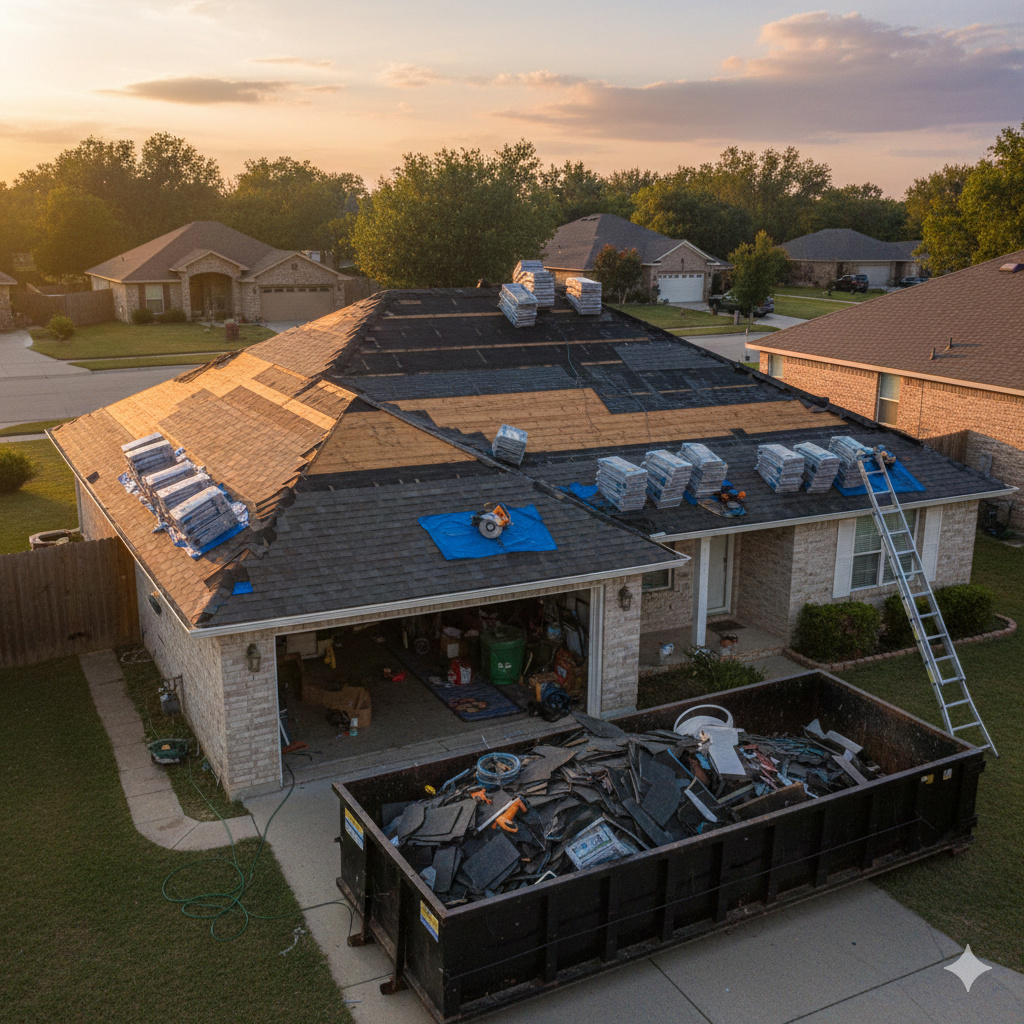
  2. Tear-off: The old roof is removed. This is labor-intensive and dirty. The disposal fees for tons of old shingles are a hard cost in the roof replacement cost.

  3. Deck Inspection: The wood is checked. This is the variable that can change the final bill.

  4. Underlayment and Flashing: These are crucial for waterproofing. Skimping here lowers the roof replacement cost temporarily but guarantees leaks later.

  5. Shingling: The visible layer is installed. The precision required here dictates the aesthetic quality.

  6. Cleanup: Magnetic sweeps for nails and debris removal.

Every step requires skilled hands. You are paying for the expertise to ensure water flows off your house, not into it. This expertise is the premium within the roof replacement cost.

How to Install roof replacement cost.

How to Clean and Maintain Your Investment

Once you have incurred the roof replacement cost, you want that investment to last. Proper maintenance does not retroactively change the installation price, but it dramatically improves the return on investment (ROI). Neglect leads to premature failure, meaning you would have to face another roof replacement cost sooner than necessary.

Cleaning involves removing debris like leaves and branches that trap moisture. Moss and algae can eat away at asphalt shingles. While you can hire professionals for soft washing, the cost of maintenance is a fraction of the full roof replacement cost.

By spending a small amount annually on care, you amortize the initial roof replacement cost over 25 or 30 years instead of 15.

Deep Dive: Financial Metrics of Roofing

In this section, we will explore the specific financial breakdowns that confuse many homeowners. It is essential to distinguish between different types of costs and how the market determines value.

Average Roof Replacement Cost vs. The Reality of Your Home

When homeowners search for the average roof replacement cost, they are often met with a wide range of numbers that may not reflect their reality. National averages usually sit between $8,000 and $20,000, but this figure is merely a baseline. The average roof replacement cost aggregates data from rural areas with lower labor rates and urban centers with high insurance premiums. Therefore, relying solely on an average can lead to poor budgeting.

However, the cost of a new roof is a slightly different metric. This can sometimes refer to new construction, where no tear-off is required. In new construction, the cost of a new roof is generally lower per square because the decking is fresh, accessible, and there is no debris to haul away. When you are replacing a roof, you must factor in demolition.

So, how much does a roof cost in terms of materials versus labor? Typically, materials account for 40% of the total, while labor and overhead make up the remaining 60%. If you ask a contractor how much does a roof cost, they will calculate the steepness (pitch) and accessibility.

Finally, how much does it cost to replace a roof when you add in premium elements? If you choose impact-resistant shingles or copper flashing, the price skyrockets. The answer to how much does it cost to replace a roof is ultimately determined by your desire for longevity versus immediate savings. A cheap roof is expensive in the long run; a quality roof is a high upfront asset.

Advantages of a High-Quality Installation

Is the high roof replacement cost worth it? Almost always, the answer is yes, provided the work is quality. A new roof does more than keep rain out; it seals the building envelope.

One major advantage is energy efficiency. Modern roofing systems have better thermal properties. A “cool roof” can lower air conditioning needs, effectively paying back a portion of the roof replacement cost over time through lower utility bills.

Another advantage is curb appeal and home value. A decrepit roof scares away buyers. If you plan to sell, a substantial portion of the roof replacement cost can be recouped in the sale price. Buyers are often willing to pay a premium for a home that doesn’t require immediate major repairs. The peace of mind provided by a new warranty justifies the roof replacement cost for both current owners and future buyers.

Challenges and Hidden Fees

Despite your best planning, the roof replacement cost can expand due to challenges. The most common challenge is structural damage that was invisible from the ground or the attic. Once the shingles are off, if the rafters are sagging or the plywood is delaminated, the roof replacement cost must increase to cover structural carpentry.

Another challenge is code compliance. Building codes change. If your home was built 20 years ago, the current code might require different ventilation or ice shield applications. Bringing the system up to code is mandatory and adds to the roof replacement cost.

  • Permit Fees: These vary by municipality and are a non-negotiable addition to the roof replacement cost.

  • Disposal Fees: If landfill prices rise, so does your quote.

Being aware of these potential pitfalls prevents “sticker shock” when the final invoice for the roof replacement cost arrives.

What is the Cost Breakdown by Material?

To finalize your understanding, we must look at how specific materials dictate the roof replacement cost.

  • Asphalt Shingles: The entry-level option. It offers the lowest roof replacement cost and is sufficient for most climates.

  • Metal Roofing: Approximately double or triple the roof replacement cost of asphalt. It lasts 50+ years and is highly resistant to fire and wind.

  • Tile (Clay or Concrete): A very high roofing cost due to the material price and the need to reinforce the roof deck to hold the weight.

  • Slate: The pinnacle of roofing. The roofing cost is astronomical compared to asphalt, but a slate roof can last over a century.

Choosing the material is the primary lever you have to control the roofing cost. If you plan to stay in the home forever, a high upfront roofing cost for metal or slate makes sense. If you are moving in five years, asphalt is the logical financial choice.

roof replacement cost1

FAQ : Roof replacement cost

What is the biggest factor in roof replacement cost?
The size of the roof and the material chosen are the two biggest factors. However, the complexity of the roof (steepness and number of facets) also plays a massive role in labor, which drives up the roofing cost.

Does insurance cover the roof replacement cost?
If the damage is caused by a covered peril like a storm, fire, or falling tree, insurance will typically cover the roofing t cost minus your deductible. They usually do not cover costs associated with general wear and tear or age.

Can I lower the roof replacement cost by layering shingles?
Yes, installing a new layer over the old one (overlay) is cheaper because it eliminates tear-off labor and disposal fees. However, this is generally not recommended as it traps heat, shortens the shingle life, and prevents inspection of the deck, potentially costing more than the initial roof replacement cost savings in the long run.

How do I know if the roof replacement cost quote is fair?
Get three to four detailed estimates. If all estimates are within a 10-15% range, that is the fair market roofing cost. Be wary of outliers that are significantly lower or higher.

Does the time of year affect the roof replacement cost?
Yes. Roofing is seasonal. In the off-season (late fall or early spring in some climates), contractors may lower the roofing cost to keep crews busy. Peak summer months often command the highest prices.

Conclusion

Navigating the complexities of home maintenance is never simple, but understanding the intricacies of the roof replacement cost empowers you to make the best decisions for your property. From the initial inspection to the final cleanup, every step of the process incurs a charge that contributes to the total. Whether you opt for affordable asphalt or durable metal, the roof replacement cost represents an investment in the safety, efficiency, and value of your home.

By vetting contractors, choosing appropriate materials, and preparing for potential hidden fees, you can manage the roofing cost effectively. Remember that this is not just an expense; it is a shield for your most valuable asset. While the numbers can be daunting, a well-executed roof replacement secures your home for decades to come. When you review your final budget, view the roofing cost not as a loss, but as the price of security and peace of mind.

🔧 Other Resources

Reddit Roofing Community – Community discussion sharing real-world experiences and expectations about roof replacement costs.
NerdWallet – Financial education article explaining factors that influence roof replacement costs.
Roofing Calculator – Online tool designed to estimate roofing replacement costs based on project details.
This Old House – Home improvement guide outlining typical costs and considerations for installing a new roof.

🔎 Other Helpful Articles

Metal Roof Cost Guide – Informational article detailing pricing factors and cost ranges for metal roofing.
Slate Roof Cost Installation – Educational guide explaining slate roof installation processes and associated costs.
New Metal Roof Cost Fort Walton Beach Florida – Location-specific article outlining metal roof costs in Fort Walton Beach, Florida.

Leave a Reply

Your email address will not be published. Required fields are marked *