
Roof Vent Costs: 1 Best Deals
Roof Vent: Top Tips
Proper airflow is the lungs of a home, and a high-quality roof vent is the mechanism that allows the house to breathe. Without adequate ventilation, a home can suffer from a myriad of issues ranging from mold growth to skyrocketing energy bills. This comprehensive guide will explore every facet of roof ventilation, ensuring you have the knowledge to make informed decisions for your property.
What Is a Roof Vent and Why Is It Essential?
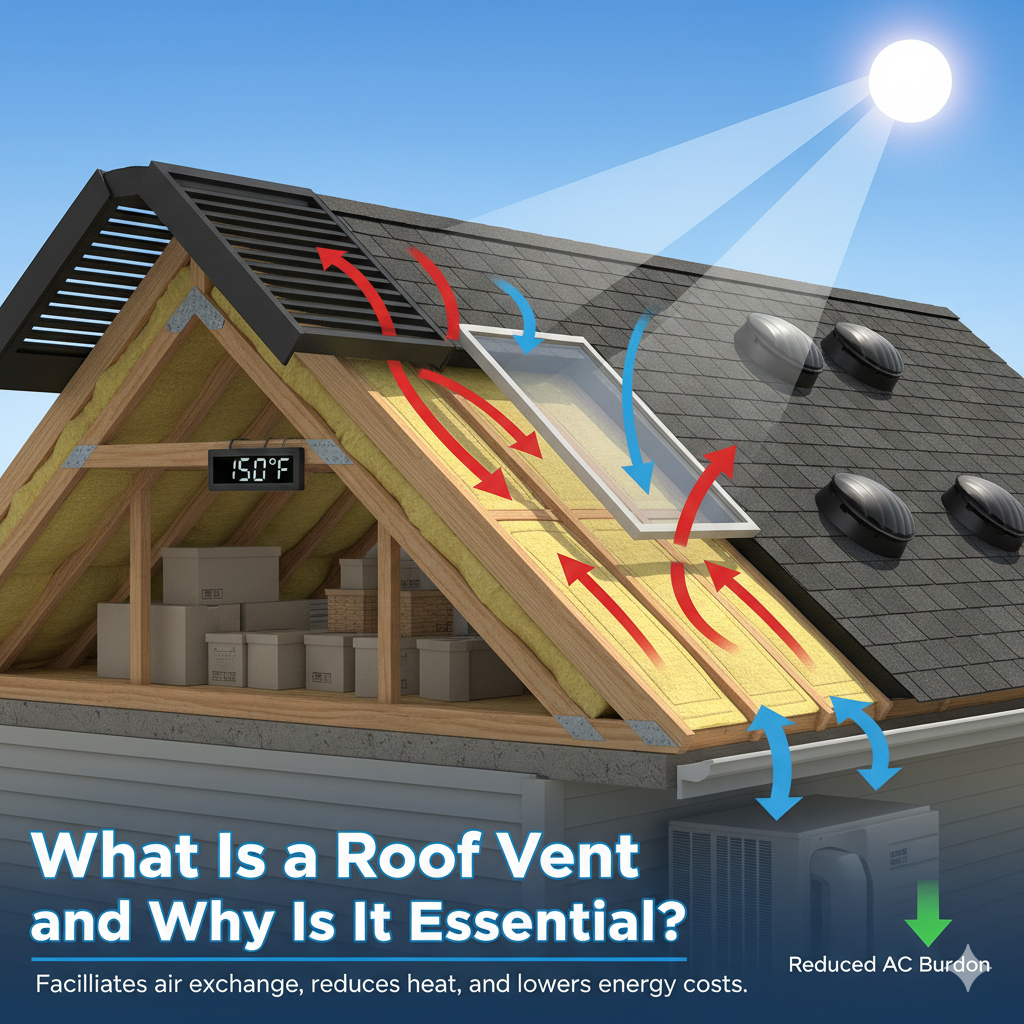
A roof vent is a specialized device installed on the rooftop of a residential or commercial building designed to facilitate the exchange of air between the attic space and the outdoors. The primary physics behind this technology involves the natural rise of warm air and the intake of cooler air. In the summer, the sun beats down on your shingles, causing the temperature in the attic to rise drastically, sometimes reaching 150 degrees Fahrenheit. A properly functioning roof vent allows this superheated air to escape, reducing the burden on your air conditioning system.
In the winter, the dynamic changes but remains equally critical. Warm air from the living space often leaks into the attic. If this warm air hits a cold roof deck, condensation forms. Over time, this moisture can lead to rot in the rafters, ruined insulation, and dangerous mold. A roof vent expels this warm, moist air before it has a chance to condense. Therefore, the device is not just about temperature control; it is fundamentally about moisture management and preserving the structural integrity of the home.
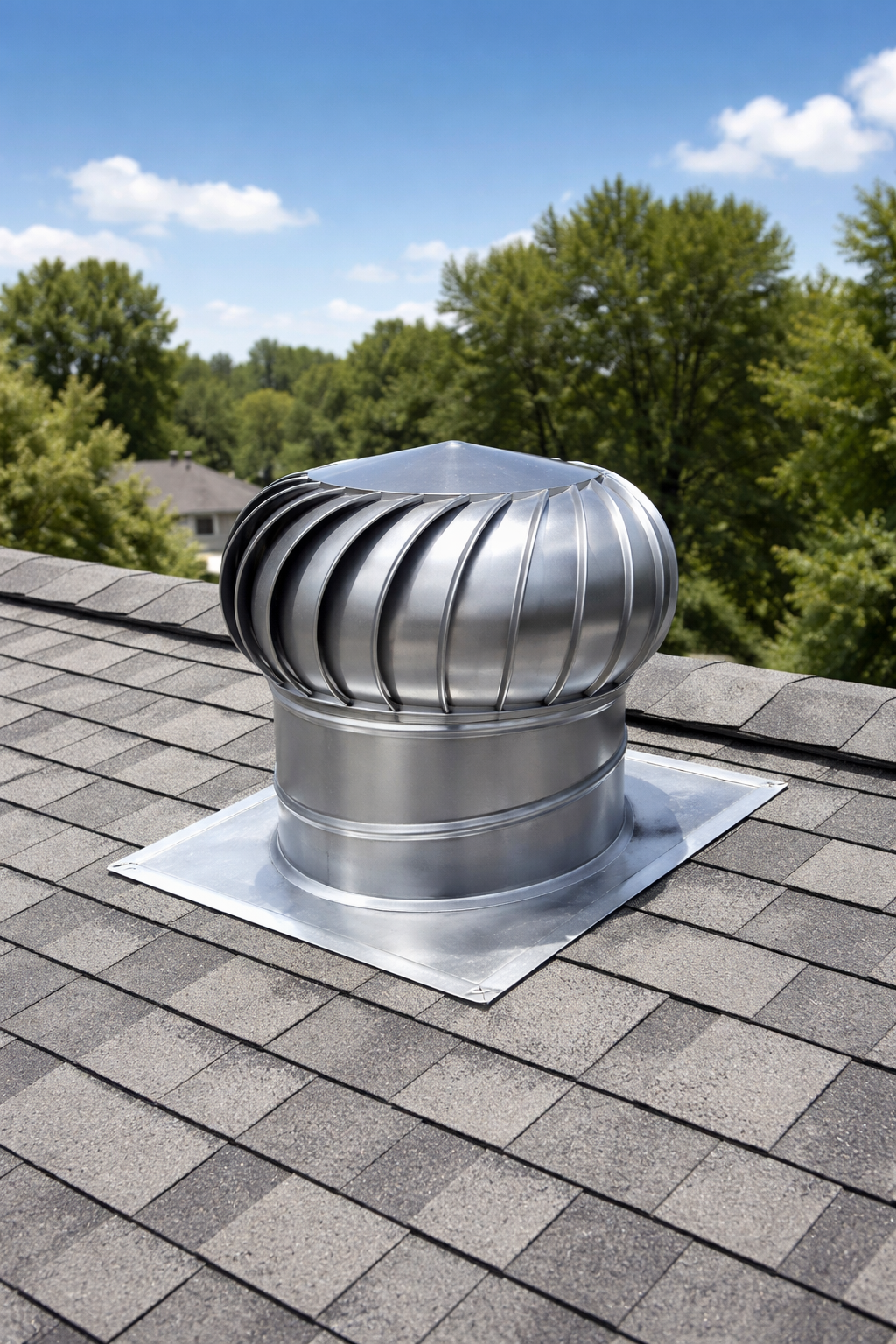
There are two main categories of ventilation: active and static. A static roof vent has no moving parts and relies on the natural buoyancy of hot air (convection) or wind pressure to move air. Examples include box vents, ridge vents, and off-ridge vents. Conversely, an active roof vent uses mechanical means to pull air out of the attic. These can be powered by electricity or solar energy, or they can be wind turbines that spin to create suction. Understanding these distinctions is the first step in mastering home ventilation.
How to Find the Right Ventilation System
Finding the correct roof vent for your specific home requires analyzing your roof’s architecture and your local climate. Not all vents work on all roofs. For instance, a hip roof (which has slopes on all four sides) often has very little horizontal ridge line, making a continuous ridge vent difficult to install effectively. In this scenario, a powered fan or a series of static mushroom vents might be the superior choice.
Consulting with a local roofing professional is often the best way to find a solution tailored to your specific building code and environmental needs.
How to Buy the Best Equipment
When you are ready to buy a roof vent, the market can be overwhelming due to the sheer variety of materials and brands. Durability should be your primary concern. Roofs are exposed to the harshest elements: UV radiation, hail, heavy rain, and snow. A cheap plastic roof vent may crack after a few years of sun exposure, leading to leaks.
It is generally recommended to buy units made from galvanized steel, aluminum, or high-grade polymer composites. Metal vents are often powder-coated to match shingle colors and resist rust. When you visit a hardware store or browse online, look for products with a warranty. A lifetime warranty on a roof vent suggests the manufacturer is confident in the material’s longevity.
Furthermore, consider the “Net Free Area” (NFA) rating when you buy. The NFA tells you how much actual space is available for air to pass through. A large-looking roof vent might have a small NFA if it is heavily baffled to prevent rain entry. You want a balance: high NFA for airflow, but sufficient weatherproofing to keep the attic dry during storms.
Advantages and Challenges of Installation
Installing a new roof vent comes with significant advantages. The most immediate benefit is improved energy efficiency. By lowering attic temperatures, your HVAC system does not have to work as hard, which can extend the lifespan of your air conditioner and lower monthly electric bills. Another major advantage is the prevention of ice dams in colder climates. By keeping the roof deck temperature closer to the outside temperature, a roof vent prevents snow from melting and refreezing at the eaves.
However, there are challenges. The most significant risk associated with adding a roof vent is the potential for roof leaks. Every time you cut a hole in your roof, you are compromising the waterproof membrane. If the flashing is not installed perfectly, water will find a way in.
Another challenge is “short-circuiting” the airflow. This happens when a new exhaust roof vent is placed too close to another exhaust vent or an intake vent. Instead of pulling air from the entire attic, the vent pulls air from the nearest opening, leaving the rest of the attic stagnant. Proper spacing requires calculation and planning. Additionally, powered vents can sometimes be noisy, creating a hum that resonates through the framing of the house, which some homeowners find disturbing.
Special Concepts and Regional Considerations
In this section, we will address four specific topics relevant to modern ventilation strategies, ranging from local codes to specific installation nuances.
1. Roofing Venting San Jose
California has strict building energy efficiency standards (Title 24). When looking at roofing venting San Jose requirements, specifically, homeowners must often ensure their “cool roof” materials work in tandem with ventilation. The climate in the Bay Area can fluctuate, and local codes in San Jose emphasize preventing moisture buildup that leads to dry rot. Compliance often requires a calculated balance of 1 square foot of ventilation for every 150 square feet of attic space.
2. Air Vents for Roof
While we often discuss the exhaust component, generic air vents for roof systems must include intake. The term encompasses the entire ecosystem: soffit vents, gable vents, and rooftop exhaust. Using incompatible air vents for roof setups—like mixing a turbine with a ridge vent—can disrupt the air pressure, causing weather infiltration.
3. How to Install Roof Vent
Understanding how to install roof vent units requires more than just a hammer. You must identify the rafter layout to avoid cutting structural lumber. When learning how to install roof vent flashing, the “shingle fashion” method is critical: the upper shingles must overlap the vent flange, while the flange overlaps the lower shingles to shed water effectively.
4. What Is a Ridge Vent on a Roof
Homeowners frequently ask, what is a ridge vent on a roof and is it better than a box vent? A ridge vent is a continuous exhaust strip running along the very peak of the roof. It is often considered the most efficient static option because it exhausts air from the highest possible point. Answering what is a ridge vent on a roof also involves aesthetics; because it is covered with cap shingles, it is nearly invisible from the street.
How to Install a Ventilation Unit Correctly
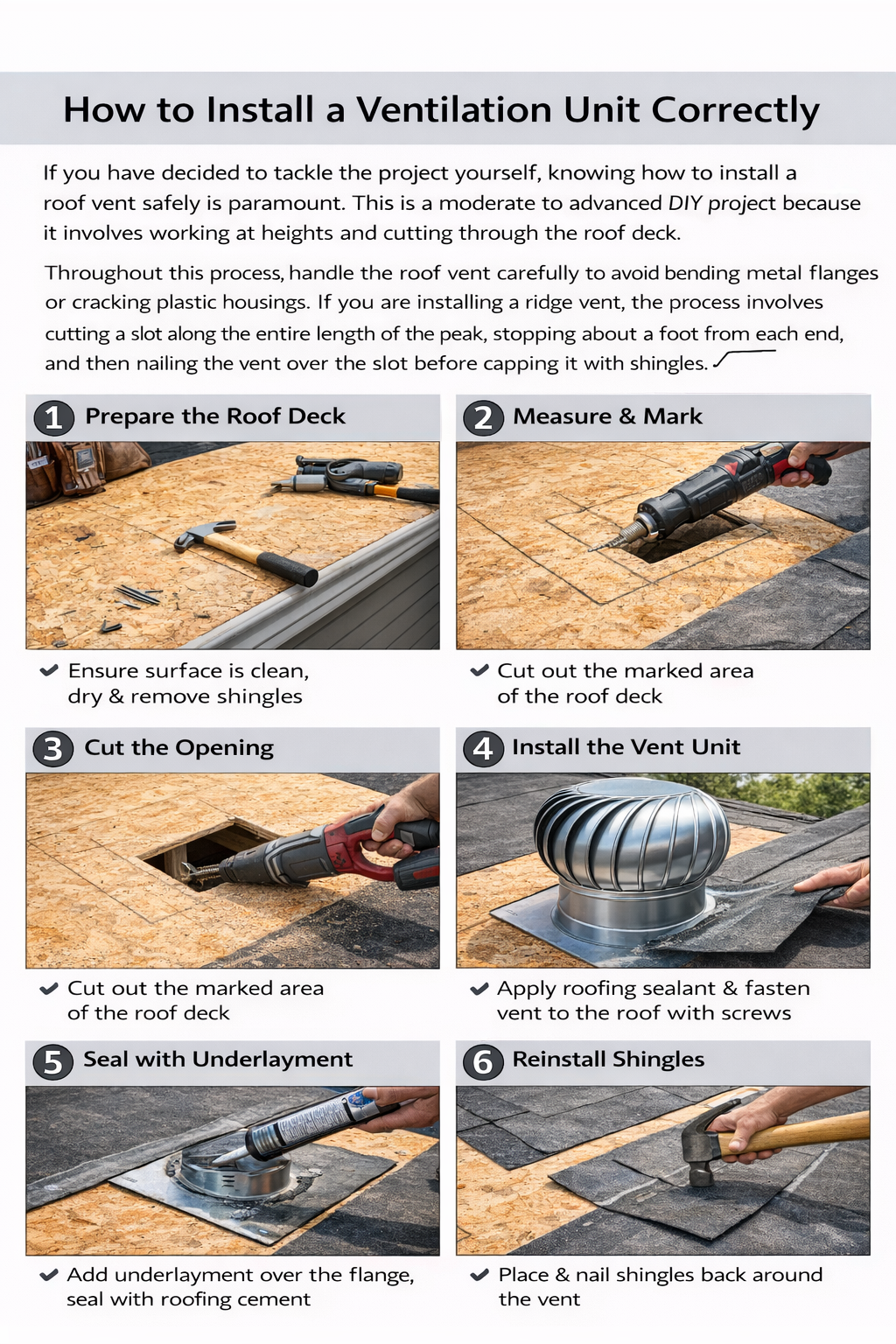
If you have decided to tackle the project yourself, knowing how to install a roof vent safely is paramount. This is a moderate to advanced DIY project because it involves working at heights and cutting through the roof deck.
Throughout this process, handle the roof vent carefully to avoid bending metal flanges or cracking plastic housings. If you are installing a ridge vent, the process involves cutting a slot along the entire length of the peak, stopping about a foot from each end, and then nailing the vent over the slot before capping it with shingles.
How Long Does a Roof Vent Last?
The lifespan of a roof vent depends heavily on the material and the environment. A standard aluminum box vent typically lasts between 15 and 20 years. However, in coastal areas with salt air, aluminum can corrode faster, reducing that lifespan. Plastic or polymer vents can last 10 to 15 years, but they are susceptible to becoming brittle under intense UV radiation.
Powered fans usually have a shorter lifespan than static vents because they contain motors. The motor on a powered roof vent might fail after 5 to 10 years, even if the housing is still intact. Solar-powered fans have batteries and panels that also degrade over time.
Generally, you should inspect every roof vent whenever you replace your roof. Most roofing contractors will recommend replacing all penetrations—pipes, jacks, and vents—when installing new shingles. It is rarely worth trying to salvage an old roof vent to save a few dollars, as the labor to replace it later will cost much more than the unit itself.
What Is the Cost of Replacement and Repair?
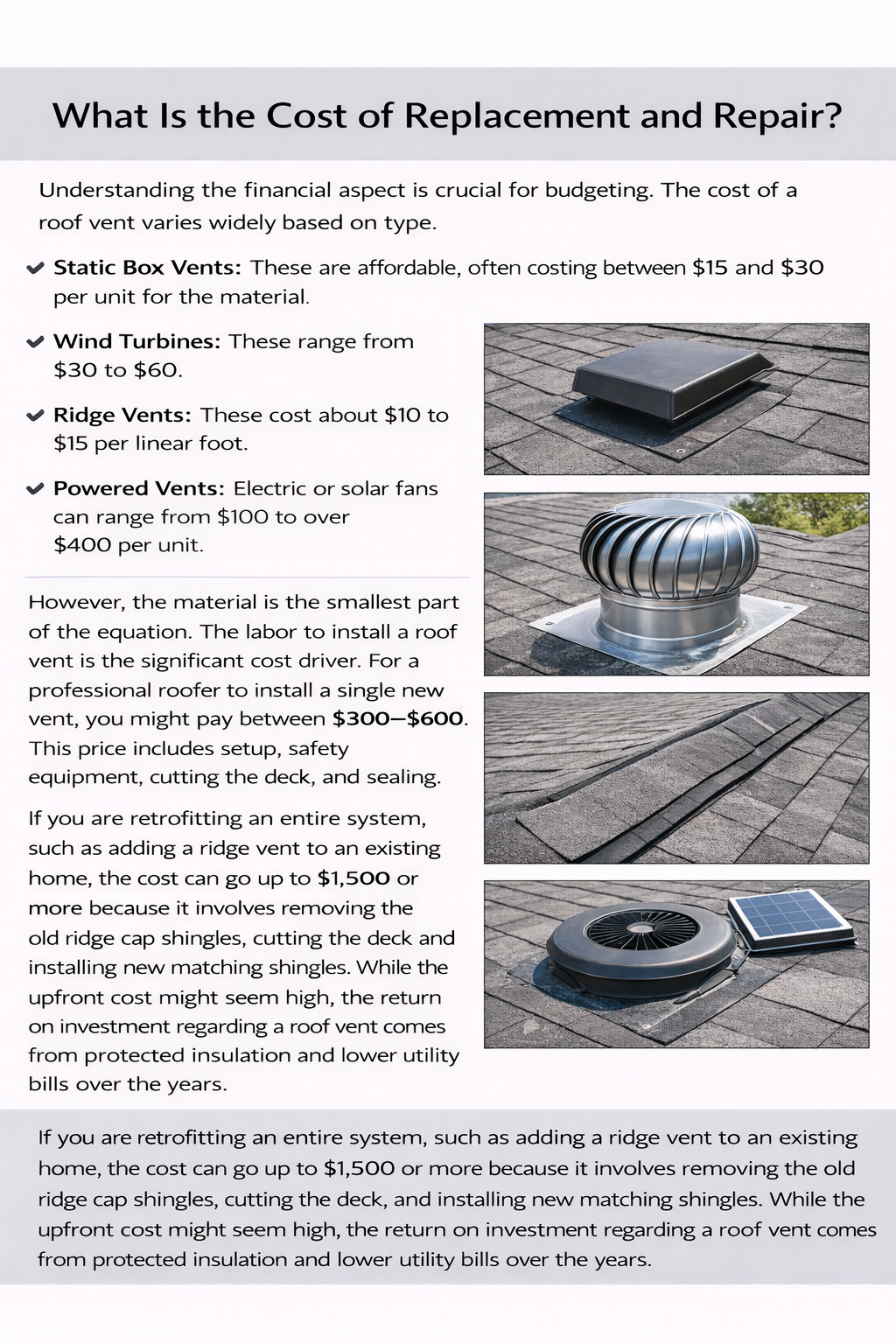
Understanding the financial aspect is crucial for budgeting. The cost of a roof vent varies widely based on type.
* Static Box Vents: These are affordable, often costing between $15 and $30 per unit for the material.
* Wind Turbines: These range from $30 to $60.
* Ridge Vents: These cost about $10 to $15 per linear foot.
* Powered Vents: Electric or solar fans can range from $100 to over $400 per unit.
However, the material is the smallest part of the equation. The labor to install a roof vent is the significant cost driver. For a professional roofer to install a single new vent, you might pay between $300 and $600. This price includes setup, safety equipment, cutting the deck, and sealing.
If you are retrofitting an entire system, such as adding a ridge vent to an existing home, the cost can go up to $1,500 or more because it involves removing the old ridge cap shingles, cutting the deck, and installing new matching shingles. While the upfront cost might seem high, the return on investment regarding a roof vent comes from protected insulation and lower utility bills over the years.
How Much Ventilation Do You Need?
Determining the quantity of ventilation is a math problem. The standard building code rule in the US is the “1/300 rule” or the “1/150 rule.” The 1/300 rule states that for every 300 square feet of attic floor space, you need 1 square foot of ventilation, provided that the ventilation is balanced (50% intake at soffits and 50% exhaust at the roof vent).
If you do not have a balanced system, or if you only have exhaust vents, you default to the 1/150 rule: 1 square foot of ventilation for every 150 square feet of attic space.
Let’s look at an example. If you have a 1500 sq. ft. attic and a balanced system (1/300), you need 5 square feet of total ventilation. This means 2.5 sq. ft. of intake and 2.5 sq. ft. of exhaust. When shopping for a roof vent, check the NFA (Net Free Area). If a box vent provides 50 square inches of NFA, and you need 2.5 square feet (360 square inches) of exhaust, you would need approximately 7 or 8 of those vents to do the job correctly. Undersizing your roof vent system renders it ineffective, while oversizing it without proper intake can pull weather into the attic.
How to Clean and Maintain Your System
Maintenance is often overlooked, but a clogged roof vent is useless. Over time, screens on vents can become choked with dust, pollen, and spiderwebs. Bird nests are also a common issue, particularly in gable vents or turbine vents that have stopped spinning.
To clean a roof vent, you generally need to access it from the roof. Using a soft brush or compressed air, clear the debris from the screen or louvers. Do not use a high-pressure water hose, as you might force water into the attic. If you have a turbine roof vent, check that it spins freely. You may need to lubricate the bearings with a silicone-based lubricant (avoid oil-based products that attract dust).
From inside the attic, ensure that insulation baffles are installed. Baffles prevent fiberglass insulation from expanding and blocking the flow of air from the soffits up to the roof vent. If you see daylight peeking through your exhaust vents, that is usually a good sign; if you see thick darkness where a vent should be, it is likely clogged.
How to Do a Ventilation Audit
Before spending money, conduct a ventilation audit. This simple process helps you understand if your current roof vent setup is working.
Performing this audit annually ensures that your home remains healthy. If you find discrepancies, it is time to calculate your requirements again and perhaps add an additional roof vent or clear existing blockages.
Frequently Asked Questions
Can I mix different types of exhaust vents?
No, you should never mix different types of exhaust systems (like a ridge vent and a box vent) on the same roof plane. This disrupts the airflow physics, causing the stronger roof vent to pull air in through the weaker one, recycling hot air rather than venting it out.
Do I need a fan if I have ridge vents?
Generally, no. Adding a powered fan to a roof that already has a ridge roof vent can reverse the airflow, pulling rain or snow in through the ridge vent. Stick to one system.
Does a roof vent cause leaks?
If installed correctly with proper flashing, a roof vent should not leak. However, as the rubber gaskets or sealant age, leaks can develop. Regular inspection is required.
Will a roof vent lower my cooling bills?
Yes, by reducing the heat load in the attic, your AC unit runs less frequently, which can result in noticeable energy savings during the summer months.
Is it necessary to vent a sealed attic?
If you have spray foam insulation on the underside of the roof deck (creating a “hot roof” or unvented assembly), you do not need a standard roof vent. The attic becomes part of the conditioned space.
Conclusion
Investing in the correct roof vent strategy is one of the smartest decisions a homeowner can make. It protects the structural longevity of the house by fighting moisture in the winter and reduces energy costs by fighting heat in the summer. Whether you choose a simple static box vent, a sleek ridge vent, or a high-tech solar fan, the key is balance and quality installation.
From understanding the basic physics of airflow to navigating the complexities of purchasing and installation, this guide has covered the essential landscape of roof ventilation. Remember that the goal is a continuous flow of air: cool air entering the bottom and warm air exiting the top through the roof vent. Regular maintenance and periodic audits will ensure that your home breathes easy for decades to come. Don’t neglect this vital component of your roofing system; a small investment in ventilation today saves thousands in repairs tomorrow.
🔧 Other Resources
• Home Depot – Retail category page listing roof vents and ventilation products for residential roofing.
• Lowe’s – Retail page presenting roof vent accessories and ventilation solutions.
• Atlas Roofing – Manufacturer page describing ridge vent products used for roof ventilation systems.
• Bill Ragan Roofing – Educational article explaining different types of roof vents and their purposes.
🔎 Other Helpful Articles
• Roof Decking Build – Technical article outlining how roof decking is constructed and installed.
• Roof Sheathing – Informational article explaining roof sheathing materials and functions.
• Roof Underlayment – Educational guide describing roof underlayment types and roles in roofing systems.
