
Ventilation systems for flat roofs: Best Choices

Ventilation systems for flat roofs: Best Choices
When managing a property, ignoring the roof over your head is easy until water starts dripping on your desk. However, proper airflow is the invisible shield that protects your structural integrity. Understanding ventilation systems for flat roofs is critical for any homeowner or building manager who wants to avoid rot, mold, and premature roof failure. Unlike pitched roofs, which often use gravity and natural convection easily, flat roofs face unique challenges that require specific engineering solutions.
Most people assume a flat roof is a sealed box, but without airflow, that box becomes a moisture trap. This guide explores everything you need to know about these essential systems, from basic definitions to complex installation procedures. We will cover the financial aspects, the practical “how-to” steps, and the specialized equipment needed to keep your building healthy.
What Is a Ventilation System for a Flat Roof?
At its core, the concept of ventilation systems for flat roofs refers to the mechanism used to circulate air between the ceiling insulation and the exterior roof membrane. This airflow is vital for regulating temperature and moisture levels. In a “cold roof” design, this ventilation is mandatory to prevent condensation from forming on the underside of the roof deck.
Condensation occurs when warm, moist air from inside the building rises and hits the cold surface of the roof. Without adequate ventilation systems for flat roofs, this moisture becomes trapped. Over time, this leads to rotting timber, saturated insulation that loses its thermal value, and the growth of harmful mold. A proper system creates a continuous flow of air, usually from one side of the roof to the other, carrying away moisture before it can do damage.
These systems are not just about letting air out; they are about creating a balanced environment. They often involve a combination of intake vents, exhaust vents, and sometimes mechanical fans. The goal is to equalize the temperature of the roof deck with the outside air, preventing ice dams in winter and excessive heat buildup in summer.
How to Do a Proper Assessment of Your Needs
Before you can select the right ventilation systems for flat roofs, you must perform a thorough assessment of your current structure. This is not a task for guesswork. You need to determine if your roof is a “cold roof” or a “warm roof.” A warm roof places insulation above the deck, often negating the need for ventilation voids, whereas a cold roof places insulation between the joists, making ventilation absolutely critical.
To do this assessment effectively:
Inspect the Attic Space: Check for existing airflow blockages. Insulation should not cover the soffit vents.
Calculate the Area: Measure the total square footage of the roof. Building codes often dictate a specific ratio of ventilation area to floor area (commonly 1:150).
Identify Moisture Sources: Look for bathroom or kitchen vents that might be venting into the roof space instead of outside.
Implementing ventilation systems for flat roofs requires understanding the path of airflow. You need to ensure there is a clear cross-ventilation path. This means air must enter one side and exit the other without obstruction. If the roof span is too wide, standard passive ventilation might fail, requiring mid-roof vents or mechanical assistance.
How to Find the Best Ventilation Products
Finding high-quality ventilation systems for flat roofs involves looking beyond the big-box hardware store. While they carry basic supplies, specialized roofing suppliers often stock the durable, high-performance units required for flat roofing. You want products that are designed to withstand standing water, heavy snow loads, and intense UV radiation.
Start by researching manufacturers who specialize in flat roofing components. Look for technical data sheets that specify the “net free area” (NFA) of the vent. The NFA tells you how much actual airflow the vent provides. You will need this number to ensure you meet the building code requirements for ventilation systems for flat roofs.
Pro Tip: Look for vents made from non-corrosive materials like aluminum or heavy-duty polypropylene. Steel vents can rust quickly on a flat roof where water tends to pool.
Online roofing forums and contractor supply websites are excellent resources. Read reviews from professionals, not just DIYers. Professionals install ventilation systems for flat roofs daily and know which brands fail after a few years and which ones last for decades.
How to Buy the Right System for Your Building
When you are ready to buy ventilation systems for flat roofs, accuracy is your best friend. Buying the wrong size or type can lead to leaks and poor performance. Do not simply buy the cheapest option; calculate exactly what you need based on the assessment you performed earlier.
Follow this purchasing checklist:
Verify Compatibility: Ensure the vent flange is compatible with your specific roof membrane (EPDM, TPO, Modified Bitumen, or Built-Up).
Check the Height: The vent stack should be high enough to clear expected snow levels in your area.
Confirm the Screen: Buy vents with insect and rodent screens.
It is often wise to buy a few more units than your calculations suggest. This accounts for potential obstructions like joists or pipes that you might discover during installation. When purchasing ventilation systems for flat roofs, also buy the appropriate sealants and flashing tapes recommended by the vent manufacturer. Mixing incompatible chemical sealants is a common cause of failure.
How Much Do These Systems Cost?
The price of ventilation systems for flat roofs varies significantly based on the complexity of the system and the materials used. Simple mushroom vents might cost as little as $30 to $50 each, while sophisticated, solar-powered extraction units can run into the hundreds of dollars.
For a standard residential flat roof (approx. 1,000 sq. ft.), you might need:
Passive Vents: 4 to 6 units at $40 each ($160 – $240).
Installation Materials: Sealants, screws, and flashing ($100).
Labor: If hiring a pro, expect to pay $300 to $600 depending on accessibility.
However, mechanical ventilation systems for flat roofs are more expensive. A powered fan system designed to actively pull moisture out of a large commercial roof can cost between $500 and $1,500 per unit, plus electrical work. While the upfront cost seems high, the cost of replacing a rotted roof deck is exponentially higher. Therefore, investing in quality ventilation systems for flat roofs is always a financially sound decision in the long run.
Specialized Components and Installation Costs
In this section, we will delve into specific components and their associated costs to give you a clearer picture of the investment required for ventilation systems for flat roofs.
Abutment Ventilation System for Flat Roof
An abutment ventilation system is crucial where a flat roof meets an external wall. This junction is a common failure point for airflow. Without a proper abutment vent, air becomes trapped at the highest point of the slope (if there is a slight pitch) or against the wall, leading to condensation. These systems usually consist of a specialized strip vent that is flashed into the wall and the roof membrane. They allow air to escape while preventing wind-driven rain from entering.
Flat Roof Air Vents
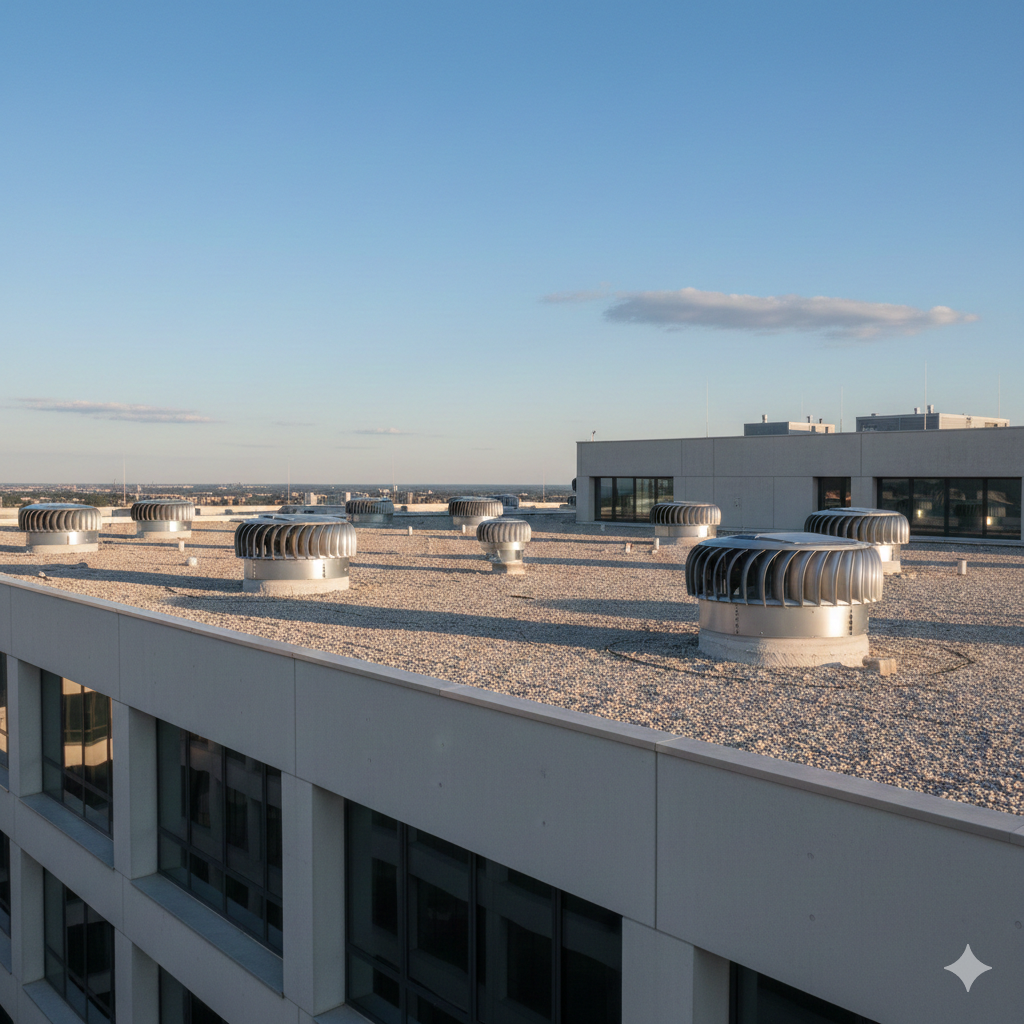
Generic flat roof air vents come in various shapes, often resembling mushrooms or low-profile domes. They are the workhorses of ventilation systems for flat roofs. They are installed directly onto the roof deck, requiring a hole to be cut through the membrane and the wood below. The flange is then sealed to become part of the roof surface.
Flat Roof Air Vents Cost
The cost for these individual units is generally affordable. A standard aluminum mushroom vent typically costs between $35 and $65. High-impact plastic versions can be found for $25 to $45. However, copper or stainless steel vents, chosen for aesthetics or extreme durability, can cost upwards of $100 per unit.
Flat Roof Air Vents Cost Installation
Installation costs for ventilation systems for flat roofs depend on the roofing material. Installing a vent on an EPDM rubber roof is faster than on a built-up tar and gravel roof. Expect to pay a roofer between $75 and $150 per vent for labor if it is a retrofit job. If the vents are installed during a complete roof replacement, the labor cost per unit drops significantly, often absorbed into the total project price.
How to Install Ventilation Systems

Installing ventilation systems for flat roofs is a precise task. If you cut a hole in your roof, you must be 100% certain you can seal it again. Improper installation is the leading cause of leaks in flat roofing.
Here is a general step-by-step process for a standard mushroom vent:
Mark the Location: Locate the space between the joists. Do not cut through structural timber.
Cut the Hole: Use a hole saw or jigsaw to cut through the roofing membrane and the deck.
Prepare the Surface: Clean the area around the hole thoroughly. Remove gravel or debris.
Apply Sealant: Apply a thick bead of roofing mastic or compatible sealant to the underside of the vent flange.
Secure the Vent: Press the vent into place and screw it down using roofing screws with neoprene washers.
Flash the Flange: This is critical. Apply a patch of roofing membrane over the flange, extending onto the main roof. Seal the edges meticulously.
When installing ventilation systems for flat roofs, safety is paramount. Always use fall protection and never work on a wet or icy roof. If you are unsure about the waterproofing steps, hiring a professional is safer than risking water damage to your interior.
How to Clean and Maintain Your Vents
Maintenance is often overlooked, but dirty ventilation systems for flat roofs are useless. Over time, screens get clogged with dust, pollen, and spiderwebs, while the housings can become homes for bird nests.
To clean them:
Clear Debris: Physically remove leaves and twigs from around the base of the vent.
Check the Screen: Use a stiff brush to clean the insect screen. If it is painted shut or corroded, it needs replacement.
Inspect the Seal: Check the sealant around the base. If it is cracked or peeling, remove the old caulk and re-seal.
Check for Blockage: Shine a flashlight down the throat of the vent to ensure insulation hasn’t shifted and blocked the airflow from below.
Regularly maintaining ventilation systems for flat roofs ensures they continue to operate at maximum efficiency. A clogged vent creates the same problems as having no vent at all. Aim to inspect your vents twice a year: once in spring and once in late autumn.

What Is the Cost of Neglect?
If you decide not to install or maintain ventilation systems for flat roofs, the costs can be staggering. We are not just talking about the price of the vents; we are talking about the cost of the damage caused by trapped moisture.
Potential costs of neglect include:
Insulation Replacement: Wet insulation must be removed. This can cost $2 to $5 per square foot to replace.
Structural Repair: Rotted roof joists require major carpentry work, often costing thousands of dollars.
Mold Remediation: If mold spreads to the living space, professional remediation can cost between $2,000 and $10,000.
Roof Replacement: A flat roof that should last 20 years might fail in 10 due to thermal shock and moisture damage from below.
Compared to these expenses, the price of installing high-quality ventilation systems for flat roofs is negligible. It acts as an insurance policy for the building’s envelope, extending the lifespan of every material involved in the roof assembly.
Advantages and Challenges
There are distinct pros and cons associated with implementing ventilation systems for flat roofs. Understanding these helps in managing expectations and planning effectively.
Advantages:
Moisture Control: The primary benefit is the removal of condensation, protecting the structure.
Temperature Regulation: Helps keep the building cooler in summer by venting superheated air.
Ice Dam Prevention: Keeps the roof deck cold in winter, preventing snow melt/refreeze cycles.
Longevity: Significantly extends the life of the roof membrane and decking.
Challenges:
Installation Risk: Every penetration in a flat roof is a potential leak source if not flashed perfectly.
Complexity: Achieving cross-flow in large or complex roof shapes is difficult with ventilation systems for flat roofs.
Maintenance: They require regular checking to ensure they aren’t blocked by debris or snow.
Aesthetics: Some owners dislike the look of vents protruding from the roofline.
Despite the challenges, the consensus among building scientists is that for cold roof designs, the advantages of ventilation systems for flat roofs far outweigh the risks.
Final Thoughts on Choosing the Right System
Selecting the correct ventilation systems for flat roofs is a balance of science and practicality. You must calculate the required airflow, choose durable materials, and ensure flawless installation. Whether you choose passive mushroom vents, continuous soffit vents, or powered extraction fans, the goal remains the same: a dry, healthy building.
Remember that ventilation systems for flat roofs are part of a holistic building system. They work in tandem with insulation and vapor barriers. If the vapor barrier is punctured, the ventilation system might be overwhelmed. If the insulation is blocking the airway, the vents are useless. Therefore, take a comprehensive view of your roof assembly.
By investing time and resources into proper ventilation systems for flat roofs, you are securing the future of your property. It is a technical necessity that pays dividends in durability, air quality, and peace of mind.
FAQ : Ventilation systems for flat roofs
Why are ventilation systems for flat roofs necessary?
They are necessary to remove moisture that accumulates in the roof cavity, preventing mold growth, wood rot, and wet insulation which reduces energy efficiency.
Can I install ventilation systems for flat roofs myself?
Yes, if you have experience with flat roofing materials and waterproofing. However, due to the risk of leaks, professional installation is recommended for complex systems.
How often should I inspect my ventilation systems for flat roofs?
You should inspect them at least twice a year, typically in the spring and fall, to ensure they are free of debris and the seals are intact.
Do all flat roofs need ventilation systems for flat roofs?
No. “Warm roofs,” where the insulation is on top of the deck, generally do not require ventilation. “Cold roofs,” with insulation between joists, absolutely require ventilation.
What is the best material for ventilation systems for flat roofs?
Aluminum and high-quality polypropylene are excellent choices because they resist corrosion and withstand the harsh conditions typical of flat roof environments.
Conclusion
In the world of construction and property maintenance, ventilation systems for flat roofs are unsung heroes. They silently work to combat the natural forces of condensation and thermal fluctuation that threaten to destroy your building from the top down. Throughout this guide, we have explored what these systems are, how to assess your needs, the intricacies of installation, and the stark financial reality of neglecting them.
From the specific “how-to” of cutting the deck to the granular details of ventilation systems for flat roofs pricing, it is clear that this is not an area for shortcuts. The integrity of your roof depends on a continuous flow of air. Whether you are dealing with a small residential garage or a massive commercial complex, the principles remain constant. You must facilitate the movement of air to keep the structure dry.
As you move forward with your roofing project, prioritize quality components. Do not compromise on the waterproofing details. Ensure that your chosen ventilation systems for flat roofs are compatible with your specific roof membrane. By doing so, you ensure that your investment remains secure, your insulation stays dry, and your building remains a healthy environment for its occupants for decades to come.
Other Resources
FAMCO – Manufacturer product page listing roof vents for residential and commercial roofing systems.
Monarch Roofing – Educational article explaining flat roof vent types and their ventilation functions.
RoofVents – Informational page describing flat roof ventilation options and airflow considerations.
Other Helpful Articles
Flat Roof Bubble Repair – Article explaining causes and repair methods for bubbles in flat roofs.
Flat Roof Scupper Installation Steps – Step-by-step guide outlining proper flat roof scupper installation.
