
rv roof repair cost: Easy Fixes
RV roof repair cost: Best Ways to Save!
Understanding the true rv roof repair cost is crucial for any recreational vehicle owner. A damaged roof can lead to catastrophic internal water damage, mold growth, and a significant decrease in your vehicle’s overall value. Whether you own a massive Class A motorhome, a nimble Class C camper, or a sturdy fifth-wheel trailer, maintaining the structural integrity of your roof is the single most critical aspect of RV ownership. When a leak occurs, the immediate concern is often the financial impact. The rv roof repair cost varies wildly depending on the extent of the damage, the materials used, and whether you tackle the project yourself or hire a professional.
This comprehensive guide will explore every facet of maintaining, repairing, and understanding the financial implications of keeping your camper watertight and road-ready. We will delve into what these repairs entail, how to execute minor fixes, how to find qualified professionals, and ultimately, how to manage the overall rv roof repair cost effectively.
What is RV Roof Repair?
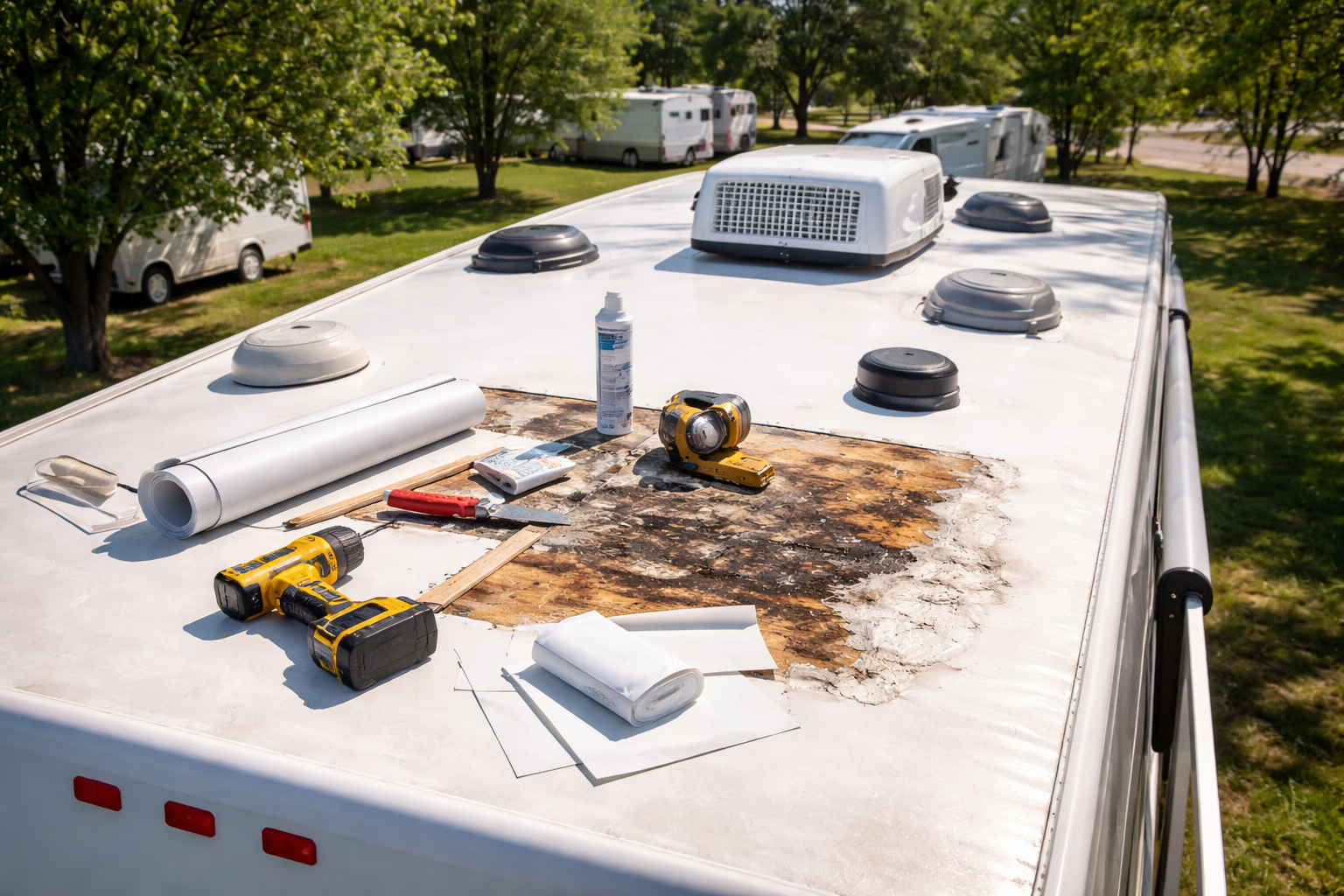
When we discuss the rv roof repair cost, we must first understand what the repair process actually entails. RV roof repair is the systematic process of identifying, evaluating, and fixing damage to the uppermost structure of a recreational vehicle. This damage can range from microscopic pinhole leaks in the sealant to massive tears in the rubber membrane caused by low-hanging branches or severe hailstorms. The type of roof you have—typically EPDM (Ethylene Propylene Diene Monomer) rubber, TPO (Thermoplastic Polyolefin), fiberglass, or aluminum—dictates the specific repair methods and materials required.
A minor repair might involve simply cleaning an area and applying a specialized self-leveling lap sealant around a vent or skylight. More extensive repairs might require patching a large tear with eternabond tape and a specialized coating. In extreme cases where water has penetrated the membrane and rotted the underlying wood substrate (the luan or plywood decking), a full structural rebuild becomes necessary.
The complexity of the required fix is the primary driver of the rv roof repair cost. Ignoring a small issue inevitably leads to a much larger, more expensive problem down the road. Proper repair restores the watertight seal, protecting the interior living space from the elements and preserving the longevity of the vehicle.
How to do Minor Roof Fixes
Knowing how to handle minor issues is the best way to keep your overall rv roof repair cost manageable. Many small leaks and tears can be addressed by a handy owner, saving hundreds of dollars in labor fees. The most common DIY repair involves resealing the seams and penetrations on the roof.
Inspect all seams around vents, air conditioners, skylights, and the front and rear caps. Look for cracking, peeling, or missing sealant.
Clean the area thoroughly. Use a specialized RV roof cleaner or a mild detergent and a soft-bristle brush. The surface must be completely free of dirt, grime, and oxidation before applying any new material.
Remove loose, failing sealant carefully using a plastic scraper. Avoid using metal tools that could gouge the roof membrane.
Apply a high-quality, self-leveling lap sealant designed specifically for your roof type (EPDM or TPO). Do not use silicone, as it rarely adheres well to RV membranes and makes future repairs incredibly difficult.
For small tears or punctures, use a specialized roof repair tape (like Eternabond). Clean the area, apply the tape, and use a roller to activate the pressure-sensitive adhesive.
By performing these simple tasks annually, you drastically reduce the likelihood of facing a massive rv roof repair cost due to neglected maintenance.
How to Find Qualified Repair Professionals
If the damage exceeds your DIY capabilities, knowing how to find a reputable professional is vital to ensure you pay a fair rv roof repair cost. Not all RV dealerships or independent shops are created equal when it comes to structural repairs.
Start by asking for recommendations from fellow RVers, either at campgrounds or in online forums and local social media groups. Word-of-mouth is often the most reliable indicator of quality work.
Check online reviews on platforms like Google, Yelp, and specialized RV service directories. Look for consistent praise regarding their transparency about the rv roof repair cost and their communication throughout the process.
Verify their experience with your specific type of roof. A shop that excels at aluminum roofs might not be the best choice for a complex EPDM replacement.
Request detailed, written estimates from at least three different shops. A trustworthy professional will break down the rv roof repair cost, separating materials, labor, and any potential hidden fees. Be wary of estimates that seem unusually low, as they may indicate corner-cutting or the use of inferior materials.
How to Buy the Right Repair Materials
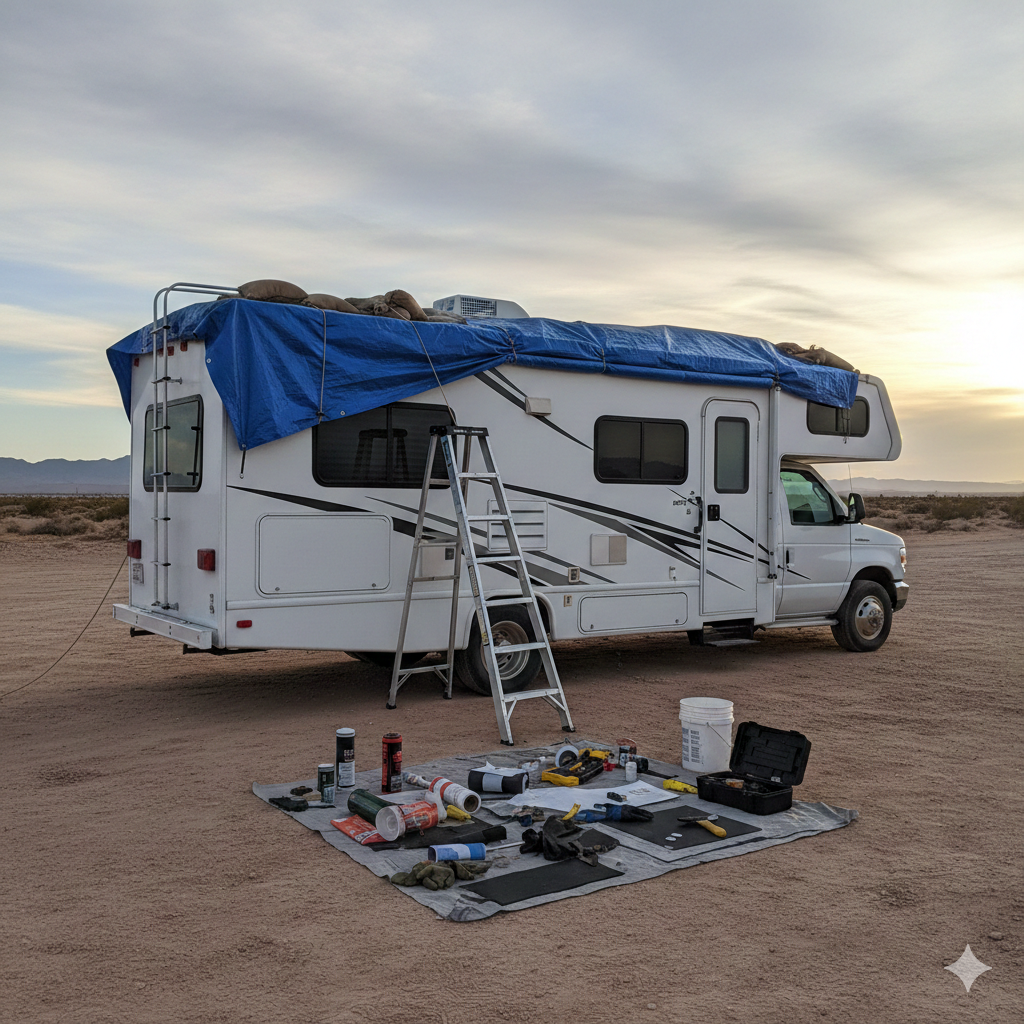
When undertaking a DIY project, buying the correct materials is essential. Purchasing the wrong products will not only fail to fix the leak but will also increase your overall rv roof repair cost when you have to redo the work.
Identify your roof material. This is the most critical step. Is it EPDM, TPO, fiberglass, or aluminum? Check your owner’s manual or contact the manufacturer if you are unsure. EPDM is typically smooth and chalks as it ages, while TPO often has a slight orange-peel texture.
Purchase sealants compatible with your specific roof. Using an EPDM sealant on a TPO roof can lead to adhesion failure. Read the labels carefully.
Invest in quality repair tapes. While generic tapes might be cheaper, specialized RV roof tapes provide a permanent, watertight seal that withstands extreme temperature fluctuations and UV exposure.
Buy the right cleaning agents. Using harsh chemicals or petroleum-based solvents on a rubber roof will cause the membrane to swell, deteriorate, and ultimately fail, leading to a catastrophic rv roof repair cost. Always use cleaners specifically formulated for RV roofs.
How Much to Budget for Maintenance
Budgeting for regular maintenance is the smartest strategy to control your long-term rv roof repair cost. Think of maintenance as an insurance policy against catastrophic failure.
You should expect to spend between $100 and $300 annually on routine maintenance supplies. This budget covers specialized roof cleaners, UV protectant treatments, tubes of self-leveling lap sealant, and a roll of high-quality repair tape to keep on hand for emergencies.
If you choose to have a professional perform an annual inspection and wash, expect to add $150 to $300 to your yearly budget. This is often a worthwhile investment, as trained technicians can spot potential issues that an untrained eye might miss.
By consistently investing a few hundred dollars a year in preventative care, you significantly reduce the odds of facing a sudden $5,000 to $10,000 rv roof repair cost for a complete replacement due to hidden water damage.
How to Install a New Roof Membrane
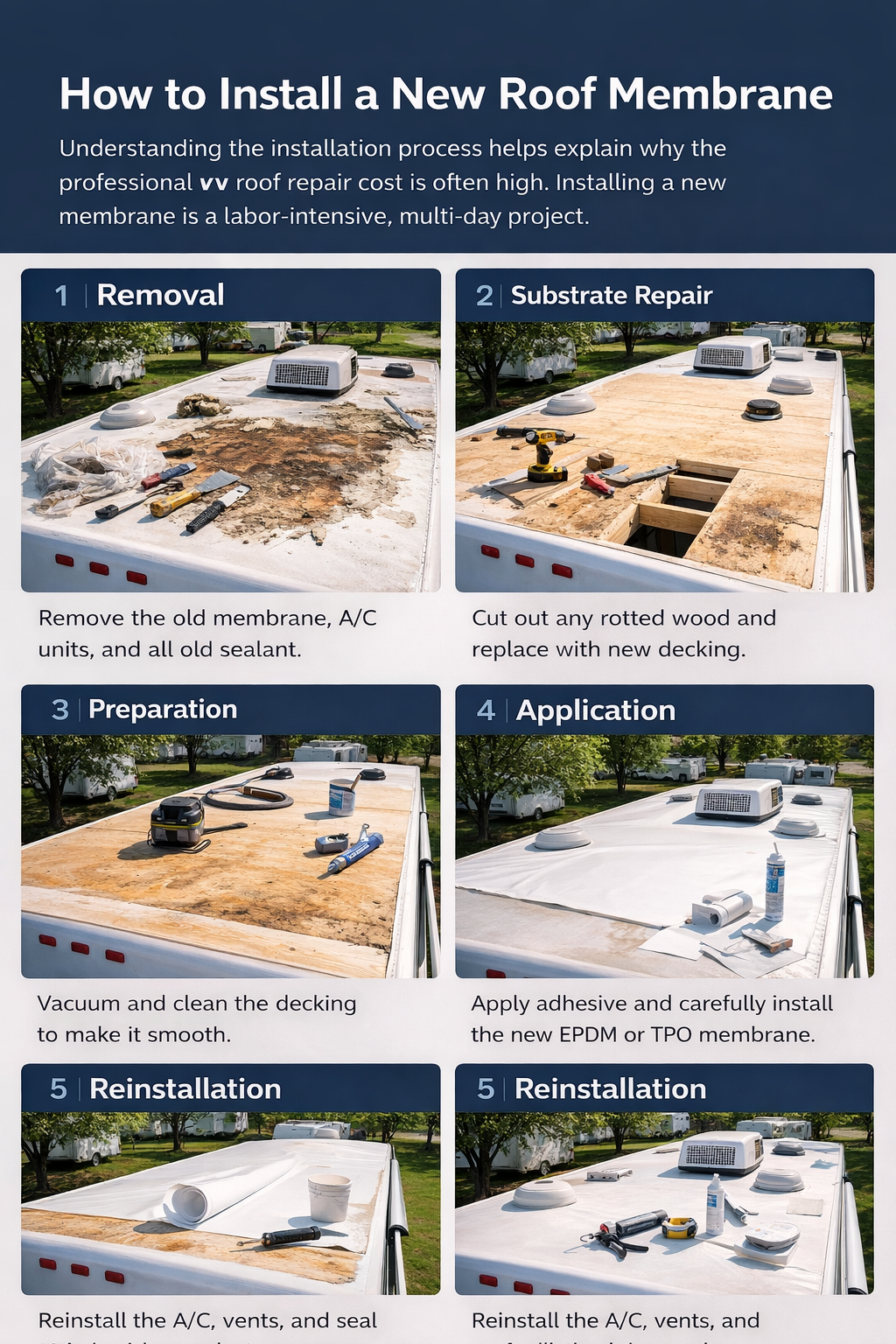
Understanding the installation process helps explain why the professional rv roof repair cost is often high. Installing a new membrane is a labor-intensive, multi-day project.
Removal: The old membrane, all roof fixtures (A/C units, vents, antennas), and all old sealant must be painstakingly removed.
Substrate Repair: The underlying wooden decking is inspected. Any rotted or damaged wood must be cut out and replaced to provide a solid foundation. This step often causes the rv roof repair cost to escalate if extensive water damage is found.
Preparation: The decking must be completely clean, dry, and smooth. Any imperfections will show through the new membrane.
Application: A specialized adhesive is rolled onto the decking. The new membrane (EPDM or TPO) is carefully rolled out, stretched, and smoothed to eliminate all air bubbles and wrinkles.
Reinstallation: All roof fixtures are reinstalled using fresh butyl tape and generous amounts of lap sealant.
Because of the specialized skills and significant labor involved, attempting this as a DIY project without prior experience is highly risky and can result in an even higher rv roof repair cost if the installation fails.
How to Clean and Protect Your Camper
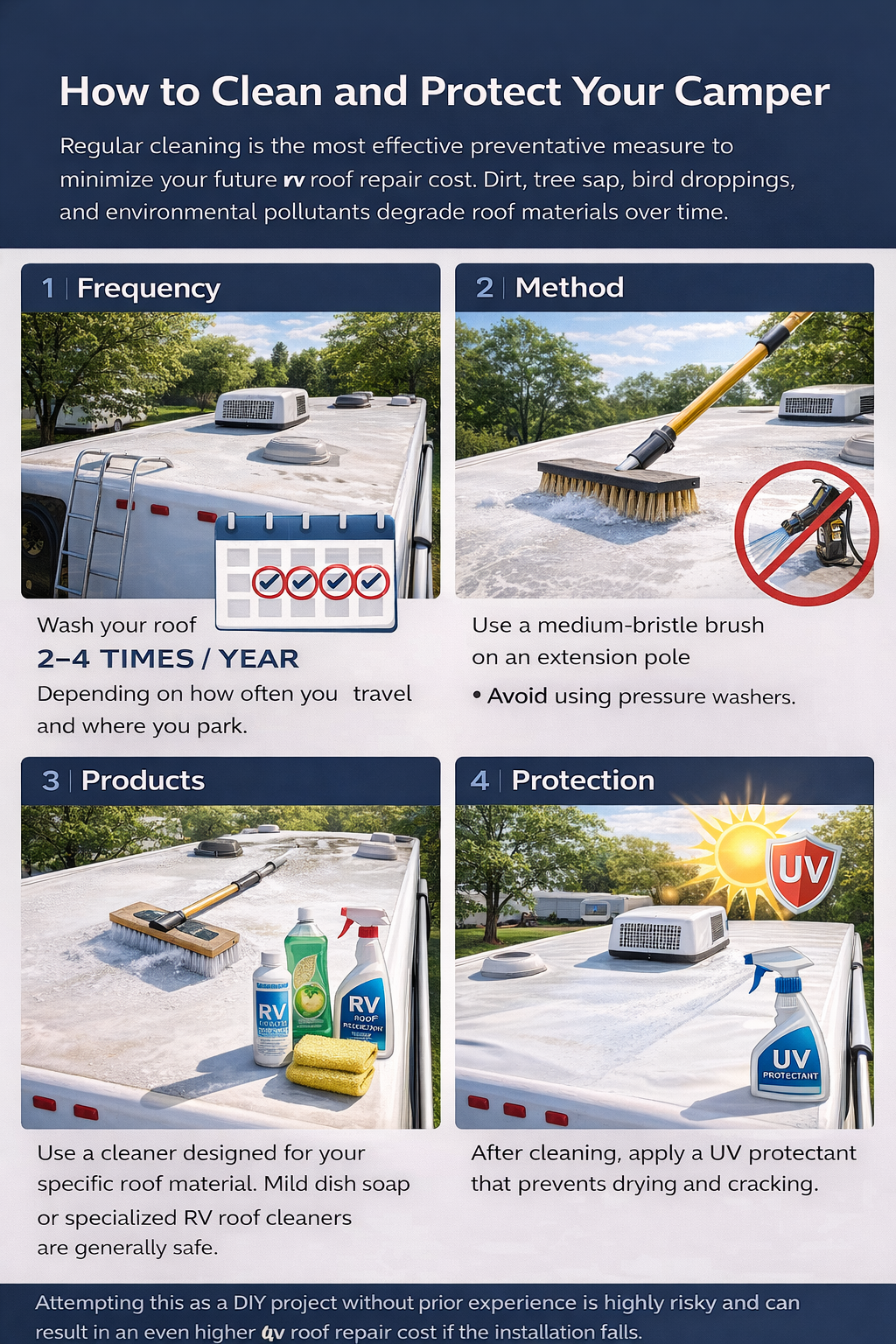
Regular cleaning is the most effective preventative measure to minimize your future rv roof repair cost. Dirt, tree sap, bird droppings, and environmental pollutants degrade roof materials over time.
Frequency: Wash your roof at least two to four times a year, depending on how often you travel and where you park. If you park under trees, you will need to clean it more frequently.
Method: Use a medium-bristle brush on an extension pole. Avoid pressure washers, as the high-pressure spray can easily slice through rubber membranes or force water under the seams, causing exactly the type of damage that leads to a high rv roof repair cost.
Products: Use a cleaner designed for your specific material. Mild dish soap is generally safe for most roofs, but specialized RV roof cleaners offer superior results.
Protection: After cleaning an EPDM or TPO roof, apply a UV protectant. This acts like sunscreen for your camper, preventing the sun’s harsh rays from drying out and cracking the material. Keeping the material supple drastically reduces the chance of tearing and lowers your lifetime rv roof repair cost.
What is the Cost Breakdown?
To fully comprehend the rv roof repair cost, we must break down the expenses involved in both minor fixes and major overhauls.
For a simple DIY reseal of a vent, the rv roof repair cost is negligible. A tube of high-quality lap sealant costs roughly $12 to $15, and a scraper might cost $5. Your primary investment is an hour of your time. If you use a professional for this minor service, expect to pay one hour of labor (typically $120 to $180 per hour) plus the cost of materials.
When dealing with a significant tear, the rv roof repair cost increases. A roll of specialized repair tape costs between $50 and $80. If the damage requires a patch kit and liquid roof coating to blend the repair, the material cost can reach $150 to $250.
The most substantial rv roof repair cost occurs when structural damage is present. If water has penetrated the membrane and rotted the luan decking, the repair requires removing the membrane, replacing the wood, and installing a new section of roofing. This is rarely a DIY job. In these scenarios, the professional rv roof repair cost easily exceeds $1,500 and can climb rapidly depending on the extent of the rot and the size of the affected area.
Average Cost Estimates and Replacement Values
When evaluating the financial impact of roof damage, several distinct categories of expense must be considered. Understanding these average figures helps owners make informed decisions regarding insurance claims and maintenance budgets.
How much does it cost to repair an rv roof: For localized repairs, such as fixing a small tear or resealing a specific seam, the professional rv roof repair cost typically ranges from $300 to $800. This includes labor and materials to patch the membrane and ensure the area is watertight. If minor wood rot is discovered around a vent, this cost can easily jump to $1,000 or more due to the additional labor required to replace the substrate.
rv roof replacement cost: When the membrane is beyond repair due to age, widespread hail damage, or severe neglect, a full replacement is necessary. The rv roof replacement cost is substantial. For a standard 30-foot travel trailer or motorhome, you should expect to pay between $4,000 and $8,000. This figure encompasses the tear-off of the old material, inspection of the decking, installation of the new EPDM or TPO membrane, and resealing of all fixtures.
camper roof replacement cost: Smaller campers, such as pop-ups or teardrops, generally have a lower camper roof replacement cost simply due to the reduced square footage. Replacing the roof on a small camper might range from $1,500 to $3,500. However, if a complete structural rebuild of the roof framing is required, even a small camper can incur significant expenses.
average cost of rv roof repair: Taking into account everything from minor lap sealant touch-ups to moderate patching, the average cost of rv roof repair across the industry hovers around $600 to $1,200. This average highlights that most owners encounter moderate issues rather than complete failures, emphasizing the importance of catching leaks early to keep the rv roof repair cost within a manageable range.
Advantages and Challenges Connected to RV Roof Repair Cost
Managing the rv roof repair cost presents several advantages and significant challenges for owners.
Advantages:
Preserved Value: The primary advantage of paying the necessary rv roof repair cost is preserving the resale value of your vehicle. A camper with a documented, watertight roof commands a much higher price on the used market.
Health and Safety: Prompt repairs prevent water intrusion, which inevitably leads to toxic black mold growth. Spending money on the rv roof repair cost ensures a safe, healthy living environment for your family.
Peace of Mind: Knowing your roof is secure allows you to enjoy your travels without the constant anxiety of impending leaks during every rainstorm.
Challenges:
High Labor Rates: The most significant challenge regarding the rv roof repair cost is the exorbitant hourly rate charged by qualified RV technicians. Labor often accounts for 60% to 70% of a major repair bill.
Hidden Damage: You rarely know the true rv roof repair cost until the membrane is removed. What looks like a small tear can reveal extensive, expensive wood rot underneath, blowing your initial budget out of the water.
Insurance Complexities: Getting insurance to cover the rv roof repair cost can be difficult. Policies generally cover sudden, catastrophic events (like a falling tree branch), but they notoriously deny claims based on “neglect” or “lack of maintenance” if a seam simply failed over time.
The Role of Liquid Roof Coatings
Another option to manage the rv roof repair cost, especially on older vehicles where the membrane is chalking but not fundamentally compromised, is applying a liquid roof coating. This process involves cleaning the roof meticulously, applying a primer, and then rolling on a thick, elastomeric coating.
This creates a new, seamless, watertight barrier directly over the old roof. The material cost for a 30-foot RV might run between $500 and $800. If you do it yourself, this represents a massive savings compared to the rv roof repair cost of a full physical membrane replacement. If professionally applied, expect to pay around $1,500 to $2,500. While not a permanent fix for structural damage, liquid coatings are an excellent way to extend the life of an aging roof by five to ten years, effectively delaying a massive rv roof repair cost.
Frequently Asked Questions : RV roof repair cost
Does RV insurance cover the rv roof repair cost?
Generally, insurance covers damage from sudden accidents, like a tree falling on your camper or severe hail damage. However, insurance almost never covers the rv roof repair cost if the leak is deemed the result of wear and tear, age, or lack of preventative maintenance.
How often should I inspect my roof to avoid a high rv roof repair cost?
You should conduct a thorough visual inspection at least twice a year: once in the spring before camping season begins, and once in the fall before winterizing. Additionally, you should inspect the roof immediately after any severe storm or after driving under low-hanging branches.
Can I walk on my RV roof to do repairs?
Most motorhomes and large fifth-wheels have “walkable” roofs, meaning the decking is thick enough to support a person’s weight. However, many ultra-light travel trailers do not. Always check your owner’s manual. If it is not walkable, you must use scaffolding or lay down large pieces of plywood to distribute your weight, otherwise, you will cause damage and increase your rv roof repair cost.
Is it cheaper to use residential roofing materials to lower the rv roof repair cost?
Never use residential roofing materials (like tar, asphalt shingles, or silicone caulk) on an RV. These materials are not designed to withstand the hurricane-force winds and constant earthquake-like vibrations an RV experiences while driving. Using them will fail quickly and ultimately result in a much higher rv roof repair cost to fix the resulting mess.
Conclusion
Navigating the complexities of recreational vehicle maintenance can be daunting, but understanding the factors that influence the rv roof repair cost empowers owners to make smart, proactive decisions. By prioritizing regular inspections, thorough cleanings, and immediate attention to minor leaks, you can successfully avoid the financial devastation of a complete roof failure. While the professional rv roof repair cost can be intimidating, treating maintenance as an ongoing investment rather than an occasional emergency expense is the key to protecting your vehicle.
Whether you are budgeting for an annual tube of sealant or preparing for a major structural overhaul, knowledge is your best defense. Stay vigilant, use the correct materials, and never underestimate the destructive power of a tiny water leak. By doing so, you ensure that your travels remain focused on the adventure ahead, rather than the costly repairs overhead.
Other Resources
Reddit – RV Roof Replacement Cost Discussion – Community discussion sharing real-world costs and experiences related to RV roof replacement.
Road Trip Tails – Informational article explaining the costs involved in replacing roofs on older RVs.
Liquid Rubber – Cost-focused guide outlining factors that influence RV roof replacement pricing.
Other Helpful Articles
Aluminum Roof Sealant – Guide explaining aluminum roof sealants and their typical uses.
Roofing Trailer – Article outlining roofing trailer types and their jobsite applications.
TPO Roof Drains Leaks – Informational article discussing common causes and repair considerations for TPO roof drain leaks.
