
Modern Home Roofs: Materials, Costs and Design Considerations
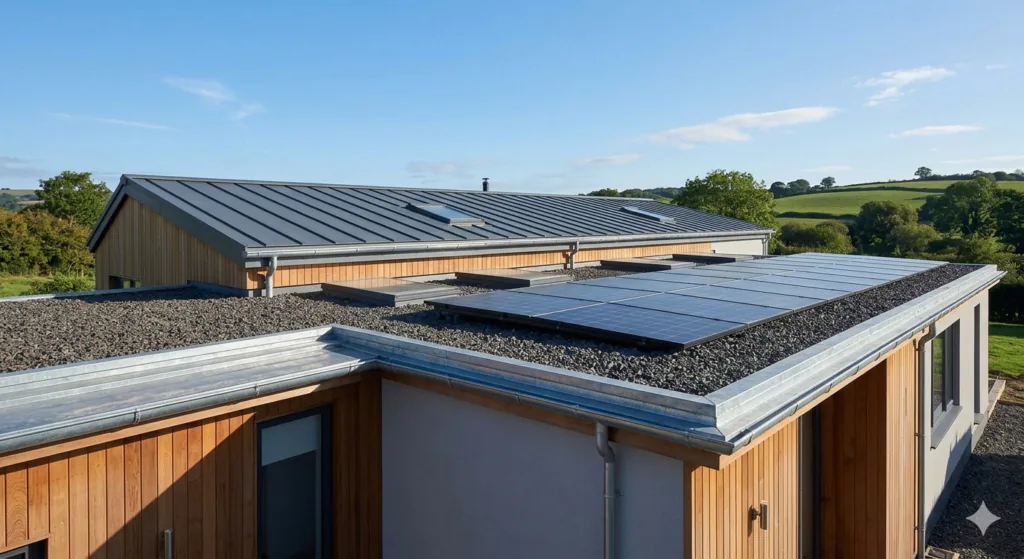
Modern Home Roofs: Materials, Costs and Design Considerations
Why Your Roof Defines Your Home
Choosing a modern roof means balancing appearance with the needs of the building. This guide compares material choices, cost factors and maintenance considerations so you can prepare specific questions for your designer or roofer. Homeowners today recognize that investing in this type of roofing contributes directly to energy efficiency, curb appeal, and long-term property value.
Whether you are building from scratch, renovating, or simply replacing an aging structure, understanding what goes into a quality modern home roof is essential before spending a single dollar. This comprehensive guide covers everything from what it actually is and how to design one, to buying tips, installation steps, cleaning routines, costs, and the real advantages and challenges you will encounter along the way.
What Is a Modern Home Roof?
A modern home roof refers to any roofing system built using contemporary materials, architectural styles, and construction techniques that reflect current performance and design standards. Unlike traditional structures built primarily with clay tiles or basic asphalt, this type of roofing system incorporates advanced materials such as metal panels, flat membrane systems, green living roofs, solar-integrated tiles, and high-durability composite shingles.
The defining characteristics include:
Clean lines and minimalist aesthetic design
High-performance insulation and superior weatherproofing
Eco-friendly or sustainable material options
Integration with smart home systems such as solar panels and rainwater harvesting
Low-maintenance surface finishes built for longevity
A modern home roof can take many shapes — from the increasingly popular flat or low-slope design common in urban architecture, to sleek angular forms found in contemporary suburban properties. The style you choose impacts structural requirements, energy performance, and your monthly utility bills.
How to Plan and Design Your Roofing Project
Before any materials are purchased or contractors are hired, thoughtful planning is where every successful modern home roof project truly begins. Start by assessing your existing structure. Is your home’s frame capable of supporting heavier materials like concrete tiles or standing-seam metal? What are the average rainfall levels and wind loads in your region?
Key planning steps include:
Define your goals — Prioritize aesthetics, energy savings, longevity, or resale value before selecting materials.
Choose your roof shape — Flat, shed, butterfly, gable, and skillion each deliver a different visual and structural result for a modern home roof.
Consult a structural engineer — Critical if you are transitioning from a sloped to a flat design.
Research local building codes — Regulations vary by region and directly affect permitted materials and slope angles.
Set a realistic budget — Costs range widely, and knowing your ceiling early prevents expensive overruns.
Good planning ensures that your investment performs as intended and stands strong for decades.
How to Find the Right Style for Your Home
Finding the right modern home roof style is a personal decision shaped by your home’s architecture, your local climate, and your lifestyle priorities. A flat roof suits contemporary urban homes and conveniently supports rooftop gardens or solar arrays. A metal standing-seam system works beautifully in areas prone to heavy rain or snow due to its exceptional water-shedding capability.
– In hot, dry climates, a white or light-colored modern home roof with a reflective coating significantly reduces indoor temperatures.
– If sustainability is your priority, a green roof or solar-tile system aligns energy production with natural insulation.
– If low maintenance is what you need, metal or composite options deliver exceptional durability with minimal upkeep.
Visit local showrooms, browse architectural websites, and consult qualified professionals to compare real-world examples of styles that interest you before committing to a specific modern home roof direction.
How to Buy the Right Roofing Materials
Purchasing materials for a modern home roof requires careful research. The market is filled with options, and not all products deliver on their promises. Follow these steps to buy smart:
Compare material lifespans — Metal can last 40–70 years; asphalt shingles average 20–30 years; slate can exceed 100 years on a well-maintained modern home roof.
Check warranty terms — Quality products should carry at minimum a 25-year manufacturer warranty.
Verify supplier credentials — Buy only from certified distributors who specialize in contemporary roofing systems.
Request physical samples — Seeing and handling the material before committing saves costly regrets later.
Factor in waste allowance — Order 10–15% more than your measurements require to account for cuts. Always cross-reference product reviews from experienced installers, not just homeowner testimonials, when evaluating materials for your modern home roof.
How Much Does It Cost?
The cost of a modern home roof varies enormously based on materials, home size, roof complexity, and local labor rates. Here is a general breakdown:
Asphalt shingle system — $5,000 to $15,000 for an average-sized home
Metal standing-seam system — $10,000 to $30,000+
Flat membrane system (TPO/EPDM) — $8,000 to $20,000
Green living modern home roof — $15,000 to $50,000+ depending on plant systems and structural reinforcement
Solar tile system — $25,000 to $75,000, though tax incentives can significantly offset the total Additional costs to budget for include:
Tear-off and disposal of the old structure ($1,000–$3,000)
Structural repairs if decking is damaged beneath the modern home roof
Insulation upgrades required for high-performance systems
Permits and inspections ($500–$2,500 depending on your location)
Despite the upfront expense, a well-chosen modern home roof typically recovers 60–70% of its cost in increased property value.
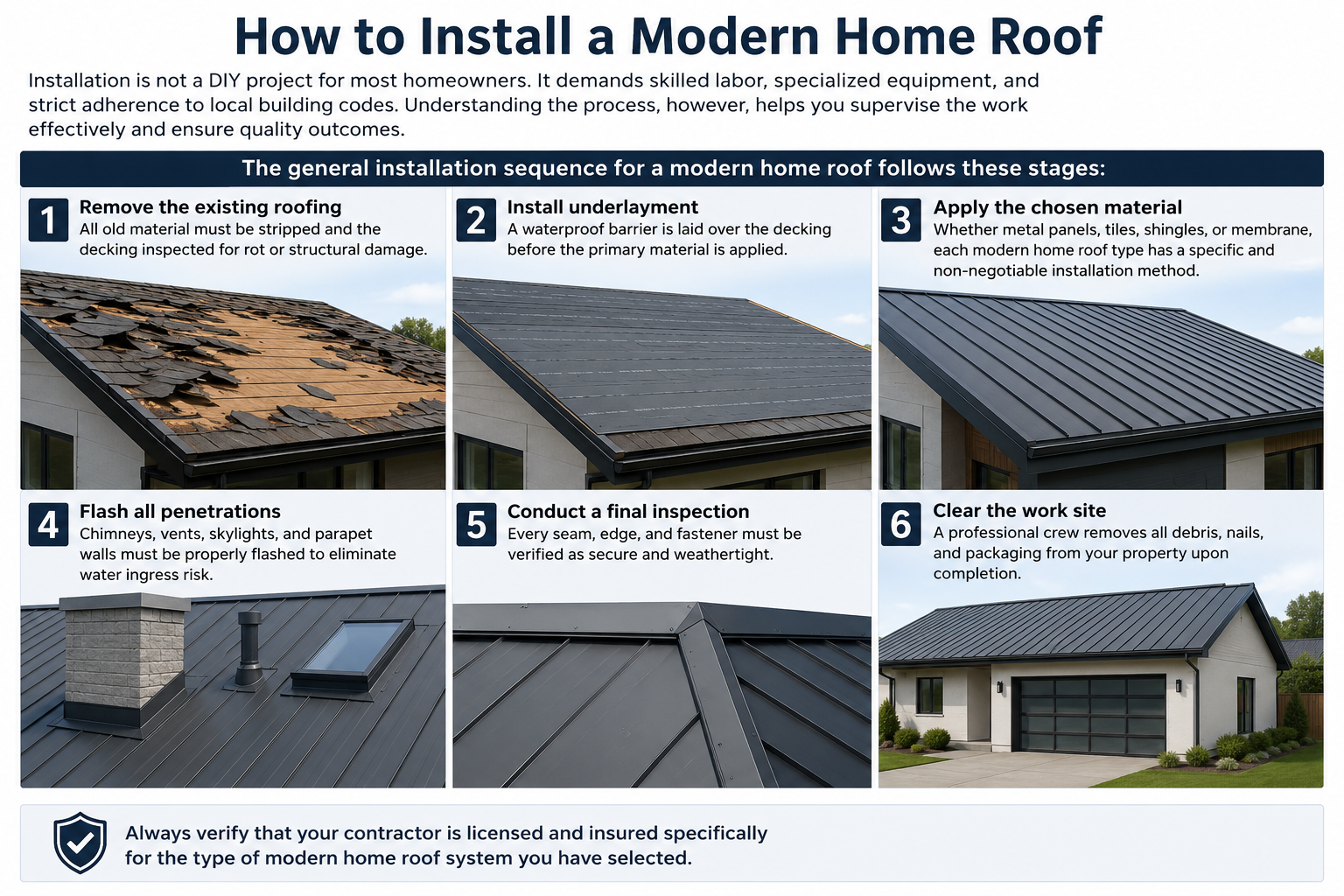
How to Install a Modern Home Roof
Installation is not a DIY project for most homeowners. It demands skilled labor, specialized equipment, and strict adherence to local building codes. Understanding the process, however, helps you supervise the work effectively and ensure quality outcomes.
The general installation sequence for a modern home roof follows these stages:
Remove the existing roofing — All old material must be stripped and the decking inspected for rot or structural damage.
Install underlayment — A waterproof barrier is laid over the decking before the primary material is applied.
Apply the chosen material — Whether metal panels, tiles, shingles, or membrane, each modern home roof type has a specific and non-negotiable installation method.
Flash all penetrations — Chimneys, vents, skylights, and parapet walls must be properly flashed to eliminate water ingress risk.
Conduct a final inspection — Every seam, edge, and fastener must be verified as secure and weathertight.
Clear the work site — A professional crew removes all debris, nails, and packaging from your property upon completion.
Always verify that your contractor is licensed and insured specifically for the type of modern home roof system you have selected.
How to Clean and Maintain Your Roof
A modern home roof requires consistent maintenance to preserve both its performance and appearance over time. Neglecting routine care shortens the lifespan of even premium-grade roofing systems.
Essential cleaning and maintenance steps:
Inspect twice yearly — Check in spring and autumn for cracked materials, moss growth, and damaged flashing on your modern home roof.
Clean gutters regularly — Clogged gutters force water back under roof edges, causing rot and interior leaks.
Remove surface debris — Leaves, branches, and dirt trap moisture and accelerate material deterioration significantly.
Treat biological growth — Apply a zinc sulfate or copper-based solution to control moss and algae on the roof surface.
Wash with low pressure — Avoid high-pressure washing on membrane or metal systems, as it can force water under seams and void warranties. Never walk on your roofing system unless it is specifically engineered for foot traffic. Always hire a qualified professional for detailed physical inspections of your modern home roof.
Advantages of a Modern Home Roof
Choosing this type of roofing system comes with a compelling list of benefits:
Energy efficiency — Modern insulation and reflective coatings dramatically reduce heating and cooling costs year-round.
Superior durability — Contemporary materials outperform traditional options in resistance to wind, hail, UV exposure, and moisture.
Higher property value — A well-maintained roof may appeal to buyers, but the effect on resale value depends on its condition, the property and the local market. A particular style does not guarantee a financial return.
Aesthetic versatility — From industrial metal to minimalist flat designs, options exist for virtually every architectural style.
Environmental benefits — Many systems reduce stormwater runoff, support solar generation, and incorporate recycled content into their construction.
Smart home integration — A modern home roof can seamlessly incorporate solar panels, humidity sensors, and automated ventilation into a unified building technology platform.
Challenges of a Modern Home Roof
Despite its many benefits, this investment also presents real challenges that homeowners must prepare for honestly:
High upfront cost — Premium materials and skilled installation carry a significant initial price that not all budgets can absorb immediately.
Contractor availability — Not every roofing company has hands-on experience with all modern home roof systems, particularly living roofs or integrated solar tile products.
Structural requirements — Green roofs and certain heavy tile systems require structural reinforcement that adds cost and extends project timelines.
Permit complexity — Innovative systems sometimes face bureaucratic resistance from planning authorities unfamiliar with newer roofing technologies.
Thermal movement — Metal systems expand and contract with temperature changes, requiring engineered fastening systems to prevent noise and long-term leaks in your modern home roof.
Understanding these challenges before committing keeps your project on track and your expectations realistic.
FAQ: Common Questions Answered
What is the most popular modern home roof material right now?
Metal roofing — particularly standing-seam steel and aluminum — is currently the leading choice due to its exceptional longevity, minimal maintenance requirements, and clean contemporary appearance.
How long does a modern home roof last?
Depending on the material selected, it can last between 25 and 70+ years. Metal and slate options significantly outlast asphalt shingle and flat membrane systems in terms of lifespan.
Can I add solar panels to any style of modern home roof?
Most contemporary roofing types can support solar panels, but flat and low-slope systems are generally the most practical. Always consult a structural engineer before adding weight to an existing structure.
Is a flat modern home roof more prone to leaks than a sloped one?
A properly installed flat system with quality membrane material and adequate drainage is not inherently more leak-prone. Poor installation — not slope — is the primary cause of flat roof failures.
How do I know when my modern home roof needs replacing?
Watch for persistent leaks, visible sagging, cracked or missing surface materials, granule loss in gutters, and a roof age that exceeds its rated lifespan. A professional inspection will provide a definitive answer.
What color works best for energy efficiency?
In hot climates, lighter colors reflect solar heat effectively. In cooler regions, darker tones on a modern home roof absorb warmth and reduce heating load. The best choice balances climate performance with your home’s overall aesthetic.
How often should a professional inspect my roof?
Schedule a professional inspection at minimum once every two years, and immediately following any severe weather event that may have caused impact damage.
Conclusion
A modern home roof is one of the most impactful and lasting investments you can make in your property. It protects your family from the elements, defines your home’s visual character, improves energy performance, and adds real market value. From understanding what a modern home roof actually is, to navigating materials, costs, installation processes, and long-term maintenance, the preparation you invest before starting this project determines the quality of everything that follows.
The challenges are real — upfront cost, contractor expertise, and structural demands among them — but for homeowners who plan carefully, the advantages consistently outweigh the difficulties. Whether you choose sleek metal panels, a sustainable green system, or a solar-integrated modern home roof, this investment will serve your home and your family for generations to come. Start with a clear vision, partner with qualified professionals, and your roof will stand as the most enduring upgrade your property has ever seen.
Other Resources
- decra.com – Explains roofing materials and design considerations commonly used for modern homes.
- pinterest.com – Showcases visual examples of modern roof designs and architectural styles.
- homeworlddesign.com – Describes various roof types and design options for residential properties.
- houzz.com – Provides a collection of modern roof design ideas and home inspiration photos.
Other Helpful Articles
- Patio Extension with Roof – Describes planning considerations and design ideas for patio roof extensions.
- GAF Timberline HD Shingles – Provides information about GAF Timberline HD shingles, including features and applications.
- Asphalt Shingle Roof Details – Explains the key components and installation details of asphalt shingle roofing systems.
