
Cost To Replace RV Roof: Expert Secrets
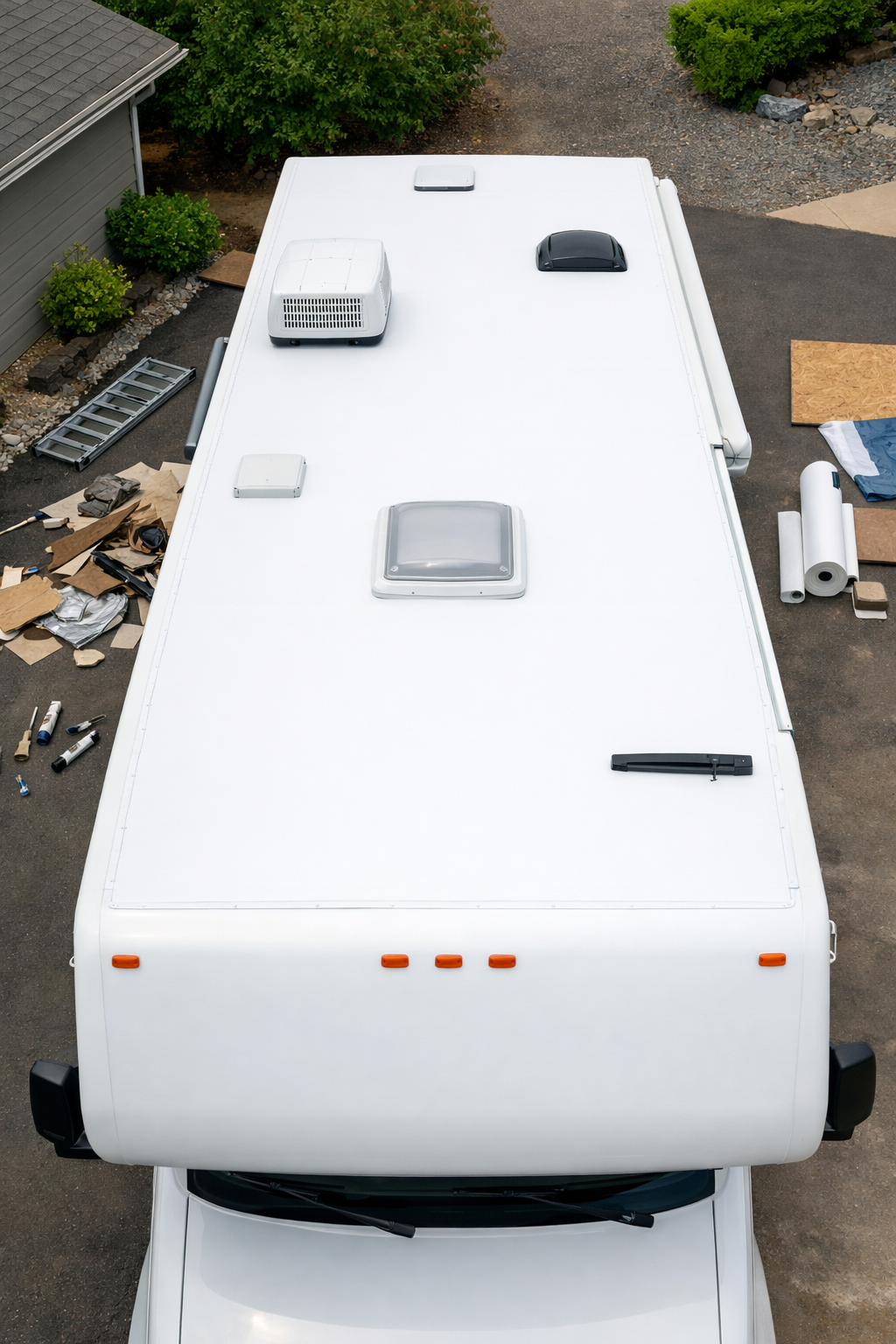
Cost To Replace RV Roof: Things You Must Know
RV ownership brings freedom and adventure, but it also comes with maintenance responsibilities. One of the most significant repairs you’ll face is roof replacement. Understanding the cost to replace rv roof helps you budget properly and make informed decisions about your recreational vehicle’s upkeep.
The roof protects everything inside your RV from weather elements, making it crucial to maintain its integrity. Over time, exposure to sun, rain, snow, and temperature fluctuations causes wear and tear. Recognizing when replacement becomes necessary and knowing what factors influence pricing empowers you to plan ahead and avoid emergency situations that could lead to interior damage.
What Is RV Roof Replacement
RV roof replacement involves removing the existing roofing material and installing a new protective layer on top of your recreational vehicle. This process differs significantly from residential roofing because RVs use specialized lightweight materials designed for mobile structures. The cost to replace rv roof varies based on material selection, RV size, and whether you hire professionals or tackle the project yourself.
The replacement process typically includes removing old sealant, stripping damaged materials, inspecting the underlying structure for rot or damage, making necessary repairs to the substrate, and installing new roofing material with proper sealing. Unlike home roofs that might last decades, RV roofs generally require replacement every 10 to 20 years depending on material quality and maintenance practices.
Common roofing materials include:
-
TPO (Thermoplastic Polyolefin): Durable, heat-reflective, and increasingly popular for its longevity
-
EPDM (Rubber): Affordable, flexible, and widely used across the RV industry
-
Fiberglass: Rigid, low-maintenance, and excellent for preventing leaks
-
Aluminum: Extremely durable but heavier and more expensive than alternatives
How To Determine If You Need RV Roof Replacement
Recognizing signs that indicate roof replacement necessity helps you address problems before they escalate. Regular inspections should be part of your RV maintenance routine, ideally conducted twice yearly or before long trips. The cost to replace rv roof may seem substantial, but it’s far less expensive than repairing water damage to your RV’s interior, cabinetry, and electrical systems.
Warning signs include visible cracks or tears in the roofing material, persistent leaks despite repeated repairs, bubbling or blistering on the surface, significant UV damage causing brittleness, sagging areas indicating structural issues, and pervasive musty odors suggesting hidden moisture problems. Black streaks, excessive chalking, and age beyond the manufacturer’s recommended lifespan also signal replacement time.
Water stains on interior ceilings or walls represent serious concerns. Even small leaks compound over time, causing extensive damage to insulation, wood framing, and creating environments for mold growth. Once water infiltration begins, the cost to replace rv roof quickly becomes justified compared to comprehensive interior restoration expenses.
How To Find Professional RV Roof Replacement Services
Locating qualified professionals requires research and due diligence. Start by contacting RV dealerships in your area, as many offer service departments with experienced technicians. Specialized RV repair shops often provide more competitive pricing than dealerships while maintaining quality standards. Mobile RV repair services bring convenience by coming to your location, though they may charge premium rates.
Request multiple quotes to compare the cost to replace rv roof across different providers. Ensure quotes include detailed breakdowns of materials, labor, warranty coverage, and timeline estimates. Verify that contractors carry proper licensing, insurance, and bonding to protect yourself from liability. Check online reviews on platforms like Google, Yelp, and RV-specific forums where owners share experiences.
Ask potential contractors these essential questions:
-
How many RV roof replacements have you completed?
-
What materials do you recommend for my specific RV model?
-
Do you provide warranties on both materials and labor?
-
What is your estimated completion timeline?
-
Will you inspect and repair underlying structural damage if discovered?
-
Can you provide references from recent customers?
-
Do you handle old material disposal and cleanup?
Membership in industry organizations like RVIA (RV Industry Association) or RVDA (RV Dealers Association) demonstrates professionalism and commitment to industry standards. These affiliations often require adherence to ethical business practices and continuing education.
How To Buy Materials For RV Roof Replacement
Purchasing materials independently can reduce the overall cost to replace rv roof if you’re hiring labor separately or planning a DIY installation. Specialty RV supply stores stock roofing materials specifically designed for recreational vehicles, ensuring compatibility and proper performance. Online retailers like Amazon, Camping World, and etrailer.com offer competitive pricing with convenient delivery options.
Calculate material quantities accurately by measuring your RV’s roof dimensions carefully. Most roofs require additional material beyond exact measurements to account for overlaps, waste, and future repairs. Purchase sealants, adhesives, primers, and finishing materials from the same manufacturer as your roofing material to ensure chemical compatibility and warranty compliance.
Consider these factors when selecting materials:
-
Climate conditions where you primarily use your RV
-
Weight considerations affecting fuel efficiency and handling
-
Maintenance requirements for different material types
-
Expected lifespan and long-term cost effectiveness
-
Color options that may affect interior temperature regulation
-
Warranty coverage offered by manufacturers
Bulk purchasing through RV owner clubs or forums sometimes yields discounts. Connect with other owners planning similar projects to potentially share shipping costs or take advantage of volume pricing. The cost to replace rv roof decreases significantly when material expenses are minimized through strategic purchasing.
How Much Does It Cost To Replace An RV Roof
The cost to replace rv roof ranges from $300 to $12,000 depending on numerous variables. DIY projects using EPDM rubber typically represent the lower end, requiring only material costs between $300 and $1,500 for average-sized travel trailers. Professional installations with premium materials like TPO or fiberglass on large motorhomes push costs toward the upper range.
For a standard 30-foot travel trailer, expect these approximate ranges:
-
DIY EPDM installation: $500-$1,200 (materials only)
-
Professional EPDM installation: $2,000-$4,500
-
DIY TPO installation: $800-$1,800 (materials only)
-
Professional TPO installation: $3,500-$7,000
-
Professional fiberglass installation: $6,000-$12,000
-
Aluminum roof installation: $8,000-$15,000
Class A motorhomes exceeding 35 feet command higher prices due to increased material requirements and labor complexity. The cost to replace rv roof on these larger units ranges from $5,000 to $15,000 for professional installation with quality materials. Fifth wheels and Class C motorhomes typically fall in the middle range.
Labor costs constitute 40-60% of total professional installation expenses. Hourly rates for experienced RV technicians range from $75 to $150 depending on geographic location and shop overhead. Complete installations typically require 20 to 40 hours of skilled labor, including preparation, installation, and finishing work.
Cost Of RV Roof Replacement
Breaking down the cost to replace rv roof into specific components helps you understand where money goes and identify potential savings. Material costs represent the most variable factor, with rubber roofing starting around $2-$4 per square foot, TPO ranging from $4-$7 per square foot, and fiberglass costing $8-$15 per square foot. These prices include only the primary roofing membrane, not adhesives, sealants, or accessories.
Preparation costs include removing old materials, which may add $500-$1,500 to professional estimates. Structural repairs to damaged decking, trusses, or insulation increase expenses substantially. Discovering and addressing rot or water damage can add $1,000-$5,000 depending on severity. This unpredictability makes getting detailed inspections before committing to final pricing essential.
Additional cost factors include:
-
Geographic location affecting both material and labor rates
-
Roof complexity with multiple levels, skylights, or solar panels
-
Accessibility challenges requiring special equipment
-
Disposal fees for old roofing materials
-
Permit requirements in certain jurisdictions
-
Warranty upgrades for extended coverage
-
Seasonal demand fluctuations affecting pricing
The cost to replace rv roof also depends on timing. Scheduling during off-peak seasons (late fall through early spring) may yield discounts as shops compete for business. However, weather constraints limit installation windows in cold climates, potentially requiring indoor facilities that increase costs.

Camper Roof Repair Cost
Sometimes partial repairs extend roof life before complete replacement becomes necessary, reducing the immediate cost to replace rv roof. Small repairs addressing specific problem areas cost significantly less than full replacement. Patching minor tears or cracks typically runs $100-$300 for materials and basic labor. Resealing roof penetrations like vents, air conditioners, and skylights costs $200-$500 per unit.
Coating entire roofs with elastomeric or acrylic sealants provides temporary protection and extends lifespan. Professional coating applications range from $1,000 to $3,000 depending on roof size and product quality. DIY coating projects reduce costs to $300-$800 for materials, though proper surface preparation remains critical for effectiveness.
Repair versus replacement decisions depend on:
-
Damage extent: Isolated problems favor repair; widespread deterioration requires replacement
-
Roof age: Roofs approaching end-of-life benefit more from replacement
-
Cost comparison: Repairs exceeding 40% of replacement cost often make replacement wiser
-
Future plans: Short-term RV ownership may justify temporary repairs
-
Leak frequency: Recurring problems despite repairs indicate systemic failure
Emergency leak repairs during trips cost more than scheduled maintenance. Mobile technicians charge premium rates for after-hours or roadside service. Carrying emergency repair supplies like self-leveling sealant, patch tape, and butyl tape allows temporary fixes until permanent solutions become feasible. These supplies cost $50-$150 but prevent thousands in water damage.
The cost to replace rv roof after delaying necessary repairs increases due to secondary damage. Water infiltration compromises insulation, rots wood framing, damages electrical systems, and promotes mold growth. Addressing problems promptly minimizes total expenses and preserves RV value.
Cost To Replace Rubber Roof On RV
EPDM rubber represents the most economical roofing option, making the cost to replace rv roof more affordable for budget-conscious owners. Rubber roof replacement costs $300-$1,500 for DIY installations on average travel trailers. Professional installation ranges from $2,000-$4,500 including materials and labor. These prices make rubber the default choice for many RV owners seeking reliable protection without premium expenses.
Rubber roofing advantages include flexibility that accommodates RV movement and vibration, ease of installation suitable for DIY projects, excellent waterproofing properties, and lower weight compared to rigid alternatives. The material handles temperature extremes well and repairs easily when damaged. Manufacturers typically warranty rubber roofing for 10-12 years, though proper maintenance extends actual lifespan to 15-20 years.
DIY rubber roof installation follows this general process:
-
Remove all roof accessories, vents, and hardware
-
Strip old roofing material and clean the substrate thoroughly
-
Inspect decking for damage and make necessary repairs
-
Apply primer to ensure proper adhesion
-
Install new EPDM membrane using appropriate adhesive
-
Cut precise openings for roof penetrations
-
Seal all edges, seams, and penetrations with compatible sealant
-
Reinstall accessories and hardware with fresh sealant
-
Perform thorough water testing before use
Material costs for rubber replacement include the membrane itself ($200-$800), bonding adhesive ($100-$200), lap sealant ($50-$150), primer ($30-$60), and cleaning supplies ($20-$40). Tools like utility knives, rollers, and measuring equipment add minimal expense if not already owned. The cost to replace rv roof using rubber remains accessible for most budgets.
How To Install RV Roof Replacement
DIY installation significantly reduces the cost to replace rv roof but requires careful planning, appropriate skills, and suitable weather conditions. Temperature affects adhesive performance, with most products requiring 50-90°F for proper bonding. Choose a dry period with favorable weather forecasts extending several days to allow adequate curing time.
Essential tools and materials include:
-
Roofing membrane appropriate for your RV size
-
Compatible adhesive or bonding agent
-
Lap sealant for seams and penetrations
-
Primer for substrate preparation
-
Utility knives with sharp blades
-
Measuring tape and straightedge
-
Rollers for adhesive application
-
Cleaning supplies and rags
-
Safety equipment including gloves and eye protection
-
Ladder and non-slip footwear
Begin by thoroughly cleaning the existing roof surface, removing all dirt, oxidation, and old sealant. This preparation step critically affects adhesion quality. Remove roof accessories systematically, labeling fasteners and components for proper reinstallation. Inspect the underlying structure carefully, addressing any soft spots, rot, or damage before proceeding.
Cut roofing material with 6-12 inches of overhang on all sides, allowing precise trimming after initial positioning. Follow manufacturer instructions exactly regarding adhesive application patterns and open times. Work systematically from one end to the other, eliminating air bubbles and ensuring complete contact. The cost to replace rv roof through DIY means requires patience and attention to detail for successful results.
Common mistakes include rushing the process, working in unsuitable weather, applying insufficient adhesive, neglecting proper surface preparation, and inadequately sealing penetrations. These errors compromise roof integrity and may necessitate premature replacement. If uncertain about your abilities, hiring professionals prevents costly mistakes.
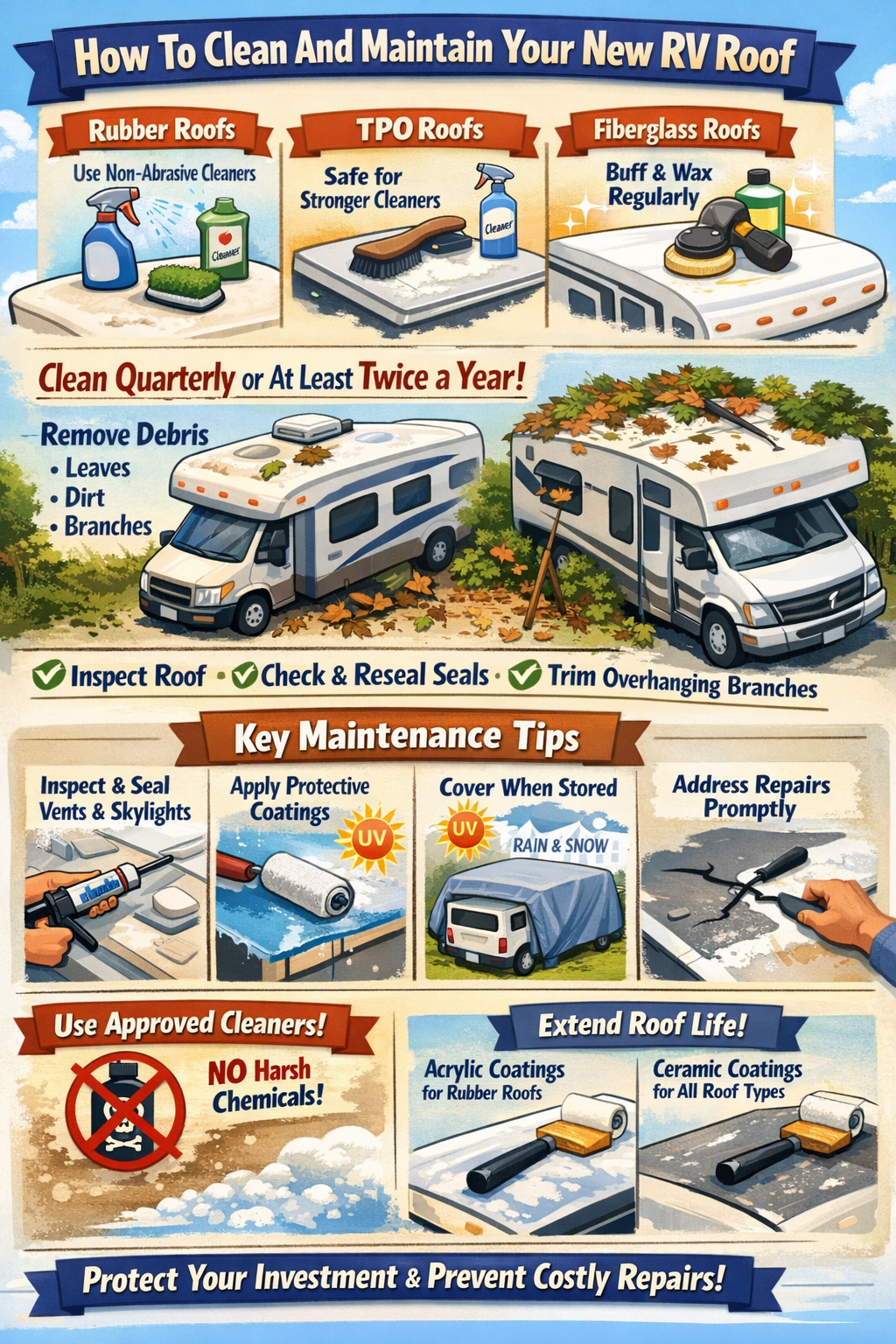
How To Clean And Maintain Your New RV Roof
Proper maintenance maximizes your investment and extends the time before you’ll face the cost to replace rv roof again. Different materials require specific care approaches. Rubber roofs need gentle cleaning with approved non-abrasive cleaners, while TPO handles more aggressive cleaning without damage. Fiberglass roofs maintain appearance with automotive-grade compounds and waxes.
Establish a regular cleaning schedule, ideally quarterly or at minimum twice yearly. Debris accumulation traps moisture, accelerates deterioration, and creates environments for mold and algae growth. Remove leaves, branches, and dirt promptly after travel or storms. Use soft-bristle brushes or microfiber mops to prevent surface scratching.
Recommended maintenance practices include:
-
Inspect the entire roof surface during each cleaning
-
Check all sealant lines for cracks, gaps, or deterioration
-
Clean and reseal roof penetrations annually
-
Apply protective coatings as recommended by manufacturers
-
Trim overhanging tree branches that could scratch or puncture roofing
-
Cover your RV when stored to minimize UV exposure
-
Address minor issues immediately before they escalate
Cleaning products matter significantly. Avoid petroleum-based cleaners, harsh solvents, or abrasive compounds that degrade roofing materials. Use manufacturer-approved cleaners or mild dish soap diluted in water. Rinse thoroughly after cleaning to remove all residue. The cost to replace rv roof increases when improper maintenance shortens material lifespan.
Protective coatings refresh appearance while providing additional UV protection and waterproofing. Acrylic coatings work well for rubber roofs, while ceramic coatings offer superior protection for all material types at premium prices. Annual coating applications cost $200-$500 for materials but potentially extend roof life by years.
What Is The Cost Comparison: DIY Versus Professional Installation
Deciding between DIY and professional installation significantly impacts the cost to replace rv roof. DIY projects save 50-70% on total expenses by eliminating labor costs. A $5,000 professional installation might cost only $1,500-$2,000 for materials and tool purchases. However, DIY approaches require time, physical capability, and willingness to accept responsibility for results.
Professional installation advantages include expertise ensuring proper technique, warranty coverage protecting your investment, efficiency completing projects quickly, insurance coverage for accidents or damage, access to commercial-grade materials and tools, and structural inspection identifying hidden problems. These benefits justify higher costs for many owners, especially those lacking experience or physical ability to work on roofs safely.
DIY installation suits owners who:
-
Possess construction or roofing experience
-
Have adequate time for thorough project completion
-
Can work safely at heights
-
Own or can borrow necessary tools
-
Feel comfortable troubleshooting problems independently
-
Want maximum cost savings despite increased effort
Professional installation makes sense when:
-
The RV represents significant financial investment
-
Complex roof configurations involve multiple levels or features
-
You lack time or physical ability for DIY work
-
Warranty coverage provides peace of mind
-
Structural concerns require expert assessment
Calculate the true cost to replace rv roof by considering your time value. A project requiring 30-40 hours of labor represents substantial personal investment. If your time carries professional value, paying for installation might actually cost less when factoring in lost income or opportunities.
Advantages And Challenges Connected To Cost To Replace RV Roof
Understanding both benefits and difficulties associated with roof replacement helps set realistic expectations. The primary advantage is restoring complete weather protection, preventing thousands in potential water damage repairs. New roofs improve energy efficiency by enhancing insulation effectiveness, potentially reducing heating and cooling costs during travel. Modern materials offer improved durability compared to original equipment, extending intervals before future replacement becomes necessary.
Replacement provides opportunities to upgrade features. Installing solar panels, improving ventilation systems, or adding skylights integrates easily during roof replacement. The cost to replace rv roof includes preparing the surface to accept these additions without future modifications. Enhanced resale value represents another advantage, as buyers value recently replaced roofs and documentation of professional installation.
Financial challenges include the substantial upfront investment required. Many owners struggle to budget several thousand dollars for roof replacement, especially when unexpected. Timing difficulties arise because roof failure doesn’t wait for convenient financial situations. Emergency replacements during travel season cost more and create scheduling complications. Choosing between repair and replacement creates decision anxiety, especially when damage falls in the gray area where either option seems viable.
Technical challenges include:
-
Material selection confusion with numerous options and conflicting recommendations
-
Finding trustworthy contractors in unfamiliar areas during travel
-
Coordinating installation timing with usage plans
-
Dealing with warranty claims if problems develop
-
Understanding technical specifications and compatibility issues
The cost to replace rv roof varies so widely that researching and comparing options becomes overwhelming. Price shopping requires understanding what each quote includes and excluding, making apple-to-apple comparisons difficult. Hidden costs like structural repairs discovered during installation create budget uncertainty.
Frequently Asked Questions : Replace my RV roof
How often should I replace my RV roof?
Most RV roofs last 10-20 years depending on material type and maintenance quality. Rubber roofs typically need replacement every 10-15 years, while TPO lasts 15-20 years and fiberglass can exceed 20 years with proper care. Regular inspections help identify replacement timing before catastrophic failure occurs.
Can I install a different roofing material than original?
Yes, you can upgrade or change roofing materials during replacement. Ensure the new material is compatible with your RV’s structural capacity and weight limitations. Consult with professionals about substrate preparation requirements for different materials, as some need specialized underlayment or fastening systems.
Does insurance cover RV roof replacement?
Standard RV insurance typically covers roof damage from covered perils like accidents, storms, or vandalism but excludes wear and tear or maintenance issues. Review your policy carefully and document any storm damage thoroughly. Extended warranties may cover premature material failure within coverage periods.
What’s the best season for RV roof replacement?
Late spring through early fall offers ideal conditions with warm, dry weather promoting proper adhesive curing. Avoid winter installations in cold climates where temperature affects material flexibility and bonding. Summer provides longest daylight but extreme heat can make working conditions difficult.
How long does professional RV roof replacement take?
Most professional installations require 2-5 days depending on roof size, complexity, and weather conditions. Simple rubber replacements on travel trailers might complete in 1-2 days, while large motorhomes with fiberglass installation could take a week including preparation and curing time.
Should I repair or replace my aging RV roof?
Replace roofs approaching or exceeding manufacturer-recommended lifespan, showing widespread deterioration, or requiring frequent repairs. Repair makes sense for isolated damage on relatively new roofs, minor leaks caught early, or when selling soon and seeking minimal investment.
Do mobile RV roof repair services cost more?
Mobile services typically charge 20-40% more than shop-based installations due to travel time, equipment transportation, and location limitations. However, they offer convenience for owners unable to travel to repair facilities or needing service in remote areas.
What warranty should I expect on RV roof replacement?
Material warranties range from 10-12 years for rubber to 15-20 years for premium TPO or fiberglass. Labor warranties typically cover 1-3 years. Always get warranty terms in writing and understand what’s covered versus excluded. Some manufacturers require professional installation for warranty validity.
Can I walk on my RV roof after replacement?
Most RV roofs support walking for maintenance when weight distributes properly. Use walk pads or boards to spread weight distribution. Avoid walking during temperature extremes when materials become brittle or soft. Check manufacturer specifications for weight limitations and walking recommendations.
Conclusion
Understanding the cost to replace rv roof empowers you to make informed decisions about this significant maintenance investment. Whether choosing DIY installation to minimize expenses or hiring professionals for guaranteed results, proper planning ensures successful outcomes. Regular maintenance extends roof lifespan and protects your RV investment.
The cost to replace rv roof reflects various factors including material selection, RV size, installation method, and regional pricing variations. By researching options thoroughly, obtaining multiple quotes, and considering both immediate costs and long-term value, you’ll find the solution that best fits your budget and needs. Remember that timely roof replacement prevents far more expensive interior damage, making it a wise investment in your RV’s longevity and your peace of mind during travels.
Other Resources
Reddit – RV Roof Replacement Cost Discussion – Community discussion sharing real-world costs and experiences related to RV roof replacement.
Road Trip Tails – Informational article explaining the costs involved in replacing roofs on older RVs.
Liquid Rubber – Cost-focused guide outlining factors that influence RV roof replacement pricing.
RV Flex Repair – Educational article detailing average costs and considerations for RV roof replacement.
Other Helpful Articles
Top Roof Louver Installation – Guide explaining installation methods and best practices for roof louvers.
Types of Roofs in Florida – Article outlining common roofing types used in Florida and their characteristics.