
5 v metal roofing magic: 9 proven benefits
5 v metal roofing upgrade: smart tips
What is 5 v metal roofing?
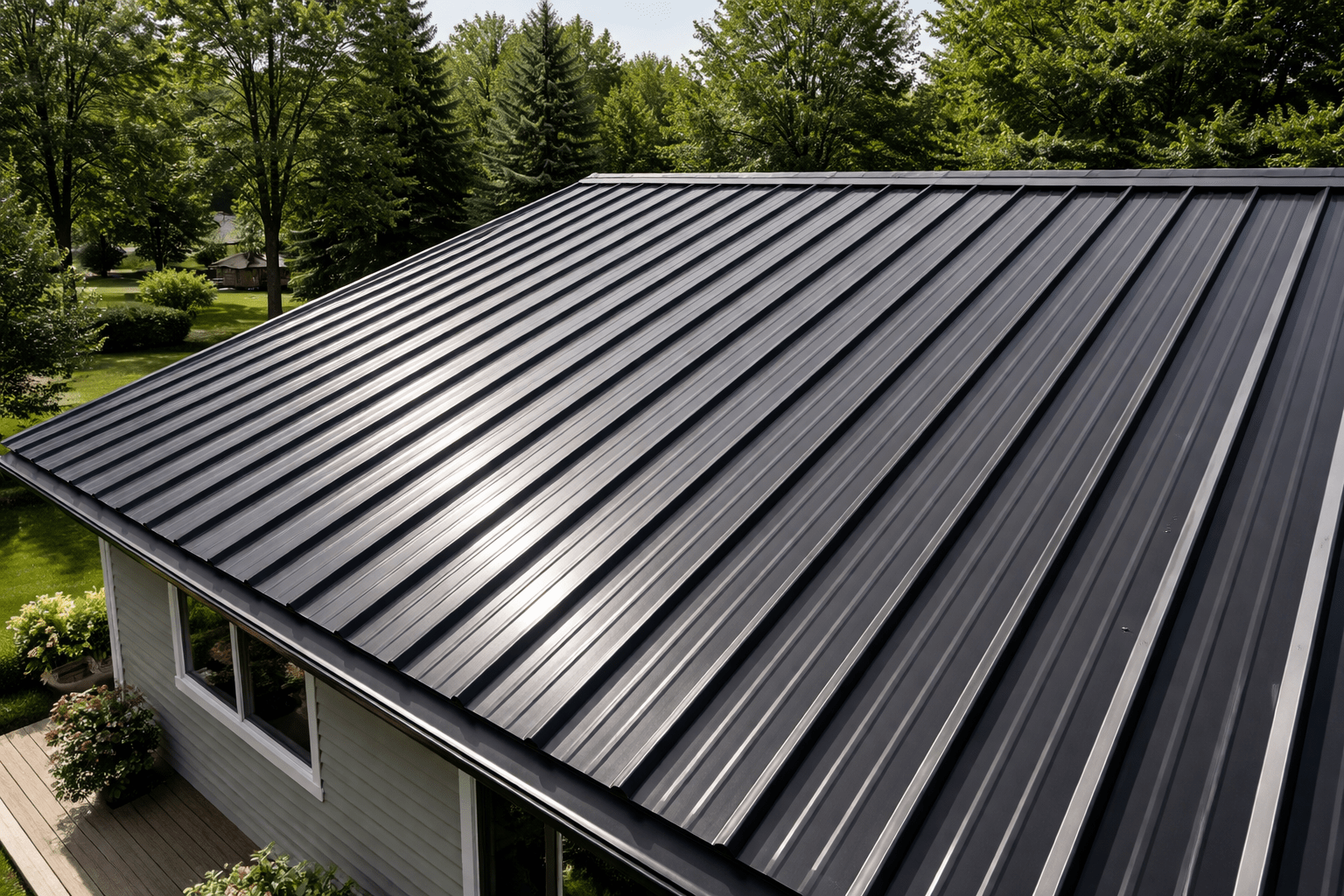
5 v metal roofing is a classic exposed‑fastener metal panel system recognized by its repeating “V” ribs that create a simple, corrugated profile used on homes, barns, and light commercial buildings. The “5” refers to the pattern of crest‑and‑valley shapes or rib spacing that helps channel water off the roof efficiently in rainy or coastal climates.
Typically made from galvanized steel, galvalume, or aluminum, 5 v metal roofing balances lightweight construction with strong resistance to wind, rain, and impact. Because the fasteners are visible on the surface, it delivers a traditional, agricultural look that many homeowners find charming on cottages, farmhouses, and outbuildings. Its straightforward profile and broad availability also make 5 v metal roofing one of the most accessible entry points into metal roofing for DIY‑minded owners.
How 5 v metal roofing works
At its core, 5 v metal roofing relies on ribbed panels that overlap and interlock to form a continuous water‑shedding surface over a solid roof deck. Each panel is attached with corrosion‑resistant screws through the face of the metal into the deck below, creating an exposed‑fastener system that is simple to install and easy to inspect. The V‑shaped ribs stiffen the panel, improve load‑bearing capacity, and help direct water toward the eaves, reducing the risk of standing water and leaks.
When properly installed on the correct roof pitch—typically at or above about 2.5:12 to 3:12—5 v metal roofing sheds rain quickly and handles snow slide‑off better than many low‑slope materials. Underneath, an appropriate underlayment, flashing details, and edge trims complete the weatherproofing package and support long‑term performance of 5 v metal roofing in demanding climates.
How to plan and design your roof
Before buying anything, you need a clear plan for 5 v metal so that measurements, structure, and aesthetics all align. Start by confirming that your existing roof framing and deck are sound, dry, and capable of supporting metal panels without major deflection or rot issues. Then measure each roof plane carefully, including length from eave to ridge and width from gable to gable, so you can calculate exact panel lengths and counts for 5 v metal with minimal waste.
Consider roof pitch, overhangs, valleys, dormers, and penetrations like chimneys or vents, which will require specialty flashing pieces and careful layout. Finally, select color, finish, and trim style so your 5 v metal roofing complements the architecture of your home while meeting any neighborhood or HOA guidelines.
How to find trusted 5 v suppliers and contractors
Finding reliable suppliers is essential if you want 5 v metal roofing that performs for decades rather than years. Start by searching for local metal roofing manufacturers and regional distributors that specifically list 5V Crimp panels, coverage widths (typically 24 inches), and available gauges in 29 or 26. Look for companies that publish testing and approvals such as Miami‑Dade, Texas Windstorm, or UL 90 wind uplift ratings for their 5 v metal roofing profiles.
For installers, focus on contractors who regularly work with exposed‑fastener metal systems instead of shingle‑only roofers, and ask to see photos of completed 5 v metal roofing projects similar to your home. Check reviews, verify licensing and insurance, and compare detailed written estimates that spell out panel gauge, underlayment type, trim packages, and fastener specs for your 5 v metal roofing job.
How much does 5 v metal roofing cost?
The total cost of 5 v metal roofing depends on material, gauge, coating, roof complexity, and labor rates in your area. In many regions, the raw panels themselves fall into a mid‑range price band compared with premium standing seam systems, making 5 v metal one of the more affordable metal options for residential roofs. Installation tends to be less expensive because exposed‑fastener systems are faster to lay out and secure, though complex roofs with valleys, hips, and multiple penetrations will still add labor.
When you factor in the long service life, lower maintenance, and potential energy savings from reflective finishes, the life‑cycle cost of 5 v metal can compare favorably to repeatedly replacing asphalt shingles. For budgeting, it is smart to gather at least three quotes that separate materials, labor, tear‑off, and optional upgrades so you can see exactly how each 5 v metal proposal is built.
5 v metal roofing upgrade
5V Crimp metal roofing price is influenced largely by panel gauge, length, finish, and order size, with 29‑gauge galvalume often sitting at the lower end and thicker, factory‑painted panels costing more per square foot. Many suppliers cut panels to the inch—from around 3 feet up to 45 feet—for 5 v metal roofing, so longer single‑piece runs can reduce seams but may increase handling and shipping costs.
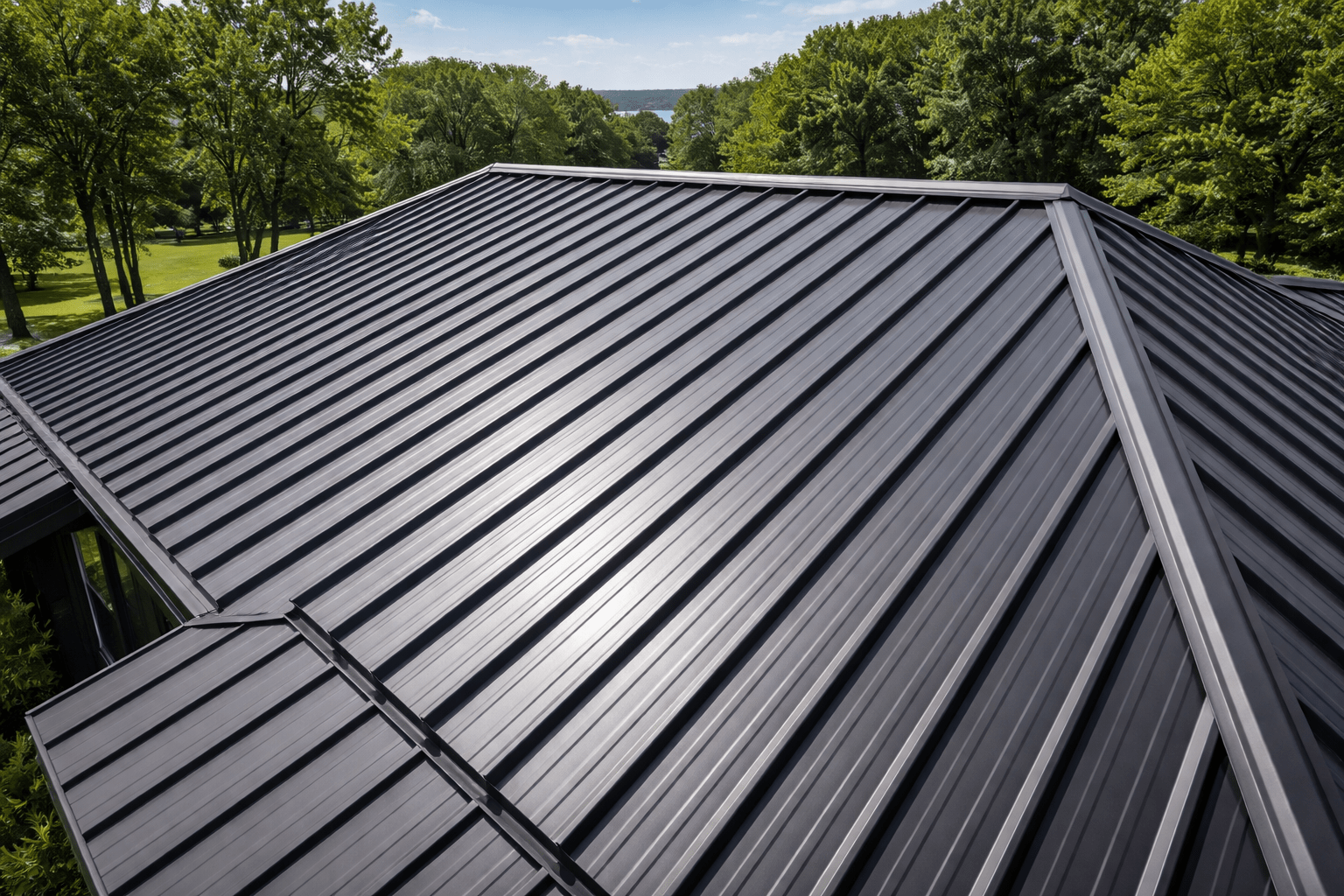
When homeowners explore 5v Crimp Metal Roofing black, they are usually seeking a bold, modern look that pairs well with white siding, wood accents, and farmhouse or contemporary architecture.
Because black panels absorb more heat, it is wise to pair this color choice with proper attic ventilation and insulation so your 5 v metal roofing still contributes to overall comfort and efficiency.
The term 5V Panel often refers to the same through‑fastened, V‑rib profile used for both roofs and walls on agricultural or coastal buildings, chosen for its clean lines and time‑tested performance. Corrugated metal roofing manufacturers that produce these panels range from national brands with published engineering and long paint warranties to regional roll formers that can quickly supply custom lengths for 5 v metal projects.
How to buy 5 v metal roofing wisely
A smart purchase decision starts with understanding product specs instead of shopping by color alone when it comes to 5 v metal roofing. Review gauge options and remember that lower numbers mean thicker steel, which can improve impact resistance and stiffness but at a higher material cost.
Compare coating systems, such as bare galvalume versus painted finishes with 25‑ to 40‑year warranties, and ask how those warranties apply when 5 v metal roofing is used near coastlines or industrial areas.
Request itemized quotes that include panels, trims, underlayment, fasteners, sealants, and accessories so you are not surprised by add‑on costs once your 5 v metal roofing is on the truck. Finally, clarify lead times, delivery logistics, and damage policies, since bent ribs or scratched coatings on 5 v metal panels can become long‑term weak points if not addressed immediately.
Step‑by‑step: how to install 5 v metal roofing
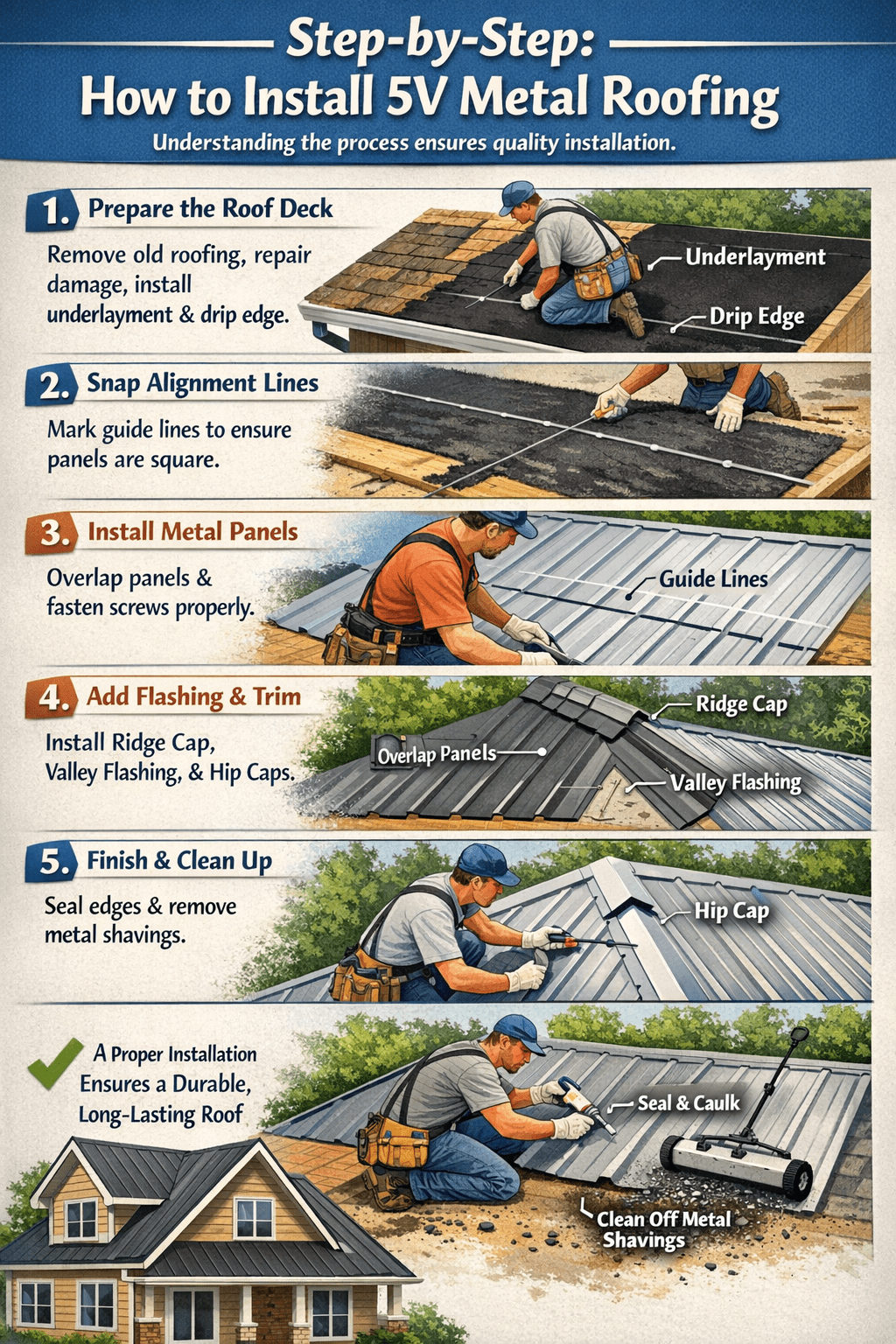
Professional installation is always recommended, but understanding the steps helps you evaluate quality when 5 v metal roofing goes on your home. First, installers prepare the deck by removing old materials as needed, repairing damage, and laying down the specified underlayment, drip edge, and starter trims along eaves and gables. Next, they snap alignment lines so the first panel of 5 v metal roof is perfectly square with the eave, since any error here will compound as more panels are added.
Panels are then set in place, overlapped correctly, and fastened following the manufacturer’s pattern, with screws driven snug but not over‑tight to avoid dimpling or distorting the ribs. Finally, ridge caps, hip caps, valley flashing, and sealants are installed to complete the 5 v metal roof system, with all cut edges cleaned of metal shavings to help prevent rust.
How to clean and maintain 5 v metal roofing
Routine maintenance keeps 5 v metal roofing looking sharp and performing well beyond the initial warranty period. Once or twice a year, visually inspect the roof for loose or backed‑out screws, damaged panels, failed sealant, or accumulated debris in valleys and against flashings.
Cleaning typically involves a gentle rinse with a garden hose and, if needed, a mild soap solution with a soft brush on especially dirty areas of 5 v metal roofing. Avoid harsh abrasives, wire brushes, or unapproved chemicals that can scratch or strip protective coatings from your 5 v metal roof panels. In snowy regions, be mindful of sliding snow and ice, and consider snow guards or diverters designed for use with 5 v metal roof to protect gutters, walkways, and landscaping.
of 5 v metal roofing
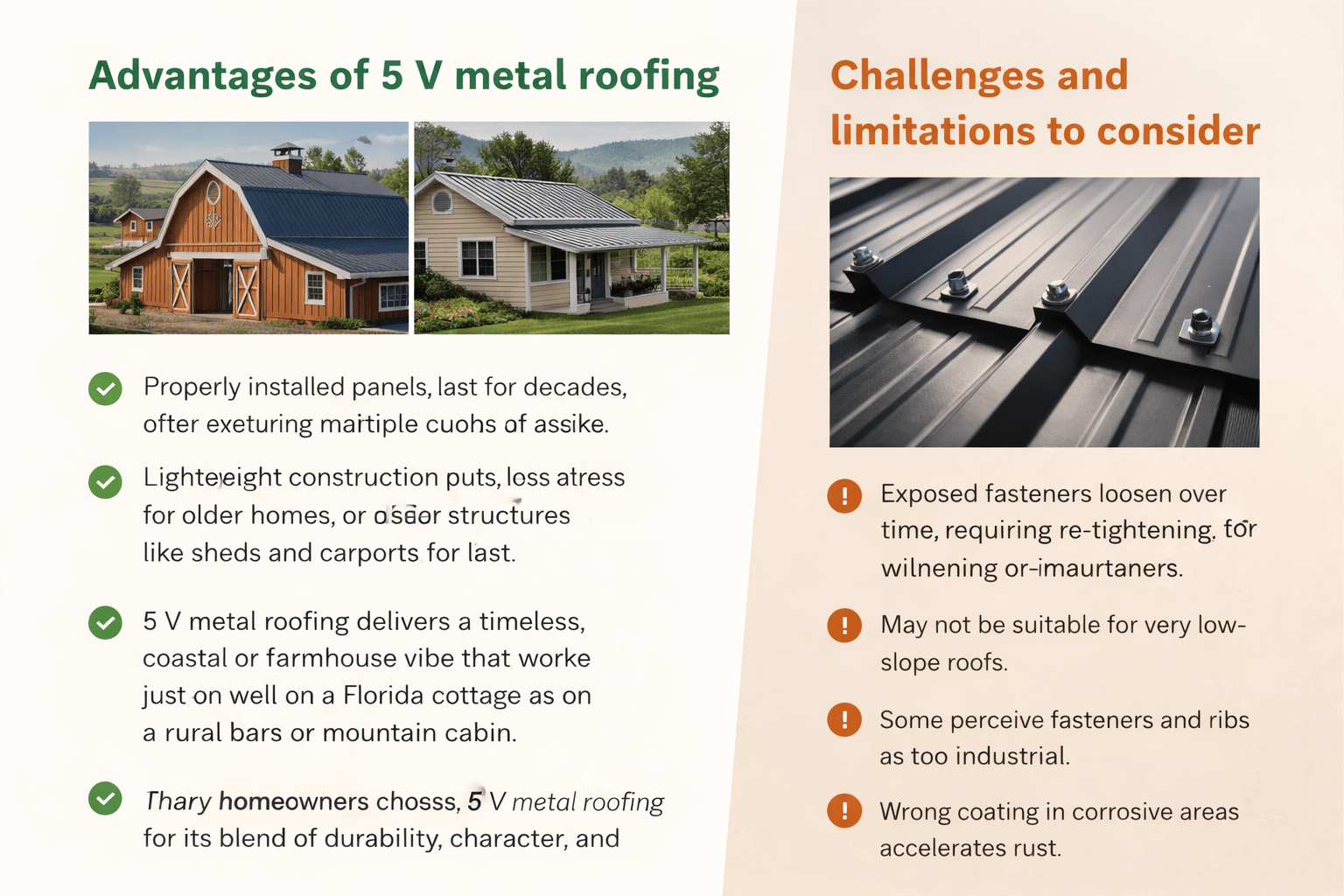
Many homeowners choose 5 v metal roofing for its blend of durability, character, and value. Properly installed panels can last several decades, often outliving multiple cycles of asphalt shingles and reducing the frequency of full roof replacements. The ribbed profile and metal substrate resist wind uplift, driving rain, and hail better than many traditional materials, especially when backed by tested wind ratings.
Lightweight construction puts less stress on framing and can be an advantage for older homes or simple structures like sheds and carports that still benefit from 5 v metal roofing. On the aesthetic side, 5 v metal roofing delivers a timeless, coastal or farmhouse vibe that works just as well on a Florida cottage as on a rural barn or mountain cabin.
Challenges and limitations to consider
Despite its strengths, 5 v metal roofing is not perfect for every project. Exposed fasteners mean hundreds or even thousands of screw penetrations through the panel surface, and over many years those fasteners can loosen or washers can degrade, requiring periodic re‑tightening or replacement. Because 5 v metal roof is typically used on steeper slopes, it may not be suitable for very low‑slope roofs where standing seam or specialty systems perform better.
Some homeowners perceive the fastener pattern and ribbed profile as too industrial compared with the sleek lines of concealed‑fastener standing seam metal roofing. In coastal or corrosive environments, choosing the wrong coating or neglecting edge details on 5 v metal roof can accelerate rust, so product selection and detailing matter.
FAQ about 5 v metal roofing
How long does 5 v metal roofing typically last?
With quality materials and correct installation, many 5 v metal roof systems can perform for several decades, often 30 to 50 years or more, depending on climate and maintenance.
Is 5 v metal roofing noisier in the rain than shingles?
When installed over a solid deck with underlayment and typical attic insulation, the sound difference between 5 v metal roofing and asphalt shingles is usually modest, though bare‑deck applications can be louder.
Can 5 v metal roofing be installed over existing shingles?
In some cases, codes and manufacturers allow installation over one layer of shingles if the deck is sound, but many professionals still prefer to remove old materials before adding 5 v metal roof.
What roof pitch is required for 5 v metal roofing?
Manufacturers commonly specify a minimum slope around 2.5:12 to 3:12 for 5 v metal roofing, and following their exact guidelines is essential to avoid leaks and warranty issues.
Is 5 v metal roofing suitable for coastal homes?
5 v metal roofing can work very well near the coast when you select corrosion‑resistant substrates and coatings, follow manufacturer guidance, and rinse salt buildup periodically.
What is the real cost over time?
Initial bids may position 5 v metal roofing above budget shingle options but below premium metals and high‑end composites in upfront cost. However, the extended lifespan and reduced frequency of full tear‑offs often lower the total cost of ownership over 30 to 50 years when compared with multiple asphalt replacements. Energy‑efficient finishes and better ventilation strategies paired with 5 v metal roofing can also trim cooling bills in hot climates, adding long‑term value. When you combine resale appeal, durability, and lower maintenance, many homeowners find that 5 v metal roof offers one of the strongest cost‑versus‑performance ratios among metal roof choices.
Conclusion
If you want a roof that blends traditional style with modern performance, 5 v metal roofing deserves a serious look. It offers a straightforward path into metal roofing, with accessible pricing, proven durability, and a familiar ribbed profile suited to homes, barns, and coastal cottages alike. By carefully planning your project, choosing reputable manufacturers and installers, and maintaining fasteners and finishes over time, you can help your 5 v metal roofing deliver decades of dependable service. With thoughtful decisions about color, coating, and detailing, 5 v metal roof can become a long‑lasting, visually striking upgrade that protects your property in almost any climate.
Other Resources
- mbci.com – Provides technical details and specifications for 5V crimp metal roofing panels used in residential and commercial roofing.
- southeasternbuildingproducts.com – Shows product information and features of a 29-gauge 5V crimp metal roofing panel with a 40-year finish warranty.
- mcelroymetal.com – Explains the design, profile, and applications of 5V crimp exposed-fastener metal roof panels.
- lowes.com – Lists a retail product page for a galvanized 5V crimp metal roofing panel with specifications and purchasing details.
Other Helpful Articles
- Steel Roof End Caps – Explains the purpose and installation of steel end caps used to protect the edges of metal roofing panels.
- AG Panel Metal Roof – Provides an overview of AG panel metal roofing, including its structure, uses, and installation basics.
- Slate Grey Metal Roof – Describes the characteristics and applications of slate grey metal roofing for residential and commercial buildings.
