
Roof Slope Snow: Safe Steps
Roof Slope Snow: Safe Tips
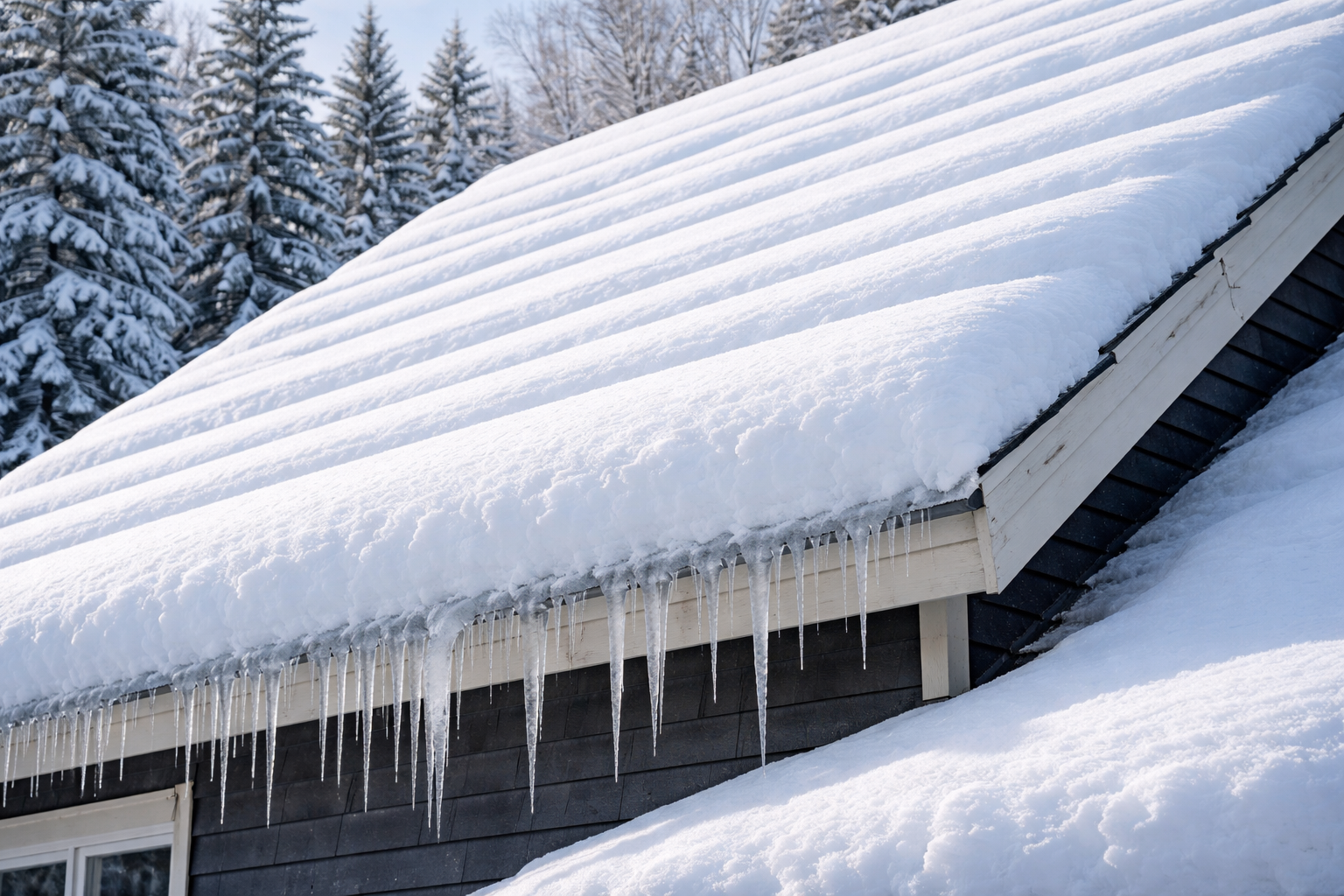
Winter brings a serene beauty to the landscape, but for homeowners, it brings the complex challenge of managing white accumulation on their homes. Understanding the dynamics of roof slope snow is not merely a matter of aesthetics; it is a critical component of structural integrity and home maintenance. When we discuss roof slope snow, we are analyzing how gravity, friction, and thermal dynamics interact on an inclined surface. This article serves as a comprehensive guide to mastering these elements.
What Is Roof Slope Snow Dynamics?
To truly understand roof slope snow, one must first grasp the physics behind it. In the simplest terms, this concept refers to how snow accumulates, retains, and eventually sheds from a pitched roof. A roof is not just a lid for a house; it is an engineered system designed to handle specific environmental loads. The interaction between the pitch (steepness) and the frozen precipitation defines the “dynamics.”
When snow falls on a flat surface, it piles up vertically. However, roof slope snow behaves differently. Gravity pulls the mass downward, while the friction of the roofing material holds it in place. If the force of gravity exceeds the coefficient of friction, the snow slides. This is the fundamental principle of shedding.
Factors influencing these dynamics include:
- Thermal Emittance: How much heat the roof releases, melting the bottom layer of snow.
- Wind Exposure: How wind scours snow from the windward side and deposits it on the leeward side.
- Surface Texture: Rough shingles hold roof slope snow longer than smooth metal.
Understanding what this phenomenon is helps homeowners predict when an avalanche might occur or when a dangerous ice dam is forming. It is the first step in proactive home care.
How to Find the Ideal Pitch for Snow
Architects and builders often debate the perfect angle for managing roof slope snow. Finding the ideal pitch involves a trade-off between aesthetics, cost, and functionality. The “pitch” is defined as the vertical rise in inches for every 12 inches of horizontal run.
To find the right pitch for your specific climate, you must consult local building codes which rely on historical weather data. In areas with heavy snowfall, a steeper pitch is generally preferred to encourage shedding. A 12/12 pitch (45 degrees) is excellent for shedding roof slope snow quickly. However, finding this pitch on an existing home requires simple tools.
You can measure your roof pitch from the attic or carefully from a ladder:
- Place a level horizontally against the roof rafter.
- Measure 12 inches along the level.
- Measure the vertical distance from the 12-inch mark up to the rafter.
- This vertical number is your “rise.”
If you are designing a new home, finding the ideal pitch for roof slope snow means looking at the “Ground Snow Load” maps provided by the ASCE 7 standard. High mountain areas often require steep A-frame designs, whereas suburban areas might tolerate lower slopes if the structure is reinforced.
How to Buy the Best Materials for Snow Loads
Buying roofing materials requires considering how they interact with roof slope snow. Not all materials are created equal when it comes to winter weather. When you set out to buy, you are looking for durability, moisture resistance, and shedding ability.
Metal roofing is often considered the gold standard for managing roof slope snow.
Standing Seam Metal: The vertical ribs provide strength, and the smooth surface allows snow to slide off easily. This reduces the heavy weight load on the structure.
Slate and Tile: These are incredibly durable and can handle heavy loads, but their textured surface might hold roof slope snow longer than metal. They are also heavy themselves, adding to the dead load.
When shopping, ask suppliers these questions:
- What is the friction coefficient of this material regarding roof slope snow?
- Does the manufacturer warranty cover ice dam damage?
- Are there matching snow retention systems available?
Asphalt shingles are the most common choice. While cost-effective, their granular surface grips roof slope snow. If you buy asphalt shingles in a heavy snow zone, ensure you also buy a high-quality ice and water shield underlayment. This self-sealing membrane is crucial for preventing leaks when snow sits on the slope for extended periods.
How to Install Snow Guards on Slopes
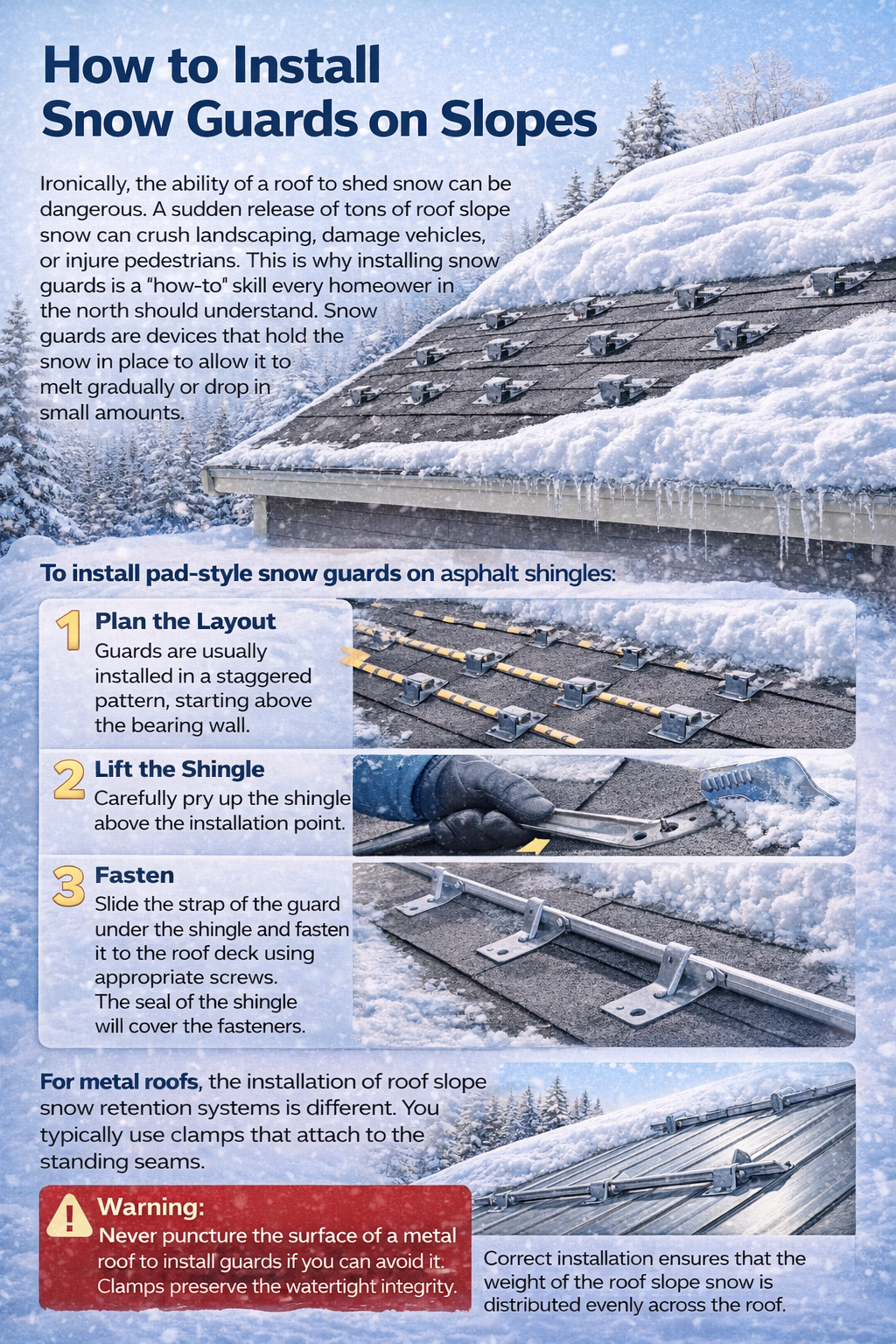
Ironically, the ability of a roof to shed snow can be dangerous. A sudden release of tons of roof slope snow can crush landscaping, damage vehicles, or injure pedestrians. This is why installing snow guards is a “how-to” skill every homeowner in the north should understand. Snow guards are devices that hold the snow in place to allow it to melt gradually or drop in small amounts.
To install pad-style snow guards on asphalt shingles:
- Plan the Layout: Guards are usually installed in a staggered pattern, starting above the bearing wall.
- Lift the Shingle: Carefully pry up the shingle above the installation point.
- Fasten: Slide the strap of the guard under the shingle and fasten it to the roof deck using appropriate screws. The seal of the shingle will cover the fasteners.
For metal roofs, the installation of roof slope snow retention systems is different. You typically use clamps that attach to the standing seams.
Warning: Never puncture the surface of a metal roof to install guards if you can avoid it. Clamps preserve the watertight integrity.
Correct installation ensures that the weight of the roof slope snow is distributed evenly across the roof, rather than point-loading specific areas. Improper installation can result in the guards being ripped off, taking parts of the roof with them.
How to Do a Snow Load Calculation
Calculating the weight of roof slope snow is a mathematical process that determines if your house is safe. While a structural engineer should perform the final analysis, a homeowner can do a rough calculation to assess immediate risk.
- First, you need to understand the difference between fresh snow and packed ice.
- Fresh, fluffy snow: Weighs about 3 pounds per square foot per foot of depth.
- Wet, heavy snow: Weighs roughly 12-20 pounds per square foot per foot of depth.
Ice: Weighs 57 pounds per square foot per inch of thickness.
To do the calculation for your roof slope snow:
- Estimate Depth: Measure the depth of the snow on the roof.
- Determine Type: Classify it as wet or dry.
- Calculate: Multiply the depth (in feet) by the weight of the snow type.
For example, if you have 2 feet of wet snow (20 lbs/ft), your load is 40 pounds per square foot. If your roof is 1,500 square feet, that is 60,000 pounds of roof slope snow sitting above your head. Most residential roofs are designed to support 20 to 40 pounds per square foot of live load. If your calculation exceeds this, or if you see signs of sagging, you have a critical situation. This calculation highlights why monitoring roof slope snow is essential.
How Much Does Snow Removal Cost?
When the roof slope snow accumulation becomes dangerous, professional removal is necessary. The cost varies significantly based on your location, the height of the roof, the steepness of the slope, and the amount of snow.
Generally, homeowners can expect to pay between $300 and $700 for a standard residential job.
- Hourly Rates: Many companies charge $50 to $100 per hour per worker.
- Flat Fees: Some contractors offer a flat fee for a specific roof size.
Factors that increase the “how much” include:
- Extreme Pitch: Steeper roofs require safety harnesses, increasing time and cost.
- Ice Removal: Chiseling away ice dams caused by melting roof slope snow is labor-intensive and costs more, often running over $1,000.
- Emergency Service: Calling for removal during a blizzard or after a structural creak is heard will come at a premium.
While the cost might seem high, compare it to the cost of a collapsed roof. Paying for roof slope snow removal is an investment in the longevity of the structure. It is often cheaper to pay for removal than to pay an insurance deductible for water damage.
What Is the Cost of Repairing Winter Damage?
If roof slope snow is ignored, the resulting damage can be financially devastating. The costs associated with repairing damage caused by heavy snow loads and ice dams are far higher than maintenance costs.
The most common issue is the ice dam. This occurs when heat escapes the home, melts the roof slope snow, and the water refreezes at the cold eaves. This ice barrier forces water to back up under the shingles.
- Interior Water Damage: Repairing drywall, insulation, and painting after a leak can cost $2,000 to $5,000.
- Gutter Repair: Heavy roof slope snow sliding off can tear gutters right off the fascia. Re-hanging or replacing gutters costs $10 to $20 per linear foot.
- Structural Repair: In the worst-case scenario of a collapse, rebuilding a roof structure can cost $10,000 to over $30,000 depending on the home size.
The true cost of roof slope snow damage also includes intangible costs like mold remediation and the displacement of your family during repairs. This highlights why managing the snow on your slope is a financial priority.
How to Clean Snow Safely from Slopes
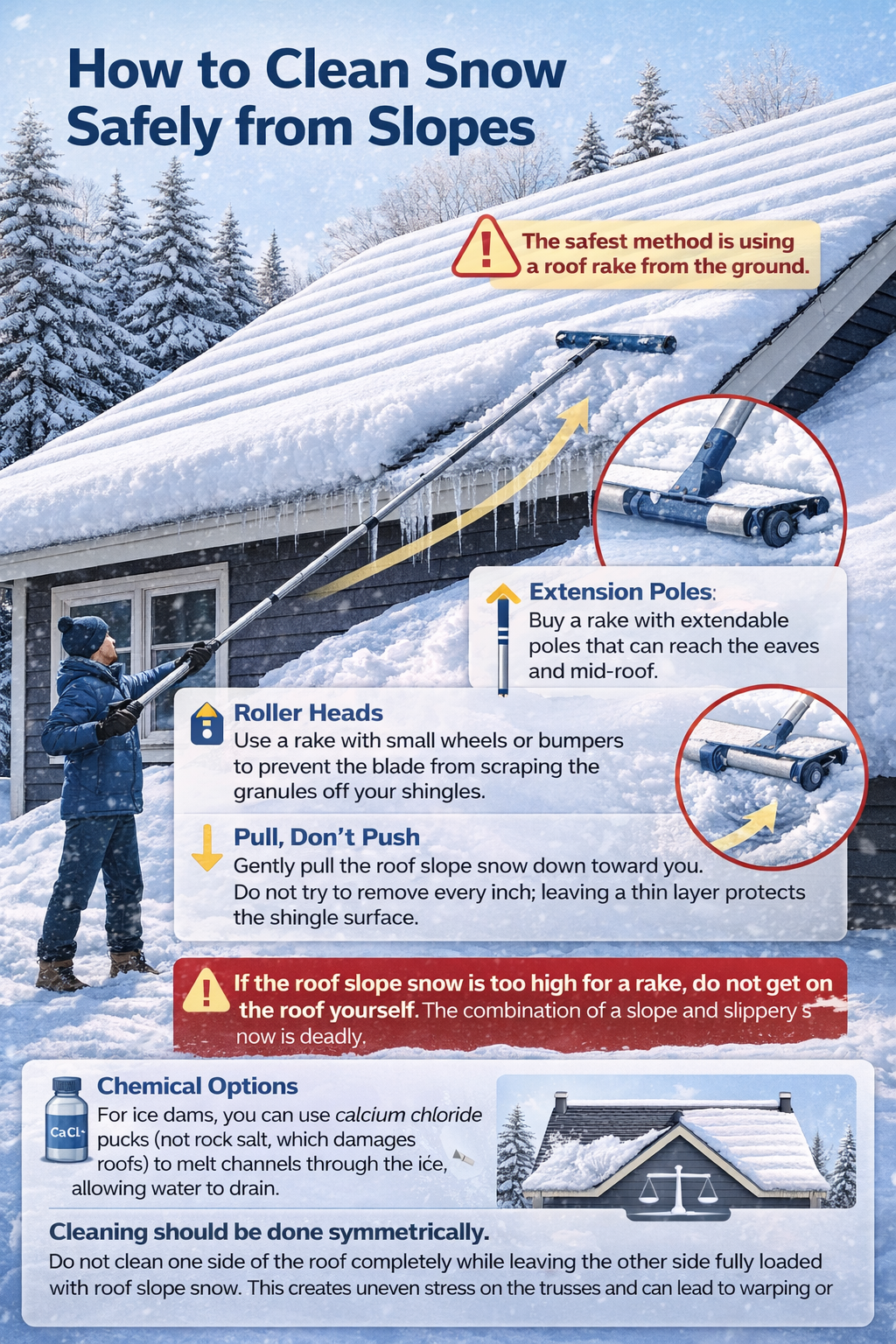
Learning how to clean roof slope snow is a vital skill. Safety is paramount; thousands of people are injured every year falling from ladders or roofs during winter.
The safest method is using a roof rake from the ground.
- Extension Poles: Buy a rake with extendable poles that can reach the eaves and mid-roof.
- Roller Heads: Use a rake with small wheels or bumpers to prevent the blade from scraping the granules off your shingles.
- Pull, Don’t Push: Gently pull the roof slope snow down toward you. Do not try to remove every inch; leaving a thin layer protects the shingle surface.
If the roof slope snow is too high for a rake, do not get on the roof yourself. The combination of a slope and slippery snow is deadly.
Chemical Options: For ice dams, you can use calcium chloride pucks (not rock salt, which damages roofs) to melt channels through the ice, allowing water to drain.
Cleaning should be done symmetrically. Do not clean one side of the roof completely while leaving the other side fully loaded with roof slope snow. This creates uneven stress on the trusses and can lead to warping or structural failure.
Critical Technical Questions Answered
We must address specific technical inquiries regarding roof slope snow to ensure a complete understanding of load bearing and removal necessity.
1: How much snow can an average sloped roof hold?
An average residential roof is engineered to hold roughly 20 pounds per square foot. However, newer homes in snow belts may be built to withstand 50 pounds or more. This translates to roughly four feet of fresh, fluffy snow or two feet of packed, old snow. Always consult your blueprints for the exact rating.
2: Is snow load required for a sloped roof panel design?
Yes, snow load is a mandatory calculation for sloped roof panel design. Engineers must account for the “sliding load” on the panels. The design must ensure the fasteners and clips can withstand the shear force exerted by the heavy, sliding roof slope snow as it moves toward the eaves.
3: Should I remove the snow from my low slope roof?
You should absolutely remove snow from a low slope roof more frequently than a steep one. Low slope roofs do not shed roof slope snow naturally. The accumulation continues to build, and drainage is slower, increasing the risk of leaks and collapse significantly.
4: Pitch of roof for snow
The ideal pitch of roof for snow shedding is generally considered to be 10/12 or greater. A pitch of 6/12 is moderate and will hold snow, while a 12/12 pitch allows gravity to overcome friction efficiently, clearing the roof slope snow naturally.
Advantages of Steep Slopes in Winter
While we have discussed the dangers, there are distinct advantages to having a steep pitch when dealing with roof slope snow. The primary benefit is the reduction of static load. A steep roof uses gravity as a tool. As soon as the sun hits the roof or the ambient temperature rises slightly, the roof slope snow creates a water film and slides off.
This self-cleaning mechanism reduces the need for manual intervention.
- Longevity: Because water and ice do not sit on the surface for weeks, the roofing material lasts longer.
- Ventilation: Steep roofs typically have larger attic spaces, which allows for better insulation and ventilation. Better ventilation keeps the roof deck cold, which paradoxically helps prevent ice dams formed by melting roof slope snow.
Furthermore, steep slopes with visible roof slope snow shedding are less prone to catastrophic collapse because the load rarely reaches critical mass. The aesthetic appeal of a high-pitched roof capped with snow is also a classic architectural look that many homeowners desire, provided the snow management systems are in place.
Challenges Connected to Roof Slope Snow
Despite the advantages of shedding, the challenges connected to roof slope snow are numerous. The most significant challenge is the “avalanche effect.” When a steep metal roof sheds its entire load at once, it creates a hazard zone around the perimeter of the house.
This requires:
- Strategic landscaping (avoiding planting delicate shrubs under eaves).
- Protected entryways (using gables to divert roof slope snow away from doors).
Another challenge is the complexity of maintenance. Repairing a chimney or a vent on a steep, snowy roof is nearly impossible for the average homeowner. It requires professional rigging and safety gear. The presence of roof slope snow hides potential damage. A missing shingle or a cracked flashing boot is invisible under the blanket of white until the spring thaw reveals a leak.
Finally, the uneven melting of roof slope snow can lead to thermal shock for some roofing materials, causing expansion and contraction cycles that wear out fasteners and seals prematurely. Dealing with these challenges requires a proactive mindset and a respect for the power of winter weather.
FAQ : Roof slope snow
What is the best way to prevent ice dams from roof slope snow?
The best way is to ensure your attic is properly insulated and ventilated to keep the roof deck cold.
Can I use salt to melt roof slope snow?
No, you should not use standard rock salt as it corrodes nails and damages shingles; use calcium chloride instead.
Does solar panel installation affect roof slope snow shedding?
Yes, the smooth glass surface of solar panels accelerates shedding, often requiring additional snow guards.
How often should I check my roof slope snow load?
You should check visually after every major storm or whenever accumulation exceeds two feet.
Is roof slope snow heavier than rain?
By volume, no, but because snow accumulates over time while rain runs off, the total load of snow is usually much heavier.
Conclusion
Managing roof slope snow is an ongoing responsibility for homeowners in cold climates. From the initial design phase where pitch is determined, to the selection of materials like metal or asphalt, every decision impacts how your home handles winter. We have explored how to calculate loads, how to clean the slopes safely, and the costs associated with removal and repair.
The interaction between gravity and precipitation on your roof is a powerful force. By respecting the dynamics of roof slope snow, investing in snow guards, and keeping a vigilant eye on accumulation, you can ensure your home remains a warm, dry sanctuary throughout the winter. Remember that the cost of prevention is always lower than the cost of failure. Whether you are dealing with a low slope or a steep pitch, knowledge is your best defense against the heavy weight of roof slope snow.
Other Resources
Cedur – Informational article explaining how roof pitch affects snow accumulation and shedding.
SnoBlox-SnoJax – Educational post discussing roof slope, snow load, and winter roof performance.
The Roof Doctors – Guide outlining minimum roof pitch requirements for effective snow protection.
Other Helpful Articles
Snow Guards for Corrugated Metal Roofs – Article describing snow guard solutions for corrugated metal roofing systems.
Standing Seam Metal Roof Snow Guards – Guide explaining snow guard options for standing seam metal roofs.
Snow Guards for Slate Roofs – Article outlining snow retention solutions designed for slate roofing systems.
