
TPO Roof Drains: Types, Inspection and Leak Prevention
TPO Roof Drains: Types, Inspection and Leak Prevention
When managing a commercial building with a flat or low-slope roof, water management is a critical priority. Standing water can cause severe structural damage, reduce the lifespan of your roofing membrane, and lead to costly interior leaks. For buildings utilizing Thermoplastic Polyolefin roofing, integrating the right drainage system is essential. This is where understanding tpo roof drains becomes vital for building owners, facility managers, and roofing contractors.
Thermoplastic Polyolefin membranes are highly popular due to their energy efficiency, durability, and cost-effectiveness. However, a membrane is only as effective as its ability to shed water. Proper drainage prevents ponding, which can degrade the roofing material over time. Integrating tpo roof drains effectively ensures that rain and melting snow are quickly channeled away from the building’s surface.
In this comprehensive guide, we will explore everything you need to know about these essential components. From understanding what they are and how to buy them, to installation procedures and maintenance requirements, we will cover every aspect. By the end of this article, you will have a thorough understanding of how tpo roof drains function and why they are indispensable for commercial roofing systems.
What Are Tpo Roof Drains?
To properly maintain a commercial roof, one must first understand the components that make it up. So, what exactly are tpo roof drains? Simply put, they are specialized drainage fixtures designed specifically for integration with Thermoplastic Polyolefin roofing systems. Unlike generic plumbing drains, these are engineered to create a seamless, watertight seal with the TPO membrane.
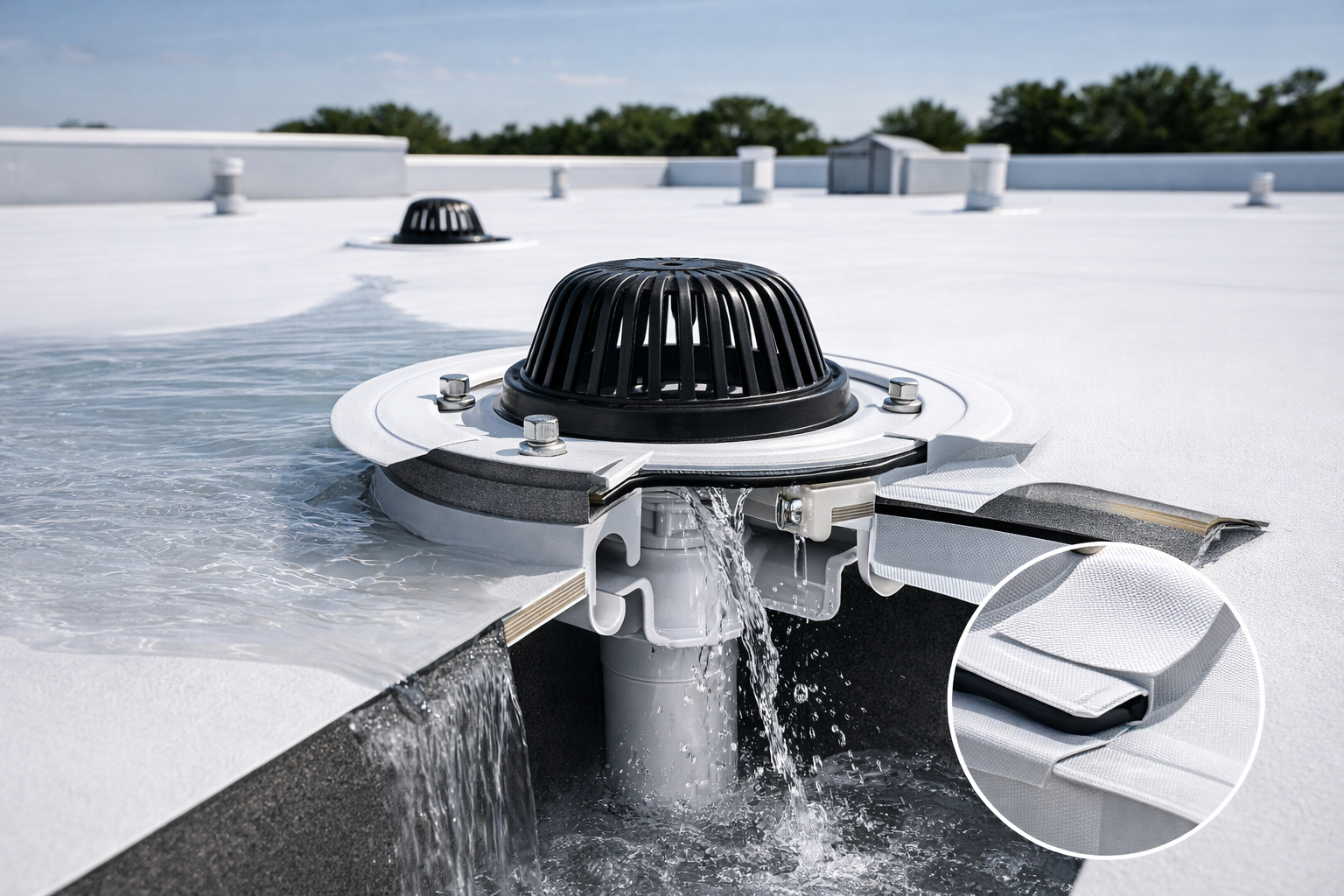
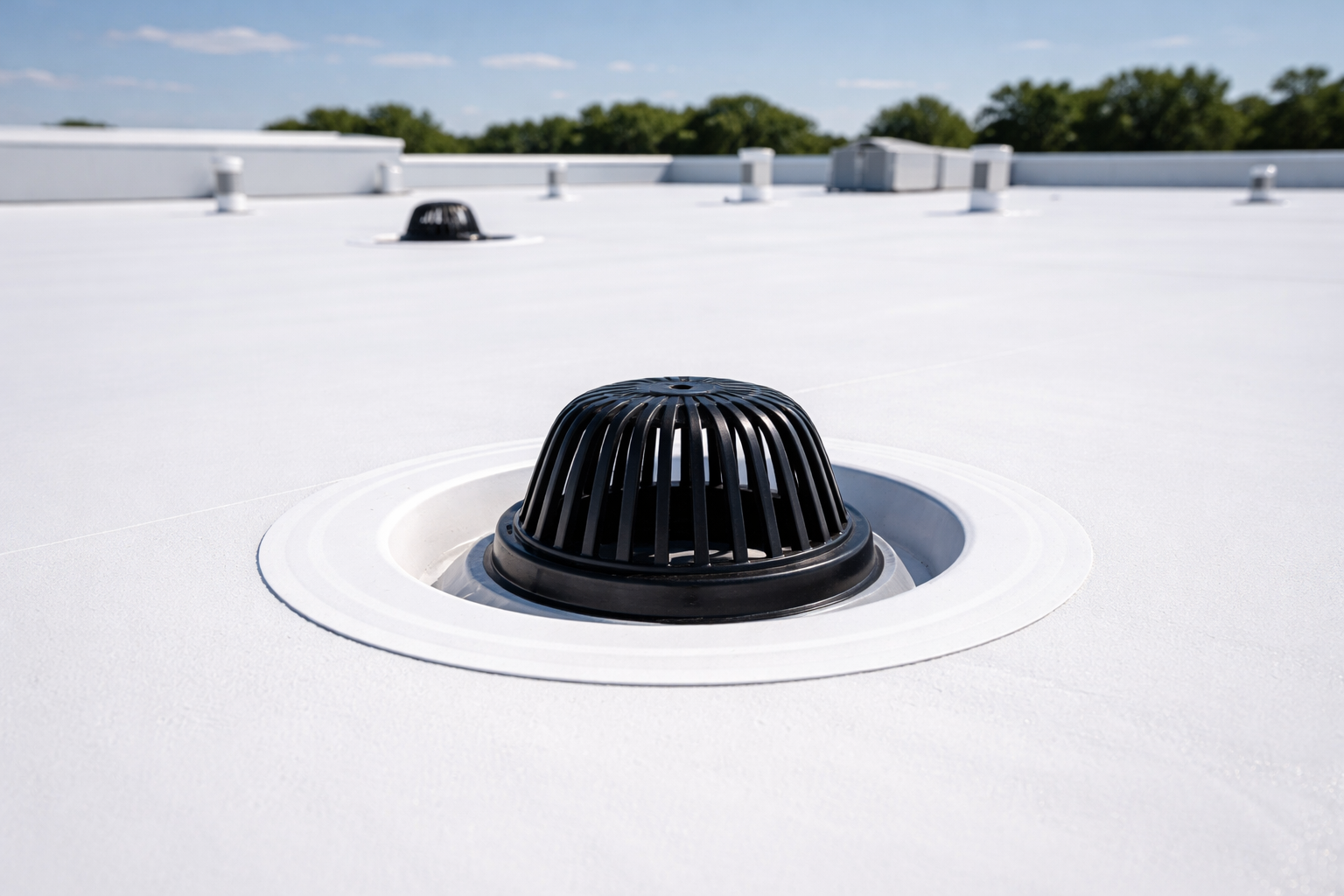
The fundamental purpose of these drains is to collect surface water and direct it into the building’s internal or external plumbing system. They are strategically placed at the lowest points of the roof surface to utilize gravity for effective water removal. The design of tpo roof drains typically includes a drain body, a clamping ring, and a strainer or dome. The strainer prevents debris like leaves, twigs, and trash from entering the plumbing system, which could cause severe clogs.
What makes tpo roof drains unique is their compatibility with the membrane material. Often, these drains come with a factory-attached skirt made of TPO. This skirt allows contractors to heat-weld the drain directly to the field membrane. This heat-welded connection creates a monolithic layer, eliminating the reliance on adhesives or caulks, which can degrade over time. Therefore, tpo roof drains offer superior waterproofing compared to traditional mechanical flashing methods.
How to Do a Drain Inspection
Regular inspections are a fundamental part of roof maintenance. Knowing how to do a proper inspection of your tpo roof drains can save you thousands of dollars in potential water damage. An inspection should be conducted at least twice a year—ideally in the spring and fall—and after any major storm events.
To perform a thorough inspection, start by safely accessing the roof and locating all drainage points. Observe the area immediately surrounding the drains. Look for any signs of ponding water, which could indicate a blockage or that the drain is not situated at the true low point. Next, carefully examine the dome or strainer of the tpo roof drains. Ensure it is securely fastened and completely free of accumulated debris. A missing or broken strainer is a critical issue that must be addressed immediately, as it allows debris to enter the plumbing pipes.
After checking the strainer, inspect the clamping ring and the TPO flashing. Look for any cracks, tears, or signs of separation between the drain skirt and the field membrane. The seal around tpo roof drains must be absolutely watertight. If you notice any deterioration or if the clamping bolts are loose or rusted, prompt repairs are necessary. Finally, if possible, shine a flashlight down the drain pipe to check for internal clogs or slow drainage, which might require professional plumbing services to clear.
How to Find the Right Drains for Your Building
Selecting the correct drainage components is crucial for the success of your roofing project. Knowing how to find the right tpo roof drains involves understanding your specific building requirements, local plumbing codes, and the existing roofing structure. You cannot simply purchase any off-the-shelf drain and expect it to function correctly with a TPO membrane.
To find the most suitable tpo roof drains, you must first determine the required drain size. This is usually dictated by the size of your existing plumbing pipes (typically ranging from 2 inches to 6 inches in diameter). Next, consider the type of installation. Are you installing new construction drains, or do you need retrofit drains to insert into existing plumbing? Retrofit tpo roof drains are highly popular for re-roofing projects because they bypass the need to tear out the old drain bowl, saving significant time and labor.
When searching for tpo roof drains, look for products manufactured by reputable roofing companies or specialized drainage manufacturers. Consult with your roofing contractor or a commercial roofing supply distributor. They can help you find tpo roof drains that meet your specific needs, such as those with heavy-duty cast iron domes for areas with high debris, or those with specific flashing configurations to match your membrane thickness. Always ensure the products you select comply with local building codes.
How to Buy Quality Drainage Components
Once you have identified your needs, the next step is knowing how to buy the components. Purchasing tpo roof drains requires careful consideration of quality, compatibility, and vendor reliability. Do not let price be the sole determining factor; poor quality drains can lead to catastrophic roofing failures.
To buy tpo roof drains effectively, start by sourcing from authorized commercial roofing distributors. While some components may be available at big-box home improvement stores, professional distributors offer a wider selection of specialized commercial products. When you buy tpo roof drains, look for items that feature factory-welded TPO skirts. These pre-flashed drains ensure a much stronger and more reliable seal than field-fabricated flashings.
Consider the materials used in the drain construction. For long-term durability, cast iron or heavy-gauge spun aluminum drains are often preferred over standard plastics. Additionally, when purchasing tpo roof drains, always verify the warranty. Ensure that the drains you buy are approved by the manufacturer of your TPO membrane. Using non-approved tpo roof drains can sometimes void your overarching roofing warranty, which is a risk no building owner should take.
Understanding Costs: How Much Are They?
Budgeting for a roofing project involves understanding all component costs. Building owners frequently ask: how much do tpo roof drains cost? The price can vary significantly based on several factors, including the type of drain, the materials used, the size, and the manufacturer.
On average, standard retrofit tpo roof drains with a pre-attached flashing skirt can cost anywhere from $100 to $300 each. These are typically made of spun aluminum or durable plastics. However, if your project requires heavy-duty new construction tpo roof drains made of cast iron, the material cost can easily exceed $300 to $500 per unit. The cost of the drain itself is only part of the equation; you must also consider the labor required for installation.
When calculating how much you will spend on tpo roof drains, remember to factor in the complexity of the installation. A simple retrofit installation might only require an hour of labor per drain. Conversely, replacing an entire drain bowl and reconnecting it to internal plumbing can take several hours and involve both roofing contractors and licensed plumbers. Therefore, the total installed cost for tpo roof drains can range from $300 for a simple retrofit to over $1,000 for a complex replacement.
What is the Cost of Ignoring Drainage Issues?
While installing new drains involves upfront expenses, what is the cost of ignoring potential drainage problems? The financial implications of neglecting tpo roof drains are severe and can quickly dwarf the cost of proactive maintenance or replacement.
If tpo roof drains are clogged or improperly sealed, water will inevitably pond on the roof surface. Prolonged ponding water adds immense weight to the building structure; a single inch of water over a 100-square-foot area weighs over 500 pounds. This can lead to structural deflection or, in extreme cases, roof collapse. Furthermore, if the seals around tpo roof drains fail, water will penetrate the building interior. This leads to damaged inventory, ruined ceiling tiles, electrical hazards, and the growth of dangerous mold.
The cost of ignoring failing tpo roof drains can easily escalate into tens or even hundreds of thousands of dollars in remediation, structural repairs, and interior restoration. By comparison, the investment in high-quality tpo roof drains and routine maintenance is negligible. Properly functioning tpo roof drains are an insurance policy for your entire commercial building asset.
How to Install Drainage Systems Properly
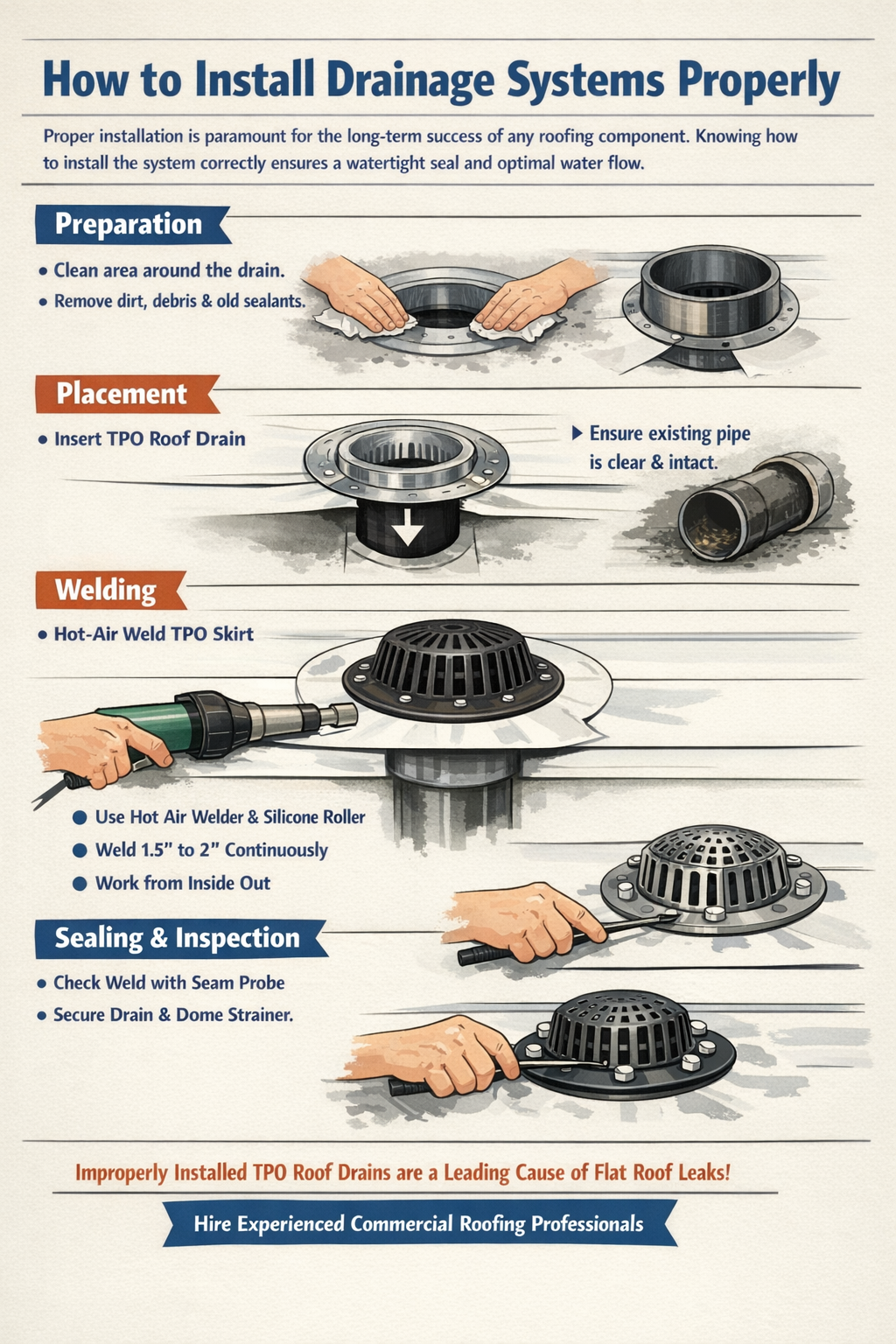
Proper installation is paramount for the long-term success of any roofing component. Knowing how to install the system correctly ensures a watertight seal and optimal water flow. While installation specifics vary based on the drain type (new construction vs. retrofit), the fundamental principles remain consistent for tpo roof drains.
Preparation: The first step is to thoroughly clean the area around the drain opening. The existing TPO membrane must be free of dirt, debris, and any old sealants. If installing a retrofit drain, ensure the existing plumbing pipe is clear and intact.
Placement: Insert the new tpo roof drains into the plumbing pipe. If it is a retrofit drain, it will typically utilize an expanding mechanical seal to secure it within the existing pipe. Ensure the drain flange sits completely flush with the roof surface to prevent any localized ponding.
Welding: This is the most critical step. The factory-attached TPO skirt of the tpo roof drains must be hot-air welded to the field membrane.
Use a hand-held hot air welder and a silicone roller.
Carefully weld the skirt to the membrane, working from the inside out to prevent wrinkles.
Ensure a minimum of a 1.5 to 2-inch continuous weld.
Sealing and Inspection: After the weld has cooled, use a seam probe to check the integrity of the entire weld perimeter. Apply a cut-edge sealant if required by the membrane manufacturer. Finally, secure the clamping ring and the dome strainer onto the tpo roof drains.
Improperly installed tpo roof drains are a leading cause of flat roof leaks, so this work should ideally be performed by experienced commercial roofing professionals.
How to Clean and Maintain Your System
To ensure longevity and optimal performance, routine maintenance is required. Knowing how to clean your drainage system is just as important as knowing how to install it. Neglected tpo roof drains will inevitably clog, leading to severe ponding issues.
To clean tpo roof drains, you should establish a regular schedule, especially after the autumn leaves fall and following major storms. Begin by putting on heavy-duty gloves, as you may encounter sharp objects or biological waste. Carefully remove the dome strainer from the tpo roof drains. Use a small trowel or your hands to scoop out any accumulated debris, mud, or vegetation from the drain bowl and the immediate surrounding area.
Once the heavy debris is removed, use a stiff brush to scrub the clamping ring and the interior of the drain bowl. You can flush the tpo roof drains with a hose to ensure water flows freely down the pipe and to wash away fine dirt. Do not use harsh chemicals or sharp metal tools that could puncture the TPO membrane or the drain skirt. After cleaning, firmly reattach the strainer to the tpo roof drains, ensuring it is secure against high winds. Consistent cleaning of tpo roof drains is the easiest way to prevent unexpected roof leaks.
Advantages and Challenges Connected to the System
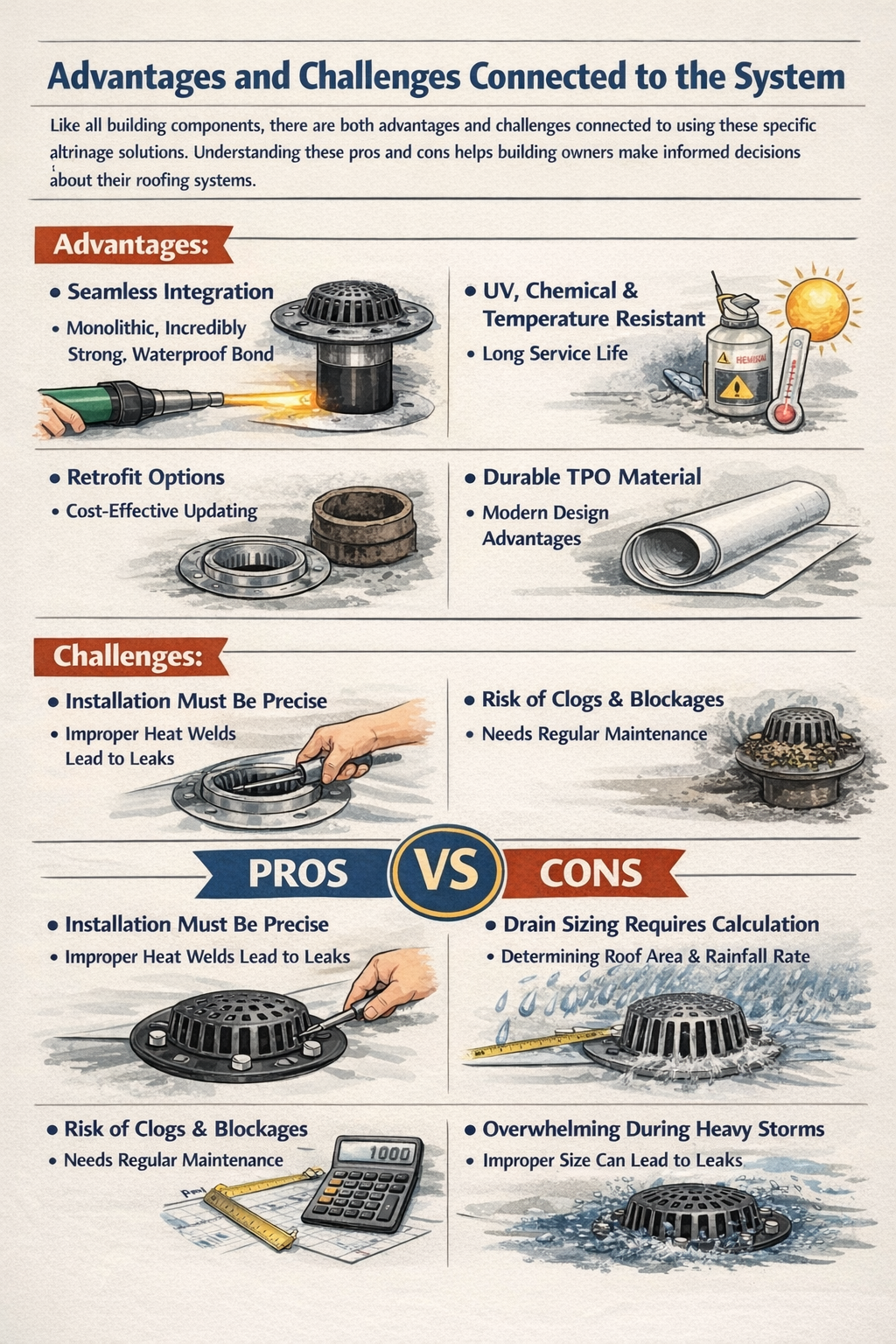
Like all building components, there are both advantages and challenges connected to using these specific drainage solutions. Understanding these pros and cons helps building owners make informed decisions about their roofing systems.
Advantages:
The primary advantage of tpo roof drains is their seamless integration. Because the drain skirt is made of the exact same material as the roof membrane, the two components can be hot-air welded together. This creates a monolithic, incredibly strong, and waterproof bond that far outperforms traditional sealants or mastics. Furthermore, modern tpo roof drains are highly resistant to UV radiation, chemical exposure, and temperature fluctuations, ensuring a long service life. The availability of retrofit options also makes updating tpo roof drains a relatively straightforward and cost-effective process during a re-roofing project.
Challenges:
Despite their benefits, there are challenges associated with tpo roof drains. The most significant challenge is the reliance on proper installation. If the heat weld is not performed correctly by a skilled technician, the drain will leak. Additionally, while the TPO material is durable, tpo roof drains are still susceptible to blockages if not regularly maintained. Finally, determining the exact placement and required capacity of tpo roof drains requires careful calculation of the roof’s square footage and local rainfall rates; improper sizing can overwhelm the system during heavy storms.
Critical Considerations for Drainage Integration
When planning a commercial roofing project, several specific details require careful attention to ensure the system functions correctly. Integrating drains into a TPO membrane involves understanding specific manufacturer requirements, proper detailing, and the different types of drain configurations available.
When considering how many roof drains do I need GAF TPO systems, or any other major manufacturer’s system, the answer depends on several factors. Building codes typically dictate the required drainage capacity based on the roof’s square footage and the maximum expected rainfall intensity for your specific geographic location. Generally, a minimum of two drains are required for any roof area, regardless of size, to provide a backup in case one becomes clogged.
Furthermore, most codes require secondary (overflow) drainage systems placed slightly higher than the primary tpo roof drains to handle severe downpours or primary drain blockages. Consulting with a structural engineer or a licensed roofing contractor is essential to calculate the exact number and size of tpo roof drains required to meet code and protect your building.
Understanding the tpo roof drain detail is vital for a successful installation. The “detail” refers to the specific architectural drawing or manufacturer specification that dictates exactly how the drain must be integrated into the membrane. A standard tpo roof drain detail will show the existing plumbing pipe, the insertion of the drain body, the application of water block mastic (if required), the placement of the drain flange, and the precise width and location of the heat welds connecting the TPO skirt to the field membrane. Following the manufacturer’s specific tpo roof drain detail is absolutely critical; deviating from these specifications will likely void the roofing warranty and lead to inevitable leaks.
Proper tpo roof drain installation requires highly specialized skills. The process of welding thermoplastic materials requires a deep understanding of temperature control, welding speed, and pressure application. During a tpo roof drain installation, the technician must ensure the area is completely dry and clean. They must carefully align the TPO skirt so it lies perfectly flat against the surrounding membrane, avoiding any wrinkles or “fishmouths” where water could penetrate. The tpo roof drain installation is not a place to cut corners, as the drain areas are typically the lowest points on the roof and endure the highest volume of water flow.
Finally, you may encounter the term tpo coated drain during your research. A tpo coated drain is an alternative to a drain with a flexible, attached TPO skirt. These are typically heavy-duty aluminum or cast-iron drain bowls that have been factory-coated with a layer of TPO material. The field membrane is then welded directly to the coated flange of the drain bowl. A tpo coated drain offers extreme durability and a very rigid connection point, which can be advantageous in certain high-stress roofing applications. However, they are often more expensive and heavier to work with than flexible skirted tpo roof drains.
Frequently Asked Questions : TPO roof drains
What is the lifespan of these drainage systems?
When properly installed and maintained, high-quality tpo roof drains can last as long as the roofing membrane itself, which is typically 20 to 30 years. However, the lifespan can be shortened by lack of maintenance, severe physical damage, or exposure to harsh chemicals.
Can I install these drains myself?
While a highly skilled DIYer might attempt it, installing tpo roof drains is strongly discouraged for non-professionals. The requirement for specialized hot-air welding equipment and the critical nature of creating a watertight seal means installation should be left to certified commercial roofing contractors.
Why is water still ponding around my drain?
If water is ponding directly around tpo roof drains, it often means the drain was not installed flush with the roof deck, or the building structure has settled, creating a new low point. Alternatively, it could indicate a partial blockage within the drain pipe itself that is slowing water flow.
Are retrofit drains as good as new construction drains?
Yes, high-quality retrofit tpo roof drains are excellent solutions for re-roofing projects. They provide a secure, watertight seal using mechanical expansion rings and factory-attached TPO skirts, offering performance comparable to new construction drains while significantly reducing installation labor and costs.
How often should the strainers be replaced?
The strainers on tpo roof drains only need to be replaced if they are broken, severely rusted (if metal), or missing. During your biannual inspections, check the condition of the strainers; if they are intact and securely fastened, they do not require replacement.
Conclusion
Managing water effectively is the cornerstone of maintaining a healthy and long-lasting commercial flat roof. Understanding the critical role that tpo roof drains play in this process empowers building owners and facility managers to make informed decisions about their roofing assets. From preventing catastrophic structural damage caused by ponding water to ensuring the longevity of the roofing membrane, these specialized drainage components are truly indispensable.
We have explored the essential aspects of these systems, detailing what they are, how to inspect them, and the critical importance of professional installation. We discussed the financial implications of drainage systems, highlighting that while purchasing quality tpo roof drains involves an initial investment, the cost of ignoring drainage issues is exponentially higher. Furthermore, we emphasized the necessity of routine maintenance, as even the best tpo roof drains will fail if they are choked with debris.
By ensuring your building is equipped with the correct number of properly installed and well-maintained tpo roof drains, you protect your investment from the devastating effects of water intrusion. Regular inspections and timely repairs will keep water flowing off your roof and away from your property. Ultimately, a proactive approach to managing your tpo roof drains ensures peace of mind and structural integrity for decades to come.
Other Resources
Thunderbird Products – Product collection featuring TPO and PVC clad roof drains for commercial roofing systems.
CopperLab – Product listing showcasing TPO and PVC roof drain solutions for flat roofs.
GAF – EverGuard TPO Coated Hercules Drains – Product page detailing TPO-coated roof drains designed for commercial roofing applications.
Centimark Video – Video resource demonstrating TPO or PVC roof drain installation and system integration.
Other Helpful Articles
Roof to Wall Vent Guide – Informational article describing roof-to-wall vent systems and installation basics.
Aluminum Roof Sealant – Guide explaining aluminum roof sealants and their typical uses.
Roofing Trailer – Article outlining roofing trailer types and their jobsite applications.
