
Steel Roof End Caps: Profiles, Fit and Ordering Guide
Steel Roof End Caps: Choosing the Right Fit
Steel roof end caps close the ends of particular trim profiles. Before ordering, identify the trim manufacturer, profile, dimensions and finish; an end cap that looks similar may not fit the assembly. This guide explains what to check with your supplier and installer.
This guide breaks down what steel roof end caps are, how to select and buy them, how much they cost, how to install and clean them, and the key advantages and challenges you should expect.
What steel roof end caps are
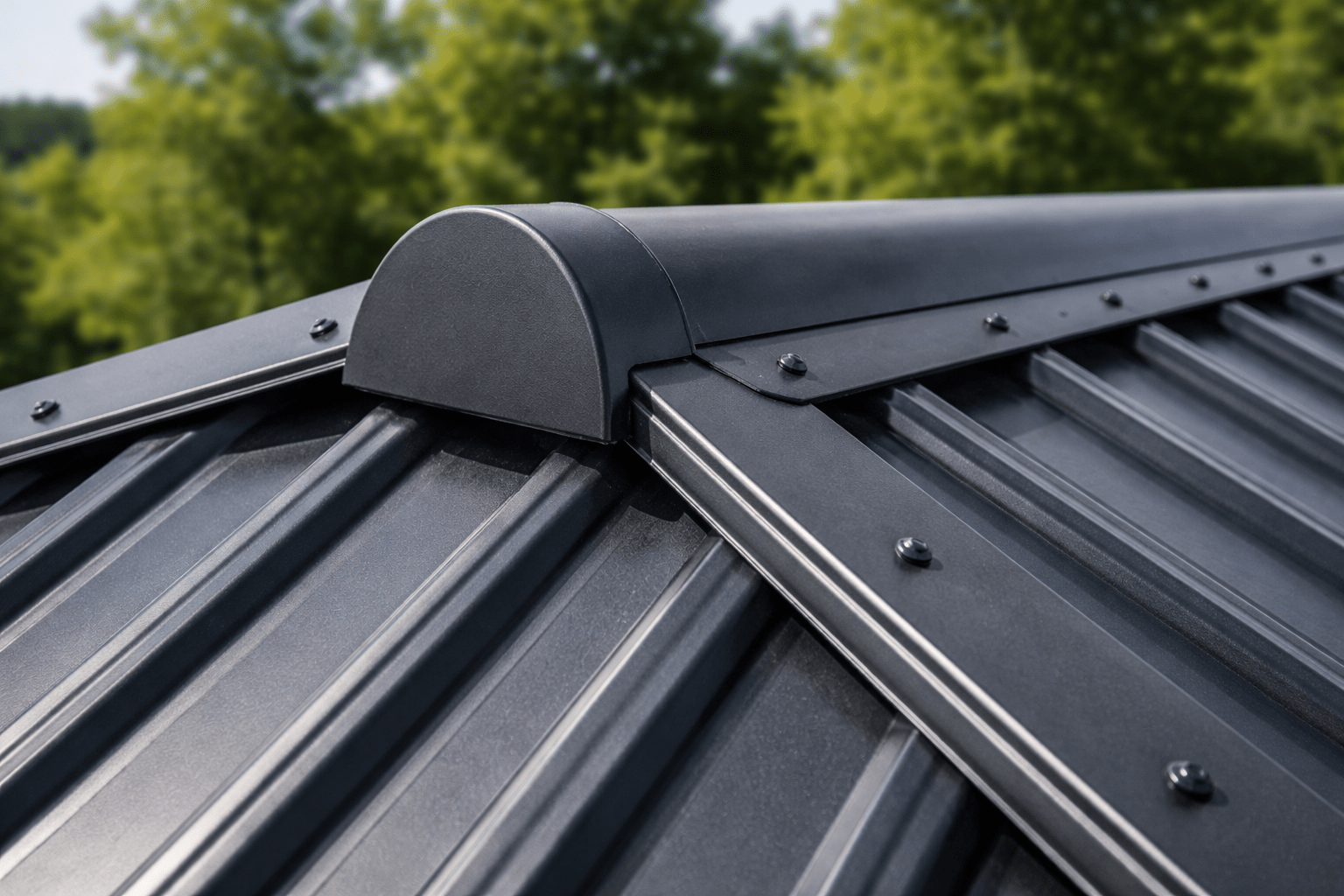
Steel roof end caps are shaped metal pieces designed to close the open ends of roof edge trim and related profiles. On a metal roof, many trims are roll-formed into channels or angles—at the end of a run, the profile is “open.” Steel roof end caps seal that opening.
Most commonly, steel roof end caps are used with:
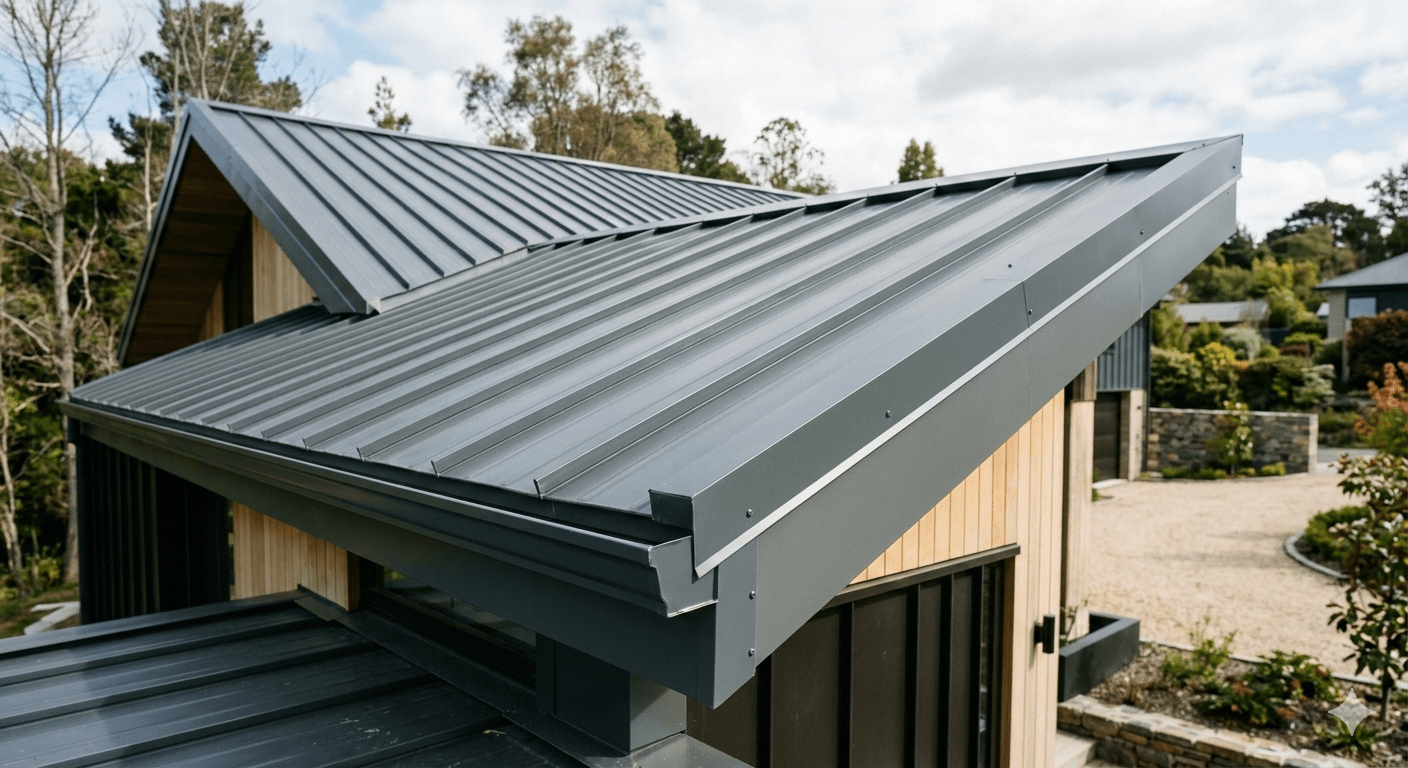
Rake trim (gable edge trim)
Eave/drip edge trim
Ridge caps and hip caps (end closures)
Fascia trim and gutter apron transitions
Parapet and coping systems (in some assemblies)
A well-made steel roof end cap matches the exact profile of the trim it closes. It may include folds, return hems, and small flanges that tuck into the trim, plus space for sealant or butyl tape.
Steel roof end caps are typically made from galvanized steel or Galvalume-coated steel, then finished with a factory-applied paint system (often SMP or PVDF) to resist fading and corrosion.
Why they matter on a metal roof
Steel roof end caps solve practical problems that show up at roof edges first:
Water intrusion: Open trim ends can funnel wind-driven rain into the trim cavity and underlayment laps
Pest entry: Wasps, birds, and rodents exploit tiny openings at roof edges
Corrosion at cut edges: Standing water and trapped debris accelerate rust where metal is exposed
Wind uplift paths: Air can pressurize underneath trim if ends are not sealed
Appearance: Uncapped trim ends look unfinished, especially on visible gables and rakes
Because steel roof end caps close geometry, they help the roof system behave like a system instead of a set of disconnected parts.
How to do the planning and measuring
Send the supplier a record of the existing trim before ordering an end cap. Use safely accessible samples or have a roofer collect the measurements.
| Detail | What to provide |
|---|---|
| System | Panel manufacturer, profile name and the trim part number, if known. |
| Location | Identify the ridge, rake, eave or other termination and whether the part has a left/right orientation. |
| Dimensions | A labelled sketch with width, height, returns and angles. Confirm units and which dimensions are inside or outside. |
| Material and finish | Existing metal, thickness, color code and coating where documented. |
| Quantity and attachment | Required count and the manufacturer’s fastening and sealing detail. |
Use manufacturer trim drawings for the specified system. A drawing from another panel profile is a reference, not approval to interchange parts.
For the names and locations of adjacent components, see our metal roof parts guide.
How to find the right steel roof end caps
Finding the right steel roof end caps is easier when you search by system, not by generic terms. Start with the roof brand or the metal supplier who provided your panels and trims.
Best places to look:
Your original metal roofing supplier (fastest path to exact match)
Local roll-forming shops that fabricate trim on demand
Metal roofing manufacturers’ accessory catalogs
Commercial roofing distributors (especially for coping/parapet assemblies)
Roofing contractors who can identify the profile from a sample
When you can’t identify the system, bring a trim offcut or trace the profile on cardboard. Many fabricators can produce steel roof end caps from a physical template even if the part isn’t a standard SKU.
What to verify before ordering:
Base metal: galvanized vs. Galvalume
Gauge: commonly 24–29 gauge depending on trim and region
Coating: SMP vs. PVDF (PVDF tends to hold color better)
Edge design: flanges/returns that lock into the trim
Fastening method: rivets, screws, concealed tabs, or adhesive/sealant-only designs
How to buy steel roof end caps
Buying steel roof end caps is mostly about getting the match right and ordering enough to handle learning curves and site variations.
Follow this buying checklist:
Confirm the exact trim profile and roof panel system
Choose the same coating and color family as your trim
Decide on pre-made vs. custom-fabricated caps
Order extras (at least 10%) for mistakes or field changes
Ask for compatible sealant recommendations (butyl tape, polyurethane, etc.)
Where you buy affects lead times:
Stock items may ship same week
Custom steel roof end caps typically require 3–10 business days
Specialty colors or PVDF finishes can extend lead times
If you’re doing a visible roofline, order steel roof end caps and trim from the same supplier batch whenever possible to reduce color variation.
How much steel roof end caps cost
There is no single standard end-cap price. A stock closure and a custom folded component can differ in material, dimensions, finish and fabrication work.
Request a written price that states the part number or approved sketch, unit price, quantity, finish, shipping and lead time. Ask whether fasteners and sealant are included. Installation and access costs should be listed separately.
Compare quotes for the same specification. A cheaper component that does not fit the trim profile is not an equivalent substitute.
What is the cost beyond the part
The “part price” is only part of the real cost. Steel roof end caps can also require:
Sealant and tapes: butyl tape, polyurethane sealant, primer when needed
Fasteners: color-matched screws, rivets, washers
Tools: snips, seamer, rivet gun, drill bits, deburring tools
Safety equipment: harnesses, roof anchors, scaffolding or lifts
Touch-up: manufacturer-approved paint for micro-scratches (used sparingly)
Budget categories to consider:
Materials (caps + sealants + fasteners)
Labor time (layout, prep, install, cleanup)
Access and safety (the biggest variable on steep or tall roofs)
Risk allowance (weather delays, hidden rot at edges)
A small job can be cost-inefficient if a contractor must mobilize for only a few caps. If you’re already doing trim replacement, adding steel roof end caps is usually a cost-effective upgrade.
How to install steel roof end caps
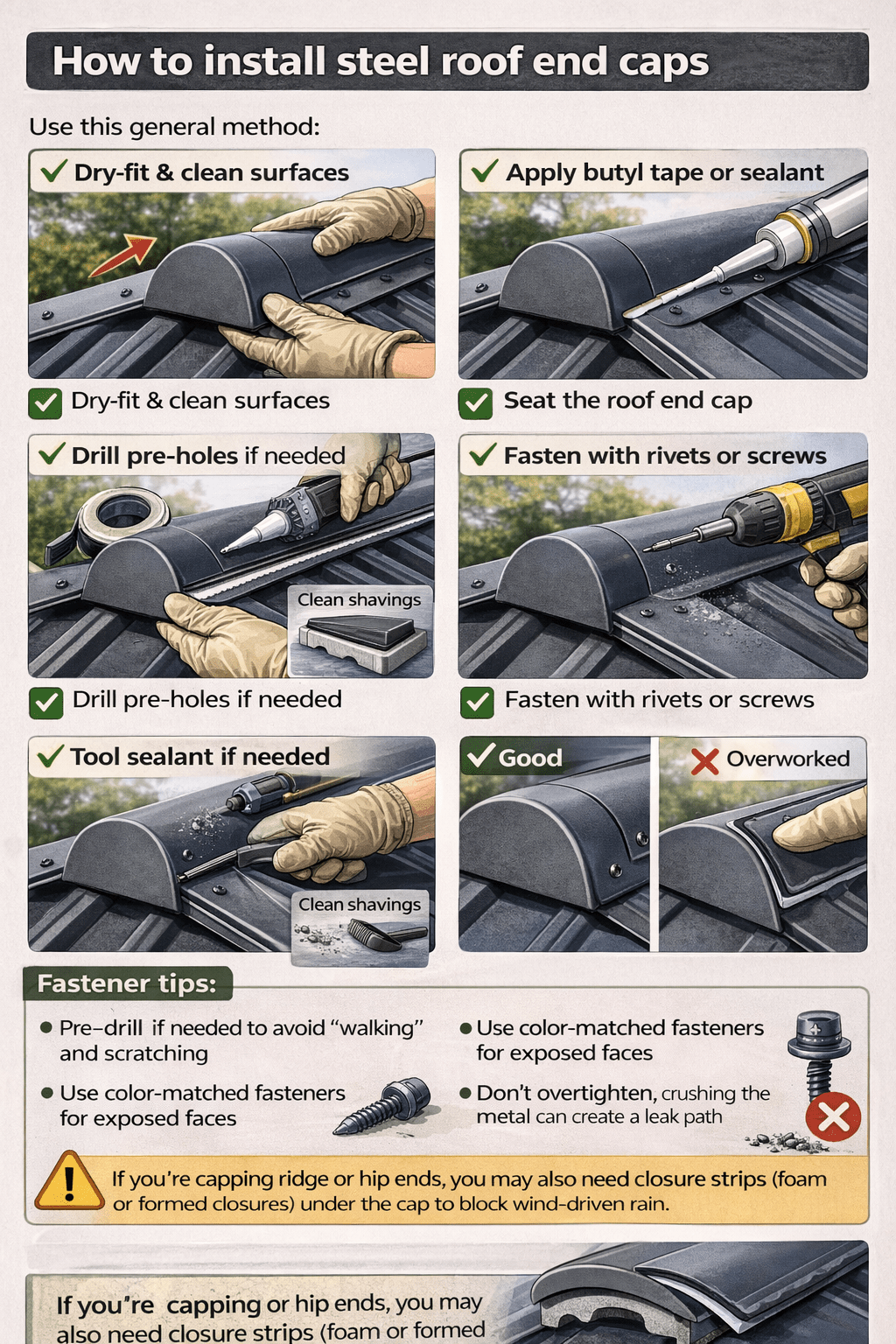
Use the installation detail for the exact roof and trim system. Before work starts, the installer should confirm the end-cap fit, compatible sealant, fastening method and any intended drainage or ventilation openings.
Do not treat a universal screw spacing or sealant bead as suitable for every profile. Ask the supplier to identify the applicable detail drawing and the required fasteners. Sealing an opening that is intended for drainage or ventilation can interfere with the assembly.
Roof access, sharp metal edges and work near roof edges require appropriate equipment and experience. Have a qualified installer carry out work that cannot be completed safely from an accessible position.
How to clean and maintain them
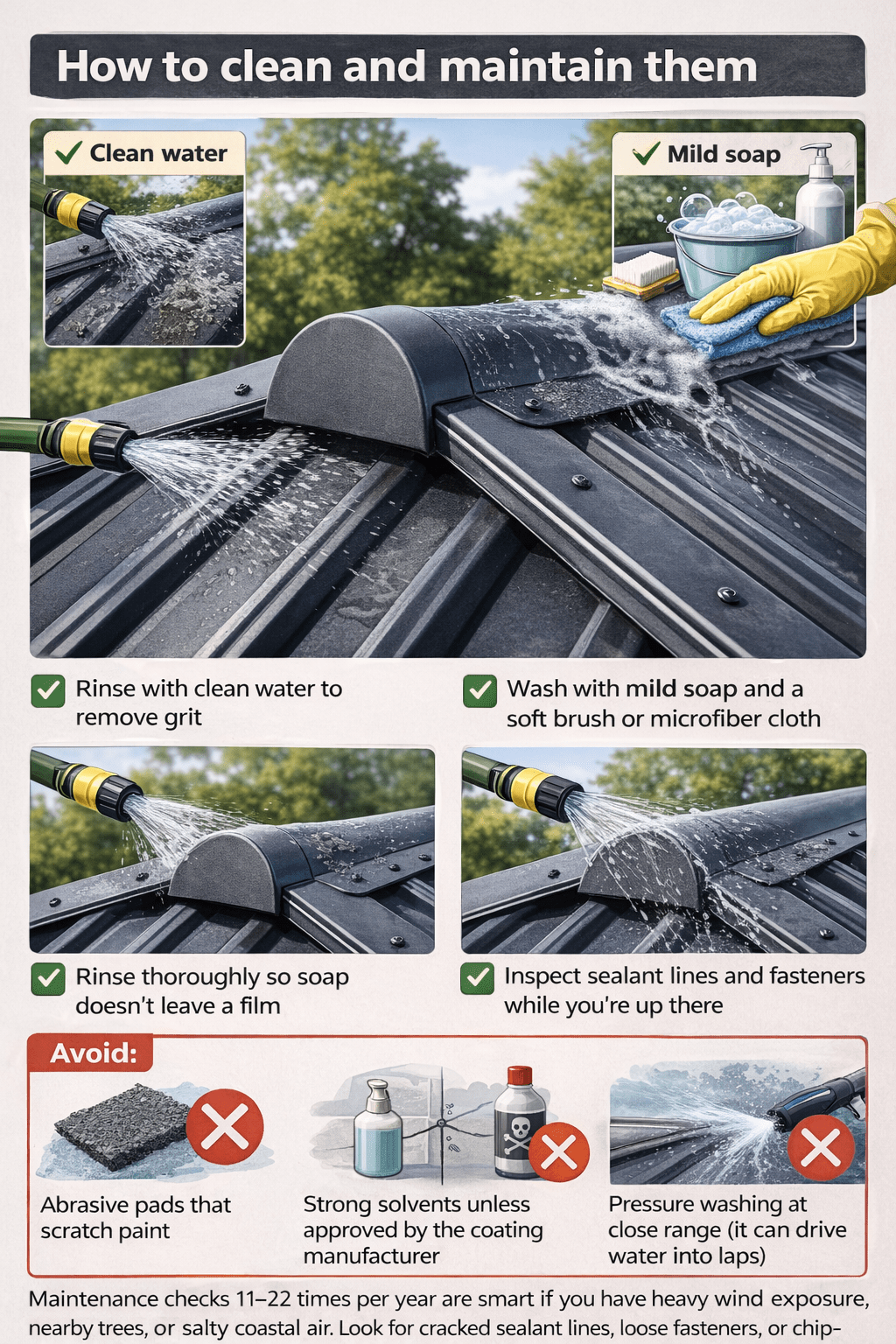
Steel roof end caps don’t need special care, but edge zones collect grime faster because of airflow and water runoff patterns.
A safe cleaning routine:
Rinse with clean water to remove grit
Wash with mild soap and a soft brush or microfiber cloth
Rinse thoroughly so soap doesn’t leave a film
Inspect sealant lines and fasteners while you’re up there
Avoid:
Abrasive pads that scratch paint
Strong solvents unless approved by the coating manufacturer
Pressure washing at close range (it can drive water into laps)
Maintenance checks 1–2 times per year are smart if you have heavy wind exposure, nearby trees, or salty coastal air. Look for cracked sealant, loose fasteners, or chipped paint at the edges. Small touch-ups prevent rust from starting at the cut line.
Advantages and challenges
Steel roof end caps come with clear upsides, but they also introduce a few practical challenges.
Advantages:
Better edge sealing against wind-driven rain
Cleaner roofline appearance and more professional finish
Reduced pest entry points
Protection of vulnerable cut edges and trim cavities
Improved durability of the roof edge system over time
Challenges:
Profile matching can be tricky across different manufacturers
Incorrect sealant choice can fail early (especially under UV exposure)
Poor fastening can distort trim and create leaks
Color matching may vary between batches
Custom fabrication adds lead time and sometimes higher cost
If you treat steel roof end caps as an afterthought, they often look like an afterthought. If you plan them with the trim package, they become a small but meaningful performance upgrade.
FAQ : Steel roof end caps
What are steel roof end caps used for?
Steel roof end caps close the open ends of metal roof trim to block water, debris, and pests, and to give the edge a finished look.
Do I need steel roof end caps on every roof edge?
You usually need them where a trim profile ends openly (rake ends, ridge ends, some transitions). Continuous runs that terminate into walls or other trim may not need separate caps.
Can steel roof end caps stop an active leak?
They can help if the leak originates at an open trim end, but leaks can also come from underlayment issues, fastener problems, or flashing failures. Diagnose first.
How do I match the correct size?
Match the trim profile exactly. Bring a sample or a traced template to a fabricator if you don’t know the manufacturer.
Should I use silicone to install steel roof end caps?
Often, butyl tape or polyurethane sealant performs better on metal roofing details. Use what your roofing manufacturer recommends for compatibility and warranty.
How long do steel roof end caps last?
When properly coated, sealed, and maintained, they can last as long as the surrounding trim—often decades—though sealant joints may need periodic renewal.
Conclusion
Steel roof end caps are small components that protect some of the most failure-prone areas of a metal roof: the edges and terminations. By matching the correct profile, buying compatible materials, installing with proper sealing and fastening, and cleaning them periodically, you can improve watertightness, appearance, and long-term durability. If you’re upgrading trim or correcting recurring edge issues, steel roof end caps are one of the simplest improvements that can deliver a reliable return in performance.
Other Helpful Articles
TPO Roof Drains Leaks – Informational article discussing common causes and repair considerations for leaks around TPO roof drains.
RV Roof Repair Cost Easy Fixes – Guide explaining average RV roof repair costs and straightforward repair options.
Best Roof for Hurricane – Article outlining roofing materials and designs best suited for hurricane-prone areas.
