
Problems with synthetic roof underlayment: Urgent Warnings
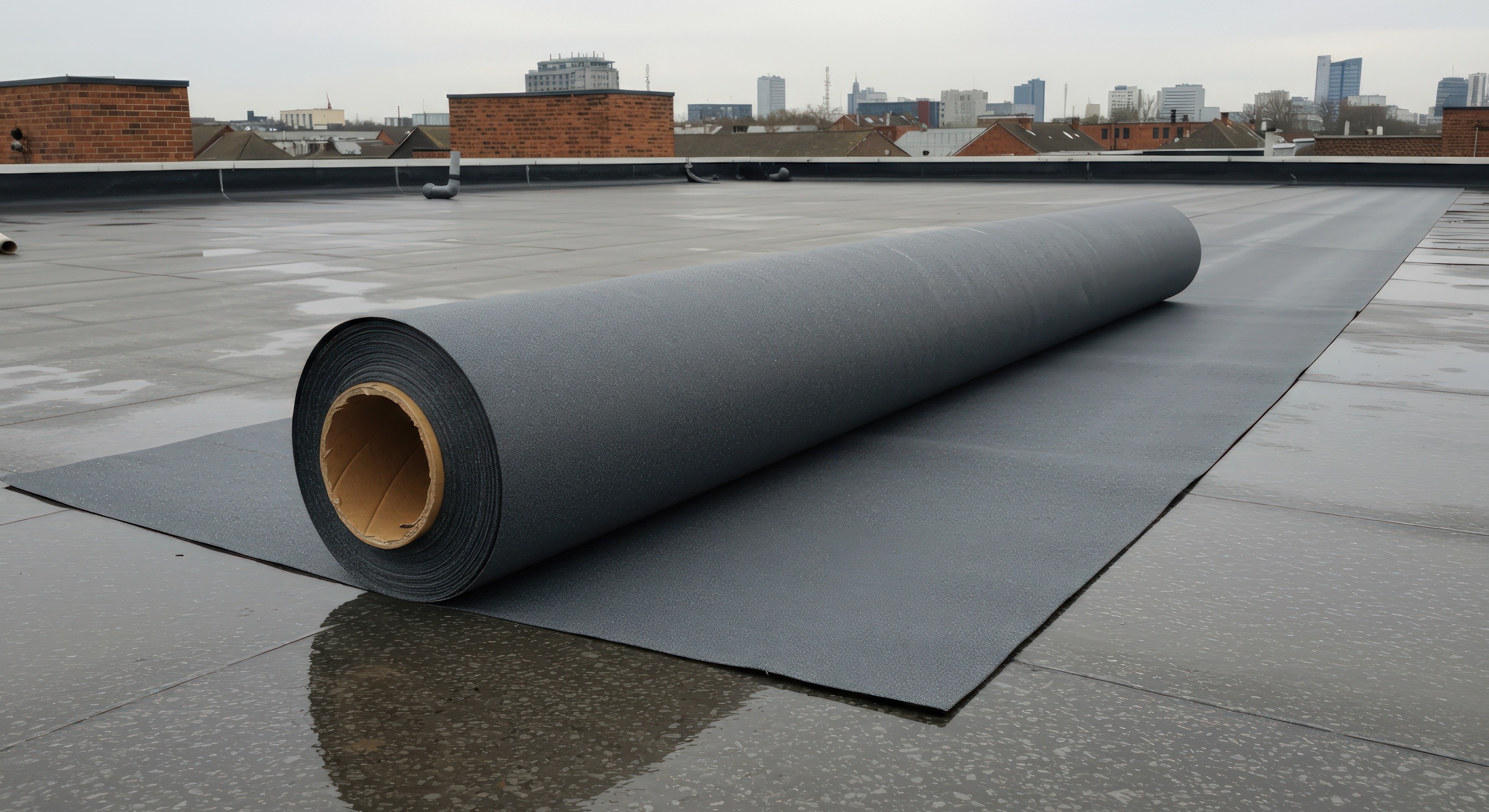
Problems with synthetic roof underlayment
What Synthetic Roof Underlayment Is and How It Works
Synthetic roof underlayment is a man-made membrane, usually made of polypropylene or polyethylene and woven or spun together. It goes between the roof deck and the final roofing material, which can be shingles, metal panels, or tiles. It replaces or adds to traditional asphalt-saturated felt, promising to be lighter, more tear-resistant, and last longer before the roof is finished.
But a lot of homeowners don’t find out about the big problems with synthetic roof underlayment until years later, when leaks, condensation, or early failures happen. You need to know how this product works in your climate, with your roofing material, and with your specific ventilation conditions in order to use it safely.
The Most Common Issues with Synthetic Roof Underlayment
Contractors often talk about how great synthetics are, but they also quietly say that the most common problems with modern roofs are with the synthetic roof underlayment, not the shingles or panels. One of the biggest problems is that moisture gets trapped. Many synthetic sheets don’t let water through very well, so they keep outside water out but also keep inside vapor in, which can condense and rot the sheathing if the attic isn’t properly vented.
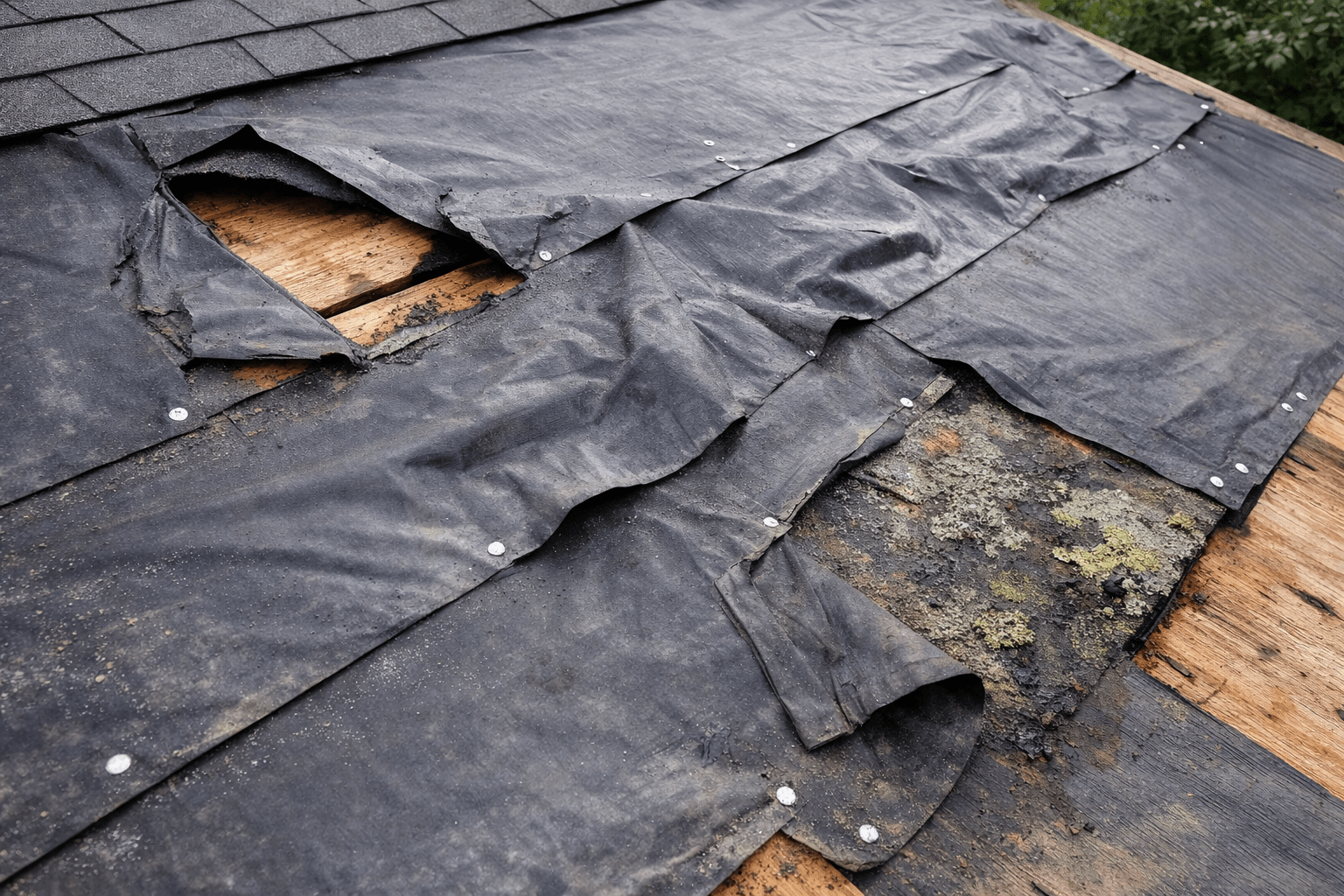
Synthetic roof underlayment also has problems that happen over and over, such as being slippery when wet, breaking down when left out in the sun for too long, and blowing off edges or fasteners in strong winds. Cheap products can get wrinkled, curled, or even delaminated, which means that a once solid barrier becomes a patchwork of gaps where water can get through.
How Issues With Synthetic Roof Underlayment Begin on Day One
Most issues with synthetic roof underlayment start on the first day of installation, long before you notice a leak in the ceiling. Contractors unintentionally make channels that let water flow under laps instead of shedding it if they stretch the material too much, ignore the manufacturer’s nailing patterns, or skip approved seam tapes.
Another way that problems with synthetic roof underlayment start is when you work on a wet deck or in high winds without the right edge restraint. This can cause panels to flap, tear, or pull around fasteners. Even small mistakes when storing things, like leaving rolls in the sun for weeks, can make them older before they even get to your roof, which means they won’t last as long.
How To Find The Real Source Of Leaks And Failures
When stains appear on the ceiling, people often blame shingles, flashing, or skylights, but many hidden problems with synthetic roof underlayment sit directly on the decking. To find the real source, a roofer should lift shingles carefully in the suspect area, looking for torn laps, unsealed overlaps, missed nails, or underlayment that has cracked or curled away from fasteners.
Moisture meters and attic inspections help pinpoint condensation‑driven problems with synthetic roof underlayment where there is no obvious exterior entry point. In some cases, thermal imaging can reveal patterns of wet insulation or sheathing that align almost perfectly with underlayment seams or fastener rows.
How Much Synthetic Underlayment You Really Need
Homeowners often don’t realize how much underlayment a roof needs. If workers start cutting corners near the end of a job, this can make problems with synthetic roof underlayment worse. Roofers figure out how much material they need based on the size and slope of the roof, then add extra material for cuts, valleys, hips, and overlaps. Synthetic materials come in longer, wider rolls, so the number of materials needed is different from felt.
If you don’t order enough material, installers might cut back on overlap or skip secondary layers at weak spots like eaves and valleys. This makes it much more likely that you’ll have problems with synthetic roof underlayment during wind-driven rain or ice dam events. It’s much cheaper to buy a little extra than to fix a deck that has been damaged by water.
How Much Does Synthetic Roof Underlayment Cost?
The first thing that comes to mind when thinking about the cost of synthetic roof underlayment is that it costs more up front than basic felt. Depending on the brand and performance rating, synthetic underlayment can cost several times more per square foot than plain asphalt-saturated paper. However, the savings on labor and the longer life of the material may make up for some of that difference.
But if the installation goes wrong and causes leaks, the total cost of problems with synthetic roof underlayment quickly outweighs any savings on materials. This is because repairs often require taking off the finished roofing to get to the damaged layers. That’s why it’s better to look at the full lifecycle cost of a system instead of just the price of a roll at the supply house.
How To Buy Synthetic Underlayment Without Regrets
To avoid future problems with synthetic roof underlayment, you should shop with a checklist instead of just picking the lowest price product on the shelf. Look for independent testing, clear permeability ratings, UV exposure limits, slip‑resistant surfacing, and compatibility notes with your chosen roofing type, especially for metal systems that can run hotter.
You should also consider warranty coverage and whether major shingle or metal manufacturers approve or even require specific underlayments, as mismatched products can cause coverage disputes if problems with synthetic roof underlayment appear later. When in doubt, ask your contractor to specify brand, product line, and installation method in the written proposal.
How To Install Synthetic Roof Underlayment Correctly
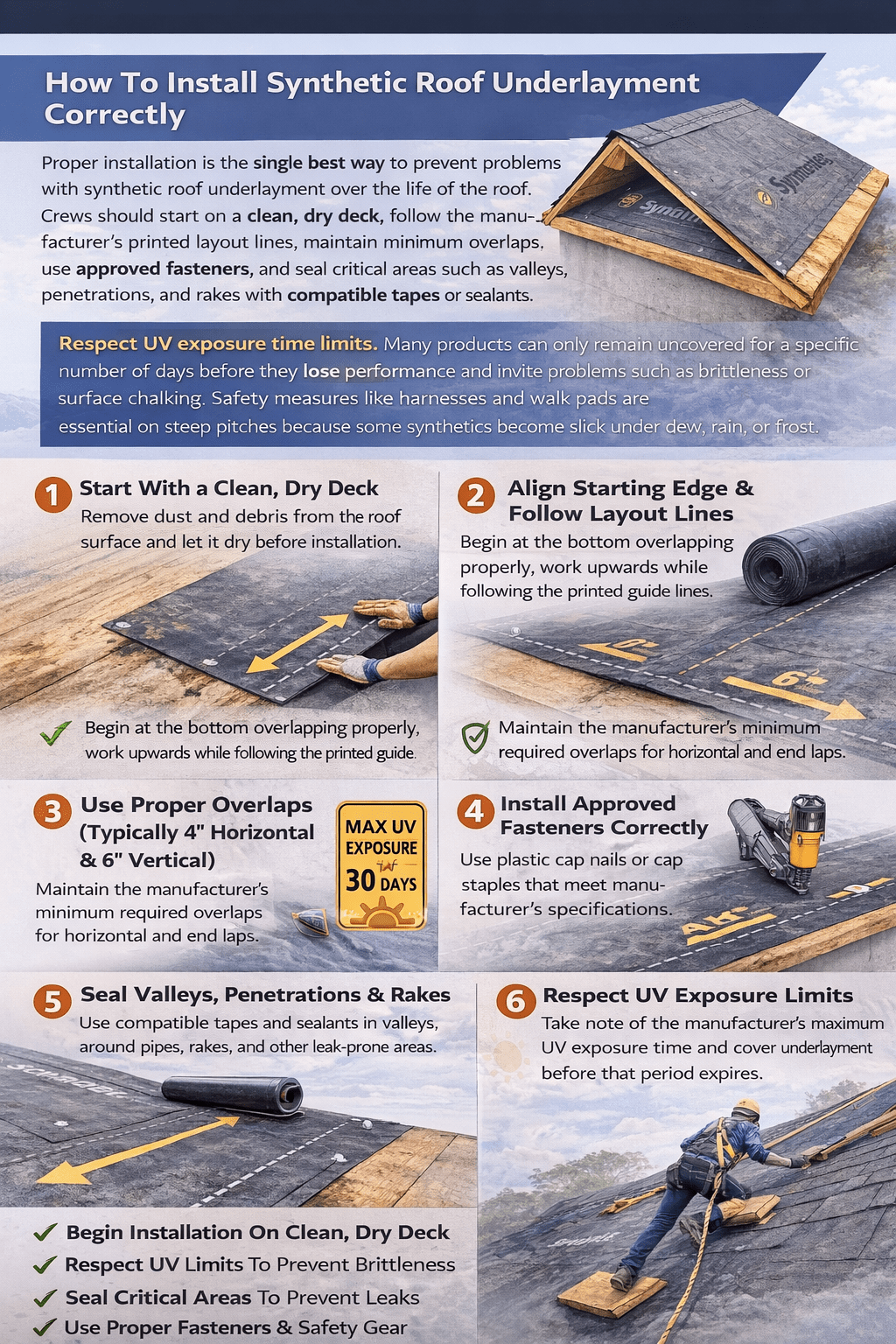
Proper installation is the single best way to prevent problems with synthetic roof underlayment over the life of the roof. Crews should start on a clean, dry deck, follow the manufacturer’s printed layout lines, maintain minimum overlaps, use approved fasteners, and seal critical areas such as valleys, penetrations, and rakes with compatible tapes or sealants where required.
They must also respect limits on maximum UV exposure time, knowing that many products can only remain uncovered for a specific number of days before they lose performance and invite problems with synthetic roof underlayment such as brittleness or surface chalking. Safety measures, including harnesses and walk pads, are essential on steep pitches because some synthetics become slick under dew, rain, or frost.
How To Clean And Maintain Areas Around Synthetic Underlayment
Once the roofing is installed, you cannot directly wash the underlayment, but you can still prevent problems with synthetic roof underlayment by keeping the entire system clean and well‑maintained. Regularly clearing gutters, valleys, and roof surfaces of leaves and debris helps water flow freely, reducing backup and the risk of hydrostatic pressure forcing water under shingles and onto the underlayment.
Inside the attic, you should keep vents free of dust and insulation, which allows moisture vapor to escape before it condenses and creates hidden problems with synthetic roof underlayment and nearby framing. A yearly inspection by a qualified roofer, combined with targeted cleaning after storms, will dramatically extend the useful life of the assembly.
Key Comparisons You Need To Know
Homeowners often ask how the problems with synthetic roof underlayment compare with older felt or tar‑based products, so it helps to look at each side by side. Against felt, synthetics win on tear resistance, weight, and exposure time, but their low breathability increases the risk of trapped moisture if ventilation is not carefully designed, while felt tends to dry more readily after short wet periods.
When people search for the best synthetic roof underlayment, they usually want a product that balances walkability, UV resistance, and permeability, which is where premium brands differ sharply from bargain rolls that are more likely to develop problems with synthetic roof underlayment such as curling or delamination. In the debate over tar paper vs synthetic underlayment, tar paper remains attractive for low upfront cost and familiarity, yet it is heavier, more fragile when wet, and far less tolerant of extended exposure than most synthetics.
Stepping back, remember that roofing underlayment is just one layer in a larger moisture management system that includes ventilation, flashing, and the finished roof covering. Selecting the right combination will do more to prevent problems with synthetic roof underlayment than any marketing claim on a single roll ever can.
The Benefits of Synthetic Underlayment Despite the Issues
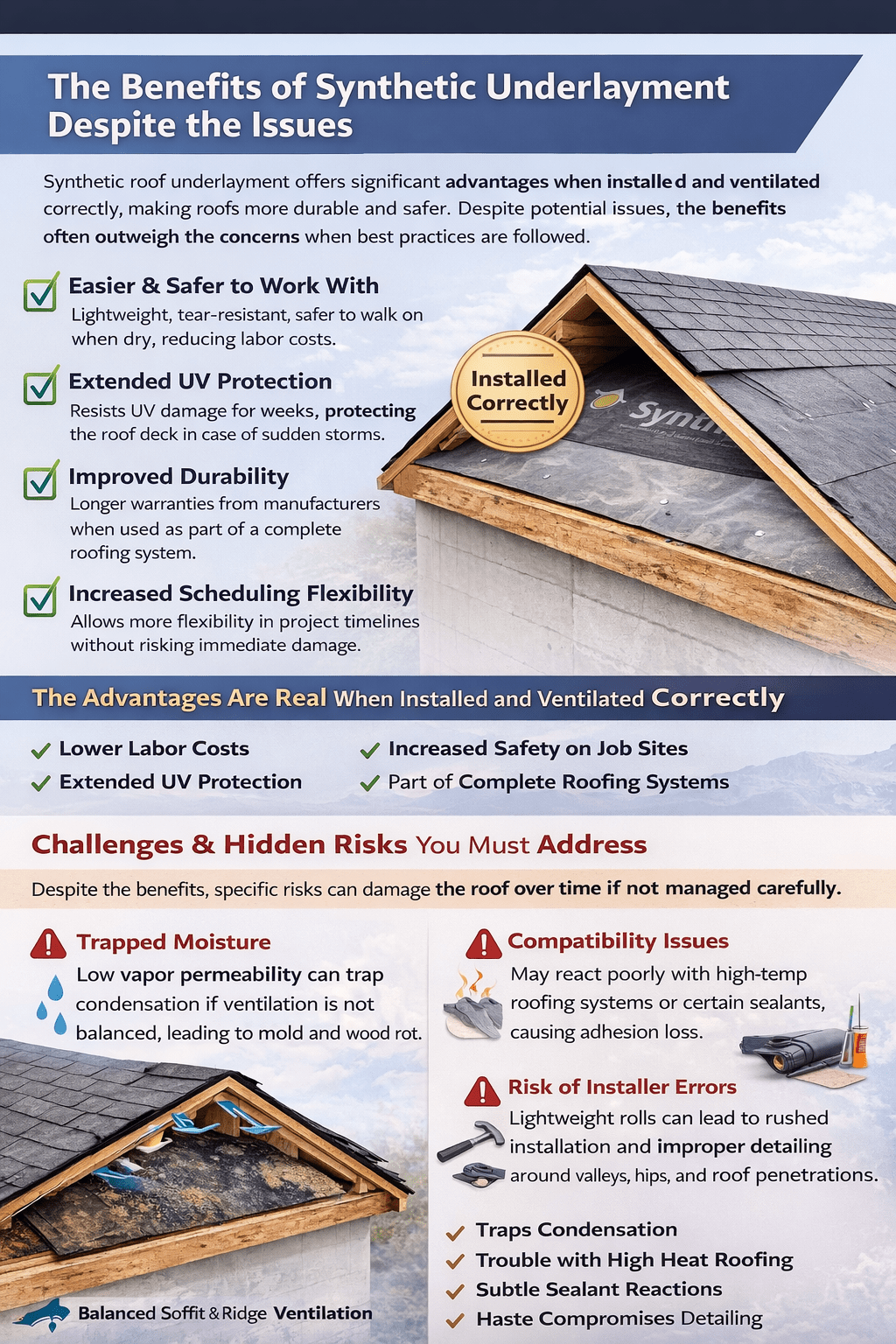
It’s important to remember that a lot of roofs work very well, even though there are known problems with synthetic roof underlayment that could happen in theory. This is because the benefits are real when the products are installed and ventilated correctly. Synthetic materials are easier to work with, lighter, more resistant to tearing, and often safer to walk on when dry than felt. This can lower labor costs and make the site safer.
Contractors have more freedom in scheduling because their extended UV exposure ratings mean that a sudden storm won’t soak the exposed sheathing and cause problems with the synthetic roof underlayment or the deck right away. Many companies also include these items in complete roofing “systems,” which connect the performance of the underlayment to longer warranties on the materials.
Challenges And Hidden Risks You Must Address
The challenges associated with problems with synthetic roof underlayment mainly revolve around moisture, compatibility, and human error. Low vapor permeability can trap condensation, especially in tightly sealed homes without balanced soffit and ridge ventilation, slowly damaging sheathing and promoting mold growth out of sight.
Additionally, some synthetic products react poorly with high‑temperature roofing systems or specific sealants, leading to softening, adhesion loss, or staining over time—all subtle problems with synthetic roof underlayment that may not emerge until warranties are long expired. Finally, because rolls are light and large, installers may move faster, increasing the risk of shortcuts that compromise detailing around penetrations, hips, and valleys.
How To Do Due Diligence Before Your Next Roof
Before signing a contract, you should investigate the likelihood of problems with synthetic roof underlayment on your home by asking specific, detailed questions. Request the exact product name, exposure rating, permeability class, and installation instructions, then verify that your roofer plans to follow those instructions instead of relying on generic habits from older materials.
Ask how they will ensure adequate attic ventilation and whether they have a plan to handle high‑risk areas like low slopes, complex valleys, or roof‑to‑wall transitions where problems with synthetic roof underlayment most often appear. A reputable contractor will welcome these questions and may even show you past projects that demonstrate good performance over many seasons.
Practical Steps To Reduce Risk On Existing Roofs
If your home already has synthetic underlayment, you can still limit future problems with synthetic roof underlayment through smart maintenance and monitoring. First, schedule periodic attic inspections to look for signs of condensation, staining on the underside of the sheathing, or musty odors that might indicate trapped moisture.
Next, have a roofer check exterior flashings, penetrations, and vulnerable roof intersections every few years, since many visible leaks tied to problems with synthetic roof underlayment begin at complex details rather than open fields. If they discover recurring issues in specific areas, they may recommend targeted repairs or enhanced ventilation rather than a full roof replacement.
Frequently Asked Questions About Synthetic Roof Underlayment
What is synthetic roof underlayment made from?
Most products are manufactured from engineered polymers such as polypropylene or polyethylene, often with multi‑layer construction to balance strength, grip, and weather resistance. These materials are designed to resist tearing and UV degradation better than traditional felt when properly used.
Why do some roofs with synthetic underlayment still leak?
Leaks typically occur because of installation errors, poor detailing, or inadequate ventilation rather than the base material itself, although low‑quality products can fail prematurely. In many cases, problems with synthetic roof underlayment arise where laps, fasteners, or transitions were not handled exactly as the manufacturer specified.
Is synthetic underlayment always better than felt?
Not always; while synthetics outperform felt in strength, exposure tolerance, and weight, felt can be more forgiving in certain moisture conditions and costs less upfront. The “better” choice depends on climate, roof design, budget, and how carefully each material will be installed to avoid problems with synthetic roof underlayment or felt alike.
How long can synthetic underlayment be left exposed?
Each product has a specific rated exposure period, often ranging from weeks to several months, after which performance may decline sharply under sunlight and weather. Exceeding this time frame greatly increases the chance of surface breakdown and long‑term problems with synthetic roof underlayment.
Can I walk safely on synthetic underlayment?
Many synthetics include textured surfaces to improve traction, but they can still become slippery when wet, icy, or dusty. Professional crews use safety gear and adjust work practices to reduce accidents related to problems with synthetic roof underlayment walkability.
Conclusion
Used wisely, synthetic underlayment can be a powerful ally in building a durable, weather‑tight roof, but ignoring the well‑documented problems with synthetic roof underlayment invites hidden damage and expensive repairs. By choosing quality products, insisting on manufacturer‑compliant installation, and pairing the roof with proper ventilation and maintenance, you dramatically lower the risk that problems with synthetic roof underlayment will ever show up in your attic or on your ceilings.
Other Resources
- reddit.com – Community discussion about potential issues and installation concerns related to synthetic roofing underlayment.
- westernstatesmetalroofing.com – Explains common problems associated with synthetic roof underlayment and considerations during installation.
- renovaroofing.com – Discusses possible disadvantages and performance issues of synthetic roofing underlayment materials.
- africkerroofing.com – Provides information about challenges that may occur when using synthetic roof underlayment in roofing systems.
Other Helpful Articles
- Aluminum Roof Sealant – Explains the uses and benefits of aluminum roof sealant for protecting and repairing roofing surfaces.
- Roofing Trailer – Describes the purpose and common features of trailers used for transporting roofing tools and materials.
- TPO Roof Drains Leaks – Provides information about causes and repair considerations for leaks around TPO roof drain systems.
