
Metal Roof and Siding Color Combinations: A Practical Guide
Choosing a metal roof and siding color combination is easier when you treat the exterior as a small palette rather than two separate product decisions. Start with the fixed colors around the house, compare physical samples in real daylight, and decide whether the roof should blend in or create contrast. This guide covers dependable pairings, including burgundy metal roof ideas, and explains how to assess performance as well as appearance.
Start with what cannot easily change
Before selecting a panel finish, list the elements that will remain: brick or stone, foundation, window frames, gutters, fascia, porch materials, and neighboring homes where local design rules apply. These fixed surfaces establish the palette’s undertone. Warm red brick usually sits naturally beside cream, tan, warm gray, or muted green. Cool gray stone often works with charcoal, slate blue, or crisp white siding.
Take a daylight photo and note whether the dominant materials look warm, cool, or neutral. Do not rely on a phone screen to judge color; screens brighten and shift shades. Ask the manufacturer or installer for samples of the actual coated metal and siding. Put them next to the brick, trim, and foundation outdoors, then check morning sun, afternoon sun, and shade. A color that looks subtle on a small chip can appear much stronger across a large roof plane.
Reliable metal roof and siding color combinations
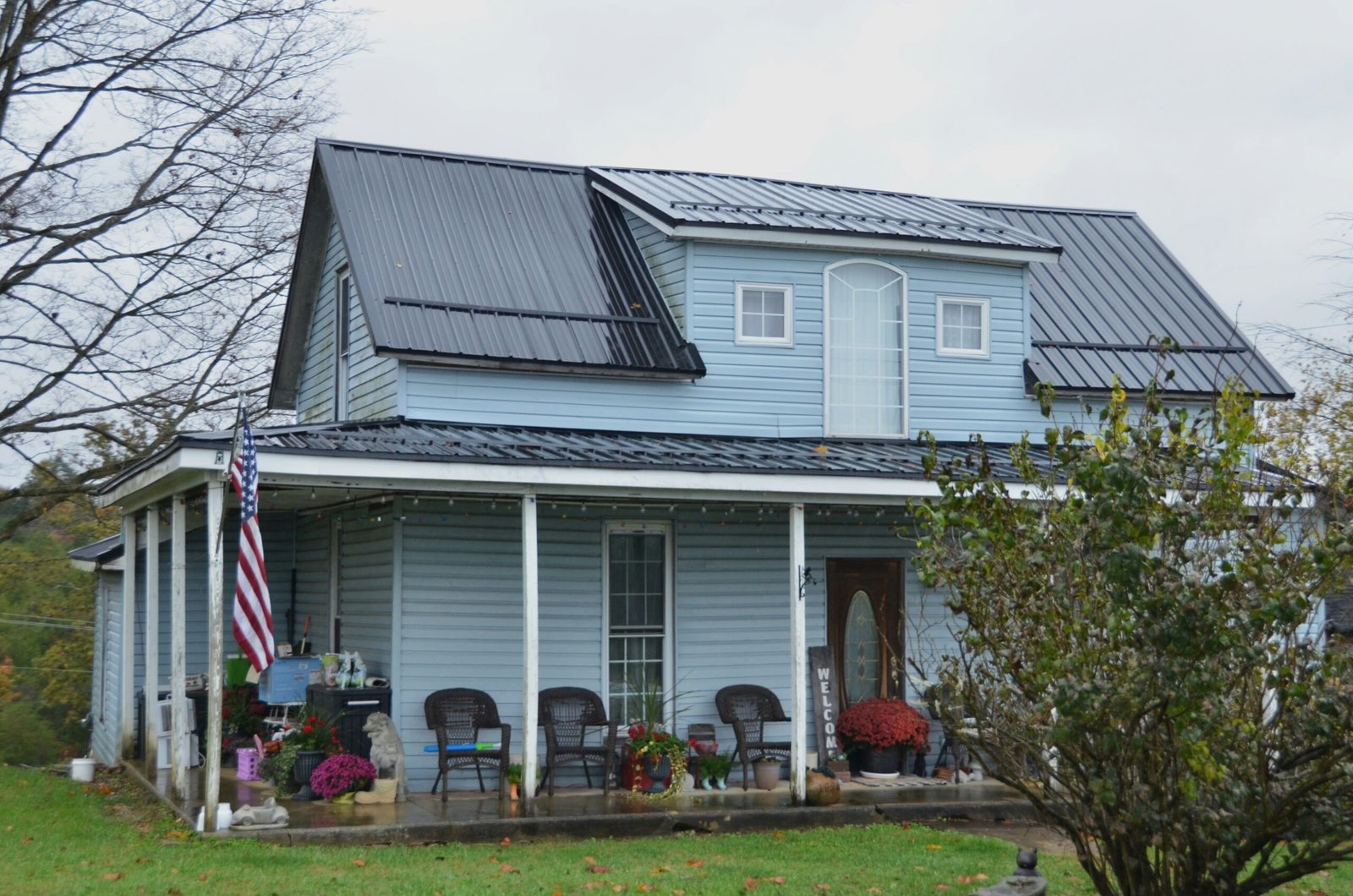
Charcoal with white or light gray: This classic high-contrast pairing gives a home a clean outline and suits many architectural styles. Charcoal anchors bright white siding without looking as stark as pure black. Light gray softens the contrast. Repeat the roof color in gutters, shutters, or an entry detail so the roof feels intentional. If the windows are bronze or warm brown, sample a warmer charcoal rather than blue-black.
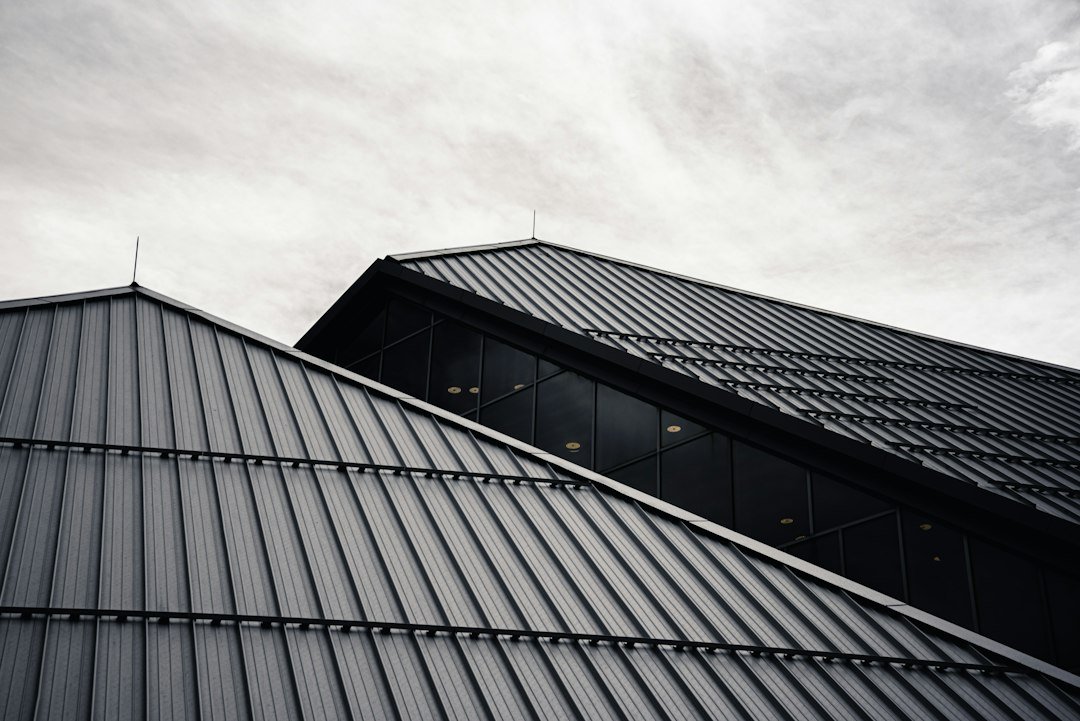
Black with warm white, beige, or wood: A black roof reads crisp and modern, especially with simple trim and natural wood. Warm white siding keeps the combination from feeling cold; medium brown accents can connect it to a wooded lot or porch. Use restraint with additional dark features. If roof, windows, gutters, and siding are all dark, the house may lose visible detail, particularly on a shaded street.
Bronze or brown with cream, tan, or stone: Earth tones work well with brick, stone, and homes surrounded by trees. A bronze roof over cream siding feels softer than black and makes natural textures stand out. With tan siding, compare samples carefully so roof and walls do not merge into one flat color. A lighter fascia or trim line adds definition.
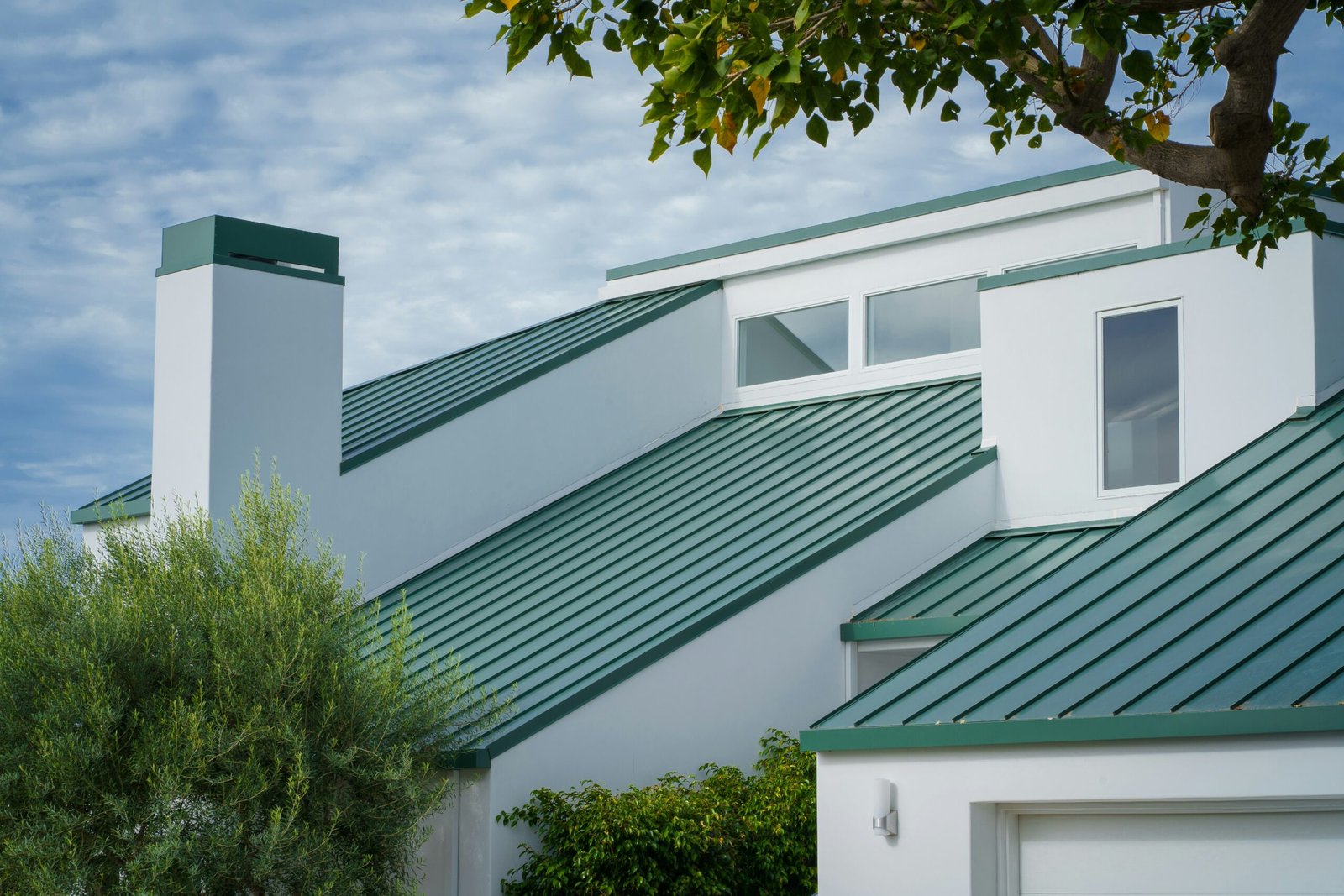
Green with white, cream, or muted gray: Green metal roofing can suit rural, craftsman, and cottage settings. Deep forest green pairs with warm white, cream, pale gray, or natural wood. The shade should relate to the landscape without disappearing into it. If the house has red brick, use a restrained green sample and check it beside the brick; complementary contrast can become busy when both colors are saturated.
Blue with white, light gray, or pale yellow: Blue roofs range from subtle slate to vivid coastal blue. Slate blue is flexible with white, gray, and natural wood. Brighter blue makes the roof a focal point, so keep siding and trim simple. Pale yellow can add warmth, but test the precise undertones together; cool blue and saturated yellow may compete rather than complement.
Burgundy with neutral siding: A burgundy metal roof is a strong choice for a barn-inspired home, farmhouse, or house with warm brick. Pair it with cream, soft gray, light beige, or muted sage. These colors let the roof stand out without creating a red-on-red effect. Burgundy can shift toward purple, brown, or red in different light. Match the sample against brick and trim, and consider quieter cream or bronze trim.
Use a simple balance method
Choose one dominant surface, one supporting surface, and one accent. On many homes, siding is dominant, the roof supports it, and trim or the front door supplies the accent. If the roof is bold, let siding take a quieter role. If the roof is neutral, siding or the entry door can provide more personality.
Keep undertones consistent. A cool charcoal roof, cool gray siding, and bright white trim form a cool palette. A brown roof, cream siding, and warm wood make a warm palette. Mixed undertones can still work, but there should be a bridge between them, such as stone containing both warm and cool flecks. For design context, see our guides to common roof types, modern home roof choices, and modern roof design ideas.
Color is also a performance decision
Do not assume a color name tells you how a roof performs in the sun. Solar reflectance and thermal emittance are measured properties. The U.S. Department of Energy explains that specially formulated “cool colors” can reflect more sunlight than conventional colors of similar appearance, and metal roofing is available in cool-roof products. Ask the manufacturer for product-specific test data or a recognized rating instead of relying on a generic claim that light colors are cooler. The DOE Consumer Guide to Cool Roofs explains the basic terms and trade-offs.
A light roof can be useful in hot, sunny locations, while darker colors may better suit the design, climate, or neighborhood. Indoor comfort depends on the whole roof assembly: insulation, ventilation, air sealing, roof slope, and the color and condition of the finish. Compare like-for-like products and consult a qualified roofer or energy professional for local recommendations. Our overview of metal versus shingle roof costs frames the broader material decision, while our guide to metal roof leaks in heavy rain covers installation details that matter beyond color.
How to compare samples before ordering
- Request the exact roof and siding finish samples, not generic paint cards.
- View them vertically and horizontally; sheen and panel direction change how light reflects.
- Check each sample beside brick, stone, trim, and the darkest window frame.
- Look at the palette in full sun, cloud, and shade, and at different times of day.
- Photograph samples from the curb, then review the images in grayscale to see whether the house has enough contrast.
- Confirm the selected colors are available in the panel profile, gauge, coating system, and warranty you intend to buy.
- Get color names and codes in writing on the estimate and verify the order before fabrication.
Painted metal can look different from vinyl or fiber-cement siding even when colors appear similar on screen. Gloss, texture, panel seams, and sun angle matter. Coordinate the roof, siding, trim, and gutters as one exterior package; a small gutter sample is worthwhile if it will run around the whole building.
Consider architecture, setting, and resale
Color should reinforce the house’s shape. On a traditional farmhouse, a restrained roof color and bright trim can emphasize gables and porches. On a contemporary home with simple lines, a limited palette—perhaps charcoal, warm white, and wood—keeps attention on the form. A busy façade with multiple dormers, stone, and trim may benefit from a quieter roof rather than another competing feature.
The landscape matters too. A wooded property may support bronze, green, and warm neutral combinations; a coastal setting may invite slate blue or crisp white. Look at neighboring homes from the street so the project feels at home without copying the house next door. If resale flexibility matters, neutral siding with a distinctive but familiar roof color generally leaves future owners more options than several highly saturated surfaces.
Common mistakes to avoid
A frequent mistake is choosing two competing statement colors, such as vivid blue siding under a saturated red roof, without a neutral element to calm the palette. Another is using several unrelated whites: cool bright trim next to warm cream siding can make both seem mismatched. Be cautious with trendy colors that are difficult to replace; roof finishes are long-term choices, and product availability may change. Confirm the manufacturer’s current chart and coating warranty before committing.
Do not select from a tiny swatch alone or assume a product photo is color-accurate. Ask for large samples and compare them next to the home. Also consider local requirements. Historic districts, homeowners associations, and municipal codes may limit colors or reflectivity. Ask before ordering custom panels. If replacing the roof but keeping existing siding, start with the siding’s undertone and age rather than choosing a palette from a new-build photo. If both surfaces are changing, view the full set together and include trim in the decision.
Frequently asked questions
What siding color goes best with a metal roof?
White, cream, light gray, beige, and muted green are versatile choices. The best match depends on the roof’s undertone, fixed masonry, trim, and setting.
What siding goes with a burgundy metal roof?
Cream, warm white, soft gray, light beige, and muted sage usually balance burgundy. Sample the exact finish beside brick and trim because burgundy can lean red, brown, or purple.
Does a light-colored metal roof always keep a house cooler?
No. Color alone is not enough to predict performance. Compare product-specific solar reflectance and thermal emittance data, and consider insulation, ventilation, climate, and the full roof assembly.
Should the roof and siding be the same color?
They can be, but different shades or contrasting trim usually help reveal the home’s shape. If using one color family, compare samples in daylight and make sure the roof and walls remain visually distinct.
Sources
- U.S. Department of Energy, Consumer Guide to Cool Roofs
- Sherwin-Williams, How to Think About Exterior Paint Color
- Sherwin-Williams Coil Coatings, Color Possibilities
Image credits: Unsplash, Ryunosuke Kikuno; Earl Wilcox; Roger Starnes Sr. Used under the Unsplash License.
