
Modified Bitumen Roof Repair: Easy Steps
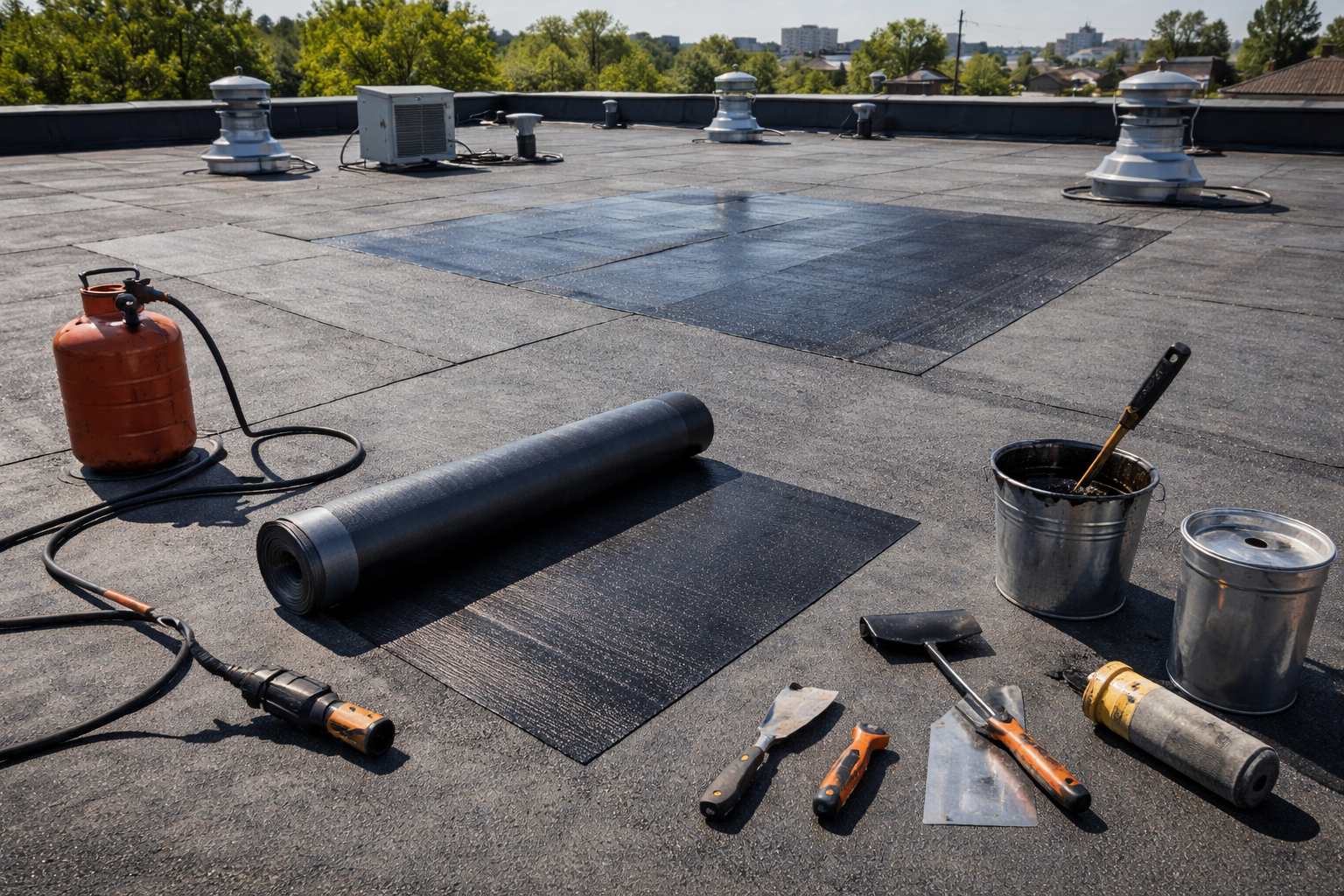
Modified Bitumen Roof Repair: Best Fixes
Understanding the nuances of commercial and flat residential roofing is essential for property owners. When leaks appear, immediate action is necessary to prevent structural damage. One of the most common roofing systems involves asphalt-based sheets, which occasionally require attention. Performing a timely modified bitumen roof repair can save thousands of dollars in replacement costs. Whether you are dealing with cracks, blisters, or open seams, knowing the right techniques is crucial. This guide covers everything from identification to execution, ensuring your building remains secure against the elements.
What Is Modified Bitumen Roofing?
Modified bitumen is a type of asphalt product that can be applied in various ways, often used on flat or low-slope roofs. It evolved from built-up roofing (BUR) systems and uses asphalt reinforced with fiberglass or polyester. The “modifiers” are polymers like APP (Atactic Polypropylene) or SBS (Styrene-Butadiene-Styrene) that give the material rubber-like properties.
When you need a modified bitumen roof repair, you are essentially patching a multi-layered system. These roofs are durable, but they are not invincible. Over time, UV rays, thermal shock, and physical damage can compromise the integrity of the membrane. Understanding the specific type of membrane you have—whether it is torch-down or cold-applied—is the first step in a successful repair process.
The material is designed to handle foot traffic better than standard membrane roofs, making it popular for buildings with HVAC units on top. However, this traffic can lead to punctures. A proper modified bitumen roof repair addresses these specific vulnerabilities, restoring the roof’s ability to shed water effectively.
Advantages of This Roofing System
Before diving into the mechanics of fixing leaks, it is helpful to understand why this material is chosen in the first place. The benefits directly influence how a modified bitumen roof repair is conducted.
-
Durability: It creates a tough, rugged surface that resists tearing.
-
Flexibility: The polymer modifiers allow the roof to expand and contract without cracking.
-
Water Resistance: When seams are sealed correctly, it provides excellent waterproofing.
However, these advantages only hold true if maintenance is prioritized. Neglecting a necessary modified bitumen roof repair negates these benefits. For instance, while the material is flexible, extreme age can make it brittle. A repair restores the local flexibility needed to withstand seasonal temperature changes.
Additionally, the multi-layered nature of the system provides redundancy. If the top layer is breached, the underlying layers may still hold water back for a short time. This gives you a small window of opportunity to schedule a modified bitumen roof repair before water enters the building interior.
Challenges Connected to Repairs
While the material is robust, fixing it comes with specific challenges. One major issue is ensuring compatibility between the old roof and the new patch materials. If you use the wrong cement or primer during a modified bitumen roof repair, the chemical reaction could damage the existing membrane.
Another challenge is moisture entrapment. If you apply a patch over a damp area, you seal the moisture inside. This can lead to blistering as the water turns to vapor in the sun. A successful modified bitumen roof repair requires a completely dry substrate. This often involves cutting out wet insulation, which increases the complexity of the job.
Safety is also a significant concern, particularly with torch-down applications. Using an open flame on a roof requires skill and fire safety protocols. Many modern repairs use cold adhesives to mitigate this risk, but ensuring a strong bond without heat can be tricky in colder weather.
Finally, finding the exact leak source on a flat roof is notoriously difficult. Water can travel laterally between layers before dripping into the building. Therefore, a modified bitumen roof repair might need to cover a larger area than just the visible drip point to be effective.
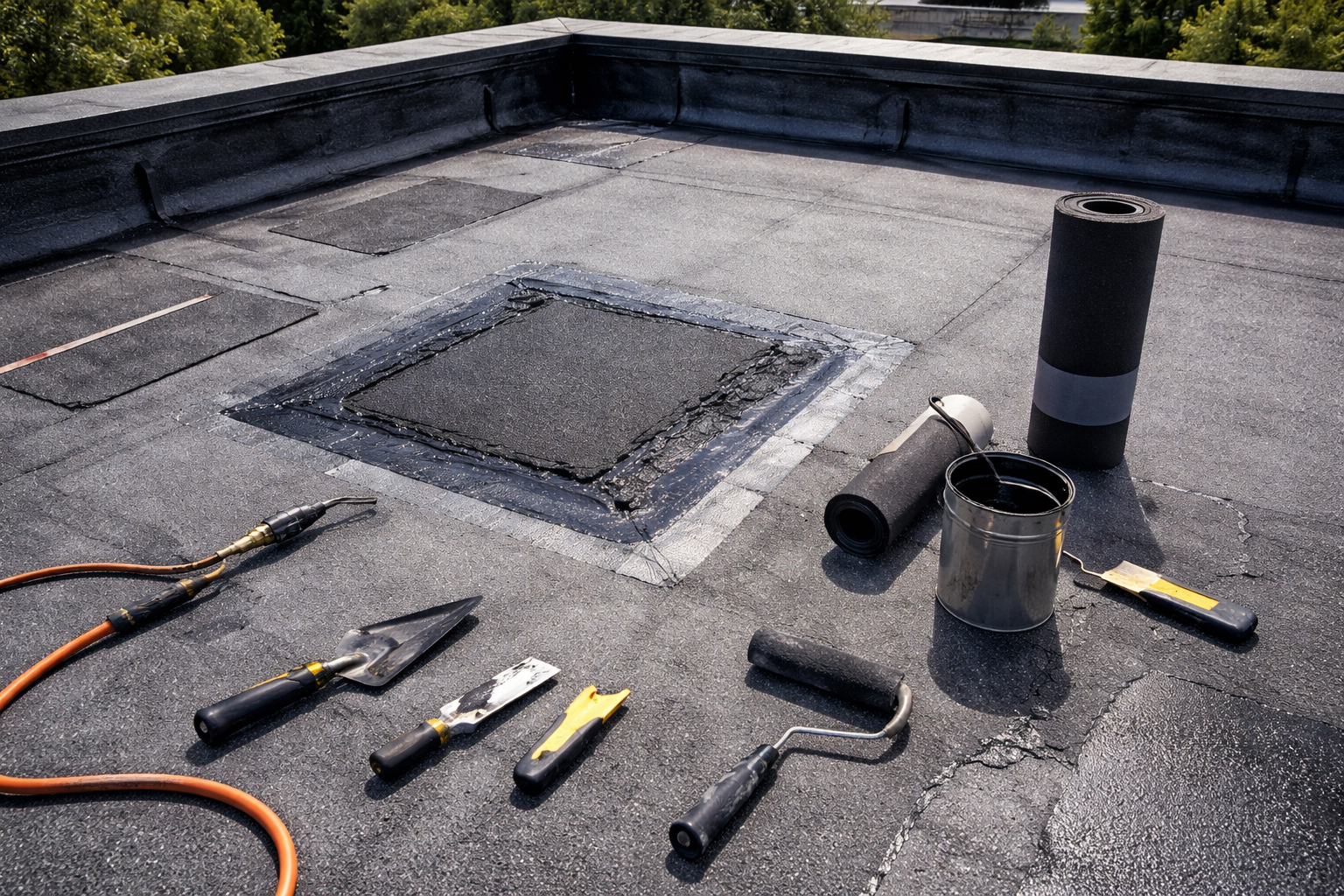
How to Find Leaks and Damage
Locating the problem is half the battle. Unlike sloped roofs where shingles blow off, flat roof damage is subtle. You must conduct a thorough inspection before attempting a modified bitumen roof repair. Start by clearing debris, as leaves and dirt can hide punctures.
Look for specific signs of wear:
-
Blisters: Bubbles in the membrane indicating trapped air or moisture.
-
Alligatoring: Cracks that look like reptile skin, caused by sun aging.
-
Open Seams: Laps where the sheets have separated.
Seams are the most common failure point. Use a probe or a dull screwdriver to gently test the overlap. If the tool slides in, you need a modified bitumen roof repair immediately. Check around flashings, vents, and drains, as these penetration points are prone to separation.
Ponding water is another indicator. If water stands on the roof for more than 48 hours, it accelerates material degradation. While you cannot fix the slope with a simple patch, identifying these areas tells you where to focus your modified bitumen roof repair efforts. Look for dark circles or vegetation growth, which signal long-term moisture presence.
How to Buy Repair Materials
Selecting the right products ensures the longevity of your fix. You cannot simply use generic tar for a specialized modified bitumen roof repair. You need compatible primers, mastics, and membrane sheets.
When visiting a supplier, specify whether you have an SBS or APP roof. SBS usually requires cold adhesive or hot asphalt, while APP is typically heat-welded. Using APP patches on an SBS roof without the right adhesive can lead to failure. A quality modified bitumen roof repair relies on chemical compatibility.
Essential Shopping List:
-
Primer: Prepares the surface for adhesion.
-
Roof Cement/Mastic: High-quality flashing cement.
-
Reinforcing Fabric: Mesh to strengthen the mastic.
-
Granules: To match the existing roof surface and protect the bitumen from UV rays.
You can buy these at professional roofing supply houses or large home improvement stores. For a comprehensive modified bitumen roof repair, consider buying a repair kit. These kits often contain smaller quantities of the necessary components, which is ideal for minor patches.
Core Repair Questions and Methods
This section addresses specific queries regarding the feasibility and methodology of restoring these roofs. We will look at four distinct aspects of the process.
1: Can you repair a modified bitumen roof?
Yes, absolutely. In fact, these roofs are among the easiest to repair because the material is uniform. Unlike synthetic rubber roofs that might require special tapes, a modified bitumen roof repair often uses materials very similar to the original roof. As long as the structural deck is sound and the insulation is dry, patching is a viable and cost-effective alternative to replacement.
2: How to repair a modified bitumen roof?
The general process involves cleaning, priming, and patching. For a standard patch, you cut out the damaged area, apply a primer to the deck, and install a base sheet. Then, you apply a cap sheet that extends beyond the damaged area. Every modified bitumen roof repair relies on the “three-course method” for sealing edges: a layer of mastic, a layer of mesh, and another layer of mastic.
3: Modified bitumen flat roof repair techniques
For flat surfaces, dealing with ponding water is key. If the leak is in a low spot, a simple patch might not suffice because it raises the height of the surface, creating a dam. In this scenario, a modified bitumen roof repair might involve using self-leveling compounds or building up the area to divert water toward a drain.
4: Flat roof repair bitumen specifics
When dealing with bitumen specifically, temperature matters. If it is too cold, the adhesives won’t cure; if it is too hot, the asphalt can become runny. The ideal modified bitumen roof repair happens in mild, dry weather. If you must repair in winter, you will need special formulations of mastic designed for cold-weather application.
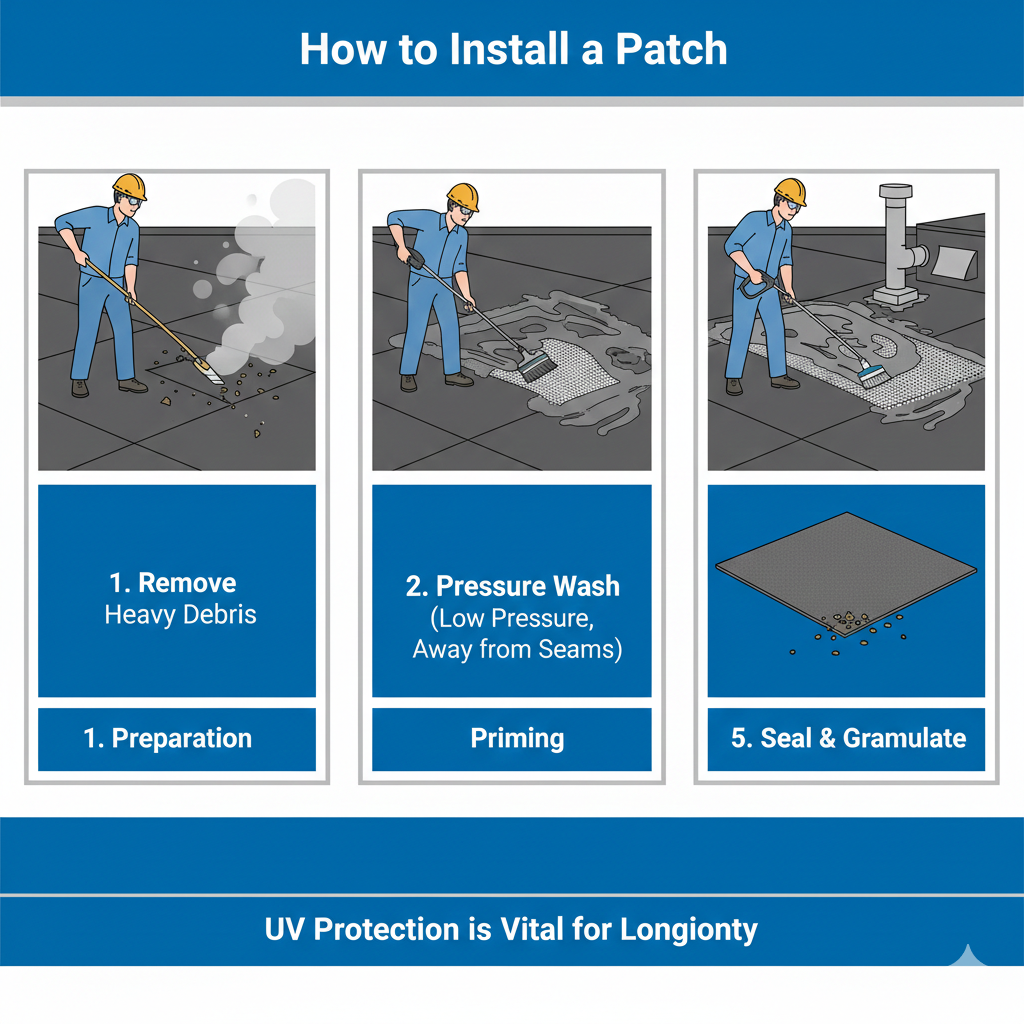
How to Install a Patch
Executing the repair requires precision. Here is a step-by-step approach to a standard cold-applied modified bitumen roof repair.
-
Preparation: Sweep the area clean. Remove loose granules and dirt. If there is a blister, cut it open with a utility knife to let it dry.
-
Priming: Apply an asphalt primer to the area. This helps the new materials bond to the old surface. A good modified bitumen roof repair never skips this step.
-
Base Layer: Apply a layer of roofing cement over the defect. Embed a piece of fiberglass mesh into the cement.
-
Top Layer: Apply another layer of cement over the mesh. This is the classic three-course method mentioned earlier.
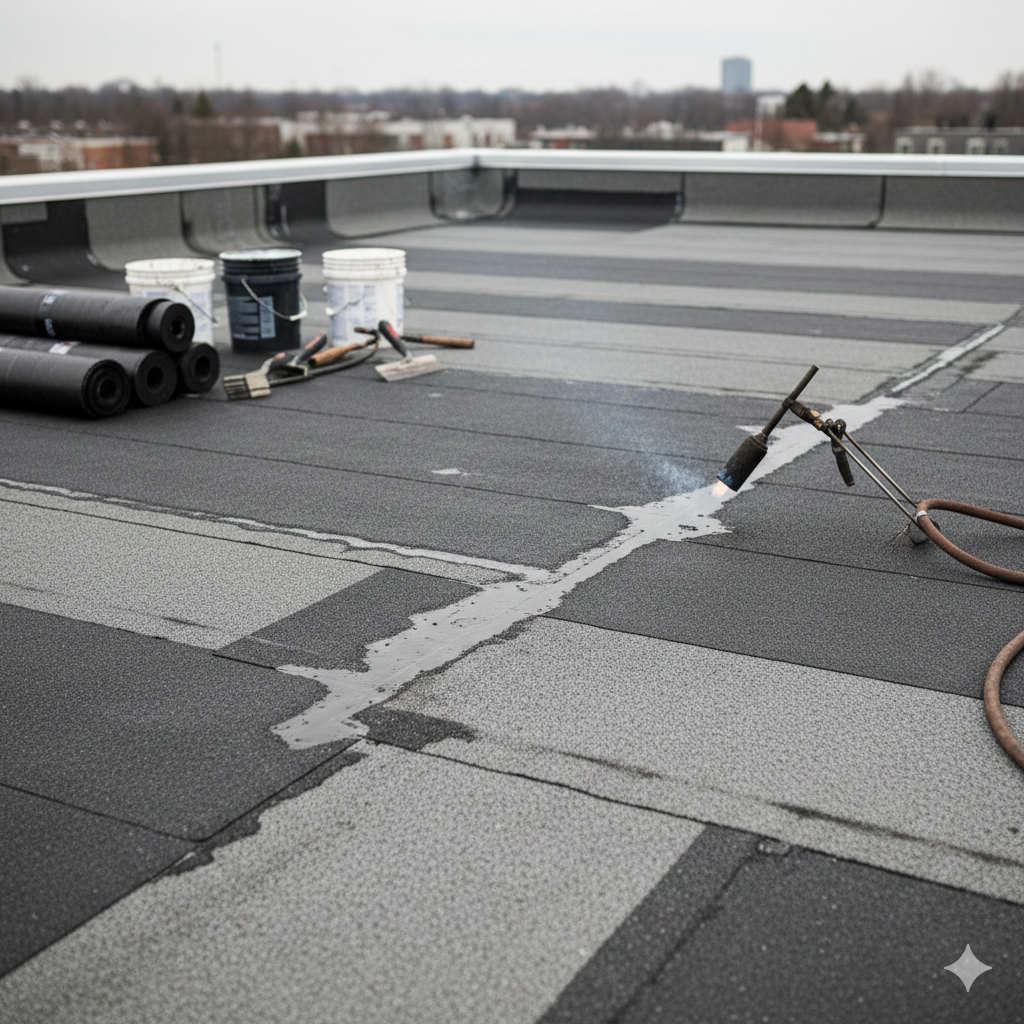
For a more permanent modified bitumen roof repair, you should install a patch of the actual membrane. Cut a piece of modified bitumen sheet that is 6 inches larger than the damage on all sides. Apply adhesive to the back of the sheet and press it firmly onto the primed surface. Use a heavy roller to push out air bubbles and ensure adhesion.
Finally, cover the edges of the patch with mastic and sprinkle loose granules over the wet cement. This UV protection is vital for the longevity of the modified bitumen roof repair.
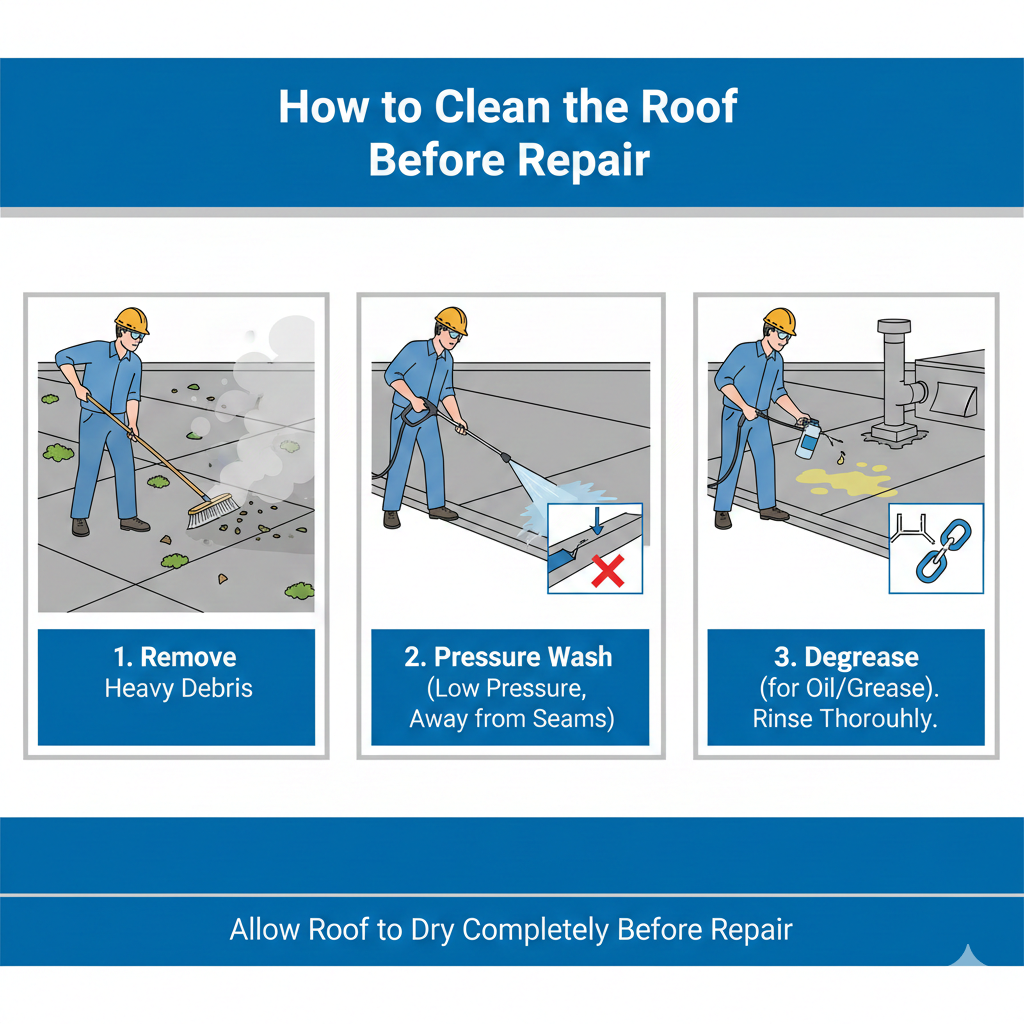
How to Clean the Roof Before Repair
You cannot glue a patch to dirt. Cleaning is the unglamorous but essential part of modified bitumen roof repair. Moss, algae, and industrial fallout create a film that prevents adhesion.
Use a stiff-bristle broom to remove heavy debris. For stuck-on grime, a pressure washer can be used, but be extremely careful. High pressure can inject water under the seams, causing more damage. Use a low-pressure setting and spray away from the seams. Allow the roof to dry completely before starting the modified bitumen roof repair.
If grease or oil is present (common near restaurant vents), use a degreaser. Rinse thoroughly. Any residue left behind will compromise the chemical bond of the modified bitumen roof repair. Solvents should generally be avoided unless specified by the manufacturer, as they can dissolve the bitumen.
What Is the Cost?
Budgeting for a modified bitumen roof repair depends on whether you hire a professional or do it yourself.
DIY Costs:
-
Materials for a small patch (cement, mesh, primer) can cost between $50 and $100.
-
A roll of modified bitumen membrane costs between $100 and $150.
-
Tools (trowel, knife, roller) might add another $50.
Professional Costs:
-
Professionals typically charge a minimum service fee, often between $300 and $500.
-
For larger repairs, costs are calculated per square foot. A comprehensive modified bitumen roof repair could run $5 to $10 per square foot depending on complexity and access.
While DIY is cheaper, a professional ensures the warranty remains valid. If the damage is extensive, a professional modified bitumen roof repair is often more cost-effective in the long run than repeated failed DIY attempts.
How to Do Maintenance
Preventative maintenance reduces the frequency of emergency repairs. A biannual inspection is recommended. During these checks, look for the early warning signs discussed earlier.
Keep the drains clear. Clogged drains lead to ponding water, which destroys the membrane and necessitates a modified bitumen roof repair. Trim overhanging tree branches to prevent physical damage and reduce leaf accumulation.
Coatings can also extend the life of the roof. An aluminized or elastomeric coating protects the bitumen from UV degradation. Applying a coating is a proactive form of modified bitumen roof repair that seals micro-cracks before they become leaks. This should be done every 5 to 7 years.
How Much Time Does It Take?
The time investment varies by the scope of damage. A simple three-course patch on a small puncture takes less than an hour. However, proper preparation adds time. You must factor in drying time for the primer and the cleaning process.
A more complex modified bitumen roof repair, such as fixing a blister or replacing a large section of wet insulation, can take half a day or more. If you are using cold adhesives, the curing time can take 24 to 48 hours, although the roof is usually weather-resistant immediately.
Planning is key. Do not start a modified bitumen roof repair if rain is in the forecast for the afternoon. You need a dry window to open the roof, dry it out, and seal it back up. Rushing the process usually leads to poor adhesion and a recurring leak.
FAQ : modified bitumen roof repair
How long does a modified bitumen roof repair last?
If performed correctly with high-quality materials, a repair can last as long as the rest of the roof, typically 10 to 15 years. However, temporary patches with mastic may only last a few years.
Can I put a new layer over the old one?
Yes, this is called a recover. However, you must perform a modified bitumen roof repair on any wet areas first. You cannot roof over wet insulation.
Is torch-down better than cold-applied for repair?
Torch-down creates a stronger heat-fused bond, but it is dangerous for DIYers. Cold-applied adhesives are safer and highly effective for the average modified bitumen roof repair.
Why is my patch peeling up?
Peeling usually happens because the surface was dirty, wet, or not primed. Proper surface preparation is the most critical part of a modified bitumen roof repair.
Does insurance cover the repair?
It depends on the cause. Sudden damage from a storm is often covered. Wear and tear or lack of maintenance, which necessitates a modified bitumen roof repair, is typically not covered.
Conclusion
Maintaining the integrity of a commercial or flat residential roof requires vigilance and knowledge. A well-executed modified bitumen roof repair is the difference between a minor maintenance expense and a catastrophic structural failure. By understanding the material properties, identifying leaks early, and following the correct application procedures, you can extend the lifespan of your roof significantly.
Whether you choose to hire a professional or attempt a DIY solution, the principles remain the same: clean, dry, and compatible materials. Do not ignore the signs of wear. Blisters, cracks, and open seams are invitations for water damage. A proactive approach to modified bitumen roof repair ensures your property remains safe, dry, and valuable for years to come. Remember, the cost of a timely repair is always lower than the cost of a premature roof replacement.
Other Resources
American WeatherStar – Comprehensive guide explaining modified bitumen roofing systems, materials, and installation methods.
Reddit – Modified Bitumen Roof Repair Discussion – Community discussion sharing approaches to patching and repairing modified bitumen roofs.
Restore Masters – Service page describing commercial modified bitumen roofing solutions and applications.
Other Helpful Articles
Temporary Roof Scaffolding in London – Article describing temporary roof scaffolding systems used on construction sites in London.
Roof Jacks for Metal Roofs – Article explaining roof jacks designed specifically for metal roofing systems.
ELK Shingles Guide – Guide providing information on ELK asphalt shingles and their characteristics.